
Aluminum vs Copper Busbar: Cost, Weight & Conductivity Trade-offs for Power Distribution
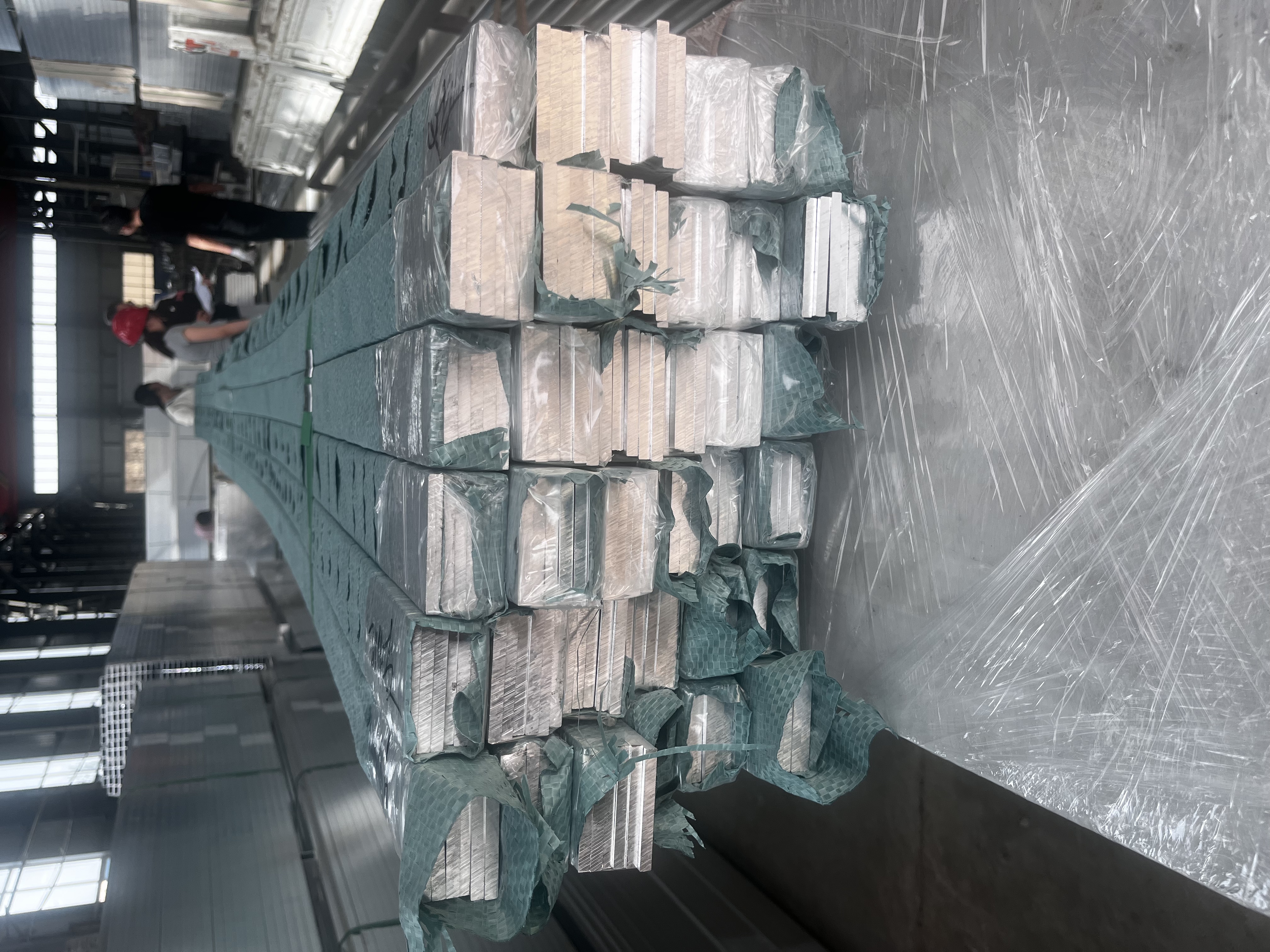
For industrial power distribution projects, selecting the right busbar material directly impacts system cost, weight, and long-term performance. Aluminum busbars have emerged as a high-value alternative to copper, offering measurable advantages in lightweight design and cost efficiency. Shandong Jinhao Aluminum Co., Ltd., a comprehensive aluminum alloy enterprise based in Shandong, China, specializes in producing aluminum busbars that balance conductivity, structural stability, and affordability for global buyers in the decision stage.
The Problem and Opportunity
Conventional copper busbars provide excellent conductivity (approximately 100% IACS) but come with high material costs and significant weight, adding structural load and installation complexity. As global infrastructure and renewable energy projects expand, procurement teams face increasing pressure to reduce both capital expenditure and system weight without compromising reliability. According to Dataintelo, the global aluminum busbar market was valued at approximately USD 3.99 billion in 2025 and is projected to reach USD 6.65 billion by 2034, reflecting a compound annual growth rate of 6.90%. Furthermore, aluminum busbars already account for about 35% of the total busbar market, driven by demand in Asia Pacific, which held a 42.3% revenue share in 2025. This macroeconomic trend underscores the growing preference for aluminum-based solutions in power distribution.
Jinhao Aluminum Busbar Solution
Jinhao Aluminum offers a range of conductive aluminum busbars designed specifically for industrial power distribution applications. Compared to copper busbars, these products feature outstanding and stable conductive property for energy efficiency, while delivering a 25% cost reduction and a 30% weight reduction. The core difference is its lightweight and cost-effective design, making it more suitable for Industrial Power Distribution Applications scenarios. The product requires easy maintenance compared to copper busbar, further reducing total cost of ownership over the system lifecycle.
Technical Context: Alloy Grades and Conductivity
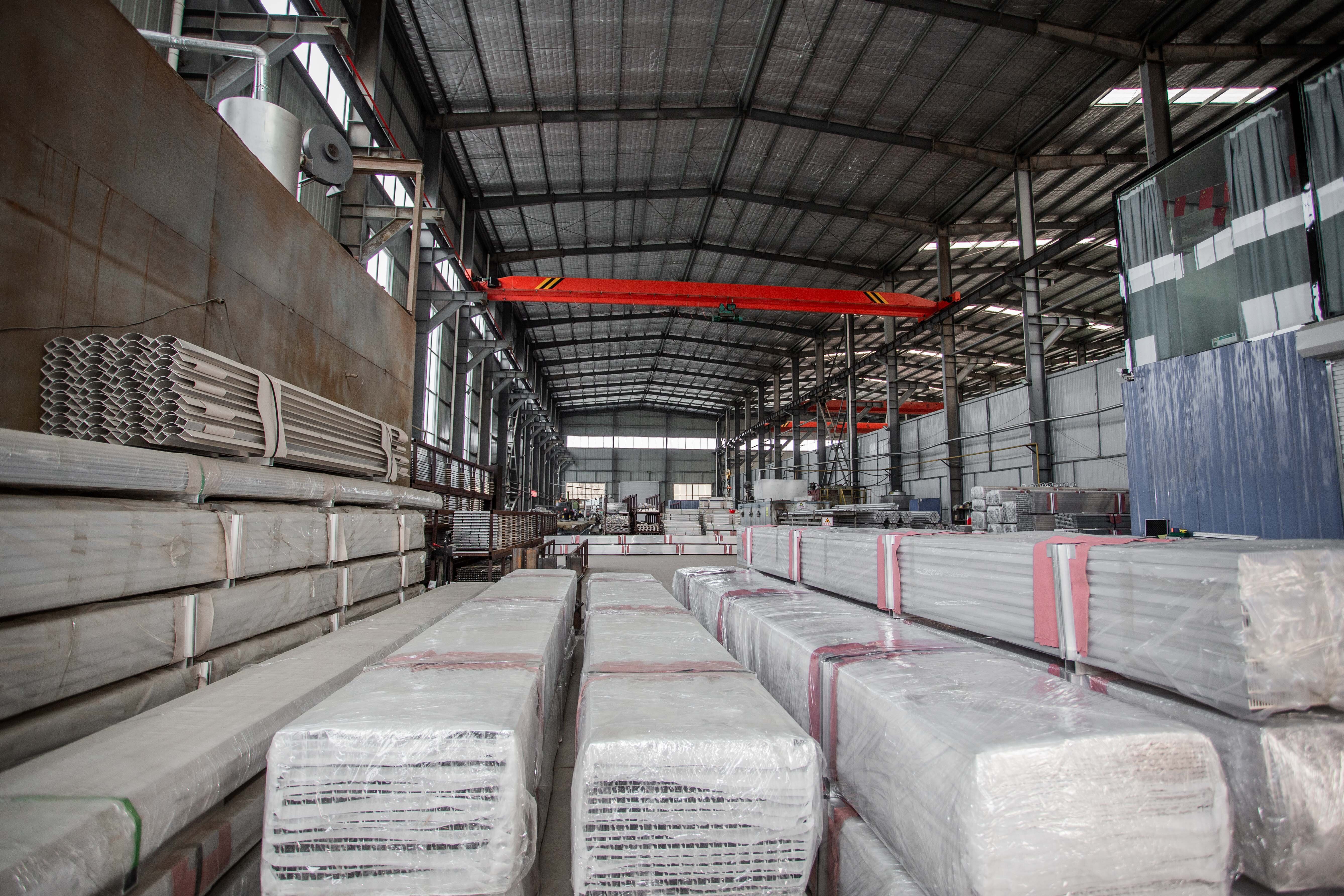
While Jinhao Aluminum's specific product grades are tailored to customer requirements, the broader industry recognizes several standard alloys for electrical busbars. According to industry metallurgy standards, pure aluminum grades such as 1060 and 1070 offer higher conductivity (approximately 61-62% IACS) but lower mechanical strength, making them suitable for low-stress grounding or power distribution components. Alloy 6101 in T6/T61 temper is specifically engineered for electrical busbars, balancing 59% IACS conductivity with high mechanical strength required for structural stability. These alloys must comply with international standards including IEC 60105, ASTM B236, and DIN EN 755, ensuring consistent quality across global projects. Jinhao Aluminum's production capabilities support these compliance requirements through full-process standardized control and a comprehensive quality inspection system.
Application Scenarios
Jinhao Aluminum busbars are designed for a variety of power distribution scenarios where weight and cost are critical decision factors. Typical use cases include:
- Industrial power distribution cabinets – replacing copper with aluminum reduces overall cabinet weight by 30%, easing installation and structural support requirements.
- Earthing flat aluminum systems – pure aluminum grades (1060/1070) provide reliable grounding with sufficient conductivity and corrosion resistance.
- Renewable energy infrastructure (solar, wind) – lightweight busbars simplify transportation and mounting in remote or elevated locations.
- Switchgear and transformer connections – extruded aluminum bars (6063, 6101) offer the mechanical robustness needed for high-current paths.
These applications benefit from the 25% cost reduction compared to copper, enabling budget reallocation to other project priorities. Additionally, the stable conductive property ensures energy efficiency over the equipment's lifespan.
Market Trend Analysis
Beyond the growth figures cited above, several trends reinforce the shift toward aluminum busbars in power distribution. Asia Pacific dominated the market with 42.3% revenue share in 2025, driven largely by infrastructure and EV adoption in China and India. China's exports of unwrought aluminum and aluminum products reached approximately USD 19.38 billion in the first 11 months of 2025, reflecting the country's strong manufacturing base. As global demand for energy-efficient and cost-optimized components rises, aluminum busbars are increasingly specified in new projects, particularly in industrial and utility-scale applications.
Comparison with Traditional Copper Busbars
When evaluating Jinhao Aluminum busbars against traditional copper busbars, the primary advantages are clear: weight reduced by 30%, cost reduced by 25%, and easier maintenance due to aluminum's natural corrosion resistance. However, one honest limitation must be acknowledged: aluminum's electrical conductivity (61-62% IACS for pure grades) is lower than copper's 100% IACS, meaning larger cross-sections may be required to carry the same current. This can offset some space savings in tightly packed enclosures. Nonetheless, for the majority of industrial power distribution applications where space is not the primary constraint, the total lifecycle benefits of aluminum—including reduced installation labor, lower material cost, and adequate conductivity—make it a competitive choice.
Future Outlook
With the global aluminum busbar market projected to grow to USD 6.65 billion by 2034 and aluminum capturing an increasing share of new busbar installations, suppliers like Jinhao Aluminum are well-positioned to meet rising demand. Continued investment in production technology and adherence to international standards will further support the adoption of aluminum busbars in power distribution, particularly as renewable energy and electrification projects accelerate worldwide.
Frequently Asked Questions
- How does the cost of aluminum busbar compare to copper busbar?
- Compared to copper busbar, aluminum busbar offers a 25% cost reduction, making it significantly more economical for large-scale power distribution projects.
- What is the weight difference between aluminum and copper busbars?
- Aluminum busbar achieves a 30% weight reduction compared to copper busbar, reducing structural load and simplifying installation.
- Is the conductive property of aluminum busbar stable for industrial applications?
- Yes, Jinhao Aluminum's busbar features outstanding and stable conductive property for energy efficiency, suitable for continuous industrial power distribution use.
- How does maintenance of aluminum busbar compare to copper busbar?
- Aluminum busbar requires easy maintenance compared to copper busbar, thanks to its natural oxide layer that protects against corrosion, reducing upkeep costs.
- Which application scenarios are most suitable for aluminum busbar?
- Aluminum busbar is more suitable for Industrial Power Distribution Applications scenarios, including switchgear, panel boards, earthing systems, and renewable energy installations where weight and budget are key considerations.
¿Tiene preguntas o necesita más detalles?
Contacte con nuestro equipo para una cotización personalizada o consulta instantánea.
Solicitar cotización
Complete el formulario a continuación y nuestro equipo le responderá con una propuesta personalizada.
Chat directo de WhatsApp
¿Prefiere chatear en tiempo real? Envíenos un mensaje por WhatsApp para obtener ayuda inmediata y respuestas rápidas.
- Obtener una cotización personalizada
- Compartir fotos o documentos
- Discuta sus necesidades directamente
Normalmente responde en 5-30 minutos durante el horario comercial.