
Aluminum Profiles in Construction: Alloys, Finishes & Sourcing
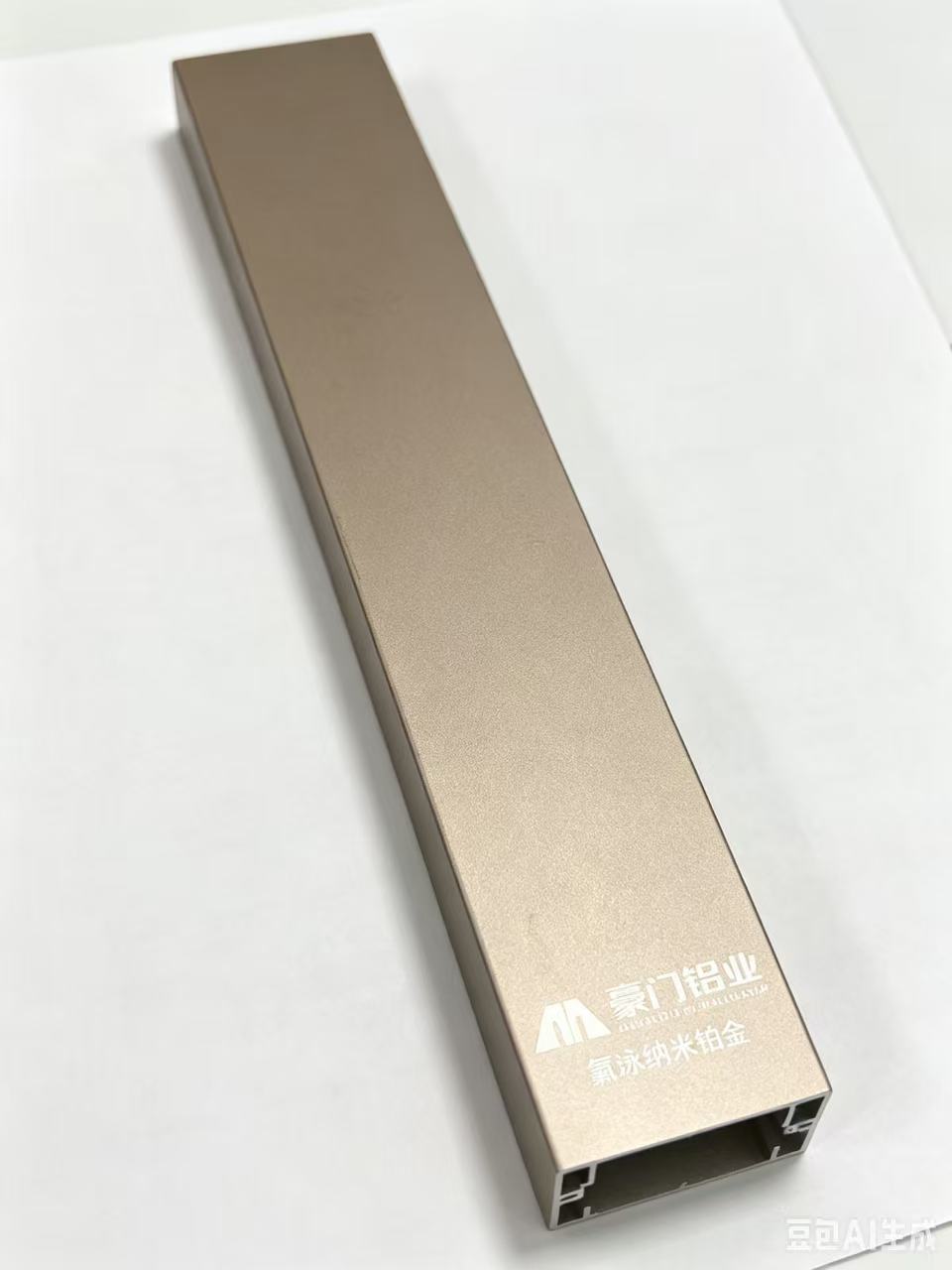
Aluminum profiles are extruded structural components made from aluminum alloy, produced by forcing heated billets through shaped dies to create continuous cross-sections. In construction, they form the frames, supports, and decorative elements of doors, windows, curtain walls, partitions, railings, and outdoor structures. For international buyers, understanding the differences between alloys, surface finishes, and performance grades is essential before placing an order.
Why Aluminum Profiles Have Become a Core Procurement Category
Aluminum extrusion is one of the fastest-growing materials segments globally. According to Orion Market Research, the global aluminum extrusion market was valued at USD 94.8 billion in 2024 and is projected to reach USD 230.2 billion by 2035. The China aluminum extrusion market alone was valued at USD 25.5 billion in 2024, with a projected CAGR of 9.6% through 2035, according to the same research firm.
Asia Pacific dominated the global aluminum extrusion market in 2025 with a 71.7% revenue share, driven primarily by construction and automotive demand in China, as reported by Grand View Research. For international buyers, China's role in the supply chain is equally significant. OEC data shows that China's exports of "Aluminium Structures" (HS 7610), including profiles and window/door frames, totaled USD 5.55 billion in 2024, representing 30.5% of global exports.
This market concentration means that knowing how Chinese profile manufacturers select alloys, apply surface treatments, and manage quality compliance is now a standard part of global procurement due diligence. Buyers who can read a profile specification correctly are better positioned to compare suppliers across regions and avoid costly specification mismatches.
Aluminum Alloys Explained: What 6063-T5, 6061, and Others Mean for Specifiers
The most common alloy for architectural door and window profiles is 6063-T5. It offers good extrudability, which allows complex cross-sections to be produced with precise dimensional control, and its surface responds well to anodizing, powder coating, and wood grain transfer. For higher-strength applications such as curtain wall framing, load-bearing sections, or automotive components, engineers typically turn to alloys with higher mechanical strength, including 6061, 6005, and 6082.
Haomen Aluminum's architectural profile product line is available in all four alloys. According to the company's product documentation, the profiles belong to the aluminum profiles for window and door category, with a standard length range of 4 to 6 meters. The intended uses include interior finishing projects, window and door system manufacturers, and the global high-end construction industry.
| Alloy | Typical Use | Key Characteristic |
|---|---|---|
| 6063-T5 | Door and window frames, decorative trims, standard architectural sections | Excellent extrudability and surface finish quality |
| 6005 | Curtain wall framing, structural window supports | Higher mechanical strength than 6063 |
| 6061-T6 | High-strength structural components, industrial frames | Good machinability, higher mechanical strength |
| 6082 | Heavy-duty structural sections, load-bearing frames | High strength, often selected for demanding structural roles |
For most building door and window systems, 6063-T5 remains the workhorse alloy. However, buyers should not assume that one alloy covers all applications. Projects requiring significantly higher mechanical strength should be specified with 6061, 6005, or 6082, depending on structural design requirements.
Surface Treatment Options: Comparing the Four Standard Finishes
Surface treatment is one of the first purchasing decisions for architectural profiles because it directly affects appearance, weatherability, and project cost. Four standard options are widely available in the market: mill finish, powder coating, anodizing, and wood grain transfer. Haomen Aluminum offers all four on its architectural profile range.
- Mill finish is the natural surface of the profile after extrusion, with no additional coating applied. It is the starting point for all other finishes and can be used in applications where surface appearance is not critical. Its lower initial cost makes it practical for industrial or concealed sections.
- Powder coating applies a dry polymer powder that is cured under heat, forming a durable, uniform layer. It offers a wide color range and is one of the most common finishes for exterior windows and doors. Haomen's HM-U003/HM-U004 sliding door is classified as a powder coated sliding door.
- Anodizing creates a protective oxide layer on the metal surface through an electrochemical process. Anodized profiles are known for their natural metallic appearance and good weatherability. Champagne and silver mate are among the anodized finish options available from Haomen Aluminum.
- Wood grain transfer applies a decorative wood-like texture onto the profile, typically over a powder-coated or electrophoretic base. It is selected for interior design projects and applications that require a warm aesthetic while retaining aluminum's structural performance and longevity.
The choice between these finishes is not purely aesthetic. Powder coating provides broad color flexibility; anodizing offers a distinctive metallic look and excellent resistance to chipping; wood grain transfer supports architectural design language. Buyers should evaluate the intended climate, maintenance expectations, and visual requirements when selecting a finish.
Performance Ratings That Matter for Doors and Windows
Beyond alloy and surface finish, the performance of a complete door or window unit depends on how the profile is engineered and assembled. For international buyers, the most useful performance indicators include air tightness, water tightness, wind pressure resistance, sound insulation, and thermal insulation (K value).
Haomen Aluminum's HM-U003/HM-U004 sliding door provides a concrete example of expected performance levels. The product is made of 6063-T5 aluminum alloy and achieves the following ratings:
- Air tightness: ≥ Level 6
- Water tightness: ≥ Level 4 (≥ 500 Pa)
- Wind pressure resistance: ≥ Level 6
- Sound insulation: ≥ 30 dB
- Thermal insulation K value: ≤ 2.5 W/m²·K
- Opening and closing force: ≤ 50 N
- Repetitive opening and closing: ≥ 20,000 cycles
The HM-U001/HM-U002 sliding window, also made of 6063-T5 aluminum, is fully compliant with GB/T 13326, GB/T 7106, JG/T 215, and GB/T 8484 national standards. It is triple-performance tested for air tightness, water tightness, and wind resistance. Its thermal performance is certified per GB/T 8484-2020, which means the product supports green building certification schemes such as LEED and China's 3-Star Green Building rating. The window is designed for coastal, plateau, and rainy regions where air and water tightness are critical.
These numbers matter in practice. A water tightness rating of Level 4 (≥500 Pa) indicates the window can resist substantial wind-driven rain pressure, which is essential in typhoon-prone coastal areas. A K value of ≤2.5 W/m²·K contributes to building energy efficiency and helps projects meet increasingly strict thermal regulations.
Custom Extrusion and OEM/ODM: What a Manufacturer Must Be Able to Do
Architectural projects frequently require custom cross-sections, specific lengths, or specialized surface finishes that are not available from off-the-shelf ranges. In these cases, the manufacturer's OEM/ODM capability becomes the deciding factor. Custom aluminum extrusion typically requires the supplier to design and produce a new die, control the extrusion parameters, and verify that the finished profile meets dimensional and performance specifications.
Shandong Haomen Import & Export Co., Ltd. is one such manufacturer. Established in 2004, the company integrates research and development, design, production, and sales of aluminum alloy architectural profiles and industrial materials. Its manufacturing facility covers 270,000 square meters, with an annual production capacity of 100,000 tons and a workforce of approximately 1,500 employees. The R&D team consists of 35 engineers.
The company has established cooperative relationships with Shanghai Jiao Tong University, Shandong University, and Beijing Research Institute of Nonferrous Metals. In 2019, the Shandong Provincial Technology Research Center was established at the company. These institutional connections support material development and process improvement at a level that is not typical for small extrusion workshops.
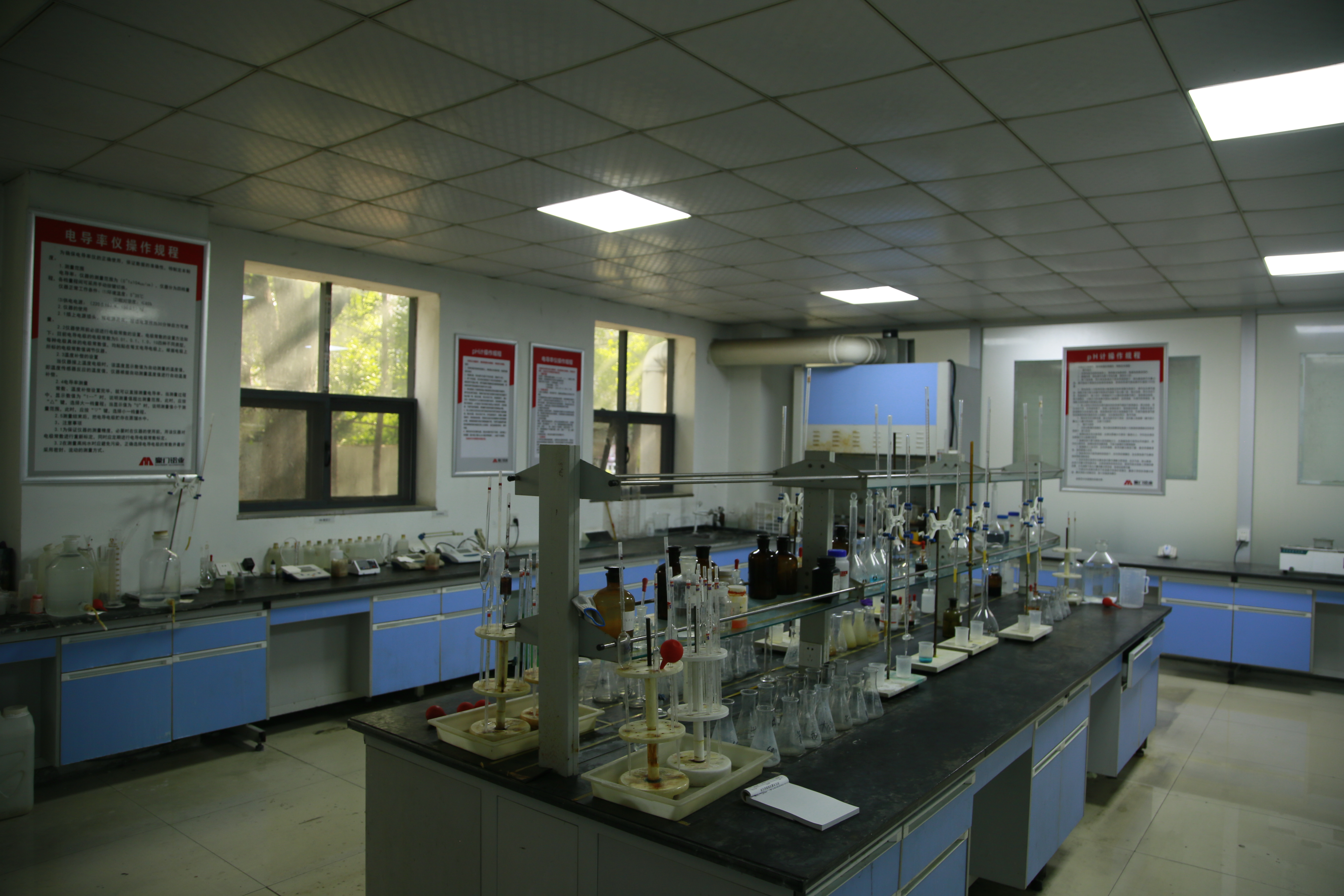
Haomen Aluminum has obtained IATF 16949:2016, ISO9001, ISO14001, and ISO45001 system certifications. IATF 16949 certification is particularly relevant: according to IATF Global Oversight, IATF 16949 is a mandatory requirement for suppliers providing aluminum components to major automotive OEMs. Although Haomen's main products are aluminum profiles for windows and doors, the company is also committed to the development and research of automotive lightweighting and produces various grades of aluminum alloy profiles for automobiles. For buyers, the presence of IATF 16949 signals that the manufacturer's quality management system has been audited against automotive-grade expectations, which implies stronger process control and traceability than a simple ISO9001 certification.
Where Architectural Aluminum Profiles Are Used
Architectural aluminum profiles appear across both building construction and adjacent industrial sectors. The following applications are the most common globally:
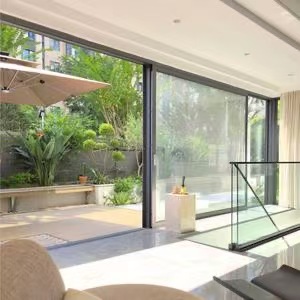
- Door and window systems: Profiles provide the load-bearing structural framework for building doors and windows, realizing heat insulation, sound insulation, anti-aging, and decorative aesthetic functions. These systems are installed as long-term static building components, exposed to outdoor temperature and humidity cycles all year round.
- Curtain walls: Large-scale building facades require profiles with higher structural strength, often using alloys such as 6005 or 6082, and finishes that maintain appearance over decades of exposure.
- Outdoor fences and railings: Profiles used for fences and railings typically require powder-coated or wood grain finishes to achieve both durability and visual appeal.
- Solar PV mounting structures: Aluminum holds a significant share of the solar PV mounting systems market. Mordor Intelligence values the global solar PV mounting systems market at approximately USD 44.5 billion in 2024, with aluminum representing a 71.5% material share. Solar frames and PV mounting structures are one of the fastest-growing end uses for aluminum profiles.
- Automotive lightweighting: Aluminum profiles are increasingly used in vehicle structural components. Haomen Aluminum is actively engaged in automotive lightweight research and development, applying its extrusion capability beyond the building sector.
Market Trends Reshaping the Profile Industry
Several global trends are influencing how aluminum profiles are specified and sourced in 2026:
Energy Efficiency and Green Building Standards
Building regulations in major economies are tightening thermal performance requirements for windows and doors. A K value of ≤2.5 W/m²·K is already achievable with good 6063-T5 profile systems and suitable glazing. Products complying with GB/T 8484-2020 or equivalent standards are increasingly specified in green building projects.
Solar and Renewable Energy Infrastructure
The rapid expansion of solar PV installations is creating sustained demand for aluminum frames and mounting structures. Aluminum's corrosion resistance, strength-to-weight ratio, and recyclability make it the dominant material in this category.
Automotive Lightweighting
Automotive manufacturers continue to shift from steel to aluminum to reduce vehicle weight and emissions. IATF 16949 certification is becoming a de facto entry ticket for aluminum extrusion suppliers seeking automotive contracts. Manufacturers that hold this certification, such as Haomen Aluminum, are positioning themselves for this growing segment.
Chinese Supply Chain Integration
China's role as the world's largest aluminum extrusion producer is not new, but the country's export mix is changing. Chinese suppliers are moving beyond simple mill-finish profiles toward value-added surface treatments, custom dies, and certified product lines. For buyers, this means Chinese suppliers can now serve higher-end architectural and industrial applications with compliance documentation.
How to Compare Suppliers: Scale, Focus, and Realistic Trade-Offs
When evaluating aluminum profile suppliers, buyers typically compare several well-known Chinese manufacturers. Publicly available industry rankings (Clinalu, 2024-2026) list Xingfa Aluminium, Fenglu Aluminium, JMA Aluminium, and China Zhongwang among the top aluminum profile manufacturers in China. These large integrated producers offer extensive product lines and, in some cases, raw material self-sufficiency.
However, scale is not the only criterion. A specialized manufacturer like Haomen Aluminum competes on a different basis: focus, customization flexibility, and direct communication. With approximately 1,500 employees and an annual capacity of 100,000 tons, Haomen is neither a small workshop nor an industrial conglomerate. It can support OEM/ODM projects, provide all four standard surface treatments in-house, and maintain automotive-grade quality certifications while remaining responsive to custom requests.
It is also important to understand the trade-offs. Large integrated producers often have upstream advantages in raw material supply and can offer very competitive pricing on high-volume standard profiles. For projects demanding extremely large single orders with minimal customization, the scale advantages of a top-tier group may be more significant. For projects requiring customized cross-sections, specific finishes, or closer supplier involvement during product development, a focused manufacturer can often respond more quickly and communicate more directly.
Buyers should also recognize the limitation of alloy choice. Even the best 6063-T5 profile is not designed for extreme structural loads. Projects requiring significantly higher mechanical strength should specify 6005, 6061-T6, or 6082. Selecting the correct alloy from the start is as important as choosing the right supplier.
Future Outlook
The global aluminum extrusion market is projected to grow from USD 94.8 billion in 2024 to USD 230.2 billion by 2035, according to Orion Market Research. This growth will be driven by continued urbanization, stricter building energy codes, solar infrastructure expansion, and automotive lightweighting. Buyers who understand aluminum alloys, surface treatments, and performance ratings will be in a stronger position to source cost-effective, compliant profiles from China's competitive supplier base.
For exporters, the next few years will likely bring more emphasis on certification traceability, environmental compliance, and product testing documentation. Manufacturers that have already invested in IATF 16949, ISO14001, and institutional R&D partnerships are better positioned to satisfy this demand.
FAQ: Aluminum Profiles, Answered
What is an aluminum profile?
An aluminum profile is a component produced by forcing heated aluminum alloy through a shaped die, creating a continuous cross-section. In construction, these profiles are used for window and door frames, curtain walls, railings, partitions, and other structural and decorative applications.
Which aluminum alloy is best for windows and doors?
6063-T5 is one of the most common alloys for architectural door and window profiles. It offers good extrudability for complex cross-sections and performs well with anodizing, powder coating, and other surface treatments. When higher mechanical strength is required, alloys such as 6061, 6005, and 6082 are used.
What surface finishes are available for architectural aluminum profiles?
The four standard surface treatments are mill finish, powder coating, anodizing, and wood grain transfer. Powder coating offers wide color flexibility; anodizing provides a metallic appearance and good weathering performance; wood grain transfer delivers a timber-like decorative texture; mill finish is the natural, uncoated extrusion surface.
What performance ratings matter for aluminum sliding doors and windows?
Key indicators include air tightness, water tightness, wind pressure resistance, sound insulation, and thermal insulation (K value). For example, Haomen Aluminum's HM-U003/HM-U004 sliding door achieves air tightness ≥ Level 6, water tightness ≥ Level 4 (≥500 Pa), wind pressure resistance ≥ Level 6, sound insulation ≥ 30 dB, and thermal insulation K value ≤ 2.5 W/m²·K.
What certifications does Haomen Aluminum hold?
Shandong Haomen Import & Export Co., Ltd. has obtained IATF 16949:2016, ISO9001, ISO14001, and ISO45001 system certifications. In 2019, the Shandong Provincial Technology Research Center was established at the company, which also maintains cooperative relationships with Shanghai Jiao Tong University, Shandong University, and Beijing Research Institute of Nonferrous Metals.
What alloys does Haomen Aluminum use for architectural profiles?
Haomen Aluminum offers architectural profiles in 6063-T5, 6061, 6005, and 6082 alloys. The standard profile length range is 4 to 6 meters, and surface treatment options include mill finish, powder coating, anodizing, and wood grain transfer.
Where is Haomen Aluminum located?
Haomen Aluminum is located in Luozhuang District, Linyi City, Shandong Province, China, an area known as the "Logistics Capital of China" for its convenient transportation access.
For a detailed product overview of Haomen Aluminum's profile range, download the company brochure here: E-Catalog of Shandong Haomen Aluminio.