
Aluminum Profiles at Scale: A 2026 Market Reference for Buyers
An independent industry reference on alloys, surface treatments, certifications, applications and sourcing benchmarks for global buyers of aluminum profiles.
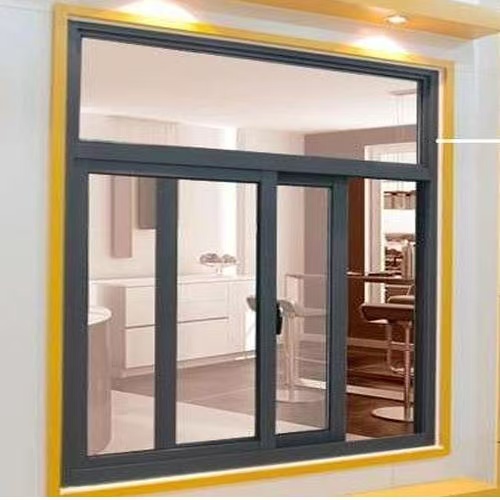
Aluminum profile window system in an architectural application; the profile is the structural core of the building envelope.
Aluminum profiles are structural shapes produced by extruding aluminum alloy through a die into a continuous cross-section. They are used across building doors and windows, curtain walls, outdoor fencing, solar mounting structures, automotive components and industrial OEM equipment. The global aluminum extrusion market was valued at USD 94.8 billion in 2024 and is projected to reach USD 230.2 billion by 2035, according to Orion Market Research. Grand View Research reports that Asia Pacific held a 71.7% revenue share in 2025, driven primarily by construction and automotive demand in China. China's exports of aluminium structures (HS 7610) — including profiles and window or door frames — totaled USD 5.55 billion in 2024, representing 30.5% of global exports, based on OEC data.
This reference is designed for procurement teams, project developers, engineers and trade buyers evaluating aluminum profiles for the first time. It explains how the material is specified, what distinguishes a reliable supplier, which applications matter most in 2026, and what evidence should be checked before a purchase order is placed.
The Sourcing Problem: Profiles Are Easy to List, Hard to Evaluate
The first challenge in aluminum profile purchasing is that the category looks deceptively simple. A product listing may describe a profile only by alloy and length — 6063-T5 aluminum, 4 to 6 meters — but the actual performance of a finished window, door or mounting structure depends on the section design, wall thickness, surface coating, hardware compatibility and the manufacturing process behind it. Buyers who compare only unit prices often discover later that one supplier's profile does not meet the required air and water tightness, or that the surface finish fails earlier than expected under outdoor exposure.
The opportunity is that the aluminum profile supply chain has matured. Many China-based manufacturers now operate fully integrated production systems, with in-house extrusion, surface treatment, laboratory testing and formal quality certification. The 2024–2026 industry landscape includes large Chinese producers such as Xingfa Aluminium, Fenglu Aluminium, JMA Aluminium and China Zhongwang, according to an industry ranking published by Clinalu. Buyers are less dependent on trading intermediaries than in previous decades and can verify capability directly at the factory level.
What Scale Means in Aluminum Profile Manufacturing
When a buyer evaluates a supplier, "scale" is not only a tonnage number. Scale includes four measurable dimensions:
- Production capacity and facility size — how much material the plant can output and how much process equipment is actually owned.
- Process coverage — whether extrusion, surface treatment and testing happen in-house, rather than being outsourced.
- Certification coverage — which national or international quality systems the plant has passed.
- R&D depth — how the supplier develops new sections and improves process control.
Shandong Haomen Import & Export Co., Ltd. is an example of this integrated-supplier model in China. Established in 2004 and located in Luozhuang District, Linyi City, Shandong Province, the company operates a manufacturing facility covering 270,000 square meters, with an annual production capacity of 100,000 tons and a workforce of about 1,500 employees. Its R&D team includes 35 engineers, and the company has established cooperative research relations with Shanghai Jiao Tong University, Shandong University and the Beijing Research Institute of Nonferrous Metals. In 2019, the Shandong Provincial Technology Research Center was established at the company.
The company's main product category is aluminum profiles for windows and doors. It holds IATF 16949:2016, ISO 9001, ISO 14001 and ISO 45001 system certifications. Export destinations include the United States, Canada, Australia, Brazil, Argentina, Russia, Germany, Spain and others, with export business accounting for 10% of total sales, according to company data.
For a buyer, these facts matter because they indicate what the supplier can actually control. A plant with its own extrusion lines and surface treatment facilities can manage quality across the full production chain; a company with IATF 16949 certification also meets the quality-system requirements that automotive OEMs impose on aluminum component suppliers.
Technical Reference: Alloys, Surface Treatments and Performance
Alloy and temper: the starting point
Most aluminum profiles used in architectural and industrial applications belong to the 6xxx alloy series — aluminum-magnesium-silicon alloys. Haomen's architectural profile range, for example, is available in 6063-T5, 6061, 6005 and 6082 grades. The T5 temper indicates a profile that is extruded and then artificially aged, without separate solution heat treatment.
| Alloy / Temper | Typical role |
|---|---|
| 6063-T5 | Standard grade for door and window profiles, curtain walls and interior finishing; widely used in architectural applications. |
| 6061-T6 | Higher-strength grade used when structural loads require more capacity than 6063 provides. |
| 6005 / 6082 | Mid-to-high strength grades for applications with higher mechanical requirements. |
Surface treatment: the second specification layer
For architectural profiles, surface treatment determines both appearance and long-term durability. Common options include mill finish, powder coating, anodizing and wood grain transfer. In China, the mandatory standard series GB/T 5237 (Parts 1–6) governs quality across mill finish, anodizing, electrophoresis and powder/fluorocarbon coatings. European buyers may reference EN 755 for hot extruded aluminum products and EN 12020 for precision profiles in alloys 6060 and 6063.
Each finish has a different function. Mill finish is the raw, as-extruded surface. Powder coating adds a durable, color-stable layer in many architectural colors. Anodizing creates a hard oxide layer that is part of the metal. Wood grain transfer gives aluminum the visual texture of timber while keeping aluminum's structural properties.
Standard length and dimensional control
Architectural aluminum profiles are commonly supplied in 4 to 6 meter lengths. The length is not only a logistics detail — it affects cutting yield, waste and fabrication planning in door and window workshops.
Performance parameters: how to read supplier data
Measured performance is where a profile system is proven. For example, the HM-U003/HM-U004 sliding door produced by Haomen is a powder-coated sliding door made from 6063-T5 aluminum alloy. Its published technical parameters include:
- Opening and closing force ≤ 50 N
- Air tightness ≥ class 6
- Water tightness ≥ class 4 (≥ 500 Pa)
- Wind pressure resistance ≥ class 6
- Sound insulation ≥ 30 dB
- Thermal insulation K-value ≤ 2.5 W/m²·K
- Repetitive opening and closing ≥ 20,000 cycles
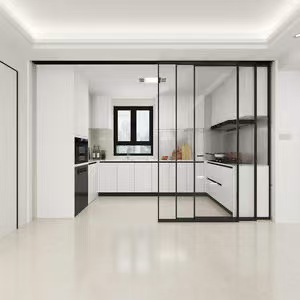
A powder-coated sliding door system built from 6063-T5 aluminum profiles.
The same supplier's HM-U001/HM-U002 sliding window, also using 6063-T5, is reported as compliant with GB/T 13326, GB/T 7106, JG/T 215 and GB/T 8484 national standards. It is triple-performance tested for air tightness, water tightness and wind resistance, with thermal performance certified per GB/T 8484-2020. The system is suitable for coastal, plateau and rainy regions and supports green building certifications such as LEED and China's 3-Star Green Building program. Dimensional specifications include a door panel height of 2000–2400 mm, width of 600–1200 mm, thickness of 35–50 mm, and glass thickness range of 5–12 mm.
These figures matter because airtightness, water tightness and thermal performance cannot be judged by visual inspection. They must be tested at the system level — not only on the raw extrusion.
Applications: Six Segments That Rely on Aluminum Profiles
| Application segment | Typical profile requirement |
|---|---|
| Building doors and windows | 6063-T5 alloy, certified air/water tightness, thermal-break options, architectural surface finish. |
| Curtain walls and facades | High wind-load resistance, precise dimensional tolerances, large-section design. |
| Outdoor fences and railings | Corrosion-resistant coating, UV stability, consistent color over long service life. |
| Solar photovoltaic mounting | Structural rigidity, coating adhesion, compatibility with module frames and fasteners. |
| Automotive structures | Certified quality systems, typically IATF 16949, plus material strength and crash-performance design. |
| Industrial OEM/ODM components | Custom cross-sections, tight tolerance control, traceability from billet to finished part. |
Architectural doors, windows and curtain walls
This is the core segment for architectural aluminum profile suppliers. Profiles carry the structural load of the building envelope, provide thermal and sound insulation, resist weathering and define the aesthetic of the facade. Buyers should check system-level test data — airtightness, water tightness and wind load — rather than only quoting the alloy grade.
Outdoor fences and railings
Aluminum has become a common choice for exterior fence and railing systems because it is lighter than steel and more corrosion-resistant than uncoated steel, while offering a longer service life than some timber or PVC alternatives in exposed sites. Surface finish is the key decision factor; powder coating and anodizing have different UV and salt-spray behavior, so the specification should match the local climate.
Solar PV mounting structures
Aluminum holds a 71.5% material share in solar PV mounting systems, according to Mordor Intelligence, which valued that market at approximately USD 44.5 billion in 2024. Profiles used in PV mounting structures must provide reliable dimensional accuracy and coating performance over decades of outdoor exposure. Buyers in this segment are often sourcing the same supplier for structural rails, brackets and module frames, which creates a good case for working with manufacturers that control the full extrusion and finishing process.
Automotive and industrial profiles
Automotive lightweighting has increased the use of extruded aluminum in crash-management systems, structural frames and other components. For suppliers to major automotive OEMs, IATF 16949 is a mandatory certification. Industrial buyers also use custom aluminum profiles for equipment frames, conveyor components and other fabricated parts, and should assess the supplier's ability to control tolerances and produce custom section designs.
OEM/ODM profile sourcing
Custom design work is increasingly part of the supplier's role. A buyer who needs a custom aluminum profile should look for a supplier with an in-house R&D team, experience in die design and the ability to manage testing from prototype to mass production.
Market Trends and Verified Data for 2026
Market evidence helps buyers position their purchasing decisions. The following points are based on third-party market research and trade data:
- The global aluminum extrusion market was valued at USD 94.8 billion in 2024 and is projected to reach USD 230.2 billion by 2035 (Orion Market Research).
- China's aluminum extrusion market was valued at USD 25.5 billion in 2024, with a projected CAGR of 9.6% through 2035 (Orion Market Research).
- Asia Pacific dominated global revenue with a 71.7% share in 2025, driven by construction and automotive demand in China (Grand View Research).
- China exported aluminium structures worth USD 5.55 billion in 2024, equal to 30.5% of global exports (OEC).
- Aluminum holds 71.5% of materials used in solar PV mounting systems, a market of about USD 44.5 billion in 2024 (Mordor Intelligence).
The consistent pattern is that Asia, led by China, is both the largest production base and the largest demand center for aluminum profiles. Construction and automotive applications continue to drive volume, while solar PV adds a new growth segment with strict quality requirements.
Aluminum Profiles vs. Traditional Alternatives
Aluminum profiles compete with traditional framing materials such as PVC and steel. The choice is not always aluminum, and buyers should understand the trade-offs.
| Material | Advantages | Typical limitations |
|---|---|---|
| Aluminum profiles | High strength-to-weight ratio, corrosion resistance, recyclability, wide range of finishes, dimensional stability. | Uninsulated aluminum conducts heat well; energy-efficient window systems require thermal-break design. Initial cost may be higher than PVC in some low-specification projects. |
| PVC framing | Lower initial material cost in some markets, good thermal performance for basic windows. | Lower structural rigidity, weaker performance under severe wind loads, fewer finish options, less established large-scale recyclability. |
| Steel framing | Very high strength and stiffness. | Heavier, requires corrosion protection, more complex installation, limited architectural finish flexibility. |
A realistic limitation of aluminum profiles is that they are not the cheapest choice in every market segment. In cost-sensitive residential projects where PVC already meets the required wind load and durability, moving to aluminum may raise the upfront budget. Buyers should therefore compare total lifecycle performance — structural loads, energy requirements, surface longevity and maintenance — rather than only the per-kilogram price.
The same logic applies to the supplier model. Sourcing through a traditional trading intermediary can be convenient for small quantities, but it often limits the buyer's visibility into the actual production line, quality process and certification validity. Sourcing directly from an integrated manufacturer provides more verifiable evidence, though it usually requires a stronger technical specification and a larger order commitment.
Future Outlook for Aluminum Profile Sourcing
Long-term demand signals support the continued importance of aluminum profiles. Building energy-efficiency regulations in Europe, North America and Asia favor aluminum systems with thermal-break design, certified airtightness and high-performance glazing. Automotive and transportation manufacturers will keep increasing aluminum content for lightweighting, which raises the value of IATF 16949-certified suppliers. Solar PV installations, particularly in sunbelt countries, will sustain demand for mounting structures and module frames produced from aluminum profiles.
For buyers, the practical takeaway is to choose suppliers that can evolve with these requirements: those with broad certification coverage, in-house R&D, and complete control over the production chain from extrusion to surface finishing. The supplier base in China is already consolidating around this model, making it easier for international buyers to find and verify dependable supply partners.
Frequently Asked Questions
What are aluminum profiles?
Aluminum profiles are structural shapes created by extruding aluminum alloy through a die. They are used in windows, doors, curtain walls, outdoor fencing, solar mounting systems, automotive structures and industrial products. Common alloys include 6063-T5, 6061, 6005 and 6082. The global aluminum extrusion market was valued at USD 94.8 billion in 2024 and is projected to reach USD 230.2 billion by 2035 (Orion Market Research).
What surface treatments are available for architectural aluminum profiles?
Architectural aluminum profiles can be supplied in mill finish, powder coated, anodized and wood grain transfer finishes. In China, GB/T 5237 (Parts 1–6) is the mandatory standard series covering finish quality, including mill finish, anodizing, electrophoresis and powder or fluorocarbon coatings. The correct finish depends on climate exposure, color design and expected service life.
What is the difference between 6063-T5 and 6061-T6?
6063-T5 is the standard grade for architectural door and window profiles. 6061-T6 is a higher-strength temper used when structural applications demand more load capacity. Some suppliers also offer 6005 and 6082 alloys to cover intermediate and high-strength requirements.
Which standards should buyers check when sourcing aluminum profiles?
Relevant standards include GB/T 5237 in China, EN 755 and EN 12020 in Europe, and IATF 16949 for automotive supply. Buyers should ask whether the standard applies to the actual production line and request test reports for air tightness, water tightness, wind load and thermal performance when building window or door systems.
Where are aluminum profiles used in practice?
Aluminum profiles are used in building doors and windows, curtain walls, outdoor fences and railings, solar PV mounting structures, automotive components and industrial OEM parts. In solar applications, aluminum holds 71.5% of the material share in PV mounting systems, a market valued at about USD 44.5 billion in 2024 (Mordor Intelligence).
How should a buyer evaluate an aluminum profile supplier?
A buyer-level supplier review should cover production capacity, facility area, in-house process coverage, certifications, R&D capability and export track record. As an example, Shandong Haomen Import & Export Co., Ltd. operates a 270,000-square-meter plant, produces 100,000 tons per year, employs about 1,500 people and holds IATF 16949, ISO 9001, ISO 14001 and ISO 45001 certifications.
Further Reference
For additional reference, the company website is www.haomenly.com. Buyers may also review the supplier profile used in this article through its publicly available catalog: Haomen Aluminum E-Catalog.
Data sources: Orion Market Research; Grand View Research; OEC; Mordor Intelligence; Clinalu; IATF Global Oversight; CEN. Company facts are based on corporate data provided by Shandong Haomen Import & Export Co., Ltd. This article is an independent industry reference and does not constitute a product endorsement.
¿Tiene preguntas o necesita más detalles?
Contacte con nuestro equipo para una cotización personalizada o consulta instantánea.
Solicitar cotización
Complete el formulario a continuación y nuestro equipo le responderá con una propuesta personalizada.
Chat directo de WhatsApp
¿Prefiere chatear en tiempo real? Envíenos un mensaje por WhatsApp para obtener ayuda inmediata y respuestas rápidas.
- Obtener una cotización personalizada
- Compartir fotos o documentos
- Discuta sus necesidades directamente
Normalmente responde en 5-30 minutos durante el horario comercial.