
Aluminum Profiles Procurement FAQ: Sliding Door & Window Specs, Acceptance Criteria, and Lead Times
Aluminum Profiles Procurement FAQ: Sliding Door & Window Specs, Acceptance Criteria, and Lead Times
Aluminum Profiles Procurement FAQ: Sliding Door & Window Specs, Acceptance Criteria, and Lead Times
Sliding door and window systems sit at the intersection of structural performance, weather tightness, and architectural appearance. For buyers, the procurement question is not simply which profile costs less per kilogram. The real decision turns on whether alloy, temper, surface finish, dimensional tolerance, glass groove geometry, and acceptance testing align with the project specification — and whether the supplier can hold that alignment across repeat orders.
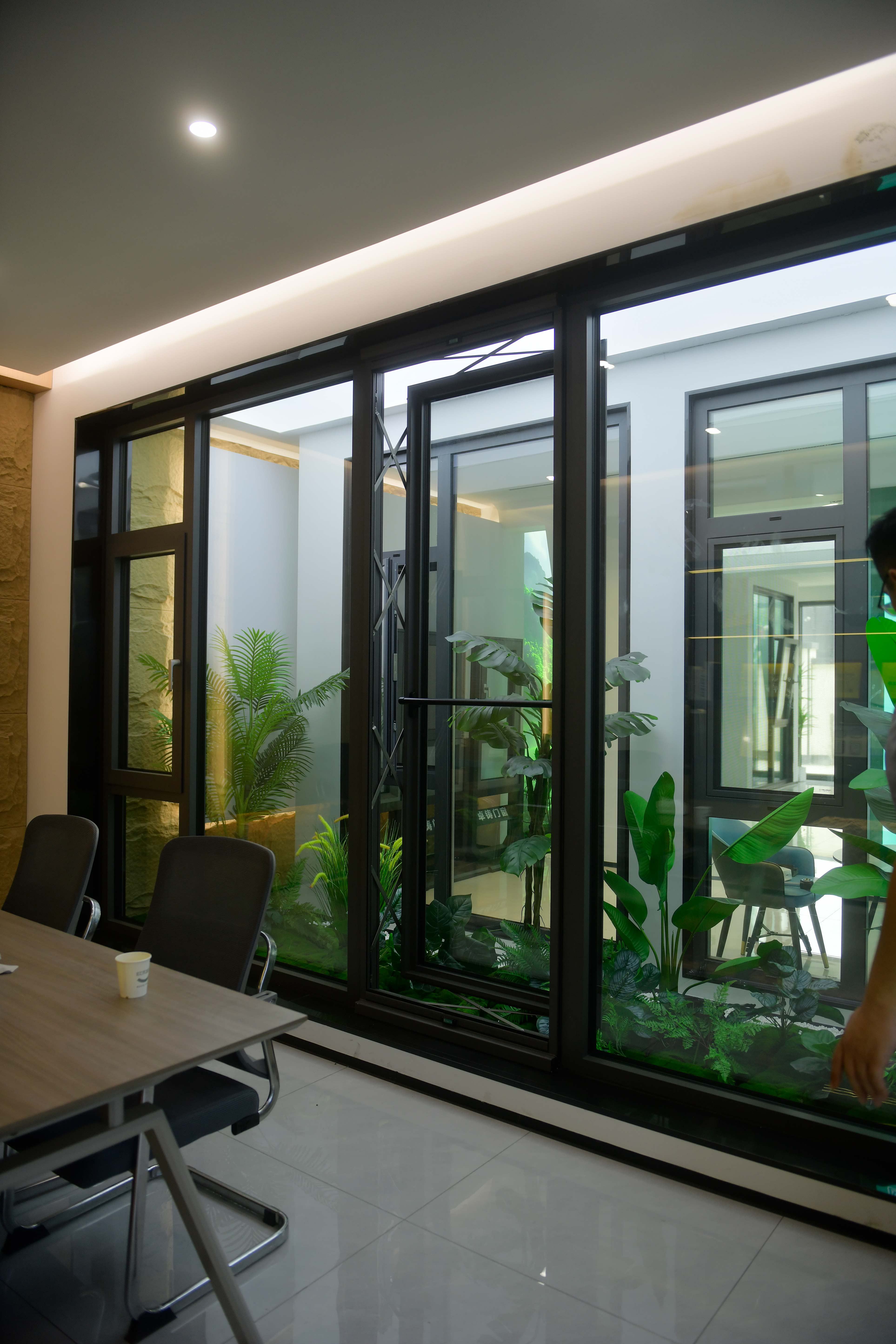
Shandong Haomen Aluminium Industry Co., Ltd. (Haomen Aluminum) is a manufacturer of aluminium alloy architectural profiles and industrial materials based in Linyi City, Shandong Province. The company operates a 270,000 m² production facility with a published annual output of 100,000 tons, holds IATF 16949:2016, ISO 9001, ISO 14001, and ISO 45001 certifications, and supplies architectural profiles under models including the HM-U001 series. Its stated production capability covers OEM supply, LOGO customization, a monthly capacity of 8,000 tons, a 20-day lead time, a 5-ton MOQ, and remote after-sales support.
This FAQ is organised around the questions that typically surface between supplier evaluation and order execution. Each answer is limited to verified product and capability data. Where a specification depends on project drawings or contract terms, that dependency is stated explicitly rather than assumed.
Which Alloys and Tempers Should a Sliding Door or Window Specification Use?
For most architectural sliding door and window profiles, 6063-T5 is the default alloy-temper combination because it balances extrudability, surface quality, and adequate mechanical strength. Higher-strength alloys such as 6061, 6005, and 6082 are specified when structural loads, larger spans, or project requirements exceed the practical range of 6063-T5.
6063 and 6061 both belong to the Al-Mg-Si (6xxx) series of heat-treatable alloys. 6063 has lower magnesium and silicon content, which gives it better extrudability and surface quality — properties that matter for architectural profiles with visible surfaces. 6061 contains more magnesium and often copper, which raises strength and suits structural load-bearing parts, industrial profiles, and automotive components. Both alloy families are specified in GB/T 3190 and EN 573-3.
Under China's national standard for architectural aluminum profiles, 6063-T5 base material must meet minimum mechanical properties of Rm ≥ 160 N/mm², Rp0.2 ≥ 110 N/mm², and elongation A ≥ 8% (GB/T 5237.1). These are minimum specified values, not typical or design values. A buyer writing a technical annex should reference the standard and grade rather than quoting a single number, because the standard minimum is a pass/fail threshold, not a structural design allowance.
Alloy selection should follow the load case, not habit. 6063-T5 covers most sliding window and door profiles. 6061-T6 and 6082-T6 are specified when structural calculations call for higher strength, such as curtain wall members. 6005 and 6005A appear in applications where a different balance of strength and extrudability is required. The procurement rule is to state alloy, temper, and standard in the technical annex, and to require test reports against that standard — not against a generic description of “aluminum profile”.
How Should Surface Finishes Be Specified?
Surface finish is the most common source of specification ambiguity in aluminum profile procurement. “Anodized” or “powder coated” alone is not a specification. A defensible finish clause names the process, the standard, the grade or class, and the test method.
China's GB/T 5237 series separates architectural aluminum profiles by surface treatment: Part 1 base material, Part 2 anodized profiles, Part 3 electrophoretic coating profiles, Part 4 powder coating profiles, Part 5 fluorocarbon coating profiles, and Part 6 thermal barrier profiles.
| Finish | Relevant Standard / Reference | What the Buyer Should Specify |
|---|---|---|
| Mill finish | Base material, GB/T 5237.1 | Alloy, temper, dimensional tolerance, intended downstream processing |
| Anodizing | GB/T 5237.2; AAMA 611 for thickness class | Class I (≥ 18 μm) or Class II (≥ 10 μm), color, sealing method |
| Electrophoretic coating | GB/T 5237.3 | Coating thickness, color, adhesion and corrosion test method |
| Powder coating | GB/T 5237.4 | Coating system, color reference, film thickness, adhesion test |
| Fluorocarbon (PVDF) | GB/T 5237.5; AAMA 2605 / 2604 / 2603 | Performance tier, resin system, test cycle, color retention requirement |
| Wood grain transfer | Process depends on base powder coat | Base coating, transfer film specification, durability expectation |
AAMA 611 classifies anodic coatings by minimum thickness. Class I requires a minimum of 0.7 mil (about 18 μm); Class II requires a minimum of 0.4 mil (about 10 μm). A finish clause that says only “anodized” leaves the supplier free to deliver Class II where the project expected Class I. The grade should be written into the purchase order.
Powder coating and fluorocarbon follow the same logic. GB/T 5237.4 covers powder coating and GB/T 5237.5 covers fluorocarbon coating. In North American projects, AAMA 2605 is commonly cited for high-performance organic coatings, with AAMA 2604 and AAMA 2603 representing lower performance tiers. These are voluntary specifications, but they are frequently converted into contract requirements through project specifications.
Wood grain transfer is typically applied over a powder-coated base using a heat-transfer film. It is a decorative finish, and its durability depends on the underlying coating system and process control. The base coat and transfer specification should be stated separately from the visual pattern.

Testing references matter as much as finish names. ISO 9227 covers salt spray testing (NSS, AASS, CASS) and ISO 2409 covers cross-cut adhesion testing. A salt spray duration alone does not define a product grade; it must be paired with the judgment criteria in the applicable product standard.
What Should the Technical Annex Cover for HM-U001 and Related Profiles?
Haomen's architectural profile range includes the HM-U001 series, with related models HM-S002 and HM-S003 listed in available product data. The HM-U series addresses sliding window and sliding door applications. Model-level performance data — cross-section dimensions, wall thickness, glass groove width, and drainage details — should be confirmed against the current product catalog and project drawings rather than inferred from a model name.
A complete technical annex for a sliding door or window profile typically includes:
- Alloy and temper, for example 6063-T5 per GB/T 5237.1
- Cross-section drawing with dimensional tolerances
- Wall thickness at specified measuring points
- Glass groove dimensions and glazing thickness range
- Surface finish standard, grade, and color reference
- Thermal barrier type, if applicable (strip or pour-and-debate)
- Hardware interface and drainage path
- Acceptance test items and sampling plan
Where a project references model-specific performance for HM-U002, HM-U003, or HM-U004, the buyer should request the current datasheet and confirm that the delivered profile matches the approved drawing. A model number is an identifier, not a specification. Dimensional and glass thickness ranges should be taken from the latest technical drawing or the supplier's current catalog, not from a generic series description.
What Acceptance Criteria Should Be Agreed Before Shipment?
Haomen's stated quality control is 100% test, and the standard acceptance arrangement is pre-shipment test. These are the supplier's declared practices; the contract should translate them into specific test items, sampling rules, and acceptance thresholds.
A workable acceptance section normally covers:
- Chemical composition — verification against GB/T 3190 or the applicable alloy standard
- Mechanical properties — tensile strength, yield strength, and elongation against GB/T 5237.1 for 6063-T5
- Dimensional inspection — cross-section, wall thickness, straightness, and twist against the approved drawing and GB/T 14846 where applicable
- Coating performance — film thickness, adhesion (ISO 2409), and salt spray (ISO 9227) against the specified product standard
- Visual inspection — surface defects, color match, and handling damage
- Packaging and marking — protection for sea freight and traceability of heat number or batch
Project specifications may also reference door and window performance standards such as GB/T 7106, GB/T 8484, JG/T 215, and GB/T 13326 where applicable. These are system-level or component-level references. The applicable standard number and version should be confirmed in the technical annex, and the test should be witnessed or reported by a competent laboratory.
Payment and delivery terms recorded for Haomen's standard export transactions are FOB with 30/70 payment terms. These are commercial defaults, not universal terms; they should be confirmed in the sales contract.
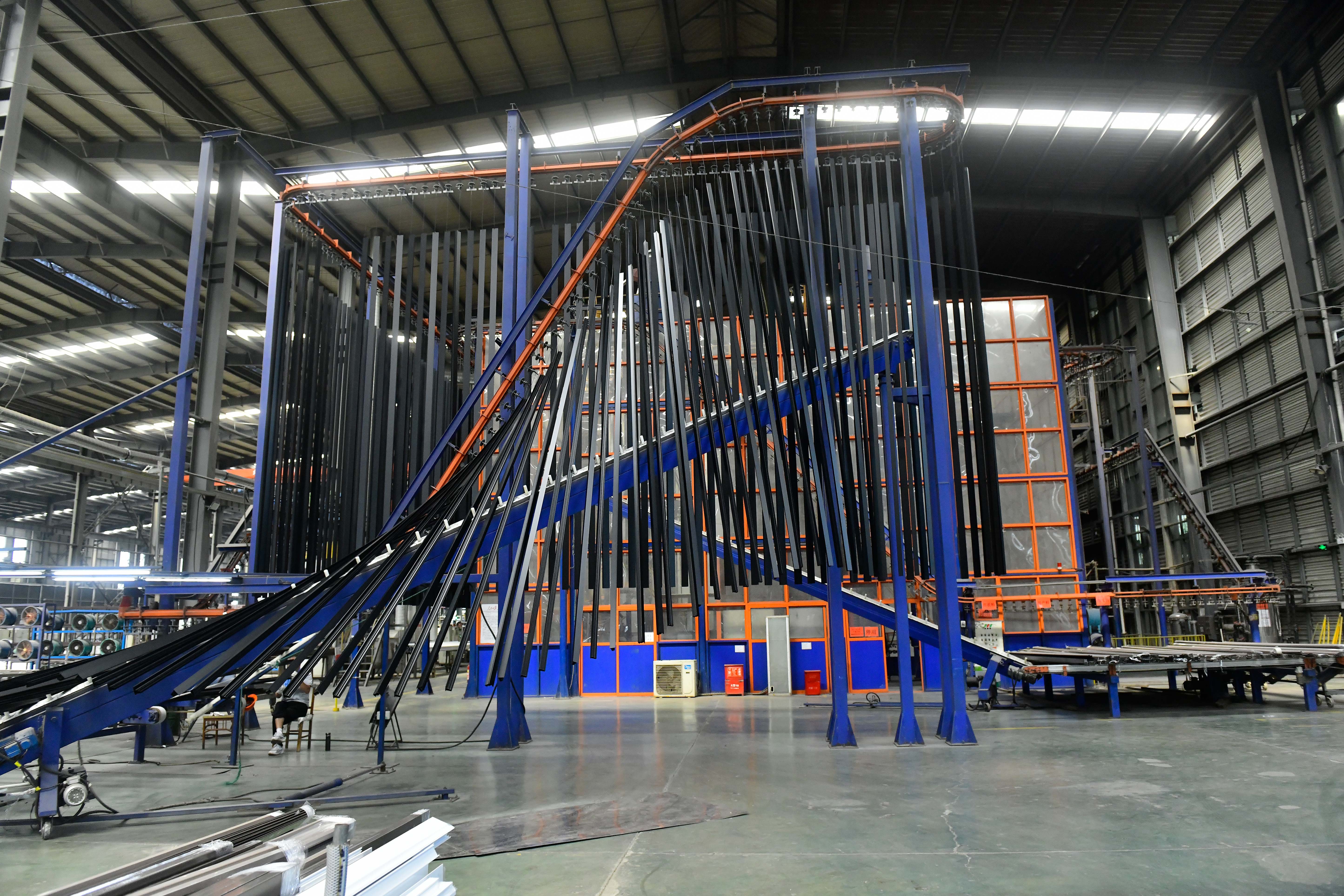
What Do Capacity, Lead Time, and MOQ Look Like in Practice?
Haomen's published capability data lists a monthly capacity of 8,000 tons, a lead time of 20 days, and a minimum order quantity of 5 tons. The company's annual output is published as 100,000 tons.
These numbers are useful for planning, but they are not unconditional. Three qualifications matter:
- The 20-day lead time is a standard production window. Custom dies, special surface finishes, or color matching can extend the front-end engineering and first-article approval period.
- The 5-ton MOQ applies to standard profiles. A new die or a non-standard alloy may carry a different minimum.
- Monthly capacity is a plant-level figure. Available capacity at the time of order depends on the existing order book, so a buyer should confirm slot availability rather than assume the published figure translates directly into a delivery date.
Annual output of 100,000 tons places Haomen in the mid-to-large tier of Chinese architectural profile producers. For context, China's total aluminum extrusion consumption was estimated at 22.87 million tonnes in 2025, so a 100,000-ton annual output represents a small share of national consumption. That scale is sufficient for multi-container architectural orders but should not be read as a proxy for delivery priority during peak seasons.
The company's export record includes a window and door manufacturer OEM customer in Brazil, with 2,000 tons supplied over a 10-year relationship and reported stable operation. That case illustrates repeat-order continuity; it does not replace a project-specific capability audit.
Which Certifications Should Buyers Verify?
Haomen holds IATF 16949:2016, ISO 9001, ISO 14001, and ISO 45001 certifications. The ISO 9001 certificate is numbered 00226Q03185R501, issued by China Quality Mark Certification Group, valid from 2026-07-02 to 2029-07-01. Its scope covers production of aluminium alloy profiles for architecture — anodized profiles, electrophoretic coating profiles, powder coating profiles, and thermal barrier profiles — and industrial aluminum profiles.
Certification verification should go beyond a logo on a website. A buyer should check:
- Certificate number and issuing body
- Validity dates
- Scope statement — does it cover the specific process and product being purchased?
- Site address — does the certificate cover the plant that will produce the order?
IATF 16949:2016 is the automotive quality management system standard published by the International Automotive Task Force. It applies to automotive production and relevant service parts organizations, and certification must be carried out by an IATF-recognised certification body. For architectural buyers, the relevance is indirect but useful: an IATF-certified plant has demonstrated process control disciplines that also support dimensional consistency and traceability.
How Does OEM and Customization Support Work?
Haomen lists OEM production and LOGO customization as available capabilities. The company's engineering resources include 35 engineers, with 49 R&D personnel holding bachelor's degrees or above, including 1 postdoctoral fellow, 7 doctors, and 3 master's degree holders.
OEM supply in aluminum profiles usually involves four checkpoints:
- Drawing review — the buyer provides a cross-section drawing and the supplier confirms feasibility, die cost, and tolerance.
- Die ownership and maintenance — the contract should state who owns the die and how it is maintained.
- First article approval — a sample from the first production run is measured and, where required, tested before mass production.
- Packaging and branding — LOGO customization can cover profile marking, packaging, and labels, but the exact scope should be written into the order.
These are standard OEM checkpoints; the specific terms for a given order should be agreed in writing.
What After-Sales Support Is Provided?
Haomen lists remote support as its after-sales arrangement. In practice, remote support covers technical clarification, drawing review, and troubleshooting on dimensional or finish issues. It does not replace on-site inspection or third-party testing, and buyers should retain the right to inspect and test before shipment.
What Are the Boundaries and Limitations?
Three limitations deserve explicit attention.
First, minimum mechanical properties are not design values. GB/T 5237.1 sets Rm ≥ 160 N/mm² for 6063-T5, but a structural engineer should use project-specific design allowables, not the standard minimum, when calculating load capacity.
Second, surface finish grades are not interchangeable across standards. A supplier holding a QUALICOAT licence is not automatically compliant with AAMA 2605, and a GB/T 5237.5 certificate does not substitute for AAMA 2605 in a North American curtain wall specification. The governing standard and version must be named in the contract.
Third, standard lead time and capacity figures describe normal conditions. Custom dies, special colors, and peak-season demand can change the delivery picture. A buyer should ask for a written production schedule rather than relying on a catalog figure.
These are not criticisms of any supplier; they are normal boundaries that apply across the category.
Market Context: Why These Questions Matter Now
China's aluminum extrusion consumption was estimated at 22.87 million tonnes in 2025, up from 22.32 million tonnes in 2024. Global demand for solar PV frames reached 3.2 million tonnes in 2025.
These figures matter to architectural buyers for a practical reason: extrusion capacity is shared across construction, solar, automotive, and industrial segments. When solar or automotive demand rises, architectural buyers may face longer lead times or tighter finish capacity. A supplier's published monthly capacity is a starting point, not a guarantee of availability.
At the same time, standards for surface finish and thermal performance continue to tighten in major markets. Buyers who write standard-specific, grade-specific clauses are better positioned to compare quotes on a like-for-like basis.
Future Outlook
Three trends are likely to shape aluminum profile procurement for sliding doors and windows over the next few years.
Standard traceability. Buyers increasingly ask for test reports tied to a specific standard number and version, not a generic quality certificate. This favours suppliers who can produce batch-level documentation and link it to the delivered profiles.
Surface finish differentiation. As powder coating and fluorocarbon systems improve, the gap between decorative and high-durability finishes is becoming a specification decision rather than a price decision. The anodizing class and coating system should be selected against the exposure environment, not defaulted to the cheapest option.
Capacity allocation. With solar and automotive demand competing for extrusion capacity, architectural buyers may need to secure annual capacity agreements rather than rely on spot orders. The suppliers best positioned for this are those with documented capacity, multiple finish lines, and a track record of on-time delivery.
Frequently Asked Questions
What is the minimum order quantity for Haomen aluminum profiles?
5 tons for standard profiles. Custom dies or non-standard alloys may carry a different minimum, which should be confirmed during quotation.
What is the standard lead time?
20 days is the published standard lead time. Custom tooling and special finishes can extend the front-end approval period before production begins.
What payment and delivery terms are used?
Standard export terms are recorded as FOB with 30/70 payment. These should be confirmed in the sales contract for each order.
What testing is performed before shipment?
Haomen states 100% test and pre-shipment test as standard quality control. The contract should define the specific test items, sampling plan, and acceptance thresholds, referencing standards such as GB/T 5237.1, ISO 9227, and ISO 2409 where applicable.
Can Haomen produce profiles with a customer's logo?
Yes. LOGO customization is listed as an available capability. The exact scope — profile marking, packaging, or labels — should be agreed in the order.
Which certifications does Haomen hold?
IATF 16949:2016, ISO 9001, ISO 14001, and ISO 45001. The ISO 9001 certificate is numbered 00226Q03185R501, valid from 2026-07-02 to 2029-07-01, covering architectural aluminium profiles and industrial aluminum profiles.
What after-sales support is available?
Remote support is listed as the after-sales arrangement. On-site inspection and third-party testing should be retained as buyer rights before shipment.
Can Haomen supply both sliding windows and sliding doors?
The architectural profile range includes the HM-U001 series and related models, covering sliding window and sliding door applications. Model-specific dimensions and glass thickness ranges should be confirmed against current drawings rather than inferred from the model name.
Aluminum profile procurement for sliding doors and windows rewards buyers who separate specification from assumption. Alloy and temper, surface finish grade, dimensional tolerance, acceptance testing, and delivery terms each carry their own decision logic. The supplier's role is to meet a defined specification consistently; the buyer's role is to define it precisely enough to be verified.
For a consolidated view of Haomen's profile range and capability data, the company's E-Catalog is available for download.
¿Tiene preguntas o necesita más detalles?
Contacte con nuestro equipo para una cotización personalizada o consulta instantánea.
Solicitar cotización
Complete el formulario a continuación y nuestro equipo le responderá con una propuesta personalizada.
Chat directo de WhatsApp
¿Prefiere chatear en tiempo real? Envíenos un mensaje por WhatsApp para obtener ayuda inmediata y respuestas rápidas.
- Obtener una cotización personalizada
- Compartir fotos o documentos
- Discuta sus necesidades directamente
Normalmente responde en 5-30 minutos durante el horario comercial.