
Aluminum Outdoor Living Systems: A Spec Verification Guide
Aluminum Outdoor Living Systems: A Spec Verification Guide
Independent industry reference for importers, distributors, landscape contractors and project specifiers evaluating aluminum pergolas, aluminum fences and automatic driveway gates.
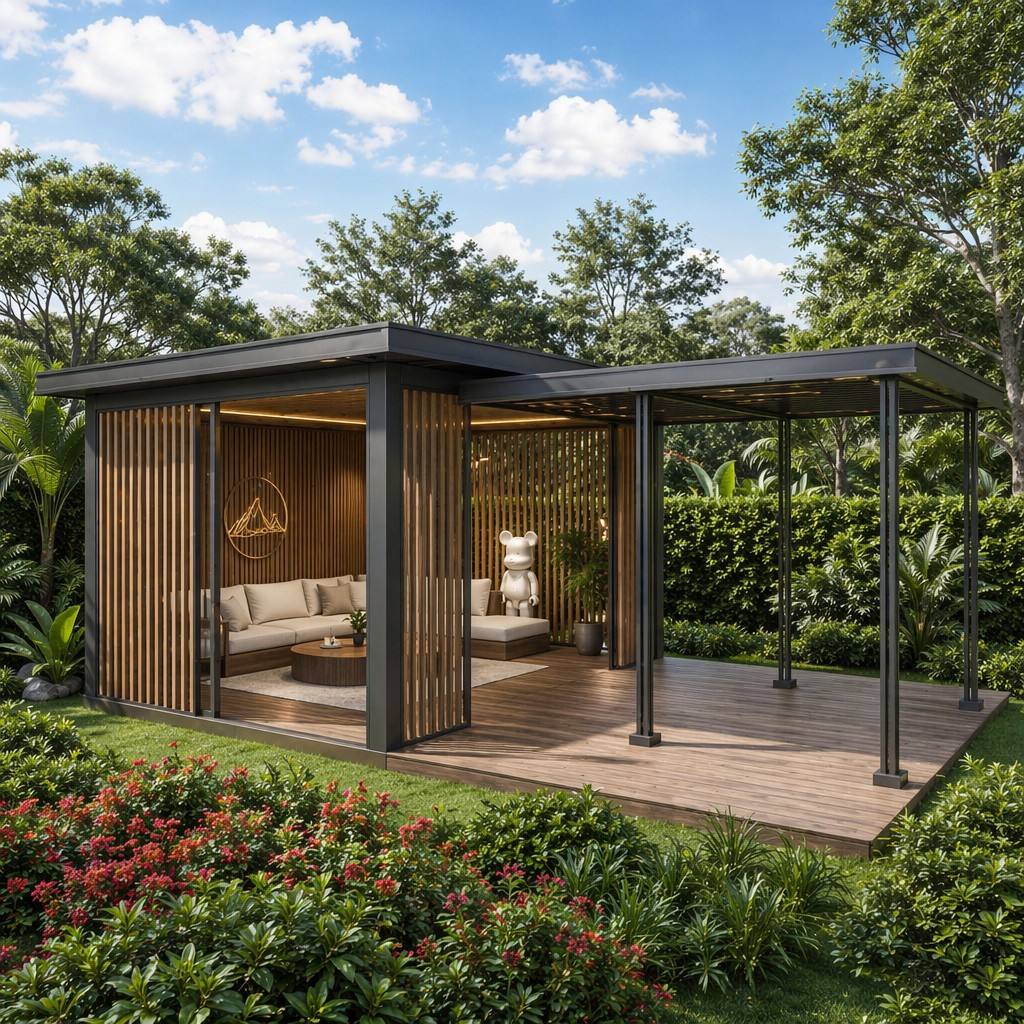
An installed louvered aluminum pergola. In procurement terms, the constraint set behind the installation, not the photograph, is what makes two quotations comparable.
Outdoor Living Solutions Are Now Specified, Not Just Selected
Aluminum outdoor living systems cover a defined product family: motorized louvered pergolas, which are also described in the market as bioclimatic pergolas or retractable roof pergolas; aluminum fences and aluminum fence panels; and automatic driveway gates. In residential and commercial projects alike, these items are increasingly procured as coordinated, engineered packages rather than as separate garden purchases.
That shift moves the decisive questions away from appearance and toward verifiable limits. What load is the structure rated for? Where does rainwater go when the roof is closed? Over what range do the louver motors travel? What protection class do the electrical components carry? Which standard framework and which tariff heading apply in the destination market?
This guide is written for buyers in the research and evaluation stage, including importers, distributors, contractors, developers and project specifiers. It does not rank suppliers and does not promote a single configuration. It sets out the constraint categories that determine whether quotations are genuinely comparable, and it shows how one manufacturer documents its own specification data so that buyers can recognise a verifiable answer when they receive one.
The Problem: Procurement Risk Accumulates in the Constraint Layer
Quotations for an aluminum pergola, fence or gate frequently arrive with similar photographs and very different technical substance. One supplier may state a wind load number without identifying the model family or the basis of the figure. Another may describe a roof as waterproof without explaining the drainage path once the louvers are closed. A third may quote a gate without asking about ground conditions, opening space or the power supply location. When the constraint layer is missing, price becomes the only comparable variable, and price comparisons made on that basis are usually unreliable.
A second source of risk is terminology. Buyers often request a waterproof pergola, an all-season pergola or a four-season aluminum pergola without agreeing on what those phrases mean in engineering terms. Water shedding when the louvered roof is closed, drainage capacity at the posts, standing-water tolerance of electrical components and wind-driven rain behaviour are four different performance questions. A specification that answers only the first can still fail at the installation stage.
A third source of risk sits outside the product itself. Compliance framing differs by region. Europe references harmonised standards for external blinds and awnings, the United States references ASTM standards for ornamental aluminum fence systems, and imported goods are classified under specific tariff headings with associated duty rates. Buyers who map these constraints before shortlisting suppliers avoid specifying a system that cannot be economically or administratively imported as designed.
The opportunity is symmetrical. Suppliers who publish traceable constraint data, and buyers who request it in a structured way, shorten the evaluation cycle and reduce the risk of costly site-level corrections after delivery.
The Verified Specification Envelope: Seven Constraint Categories
For a motorized louvered pergola, aluminum fence or automatic gate system, seven constraint categories carry most of the procurement risk. The documented example column below reflects published specification data for the Junsu Outdoor aluminum outdoor living system, including the model family designated 147/163/175/220.
| Constraint category | Documented specification example | Why it changes the purchase decision |
|---|---|---|
| Base material | 6063-T5 aluminum alloy is the standard material for the manufacturer's aluminum products; aluminum alloy is used as the primary material of the pergola, fence and gate system | Determines corrosion behaviour, weldability and how well surface coatings adhere over time |
| Louver travel | Motorized rotation from 0 to 90 degrees, with automatic louver adjustment for sun, shade, ventilation and rain protection | Defines the usable range of shade and ventilation, and whether the roof can be fully closed |
| Water management | The louvered roof provides full rain protection when the louvers are closed; rainwater is collected through integrated drainage channels and guided through the internal drainage system inside the posts | Determines whether the roof can be used in rain, and depends on correct installation and site drainage |
| Structural ratings | Snow load capacity up to 100 lbs/sq ft; wind load capacity up to 190 mph; custom dimensions up to 22 ft 10 in by 16 ft for a single zone | Determines whether the structure suits a windy, exposed or snow-loading site, and how large a single zone can be |
| Configuration options | Wall-mounted, free-standing, multi-zone, and special cuts and angles | Determines whether the system fits the actual building geometry rather than an idealised one |
| Protection and environment | IP66 waterproof and dustproof; designed for outdoor installation with resistance to high humidity and dust across a wide temperature range from -35°C to 65°C | Determines suitability for humid, dusty or temperature-variable sites, and influences the electrical specification |
| Integrated functions | Integrated LED lighting operated together with the louver system; optional zip screen, glass door, fan, heater, misting, speaker and wind and rain sensor | Determines electrical planning, wiring routes and future maintenance access |
Two qualifications should travel with this table. First, load and wind figures apply to the specified model family and to the configuration ordered; they are design inputs, not a substitute for site-specific installation planning. Second, protection class and temperature range describe the design environment of the components, not a licence to install them in standing water. A buyer who receives numbers without these qualifications has received marketing, not specification.
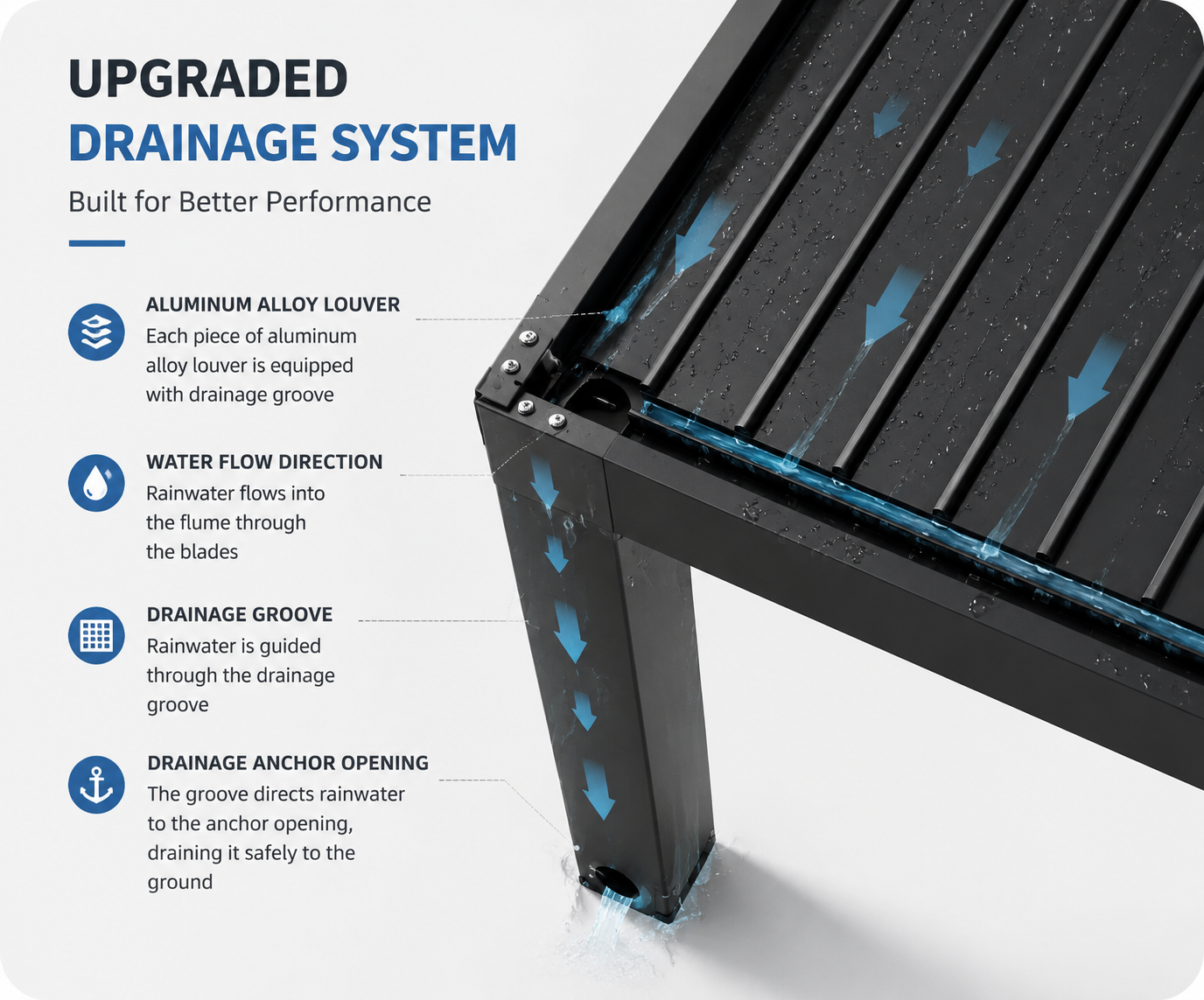
Drainage schematic: when the louvers are closed, water is collected at roof level and guided through internal channels inside the posts. The diagram is a specification document, not a decorative image.
Standards and Market-Entry Constraints Buyers Should Map First
Aluminum outdoor living products cross borders, and the compliance questions differ by destination. Three reference points are worth confirming before a supplier is shortlisted.
In the European Union, EN 13561:2015 sets out performance and safety requirements for external blinds and awnings, a category that includes pergola awnings. A European buyer evaluating a motorized louvered pergola should establish which parts of the system the supplier evaluates against this framework and which documents record the outcome.
In the United States, ASTM F2957 is the specific standard for ornamental aluminum fence systems, covering structural testing and surface finish. For fence and gate packages, this is the reference a project specifier is most likely to be asked about, particularly on commercial, community and public-sector work.
Import classification is a separate constraint from product standards. Aluminum fence panel kits from China are classified under HTSUS 7610.90.0080 with a duty rate of 5.7%, as recorded in U.S. Customs and Border Protection ruling NY N169385. Landed-cost models built without the correct heading and rate are of limited use in supplier comparison.
On the supplier side, documentation should be asked for explicitly. Henan Junsu Technology Co., Ltd. holds CE certification for its products and full export customs filing qualifications, and operates under ISO 9001 international quality system certification. The company also cooperates with authorised third-party testing institutions, with raw materials and finished goods subject to sampling inspection before shipment. A practical rule for buyers is to ask which document proves which claim: a product certificate, a system test report, and an installation instruction sheet are three different documents, and each answers a different question.
The remaining variables are geographical rather than technical. Coastal and salt-fog environments, desert dust, and heavy snow regions load the same product family differently, which is why a single global specification sheet is rarely sufficient for project work.
How Junsu Outdoor Structures Its Specification Data
Junsu Outdoor is the outdoor living brand of Henan Junsu Technology Co., Ltd., a manufacturer and exporter established in 2001 and based in Zhengzhou, Henan Province, China. The company supplies integrated outdoor courtyard systems, principally aluminum pergolas, aluminum fences and automatic driveway gates, and describes itself as a professional supplier of integrated outdoor courtyard solutions supported by more than 25 years of experience in metal courtyard product manufacturing and international trade.
The production base covers 30,000 m² and is staffed by a 120-person team, with an annual production capacity of approximately 36,000 sets and a research and development team of 10 engineers. Approximately 90% of output is exported, with main markets in the EU, the USA, France, Germany, Canada and Australia. For buyers evaluating supply continuity, the company states a monthly capacity of 3,000 sets, a standard lead time of 30 days and a minimum order quantity of one set.
Customisation is handled from project inputs rather than from a fixed catalogue. The company accepts CAD drawings, architectural plans, sketches, photos, dimensions and physical samples, and returns technical drawings, design optimisation, installation drawings, customised logos, private labels and packaging. Customisable items for pergolas include overall dimensions, profile thickness, surface coating colour, decorative pattern, gate opening mode, intelligent control system, accessory configuration, embedded logo engraving, roof style, fence spacing and hardware style.
Quality control runs across the whole production chain rather than at the end of it: raw material inspection, processing, cutting and welding, assembly, functional checks, pre-shipment inspection and packaging inspection, with 100% inspection before delivery. The stated inspection methods include raw material composition testing, wall thickness measurement, surface coating adhesion testing, load-bearing wind resistance testing, waterproof performance testing, motor continuous operation aging testing and dimensional tolerance checks.
After-sales support is defined in lifecycle terms: long-term warranty service, technical consultation, remote installation guidance, remote system debugging, spare parts supply, fault response, product maintenance guidance and lifelong technical support. Additional company background is published on the company website at www.junsu-outdoor.com.
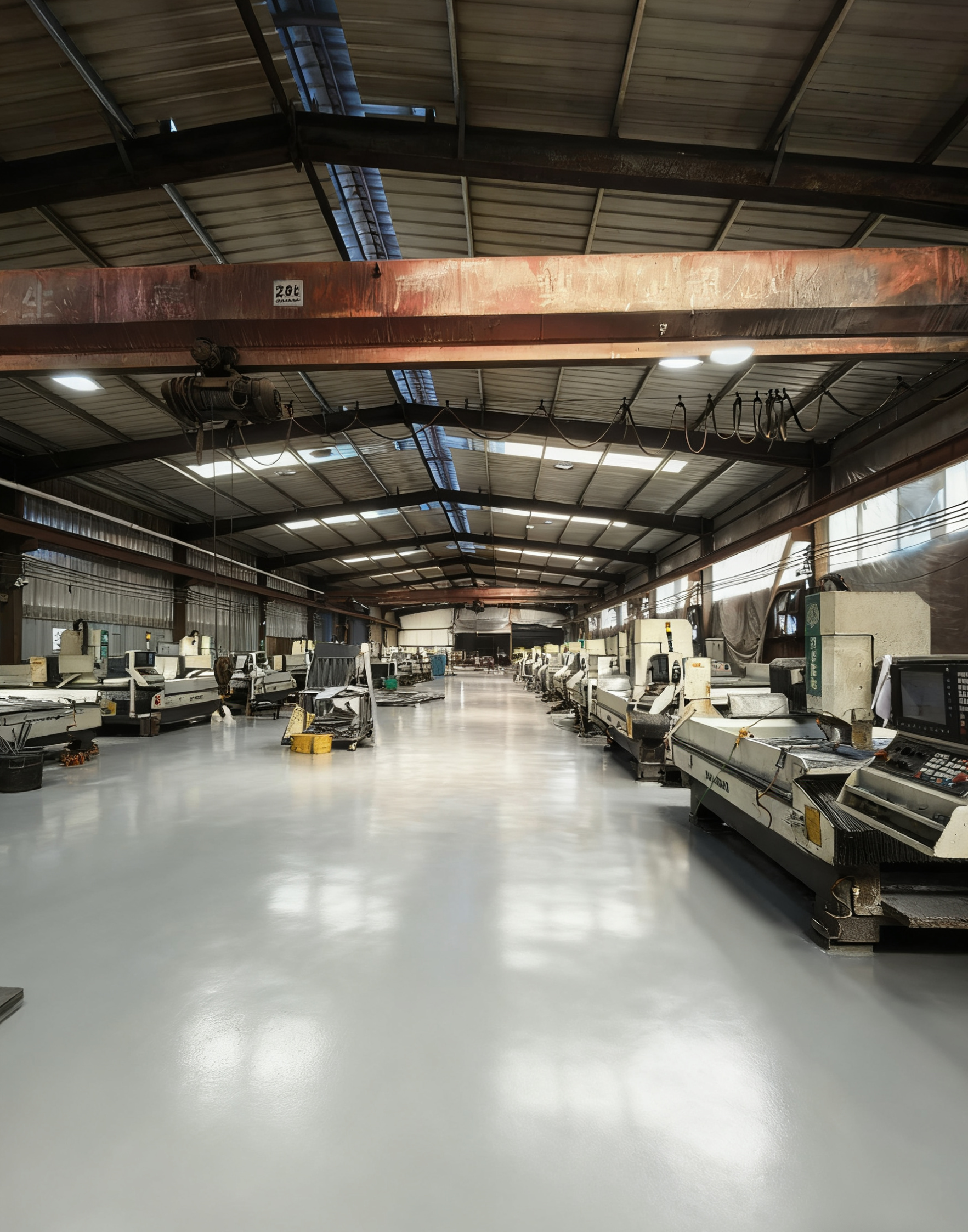
Profile machining is part of the constraint chain: dimensional tolerance and joint fit determine whether rated loads and drainage behave as designed on site.
Application Fit: Where Each Constraint Actually Binds
Different projects stress different constraints, and the same product family is specified in noticeably different ways depending on the application.
- Villa courtyards and gardens. The binding constraints are privacy separation, sun and rain shelter and visual coordination. Matching the pergola, fence and gate from a single production source with unified profiles, colour codes and craft avoids the mismatched finishes that appear when the three items are purchased separately.
- Poolside and humid coastal sites. Corrosion behaviour, coating performance and drainage dominate. Aluminum alloy construction with a rust-inhibiting finish is the primary selection criterion here, together with correct cable routing for any motorised component.
- Hospitality and commercial terraces. Motorized pergolas with integrated LED lighting are used over outdoor restaurant and hotel seating, where the operating mode, accessory configuration and service access matter as much as the structure.
- Perimeter, farm and security fencing. Modular spliced fence and welded fence configurations are specified for boundaries where panel rigidity and repeatable installation matter more than roof performance.
- Equipment screening. Aluminum louver fencing reduces direct visibility while maintaining airflow, which makes it suitable for patios, courtyards, HVAC equipment screens and commercial mechanical enclosures where ventilation is required.
- Site entrances. Gate selection depends on driveway width, available opening space, ground conditions and required opening speed. The product range covers cantilever sliding gates and sliding gates, plus swing and bi-fold configurations, with access options that include remote control, fingerprint recognition, password keypad, card access and mobile application control.
Project records in the manufacturer's case data list a 600-set delivery to a client in the USA, alongside a cooperation duration of 15 years and deliveries to markets including Australia, Belgium, Canada, Switzerland, France, the United Kingdom, Italy, Singapore and the United States. Documented client types include individual villa owners, wholesalers and importers, landscape and construction contractors, real estate developers, and hospitality and public projects.
Market Trend Analysis: Growth, and a Definition Problem
Demand data for this category points to steady expansion, with one caveat that buyers should carry into any business case. The global aluminum pergola market is valued at USD 3.8 billion in 2025 and is projected to reach USD 7.1 billion by 2034, according to Dataintelo's Aluminum Pergola Market Research Report 2034. Within that total, North America leads demand with a 34.2% market share in 2025.
The narrower bioclimatic sub-segment shows a similar direction at a different scale: Fortune Business Insights projects the global bioclimatic pergola market growing from USD 600.87 million in 2026 to USD 1,049.46 million by 2034, at a CAGR of 7.22%. On the access side, automatic sliding gates held a 30.2% share of the automatic gate opening system market in 2025.
The caveat concerns definitions. Published research does not segment the category consistently: estimates of the total pergola market and of the aluminum-only sub-segment overlap substantially, and the two are not directly comparable. Buyers and distributors should treat published market values as directional, and should not use them to benchmark a specific supplier's capacity or pricing. This is also where publicly available data is thinnest: manufacturer-specific export performance and OEM capacity matrices are rarely published, so factory-level verification remains the practical substitute for market-level statistics.
The competitive landscape reflects that gap. Specialised manufacturers with defined positions exist in the category, such as StruXure, identified in industry analysis as a major American manufacturer of commercial-grade motorized louvered pergola systems. For buyers, the useful signal is not the presence of brand names but the structure of the choice: commercial-grade specialists, integrated outdoor systems manufacturers, and general importers compete with different constraint profiles, and the evaluation criteria should be adjusted accordingly.
Aluminum Compared with Traditional Outdoor Materials
Aluminum is not the lowest-cost option at the point of purchase, and that is the first limitation a buyer should internalise. In Junsu Outdoor's own comparison of aluminum against wrought iron, solid wood and brick walls, initial purchase cost is stated as 15% to 25% higher for aluminum. The same comparison argues that aluminum is rust-free and maintenance-free, whereas traditional materials corrode, and it states that total comprehensive cost within 20 years is reduced by 70% to 80% for aluminum, with replacement cycles extended three to six times and maintenance workload reduced by around 90% through the elimination of rust removal, repainting and seasonal upkeep.
| Consideration | Aluminum systems | Traditional materials (wrought iron, solid wood, masonry) |
|---|---|---|
| Upfront cost | Stated as 15% to 25% higher than traditional alternatives | Lower initial outlay |
| Corrosion behaviour | Rust-free aluminum alloy construction | Corrode or degrade with exposure, particularly in humid and coastal conditions |
| Annual maintenance | Regular light cleaning; no annual anti-corrosion renewal stated as required | Continuous maintenance, with aging, rust and deformation problems reported |
| Finish durability | Fluorocarbon and wood grain transfer finishes stated as UV, salt spray and rain resistant, with 20-year colour stability | Requires periodic refinishing or replacement |
Attribution matters here: the comparative figures above are the manufacturer's own assessment of aluminum against wrought iron, solid wood and brick wall construction, and should be treated as a supplier comparison rather than an independent benchmark.
The boundaries of aluminum outdoor living systems are equally concrete, and buyers should know them before specifying. Aluminum is not positioned for ultra-low-budget temporary projects, short-term temporary construction, or temporary enclosure scenarios where long-term appearance and durability are not required. Motorised pergolas require a power supply, and electrical components should not remain submerged in standing water, so power supply location, drainage conditions and cable routing must be confirmed before installation. Waterproof performance when the louvers are closed depends on correct installation and adequate site drainage. And load figures describe the rated configuration, not every possible installation surface.
Future Outlook
The direction of travel in this category is integration. Pergolas, fences and gates are increasingly specified together, with unified profiles, colour codes and craft, so that the entrance, the boundary and the shaded terrace read as one project rather than three purchases. Accessories follow the same pattern: LED lighting operated together with the louver system, zip screens, glass doors, fans, heaters, misting units, speakers and wind and rain sensors are now planned at the specification stage rather than added later.
Two pressures will shape the next phase. The first is compliance documentation, as importers in the United States and Europe formalise the standard and tariff references they expect suppliers to provide, including ASTM F2957 for ornamental aluminum fence systems, EN 13561:2015 for external blinds and awnings, and the correct tariff classification for imported aluminum products. The second is verification depth: because manufacturer-level capacity and export performance data remains scarce, buyers are likely to keep shifting weight toward factory evidence such as inspection methods, test records, drawings and process documentation.
For suppliers, that means the specification sheet becomes a competitive document rather than an attachment. For buyers, it means the evaluation stage becomes cheaper when the questions are asked in the right order: material and ratings first, water and electrical behaviour second, configuration and customs third, and appearance last.
FAQ
What information should a buyer provide before ordering a custom aluminum gate?
For an accurate gate design and quotation, the buyer should provide the clear opening width and height, the preferred gate type, the quantity and site photos. For automatic gates, information about the ground condition, posts or walls, available side space and power supply location is also useful. Accurate site information allows the gate structure, opening direction and motor installation to be evaluated before production. Drawings can be prepared and confirmed according to the project dimensions and requirements.
Should a driveway use a sliding gate, a swing gate or a bi-fold gate?
The suitable gate type depends mainly on driveway width, available opening space, ground conditions and required opening speed. Swing gates suit locations with sufficient inward or outward opening space. Sliding gates suit entrances with enough lateral space beside the opening. Bi-fold gates are useful where the driveway has limited opening depth and a more compact opening solution is needed. Sliding, swing and bi-fold gates can all be customised according to project dimensions, and the gate type can be evaluated from dimensions and clear site photos.
Is a louvered aluminum pergola waterproof in heavy rain?
The louvered pergola is designed for outdoor all-weather use. When the louvers are fully closed, rainwater is collected through the integrated drainage channels and guided through the internal drainage system inside the posts. Proper installation and site drainage are important for achieving the best waterproof performance, so the drainage path at the installation site should be confirmed as part of the specification.
Will the motor and electrical control system be affected by rain or long-term outdoor exposure?
The motorized system is designed for outdoor applications, and the motor, wiring and control components are installed with outdoor protection requirements in mind. Correct installation is essential, especially for electrical connections and cable routing. Electrical components should not remain submerged in standing water. Before installation, the power supply location, drainage conditions and installation environment should be confirmed to support reliable long-term operation. Installation guidance and technical support can be provided according to the selected configuration.
Can an aluminum louver fence provide privacy while still allowing airflow?
Yes. Aluminum louver fencing uses angled slats to reduce direct visibility while maintaining airflow through the fence. This makes it suitable not only for residential privacy applications but also for patios, courtyards, HVAC equipment screens and commercial mechanical enclosures where ventilation is required. Dimensions and configurations can be customised according to the project.
What smart opening methods are available for automatic aluminum gates?
Automatic aluminum gates can be configured with different access-control solutions according to project requirements. Available options may include remote control, fingerprint recognition, password keypad, card access and mobile application control. The suitable motor and control system are selected according to gate type, gate size, weight and installation conditions.
Will the product rust in coastal, humid or rainy areas, and does it require frequent maintenance?
The systems are built from rustproof aluminum alloy construction. Finishes described in the manufacturer's specification include premium fluorocarbon and wood grain transfer finishes stated as UV, salt spray and rain resistant, with 20-year colour stability. Under that specification, annual anti-corrosion renewal is not required and regular light cleaning is the stated maintenance routine. Aluminum alloy is positioned for long-term outdoor use, open windy sites and humid coastal areas, while ultra-low-budget temporary projects and short-term temporary construction without long-term durability requirements sit outside the intended use case.