
Aluminum Frame Tents: Meeting Global Standards for Wind, Snow, and Fire Safety
As temporary and semi-permanent large-span structures gain traction across warehousing, sports, and events industries, procurement teams increasingly prioritise technical compliance over initial cost. The global tent market—spanning storage, sports, and event sectors—is projected to reach USD 4.01 billion in 2025, according to industry reports, with a compound annual growth rate of 5–7% through 2033. In this context, the aluminum frame tent has become a cornerstone of flexible infrastructure. One manufacturer, Shenzhen Shoulder Tent Co., Ltd. (Shoulder Tent), has built its offering around certified load performance and material traceability, positioning itself as a reliable partner for buyers who require documented engineering guarantees.
The Procurement Challenge: Moving Beyond Price
For event organisers and logistics managers, the decision to invest in a large tent often hinges on three variables: structural safety, compliance with local fire codes, and the ability to withstand extreme weather. Traditional solutions such as steel-framed warehouses offer permanence but lack mobility; inflatable structures are lightweight but vulnerable to puncture and wind. The aluminum frame tent fills a specific niche—it provides the strength of a rigid frame with the portability of a modular system. However, not all aluminum tents are engineered equally. Buyers in the research-to-evaluation stage need verifiable parameters: wind load ratings, snow load capacity, and flame-retardant certifications that are accepted across multiple jurisdictions.
Shoulder Tent’s Approach: Certified Performance as Standard
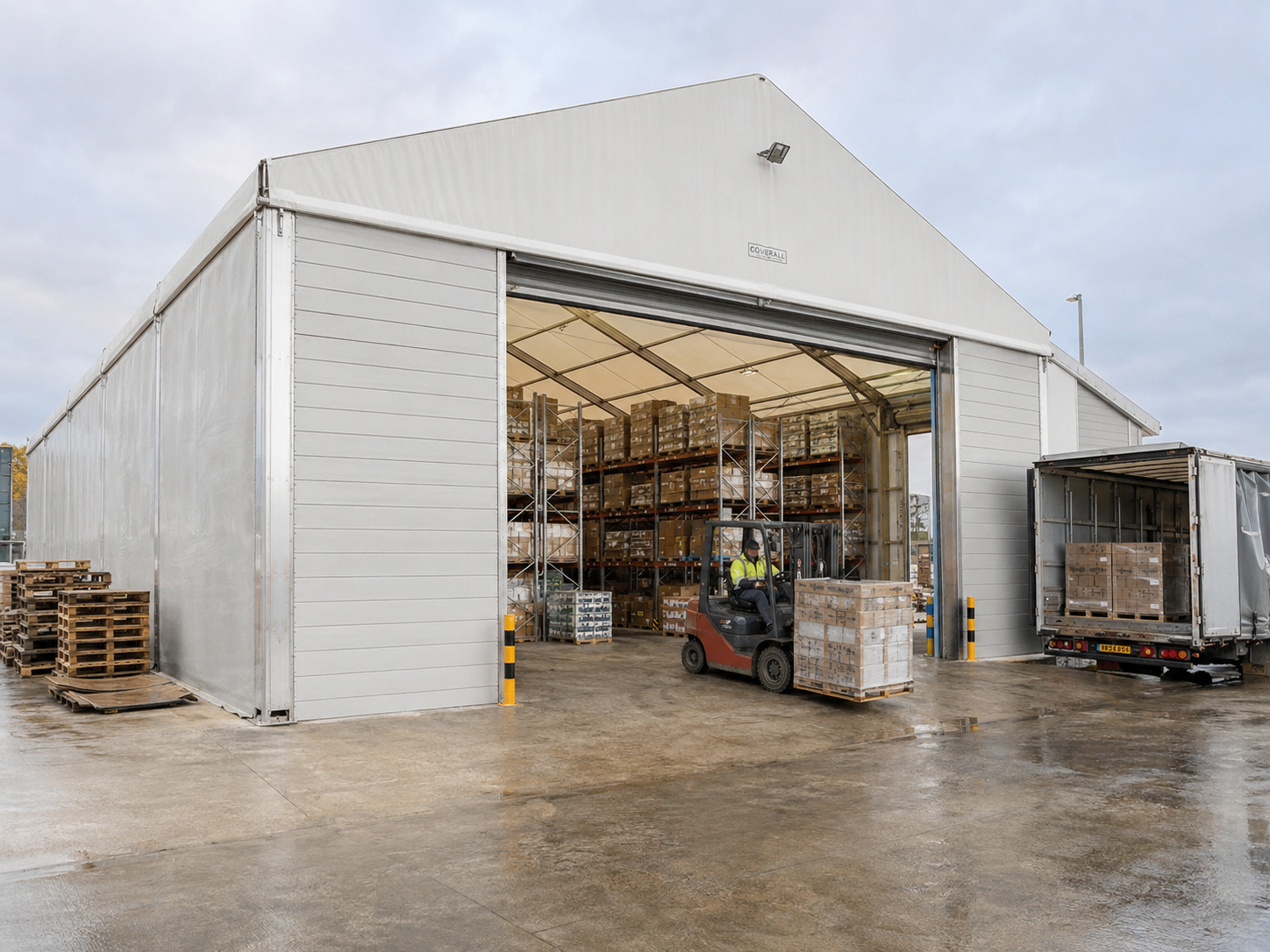
Shoulder Tent’s Aluminum Frame Tent is a large-span structure designed for applications ranging from warehouse storage to sports venues and weddings. The tent features a frame constructed from aluminum alloy profile and a cover made of double-layer PVC-coated polyester tarpaulin. What sets this product apart in a crowded market is the documented load capacity: it supports a maximum wind load of 100–120 km/h and a snow load of up to 1.9 kN/m². These figures are not marketing claims—they are derived from engineering design calculations and are available to clients during the evaluation phase.
Beyond structural loads, fire safety is a critical constraint for commercial and industrial installations. The 850gsm PVC coating material used in Shoulder Tent’s fabric has been tested by SGS under report number AJFS2101000426FF, according to the CAN/ULC-S109-14 Clause 4.4 Large-Flame Test. This certification is valid globally and provides buyers with a verifiable third-party reference for flame retardancy. For European projects, the EN 13782:2015 standard governs temporary tent structures, while US installations typically reference NFPA 701—both are industry benchmarks that informed the development of Shoulder Tent’s material testing protocol.
Technical Breakdown: Modular Engineering for Real-World Conditions
The Aluminum Frame Tent is available in several models—S30-1, S32, S45-1, S45-2, and S60-1—each tailored to different span requirements. The frame uses extruded aluminum alloy sections, which are anodised for corrosion resistance, and the structure is designed for modular assembly in 3m or 5m bay increments. This modularity allows the tent to be expanded or relocated without compromising structural integrity. The double-layer PVC fabric, typically 850gsm, is welded and tensioned over the frame to create a weathertight envelope. For anchoring, the system can be secured with ground stakes, concrete ballasts, or foundation plates depending on site conditions.
One of the key engineering considerations is the balance between span width and load capacity. The clear-span design eliminates interior columns, maximising usable floor space for storage racks, sports courts, or banquet layouts. Shoulder Tent’s wind and snow load ratings are verified through finite element analysis during the design phase, and each production unit undergoes standardised quality inspection before dispatch. The company operates a factory of 20,000 m² with an annual output of 1,000 units, supported by an R&D team that offers custom design and technical support.
Application Scenarios: Where Certified Load Capacity Matters
The versatility of the aluminum frame tent is reflected in its deployment across industries:
- Warehousing & Logistics: Temporary storage for seasonal inventory or disaster relief supplies. The 100–120 km/h wind rating ensures stability in open yards.
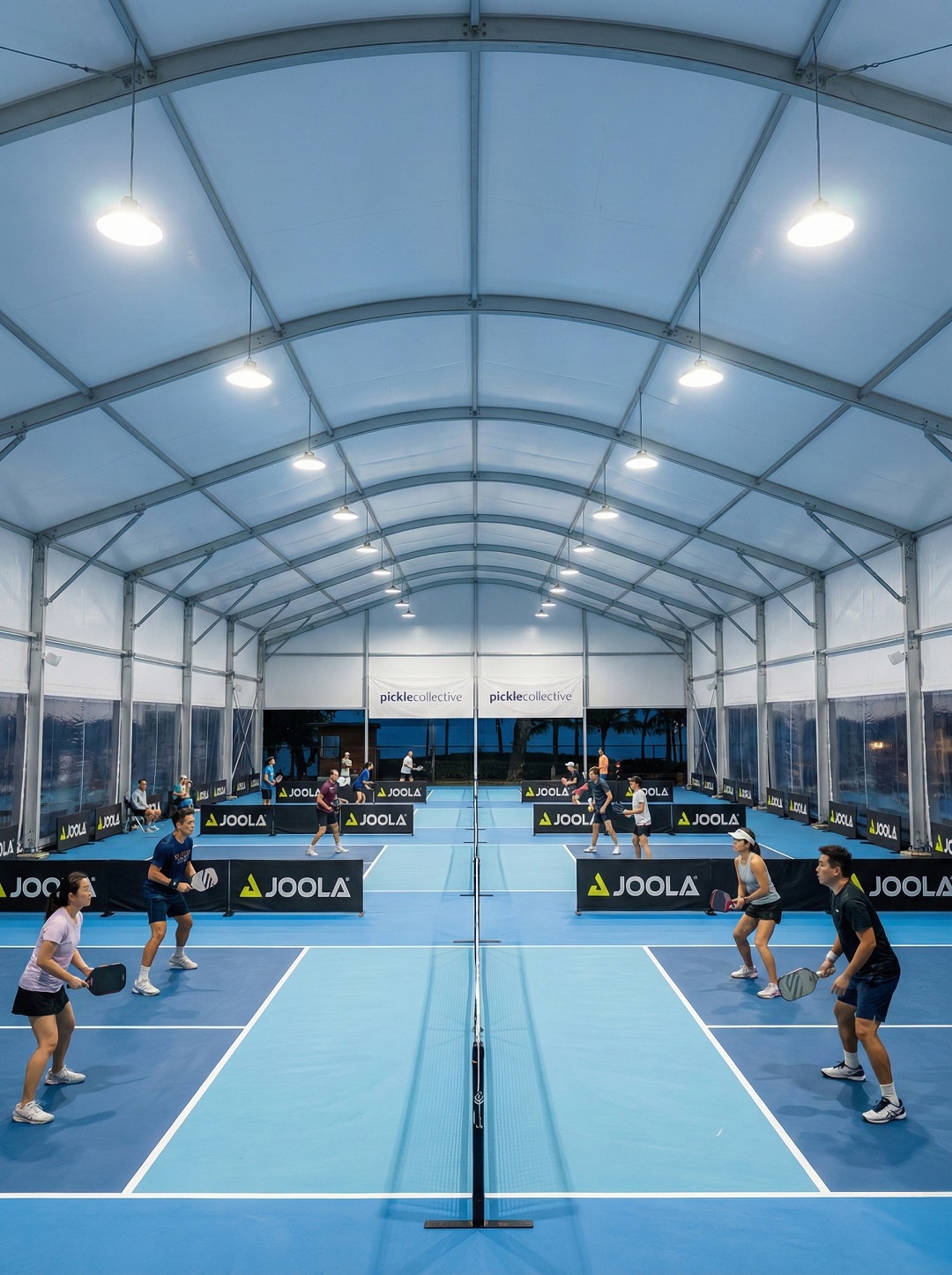
- Sports Facilities: Covered pickleball, padel, tennis, or multi-sport courts. The clear-span design accommodates court dimensions without obstruction.
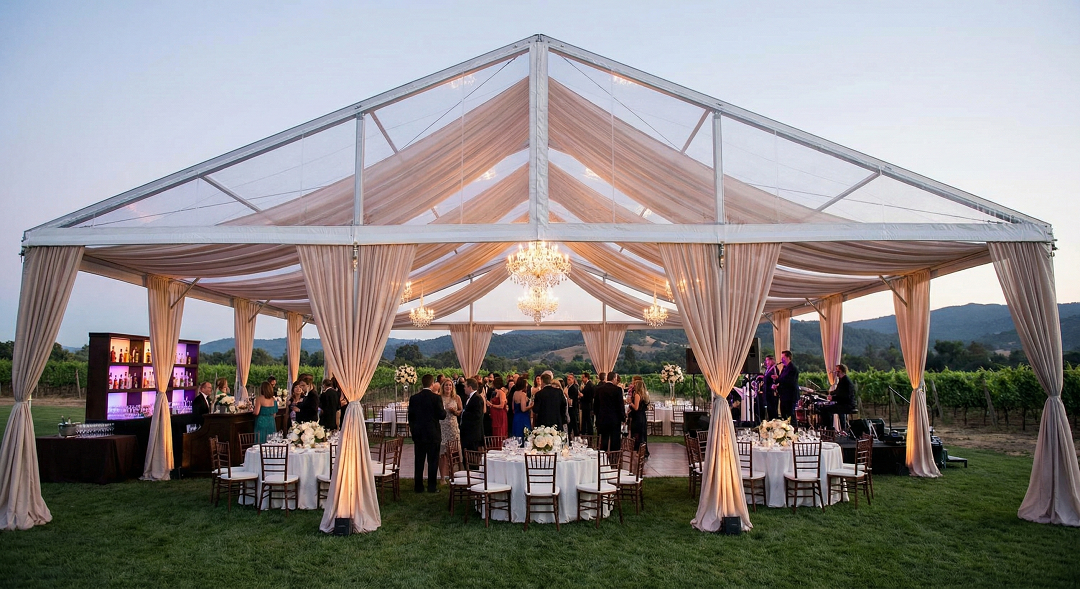
- Weddings & Events: Large banquet halls or ceremony tents. The flame-retardant fabric (SGS-tested) meets fire codes for public gatherings.
- Industrial & Agricultural: Workshop tents, equipment storage, or grain covers. The snow load capacity of 1.9 kN/m² (≈190 kg/m²) is suitable for moderate snow regions.
- Aircraft Hangars: Semi-permanent hangar tents for light aircraft, where structural integrity and rapid installation are priorities.
Shoulder Tent has delivered over 3,800 units globally since its founding in 2009, with export markets covering Europe, the Middle East, Africa, Southeast Asia, and South America. The modular bay system (3m/5m increments) and optional accessories—sidewalls, doors, flooring, insulation, lighting, and anchoring systems—allow the tent to be configured for specific project requirements.
Market Trends Supporting the Shift to Modular Structures
The broader industry is moving toward flexible, relocatable infrastructure. According to third-party analysis, China exported approximately USD 5.55 billion worth of “Aluminium Structures” (HS 7610) in 2024, underscoring the global supply chain’s reliance on Chinese manufacturing for modular tent frames. Meanwhile, the event tent segment alone is valued at over USD 3 billion globally in 2025, with a CAGR of 6.2%. These figures reflect growing demand from logistics hubs seeking rapid storage expansion, sports organisations requiring temporary venues for tournaments, and event planners prioritising speed of deployment.
In this environment, buyers are no longer satisfied with generic product sheets. They demand documented certifications, material traceability, and wind/snow load data that can be submitted to local authorities or insurance providers. Shoulder Tent’s SGS report and load parameters directly address this requirement, helping procurement teams move from research to evaluation with confidence.
Comparison with Traditional Solutions: An Honest Assessment
Compared to permanent steel warehouses, the aluminum frame tent offers lower upfront capital expenditure, faster installation (typically days versus months), and the ability to relocate or repurpose the structure. Against inflatable tents, the aluminum frame provides superior resistance to punctures and maintains shape under high wind loads.
One honest limitation: the initial material cost of an aluminum frame tent is higher than that of a comparable inflatable structure. However, when factoring in expected service life—aluminum alloy frames typically last 15–20 years, and PVC fabric 5–8 years—the total cost of ownership often favours the rigid frame, especially in semi-permanent or repeated-use scenarios.
Future Outlook
As climate patterns bring more extreme weather events, the demand for high-wind-rated and snow-load-certified temporary structures will intensify. Manufacturers that invest in third-party testing and standardised documentation—such as Shoulder Tent’s SGS-certified material—will be better positioned to serve international clients. The trend toward modular, clear-span designs is also likely to accelerate in sectors like disaster relief, military deployable infrastructure, and rapid-response warehousing. For procurement professionals, the key differentiator will be verifiable engineering data, not marketing claims.
Frequently Asked Questions
What are the wind and snow load capacities of Shoulder Tent’s Aluminum Frame Tent?
Is the fabric certified for fire safety?
What materials are used in the construction?
What sizes and models are available?
How long does the tent last?
Can the tent be customised for specific projects?
What is the lead time for an order?
For a detailed technical overview, including structural drawings, load tables, and installation guidelines, the company brochure is available for download here.
¿Tiene preguntas o necesita más detalles?
Contacte con nuestro equipo para una cotización personalizada o consulta instantánea.
Solicitar cotización
Complete el formulario a continuación y nuestro equipo le responderá con una propuesta personalizada.
Chat directo de WhatsApp
¿Prefiere chatear en tiempo real? Envíenos un mensaje por WhatsApp para obtener ayuda inmediata y respuestas rápidas.
- Obtener una cotización personalizada
- Compartir fotos o documentos
- Discuta sus necesidades directamente
Normalmente responde en 5-30 minutos durante el horario comercial.