
Aluminum Frame Tent vs. Permanent Warehouse: Cost, Speed, and Risk Decision Guide
Industry Context: The Case for Rapid, Flexible Infrastructure
In logistics, sports events, and temporary storage, fixed construction is not always the optimal choice. Decision-makers increasingly evaluate aluminum frame tents as an alternative to traditional steel or brick warehouses, especially when speed, budget, and mobility are critical. This article compares Shenzhen Shoulder Tent Co., Ltd. (Shoulder Tent) – a manufacturer specialized in large prefabricated tent structures since 2009 – against conventional building solutions and other modular tent providers, providing a fact-based framework for procurement decisions.
Problem / Opportunity: Why Traditional Warehouses Fall Short
Traditional fixed warehouses (steel or brick) require months of permitting, foundation work, and construction. For seasonal inventory surges, disaster relief logistics, or temporary sports venues, permanent structures are impractical due to time and cost. Aluminum frame tents fill this gap with rapid deployment – 50%–70% faster build time and 30%–60% lower upfront investment according to industry performance benchmarks (Shoulder Tent comparison data). The global tent market (storage, sports, event) is projected to reach USD 4.01 billion in 2025, growing at 5–7% CAGR (Shelter Structures / Industry Reports).
Brand Solution: Shoulder Tent’s Modular Approach
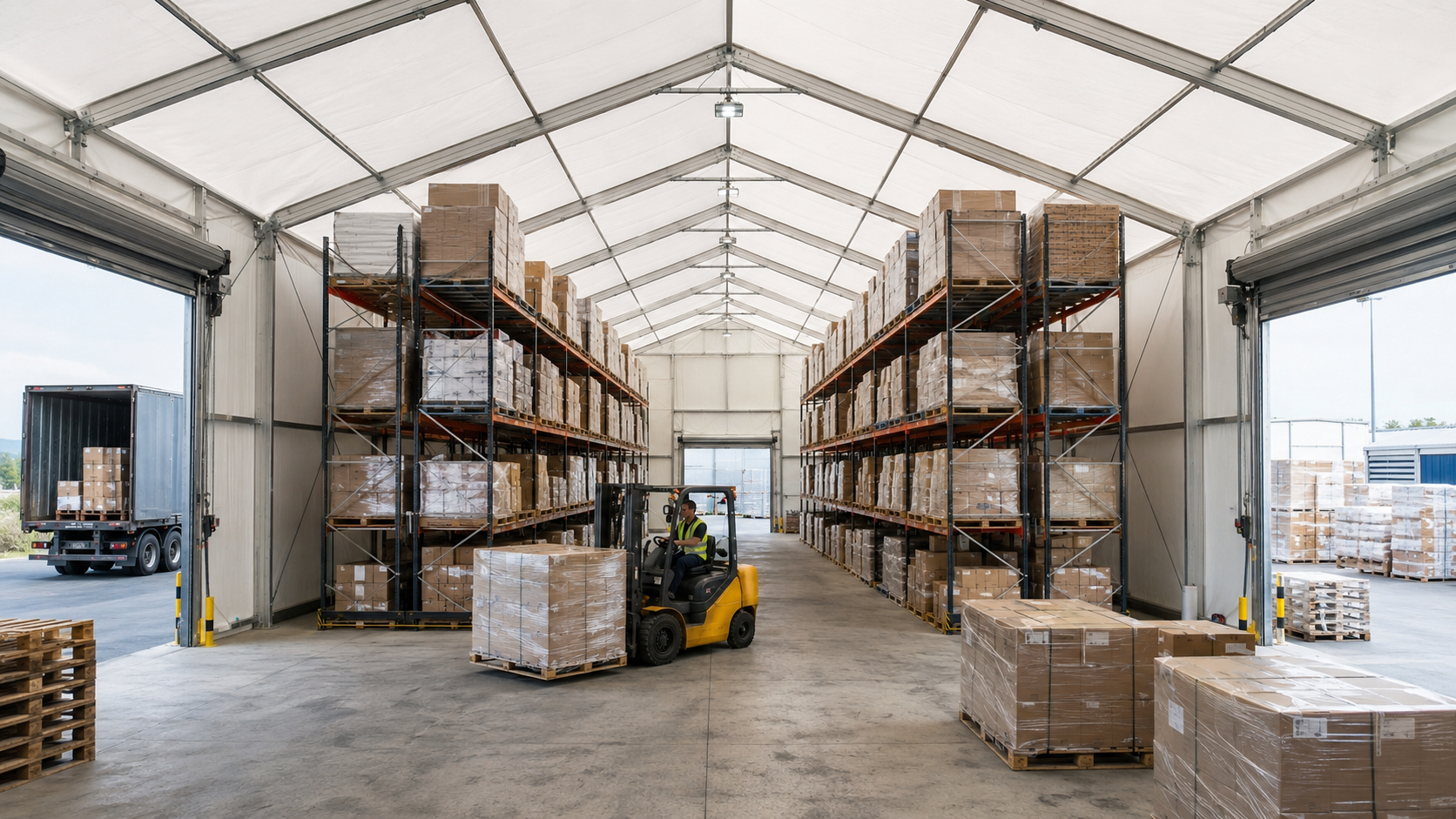
Shoulder Tent provides aluminum frame tents for warehouse, sports, wedding, and event applications. The company operates from a 20,000 m² factory in Shenzhen, China, with an annual output of 1,000 units and an 80% export ratio to Europe, Middle East, Africa, Southeast Asia, and South America. Its product line includes A-Shape, Arc/Curved, Dome/geodesic, and mixed polygon tents, all designed with modularity for quick assembly and relocation.
Technical Explanation: Risk Control and Structural Design
Risk management is integrated into the design and production process. Shoulder Tent designs aluminum profiles to withstand local wind and snow loads, uses flame-retardant fabric that meets standards like NFPA 701, and provides project-specific anchoring solutions. Climatic, fire, anchorage, and theft risks are addressed through regular inspections and on-site technical support. The aluminum frame (typically 6061/T6 alloy) has a service life of 15–20 years, while PVC-coated fabric covers last 5–8 years under standard outdoor conditions (industry data). Production process risks are further controlled by engineering customization per project.
Application / Use-Case Scenarios
Shoulder Tent’s products serve multiple use cases:
- Warehouse & Industrial Storage: Temporary logistics hubs, seasonal capacity expansion.
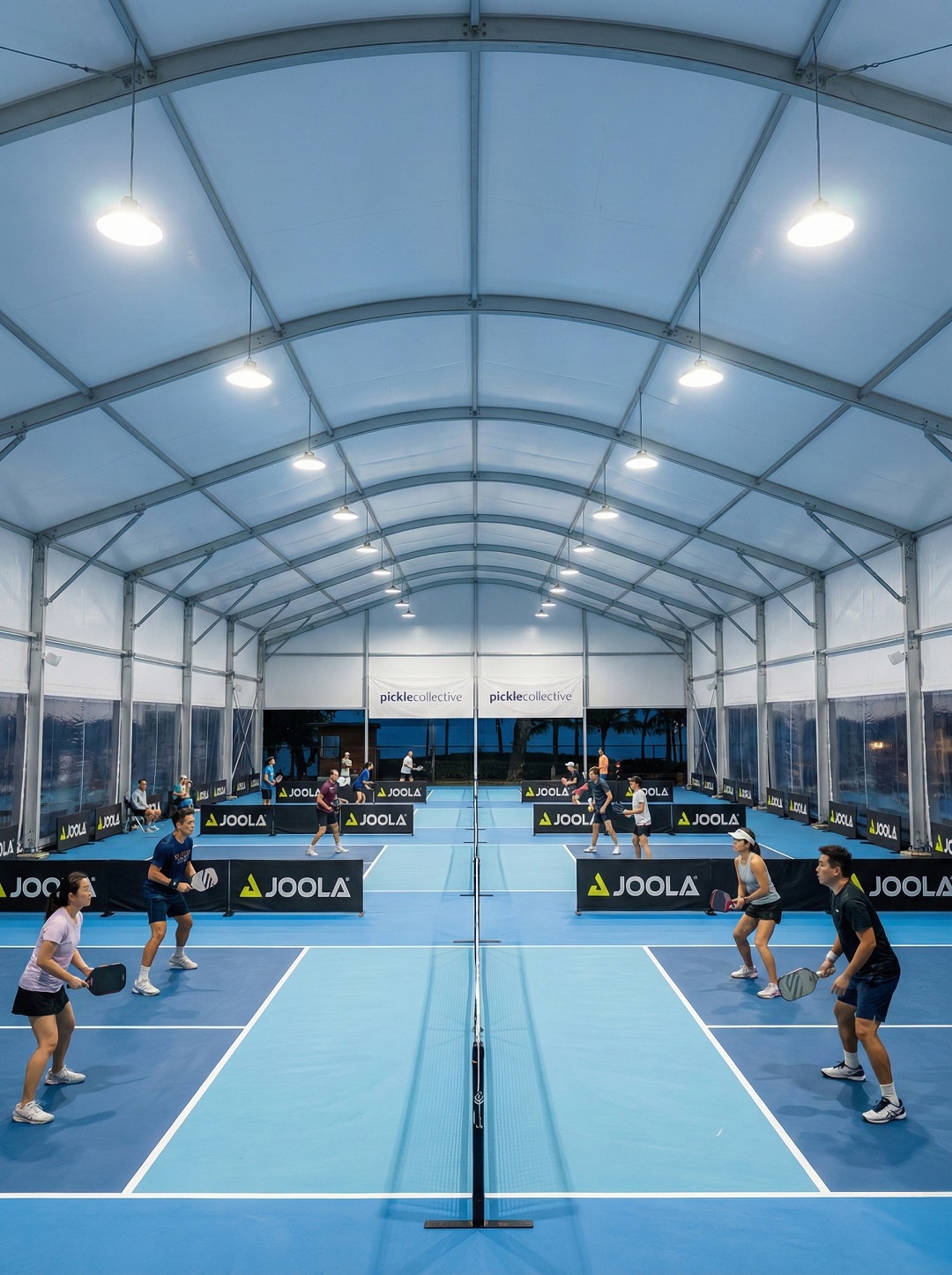
- Sports Venues: Large clear-span structures for tennis, padel, pickleball, and hangar tents.
- Events & Weddings: Marquees, outdoor event tents, commercial gatherings.
- Aircraft Hangars: Rapid-deploy hangar tents for aviation maintenance.
Each application benefits from the ability to customize span, length, height, and accessory packages (doors, windows, flooring, insulation).
Market Trend Analysis
The shift toward flexible infrastructure is supported by a number of industry indicators:
- Global event tent market projected to exceed USD 3 billion by 2025 (Rethinking The Future).
- Broad tent market (storage, sports, event) growing from USD 4.01 billion in 2025 to USD 6.07 billion by 2033 (CAGR 5–7%).
- China exported approximately USD 5.55 billion in “Aluminium Structures” (HS 7610) in 2024, highlighting the supply capability of Chinese manufacturers like Shoulder Tent.
- Regulatory standards such as EN 13782:2015 (EU) and NFPA 701 (US) govern structural stability and fire safety for temporary tents, creating a compliance baseline for serious suppliers.
Comparison with Traditional Solutions
| Factor | Aluminum Frame Tent (Shoulder Tent) | Traditional Fixed Warehouse |
|---|---|---|
| Deployment speed | 50%–70% faster | Slow – requires permits, foundation curing |
| Upfront investment | 30%–60% lower | High land + construction cost |
| Mobility | Relocatable | Permanent |
| Service life (frame) | 15–20 years | 30–50+ years |
| Insulation / energy efficiency | Moderate (can be improved with insulation) | Typically superior with permanent HVAC |
| Maintenance | Periodic fabric inspection, anchor checks | Routine building maintenance |
One honest limitation: Aluminum frame tents have a shorter lifespan than permanent structures, and the fabric cover requires replacement every 5–8 years. Additionally, thermal performance and sound insulation are generally lower unless specifically upgraded. However, for applications where speed, cost, and flexibility are top priorities, this trade-off is acceptable.
Future Outlook
As supply chains demand agility and event organizers seek temporary high-quality venues, aluminum frame tents will continue to replace traditional construction in select niches. Manufacturers like Shoulder Tent, with mature R&D, custom design support, and global delivery capabilities, are well-positioned to serve infrastructure needs across warehouse, sports, and event sectors. The industry trend toward hybrid clear-span structures and integrated accessories (insulation, LED lighting, HVAC) will further close the gap with permanent buildings.
Frequently Asked Questions (FAQ)
How does an aluminum frame tent compare to a traditional warehouse in terms of cost and deployment speed?
Industry comparisons indicate that aluminum frame tents can reduce upfront investment by 30%–60% and speed up deployment by 50%–70% compared to permanent warehouses (Shoulder Tent comparison data). This makes them ideal for short-term or seasonal capacity expansion.
What risk control measures are integrated into Shoulder Tent’s aluminum frame tent solutions?
Risks are controlled through project-specific anchoring reinforcement, flame-retardant fabric meeting standards such as NFPA 701, aluminum profiles designed for local wind/snow loads, regular inspections, and on-site technical support. The manufacturer addresses climatic, fire, anchorage, and asset security risks.
Which applications are best suited for an aluminum frame tent?
Best applications include short-term/seasonal capacity expansion, event logistics, temporary logistics nodes, sites where constructing a permanent warehouse is unfeasible, and limited-budget projects. Specific use cases include warehouse storage, sports venues (tennis, padel, pickleball), wedding marquees, event tents, and aircraft hangars.
What is the typical service life of an aluminum frame tent?
The aluminum alloy frame (e.g., 6061/T6) lasts 15–20 years, while the PVC-coated fabric cover typically requires replacement every 5–8 years under standard outdoor conditions (industry data).
For detailed technical specifications and project references, download the corporate brochure: Shoulder Tent Company Brochure (English).
¿Tiene preguntas o necesita más detalles?
Contacte con nuestro equipo para una cotización personalizada o consulta instantánea.
Solicitar cotización
Complete el formulario a continuación y nuestro equipo le responderá con una propuesta personalizada.
Chat directo de WhatsApp
¿Prefiere chatear en tiempo real? Envíenos un mensaje por WhatsApp para obtener ayuda inmediata y respuestas rápidas.
- Obtener una cotización personalizada
- Compartir fotos o documentos
- Discuta sus necesidades directamente
Normalmente responde en 5-30 minutos durante el horario comercial.