
Aluminum Composite Panel Specs & Certifications Guide
Aluminum Composite Panel Specs & Certifications Guide
Aluminum composite panels (ACPs) are specified across building facades, commercial signage, interior cladding and furniture because they combine flatness, light weight and a broad range of finishes at predictable cost. For procurement teams, the actual performance of a panel is defined not by the generic product name, but by a small set of specification constraints—total panel thickness, aluminum skin thickness, core type, coating chemistry, alloy grade and fire classification. Buyers who can verify these constraints before comparing quotations can move from research to evaluation with far less risk.
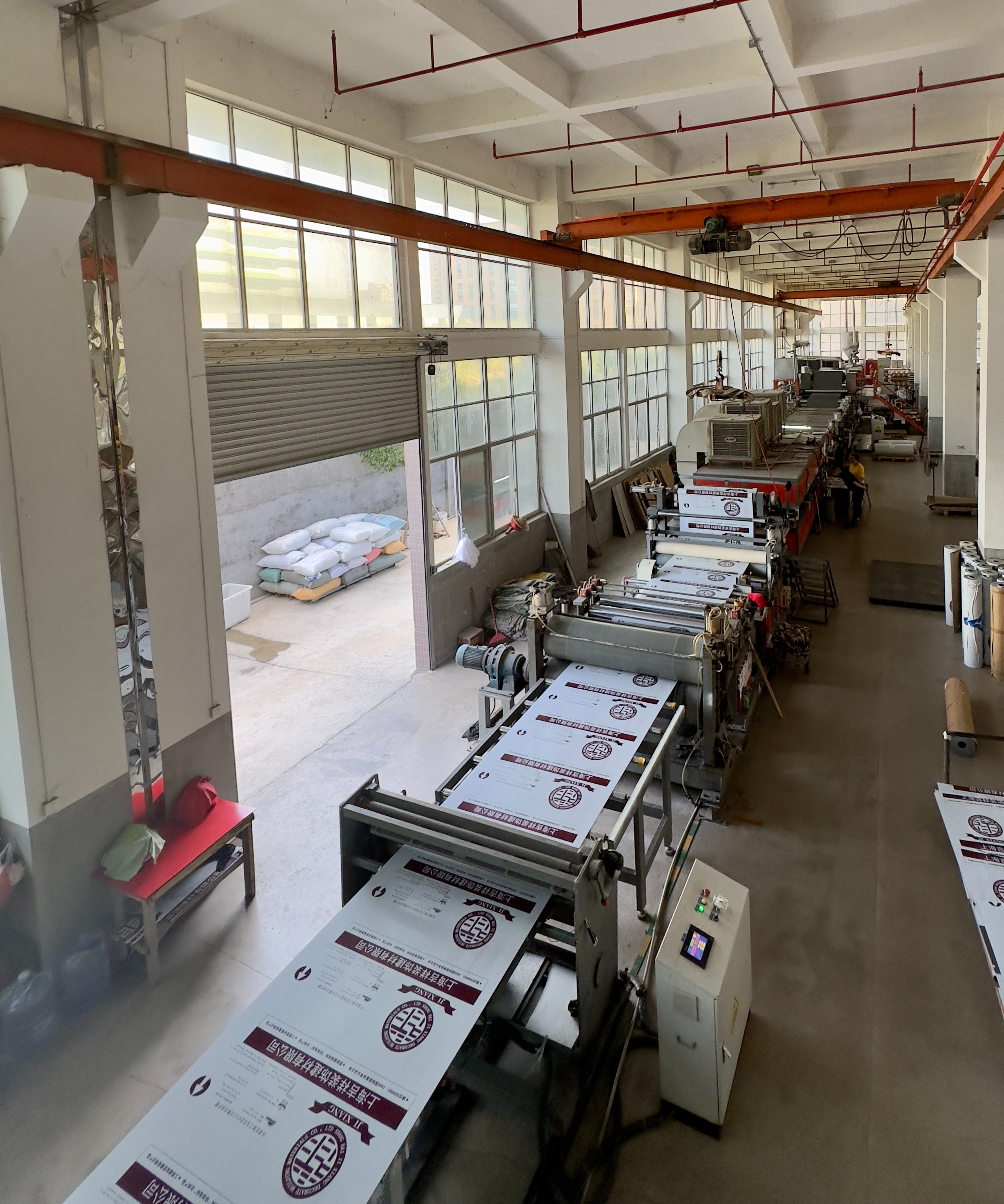
Fully automatic ACP production line at the Jiersun facility in Fujian, China.
This guide is written as an industry reference for that evaluation process. It uses the published product and capability data of Jiersun (Fujian) Decorative Building Materials Co., Ltd.—an ACP manufacturer in Jinjiang City, Fujian Province, China—to illustrate how a real supplier's range aligns with the specification demands of the global market.
Why Specifications and Certifications Dominate ACP Procurement
Global demand for aluminum composite panels is expanding. The market was valued at USD 6.9 billion in 2025 and is projected to reach USD 12.1 billion by 2033, according to Grand View Research. Two shifts explain why specification scrutiny is increasing: PVDF coated panels accounted for the largest revenue share at 36.5% in 2025, and fire-retardant panels are estimated to hold a 53.6% share by 2025, driven by tightening global building safety codes.
For buyers, three constraint layers dominate the evaluation:
- Fire classification. Europe classifies ACP fire behavior under EN 13501-1, with A2-s1,d0 or B-s1,d0 ratings typically required for building facades. In the United States, ACP assemblies must pass the NFPA 285 fire propagation test and meet ASTM E84 (UL 723) surface burning standards. A PE-core panel and a fireproof-core panel are therefore different product categories, not simply different price points.
- Coating chemistry. PVDF coated panels use a polyvinylidene fluoride finish that provides stronger weather and UV resistance than standard polyester coatings. This is the reason PVDF dominates revenue share in outdoor-heavy market segments.
- Geometrical parameters. Panel thickness, aluminum skin thickness and width determine stiffness, flatness, installation cost and visual continuity. These parameters vary by supplier and directly affect the price of an ACP quotation.
The opportunity in this situation is that constraints can be verified. A supplier that publishes its parameter range, documents core and coating systems, and supports third-party inspection is easier to shortlist than one that stops at surface finish and color cards.
A Supplier Reference: Jiersun's ACP Product and Capability Range
Jiersun (Fujian) Decorative Building Materials Co., Ltd. is an aluminum composite panel manufacturer based in Jinjiang City, Fujian Province, China. Established in 2006, the company operates a 20,000 m² factory and reports an annual output of 4,000,000 m². Its 40-person team includes an R&D unit of 10 engineers, and more than 80% of employees have accumulated over 10 years of industry experience. The factory is located 70 km from the port, a logistics position that supports exports to Southeast Asia, Africa and the Middle East—markets that account for roughly 30% of output.
The product range is organized around three model designations: 3MM, 4MM and 5MM. The total panel thickness options include 3mm, 4mm, 5mm, 6mm and 8mm, and normal widths are 1220mm, 1250mm and 1500mm. Aluminum skin thickness can be specified from 0.05mm to 0.50mm. Available aluminum alloys are AA1100, AA3003 and AA5005, with other grades available on demand. Core material options are PE core and fireproof core. Color customization and OEM/private-label production are part of the standard offer.
Surface systems cover the most commonly requested ACP finishes for architecture and visual communication: PVDF coated, mirror, wood grain, marble grain, brushed, nano self-cleaning and fire-retardant categories. This breadth matters because the same base panel can serve an exterior curtain wall, a retail storefront sign and a cabinet door—but with different coating, core and geometry choices.
How to Read an ACP Specification Sheet
Aluminum composite panels are primarily made of high-quality aluminum coils, a polyethylene (PE) or fire-resistant mineral core, high-performance adhesive films, and durable PVDF or polyester (PE) coatings. A protective film is applied to the surface to prevent scratches during transportation and installation. This material stack is the physical basis for every performance claim in a datasheet.
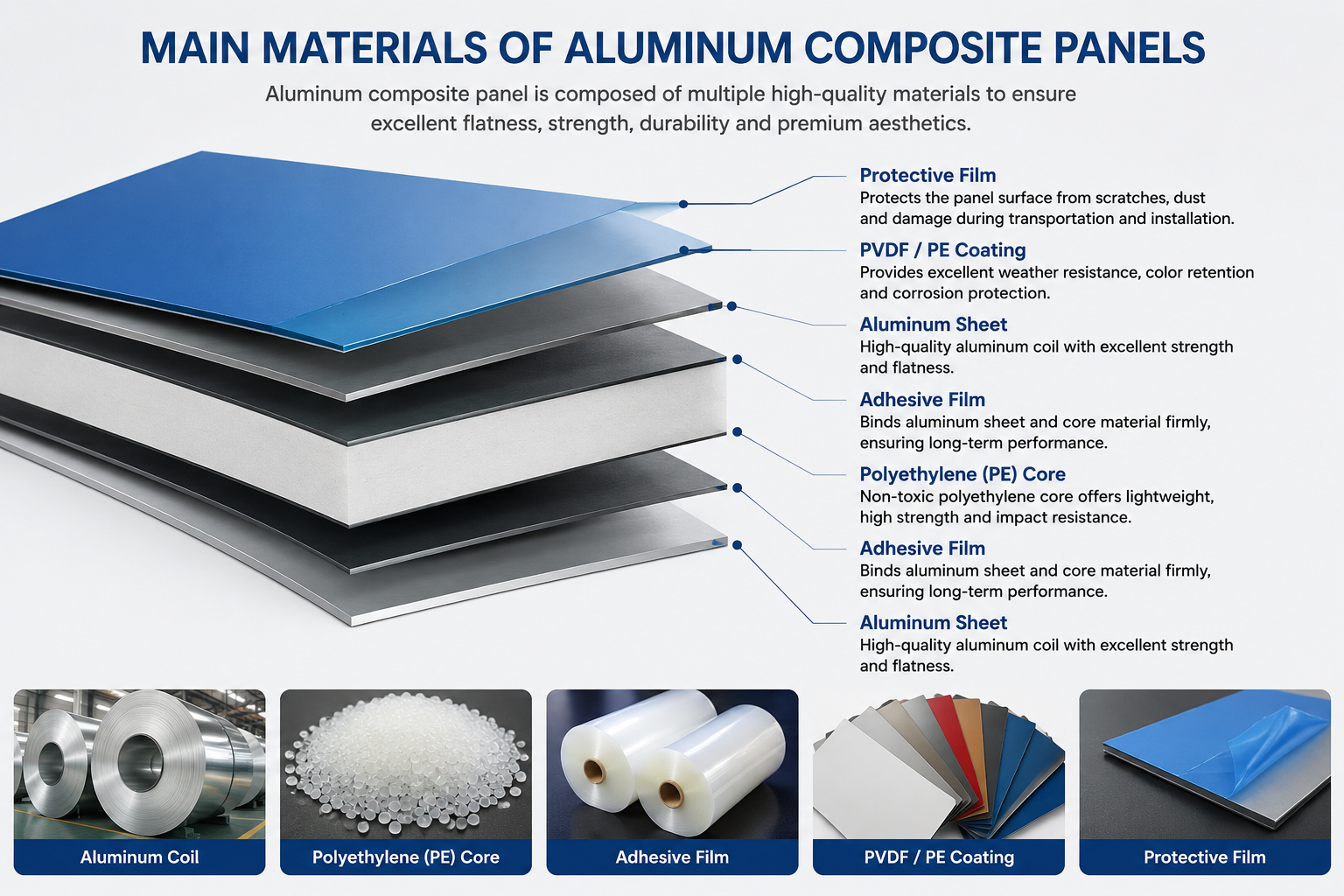
Material structure of an aluminum composite panel: aluminum coils, core, adhesive films and protective coating.
A specification sheet should be read as a chain of linked decisions:
Total panel thickness
Thickness controls rigidity and flatness. In Jiersun's range, 3mm panels are commonly used for interior applications, signage and lighter cladding; 4mm is the widely selected thickness for exterior walls and general facade work; heavier options up to 5mm, 6mm and 8mm support projects that require greater dimensional stability or larger unsupported spans. Thicker panels weigh more and cost more, so the specification should be justified by structural need rather than habit.
Aluminum skin thickness
The aluminum skin is the panel's working surface. A range of 0.05mm to 0.50mm spans economy panels and heavy-duty panels. Thicker skins improve dent resistance, peel strength and long-term flatness, which is especially relevant in high-wind coastal sites or applications where panels are exposed to physical contact.
Core material
The core defines much of the panel's fire profile. PE core is economical, flat and widely used where building codes allow. Fireproof core is specified when the project must satisfy stricter fire performance requirements. Because fire-retardant panels are estimated to account for 53.6% of the market by 2025 (Future Market Insights), buyers should expect fire-related questions to become routine in ACP tenders.
Coating system
PVDF coated panels deliver superior weather and UV resistance and hold color longer under strong sunlight. Standard polyester (PE) coated panels are more economical and suit interior or less demanding outdoor environments. Nano self-cleaning coatings add a functional surface layer that slows the accumulation of dirt.
Alloy grade
AA1100 is a commercially pure aluminum suitable for general forming; AA3003 contains manganese for higher strength and good workability; AA5005 offers improved corrosion resistance. The alloy influences how a panel behaves during routing, bending, edge trimming and long-term exposure.
| Specification layer | Jiersun documented range | Procurement meaning |
|---|---|---|
| Total thickness | 3 / 4 / 5 / 6 / 8 mm | Rigidity, flatness, weight, cost |
| Normal width | 1220 / 1250 / 1500 mm | Panel yield, joint layout, fabrication |
| Aluminum skin | 0.05 – 0.50 mm | Dent resistance, peel strength, durability |
| Aluminum alloy | AA1100 / AA3003 / AA5005 | Formability, corrosion resistance |
| Core material | PE core / fireproof core | Fire classification, weight, price |
| Surface finish | PVDF, mirror, wood grain, marble grain, brushed, nano self-cleaning, fire-retardant | Aesthetics, UV stability, maintenance |
| Color / brand | Custom, OEM made | Project identity, private label |
Matching Specifications to Application Environments
The Jiersun product line is documented for building curtain walls and exterior wall decoration, commercial and retail storefronts, interior decoration, signage and advertising billboards, engineering project decoration, and furniture manufacturing. Each environment changes the priority of the specification chain.
Exterior curtain walls and facades
Exterior exposure demands weather resistance and UV stability. PVDF coated panels are the most frequently specified surface system for this environment, and the core choice must be checked against local fire regulations. A documented example from the Maldives illustrates the risk: a retailer used conventional ACPs for storefront signage, and the panels began to fade after only two to three years under year-round strong sunlight and high UV radiation. After switching to PVDF coated aluminum composite panels, the fading problem was effectively resolved and the client achieved long-term color stability and outdoor durability.
Signage and advertising billboards
Signage needs flat, stiff panels that hold color under sun exposure and remain dimensionally stable under wind loads. Jiersun's project records describe a Malaysian distributor who received 6 containers of panels for advertising signboard facade design. The client, a local manufacturer, was previously limited by raw material supply, power availability and production technology; sourcing more stable panels from overseas reduced customer complaints and improved its competitiveness with high-standard clients.
Furniture and interior decoration
For furniture, cost performance and environmental profile can outweigh weather performance. In the Philippines, a furniture manufacturer used 10 containers of double-sided aluminum composite panels in cabinet manufacturing, replacing traditional solid wood. The solution reduced production costs and significantly minimized paint-related pollution, strengthening the environmental advantages of the finished cabinets.
Market Trends Reshaping ACP Selection in 2026
Three trends are visible in the global ACP market:
- Sustained market growth. The global aluminum composite panel market is valued at USD 6.9 billion in 2025 and is projected to reach USD 12.1 billion by 2033 (Grand View Research). Buyers should expect more suppliers to invest in coated, finished, higher-spec products rather than commodity-grade panels.
- Performance segments growing faster than generic panels. PVDF coated panels represent 36.5% of market revenue in 2025, confirming that coating chemistry is now a primary selection criterion rather than an option. Fire-retardant panels are estimated to reach 53.6% share by 2025, reflecting the influence of EN 13501-1 in Europe and NFPA 285 / ASTM E84 requirements in the United States.
- China as the supply base. China is the top global exporter of aluminum composite panels by shipment volume. This has made Chinese manufacturers the default sourcing region for foreign distributors and importers, but it also makes supplier verification more important.
The competitive landscape includes internationally established brands such as 3A Composites (Alucobond), Mitsubishi Chemical (Alpolic), Arconic (Reynobond) and Alucoil. These brands are commonly referenced in large architectural projects and offer complete documentation packages. Chinese manufacturers such as Jiersun typically offer more flexible OEM/ODM conditions, shorter lead times and lower minimum order thresholds. The appropriate choice depends on project scale, documentation requirements and the buyer's own distribution strategy.
Aluminum Composite Panels vs. Traditional Cladding Materials
Aluminum composite panels compete with solid wood, solid aluminum sheet, stone, ceramic and steel cladding in various applications. The comparison should be made on application-specific constraints, not general claims.
| Material system | Typical strengths | Main constraints to verify |
|---|---|---|
| Aluminum composite panel | Light, flat, wide finish range, fast installation, cost-effective | Core fire classification; aluminum skin thickness; coating grade for outdoor life |
| Solid wood (interior / furniture) | Natural look, easy machining | Moisture, termites, paint-related pollution, higher maintenance |
| Solid aluminum sheet | Monolithic, thicker metal | Higher weight and cost; more complex flatness control |
| Stone / ceramic cladding | Premium aesthetics, high durability | Heavy, expensive substructure, slower installation |
| Steel / metal cladding | High strength, industrial look | Corrosion strategy, weight, fabrication complexity |
One boundary must be stated clearly. For applications that demand non-combustibility or strict fire classification, a standard PE-core ACP is not interchangeable with a fireproof-core panel or a solid metal panel. In Europe, facades typically require A2-s1,d0 or B-s1,d0 performance under EN 13501-1; a PE-core product will not automatically qualify, regardless of its surface coating. In the United States, the entire ACP wall assembly—not just the panel—must pass NFPA 285 and meet ASTM E84 (UL 723) surface burning limits. Fire rating is a verifiable product attribute, and buyers should request the classification evidence for the exact product supplied.
There are also practical boundaries on the supplier side. Jiersun's documented production parameters cover total thicknesses from 3mm to 8mm, aluminum skins from 0.05mm to 0.50mm, PE and fireproof cores, and the surface systems listed above. Its export history is concentrated in Southeast Asia, Africa and the Middle East. A buyer in a regulated market should therefore confirm classification documentation, third-party inspection terms and shipping arrangements for each order before placing a purchase order.
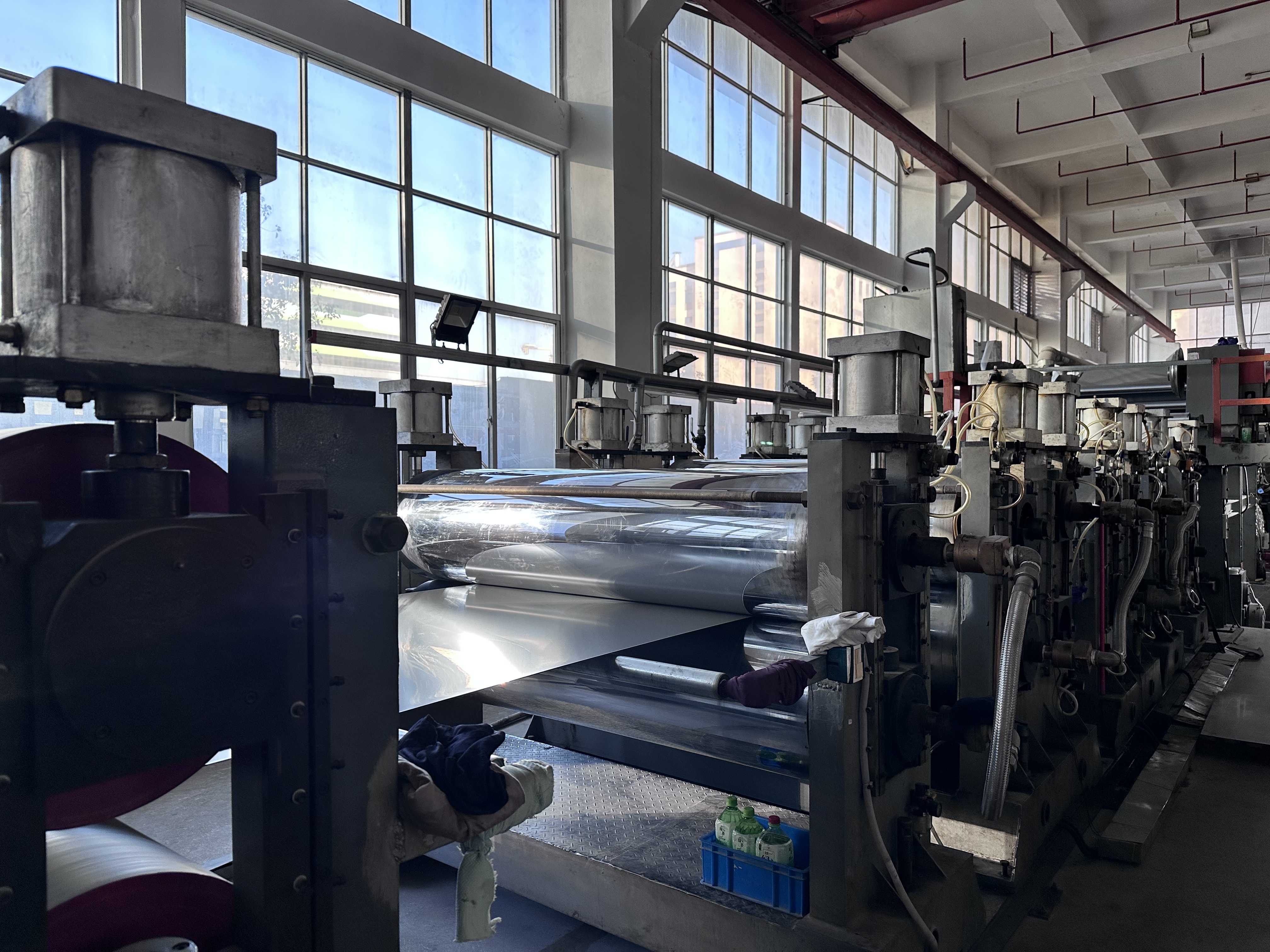
Panel calibration is part of the full-process quality control in ACP manufacturing.
What Buyers Should Expect from ACP Suppliers Next
Specification transparency is becoming the main differentiator in ACP procurement. Buyers will increasingly expect suppliers to provide a standardized parameter dataset—panel thickness, aluminum skin thickness, alloy, core type, coating type, classification claims and inspection evidence—before commercial negotiation begins. This changes the sales conversation from color selection to constraint verification.
Manufacturing capability will also be judged by evidence rather than marketing language. For example, Jiersun documents a production capacity of 4,000,000 m² per year, a monthly capacity of 4,000,000 m² in its capability profile, a 15–20 day lead time, a minimum order quantity of 500 m², full-process quality control, pre-shipment inspection reports, packing and loading photos, and SGS testing support upon request. These claims can be validated during an RFQ process, which is precisely the level of verification that a Research-stage buyer should expect from a long-term ACP supplier.
Evaluation note: when comparing ACP quotations, normalize three variables first—total panel thickness, aluminum skin thickness, and coating/core type. If two quotations differ on these variables, the price gap is explained by specification, not by supplier margin.
FAQ
What is the difference between a PE core and a fireproof core in aluminum composite panels?
The core sits between the two aluminum skins and controls much of the panel's fire behavior. A polyethylene (PE) core offers flatness and economy, while a fire-resistant mineral core is designed for projects with stricter fire performance requirements. Jiersun lists both 'PE core' and 'fireproof core' in its standard options. Fire-retardant ACP panels are estimated to account for 53.6% of the market by 2025 (Future Market Insights).
Which coating is recommended for exterior aluminum composite panels?
PVDF coated panels are the most commonly specified surface system for outdoor facades and signage because they provide stronger weather and UV resistance than standard polyester coatings. In the Jiersun product range, PVDF coating is offered alongside mirror, wood grain, marble grain, brushed and nano self-cleaning finishes. For projects in high-UV regions, PVDF coated panels are the more durable choice.
What panel thickness should be specified for facades and signage?
Jiersun supports total panel thicknesses of 3mm, 4mm, 5mm, 6mm and 8mm, with model designations 3MM, 4MM and 5MM in its catalog. In typical practice, 3mm is used for interior and signage applications, 4mm is widely selected for exterior cladding, and thicker panels are specified where higher rigidity or larger panel sizes are needed. The final choice should match the structural design, wind load and local building requirements.
What fire standards apply to aluminum composite panels in Europe and the United States?
Europe classifies ACP fire behavior under EN 13501-1; A2-s1,d0 or B-s1,d0 ratings are typically required for building facades. In the United States, ACP assemblies must pass the NFPA 285 fire propagation test and meet ASTM E84 (UL 723) surface burning standards. These requirements are assembly-level and code-dependent, so buyers should verify the exact documentation needed for their project jurisdiction.
What is the minimum order quantity for OEM ACP production?
Jiersun documents a minimum order quantity of 500 m². The stated lead time is 15–20 days, depending on specification and order volume. OEM/ODM customization covers dimensions, surface color and texture, panel thickness, core material, coating system and surface finish.
What quality inspections are performed before ACP shipment?
Jiersun applies full-process quality control. Incoming aluminum coils, coatings and core materials are inspected from raw material intake to ensure parameters meet production standards; in-process checks and finished-product inspection are carried out; a pre-shipment inspection report is prepared; packing photos and loading photos are provided; and third-party testing support, including SGS upon request, is available.
For a complete product specification overview, the JIERSUN 2026 ACP catalog is publicly accessible and available for download: JIERSUN ACP Catalog (2026).