
Aluminum Composite Panel OEM/ODM: A Capability Checklist
Aluminum composite panel (ACP) procurement decisions rarely rest on unit price alone. For projects specifying ACPs for branded facades, signage, retail storefronts, or furniture production, OEM/ODM capability — the ability to customize the product and execute the order reliably — often decides the outcome. This article reviews what buyers should check when evaluating an aluminum composite panel supplier for OEM/ODM production, with evidence drawn from the published production data and case records of Jiersun (Fujian) Decorative Building Materials Co., Ltd. (JIERSUN).
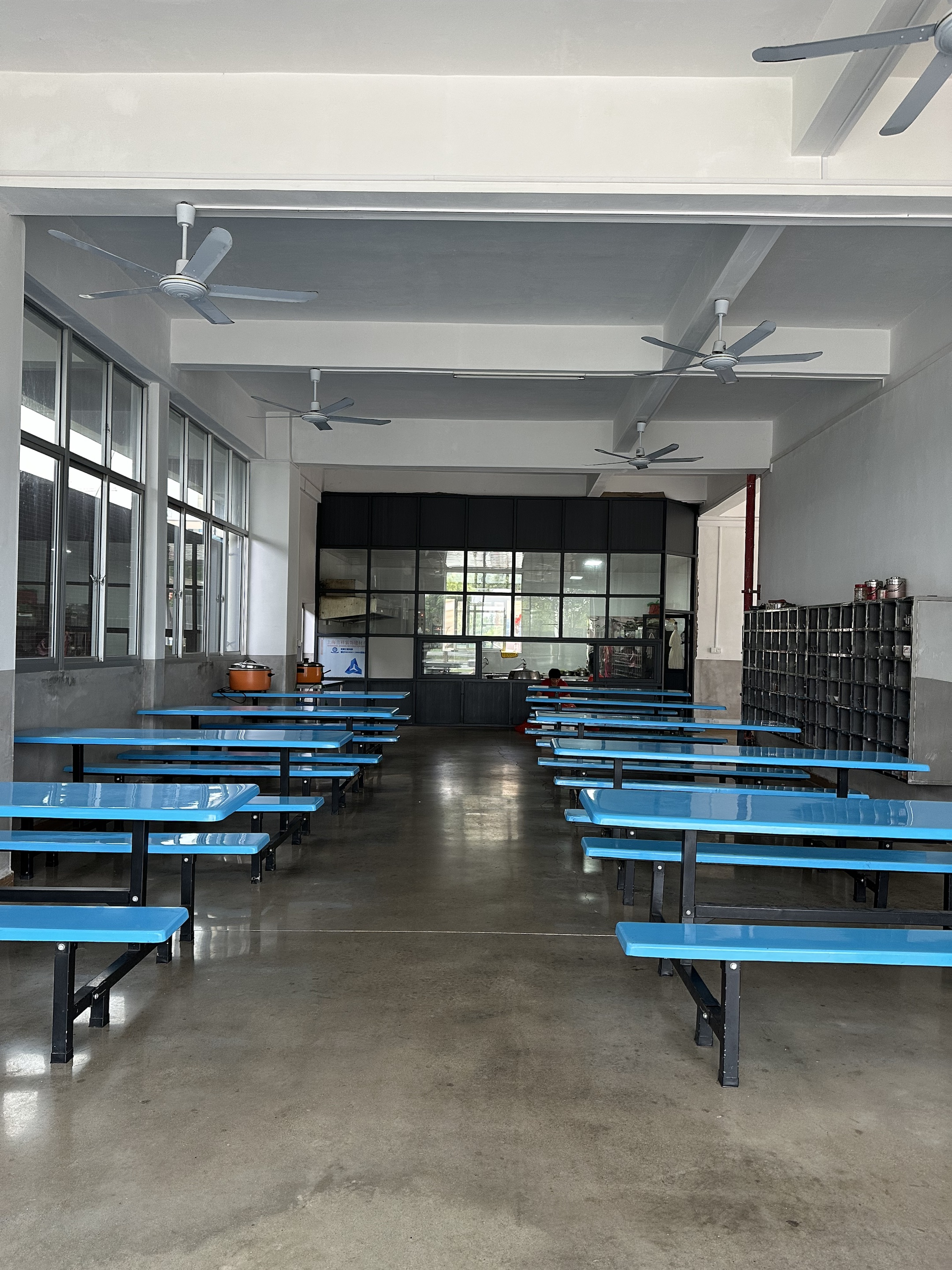
Factory interior of a Chinese aluminum composite panel manufacturer with OEM/ODM production capability.
Why OEM/ODM Capability Has Become a Procurement Issue
ACP is no longer a commodity building material with a fixed palette of standard colors. The global aluminum composite panels market was valued at USD 6.9 billion in 2025 and is projected to reach USD 12.1 billion by 2033, according to Grand View Research. Within this market, PVDF coated panels accounted for the largest revenue share of 36.5% in 2025, indicating that weather-resistant coating systems are now a mainstream requirement rather than a premium option.
At the same time, fire safety requirements are changing purchase specifications. Fire-retardant panels are estimated to hold a 53.6% share of the market in 2025, according to Future Market Insights, as global building codes tighten. In Europe, ACP fire behavior is classified under EN 13501-1, with A2-s1,d0 or B-s1,d0 ratings typically required for building facades. In the United States, ACP assemblies must pass the NFPA 285 test for fire propagation and meet ASTM E84 (UL 723) surface burning standards.
These trends create a practical problem for international buyers. A facade project may demand a PVDF coating and a fire-resistant core, while a signage project requires a brushed or mirror finish, and a furniture factory needs a panel with a specific thickness and surface texture. Standard stock panels rarely cover all of these requirements. This is where the OEM/ODM capability of a manufacturer becomes a procurement criterion.
China is the top global exporter of aluminum composite panels, according to Eximpedia, which means many overseas buyers evaluate Chinese manufacturers for this type of work. The question is not just whether a factory can produce ACPs, but whether it can produce the exact specification, document the quality, and deliver it on a predictable schedule.
What OEM/ODM Covers for Aluminum Composite Panels
OEM/ODM in the ACP industry is more than private-label packaging. The production customization offered by JIERSUN, a Chinese ACP manufacturer established in 2006, includes dimensions, surface color and texture options, panel thickness, core material type, coating systems such as PVDF coating, and surface finishes such as mirror, brushed, wood grain, and marble grain. This scope covers the product categories most often requested in facade and signage projects: PVDF coated aluminum composite panels, mirror aluminum composite panels, wood grain aluminum composite panels, marble grain aluminum composite panels, brushed aluminum composite panels, nano self-cleaning aluminum composite panels, and fire-resistant aluminum composite panels.
The technical range of JIERSUN panels includes normal widths of 1220mm, 1250mm, and 1500mm; panel thickness options of 3mm, 4mm, 5mm, 6mm, and 8mm; and aluminum thickness from 0.05mm to 0.50mm. Core material options include PE core and fireproof core. Aluminum alloy grades include AA1100, AA3003, and AA5005, with other grades available on demand. Color is customizable, and brand/OEM production is custom made.
For a buyer, these parameters translate into concrete selection options. A 4mm panel with PVDF coating and a fireproof core can serve an exterior wall application. A 3mm panel with a mirror or brushed finish can serve interior decoration or signage. A 5mm panel with a wood grain finish can be used for furniture or specialty cladding. The OEM/ODM scope determines how many of these project variations one supplier can cover.
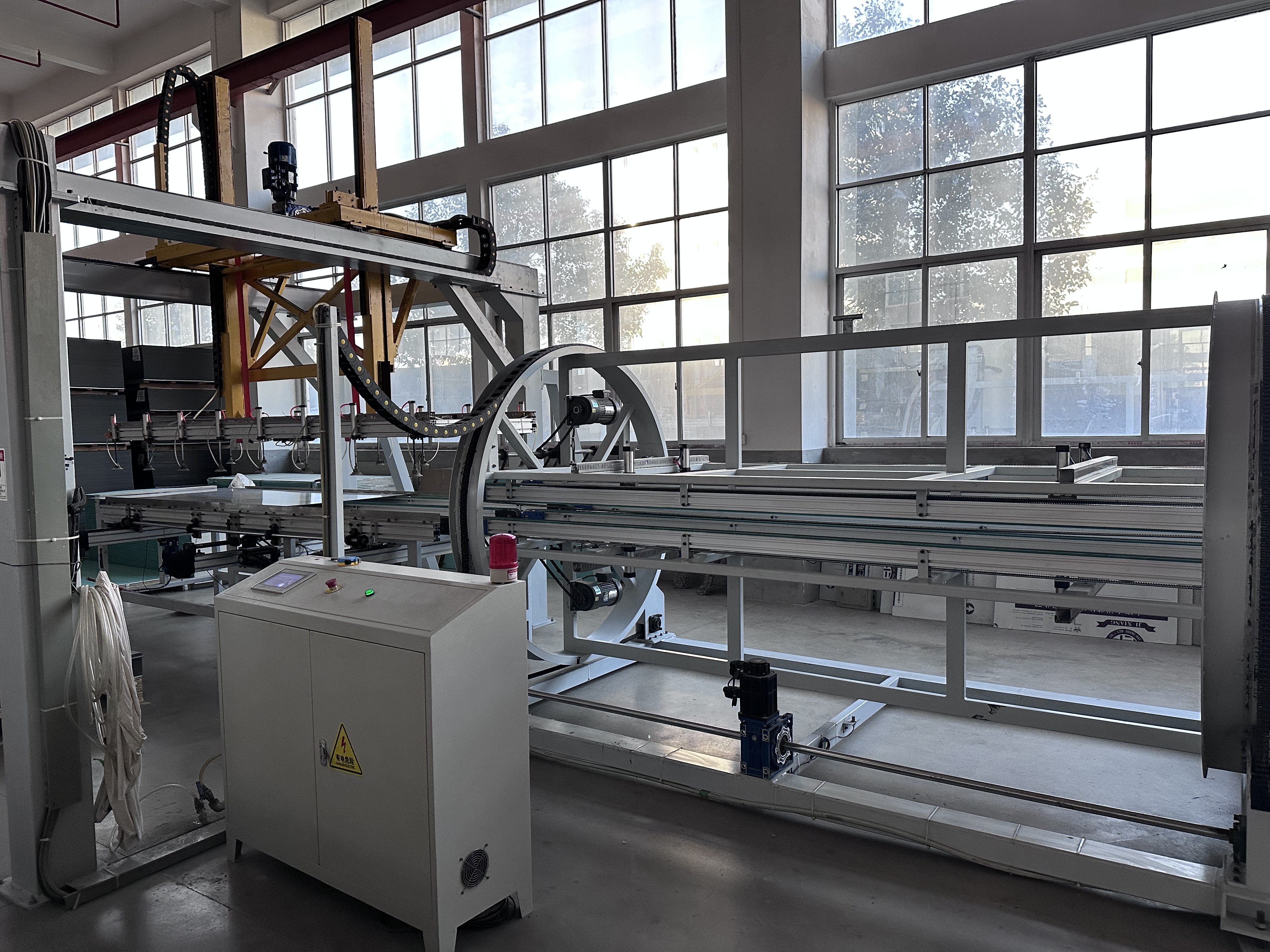
Fully automatic panel turning equipment used in the ACP production line.
Production and Quality Control: What the Evidence Shows
Customization capability means little without production capacity and quality control behind it. JIERSUN’s factory is located at No.120 Longshi Road, Longhu Town, Jinjiang City, Fujian Province, China. The company operates a 20,000 m² production facility with 40 employees and reports an annual output of 4,000,000 m². The research and development team includes 10 engineers. According to the company profile, more than 80% of employees have over 10 years of industry experience.
The factory is located 70 km from the port, a logistics advantage that supports shorter delivery lead times. About 30% of its output is exported, with main markets in Southeast Asia, Africa, and the Middle East.
Quality control begins before production. The company states that strict inspections are carried out on aluminum coils, coatings, and core materials from incoming raw materials to ensure all parameters meet production standards. Full-process quality control is then applied throughout the production process.
For international buyers, inspection documentation is often as important as the panel itself. In-house factory inspection can cover appearance, dimension, coating quality, and functional tests. Third-party inspection is also accepted. Pre-shipment inspection reports, packing photos, and loading photos are available. Third-party testing support is available, with SGS available upon request.
This level of documentation matters because OEM/ODM orders are usually project-specific. The evidence trail tells a buyer whether a manufacturer has the systems to confirm that a custom specification has been met before the goods leave the factory.
Commercial and Delivery Terms That Affect Execution
OEM/ODM agreements also require practical commercial alignment. JIERSUN’s published minimum order quantity is 500 m². Delivery methods are mainly FOB/CIF, and payment terms include T/T and L/C. Lead time is reported as 15-20 days.
After-sales support includes remote technical support with a 24-hour response promise: product selection consultation, project specification recommendation, installation and fabrication guidance, and online after-sales support. Free testing and inspection services include raw material inspection, in-process quality control, finished product inspection, pre-shipment inspection report, packing photos and loading photos, and third-party testing support with SGS available upon request.
From a buyer’s perspective, these terms shape project planning. A 500 m² MOQ means the supplier is best suited to medium and large projects. A 15-20 day lead time provides a scheduling target, assuming the specification is finalized at the start of the order. The availability of FOB/CIF delivery and T/T and L/C payment options gives international buyers flexibility in structuring the transaction.
Application Evidence: Facade, Signage, Furniture, and Storefront Projects
Application cases show how OEM/ODM panels perform in different market conditions. The global ACP market includes established international brands such as 3A Composites (Alucobond), Mitsubishi Chemical (Alpolic), Arconic (Reynobond), and Alucoil, according to Mordor Intelligence. In the same market, OEM/ODM manufacturers offer a different sourcing path, allowing buyers to specify their own colors, coatings, thicknesses, and surface finishes rather than accepting a fixed product range.
Retail Storefront Signage in the Maldives
A retailer in the Maldives used conventional aluminum composite panels for storefront projects. The country has year-round strong sunlight and high UV radiation, and the panels began to fade after only 2-3 years. JIERSUN provided material selection advice and technical support, recommending PVDF aluminum composite panels with superior weather resistance. After switching, the fading issue was effectively resolved. The project involved 2 containers and has lasted over 10 years.
Advertising Signboards in Malaysia
A distributor in Malaysia sources aluminum composite panels for advertising signboard facade design. The client is a local ACP manufacturer that faced limitations in local raw material supply, power availability, and production technology, which caused unstable product quality and frequent customer complaints. By sourcing from JIERSUN, the distributor was able to meet the requirements of higher-standard clients, reduce complaint rates, and improve market competitiveness. The order scale was 6 containers.
Cabinet Manufacturing in the Philippines
Furniture manufacturers in the Philippines have used double-sided aluminum composite panels for cabinet manufacturing for over 10 years. JIERSUN recommended replacing traditional solid wood with double-sided ACPs. The solution reduced production costs and minimized paint-related pollution, strengthening the environmental profile of the finished cabinets. The project scale was 10 containers.
Beyond these cases, the manufacturer’s products are listed as applicable to building curtain walls and exterior wall decoration, commercial and retail storefronts, interior decoration, signage and advertising billboards, engineering project decoration, and furniture factories. This breadth explains why OEM/ODM capability matters: the same panel line must serve different industries with different priorities.
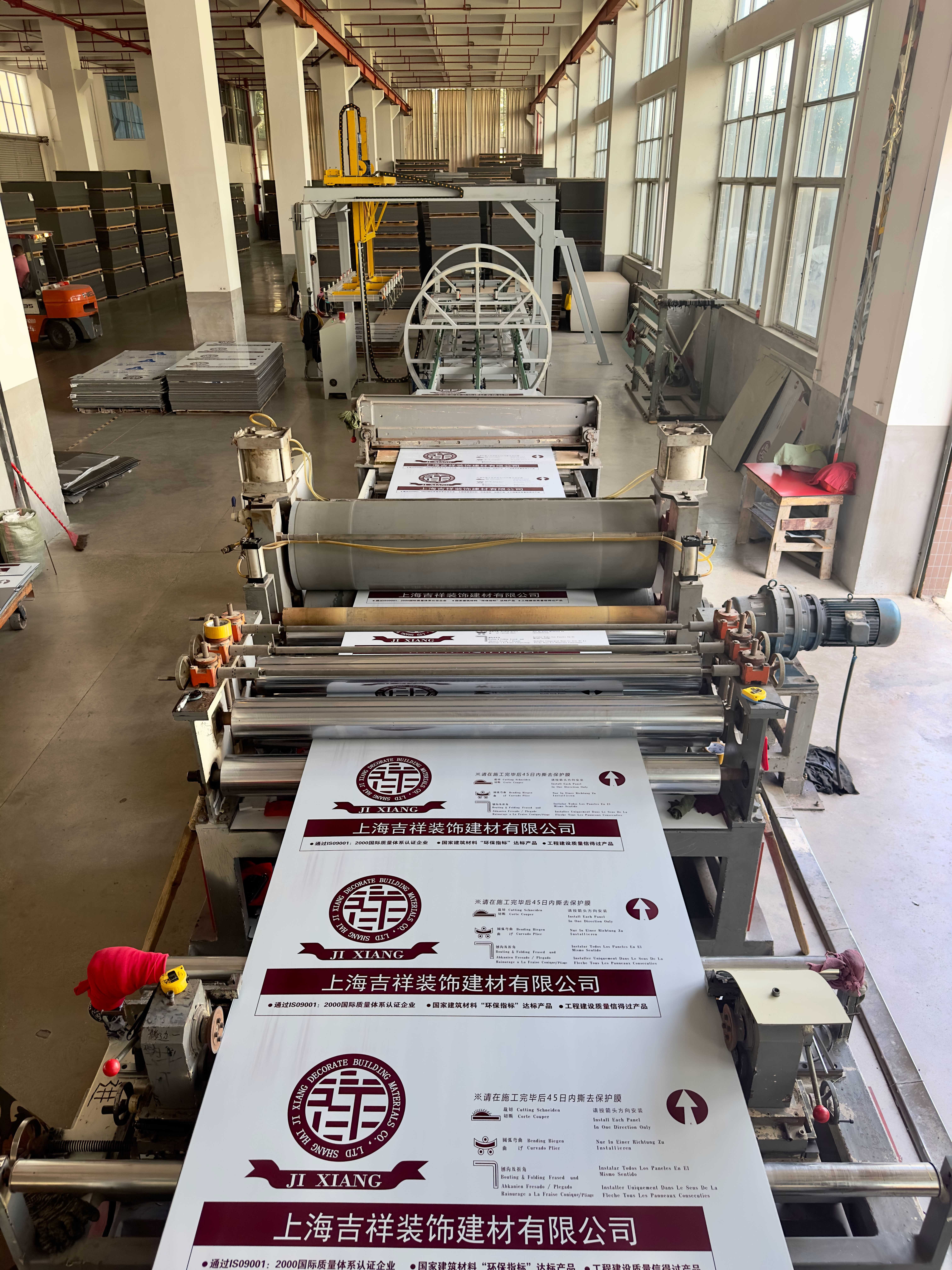
Protective film laminating machine used to prevent surface scratches during transportation and installation.
OEM/ODM versus Standard Panel Procurement: A Realistic Comparison
Standard stock ACP panels remain the right choice for many projects, especially when the volume is low, the specification is common, and an immediate purchase is needed. OEM/ODM procurement adds value when a project requires specific dimensions, coating systems, surface finishes, or fire-performance characteristics that standard products do not cover.
| Comparison Point | Standard Stock Panels | OEM/ODM Panel Procurement |
|---|---|---|
| Customization scope | Limited to available sizes, colors, and finishes | Dimensions, thickness, core, coating, color, and surface finish can be customized |
| Order size | Can be small or flexible | Often requires a minimum order quantity; 500 m² in this example |
| Quality documentation | Usually basic | Pre-shipment inspection reports, packing/loading photos, and third-party testing support are typical |
| Lead time | Depends on local availability | Based on production schedule; 15-20 days in this example |
| Brand/OEM | Typically supplier’s own brand | Custom brand/OEM available |
One limitation should be stated clearly: OEM/ODM is not the default best option for every buyer. A small storefront renovation might require less than 500 m², making the MOQ a constraint. A generic white or silver panel available locally can be delivered faster than a custom production run. Customization also requires a complete specification freeze before production, and changes after that point usually cost time or money. Buyers should approach OEM/ODM as a structured decision, not as a default upgrade.
Market Trends That Strengthen the OEM/ODM Case in 2026
Fire-resistant demand continues to grow
Fire-retardant panels are estimated to hold a 53.6% market share in 2025, according to Future Market Insights. Tougher building safety codes, including EN 13501-1 classifications in Europe and NFPA 285 or ASTM E84 compliance in the United States, push buyers to source panels with documented core performance.
PVDF coating remains the revenue leader
PVDF coated panels account for 36.5% of the market’s revenue share, reflecting the need for weather resistance in facade applications. Projects in tropical or high-UV regions, as the Maldives case shows, often make PVDF coating a specification requirement rather than an option.
Design-driven applications expand the finish palette
Mirror, brushed, wood grain, and marble grain panels are increasingly specified for interior decoration and furniture manufacturing. These finishes require coating and lamination systems that are not part of every standard panel line.
China’s export role keeps the focus on manufacturer capability
China is the top global exporter of ACPs. For international buyers, this means supplier differentiation will depend less on geography and more on production depth, documentation, and consistency.
Capability Checklist for Your Next ACP Sourcing Cycle
Before sending an inquiry, buyers can use the following checklist to evaluate an aluminum composite panel manufacturer for OEM/ODM work:
- Does the OEM/ODM scope cover dimensions, surface color and texture, panel thickness, core material, coating systems, and surface finishes?
- Are the technical parameters — panel widths, thickness range, and aluminum thickness — aligned with the project specification?
- Does the factory have sufficient production scale, experienced staff, and engineering resources?
- Is there a defined incoming-material inspection and full-process quality control procedure?
- Are pre-shipment inspection reports, packing photos, and loading photos available?
- Is third-party testing support, such as SGS, available on request?
- Do the commercial terms — MOQ, lead time, delivery methods, and payment terms — match the project’s constraints?
- Is the supplier willing to state limitations, such as the MOQ threshold, rather than promising unlimited flexibility?
FAQ: Aluminum Composite Panel OEM/ODM
What customization options are available for aluminum composite panel OEM/ODM?
OEM/ODM services include customization of dimensions, surface color and texture, panel thickness, core material type, coating systems such as PVDF coating, and surface finishes such as mirror, brushed, wood grain, and marble grain. This allows buyers to match the panel to the specific application, whether exterior wall cladding, signage, interior decoration, or furniture production.
What is the minimum order quantity for OEM aluminum composite panels?
JIERSUN lists its minimum order quantity as 500 m² for OEM/ODM production. Delivery methods are mainly FOB/CIF, and payment terms include T/T and L/C.
Which aluminum composite panel surface finishes can be produced under OEM/ODM?
The available surface categories include PVDF coated, mirror, wood grain, marble grain, brushed, nano self-cleaning, and fire-resistant aluminum composite panels. Panel widths include 1220mm, 1250mm, and 1500mm, with thickness options of 3mm to 8mm and aluminum thickness from 0.05mm to 0.50mm.
What quality control and inspection processes apply to OEM orders?
The manufacturer conducts strict inspections on aluminum coils, coatings, and core materials from incoming raw materials, followed by full-process quality control. For shipment, buyers can request in-house factory inspection covering appearance, dimension, coating quality, and functional tests, or third-party inspection reports. Pre-shipment inspection reports, packing photos, and loading photos are available.
What is the typical lead time for OEM aluminum composite panel orders?
JIERSUN reports a lead time of 15-20 days for its production system. The actual schedule depends on the finalized specification, material availability, and any third-party inspection arrangements.
How can OEM/ODM capability be verified beyond product samples?
Buyers can review application cases, factory production data, inspection documentation, and third-party testing arrangements. Documented cases include a retail storefront signage project in the Maldives, an advertising signboard project in Malaysia, and a furniture manufacturing application in the Philippines.
This article is an independent industry reference. Product capability and company data are based on the manufacturer’s published product specifications, sourcing terms, and case records. Buyers are advised to confirm all specifications, certifications, and commercial terms directly with the supplier before placing an order.