
Aluminum Can Application Fit: A Coating and Leak Checklist
Aluminum Can Application Fit: A Coating and Leak Checklist
Aluminum can application fit is decided by three evidence sets, not by a catalogue number: what the beverage does to the interior, what the filling and seaming line does to the closure, and what the destination market requires the supplier to document. A buyer who can describe the scenario can turn it into specific requests before a quotation exists; a buyer who compares only unit price is comparing cans whose fit has never been defined.
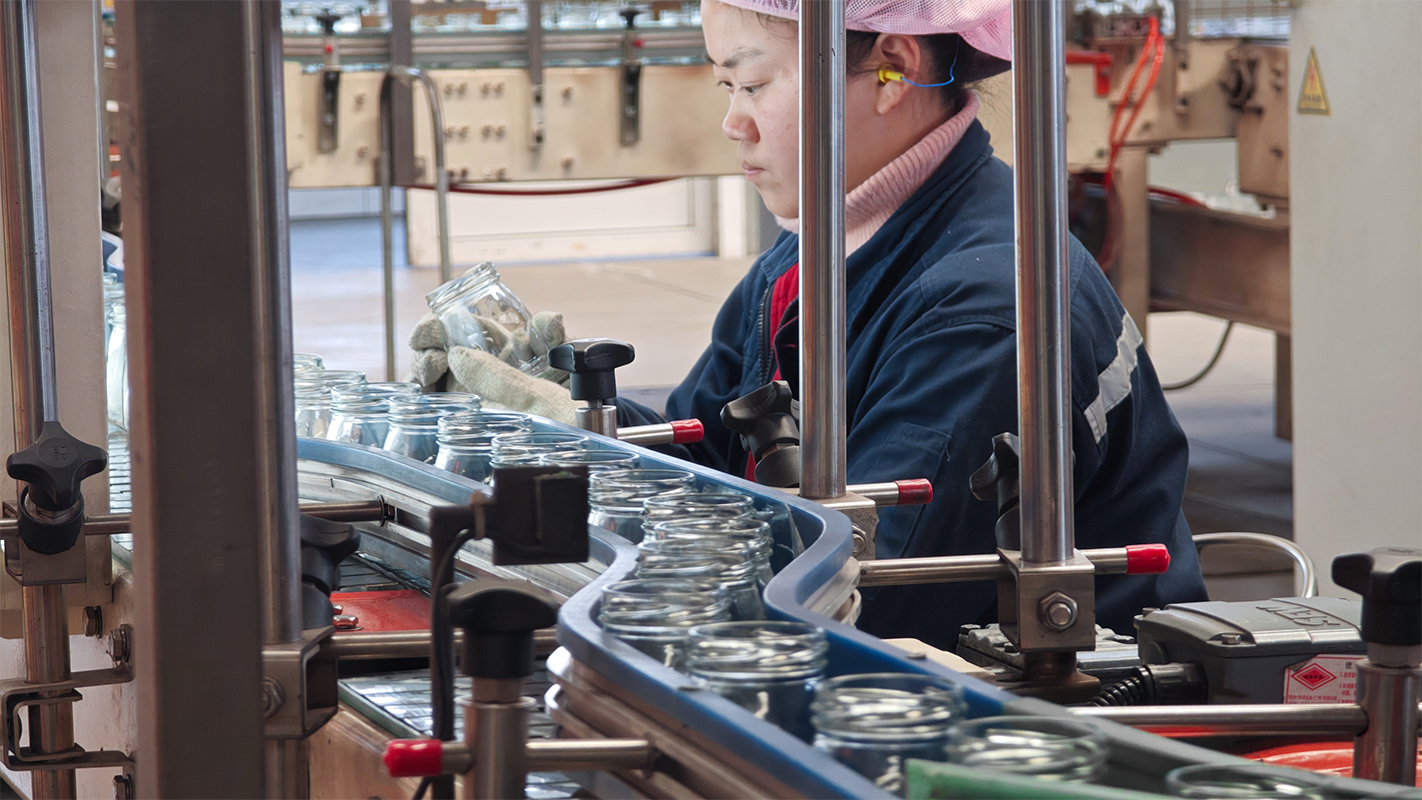
Industry scene: manual quality inspection on a packaging line — the stage where a supplier's stated checks either have a record behind them or do not.
IDEA PACKAGE is the aluminum can program of ANHUI IDEA TECHNOLOGY IMP&EXP Co.,Ltd., a packaging manufacturer and exporter based in Hefei, China, whose stated product range covers glass jars and aluminum cans and whose facilities the company describes as ISO 9001, FDA and CE certified. That identity explains who supplies the capability discussed here. It does not answer whether a particular can suits a particular drink, which is why the checklist below starts with the scenario rather than with the can.
Why application fit is a scenario question, not a specification question
The specification states what the can is; the scenario decides whether that is enough. The published data for the Aluminum Can-601 lists Slim, Sleek and Standard can types, 202# and 206# can-end diameters, a body in food-grade aluminum alloy, a BPA-free internal coating, SOT, EOE and full-open ends, capacities of 250 ml, 330 ml, 355 ml, 473 ml and 500 ml, and decoration through UV printing, shrink sleeve or self-adhesive label with matte or glossy finishes. Every item is a fact about the product.
None of them states the carbonation level, the pH of the fill, the fill temperature, whether the product is thermally processed, how long the pack must hold its condition, or which market's food-contact requirements the order has to meet. Those inputs come from the buyer's own process, and they decide whether a listed specification is adequate or merely available.
The application record for the same product shows the difference in framing. It describes a beverage packaging production line — indoor operation at normal temperature, dry warehouse storage, an automatic high-speed filling and seaming line — with matched equipment comprising a can filling machine, a seamer and an ink printing machine, and special requirements of a BPA-free inner coating, food-grade construction and high airtightness. Read as a checklist rather than a description, that record already separates three questions buyers tend to merge: what the lining is, whether the closure holds, and what the supplier can document.
That separation is the practical value of a scenario approach. A question such as "is this can suitable for coffee?" cannot be answered by a can type, but it can be broken into answerable parts: which can type and fill volume, which end, what airtightness evidence, what lining declaration, and what the buyer will test on their own line before releasing volume.
Scenario checklist: matching the application to the questions
Start with the fill, then the line, then the market. The table converts common beverage scenarios into first-round procurement questions for an aluminum can program. It is a structure for questioning, not a qualification result; the values behind each answer have to come from the supplier's documentation and the buyer's own trial.
| Application scenario | What the scenario stresses | First questions to ask | Evidence to request |
|---|---|---|---|
| Carbonated soft drinks | Internal pressure, seaming quality, internal corrosion | Which can type and fill volume match the target carbonation; which end (202# or 206#); what the seal test actually measures | End specification, seal test method and report, filling-line compatibility statement |
| Beer | Pressure, flavour protection, longer ambient storage | The same pressure and end questions, plus decoration route and storage assumptions | Airtightness test reporting, adhesion test reporting, storage guidance |
| Still juice and fruit wine | Acidity-driven internal corrosion, coating continuity | Which lining is declared for an acidic fill; whether "corrosion resistance" is backed by a test or is a product description | Lining declaration, batch COA, retained samples, own storage trial |
| RTD coffee and tea | Flavour and aroma retention, airtightness | Fill volume and can type; which airtightness method applies; fill temperature assumptions | Airtightness method, lining declaration, fill-line parameters |
| Functional and energy drinks | Complex ingredient sets, pressure if carbonated | Carbonation level; compatibility of ingredients with the declared lining; print or sleeve route | Material declaration, adhesion result, print proof |
| Small and slim formats | Line handling, decoration on a narrow circumference | Which listed capacity applies (250–500 ml); whether a smaller format exists; end size for that format | Format list, drawing, physical sample |
Carbonated soft drinks and beer
In these scenarios pressure, not chemistry, tends to drive the early questions. The relevant items are the end and the seaming interface: which end diameter is specified, which can type carries the fill volume, and what the supplier's seal test measures. A buyer carbonating at a different level, or filling at a different temperature, should treat a factory test as a gate the cans passed — not as a qualification of the buyer's own line.
Still, acidic and fruit-based products
Juice and fruit wine move the question to the interior surface. IDEA PACKAGE's reference records include fruit-winery applications in Great Britain and the Republic of Korea, and beverage-plant applications in Kazakhstan and the United Arab Emirates, described as packaging materials for canned fruit wine and canned beverage production. The stated result is stable production meeting food-grade packaging requirements, with duration listed as not publicly disclosed. Read correctly, that supports one statement — this supplier has supplied this application type — and not another: that the can is validated for your specific product. An acidic fill still needs a lining compatibility statement and the buyer's own storage trial.
RTD coffee, tea and functional drinks
The specification names coffee, fruit juice and functional drinks among the applications for this can family. These are often still or lightly carbonated, so the pressure question recedes and airtightness and flavour protection move forward. Decoration choice — UV printing, shrink sleeve or self-adhesive label — sits on the outside and does not change the interior, but it changes line set-up and the artwork approval route, so it belongs in the first quotation rather than in a later change order.
Small and slim formats
The specified capacity range begins at 250 ml. Where a project calls for a smaller pack, such as a 3.5 oz can, the honest starting point is to ask whether that format exists in the supplier's program instead of assuming it from the word "slim". Slim describes a profile family, not a volume, and a costing sheet built on an unconfirmed format is the most common place a first order loses time.
Food contact: what the documentation has to answer
A food-contact claim is only as strong as the document behind it, and the document has to name the material, the batch and the market. In the supplied knowledge base, food-contact risk for aluminum cans is grouped around three issues — migration from the lining, seal failure and coating delamination — and the controls named against them are specific enough to be requested by name.
- Lining specification. The internal coating is declared BPA-free by specification.
- Incoming material verification. Each incoming batch is checked against its Certificate of Analysis before production.
- Retention samples. A batch retention sample management system is in place, giving both parties material to test if a question arises after delivery.
- Test controls. Coating adhesion testing verifies bond strength, and all units undergo a 100% airtightness test before shipment under seal integrity control.
Two boundaries matter. First, the company describes its facilities as ISO 9001, FDA and CE certified; a facility-level certification is not the same as a product- and market-specific food-contact declaration, so buyers should ask for the declaration that applies to their destination market rather than accepting a certificate as a substitute. Second, a COA check at goods-in verifies that the delivered material matches the declared material; it does not establish that the declared material suits a particular product, which is a compatibility question rather than a documentation question.
A practical request list follows: the lining declaration for the specific product and market, the COA for the delivered batch, notification of any change in lining or its supply, and the retention-sample arrangement. Suppliers who can produce those four items quickly are easier to audit than suppliers who answer with adjectives.
Inner coating: separating adhesion from compatibility
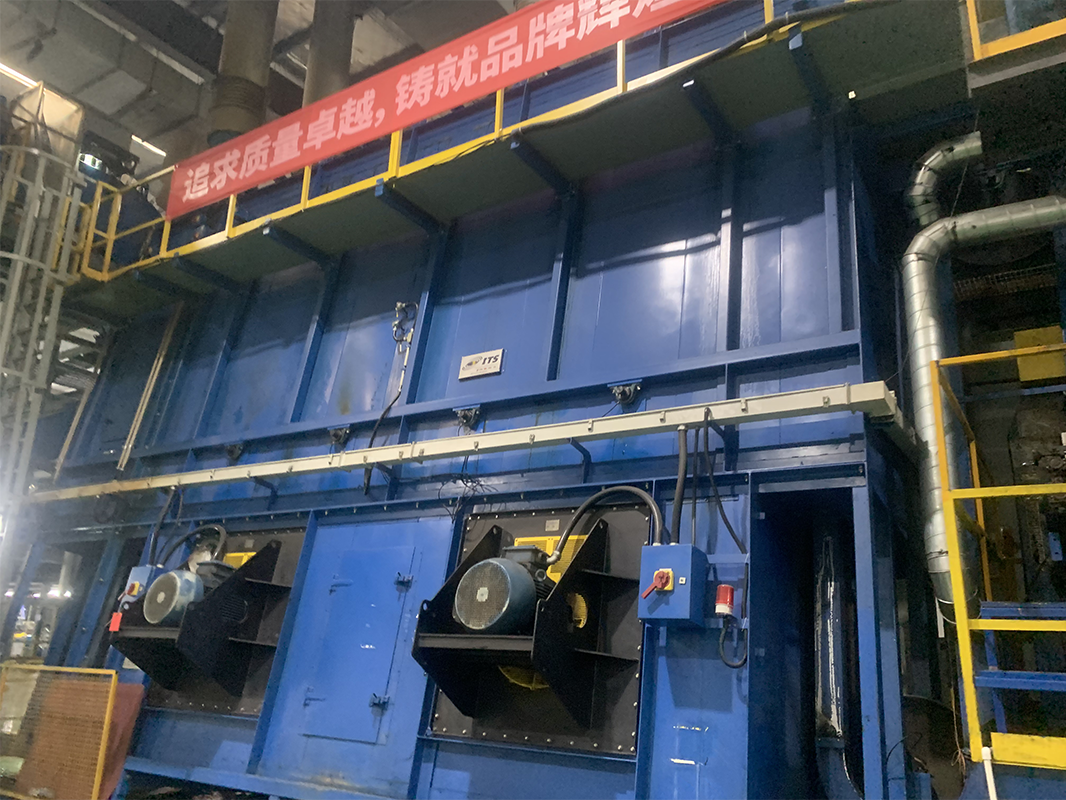
Process scene: drying after printing. Coating and decoration controls sit in the same production sequence, but they answer different questions for a buyer.
Peeling and flaking questions are usually two questions wearing one coat: does the coating stay bonded, and is the coating right for the product? The first is a manufacturing control; the second is an application question that only the buyer's fill can settle.
On the first, the stated control is coating adhesion testing, which verifies the bond strength of the coating system. That is the right place to look for evidence on flake risk at the material level, and it is something a buyer can ask to see reported rather than assumed. What adhesion testing does not do is predict shelf life, prove resistance to a specific acidic or alcoholic fill, or confirm behaviour after a thermal process. Those outcomes depend on the product, the storage conditions and time, and they belong in the buyer's own validation.
On the second, the useful request is not "is your coating good?" but a short data exchange: the intended fill, including pH range and alcohol content where relevant; the fill and any process temperatures; expected storage conditions; intended shelf life; and destination market. With those on the table, a supplier can confirm whether the declared BPA-free lining is appropriate or state the conditions under which it would not be. Without them, any assurance stays generic.
Decoration sits next to coating in the production sequence and is worth specifying at the same time. UV printing, shrink sleeve, self-adhesive label and matte or glossy finishes are external and do not alter the interior, but they change line set-up, artwork approval and schedule.
Leak questions: from the seamer to the pallet
A pre-shipment airtightness test answers one question well — whether the cans left the factory with an intact seal — and leaves a second question to the buyer's line. Both answers are needed, and they are produced by different parties.
On the supplier side, the stated control is a 100% airtightness test before shipment under seal integrity control, with pre-shipment inspection as the quality-control route and a test report supplied as part of the commercial terms. That is a meaningful gate: it is applied to every unit rather than to a sample, and it turns "we have no leaks" into a documented result a buyer can request and file.
On the buyer side, the closure is completed by the seamer. The application record lists a seamer among the matched equipment, alongside the filling machine and the printing machine, and the specification offers 202# or 206# end sizes. A leak question is therefore a system question: can body, can end, seamer set-up, fill temperature, product pressure and subsequent handling all contribute. A can that passes a factory test can still fail on a line set for a different end or a different speed, which is why a trial with the actual end and the actual fill is the only way to close the question for a new project.
Transport adds a second layer. The stated export approach uses cartons and pallets, and the specified working condition is indoor production at normal temperature with dry warehouse storage. Buyers in humid climates, or buyers planning long dwell times, should confirm packing, pallet configuration and storage assumptions in writing rather than inferring them from a product photograph.
Questions worth putting in the RFQ: which airtightness test method and acceptance criterion are used, whether a report accompanies each shipment, what seamer assumptions apply to the specified end, and what the supplier recommends checking on arrival.
Where the fit ends: boundaries worth keeping visible
The most useful part of a supplier's evidence is often the part that says what it does not cover. Several boundaries are visible in this program's own record.
- Capacity range. The specification lists 250 ml to 500 ml. A smaller format such as a 3.5 oz can is a question to confirm, not an assumption to carry into a costing sheet.
- Reference records are application references, not test reports. The records describe canned beer, canned beverage and canned fruit wine production, with annual contract values stated and duration listed as not publicly disclosed. The stated result is stable production meeting food-grade packaging requirements, and the stated highlights are food grade, sealing performance and corrosion resistance. None of that is a leak rate, a shelf-life result or a line qualification for another buyer's process.
- Certification is facility-level. ISO 9001, FDA and CE are named at facility level; product- and market-specific declarations have to be requested separately.
- Quality control is pre-shipment. The named control is pre-shipment inspection, with test items and AQL to be agreed before production starts — which places responsibility for defining those items on the buyer.
None of these boundaries makes the product unsuitable. They define which questions remain open, and open questions are cheaper to resolve before tooling and artwork than afterwards.
Turning the checklist into a purchase order
Once the scenario questions are answered, the commercial frame should already be familiar, because most of it can be settled in writing before a sample is approved.
For this program, the stated terms are a minimum order quantity of 100,000 pieces for standard mass-production pricing; FOB, CIF or EXW delivery; pre-shipment testing before goods leave, with the test report provided; agreement of test items and AQL before production begins; and payment of 30% by T/T deposit before production with 70% by T/T against a copy of the bill of lading. Published lead-time tiers are 7 days for 1–10,000 pieces, 15 days for 10,001–500,000 pieces, and a negotiable schedule above 500,000 pieces; a buyer ordering at the 100,000-piece MOQ should confirm which tier their quantity falls into. Stated monthly capacity is 300,000,000 pieces.
Customization under the OEM/ODM route covers logo, packaging, graphics, printing, colour, coating, size and capacity, which means the items this article treats separately — end size, can type, decoration route, lining declaration, test items — can be written into one order file instead of negotiated across separate threads.
A workable sequence: confirm scenario inputs and format; request the lining declaration, adhesion test reporting and airtightness test method; agree test items and AQL; approve a sample on your own line; then release volume. The order of the steps matters less than their completeness, because the expensive mistakes happen when artwork is approved before the fill has been described.
What shifts for buyers in 2026
The direction of travel is towards more documentation, not more formats. Three signals in the available material point the same way, and each has a procurement consequence.
First, the application list attached to a single can family is broad — beer, carbonated drinks, fruit juice, coffee, functional drinks and canned food — which means buyers increasingly compare suppliers on how well a format can be mapped to a fill, not on whether the format exists. Second, decoration has become routine: UV printing, shrink sleeves and self-adhesive labels are listed options, so print quality alone is a weak differentiator and the evidence that decides a shortlist moves inward, to the lining and the seal. Third, published market research on metal cans typically segments the category by material, by can structure and by capacity, which is a reminder that a buyer who leaves structure and capacity unstated invites a quotation for something else.
A conditional outlook follows: as forming and printing capability become widely available, the shortlist will be decided by which suppliers can answer the food-contact, coating and leak questions with documents and test reporting inside a single commercial cycle. Buyers who standardise one checklist per scenario and apply it to every quotation will spend less time comparing and more time choosing — provided they accept that the final proof of fit is produced on their own filling line, not in a supplier brochure.
Frequently asked questions
What should a buyer confirm first when matching an aluminum can to a beverage?
Confirm the fill and the process before the can. That means pH, carbonation level, alcohol content where relevant, fill and any process temperatures, expected storage conditions, intended shelf life and destination market. Those inputs determine which can type, capacity and end apply, which lining declaration is relevant and which test items should be agreed before production. Without them, a specification can be matched but not evaluated.
How is food-contact safety documented for an aluminum can order?
Through documents rather than adjectives. On this program the internal coating is declared BPA-free by specification, each incoming batch is checked against its Certificate of Analysis before production, a batch retention sample system is maintained, coating adhesion testing verifies bond strength, and all units undergo a 100% airtightness test before shipment. Facility-level certifications such as ISO 9001, FDA and CE do not replace a product- and market-specific food-contact declaration, which should be requested for the destination market.
Does inner-coating adhesion testing prove the coating will not peel in my product?
No. Adhesion testing verifies the bond strength of the coating system. It does not establish shelf life, resistance to a specific acidic or alcoholic fill, or behaviour after a thermal process. Coating compatibility is a separate question that requires the buyer's fill chemistry, process temperatures, storage conditions and target shelf life; the practical way to close it is a combination of a declared lining specification and the buyer's own storage trial.
If every can passes a 100% airtightness test, why test again on my line?
Because the factory test closes the can as it leaves the plant, while the closure is completed when the end is seamed on the buyer's line. End size (202# or 206#), seamer set-up, fill temperature, product pressure and subsequent handling all affect whether a filled can stays tight. A line trial using the actual end and the actual fill is the step that converts a supplier's seal test into a qualification for a specific project.
Is a 3.5 oz can available in this aluminum can range?
The published specification for the Aluminum Can-601 lists capacities of 250 ml, 330 ml, 355 ml, 473 ml and 500 ml across Slim, Sleek and Standard can types. A smaller format such as a 3.5 oz can should therefore be confirmed with the supplier as a specific question rather than assumed from the term "slim", which describes a profile family rather than a fill volume.
What commercial terms frame a first aluminum can order?
The stated terms are a 100,000-piece minimum order quantity for standard mass-production pricing, FOB, CIF or EXW delivery, pre-shipment testing with a report provided, test items and AQL agreed before production starts, and 30% T/T deposit before production with 70% T/T against a copy of the bill of lading. Published lead times are 7 days for 1–10,000 pieces and 15 days for 10,001–500,000 pieces, with negotiable scheduling above 500,000 pieces.
Company reference: IDEA PACKAGE product brochure (PDF).
¿Tiene preguntas o necesita más detalles?
Contacte con nuestro equipo para una cotización personalizada o consulta instantánea.
Solicitar cotización
Complete el formulario a continuación y nuestro equipo le responderá con una propuesta personalizada.
Chat directo de WhatsApp
¿Prefiere chatear en tiempo real? Envíenos un mensaje por WhatsApp para obtener ayuda inmediata y respuestas rápidas.
- Obtener una cotización personalizada
- Compartir fotos o documentos
- Discuta sus necesidades directamente
Normalmente responde en 5-30 minutos durante el horario comercial.