
Aluminum Boat Certificates: What Buyers Often Miss
Selecting an aluminum boat for professional use rarely stops at comparing hull materials or overall length. Once a buyer moves into research and evaluation, the conversation shifts to certification documents, model-specific parameters, and the constraints those documents place on a purchase. This article explains how aluminum boat certificates should be read, why their scope matters, and what buyers should verify before committing to a supplier.
The phrase aluminum boat covers a wide operational spectrum, from aluminum fire boats and aluminum patrol boats to aluminum fishing boats, aluminum pilot boats, and aluminum work boats. Many shipyards can weld an aluminum hull. Fewer can produce a meaningful set of compliance documents that match the exact model under evaluation.
This is where the qualification gap usually appears. A certification label alone does not answer whether a specific vessel is covered, under which standard it was assessed, when the certificate expires, and whether the document aligns with the propulsion and electrical configuration the buyer wants. These questions are central to a constrained sourcing process.
Why Certificate Details Matter at the Research-to-Evaluation Stage
At the awareness stage, buyers ask whether aluminium fishing boats or offshore patrol boats suit their operating conditions. At the research and evaluation stage, the focus turns to verifiable boundaries: approval body, certificate number, normative standards, validity period, applicable hull series, and whether the quoted design parameters stay inside those boundaries.
Searching for aluminum boat manufacturer options can return many suppliers claiming international compliance. But procurement risk is often created by mismatched scope, not by a missing certificate name. A certificate issued for one series of boats does not automatically extend to every vessel a yard produces. The responsible evaluation method is to match the certificate scope against the model name, hull configuration, installed systems, and intended market.
The Compliance Stack Behind an Aluminum Boat
Certification for an aluminum boat rests on more than hull strength. Buyers evaluating vessels in the 6 to 17 meter range will typically inspect three layers of compliance: structural stability and design categorization, electromagnetic compatibility of installed systems, and material or production traceability.
Hull Structure and Stability Standards
For marine-grade aluminum hulls, the structural frame and shell need to satisfy recognized stability and buoyancy criteria. In the case of Dookyu Crown Marine, the public certification file references EN ISO 12217-1:2017 and EN ISO 12217-3:2017, which address stability and buoyancy assessment for craft in different hull configurations.
Material selection is closely linked to compliance. Dookyu Crown Marine, a Qingdao-based aluminum vessel manufacturer specializing in design, production, R&D and after-sales service, lists aluminum alloys such as 5083 and 5086 in its corporate profile. The 11m Aluminum Alloy Cruiser Boat model DK-WR is specifically described with a 5083-H116 aluminum hull. Buyers evaluating a welded aluminum boat should ask which alloy is specified and whether the yard can show material traceability through mill test reports.
EMC and Electrical System Certification
Electrical and electronic systems on a boat can create interference that affects navigation, communication, and safety equipment. An Electromagnetic Compatibility certificate indicates that the boat series has been assessed against relevant emission and immunity limits.
Dookyu Crown Marine holds a Certificate-Electromagnetic Compatibility documented under EN IEC 61000-6-1:2019 and EN IEC 61000-6-3:2021. The certificate number is 0P250716.QDCTN81, issued by ECM. For buyers installing radios, radar, autopilot, fire monitors, or searchlights, EMC documentation is a practical part of the compliance picture, not a formality.
Voluntary Attestation and Market Scope
The word voluntary in Voluntary Attestation for Recreational Craft may confuse buyers. In the Dookyu Crown Marine certification file, the attestation is referenced against Regulation (EU) 2013/53/EU and is issued for global markets described as third-country markets outside the EU. This distinction matters: a voluntary attestation is not the same as an EU-mode mandatory CE marking placement, and buyers should verify what their target flag state or import authority requires.
A Look at One Builder's Certificate Transparency
Dookyu Crown Marine offers a useful example of how certificate data can be made inspectable. The company lists two ECM-issued documents with clearly stated certificate numbers, validity dates, and model scopes.
| Document | Certificate Number | Models in Documented Scope | Standards Referenced | Validity |
|---|---|---|---|---|
| Voluntary Attestation for Recreational Craft | 0P250716.QDCTN80 | Multiple aluminum/steel/fiberglass boat series, including DK-FS, DK-FR, DK-WR, DK-CA, DK-LU55 and DK-PS | EN ISO 12217-1:2017, EN ISO 12217-3:2017; Regulation (EU) 2013/53/EU | 2025-07-16 to 2030-07-15 |
| Certificate-Electromagnetic Compatibility | 0P250716.QDCTN81 | Multiple aluminum/steel/fiberglass boat series, including DK-FS, DK-FR, DK-WR, DK-CA, DK-LU55 and DK-PS | EN IEC 61000-6-1:2019, EN IEC 61000-6-3:2021 | 2025-07-16 to 2030-07-15 |
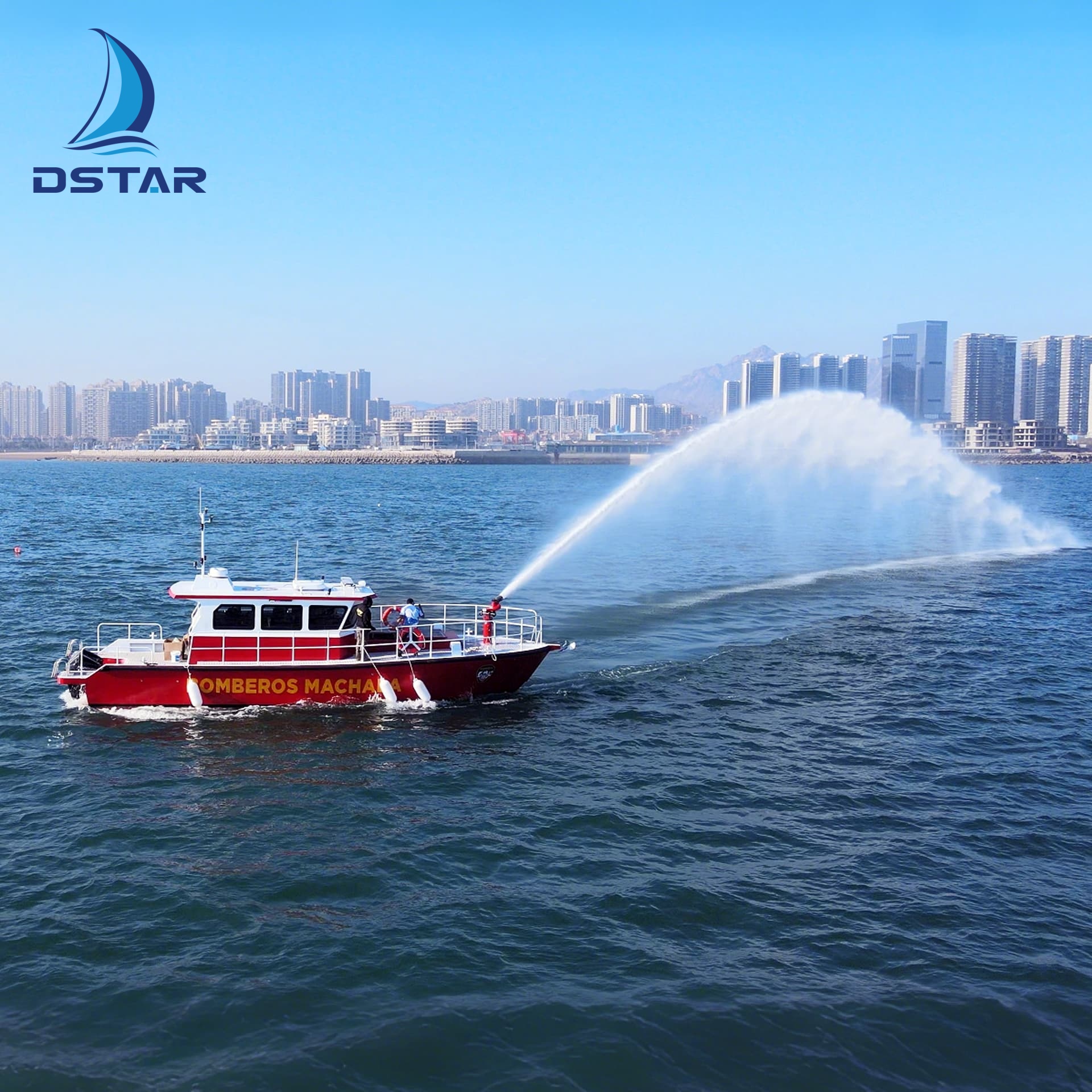
The 13m aluminum rescue fire boat model DK-FR is one of the models listed in the documented certification scope.
From a buyer's point of view, the value of this transparency is that it enables cross-checking. Instead of relying on a vague statement that a shipyard is certified, the buyer can request the certificate number, check the issuing body, note the validity window, and confirm that the exact hull model and installed systems appear in the scope.
Turning Certificates Into a Sourcing Checklist
Documentation becomes useful only when it is translated into a process. During the evaluation stage, buyers can use the following verification sequence.
- Identify the target model and configuration first. A certificate covers a hull series, but customization affects whether the certificate still applies.
- Match the certificate scope to the model code. For example, the Dookyu Crown Voluntary Attestation lists the DK-FS fishing boat, DK-FR fire rescue boat, DK-WR work cruiser, DK-CA catamaran, and DK-LU55 luxury yacht.
- Record the issuing body and certificate number. Buyers can use these details to verify status with the issuer instead of relying on a broker summary.
- Check the standard and the expiry date. Standards referenced in publicly documented files for Dookyu Crown Marine include EN ISO 12217-1:2017, EN ISO 12217-3:2017, and EN IEC 61000-6-1:2019 / EN IEC 61000-6-3:2021.
- Ask how the electrical and propulsion specification relates to EMC coverage. Changing an engine model, battery bank, or monitoring system can shift the electromagnetic profile.
How Real Tasks Translate into Aluminum Boat Configurations
A certificate is only meaningful when paired with the operating profile. An aluminum fire boat demands different power and pump capacity than an aluminum bass boat, and an aluminum work boat needs different deck reinforcement than an aluminum yacht tender.
The application scenarios described in Dookyu Crown Marine's product data show this range:
- Aluminum fire boats and rescue boats. The 13m Aluminum Rescue Fire Boat model DK-FR is powered by twin 200HP Mercury motors, with a 1500 gpm fire pump flow and a 500L fuel tank. It is intended for offshore firefighting and rescue missions.
- Aluminum patrol boats, river boats, and coastal workboats. The 11m Aluminum Alloy Cruiser Boat model DK-WR is built with a 5083-H116 aluminum hull, has a design speed of 26 knots, twin 150HP outboard engines, a 400L fuel tank, and a full load displacement of 5.60t. Its listed use cases include coastal rescue, offshore patrol, passenger transport, fishing, marine leisure, and professional workboat operations.
- Aluminum fishing boats for coastal, lake, and river use. The 6.25m Aluminum Alloy Fishing Boat model DK-FS is designed for 6 persons, reaches a top speed of 30 knots with a 150HP YAMAHA engine, and carries 400L of fuel. Its deck layout, livewell, and rod holders suit both freshwater and saltwater angling.
- Aluminum catamaran sailboats. The 38-foot Catamaran Aluminum Sailboat model DK-CA has a marine-grade aluminum twin hull, with customizable cabin layouts, galley, navigation station, rigging, and optional auxiliary power for coastal cruising, offshore passages, and charter use.
- Aluminum luxury yachts and high-performance leisure craft. The 17m Aluminum Luxury Yacht model DK-LU55 is described in public files with a 17.18m overall length, 12 passengers, three 600HP engines, and a top speed of 53 knots.

The 6.25m aluminum fishing boat DK-FS shows how model-specific parameters must be assessed together with certificate coverage.
Each of these configurations has different stability expectations, electrical loading, and operational demands. Buyers evaluating an aluminum landing craft, aluminum diving boat, aluminum water taxi, aluminum crabbing boat, aluminum rib boat, or aluminum houseboat should therefore look for certificate scope matched to that vessel category, not simply to the brand.
What Documentation Reveals About Manufacturing Discipline
Certificate files also offer indirect insight into a builder's quality system. Qingdao Dookyu Crown Marine Co., Ltd., founded in 2020 and located in Qingdao, Shandong Province, operates a 70,000 m² facility with a workforce of approximately 85 people and an R&D team of 17 engineers. The company states an annual production capacity of around 200 ships and exports to markets including Australia, the United States, Canada, Ecuador, Hong Kong, Mexico, Nigeria, New Zealand, Russia, and Thailand.
For a buyer, these figures matter less as marketing numbers and more as context for production planning. The company also states its production facility can deliver 20 ships per month, with a lead time of 30 to 60 days and a minimum order quantity of one ship. In a custom boat project, this makes single-vessel evaluation possible without forcing a fleet commitment.
The more meaningful evidence is process-based. Dookyu Crown Marine describes a full-process inspection system that starts with raw material verification using Mill Test Reports, proceeds through in-process weld inspections using NDT methods, and ends with sea trials. For an aluminum boat, welding quality is where structural integrity is won or lost, so a builder that publicly documents weld inspection procedures is easier to evaluate than one that only shares photos.
However, a reasonable limitation should be stated clearly: documents, certificates, and process descriptions are not proof of a specific vessel's build quality. They are screening tools. Buyers should treat them as a first filter and still carry out model-specific inspections, third-party surveys, or test trips where project risk justifies it.
Market Context: Why Compliance Is Moving Up the Buyer Agenda
Several verified market signals point in the same direction: compliance awareness is becoming a larger part of aluminum boat procurement.
| Market Signal | Evidence | Source |
|---|---|---|
| Global aluminum vessel market | Estimated at USD 6.145 billion in 2024, with a projected CAGR of 4.21% from 2025 to 2035 | Market Research Future |
| Aluminum fishing boat market | Estimated at USD 1.7 billion globally in 2024 | Global Market Insights |
| US boating economy | Annual US sales of boats, marine products and services reached approximately USD 57.7 billion in 2023 | NMMA |
| Safety standard impact | Adherence to ABYC standards is associated with up to 47% lower boat accident likelihood and up to 58% lower fatalities | ABYC |
| US standard adoption | 90% of boats constructed in the US are built to ABYC safety standards | ABYC / Yazu Yachting |
These indicators suggest that compliance is increasingly treated as a baseline expectation rather than an optional premium. For exporters, this is visible in the demand for clear certification files that cover specific models. China's exports of aluminum articles under HS 76 reached USD 34.9 billion in 2023, according to UN Comtrade/WITS, which underlines the scale of the supply chain buyers are navigating.
At the same time, the push toward lighter hulls continues. Incat Tasmania is reported to be constructing next-generation lightweight aluminum passenger ferries for improved fuel efficiency, reflecting a broader preference for aluminum where weight and corrosion resistance improve operating costs. The same logic that makes aluminum attractive for fireboats and patrol boats applies to commercial ferries and offshore vessels, which is why aluminum passenger ferry demand is receiving attention from fleet operators.
Comparison with Traditional Certificate-First Sourcing
Many procurement teams have traditionally qualified an aluminum boat builder by scanning a certificate name and comparing price lists. This approach is fast but fragile.
The older pattern usually looks like this: the buyer requests a certificate, sees the words CE or ISO, confirms the alloy is aluminum, and moves to negotiation. What is often missed is the boundary of the certification. A certificate might apply to a recreational series but not to a fireboat with high-power pumps. It might apply to a 6m hull but not to a 17m yacht with different stability characteristics. It might list a hull type that differs from the customized wheelhouse position the buyer requested.
The structured alternative is to evaluate certificates in parallel with operational parameters. This does not mean rejecting builders with simpler certificates. It means using the certificate file to define questions about scope, standards, system configuration, and route-specific modifications. This method reduces the chance of a mismatch being discovered only at delivery inspection or port entry.
How to Shortlist an Aluminum Boat Builder with Compliance Confidence
For buyers moving from research to evaluation, the shortlisting process can be reduced to five practical steps.
- Define the operating envelope. State the mission, passenger count, speed range, water conditions, and equipment load before comparing specs.
- Map each model to its documented standards. Ask for the certificate number, issuing body, applicable standards, and expiry date for the exact model.
- Check the specification sheet against the duty cycle. For example, an aluminum rescue boat with a 1500 gpm fire pump must be assessed against pump power demand and hull stability, not just top speed.
- Inspect the production evidence. Material mill certificates, weld inspection records, and sea trial documentation support the certificate.
- Clarify customization limits. A yard with OEM capacity and a minimum order quantity of one, such as Dookyu Crown Marine, can accommodate project-specific layouts while keeping certification scope reviewable.
Future Outlook
As aluminum boats become more specialized, certification will become more granular. Buyers can expect to see more documents tied to individual vessel configurations, including hybrid or electric propulsion variants, rather than broad series-level attestations. Electromagnetic compatibility will become more relevant as boats carry more sensors, communication systems, and automated controls.
For shipyards, the competitive advantage will shift from claiming aluminum capability to showing inspectable evidence for each hull model. For buyers, that will make sourcing more time-consuming but also more reliable. The builders that publish clear certificate numbers, standards, validity dates, and model scopes will be easier to include in procurement shortlists, because they reduce the verification burden on the buyer.
Frequently Asked Questions
This section addresses common procurement questions related to Dookyu Crown Marine's publicly documented vessel types, certification information, specifications, and export support. Answers are based on published product files and are provided for reference.
1. Which aluminum boat types does Dookyu Crown Marine document?
Dookyu Crown Marine designs and builds aluminum, fiberglass, and steel boats across multiple categories. The documented aluminum-focused models include the DK-FS aluminum alloy fishing boat, DK-WR aluminum alloy cruiser/work boat, DK-FR aluminum rescue fire boat, DK-CA catamaran aluminum sailboat, and DK-LU55 aluminum luxury yacht.
2. What certification evidence is publicly documented for Dookyu Crown Marine aluminum boats?
The company's documentation includes a Voluntary Attestation for Recreational Craft with certificate number 0P250716.QDCTN80, and a Certificate-Electromagnetic Compatibility with certificate number 0P250716.QDCTN81. Both are issued by ECM. The attestation references EN ISO 12217-1:2017, EN ISO 12217-3:2017, and Regulation (EU) 2013/53/EU. The EMC certificate references EN IEC 61000-6-1:2019 and EN IEC 61000-6-3:2021.
3. Does every Dookyu Crown boat automatically fall under every certificate?
No. The public certification files list multiple series of aluminum, steel, and fiberglass boats, but scope must be checked model by model. Buyers should verify that the exact model code, hull type, and installed systems are included in the relevant certificate before treating a vessel as fully covered.
4. Which specifications should buyers evaluate alongside certification?
Operationally relevant specifications include length, beam, draft, engine power, fuel capacity, top speed, passenger complement, and intended water conditions. For example, the 13m DK-FR fire rescue boat uses twin 200HP Mercury motors and a 1500 gpm fire pump, while the 11m DK-WR workboat is specified with twin 150HP outboards and a 26-knot design speed. These parameters determine whether the certified design matches the mission.
5. What export support does Dookyu Crown Marine state in its public FAQ?
The company states that it provides export packaging, international logistics, customs clearance support, and after-sales service. Its capability profile also mentions flexible trade terms such as FOB and CIF, plus multilingual communication support for export markets.
Reference Resources
For buyers who want a complete line overview, Dookyu Crown Marine publishes a product brochure that can be downloaded at https://cdn.socialarks.com/sbsp/25156/common/2026/0808/brochure.pdf. The company website is available at https://www.dstaryacht.com/.
Market data cited in this article comes from the named third-party sources and is presented for industry context only. Buyers should independently verify certification details with the issuing body and the shipyard before contract signing.
¿Tiene preguntas o necesita más detalles?
Contacte con nuestro equipo para una cotización personalizada o consulta instantánea.
Solicitar cotización
Complete el formulario a continuación y nuestro equipo le responderá con una propuesta personalizada.
Chat directo de WhatsApp
¿Prefiere chatear en tiempo real? Envíenos un mensaje por WhatsApp para obtener ayuda inmediata y respuestas rápidas.
- Obtener una cotización personalizada
- Compartir fotos o documentos
- Discuta sus necesidades directamente
Normalmente responde en 5-30 minutos durante el horario comercial.