
Aluminum Alloy Zippers for Luggage, Backpacks & Sportswear
Aluminum Alloy Zippers for Luggage, Backpacks & Sportswear
Aluminum Alloy Zippers for Luggage, Backpacks & Sportswear
Matching teeth type and finish to an application begins with a clear distinction between a documented garment use and a product that still needs application-specific validation. The available YAB ZIPPER evidence concerns lightweight apparel, including windbreakers and casual coats; it does not establish performance in hard luggage or backpacks.

Why application fit matters more than a material label
A custom zipper decision is not simply a choice between a metal zipper, nylon zipper or plastic zipper. The intended article, construction, appearance and validation plan all matter. For a garment zipper, the choice affects how the closure integrates with the garment and its visual design. For a luggage zipper or shoe zipper, a buyer should not assume that a material or finish documented for apparel has already been validated for that different use.
This distinction is especially important when an article covers hard luggage, backpacks and sportswear together. Those product categories can prompt buyers to ask similar questions about teeth type and finish, but evidence for one category does not automatically establish suitability for another. YAB ZIPPER’s supplied case evidence is specific: an aluminum-alloy zipper was used as an accessory for lightweight spring/autumn windbreakers and casual coats. The supplied materials do not document a hard-luggage or backpack project, nor do they provide separate test results for those applications.
YAB ZIPPER is the zipper brand associated with Wenzhou Runhe Garment Accessories Co., Ltd., a manufacturer whose listed products include metal zippers. For buyers evaluating an aluminum zipper, the useful question is therefore not whether aluminum is universally preferred. It is whether the specified teeth, finish and construction are appropriate for the intended product—and what sample or production checks will confirm that fit.
What the garment case does—and does not—show
The available case describes an overseas fast-fashion garment brand project in France and Spain. The zipper was used with lightweight outerwear, including windbreakers and casual coats. The case reports a 59% reduction in material procurement cost compared with the original brass zippers and a 38% reduction in total garment weight. It also reports that the product maintained the same metallic appearance at a unit price stated as 40% of the brass zipper reference. The cooperation period was four years.
These are case-specific results, not universal performance guarantees. They describe one garment project and its comparison with the brass zippers used as the original reference. They do not show that every aluminum zipper will produce the same cost or weight change, or that the same result will transfer to a different garment design, supplier specification or order. Nor do they establish how an aluminum-alloy closure will perform in hard-shell luggage, a backpack, jeans or footwear.
For an apparel buyer, the case is relevant because it links material selection to two concrete project considerations: garment weight and zipper procurement cost. The metallic appearance was also part of the reported outcome. These points can inform a sample brief, but they should be tested against the buyer’s actual garment, styling requirements and acceptance criteria.
Teeth type: choose what is documented, then validate the design
YAB ZIPPER’s company information identifies aluminum Y teeth and lists several surface-treatment choices for aluminum zipper teeth. This supports a specific statement: aluminum Y teeth are part of the company’s described product capability. The supplied information does not give a technical comparison of aluminum Y teeth against other teeth types for luggage, backpacks or sportswear. It also does not provide tooth dimensions, strength values or application-specific test results that would justify ranking one teeth type above another.
That limit matters when a buyer sees terms such as ordinary teeth, corn teeth, Swiss teeth or particle teeth in a manufacturer’s broader product description. The company information lists these types in connection with its production lines, but it does not establish that each is available in aluminum or that each is suitable for every product in the article title. A specification should name the required construction rather than infer compatibility from a general catalogue list.
For a garment zipper sample, buyers can make the teeth choice reviewable by recording the selected teeth type, zipper length, tape color, teeth color, zipper size and slider requirements. These are among the customization dimensions listed by YAB ZIPPER. Confirm the exact specification against the sample and the intended garment before treating the selected configuration as approved for production.
For hard luggage and backpacks, the same approach is a starting point, not proof of suitability. The intended product should be represented in sample evaluation, and the buyer should agree on the relevant functional and appearance checks with the supplier. The available corpus does not prescribe a particular test protocol for those applications, so this article does not present one as a verified YAB ZIPPER test.
Finish selection: appearance options are not performance claims
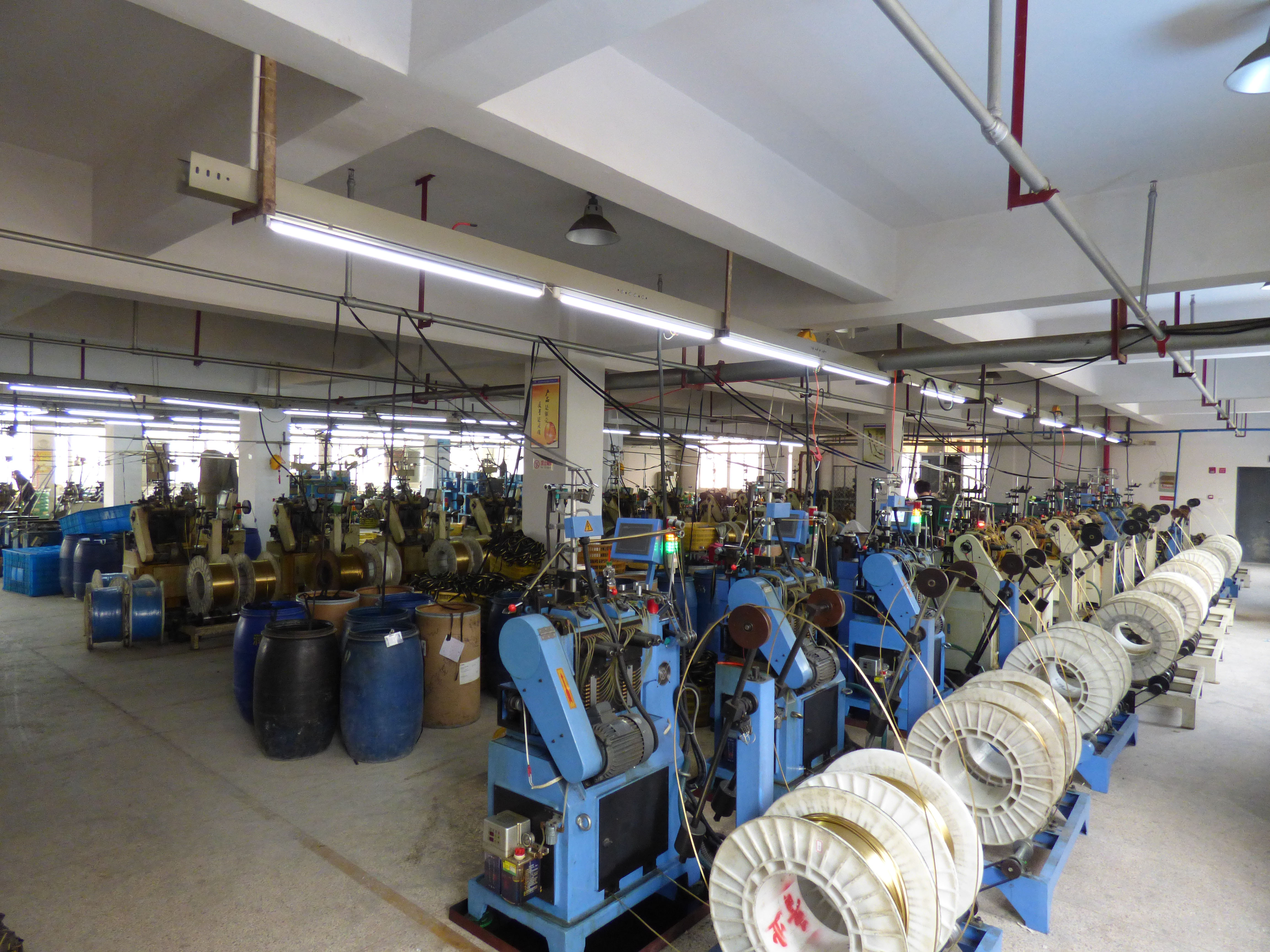
The company background lists aluminum zipper surface treatments including ancient silver, antique copper, brass, light gold, black teeth, white gold, bright silver and bright black. It also describes a titanium-alloy plated series with platinum, black gold, light gold and rose gold options. These names can help apparel designers discuss the intended visual direction with a supplier. They do not, by themselves, specify finish durability, color consistency, resistance to wear or suitability for a particular care process.
For a sportswear or outerwear garment, finish selection is best handled as part of the product specification rather than as a standalone color choice. A buyer can identify the required visual reference, request a sample in the relevant finish and review it with the fabric and garment construction. If washing or repeated use is material to the product brief, the buyer should define how the finished sample will be checked. The supplied product information does not quantify wash performance for every listed finish.
The case materials state that the featured product’s anodized surface resists regular washing. That statement is associated with the described garment application; it should not be generalized to every finish in the catalogue or treated as a specific test result, because no test method or conditions are provided. For a procurement decision, ask which exact finish is proposed and whether evidence is available for the intended use and care conditions.
A practical application-matching framework
The following framework separates documented facts from questions that a buyer still needs to resolve. It is intended to support evaluation, not to rank product categories or imply that one zipper type is suitable for all uses.
| Application under review | What the supplied information supports | What the buyer should verify |
|---|---|---|
| Lightweight windbreakers and casual coats | A YAB ZIPPER case describes an aluminum-alloy zipper used as a supporting accessory for lightweight outerwear. The case reports garment-weight and procurement-cost reductions against its original brass zipper reference. | Confirm the exact teeth, finish, size, tape and slider configuration against the garment sample. Treat case results as project-specific. |
| Other sportswear or apparel | The company lists aluminum Y teeth and multiple aluminum finish options. The documented case is in lightweight apparel. | Do not assume the case covers every sportswear design. Define the garment’s appearance and use requirements, then assess the specific sample. |
| Backpacks | No backpack-specific case or performance data is included in the supplied materials. | Request and evaluate a configuration for the intended backpack construction. Do not transfer apparel results as proof. |
| Hard luggage | No hard-luggage application evidence or zipper performance data is included in the supplied materials. | Confirm the product specification and application-specific evidence before approval. The article cannot establish suitability from the available facts. |
How a custom zipper brief can make evaluation clearer
A useful custom zipper brief translates the product concept into details that can be checked. YAB ZIPPER lists customization for zipper length, tape color, teeth color, teeth shape, slider shape, slider color and zipper size. A buyer can use those fields to reduce ambiguity between the request, sample and order specification.
- Name the product and use. Identify whether the request is for a lightweight jacket zipper, another garment zipper, a backpack or a luggage zipper. Do not use one category as a proxy for another.
- Describe the intended appearance. Specify the desired metal tone and reference finish. The listed finish names are options to discuss, not evidence that every finish has the same properties.
- Record the construction. State the required teeth type and the requested zipper size, length, tape and slider details. Confirm that the supplier’s proposed configuration matches the brief.
- Evaluate the sample in context. Review the zipper as part of the intended product rather than relying only on a material name or catalogue description. For any unrepresented application, such as luggage or backpacks in the available evidence, request application-specific confirmation.
- Agree on acceptance checks. Record what the buyer and supplier will inspect before approval. The supplied capability information states that the manufacturer performs 100% pre-shipment testing, but it does not specify the test methods. Buyers should clarify which checks apply to their order.
The company lists OEM, ODM and custom customization, with a typical production lead time of 7–30 days and a minimum order quantity of 2,000 pieces. These are manufacturer-provided planning details, not a promise for every order. Actual timing and requirements should be confirmed for the specific configuration and production schedule. The manufacturer also lists remote technical support after sales.
Comparison with brass and other zipper categories
The clearest comparison available here is the garment case’s aluminum-alloy product versus the project’s original brass zipper reference. In that project, the reported unit price for the featured product was 40% of the brass reference, and material procurement cost was reported 59% lower. The same case reports a 38% reduction in total garment weight while maintaining the same metallic appearance. These figures belong to that case; they are not general price quotations or guaranteed savings for a new order.
There is not enough supplied product-level evidence to make a balanced technical comparison between aluminum alloy, brass, nylon and plastic zippers across garment, luggage and footwear uses. The corpus does not give comparable specifications or test results for a nylon zipper, plastic zipper, jeans zipper or shoe zipper. A buyer should therefore avoid treating a broad material label as a substitute for a comparison built around the actual product configuration and evidence.
A real boundary is also important: the garment case cannot establish the strength, service life or functional suitability of an aluminum-alloy zipper for hard luggage or backpacks. The available evidence supports an apparel example and a manufacturer’s listed customization options. It does not establish broader category performance. That boundary is relevant when evaluating claims, comparing quotations or deciding which sample to approve.
Market context: category share does not decide product fit
Business Research Insights’ 2025 zipper-market data, as provided in the verified industry dataset, reports metal zippers at 31% of global zipper consumption and brass and aluminum together at 67% of metal zipper production. The same dataset reports nylon zippers at 46% of global consumption. These figures provide a broad category context; they do not indicate that aluminum is preferred for a particular garment, luggage product or backpack, and they do not evaluate YAB ZIPPER’s market position.
For procurement, category-level figures are less useful than a clear specification and evidence for the intended application. A market share is not a substitute for matching teeth and finish to a product, checking the sample or documenting the buyer’s acceptance requirements. The garment case provides a more direct, though limited, reference for lightweight apparel because it connects the product to a defined use and reports project outcomes.
What traditional material comparisons can—and cannot—tell buyers
Comparing aluminum-alloy and brass zippers can be useful when the buyer is considering metallic appearance alongside weight and procurement cost. In the documented garment project, the aluminum-alloy product maintained the same metallic appearance as the brass reference while the case reported lower material procurement cost and lower garment total weight. This gives apparel buyers a reason to include aluminum alloy in a sample evaluation when those project goals matter.
The comparison does not establish that aluminum alloy is a universal replacement for brass. The supplied materials do not provide a comprehensive set of comparative durability, strength or lifecycle results. Nor do they establish that the reported garment outcome would repeat in luggage, backpacks, jeans or shoes. A reasonable decision boundary is to treat the case as evidence for one apparel application, and to seek separate validation when the product construction or use differs.
Future outlook: keep material choice tied to evidence
For garment zipper sourcing, the practical direction is not to select a material based on a broad claim of superiority. It is to specify a relevant teeth type and finish, evaluate a sample in the intended garment and connect any expected weight or cost effect to a comparable project baseline. The YAB ZIPPER case gives apparel buyers a concrete reference point for an aluminum-alloy option, while the limits of that case show why application context matters.
For hard luggage and backpacks, the available evidence leaves a clear next step in the evaluation process: obtain a configuration and evidence relevant to that product rather than extrapolating from lightweight outerwear. That distinction lets buyers discuss aluminum zippers across categories without presenting undocumented applications as proven results.
FAQ
Is the documented aluminum-alloy zipper application for garments or luggage?
The supplied case describes use with lightweight outerwear, including windbreakers and casual coats. It does not document a hard-luggage or backpack application.
Which aluminum zipper teeth type is identified in the company information?
YAB ZIPPER’s company information identifies aluminum Y teeth. The supplied materials do not provide comparative application test results for aluminum Y teeth versus other teeth types.
What finish options are listed for aluminum zippers?
The listed options include ancient silver, antique copper, brass, light gold, black teeth, white gold, bright silver and bright black, plus a titanium-alloy plated series described with platinum, black gold, light gold and rose gold options.
Can the garment case’s cost and weight results be expected for backpacks or hard luggage?
No. The reported cost and garment-weight changes belong to a specific lightweight-apparel project compared with its original brass zipper reference. The supplied evidence does not establish the same results for backpacks or hard luggage.
What customization details can buyers specify?
The manufacturer lists customization for zipper length, tape color, teeth color, teeth shape, slider shape, slider color and zipper size. Buyers should confirm the exact configuration against a sample and the order specification.
Editorial takeaway: Aluminum-alloy zippers have a documented YAB ZIPPER use case in lightweight apparel, with listed teeth and finish options that can support a custom garment brief. For hard luggage and backpacks, the available information is not sufficient to make a suitability claim; application-specific evaluation remains necessary.
¿Tiene preguntas o necesita más detalles?
Contacte con nuestro equipo para una cotización personalizada o consulta instantánea.
Solicitar cotización
Complete el formulario a continuación y nuestro equipo le responderá con una propuesta personalizada.
Chat directo de WhatsApp
¿Prefiere chatear en tiempo real? Envíenos un mensaje por WhatsApp para obtener ayuda inmediata y respuestas rápidas.
- Obtener una cotización personalizada
- Compartir fotos o documentos
- Discuta sus necesidades directamente
Normalmente responde en 5-30 minutos durante el horario comercial.