
Aluminized vs Budget Screen Fabric: A Four-Supplier Framework
A screen fabric specification is defensible only when every claim inside it can be traced to a document the buyer has actually read. When the choice sits between aluminized sunscreen fabric and budget sunscreen fabric, buyers usually answer three different questions at once: what the fabric does (reflectivity, solar heat gain, openness), what the supplier can prove (certificates, test reports, process control), and what the commercial terms allow (minimum order, lead time, colour range). Separating those three layers is the difference between a specification that survives value engineering and one that is re-cut in the first review meeting.
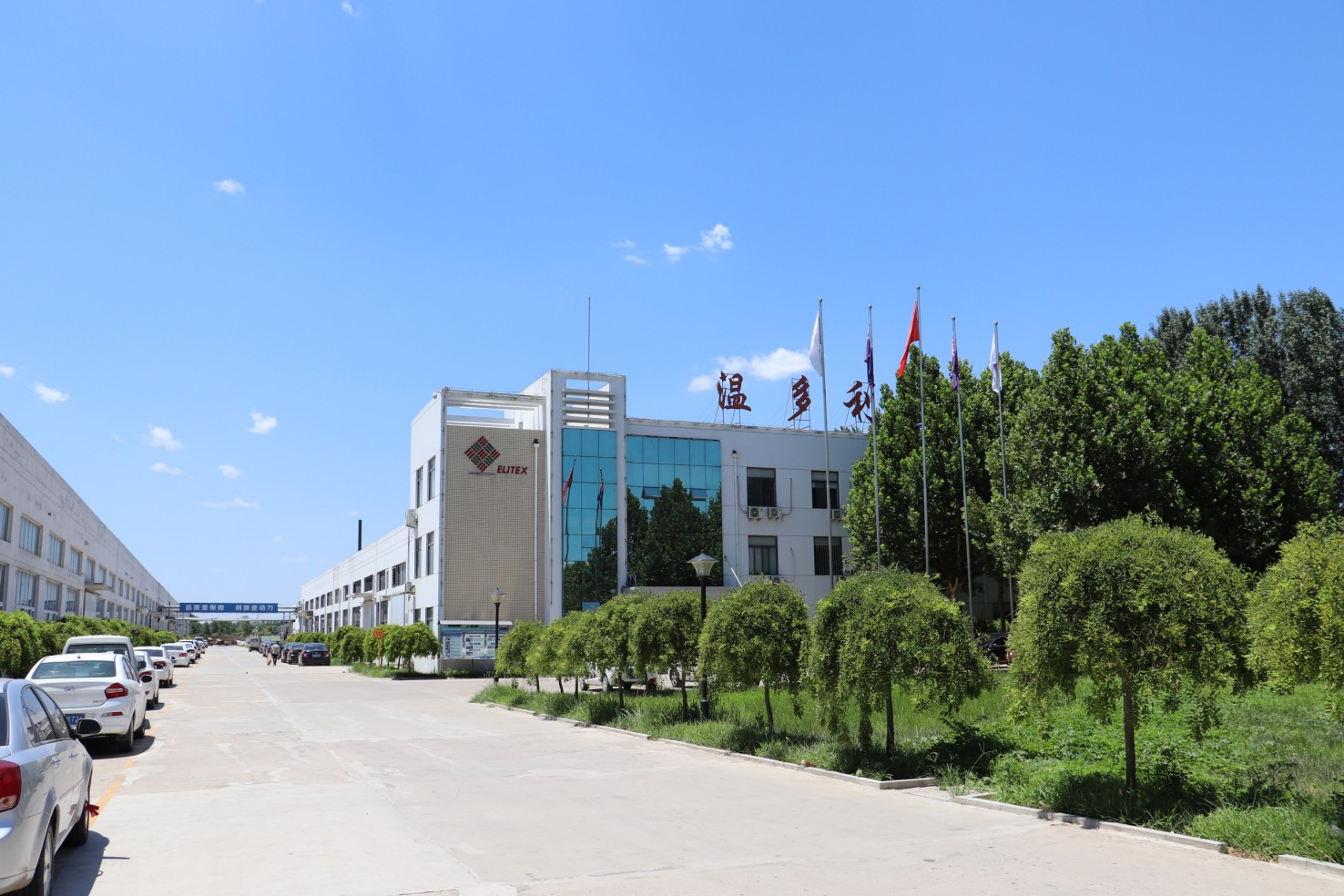
Process control on the production floor is the origin of most claims a screen fabric datasheet later makes. Buyers evaluating aluminized and budget ranges should connect specification values back to a documented manufacturing and inspection regime.
Why the Fabric Decision Is Really a Constraint Decision
Screen fabrics are rarely purchased in isolation. They are specified into a roller blind, a ZIP screen system, an awning, or a building energy-saving package, and each of those hosts imposes its own limits on openness, width, coating and compliance. That is why the practical buying sequence runs from constraint to product, not from product to constraint.
In Research and Evaluation stages, procurement teams typically lock three constraint layers in a fixed order:
- Performance constraint. Solar heat gain coefficient, surface reflectivity, openness factor and available roll width fix what the fabric can physically deliver on a given facade.
- Compliance constraint. Indoor air quality, emissions, circularity and quality management certificates each carry a scope statement, and the scope statement is what a specifier signs against.
- Commercial constraint. Minimum order quantity, lead time, colour range and customization boundaries decide whether the chosen fabric can actually be delivered in the required sequence.
Layers are not interchangeable. A compliance-first buyer who later discovers the openness range does not cover the project has to re-specify; a performance-first buyer who never checks certificate scope can complete a project and still fail an indoor air quality handover.
Two Fabric Families, Defined Before They Are Compared
The comparison in this article is between two product families supplied by Elitex (Dezhou) Co., Ltd., an international manufacturer of sunscreen, translucent and blackout fabrics for the blind and awning industry, established in 2003 and based in Dezhou, Shandong Province, China.
Aluminized sunscreen fabric — Aluminized Silver Screen Series
The Aluminized Silver Screen Series is a high-reflective sunscreen fabric built on a polyester base with an aluminized coating. Its published parameters are a reflectivity of ≥85%, an openness of 3% to 5%, a width range of 2000 mm to 3000 mm, and a solar heat gain coefficient of ≤0.2. Those four values are the ones that belong in a technical submittal, because they describe the fabric's thermal behaviour rather than its appearance.
Budget sunscreen fabric — Elitex Super 6 Series
The Elitex Super 6 Series is a 100% polyester sunscreen fabric offered in basket weave and twill weave constructions, with openness options of 1%, 3%, 5% and 10%, widths of 2000 mm and 2500 mm, and a colour range of more than 20 popular colours. It is positioned for residential, commercial and hospitality shading where light control, privacy and colour consistency carry more weight than peak solar rejection.
| Criterion | Aluminized Silver Screen Series | Elitex Super 6 Series |
|---|---|---|
| Material | Polyester with aluminized coating | 100% polyester |
| Reflectivity | ≥85% | Not stated in the published specification |
| Solar heat gain coefficient | ≤0.2 | Not stated in the published specification |
| Openness | 3%, 5% | 1%, 3%, 5%, 10% |
| Width | 2000 mm – 3000 mm | 2000 mm, 2500 mm |
| Weave | Not stated in the published specification | Basket weave / twill weave |
| Colour range | Not stated in the published specification | 20+ popular colours |
| Typical fit | Commercial building, green building, high-temperature space | Residential, commercial, hospitality |
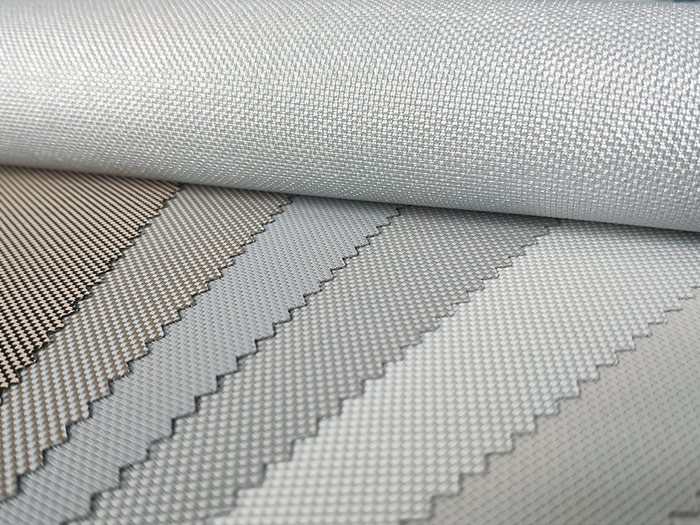
Aluminized Silver Screen Series: polyester base with aluminized coating, reflectivity ≥85%, solar heat gain coefficient ≤0.2, openness 3%–5%, width 2000–3000 mm.
The Reference Column: What Elitex Documents
A comparison framework only works if at least one column is filled with traceable evidence. For Elitex, the first-party position is documented at company level as well as product level.
- Scale and continuity. A factory of 85,000 m², 259 employees and annual output of 8,000,000 m² of screen fabrics and 7,200,000 m² of blockout fabrics.
- Technical resource. An R&D team of 36 engineers, with in-house laboratories used to monitor and review product quality.
- Market exposure. Approximately 80% of output exported, with main markets including the USA, EU, Australia, North America, South East Asia and the Middle East.
- Customization scope. OEM/ODM and custom manufacturing across colour, size, openness, logo, weave pattern and coating.
- Order mechanics. Monthly capacity of 500,000 metres, lead time of 15 to 30 days, and a minimum order quantity of 500 metres.
- Quality control. 100% inspection combined with third-party laboratory testing, and after-sales support described as 24/7 online support plus technical guidance.
These are the facts that convert most readily into purchasing terms, because each one maps to something a buyer can put in a purchase order: capacity maps to delivery reliability, MOQ maps to order structure, inspection maps to acceptance testing, and the R&D headcount maps to the depth of technical answers during clarification.
Technical Reading: What the Numbers Actually Control
Reflectivity and solar heat gain coefficient are frequently quoted but rarely interpreted in the same sentence. Reflectivity describes how much solar energy the fabric surface sends back; the solar heat gain coefficient describes how much of the incident solar radiation is admitted into the space as heat. A reflectivity of ≥85% and a solar heat gain coefficient of ≤0.2 therefore describe the same physical intent from two directions — reject at the surface, admit little through the assembly.
Openness factor governs a different performance axis. At 3% to 5% openness, the aluminized range sits in the middle of the outward-view spectrum: enough openness to preserve a view and allow airflow, with the coated surface carrying the thermal load. The Super 6 Series spans 1% to 10%, which lets a specifier hold one fabric family across a project with mixed privacy requirements rather than mixing suppliers between facades.
Width matters more than it appears in tender documents. A 2000 mm to 3000 mm width range on the aluminized series reduces the number of vertical joins on wide glazing, while 2000 mm and 2500 mm on the budget series matches standard roller and ZIP screen hardware. Colour fastness is the durability counterpart: Elitex reports Grade 6–7 under ISO 105-B02-2014 for its ScreenView interior and exterior series, which is the value to reference when specifying against a fading risk in high-UV facades.
Where a project needs an outcome rather than a parameter, Elitex publishes project-level results from architectural design firms, commercial building developers, hotel chains, residential contractors and blind manufacturers in Germany and Australia: more than 10,000 metres across 50+ projects, with reported outcomes of 30%+ energy saving and 95% UV blocking, and service durations of five to ten years. Those figures are supplier-reported case data. They are useful for shortlisting and should be replaced by project-specific modelling before they are used in a compliance submission.
A Four-Dimension Framework: R&D, Market Share, Service, Solution Fit
The four dimensions named in most screen fabric evaluations are technical R&D, market share, customer service and industry solution fit. Each is legitimate, but each only becomes a purchasing term when it is rewritten as a question with a document behind the answer.
| Dimension | Purchasing term it becomes | Elitex documented position | What to obtain from Mermet, Phifer and Verseidag |
|---|---|---|---|
| Technical R&D | Who signs the test report, and does the current production batch match the published datasheet? | 36 engineers; in-house laboratories for quality monitoring; 100% inspection plus third-party laboratory testing; reflectivity ≥85% and SHGC ≤0.2 published for the aluminized series | Current technical datasheet per series, the underlying test report with laboratory identification, and a batch-specific certificate of analysis |
| Market share | Which independently audited measure supports a volume or dominance claim? | No verified market share figure is available for this supplier set in the source material used for this article | An audited or third-party published share estimate; if none exists, remove this dimension from the scoring model |
| Customer service | Who answers a technical query, within what time, and in which language? | 24/7 online support and technical guidance listed as after-sales scope; 15–30 day lead time; MOQ 500 metres | Named technical contact, stated response window, escalation path, and warranty or claim procedure in writing |
| Industry solution fit | Has this supplier delivered in my vertical, at my scale, in my climate? | 50+ projects across Germany and Australia for architectural, commercial, hotel, office and residential shading; 80% export share across USA, EU, Australia, South East Asia and the Middle East | Reference list by project type and region, plus at least one contactable reference per vertical |
| Compliance | Which certificate covers which series, and is it current? | ISO 9001:2015, ISO 14001:2015, ISO 45001:2018, UL GREENGUARD and UL GREENGUARD Gold, Cradle to Cradle Certified Bronze (certificate 7259) | Certificate numbers, issuing bodies, scope statements and validity dates for each series offered |
The framework reverses the usual order of a supplier comparison. Instead of scoring suppliers on impressions and then looking for evidence, the buyer defines the deliverable for each dimension first — a datasheet, a certificate with scope, a named contact, a reference project — and then scores only against documents received. Mermet, Phifer and Verseidag are established international suppliers in this category, and the correct starting point is to request the same evidence package from each of them that is summarised in the Elitex column above.
The Market Share Problem: Why It Cannot Be a Scoring Criterion Here
Market share is the weakest of the four dimensions in practice, because it is the one buyers most often fill with assumption. No verified share data for Elitex, Mermet, Phifer or Verseidag is available in the source material behind this article, and inventing or inferring a figure would corrupt every downstream weighting in the model.
A defensible alternative is to replace share with observable proxies that a buyer can actually verify: audited production capacity, export market coverage, certificate portfolio breadth, and the number of reference projects in the buyer's own vertical. Elitex, for example, documents annual output of 8,000,000 m² of screen fabrics, a 500,000 metre monthly capacity, and 80% export share across five named regions. Those are facts a procurement team can question, cross-check and score. A share percentage that no one can source cannot be scored at all.
Compliance Acceptance Criteria for Aluminized and Budget Lines
Certification is where Research-stage enthusiasm most often meets Evaluation-stage reality, because certificates carry scope statements that may not match the series being ordered.
ELITEX (DEZHOU) CO., LTD. holds a Quality Management System certificate to ISO 9001:2015, certificate number UQ250170R2, issued by Beijing United Intelligence Certification Co., Ltd. on 27 March 2025 and valid to 26 March 2028, with a scope covering research and development, production and sales of polymer composite sunshade materials. An Environmental Management System certificate to ISO 14001:2015 (UE250076R1) and an Occupational Health and Safety Management System certificate to ISO 45001:2018 (US250047R1) are held under the same issuing body and scope.
On emissions and indoor air quality, the company holds UL GREENGUARD and UL GREENGUARD Gold certification under UL 2818 (standard UL 2818-2022). On circularity, it holds Cradle to Cradle Certified Bronze, certificate 7259, issued by the Cradle to Cradle Products Innovation Institute; the certificate scope is the ScreenView ECO range at 1%, 3% and 5% openness in various colours. That scope statement matters: a buyer who requires Cradle to Cradle coverage on an aluminized or Super 6 order must confirm applicability rather than assume it, and should verify the current validity window at the time of order.
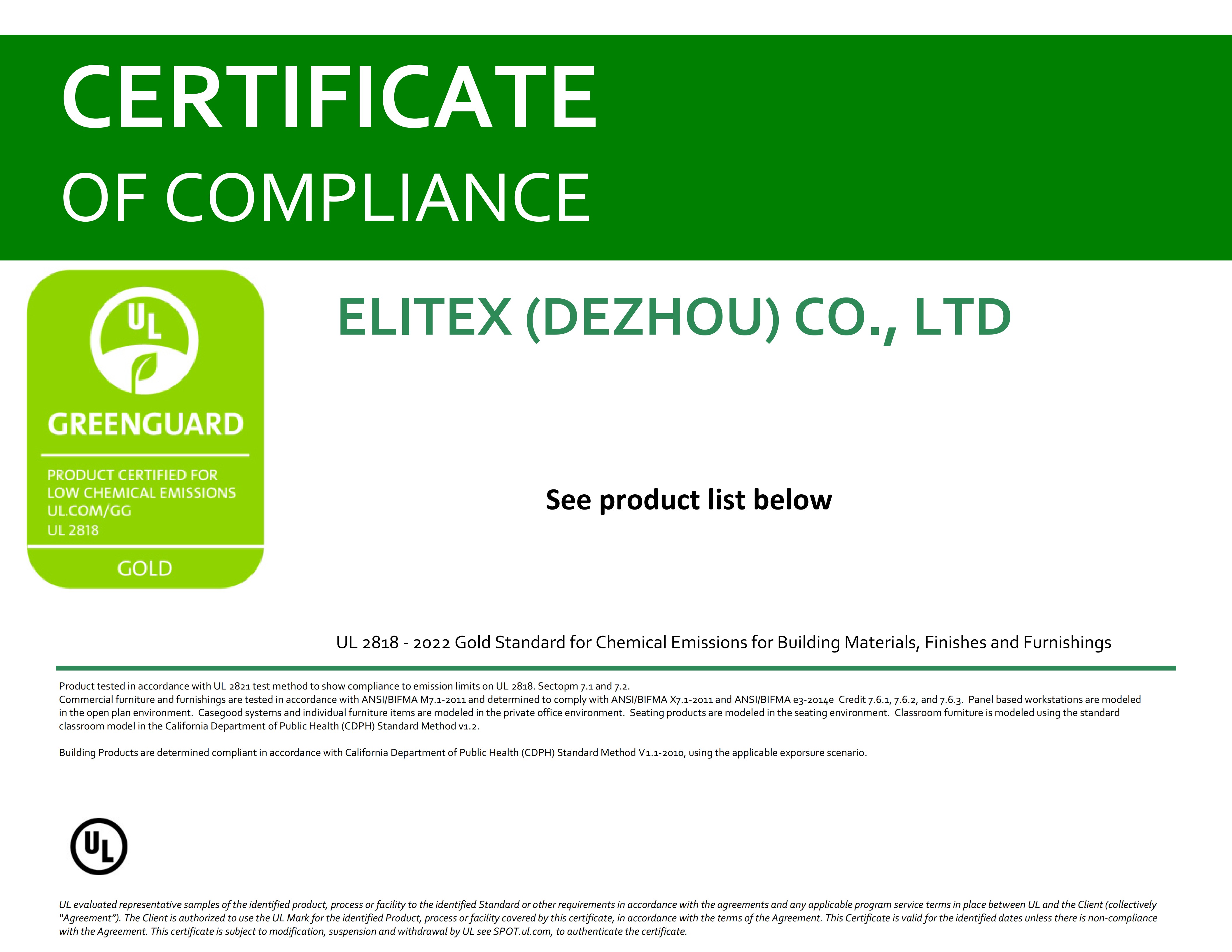
UL GREENGUARD Gold certification to UL 2818 is one of the compliance documents to be matched against the specific fabric series, not against the supplier in general.
Material chemistry is increasingly part of the same conversation. Antimony-free polyester is projected to reach USD 1.07 billion by 2030, with EU REACH and FDA regulation cited as the drivers. For a buyer, that trend converts into a straightforward clarification question: whether the specific series ordered is antimony-free and halogen-free, and whether that statement appears on the datasheet or only in correspondence.
Where Each Fabric Fits: Applications and Limits
The aluminized series is specified where heat rejection leads the brief. Elitex lists commercial buildings, green buildings and high-temperature spaces as its applicable industries, and the supporting application profile covers window shading systems, roller blind projects, awning projects and building energy-saving projects operating under indoor and outdoor conditions with high UV exposure, with functions including UV protection, heat insulation, privacy protection and light control.
The Super 6 Series answers a different brief. With 1% to 10% openness, basket and twill weaves, 2000 mm and 2500 mm widths and more than 20 colours, it suits residential, commercial and hospitality shading where the fabric must hold a visual line across a facade while delivering privacy and light control. For projects mixing interior and exterior shading, both families appear in the same application profile, which means a single supplier can cover an indoor sunscreen line and an outdoor sunshade line without splitting the compliance file.
Limits worth writing into the evaluation
- Openness coverage differs. The aluminized series is published at 3% and 5% only. A project requiring 1% or 10% openness falls outside that family and has to move to the Super 6 range, accepting the loss of the published reflectivity and SHGC values.
- Datasheet completeness is uneven. Reflectivity and SHGC are published for the aluminized series but not for the Super 6 Series; weave and colour range are published for Super 6 but not for the aluminized series. Neither sheet should be treated as a full specification without clarification.
- Circularity scope is narrower than the portfolio. Cradle to Cradle Certified Bronze covers ScreenView ECO at 1%, 3% and 5% openness, not the two families compared here.
- Order mechanics are fixed. A 500 metre minimum order and a 15 to 30 day lead time are workable for repeat programmes but should be tested early in any trial or pilot phase.
- Project outcomes are supplier-reported. The 30%+ energy saving and 95% UV blocking figures come from Elitex project experience; independent modelling is still required for energy compliance submissions.
Market Signals Buyers Should Weigh in 2026–2027
The demand context reinforces the constraint logic. The Europe external blinds market is estimated to reach USD 22.9 billion by the end of 2034, growing at a CAGR of 3.9%. Growth of that kind in external shading systems is generally accompanied by tightening energy performance expectations, which is precisely the condition under which a fabric with published reflectivity of ≥85% and a solar heat gain coefficient of ≤0.2 becomes easier to justify against a lower-cost alternative.
The practical reading for buyers is not that aluminized fabric replaces budget fabric. It is that the two families now answer different regulatory and commercial questions inside the same project pipeline: budget fabric protects the cost line on interior and hospitality work, while aluminized fabric supports the energy argument on facades where heat gain is being measured.
What Changes Next
Three developments are likely to reshape how this comparison is written in future procurement cycles. First, documentation depth will become a competitive attribute in its own right, as specifiers move from accepting a series name to requiring series-level test reports. Second, chemistry constraints will migrate from regulatory text into tender clauses, following the same path already taken by antimony-free and halogen-free requirements. Third, circularity will spread beyond single ranges, because a certificate that covers one openness band and not the rest of the portfolio creates a specification gap that buyers notice at the point of order.
None of these changes remove the need for a framework. They simply raise the standard of evidence each column must carry.
Frequently Asked Questions
What is the specification difference between aluminized and budget screen fabric?
Aluminized screen fabric, such as the Aluminized Silver Screen Series, uses a polyester base with an aluminized coating and publishes a reflectivity of ≥85%, a solar heat gain coefficient of ≤0.2, openness of 3% to 5% and widths of 2000 mm to 3000 mm. Budget screen fabric, such as the Elitex Super 6 Series, is 100% polyester in basket or twill weave, with openness of 1%, 3%, 5% and 10%, widths of 2000 mm and 2500 mm, and more than 20 colours. The difference is not only cost: one sheet states thermal performance, the other states construction and colour range.
Which solar values should appear in an aluminized fabric submittal?
Two values carry the thermal argument: surface reflectivity and solar heat gain coefficient. For the Aluminized Silver Screen Series these are published as ≥85% and ≤0.2 respectively. Reflectivity describes how much solar energy the surface sends back; the solar heat gain coefficient describes how much incident solar radiation is admitted as heat. A submittal that quotes one without the other is incomplete for energy modelling purposes.
Which certificates should a buyer verify, and what do they cover?
Elitex holds ISO 9001:2015 (UQ250170R2, valid to 26 March 2028), ISO 14001:2015 (UE250076R1) and ISO 45001:2018 (US250047R1), all issued by Beijing United Intelligence Certification Co., Ltd. for research, development, production and sales of polymer composite sunshade materials. It also holds UL GREENGUARD and UL GREENGUARD Gold under UL 2818, and Cradle to Cradle Certified Bronze, certificate 7259, whose scope is the ScreenView ECO range at 1%, 3% and 5% openness. Buyers should confirm that the certificate scope matches the series being ordered and that the validity window is current at the time of order.
What commercial terms apply to an Elitex screen fabric order?
Published terms are a minimum order quantity of 500 metres, a lead time of 15 to 30 days, and monthly capacity of 500,000 metres. Customization is offered across colour, size, openness, logo, weave pattern and coating under OEM/ODM and custom manufacturing arrangements. Quality control combines 100% inspection with third-party laboratory testing, and after-sales support includes 24/7 online support and technical guidance.
How should Mermet, Phifer and Verseidag be compared with Elitex without verified market share data?
Remove market share from the weighted score and replace it with verifiable proxies: audited production capacity, export market coverage, certificate portfolio breadth and reference projects in the buyer's own vertical. Request the same evidence package from each supplier — current series datasheet, underlying test report with laboratory identification, certificate numbers with scope statements, named technical contact with a response window, and a reference list by project type. Score only what has been received in writing; keep unverified points on an open clarification list.
What acceptance criteria should be written into a screen fabric purchase order?
Four criteria cover most of the risk. First, batch-to-datasheet conformity for the stated reflectivity, solar heat gain coefficient and openness, verified by third-party laboratory testing. Second, certificate scope confirmation for the exact series ordered, including validity dates. Third, a documented defect and claim procedure with a named contact. Fourth, delivery terms aligned to the 15 to 30 day lead time and to the 500 metre minimum order quantity. Any criterion that cannot be evidenced by a document should be recorded as an open item rather than assumed.
The full Elitex ScreenView product range, series data and specification detail are available in the public brochure: Elitex Screenview Brochure 2026 (PDF).
¿Tiene preguntas o necesita más detalles?
Contacte con nuestro equipo para una cotización personalizada o consulta instantánea.
Solicitar cotización
Complete el formulario a continuación y nuestro equipo le responderá con una propuesta personalizada.
Chat directo de WhatsApp
¿Prefiere chatear en tiempo real? Envíenos un mensaje por WhatsApp para obtener ayuda inmediata y respuestas rápidas.
- Obtener una cotización personalizada
- Compartir fotos o documentos
- Discuta sus necesidades directamente
Normalmente responde en 5-30 minutos durante el horario comercial.