
Airless Pump vs Stick vs Powder Jar: Cosmetic Packaging Buyer Decision Matrix
Independent Industry Reference · Cosmetic Packaging
Why Format Choice Is a Specification Decision
Cosmetic packaging format selection rarely goes wrong because a brand chose an unattractive container. It goes wrong because the container and the formula were never aligned on fill volume, material and sealing. Three formats compete for the same shelf position in a modern colour cosmetics line — the airless pump bottle, the stick tube and the powder jar — and each carries a different set of purchasing consequences.
The market context behind that repeated decision is substantial. Third-party estimates place the global cosmetic packaging market at approximately USD 34.17 billion to USD 47.3 billion in 2024, with projections reaching up to USD 89.72 billion by 2034, depending on whether secondary packaging and bulk industrial containers are included in the scope (Fortune Business Insights, ResearchAndMarkets, Data Bridge Market Research). Plastic accounted for 64.5% of material share in 2024, followed by glass and metal (ResearchAndMarkets). Asia Pacific held a 42.36% share of the global market in 2025, supported by rising disposable incomes and e-commerce growth (Fortune Business Insights).
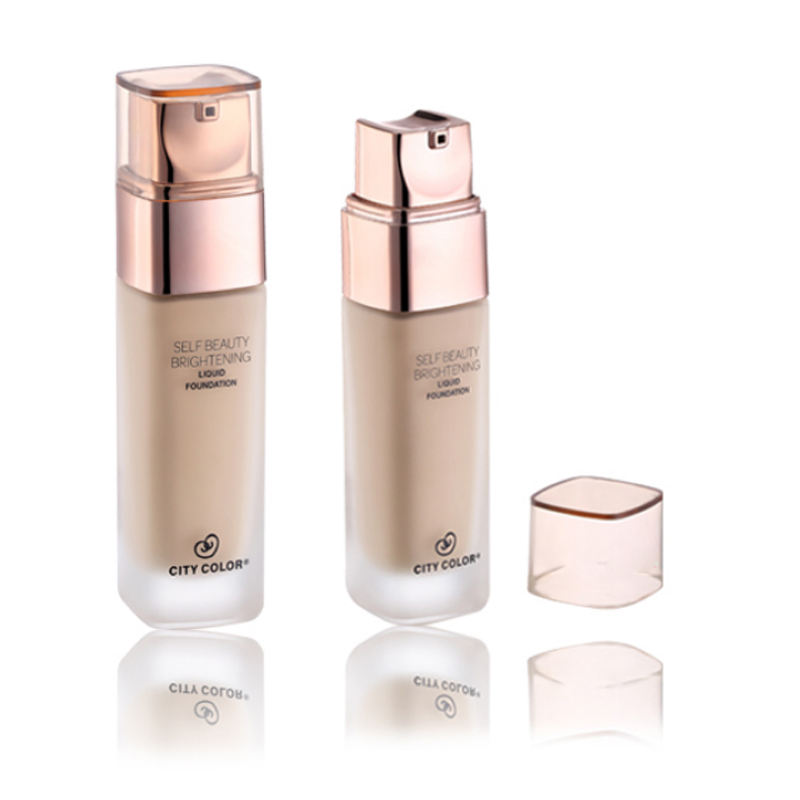
Those figures describe an industry in which the format decision is made thousands of times a year, usually under time pressure. This reference sets out a buyer decision matrix for three specific formats — an airless pump liquid foundation bottle (CP07-2026), an empty stick foundation tube (CP08-0053) and a leak-proof plastic powder jar (CP05-2159B) — so that format selection can be argued from published specifications rather than preference.
Problem and Opportunity: The Gap Between the Mood Board and the Formula Sheet
At the awareness stage, a brand team typically has a visual direction and a formula concept, but no fixed specification. At the research stage, the formula concept begins to impose constraints: is the product a liquid, a semi-solid stick, or a loose powder? How much product should a single unit deliver? Will the pack travel in a bag and be opened and closed repeatedly?
For the three formats examined here, the application context is shared and documented. These products are intended for daily cosmetic storage and carrying, used for packaging by global cosmetic brands, and operate under normal room temperature conditions of 16°C to 25°C. The operating mode is carry-around use for daily makeup, involving repeated opening and closing, and the stated special requirements are leak-proof construction, non-irritating material, portability and light weight. The materials are described as environmentally friendly and suitable for direct contact with skin cosmetics.
That shared context is precisely what makes a side-by-side comparison useful. When the use environment is constant, the differences that remain are structural — and structural differences are the ones a purchase order locks in. The opportunity for a research-stage buyer is therefore straightforward: resolve fill volume, footprint, material and sealing on paper first, before sampling and tooling time is spent on a format that the formula cannot use.
The Three Formats at a Glance
The three references below belong to the same family of empty cosmetic packaging components, which makes the comparison unusually clean: one application context, three different geometries.
| Attribute | Airless Pump Liquid Foundation Bottle | Empty Stick Foundation Tube | Leak-Proof Plastic Powder Jar |
|---|---|---|---|
| Model | CP07-2026 | CP08-0053 | CP05-2159B |
| Product category | Glass Bottles | Plastic Bottles | Plastic Jars |
| Material | Glass | Plastic | Plastic |
| Fill volume | 30 ml | 10 ml | 5 ml |
| Dimensions | W33.5 × H92 mm | D29 × H60 mm | W40.7 × H32.6 mm |
| Stated construction thickness | Not stated in this specification set | Not stated in this specification set | 1 mm |
| Usage designation | Cosmetic packing | Cosmetic packing | Cosmetic packing |
Two facts follow immediately from the table. The first is the fill spread: 30 ml, 10 ml and 5 ml, a six-fold difference between the largest and the smallest format. The second is the material split: only one of the three is specified as glass, while the other two are specified as plastic — consistent with the broader market, where plastic holds the majority of material share.
Reading the Specification Sheet: What Each Variable Actually Governs
A specification line is only useful if a buyer knows which commercial decision it constrains. The four variables below map directly onto four different internal conversations.
Fill volume sets the commercial model
At 30 ml, the airless pump liquid foundation bottle (CP07-2026) supports a full-size liquid foundation unit. At 10 ml, the empty stick foundation tube (CP08-0053) supports a smaller, more concentrated unit. At 5 ml, the leak-proof plastic powder jar (CP05-2159B) supports a small powder or travel-format unit. Fill volume is usually the first variable to be fixed, because it determines cost per unit of product, the number of units a formula batch will fill, and whether the SKU is positioned as a core size or a companion size.
Dimensions set the physical context
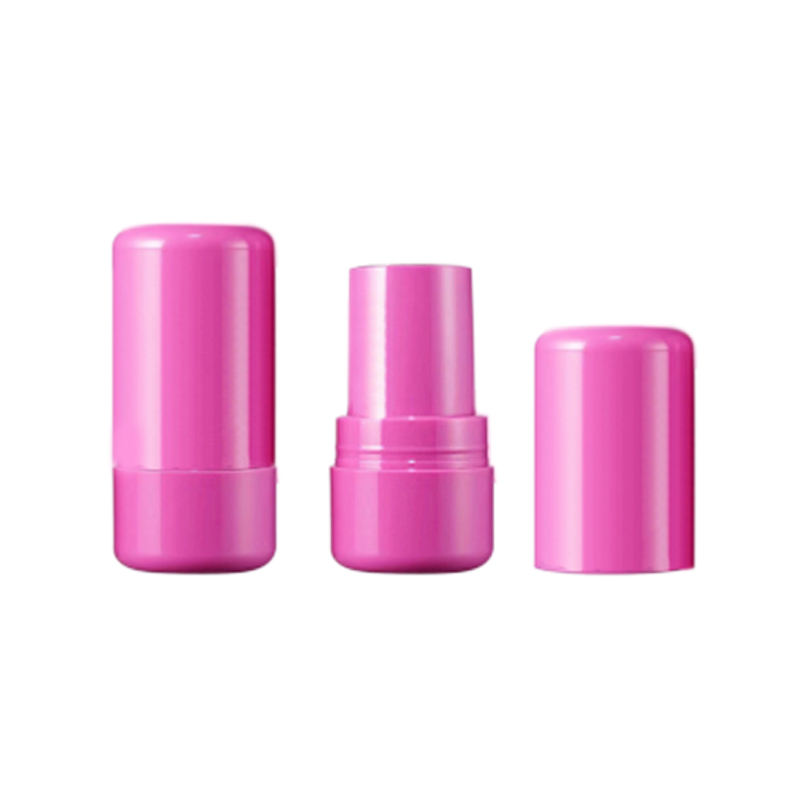
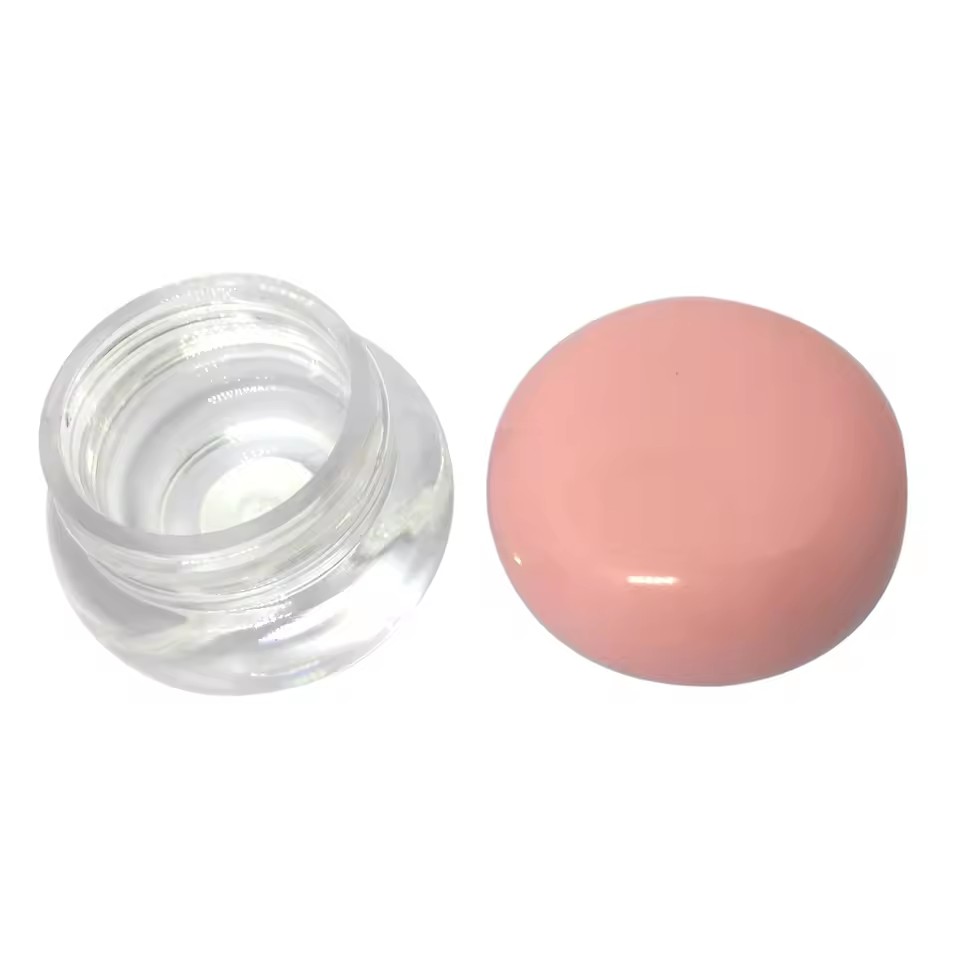
The three footprints are meaningfully different in shape, not just in scale. The airless pump bottle is the tallest at H92 mm, which gives it the strongest vertical presence on a shelf or in a display tray. The stick tube is the narrowest at D29 mm with a compact H60 mm height, which suits tightly packed assortments and travel-oriented sets. The powder jar is the widest at W40.7 mm and the shortest at H32.6 mm, a low-profile format whose width, rather than height, drives carton and tray layout.
Wall thickness and construction data
Only one of the three references publishes a thickness value in this specification set: the leak-proof plastic powder jar at 1 mm. Across the same supplier's wider range, wall thickness figures vary by format — for example, several tube-type components in the range are specified at 0.3 mm. Buyers should treat thickness values as format-specific measurements rather than as a cross-format performance ranking, because the measured structural element differs between a jar body and a tube wall.
Material: glass versus plastic
Glass and plastic behave differently in three procurement-relevant ways. Glass is denser than plastic at comparable volume, which affects unit weight, freight cost and handling expectations in transit. Plastic offers the lighter construction that the application requirements for portable, lightweight daily-carry packaging point toward, and it currently holds the majority of material share in cosmetic packaging overall. The choice is therefore not a quality hierarchy; it is a trade-off between perceived weight and finish on one side, and weight, freight and end-of-life handling on the other.
The Buyer Decision Matrix
The matrix below converts the specifications into a decision path. It is organised by buyer priority rather than by product, because priorities differ between a launch team, a procurement team and a compliance team.
| Buyer priority | What to check | Format implication |
|---|---|---|
| Formula state | Liquid, semi-solid stick, or loose powder | Liquid formulas point to the airless pump bottle; stick formats point to the stick tube; powder formats point to the jar |
| Target fill volume | Required millilitres per unit | 30 ml (CP07-2026) for full-size liquid; 10 ml (CP08-0053) for compact stick units; 5 ml (CP05-2159B) for small powder units |
| Shelf and tray geometry | Height, diameter or width limits | Tallest format: CP07-2026. Narrowest: CP08-0053. Widest and lowest: CP05-2159B |
| Material positioning | Glass finish versus lighter plastic construction | Glass specified for CP07-2026; plastic specified for CP08-0053 and CP05-2159B |
| Carry and re-close behaviour | Repeated opening and closing during daily use | Sealing design must be confirmed for all three formats at sampling |
| Leak-proof requirement | Stated requirement for daily storage and carrying | Verification method must be agreed before production, not after |
| Skin-contact material | Material suitable for direct contact with skin cosmetics | Applies across the range and should be documented per component |
Matching Format to Formula and Use Case
The clearest way to test a format is to walk the use case through it. Consider the documented daily-use scenario: a consumer carries the product, opens and closes it repeatedly during makeup application, works at normal room temperature between 16°C and 25°C, and may use supporting tools such as a makeup brush, a makeup puff and a cosmetic mirror.
- Liquid foundation in a 30 ml airless pump bottle (CP07-2026). The fill volume matches a core-size liquid product. The airless pump format is widely used where a liquid formula is dispensed repeatedly without the pack being fully opened each time, and the W33.5 × H92 mm glass body gives the format a tall shelf presence.
- Stick foundation in a 10 ml stick tube (CP08-0053). The compact D29 × H60 mm geometry suits direct-application stick formats and tightly arranged assortments, and the 10 ml fill keeps the unit economical for a companion or travel SKU.
- Powder in a 5 ml leak-proof jar (CP05-2159B). The wide, low W40.7 × H32.6 mm jar with 1 mm stated thickness is designed for small-volume powder packing where the leak-proof requirement is the governing constraint rather than the fill size.
- Adjacent formats in the same range. Where a line needs to extend beyond these three, the same range includes a 20 ml luxury lipstick tube (CP01-2142), a 3 ml lipgloss or mascara tube (CP02-2231), a 10 ml eyeliner tube (CP04-1215), a 20 ml deodorant stick container (TP01-1018-15), an eyeliner pencil (CP06-1056) and a makeup powder case (CP03-1394).
Leak-Proof Requirements and Purchasing Terms
Leak-proof behaviour is not an accessory property of a pack; for carry-around cosmetics it is part of the format definition. The documented application requirements for this product family list leak-proof construction alongside non-irritating material, portability and light weight. That combination matters most for the powder jar, where a failed seal affects both the product and everything the consumer carries it with.
In purchasing terms, leak-proof status should be converted into a verifiable item before the order is confirmed. A practical set of purchase-order items looks like this:
- Format and model reference — the exact model code, so that the approved sample and the production run refer to the same geometry.
- Fill volume and dimensional tolerance — the nominal volume plus the tolerances agreed for dimensions such as W33.5 × H92 mm, D29 × H60 mm or W40.7 × H32.6 mm.
- Material declaration — glass or plastic stated explicitly per component, together with the skin-contact suitability requirement.
- Construction thickness — requested as a documented value for every format, including those where it is not published in the standard specification set.
- Sealing and closure design — the mechanism that delivers the leak-proof requirement, plus the test method that will be used to confirm it.
- Sampling and validation step — a physical sample stage covering repeated open-and-close cycles that reflect daily carry use.
- Decoration and assembly scope — which finishing steps fall inside the packaging supplier's scope and which do not.
- Compliance documentation — the jurisdictional evidence required for the destination market, agreed before production rather than after shipment.
What the Market Data Suggests
Two regulatory developments are shaping how format decisions are documented. The EU Packaging and Packaging Waste Regulation (PPWR) 2025/40 sets strict recyclability and labelling standards for cosmetics, and the U.S. Modernization of Cosmetics Regulation Act (MoCRA) introduced mandatory facility registration and product listing requirements for packaging entities. Both push buyers toward format choices that can be evidenced on paper, not only validated by feel.
Consumer expectations are moving in a similar direction. One 2024 consumer survey placed sustainable packaging, including refillable and recyclable options, among the top priorities for 63% of cosmetic consumers (Statista / Packly); that figure comes from a single consumer survey and should be treated as directional rather than definitive. On the supplier side, third-party market listings identify Albéa S.A., Amcor PLC, Berry Global Group, AptarGroup Inc. and HCP Packaging among the major global cosmetic packaging groups (Mordor Intelligence / Fortune Business Insights). Alongside those groups, a large tier of specialised manufacturers works on customised cosmetic packaging programmes, which is where format-level specification work most often takes place.
China remains a significant supply base for that tier. China's beauty product exports reached approximately USD 4.77 billion in 2024, with the UK recorded as the fastest-growing destination market at +20.8% (OEC).
Where Each Format Reaches Its Limits
A decision matrix is only credible if it states where each option stops working. Three boundaries are worth flagging before any of these formats is committed to tooling.
- The glass airless bottle carries a weight and disposal trade-off. Glass is heavier than plastic at comparable volume, which raises unit freight weight and handling considerations, and a multi-component dispensing format introduces additional materials that must be accounted for in recyclability and labelling reviews under frameworks such as PPWR 2025/40.
- The stick tube is bounded by its fill and geometry. At 10 ml with a D29 × H60 mm body, this format is not a substitute for a full-size liquid unit; it suits compact stick formats and companion sizes, and it is not designed for high-volume liquid or loose powder filling.
- The powder jar is bounded by its volume and by its seal. At 5 ml it is a small-format pack, and because leak-proof behaviour is a stated requirement for carry-around use, any failure in the closure design is a product-level failure rather than a cosmetic one.
How a Customised Manufacturer Fits the Picture
Guangzhou Cosfinity Cosmetics Co., Ltd., established in 2009, specialises in customised cosmetic packaging solutions and operates from a 40,000 m² facility in Guangzhou, China, with a workforce of approximately 200 employees and an R&D team of 25 engineers. The company exports 100% of its sales globally, and its stated annual production capacity is 500,000,000 pieces.
Its main product lines cover Lipstick Tube, Lipgloss / Mascara Tube, Powder Case, Eyeliner Tube, Powder Jar and Liquid Foundation Bottle — the same categories from which the three formats in this matrix are drawn. For a research-stage buyer, that spread matters less as a catalogue fact and more as a practical one: a format comparison between an airless pump bottle, a stick tube and a powder jar can be run against a single supply base with a shared application requirement set, rather than assembled across three suppliers with three different specifications.
Future Outlook
Three shifts are likely to keep this comparison relevant. First, regulatory documentation will continue to move earlier in the process: PPWR and MoCRA both reward buyers who can state the material, the pack construction and the intended end-of-life route at the specification stage rather than at the shipping stage. Second, small-format packs such as the 5 ml powder jar and the compact 10 ml stick tube are structurally aligned with travel, refill and assortment formats, which keeps demand for low-volume geometries steady even as core sizes grow. Third, material strategy will remain a balancing act rather than a single direction: plastic already holds the majority of material share, while glass retains its position where weight and finish justify the freight and handling consequences.
For buyers, the practical implication is modest but useful. The format decision is unlikely to become simpler; it can, however, become faster, because the variables that decide it — fill volume, dimensions, material, thickness and seal design — are known and documented before a single mould is cut.
Frequently Asked Questions
What is an airless pump liquid foundation bottle, and how does it differ from a stick foundation tube?
The airless pump liquid foundation bottle, model CP07-2026, is a glass bottle with a 30 ml capacity and dimensions of W33.5 × H92 mm, used for cosmetic packing of liquid foundation. The empty stick foundation tube, model CP08-0053, is a plastic component with a 10 ml volume and dimensions of D29 × H60 mm. The difference is format family as much as size: one is a pump-dispensed bottle for liquids, the other a compact tube for stick-format product.
How much product does each of the three formats hold?
The airless pump liquid foundation bottle (CP07-2026) holds 30 ml, the empty stick foundation tube (CP08-0053) holds 10 ml, and the leak-proof plastic powder jar (CP05-2159B) holds 5 ml. That is a six-fold difference between the largest and smallest format in this comparison, and fill volume is usually the first variable fixed in a packaging brief.
Which format suits which formula type?
The match follows the physical state of the formula. Liquid foundation aligns with the 30 ml airless pump bottle (CP07-2026). Stick-format product aligns with the 10 ml stick foundation tube (CP08-0053). Loose or compacted powder aligns with the 5 ml powder jar (CP05-2159B), which is specified as leak-proof and carries a stated thickness of 1 mm.
How is material choice between glass and plastic decided?
In this comparison, only the airless pump liquid foundation bottle (CP07-2026) is specified as glass; the stick foundation tube and the powder jar are specified as plastic. Glass is denser than plastic at comparable volume, which affects unit weight, freight and handling, while plastic supports lighter construction — a factor that matters for packaging intended for daily carrying. Third-party data shows plastic holding the majority of material share in cosmetic packaging, at 64.5% in 2024 (ResearchAndMarkets), with glass and metal following.
What does the leak-proof requirement mean in purchasing terms?
Leak-proof construction is listed as a special requirement for this product family, alongside non-irritating material, portability and light weight, because the packs are carried daily and opened and closed repeatedly. In purchasing terms it should be converted into a defined sealing design and an agreed verification method, confirmed through physical samples before production rather than assumed from the specification sheet. The leak-proof plastic powder jar (CP05-2159B) is the format in this comparison where that requirement is stated in the product name itself.
What information should a buyer request before confirming a format?
At minimum: the exact model reference, the nominal fill volume, dimensional tolerances for the agreed dimensions, the material declaration with skin-contact suitability, a construction thickness value for every component, the sealing design and its verification method, a sampling stage covering repeated open-and-close cycles, and the compliance documentation required by the destination market. Where a thickness value is not published in the standard specification set — as is the case for CP07-2026 and CP08-0053 here — it should be requested explicitly rather than inferred.