
Air-Cooled vs Water-Cooled: JONSON 20kW/30kW Induction Heaters
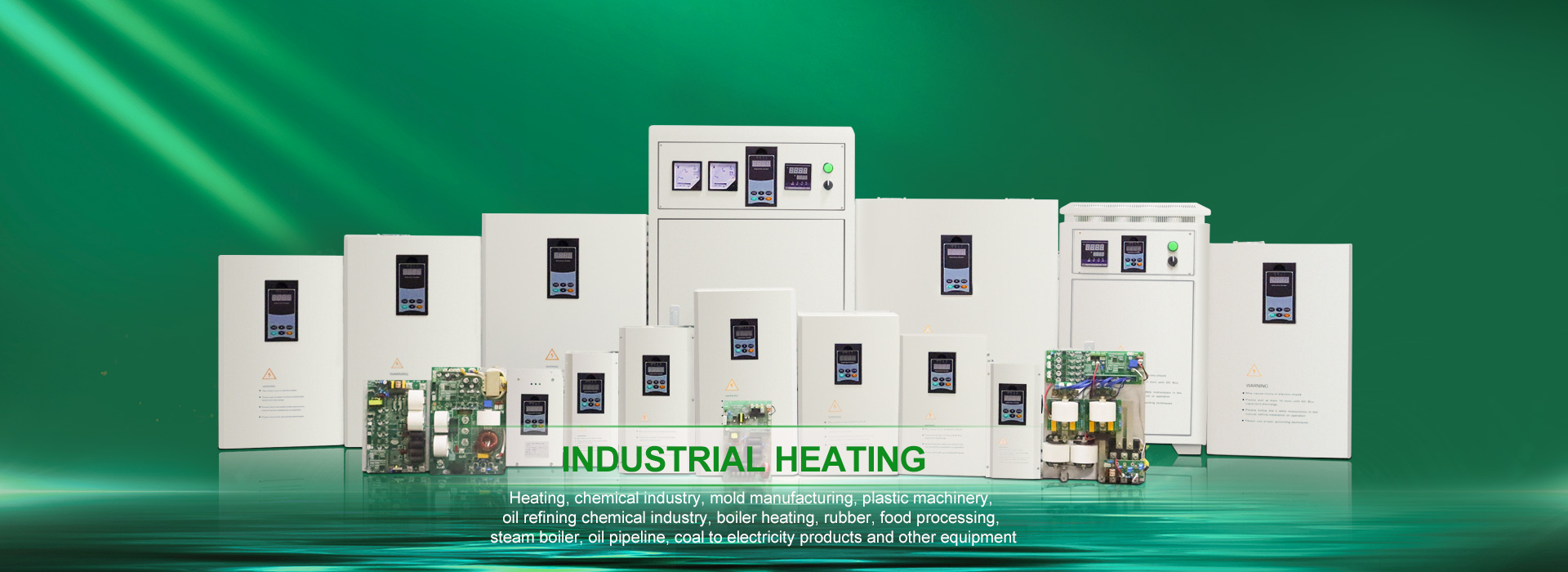
Industrial induction heating equipment used for distributed process heating in manufacturing plants.
Industrial induction heating has moved from pilot projects to installed base. As of mid-2024, more than 550,000 induction heating systems were operating worldwide, with Asia-Pacific accounting for roughly 40% of that base, or about 220,000 units, according to Global Market Insights. The same research places the 10 kW to 100 kW power band as the market's dominant segment, which is where most plant-level equipment shortlists begin.
Two models sit directly inside that band: the JONSON JS1000-20, a 20 kW induction heating machine rated at 380 V, and the JONSON JS1000-30, a 30 kW high-frequency induction heating machine also rated at 380 V. JONSON is the induction heating brand of Guangdong Jiangxin Electronic Technology Co., Ltd., a manufacturer based in Shunde District, Foshan City, Guangdong Province, founded in 2011 and producing induction heaters, induction heating control boards, induction heating coils, steam generators and hot air generators. The company lists an annual output of 120,000 units and an export share of approximately 40%, with main markets including Europe, the United States, India and Indonesia.
This reference focuses on one variable that is easy to treat as a footnote during evaluation and expensive to revisit after commissioning: the choice between air-cooled and water-cooled heat dissipation. Both JONSON models are listed with both dissipation options, which turns cooling into a buyer decision rather than a factory default. The sections below compare the two ratings, explain what cooling choice changes technically, and set out the checks a procurement team should complete before issuing a purchase order.
Why Cooling Choice Became a Procurement Question
For most of the last decade, induction heater evaluation followed a predictable sequence: power rating, voltage, coil compatibility, price, delivery. Cooling rarely entered the conversation because most units were purchased as part of a machine rather than as standalone plant equipment. That has changed as induction heating has moved into distributed smart manufacturing layouts, where heaters are mounted close to the process, on production lines, inside utility corridors or on mezzanine walls.
In those layouts, cooling is no longer only a property of the box on the wall. It is an interface between the heater and the building. An air-cooled unit rejects heat into the space where it is mounted, which means the plant room's ventilation, dust load and ambient temperature become part of the heater's operating environment. A water-cooled unit moves heat into a coolant loop, which means water quality, flow availability, drain and leak management, and shutdown planning become part of the maintenance scope.
The opportunity sits on the same axis. Plants that plan cooling deliberately, matching the dissipation mode to the room, the utility infrastructure and the maintenance organisation, tend to avoid the two most common retrofit problems: a heater installed in an enclosure with no thermal headroom, and a water loop added after installation because the original air-cooled assumption did not survive contact with a hot plant room.
The Two Models in This Comparison
The table below reproduces the published model data for the two units. Where a specification is not published for a specific model, that is stated rather than inferred.
| Parameter | JS1000-20 | JS1000-30 |
|---|---|---|
| Product type | Induction Heating Machine | High Frequency Induction Heating Machine |
| Rated power | 20 kW | 30 kW |
| Rated voltage | 380 V | 380 V |
| Voltage adaptation range | 300 V to 400 V (as listed) | Not stated in the published model listing; the model is listed at 380 V rated voltage |
| Heat dissipation mode | Air-cooled / water-cooled | Air-cooled / water-cooled |
| Structure | Wall-mounted | Wall-mounted |
| Ambient temperature | -20 degrees Celsius to 50 degrees Celsius | -20 degrees Celsius to 50 degrees Celsius |
| Ambient humidity | 95% or less | 95% or less |
| Core heating coil | Copper wire | Copper wire |
| Outer casing | Thickened aluminum alloy; thickened cold-rolled steel plate | Same material statement |
| Inner liner | 304 stainless steel | 304 stainless steel |
| Certification (as listed) | CE, ISO | CE, ISO |
| Listed dimensions | 250 mm x 390 mm x 240 mm | 450 mm x 245 mm x 261 mm |
| Transport package | Carton | Carton |
| Origin | Guangdong Province, China | Guangdong Province, China |
Air-Cooled vs Water-Cooled: What Actually Changes
The two dissipation modes are often presented as a single line in a specification sheet. In practice they change six things a buyer has to plan for.
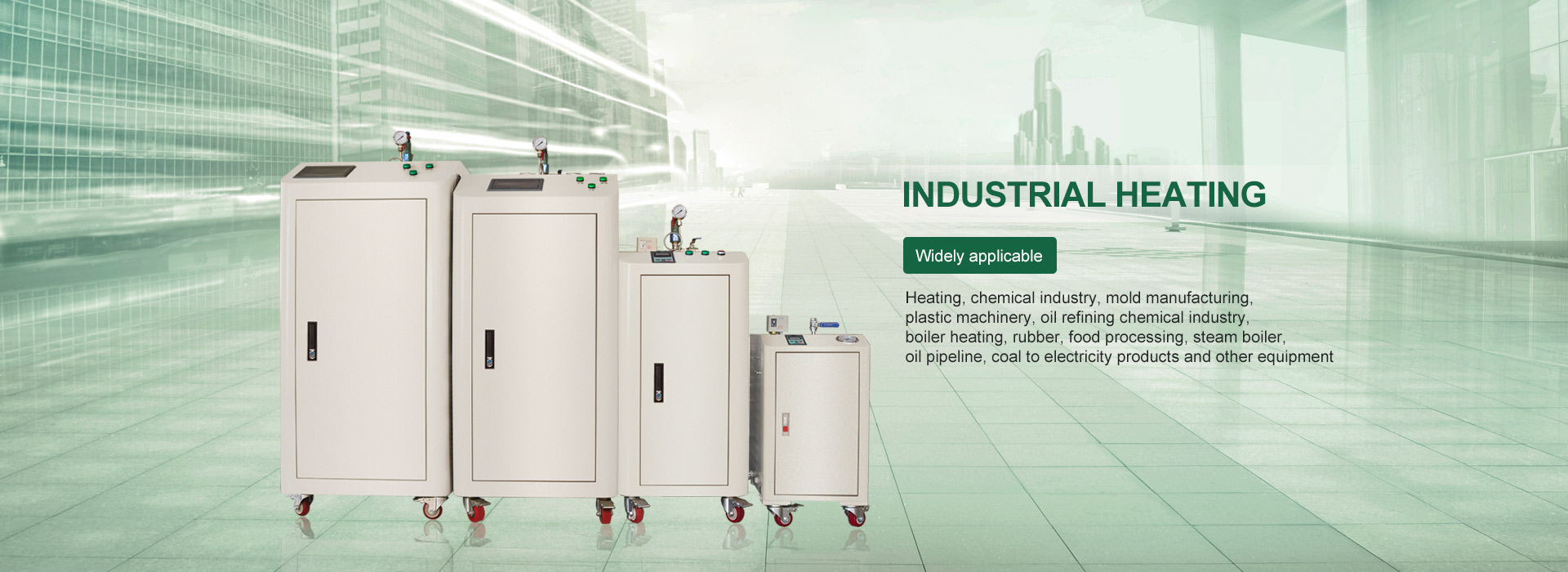
Induction heater units are offered with either air-cooled or water-cooled dissipation, which shifts infrastructure requirements to the plant side.
| Dimension | Air-cooled | Water-cooled |
|---|---|---|
| Utilities required | Electrical supply only | Electrical supply plus a coolant circuit, including supply, return and quality control |
| Heat path | Rejected into the surrounding space through heat sinks and forced air | Transferred to coolant and removed from the immediate area |
| Room impact | Raises local ambient temperature; airflow clearance is required around and above the unit | Reduces local heat load; a coolant route must be designed |
| Installation scope | Shorter; wall mounting plus electrical termination | Longer; pipework, valves, leak checks and commissioning |
| Maintenance routine | Periodic cleaning of air paths and filters; fan inspection | Coolant quality monitoring, flow checks, leak inspection and scheduled downtime |
| Typical mis-fit | Sealed or dusty enclosures, hot rooms with little ventilation | Sites without reliable water supply or without capacity to run a coolant loop |
Both models share the same published operating envelope: ambient temperature from -20 degrees Celsius to 50 degrees Celsius and relative humidity up to 95%. That range is wide, and it is the reason cooling planning matters more than the headline number suggests. A unit mounted in a plant room sitting at the top of the permitted ambient band has very little thermal headroom left, regardless of dissipation mode, and the surrounding infrastructure does the remaining work: ventilation for air-cooled units, coolant temperature and flow for water-cooled units.
Materials are identical across the two ratings. The core heating coil is copper wire, the outer casing combines thickened aluminum alloy with thickened cold-rolled steel plate, and the inner liner is 304 stainless steel. Buyers comparing the two models on enclosure durability will find the same material statement for both, which means the real differences between them are power, footprint and cooling infrastructure, not build materials.
Wall Mounting, Electrical Fit and Layout Planning
Both models are listed as wall-mounted, which shapes installation in three practical ways.
- Footprint and layout: the published dimensions are 250 mm x 390 mm x 240 mm for the 20 kW unit and 450 mm x 245 mm x 261 mm for the 30 kW unit. The larger rating requires a longer wall run, which affects cable tray routing, coil lead lengths and the position of adjacent panels.
- Airflow and access: an air-cooled installation needs clear space for air intake and exhaust and enough room for service access. Water-cooled units still need front access for inspection and coil work, but the thermal clearance requirement shifts to the coolant circuit.
- Coil routing: induction heating performance depends on how the coil couples to the load. Cable length between the wall-mounted unit and the coil, distance to the process, and the physical route all need to be settled before the mounting position is finalised.
Electrical fit is the second planning layer. Both models are rated at 380 V. The JS1000-20 listing documents a voltage adaptation range of 300 V to 400 V, which is relevant for plants where supply voltage sags under load or where the heater shares a distribution board with high-demand equipment. The published JS1000-30 listing states a 380 V rated voltage and does not publish a separate adaptation band. Buyers specifying the 30 kW unit for a site with unstable supply should therefore request the applicable voltage range in writing rather than assume it matches the 20 kW model.
Application Fit and Reference Evidence
JONSON lists the applicable industries for both models as plastics and rubber, food processing, chemical reactions, crude oil pipeline heating, textile printing and dyeing, aquaculture heating, metal heat treatment, building heating, and medicinal herb drying. That is a broad envelope, and it explains why the 20 kW and 30 kW ratings appear together on so many shortlists: they cover a wide range of process heating tasks without moving into the infrastructure class of much larger cabinets.
Procurement teams evaluating this band should look beyond the datasheet. The manufacturer reference case for this product family covers 100 units deployed across Indonesia, China, Vietnam, Russia and India, serving Industrial Induction Heater OEM and ODM clients. The recorded project outcomes are an overall thermal efficiency of 95% to 98%, comprehensive energy savings of 30% to 70%, a lifespan extension of three times, and zero major failures. The same case material describes a stable service life of 5 to 10 years and highlights of high energy efficiency, eco-friendly zero emission, and wide compatibility across industrial, commercial and residential heating.
Manufacturing and quality evidence is also relevant at the evaluation stage. The company states a monthly production capacity of 10,000 units, a standard lead time of 7 to 14 days, and a minimum order quantity of one unit. Quality control is described as 100% pre-shipment testing plus product inspection by SGS, with remote technical support provided after delivery. For buyers who need panel graphics, parameter adjustments or private logo marking, the stated customisation scope covers product specifications, custom sample fabrication, graphic and panel customisation, parameter adjustment and private logo application under an OEM and ODM model.
Market Context: Why 20 to 30 kW Keeps Appearing on Shortlists
The commercial case for this power band is supported by market data rather than vendor positioning. WiseGuyReports estimates the global induction heating system market at USD 2.39 billion in 2024, projected to reach USD 4.5 billion by 2035. Global Market Insights reports more than 550,000 systems deployed worldwide as of mid-2024, with Asia-Pacific holding roughly 40% of the installed base. MarketsandMarkets identifies the 10 kW to 100 kW segment as the dominant power band, driven by versatility across hardening, forging and brazing applications.
Estimates in this category vary by scope, because broader heating equipment definitions produce larger numbers than system-level definitions, so buyers should treat any single figure as directional. What the data does support consistently is direction: electrification of process heat is expanding, and the global industrial boiler and steam generator market alone was estimated at USD 54.79 billion in 2024, with a reported shift toward electrification via induction technology to meet decarbonisation targets. That shift is one reason cooling infrastructure now appears in equipment specifications that previously listed only power and voltage.
Where Induction Fits Against Conventional Heating, and Where It Stops
| Aspect | Induction heating | Conventional gas or resistance heating |
|---|---|---|
| Reported energy efficiency | Up to 92% in market-level reporting | Lower in the same reported comparisons |
| Reported cycle time | Average reduction of 30% in the same reporting | Baseline |
| Emissions at point of use | Zero emission, as stated in the manufacturer product highlights | Combustion or indirect heating losses |
| Control | Digital control boards with parameter adjustment and customisation | Varies by system |
For a fair evaluation, the limits matter as much as the advantages.
- Coil and load dependency: induction heating works on electrically conductive loads, and performance depends on how the coil couples to the part, pipe or vessel. The 20 kW and 30 kW units are heating machines, not universal heaters, and an inductor configured for one geometry is not automatically suitable for another. JONSON supplies customised electromagnetic induction heating coils across a 1 kW to 100 kW range, which is the practical route to matching a specific load.
- Documentation boundaries by model and market: certification statements should be matched to the exact model and destination market. The company CE certificate of conformity KEYS23032915001EM-02, issued by Guangdong KEYS Testing Technology Co., Ltd. and valid to 2028-04-07, lists the JS1200-005, JS1200-006, JS1200-008 and JS1200-010 models in its scope. The CCC certificates held for the mainland China market cover JS3000 series models, including a 380 V 3N~ 50 Hz group up to 60 kW. Buyers specifying JS1000-20 or JS1000-30 should request the certificate covering the quoted model and target market rather than accept a generic compliance statement.
- Published adaptation range gap: the 20 kW model documents a 300 V to 400 V adaptation range, while the 30 kW listing does not publish an equivalent figure. This is a documentation gap that a buyer can close with a written specification, but it should not be closed by assumption.
- Service life is finite: the reference case describes a stable service life of 5 to 10 years. The company profile separately states a ten-year whole-machine service life commitment with one year of free maintenance and lifelong maintenance. Buyers should distinguish between the two, because one describes observed project outcomes and the other describes a commercial commitment.
- Cooling infrastructure is the buyer responsibility: neither dissipation mode removes the need for plant-side preparation. Air-cooled units require clean air paths and ventilation; water-cooled units require a maintained coolant circuit. Choosing the wrong mode does not usually cause immediate failure, but it shortens service intervals and reduces thermal headroom.
Future Outlook
Three developments are likely to shape how 20 kW and 30 kW induction heaters are specified over the next few years. First, safety and compliance baselines are consolidating around IEC 60519-1 and IEC 60519-3 for industrial induction heating equipment, which pushes buyers toward documented conformity rather than vendor assurances. Second, electrification of process heat continues to move load from combustion to electricity, increasing the number of installations where electrical quality and cooling capacity become the binding constraints. Third, and most relevant to this comparison, cooling is becoming a decision the buyer is expected to document. As plant rooms fill with distributed equipment, tolerance for unplanned heat rejection and unmanaged coolant loops is falling.
For now, the practical conclusion is unglamorous: the difference between a smooth installation and a difficult one is usually decided before the purchase order, in the layout drawing, the voltage verification and the cooling plan.
Frequently Asked Questions
How should a buyer decide between the 20 kW and 30 kW model?
Start with the actual heat demand of the process rather than the rating that looks safest. The JS1000-20 is listed at 20 kW with a 300 V to 400 V adaptation range and dimensions of 250 mm x 390 mm x 240 mm; the JS1000-30 is listed at 30 kW with dimensions of 450 mm x 245 mm x 261 mm. Where a site has voltage fluctuation and a smaller wall footprint, the documented adaptation range of the 20 kW unit is a concrete advantage. Where the process needs more capacity and the electrical supply is stable, the 30 kW rating provides that headroom at the cost of a longer mounting run.
Is air-cooled or water-cooled the better default for these models?
Neither is universally better, and both models support both modes. Air-cooled installation is simpler because it requires no coolant circuit, but it rejects heat into the room and depends on clean, unobstructed airflow. Water-cooled operation keeps the local ambient heat load lower and suits enclosed or hot plant rooms, but it adds pipework, coolant quality management, leak inspection and scheduled downtime. The deciding factors are the room itself, the utilities available, and the maintenance organisation capacity to run a coolant loop.
What should be verified about the 380 V supply before ordering?
Confirm both the nominal supply and its behaviour under load. The JS1000-20 is documented with a voltage adaptation range of 300 V to 400 V around its 380 V rating. The published JS1000-30 specification states a 380 V rated voltage and does not state an adaptation band, so a buyer planning to run that model on a fluctuating supply should obtain the applicable range in writing. Both models are listed for ambient temperatures from -20 degrees Celsius to 50 degrees Celsius and relative humidity up to 95%, so the electrical room environment should be checked against those limits at the same time.
How does the cooling choice affect maintenance planning?
Air-cooled units place the maintenance burden on cleaning and airflow: dust, lint and blocked paths are the recurring risks, and the work is usually short and local. Water-cooled units place the burden on the coolant circuit, including quality, flow, leak checks and planned downtime. In both cases the maintenance interval is influenced by the environment, and a plant room sitting at the top of the permitted ambient range will demand more attention than a controlled space. Maintenance planning should therefore be written around the specific room rather than the equipment class.
What evidence and documentation should be requested before purchase?
Request four things. First, the model-level specification sheet covering rated power, rated voltage, adaptation range and listed dimensions. Second, the certificate that covers the exact model and destination market, since certificate scopes differ across model families and regions. Third, quality documentation, which the manufacturer describes as 100% pre-shipment testing plus SGS product inspection. Fourth, installation requirements for wall mounting, airflow or coolant supply, and coil configuration. Commercial terms worth confirming include the stated 7 to 14 day lead time and the monthly capacity of 10,000 units, both of which affect project scheduling.
How do these models sit against the wider induction heating market?
The 10 kW to 100 kW band is identified by MarketsandMarkets as the dominant segment of the induction heating market, which places both the JS1000-20 and JS1000-30 in the busiest part of the category. Global Market Insights reports more than 550,000 induction heating systems installed worldwide as of mid-2024, with Asia-Pacific holding roughly 40% of that base. Within that context, the two models are mid-band industrial units: large enough for process heating tasks in plastics, food, chemical and metal applications, and small enough to be wall-mounted close to the process.
An independent comparison of two models from the same manufacturer will not settle a plant-wide heating strategy, and it is not meant to. What it can do is make the evaluation criteria explicit: match the rating to the load, match the cooling mode to the room and the maintenance organisation, verify the electrical envelope in writing, and confirm that certificates cover the quoted model and market. Buyers who work through those four steps will find that the difference between the JS1000-20 and the JS1000-30 is a straightforward trade between capacity and footprint, and that the harder decision is usually the cooling one. Product documentation for these models is published by Guangdong Jiangxin Electronic Technology Co., Ltd. at www.jonson-ih.com.