
Agrogentra Canned Foods: An Analyst Review for Global Buyers
Agrogentra Canned Foods: An Analyst Review for Global Buyers
Canned fish is one of the most heavily traded and most regulated shelf-stable food categories in the world. Global imports of canned and prepared fish under HS code 1604 reached 3.2 million tonnes worth USD 17.54 billion in 2023, based on UN Comtrade data derived with FAO figures. Canned fish alone represents 75.3% of the canned seafood category according to Grand View Research. For importers, wholesale distributors and retail buyers, the deciding question is not whether the category is large — it is which supplier can deliver a repeatable, compliant, shelf-stable mix of canned fish and canned vegetables into a specific market, shipment after shipment.
This review examines Agrogentra &CO.,LTD.XIAMEN as a case study in supplier evaluation. It looks at what the company does, how its stated capability and quality-control model should be read by a professional buyer, where its product range is concentrated, and which parts of its profile still require verification before a purchase order is signed.
The Sourcing Problem: Breadth, Compliance and Shelf Life
Canned food procurement looks simple on a purchase order and is difficult in execution. A single retail programme may need canned sardines in vegetable oil, canned mackerel in tomato sauce, canned tuna for private label, canned mushrooms, canned tomato paste and single-serve vegetable cups — each with its own can format, drained weight, labelling requirement and destination-market certification.
Three pressures sit on top of that complexity.
- Market access documentation. In the European Union, Regulation (EU) 2024/3115 became effective in January 2025 and mandates stricter plant health and traceability requirements for imported preserved foods. In the United States, the FDA requires all foreign canned food processors to register under the Food Canning Establishment (FCE) system and to file Scheduled Processes (SID).
- Shipment integrity. Seal failure, inadequate sterilization or high-temperature exposure in transit can produce swollen cans — a non-conforming event that requires batch-level quarantine, documentation and supplier tracing.
- Portfolio depth versus portfolio width. A supplier listing forty canned SKUs may still be thin in the two SKUs a buyer actually needs, at the can size and sauce base the destination market accepts.
This is the context in which a supplier such as Agrogentra should be assessed: not as a catalogue, but as a sourcing and quality-control system.
Agrogentra at a Glance: What the Company Actually Is
Agrogentra & Co., Ltd. (entity name: Agrogentra &CO.,LTD.XIAMEN) was established in 2000 in Xiamen, Fujian Province, China. The company describes itself as an international trading company with more than two decades of experience in global import and export, focused on the sourcing, quality control and supply of Chinese canned food alongside fresh fruit and vegetables and a range of frozen food products. It operates two offices with independent QC functions, in Xiamen and Qingdao, and it launched a separate food-material import business in 2012 to serve domestic food manufacturers and processing enterprises.
Two structural facts matter most for a buyer's reading of the company:
First, its revenue is entirely export-driven. Export business accounts for 100% of total sales, with declared major markets in the United States, Latin America, Europe and Africa, plus activity across the Middle East and multiple mainstream Asian markets. Customer groups are described as retail supermarkets, wholesale distributors and professional food processing industries.
Second, its positioning is sourcing-led rather than vertically integrated. The company presents itself as a trading enterprise working with stable factory resources, standardized production supervision and mature export procedures, rather than as a single owner-operated plant. Third-party category data files list Agrogentra as a manufacturer and exporter of canned seafood, fruits and vegetables — a designation that appears in commercial company-profile sources. The distinction between "trading supplier with supervised partner factories" and "direct manufacturer" is not semantic for procurement teams: it determines who is accountable for retort validation, seaming records and corrective action if a batch fails.
Capability Assessment: Facility, Capacity and Quality Control
The company's declared capability profile includes a manufacturing footprint of 36,000 square metres, annual production capacity of 60,000 units, an R&D team of 6 engineers, and approximately 10 staff. Read together, these figures describe a lean commercial organisation operating against a substantially larger production base — a configuration that is consistent with a sourcing-and-supervision model rather than a single fully integrated factory.
The quality-control structure is the more decision-relevant element. Agrogentra states that it maintains independent QC departments in both Xiamen and Qingdao, covering factory audits, raw material testing, production monitoring, finished product inspection and pre-shipment sampling across the full process. The stated purpose is to ensure that every shipment complies with international food safety standards and customer requirements.
For a procurement manager, that five-stage sequence maps onto recognizable control points:
| Stated QC stage | What it controls | What a buyer should verify |
|---|---|---|
| Factory audit | Which production sites are approved to run the order | Plant name, FCE registration, audit report date |
| Raw material testing | Fish species, freshness, vegetable grade | Species declaration and testing frequency |
| Production monitoring | Retort parameters, seaming integrity, filling weight | Retort records and seaming inspection logs |
| Finished product inspection | Drained weight, organoleptic quality, appearance | Acceptance criteria agreed in the specification |
| Pre-shipment sampling | Batch release before container loading | Sample retention period and claim procedure |
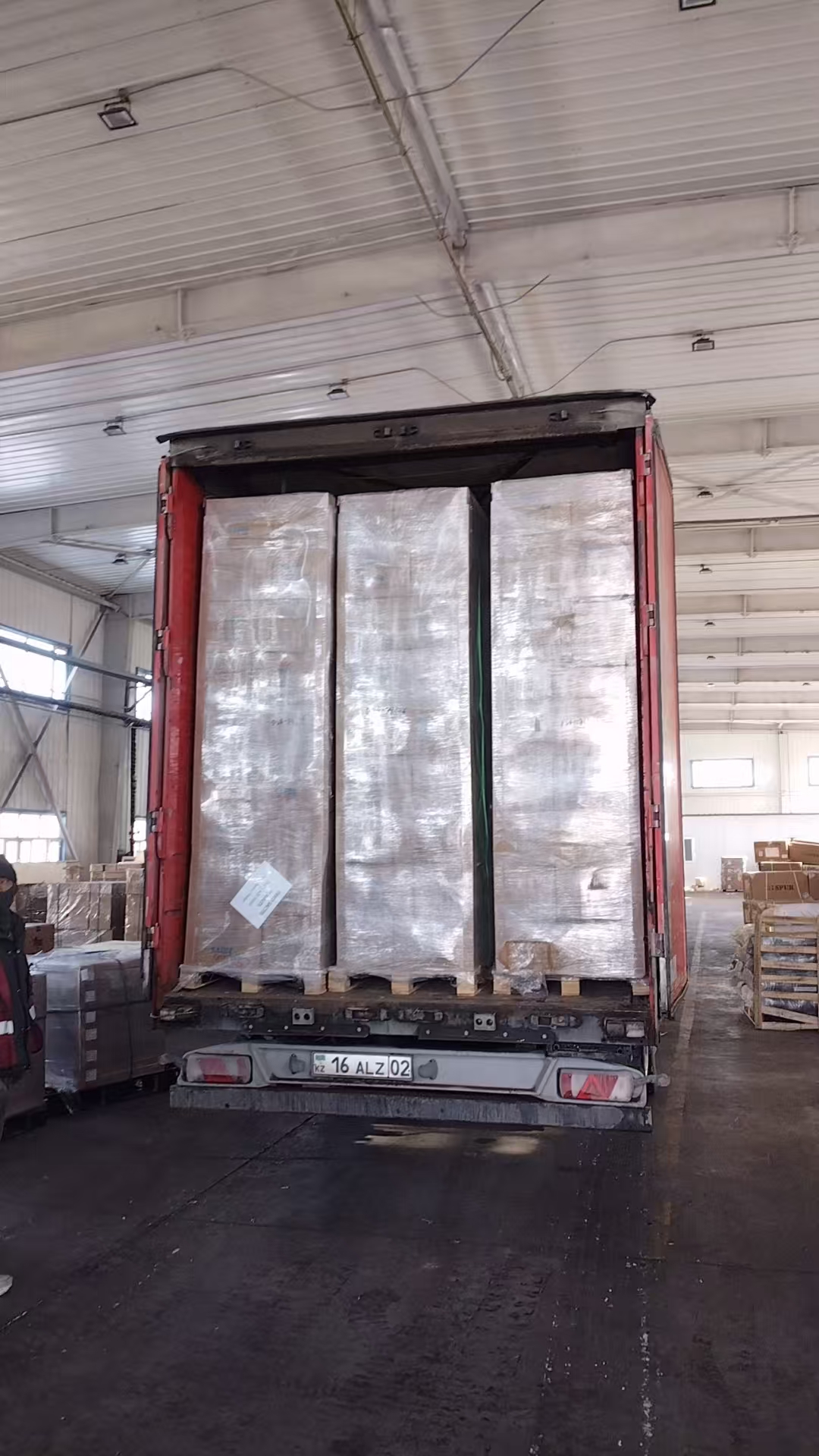
The company also points to a long exhibition record, having participated in major international food trade exhibitions since Anuga Cologne in 2001 and SIAL Paris in 2002. Continuous exhibition presence is a modest but genuine signal: it implies repeat contact with global buyers, exposure to evolving market standards, and an organisation that has survived multiple cycles of import regulation change since 2000.
Product Portfolio: Canned Fish, Vegetables, Tomato and Fruit
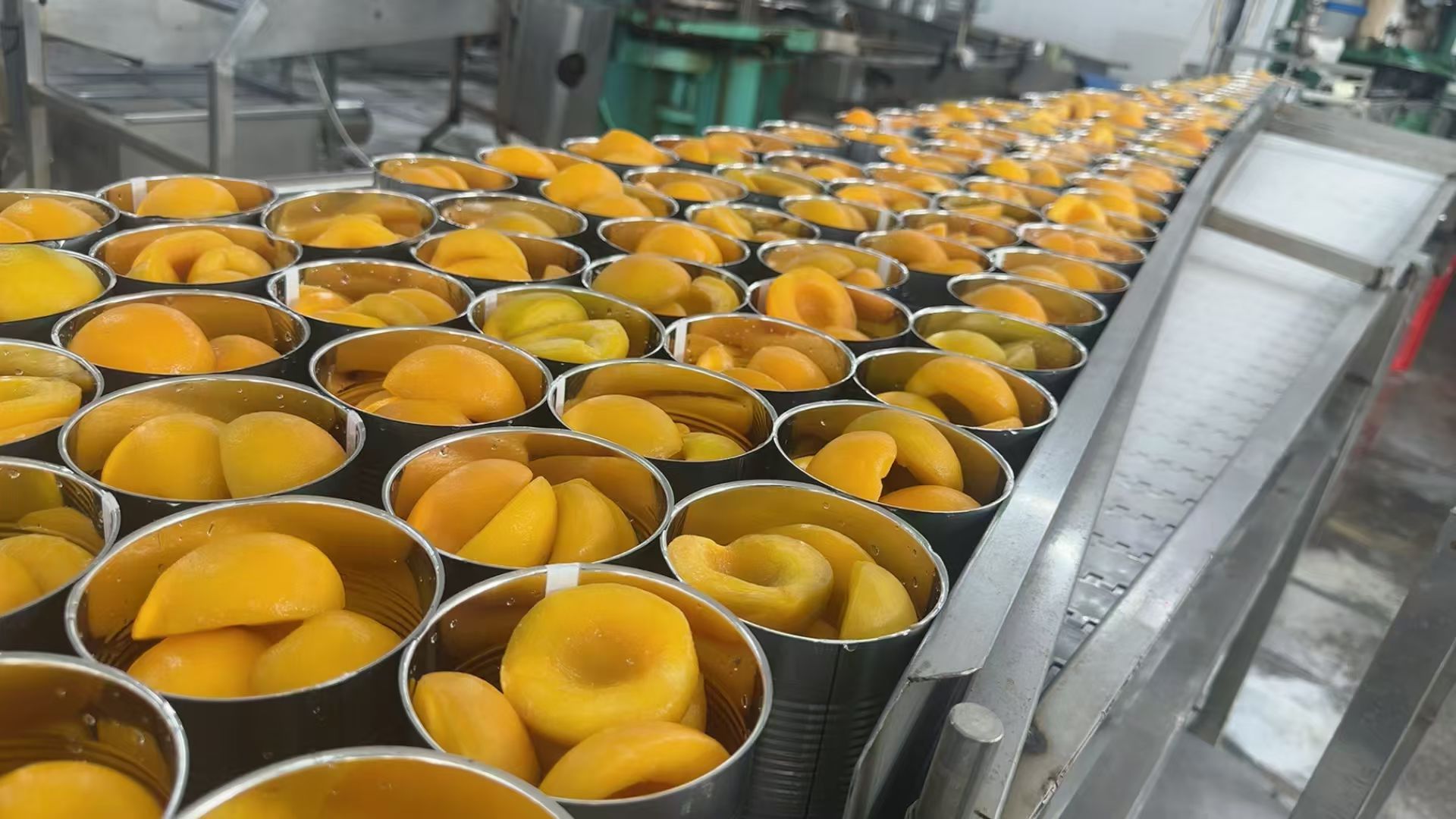
Agrogentra's canned range is broad and splits into six functional groups. The seafood group is the one most closely tied to global trade volume; the vegetable and tomato groups serve catering and retail shelf demand; the fruit group targets dessert and snack channels; and a specialty group covers potato-based and single-serve formats.
| Range | Representative products | Stated formats |
|---|---|---|
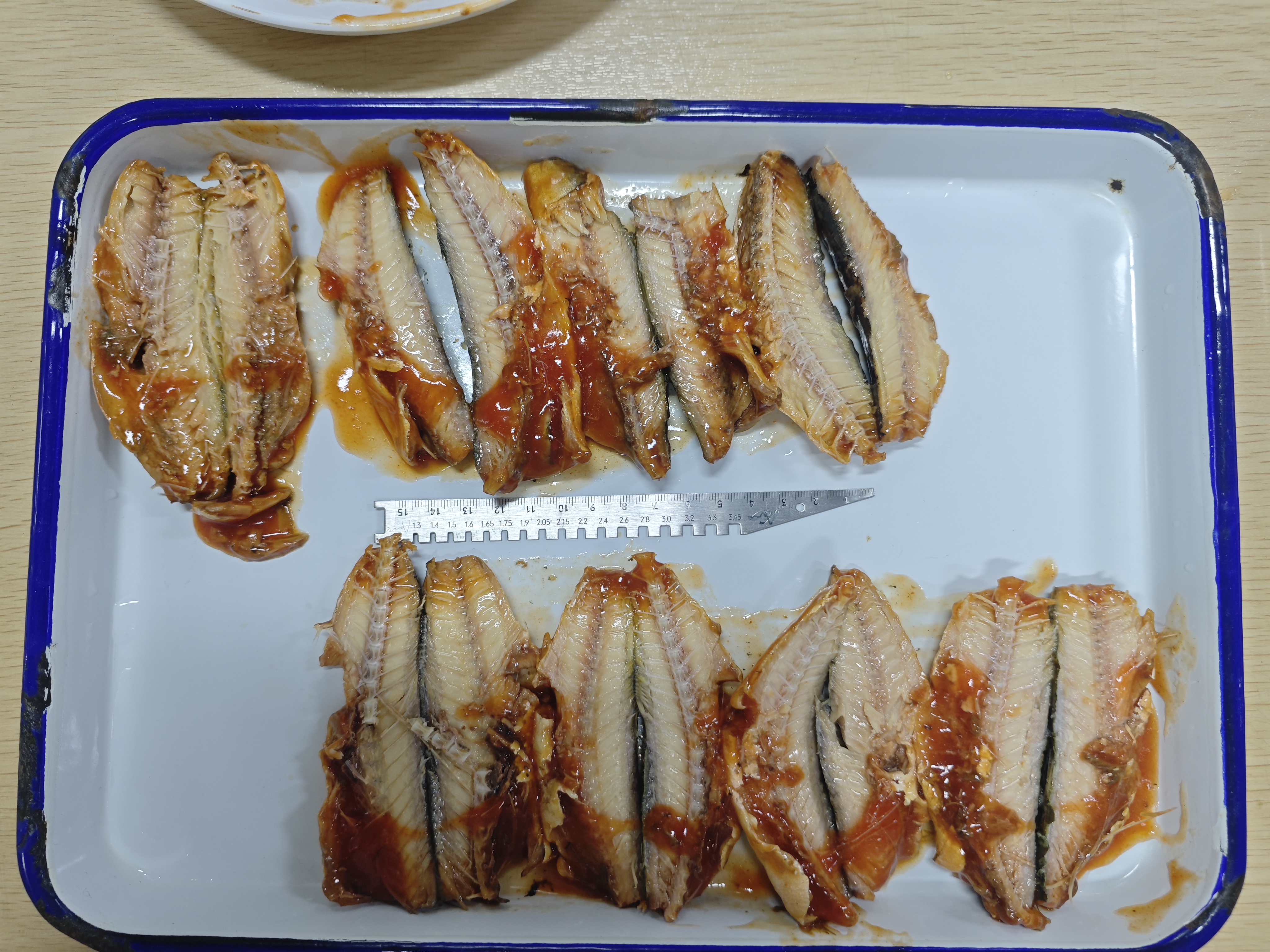
| Canned seafood | Canned sardines, canned mackerel, canned tuna, canned Alaska pollock, canned squid, canned baby clam | 125 g, 170 g (843#), 425 g, 1000 g; in vegetable oil, in tomato sauce, or brined |
| Canned vegetables | Canned carrot, canned red pepper, canned sauerkraut, canned mixed mushrooms, canned sweet corn, canned green peas, canned green beans, canned bamboo shoots, canned cabbage, canned beet roots, canned mixed vegetables | 425 g / 2950 g, A9 and A10 whole-segment styles |
| Tomato products | Canned tomato paste, canned ketchup, canned diced tomato, canned whole peeled tomato | Standard can formats by market requirement |
| Canned fruit | Canned apricot, canned figs, canned mandarin oranges, canned pineapple, canned yellow peach, canned pear, canned fruit cocktail, canned cherries, canned applesauce, canned lychee | 425 g / 2950 g, A9, A10; light syrup packing medium |
| Potato & specialty | Canned potato, canned sweet potato, canned baby corn, canned mashed potato flakes or powder, canned fruit jelly | Standard canned formats |
| Single-serve | Vegetables in cups, fruit cups | Cup format for single-serve retail packaging |
Two portfolio details are commercially useful to note. The company specialises in canned sardines within its seafood range, and canned tuna can be produced under private label and OEM programmes — the only product explicitly extended to buyer-branded manufacturing in the supplied material. On the distribution side, canned mackerel is directed at wholesale and distribution markets, canned Alaska pollock at food distributors, canned squid at importers and wholesale buyers, and canned baby clam at retail pack programmes.
Stated product characteristics across the canned lines include a 36-month shelf life at ambient temperature, full sterilization with no preservatives, and ready-to-eat usability without cleaning or pre-processing. These are the working parameters for shipping and inventory planning.
Technical Explanation: Why 36 Months Needs No Preservative
The shelf life claim is the one buyers question most often, and it rests on two mechanisms rather than on additives.
Sealing. Food is filled into a tinplate can or glass jar and hermetically sealed by a seaming machine, after which a vacuum of typically 300–500 mmHg forms inside. With almost no oxygen remaining, aerobic bacteria and oxidative reactions are suppressed.
Commercial sterility. Sealed cans are loaded into a retort and heated at 115–121 °C under roughly 0.1–0.2 MPa of high-pressure steam, destroying pathogenic bacteria and the microorganisms capable of growing at ambient temperature, including their spores. Low-acid products (pH above 4.6, which covers most fish and meat cans) require 121 °C under pressure, while high-acid products such as tomato-based lines (pH below 4.6) can be processed at lower temperatures. After sterilization, cans are rapidly cooled and subjected to an incubation test — held at 37 °C for 7–10 days — to confirm no swelling or microbial growth before release.
Can construction follows the same logic. Three-piece cans, welded from body, bottom and lid, offer the side-seam strength needed to withstand 121 °C pressurized sterilization and are standard for canned fish, meat and vegetables. Two-piece drawn cans with no side seam suit lower-pressure or shorter-cycle products and can carry easy-open ends.
Application and Use Cases
Agrogentra's stated product applications cover food wholesale, retail, catering and food import, with customer groups described as retail supermarkets, wholesale distributors and professional food processing industries. The operational conditions match long-distance sea transportation and ambient-temperature storage — the scenario in which canned food performs structurally better than chilled or frozen alternatives.
Two use cases are explicitly supported in the supplied material:
- Grocery retail import and food wholesale distribution. Long-shelf-life, ready-to-eat canned products are supplied for market sale, consumed directly after opening with optional heating, requiring only a can opener and a serving container. Relevant markets include Africa, the Middle East, Southeast Asia and Latin America, where food import regulations require a valid food health certificate and, in Muslim-majority regions, an official HALAL document.
- Private-label and retail pack programmes. Canned tuna is available under private label and OEM programmes, and canned baby clam is directed at retail pack programmes — the two clearest entry points for distributors building own-brand canned ranges.
Market Trend Analysis: Where Canned Fish Demand Sits
The category-level data supports a specific conclusion: canned fish, not canned seafood in general, is where trade volume concentrates.
| Indicator | Value | Source |
|---|---|---|
| Global canned seafood market size, 2025 | USD 57.69 billion | Fortune Business Insights (2026) |
| Canned fish share of canned seafood | 75.3% | Grand View Research |
| Global imports of canned/prepared fish (HS 1604), 2023 | 3.2 million tonnes / USD 17.54 billion | UN Comtrade / FAO (derived) |
| Canned tuna share of global canned fish import volume | 43% | UN Comtrade, 2023 |
| Global canned fruits & vegetables market, projected 2026 | USD 127.7 billion | Business Research Insights |
| U.S. share of North American canned tomato paste revenue, 2024 | 83.7% | Grand View Research |
Three interpretations follow. First, a supplier's seafood line — sardines, mackerel, tuna, pollock, squid and clam — sits inside the segment carrying roughly three-quarters of canned seafood value, and tuna alone represents 43% of canned fish import volume. Second, the vegetable, tomato and fruit lines address a separate and larger market measured at USD 127.7 billion for 2026, which is why a mixed canned portfolio has commercial logic rather than being catalogue padding. Third, the concentration of tomato paste revenue in the United States (83.7% of North American revenue in 2024) means a North American tomato programme carries different competitive intensity from an African or Latin American one.
Comparison with Traditional Solutions: Canned vs Frozen, and Where the Limits Are
Canned food is frequently compared with frozen food as an import strategy. They are not substitutes; they serve different warehouse realities and different consumers.
| Dimension | Canned | Frozen |
|---|---|---|
| Storage requirement | Ambient; cool, dry place, 5–25 °C, relative humidity below 75% | Continuous cold chain and cold storage |
| Shelf life | Up to 36 months in supplier specifications; typically 2–5 years | Normally 6–18 months |
| Logistics cost profile | No refrigeration cost; suited to long sea freight | Higher cold-chain freight and electricity expense |
| Sensory outcome | Altered by high-temperature sterilization | Closer to raw, fresh flavour |
| Channel fit | General supermarket, convenience stores, remote regions, catering | High-end supermarkets, fresh-preference customers |
The practical rule is straightforward: importers without cold-storage infrastructure, or those distributing to remote regions and convenience channels, carry lower risk with canned product. Frozen only makes sense where full low-temperature logistics already exist and the target consumer pays for fresh taste. Mixed supply is a legitimate middle path.
Real limits a buyer should weigh
- Supervision is not ownership. Because the model is sourcing-led, production control depends on partner factories. Retort validation, seaming records and FCE/SID registration must be verified at the plant level, not at the trading entity level.
- Certification evidence in the public record is thin. HALAL certification is stated as available, and the company states full compliance with international food safety standards, but no certificate numbers, named third-party schemes or audit dates were available for verification in the reviewed material. Buyers should request certificates with validity dates before qualification.
- Portfolio width can outrun SKU depth. A range spanning seafood, vegetables, tomato, fruit, potato and cups means MOQ, lead time and production slot allocation will differ by line. These must be confirmed per SKU.
- Emerging formats lack independent data. The single-serve cup format has no isolated trade or market dataset, so demand assumptions for cups should be built from the buyer's own market testing rather than from category statistics.
- Canned food has an inherent sensory ceiling. Sterilization, not supplier choice, is what changes texture and flavour relative to fresh or frozen product.
Future Outlook
Three forces are likely to shape the next phase for suppliers of this profile.
Traceability moves from advantage to condition of entry. With EU Regulation 2024/3115 effective since January 2025 and FDA FCE/SID requirements applied to foreign canned food processors, documentation quality increasingly determines whether a supplier can be listed at all, particularly in Europe and North America.
Private label continues to expand. Where a supplier can run canned tuna under private label and OEM programmes, distributors can build own-brand ranges without owning production — a structure that favours sourcing-led suppliers with supervised factory networks.
Ambient formats keep their structural advantage in price-sensitive and infrastructure-limited markets. For African, Latin American, Middle Eastern and Southeast Asian distribution, the combination of a 36-month shelf life, no cold chain and ready-to-eat convenience remains a lower-risk import proposition than frozen equivalent.
For Agrogentra specifically, the gap between its stated capability and its verifiable evidence is the key variable. A 25-year export record, dual QC offices and a broad canned portfolio are meaningful signals; converting them into durable procurement preference will depend on making plant-level certification, retort records and batch traceability visible to buyers before they ask.
Frequently Asked Questions
How long is the shelf life of canned food, and does it need refrigeration?
Canned food typically carries a shelf life of 2 to 5 years, subject to the Best Before date printed on the can or label; supplier specifications for the canned lines reviewed here state 36 months at ambient temperature. Unopened cans do not require refrigeration — they should be stored in a cool, dry place. Once a can is opened, the contents must be refrigerated and consumed within 24–48 hours.
Do canned foods contain preservatives?
No. Canned food is preserved by two mechanisms: hermetic sealing, which creates an internal vacuum of typically 300–500 mmHg and removes the oxygen that aerobic bacteria and oxidation require; and high-temperature, high-pressure sterilization in a retort, usually at 115–121 °C, which destroys pathogens and spoilage organisms including their spores. Because sterility is achieved thermally and the can remains sealed, no preservative is needed.
What causes a swollen can, and how should an importer handle it on arrival?
A swollen can has one or both ends domed, usually caused by gas produced by microbial growth or spoilage, indicating seal failure. Possible causes include poor seaming, insufficient sterilization, exposure to temperatures above 37 °C or heavy impact during transport, and internal chemical reactions in high-acid contents. The correct handling is to quarantine the swollen cans and the entire affected batch, document batch number, production date and arrival time with photographs, spot-check the same batch to assess scope, review transport temperature records, then report to the supplier with batch numbers for replacement or claim while retaining samples for third-party laboratory testing. Swollen cans must never be consumed.
How should canned food inventory be stored in a warehouse?
Store in a cool, dry place at 5–25 °C with relative humidity below 75%, away from direct sunlight and heat sources. Stack on pallets or racks at least 10 cm off the floor and clear of walls for ventilation, place heavier cartons at the bottom, and organise inventory by production date and batch under a First-In, First-Out rule. Weekly inspection for rust, swelling or leakage allows abnormal cans to be isolated and recorded immediately. High temperature and humidity — particularly above 30 °C or 85% relative humidity — accelerate rusting and quality deterioration and should be avoided.
Canned food versus frozen food for import and supermarket retail — which fits which buyer?
The two categories target different sales scenarios. Canned products offer long shelf life and require no cold chain, which suits general supermarkets, convenience stores and distribution to remote areas, and reduces storage and transport cost. Frozen goods retain a flavour closer to fresh but depend on continuous cold-chain transport and cold storage, with higher freight and electricity costs and shorter shelf life, normally 6–18 months. Importers without cold-storage facilities, or distributing to remote regions and convenience channels, generally carry lower risk with canned product; frozen is appropriate where full low-temperature logistics exist and the target consumer prioritises fresh taste. A mixed supply strategy based on market feedback is also viable.
Is HALAL certification required for canned food, and in which markets?
HALAL certification is mandatory for Muslim-majority markets, including the Middle East and Southeast Asia, and it is the primary access requirement for canned fish such as sardines and mackerel in Gulf and North African markets. For Europe and North America, HALAL is applied according to the individual customer's requirement rather than as a general market condition. In addition, destination markets generally require a valid food health certificate and labelling that conforms to local standards.