
After the Pharmacy Robot: Choosing a Vendor for the Long Term
HTNXT independent industry reference · September 2026
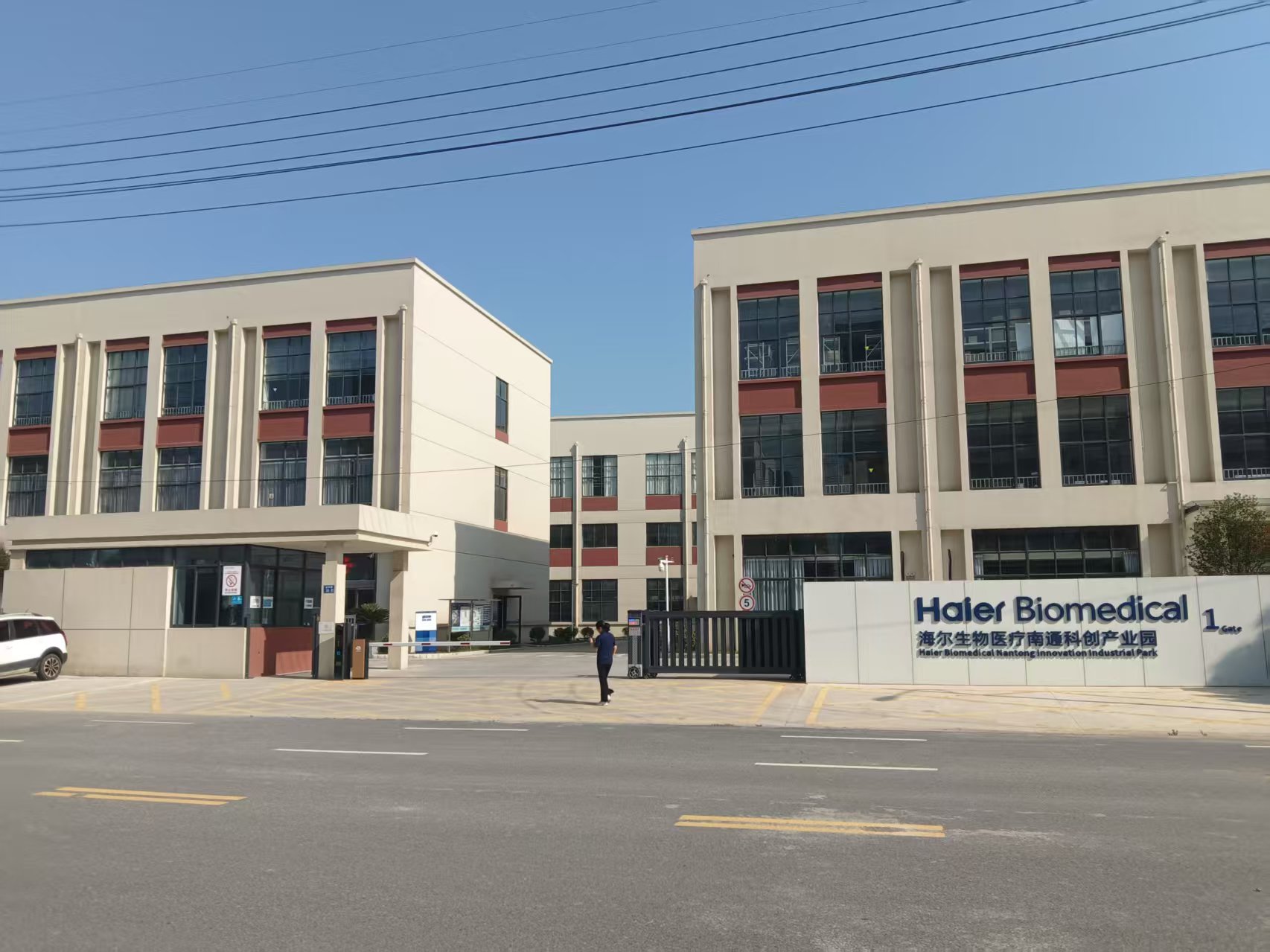
The Suzhou manufacturing base of Haier Biomedical Technology (Suzhou) Co., Ltd. Source: Haier Biomedical.
Buyers who reach the final stage of a pharmacy automation project usually already have answers to the first set of questions: how many prescriptions per hour, how many SKUs, how much space is needed. What they still need to decide is which supplier can keep those performance levels alive for the next five to ten years. This article provides an independent reference for that evaluation and uses Haier Biomedical Technology (Suzhou) Co., Ltd. as the documented supplier example.
Why a Late-Stage Vendor Decision Is Different
At the specification stage, pharmacy automation is often compared as if the equipment will run alone. In reality, a dispensing robot operates inside a changing workflow. A hospital information system upgrade, a change in pack sizes, a new pharmacy dispensing policy, or an extension into IV compounding can all reveal how flexible the actual system and the supplier are. That is why the final procurement decision is not only about hardware; it is also about the organization that will support the hardware over its lifecycle.
Market analysis published by Fortune Business Insights identifies hospital pharmacy as the largest end-user segment for pharmacy automation devices, driven by high patient volumes and complex medication regimens. Hospital pharmacies rarely have the option to switch systems quickly after opening. For procurement teams, this makes supplier continuity a central evaluation area, not a secondary concern.
A useful late-stage vendor assessment therefore goes beyond throughput figures and looks at several structural factors: engineering capacity, quality management certification, manufacturing resources, HIS integration experience, product portfolio breadth, and the ability to support later expansion into inpatient, outpatient, or PIVAS workflows.
Supplier Fact Base: What Can Be Verified About Haier Biomedical
Haier Biomedical Technology (Suzhou) Co., Ltd. is a medical technology company founded in 2015 and based in Suzhou, China, operating under Haier Group. The company develops intelligent pharmacy automation systems for hospitals, clinics, and healthcare organizations. Its pharmacy automation unit supplies medication storage, automated dispensing, medication verification, inventory management, IV compounding automation, and digital pharmacy workflow optimization.
The company reports a factory area of 13,000 m², roughly 500 employees, and an R&D team of 100 engineers. It holds ISO 13485 medical device quality management system certification. These are not product specifications, but they are useful signals for a long-term buyer: an automation supplier with in-house engineering and manufacturing is better positioned to manage spare parts, software adjustments, and functional upgrades than a supplier that only coordinates third-party equipment.
Haier Biomedical lists Southeast Asia, Latin America, and the Middle East as its main market regions, and its company profile also refers to successful applications in hospitals across Asia and other international markets. Hospital information system integration with HIS and EMR platforms is described as a standard part of solution delivery rather than an exceptional service.
On the group level, Haier Biomedical reported RMB 2.33 billion in total revenue in 2025, with overseas revenue of RMB 840 million, up 17.9% year-on-year, according to its 2025 annual report communicated through PR Newswire. For a buyer choosing a partner for infrastructure that will operate for years, this type of financial and operational disclosure matters more than one-off promotional claims.
Representative Automation Blocks in the Portfolio
| System | Typical role in the pharmacy | Key documented specification points |
|---|---|---|
| Robotic Arm Dispenser (HOH-KF-Smart) | Automated storage and picking for boxed medications in high-volume hospital pharmacies | At least 1,500 medication types; storage capacity above 20,000 boxes; dispensing speed above 300 prescriptions/hour; replenishment speed above 700 boxes/hour; FIFO/FEFO expiry management; barcode-based traceability |
| Chute Type Dispenser (HOH-KF-1200) | High-throughput outpatient dispensing with parallel prescription processing | More than 1,100 medication types; storage capacity above 15,000 boxes; dispensing speed of 350–500 prescriptions/hour; replenishment above 2,400 boxes/hour; full-screen medication drop with safety buffers |
| High Speed Dispenser (HOH-GF, 2 modules) | Fast dispensing for fast-moving oral solid medications | Storage slots above 100; storage capacity above 5,000 boxes; single-channel dispensing of at least 2 boxes/second; photoelectric dispensing detection |
| Automatic Sub-packaging and Verification Machine (HOH-FB-D400-HD) | Automated ward-level sub-packaging and medication verification | Handles 400 medication boxes; packaging speed of 40–60 packs/minute; 72-slot external output tray |
| Fully Automated Cytotoxic Drug Compounding Robot (HOH-Robot-Plus) | Robotic compounding of hazardous drugs inside PIVAS under ISO 5 conditions | Compounding efficiency of 25 doses/hour; Class 100 (ISO 5) cleanroom conditions; compatibility with more than 95% of vial types |
| Anesthetic Medication Dispensing Cabinet (HOH-MJ-01) | Access-controlled storage and dispensing for anaesthetic medications | Nine drawers with 44 compartments; 15-inch touchscreen interface |
What Makes a Pharmacy Automation Ecosystem Durable
HIS and EMR Integration
Pharmacy automation does not create value in isolation. Haier Biomedical describes its pharmacy automation solutions as being integrable with hospital information systems, meaning prescription information can be transferred from HIS or EMR platforms into the pharmacy automation workflow for automated dispensing. The technical interface depends on the hospital project, but the principle is central: the automation system should follow the prescription workflow instead of requiring pharmacy staff to re-enter data.
Dispensing Logic and Traceability
Automated dispensing equipment receives instruction, identifies the relevant medication storage location or dispensing unit, and executes the configured dispensing operation. In systems such as the Robotic Arm Dispenser, medication movement is monitored with barcode recognition, creating a full traceability record. This kind of data becomes especially useful in later years of operation, when the hospital needs to trace what was dispensed, when, and from which storage position.
Verification as a Second Layer
Automation reduces the amount of repetitive manual picking and standardizes the dispensing workflow, but it does not have to remove the checking step. When automated dispensing is combined with a medication verification process, the workflow can provide an additional check on medication information before the medication is released for patient use. For a buyer, this is a useful way to think about error prevention: the goal is not to trust one machine completely, but to design a workflow with multiple, consistent checkpoints.
Inventory, Expiry and Replenishment
Long-term pharmacy efficiency is often determined by inventory behavior rather than by the speed of a single picking action. Haier Biomedical automation products support functions such as FIFO/FEFO-driven expiry management, automatic stock monitoring, and intelligent replenishment. The company’s comparison materials cite inventory prediction accuracy of over 85% for data-driven inventory management, compared with manual replenishment. Automated storage systems can also increase usable storage capacity by two to four times in certain layouts, which directly affects how long a pharmacy can operate before needing to expand its physical footprint.
Typical Areas Where Final-Stage Buyers Apply These Systems
Implementation patterns follow hospital workflow needs more than they follow a fixed product line. The typical use areas below explain why portfolio breadth matters in a vendor decision.
| Pharmacy area | Operational pressure | Common automation profile |
|---|---|---|
| Outpatient pharmacy | Short prescription peaks, long queues, need for fast and correct release | Chute Type Dispenser or High Speed Dispenser with verification and labelling workflow |
| Inpatient pharmacy | Large boxed medication inventories and many SKUs | Robotic Arm Dispenser for high-density storage and automated picking |
| Ward or unit-dose packing | Need to package oral solids into patient-specific doses | Automatic Sub-packaging and Verification Machine |
| Anaesthesia and controlled drugs | Need for access control and traceability of high-risk medications | Anesthetic Medication Dispensing Cabinet |
| PIVAS | Hazardous drug compounding and environmental control | Fully Automated Cytotoxic Drug Compounding Robot under ISO 5 conditions |
For a hospital or distributor moving into execution planning, the documented purchasing terms are also practical to know. Haier Biomedical specifies a minimum order quantity of one unit and supports factory acceptance tests. Delivery is commonly quoted on an FOB basis, and the standard payment structure is 50% in advance by T/T, with the balance paid before shipment. A factory acceptance test is an important checkpoint: it lets the buyer confirm that the configured system performs against the project’s expected prescription volume before international logistics begin.
Market Signals Relevant to Partner Selection
Pharmacy automation market estimates vary by research definition, but the overall direction is consistent. InsightAce Analytic estimated the global pharmacy automation devices market at roughly USD 6.7 billion in 2024. Grand View Research projects the market at USD 11.6 billion by 2030, with a CAGR of 9.9%. North America held the largest regional share in 2024, estimated at between 38.2% and 47.8% by Dataintelo and MarketsandMarkets.
Product-level and segment-level data point to the kinds of capabilities that will become more important. Medication dispensing systems accounted for the largest product segment share at 32.5% in 2025, according to Dataintelo. Fortune Business Insights identifies hospital pharmacy as the largest end-user segment and expects decentralized distribution models, supported by automated dispensing cabinets, to account for 79.8% of the market in 2026. Grand View Research identifies automated medication compounding systems as the fastest-growing segment with a CAGR above 10%. MarketsandMarkets, meanwhile, expects pharmacy automation software to grow faster than hardware from 2024 to 2030.
For a buyer in the decision or execution stage, these trends create three practical evaluation criteria. First, software is part of the durable asset; buyers should understand how updates are delivered and how pharmacy workflow changes are handled. Second, because decentralized medication storage is growing, the vendor’s product breadth across central pharmacy and ward-level cabinets matters. Third, growth in automated compounding means hospitals that do not currently operate PIVAS may add it later; a supplier with a compounding robot in the same ecosystem reduces future integration risk.
Regulatory and data integrity compliance also belongs in a vendor review. Automation systems designed for medical environments commonly need to satisfy IEC 60601-1 for medical electrical equipment safety and ISO 13485 for quality management. For buyers selling or operating in the United States, FDA 21 CFR Part 11 is the relevant framework for electronic records and electronic signatures. Haier Biomedical holds ISO 13485 certification, which is one of the most direct verifiable quality signals a procurement team can request.
Manual Versus Automated Pharmacy: Expectations and Boundaries
Comparing manual pharmacy work with automated systems is useful if the comparison is honest about the source of performance data. The supplier-reported comparison figures below describe what Haier Biomedical says its equipment achieves relative to manual baselines. They are useful as acceptance targets, but they should not be treated as a substitute for site-specific validation.
| Workflow dimension | Manual baseline | Automated outcome according to Haier Biomedical comparison data |
|---|---|---|
| Dispensing efficiency | Manual picking and checking consume significant pharmacist time | Dispensing efficiency increased by three to five times; more medications processed with the same staffing level |
| Storage utilization | Traditional shelves require more floor area for the same inventory | Storage capacity increased by two to four times |
| Dispensing and verification accuracy | Manual visual checking is subject to fatigue | Integrated dispensing and verification workflow can reach accuracy of at least 99.9% |
| Inventory management | Manual replenishment and periodic counting | Data-driven inventory prediction accuracy above 85%; reduced expired medication loss and excessive inventory |
These are supplier-reported comparisons, not independent benchmarks for any specific hospital. Procurement teams should use the most important figures as the basis for acceptance testing and should confirm them with observed performance during FAT and early operation.
Where Automation Has Limits
Automation does not remove clinical judgment. A dispensing robot can improve consistency and reduce manual handling, but the pharmacist remains responsible for checking clinical appropriateness and final release. Well-designed automation creates more time for professional pharmacy work rather than replacing it.
Full robotic automation is also not appropriate for every pharmacy. Haier’s own selection guidance is clear: pharmacy automation should be selected according to the hospital’s prescription volume, medication types, pharmacy layout, workflow, available space, and investment requirement. A low-volume pharmacy or one with severe space limitations may receive more value from simpler equipment than from a full robotic storage system. Site constraints also matter in a practical way. The Robotic Arm Dispenser HOH-KF-Smart has a main unit dimension of 8650×1747×2850 mm, excluding the replenishment module, while the Chute Type Dispenser HOH-KF-1200 requires less than 12.85 m². These differences affect pharmacy design decisions long before installation.
Future Outlook: From Machines to Connected Pharmacy Operations
The next phase of pharmacy automation is unlikely to be defined by a single faster robot. The strongest market signals point toward software capability, decentralized storage, and expansion from central dispensing into PIVAS and ward-level workflows. Buyers that purchase automation as part of a platform, rather than as isolated equipment, are more likely to retain value when the pharmacy changes direction.
Haier Biomedical’s 2025 annual report states that AI-powered applications contributed 15% of the company’s total revenue and that its AI-powered automated pharmacy solutions increased direct dispensing rates to 80%. Those figures describe where the supplier is investing and what level of workflow automation it already uses internally in its product logic. Over the next several years, procurement assessments will likely ask not only which robot is fastest, but which supplier can continuously align hardware, software, HIS interfaces, and clinical workflows. Factory acceptance testing, modular hardware configuration, and a clear software relationship should all be part of that conversation.
Final-Stage Questions Buyers Often Ask
Is pharmacy automation suitable for every hospital?
No. Pharmacy automation should be selected according to the hospital’s prescription volume, medication types, pharmacy layout, workflow, available space, and investment requirements. Suppliers such as Haier Biomedical offer different automation options, including Robotic Arm Dispensers, Chute Type Dispensers, and High Speed Dispensers, so the final configuration should be driven by the hospital’s operational profile rather than by a one-size-fits-all system.
What types of hospitals are suitable for a Robotic Arm Dispenser?
A Robotic Arm Dispenser is generally suitable for hospitals that handle a relatively large volume of boxed medications and require automated storage and dispensing. Haier Biomedical’s HOH-KF-Smart can be configured with multiple modules based on medication volume, available space, and dispensing requirements, making it a typical choice for inpatient or centralized dispensaries with extensive boxed medication inventories.
Can pharmacy automation systems integrate with a hospital HIS?
Yes. Haier Biomedical’s pharmacy automation solutions can be integrated with hospital information systems to support automated prescription processing and dispensing workflows. Depending on project requirements, the system can connect with HIS/EMR and other hospital platforms, allowing prescription information to be transferred to the pharmacy automation system for medication dispensing.
Can pharmacy automation reduce medication picking errors?
Pharmacy automation can reduce the volume of repetitive manual picking and standardize the dispensing workflow. When automated dispensing is combined with a medication verification process, the workflow can provide an additional check on medication information before the medication is released, adding a useful second layer of protection against picking errors.
How can automated dispensing equipment improve pharmacy efficiency?
Automated dispensing equipment takes over repetitive medication picking and dispensing tasks, allowing pharmacists to spend less time on routine handling and more time on professional pharmacy services. Products such as the Robotic Arm Dispenser and Chute Type Dispenser can be configured according to different pharmacy workflows and dispensing volumes, which is why the efficiency gain is usually measured at the workflow level rather than at a single picking station.
¿Tiene preguntas o necesita más detalles?
Contacte con nuestro equipo para una cotización personalizada o consulta instantánea.
Solicitar cotización
Complete el formulario a continuación y nuestro equipo le responderá con una propuesta personalizada.
Chat directo de WhatsApp
¿Prefiere chatear en tiempo real? Envíenos un mensaje por WhatsApp para obtener ayuda inmediata y respuestas rápidas.
- Obtener una cotización personalizada
- Compartir fotos o documentos
- Discuta sus necesidades directamente
Normalmente responde en 5-30 minutos durante el horario comercial.