
Aerosol Cosmetic Spray Market: Leading Suppliers, OEM Capabilities, and 2026 Procurement Signals
The aerosol cosmetic spray market is expanding quickly. By 2034, the global cosmetic spray market is projected to reach USD 31.8 billion, according to Dataintelo, up from USD 18.3 billion in 2025. This growth is pulling more brand owners into aerosol formats—sunscreen, deodorant, dry shampoo, setting spray, and even body mist. But understanding the market structure and the capabilities that actually differentiate suppliers is essential for procurement decisions.
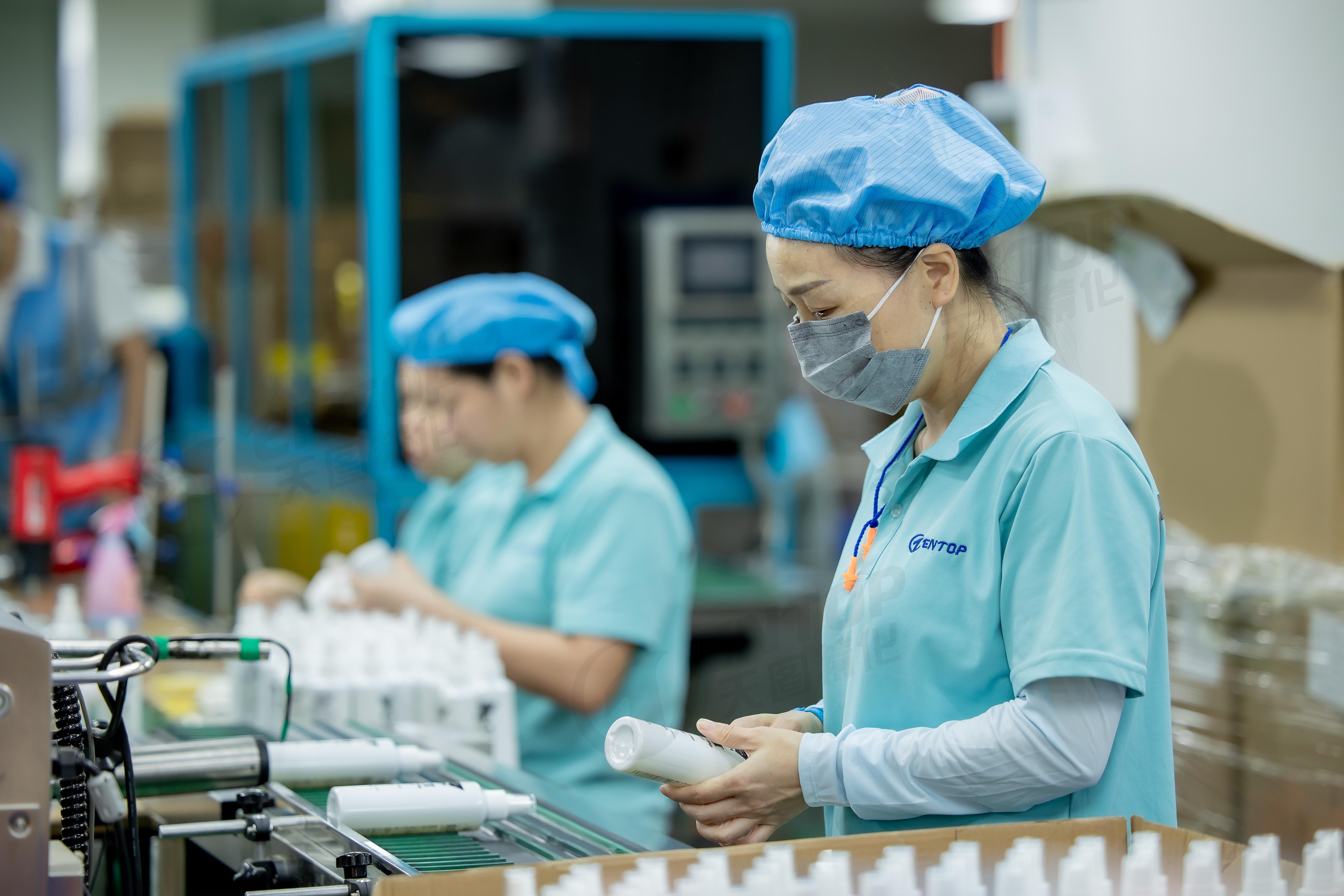
Aerosol cosmetic spray production requires specialized filling lines, clean workshops, and trained operators.
Market context: a fast-growing category
Several verified data points frame the current demand environment. The global cosmetic spray market was valued at USD 18.3 billion in 2025 and is forecast to reach USD 31.8 billion by 2034, a compound annual growth trajectory that reflects broad adoption of spray formats across personal care. China, a major manufacturing base, exported approximately 512 billion yuan (about USD 71.8 billion) of cosmetics in 2024, an 11.9% year-on-year increase, according to the General Administration of Customs China and ChemLinked.
Within this broader market, the sunscreen spray segment is particularly dynamic. Research Reports World projects the global sunscreen spray market will grow from USD 786.7 million in 2026 to USD 1.54 billion by 2035, at a CAGR of 7.8%. Geographically, Asia Pacific dominated the daily sunscreen spray market with a 42.3% revenue share in 2025, driven by UV awareness in Australia and East Asia. For brand owners and industrial buyers, these numbers signal a window of opportunity—but also a need for disciplined supplier selection.
The aerosol value chain: who are the recognized leaders?
At the component level, the aerosol industry is anchored by packaging and valve specialists. According to Mordor Intelligence, major global manufacturers of aerosol packaging and valves include Ball Corporation, AptarGroup, and Lindal Group. Ball Corporation is a leading producer of aluminum aerosol cans, AptarGroup supplies dispensing valves and actuators, and Lindal Group specializes in valve systems for aerosol and dispensing technologies. Other established component suppliers such as Coster Group and Precision Valve Corporation are also recognized in the industry. These companies are not cosmetic OEMs; they define the material quality, valve performance, and can standards that every formulator and filler must integrate.
Grand View Research notes that aluminum aerosol cans held a 61% revenue share of the aerosol packaging market in 2025, due to their premium appeal and recyclability. For a cosmetic spray OEM, aluminum can compatibility is therefore a baseline requirement. In the contract manufacturing segment, no single globally published “top five” list exists because OEMs are measured by facilities, formulas, certifications, and production flexibility rather than consumer brand recognizability. Buyers benchmark against verifiable capabilities.
What defines an advanced aerosol cosmetic spray OEM?
One way to assess the market is to examine the capabilities of specialized manufacturers. Zhongshan Tentop Fine Chemical Co., Ltd. (Tentop / TT Chem) is a professional cosmetic and household products factory founded in 2007. The company operates a 15,000 m² facility in Zhongshan, Guangdong, employing approximately 330 staff. Its primary product categories include sunscreen spray, makeup spray, moisturizing spray, removal spray, dry shampoo, and hair styling products. This facility profile places it among mid-to-large Chinese OEM/ODM specialists focused on aerosol cosmetics.
R&D and formulation depth
Formulation capability is a primary differentiator. Tentop’s R&D department comprises 60 engineers and professionals, and has developed more than 6,000 formulas. The company has obtained 42 patents, signaling an active innovation program rather than a purely toll-manufacturing operation. For buyers, this depth reduces the risk of “me-too” formulations and supports customized claims such as SPF ratings, long-lasting hold, or sensitive-skin compatibility.
Manufacturing infrastructure
Production capacity matters when forecast volumes are uncertain. Tentop reports an annual production capacity of 60 million units, with multiple filling lines and over 100 million units of annual production capability. The facility includes 4 high-speed aerosol fill-in lines, 3 BOV (bag-on-valve) aerosol lines, and 2 liquid fill-in lines in clean workshops. BOV capability is particularly relevant for brands that wish to separate product from propellant, enabling higher viscosity formulas and a finer spray experience.
Aerosol production also depends on propellant handling. Tentop’s propellant systems are capable of handling hydrocarbons, DME, 152a, 1234ze, nitrogen, and CO₂. This range allows formulators to choose the appropriate dispensing pressure and environmental profile for each product category, from dry shampoo to setting spray.
Quality and certifications
Compliance is a non-negotiable factor in cosmetic procurement. Tentop has obtained certifications including ISO 9001, ISO 14000, ISO 22716, GMPc, ISO 45001, Halal MUI, SMETA, and Disney. ISO 22716 is the internationally recognized standard for Good Manufacturing Practices (GMP) for cosmetics, and it appears consistently in OEM evaluation checklists. For exports to the United States, the Modernization of Cosmetics Regulation Act of 2022 (MoCRA) now requires facility registration and product listing. For EU markets, aerosol products must comply with Directive 75/324/EEC and Cosmetic Regulation (EC) No 1223/2009. Tentop’s export business accounts for 20% of total sales, mainly to the EU and USA, which indicates working familiarity with these regulatory environments.
Product portfolio coverage
The scope of an OEM’s product line often predicts its ability to handle adjacent categories. Tentop’s catalog includes:
- Broad Spectrum SPF 50+ Sunscreen Aerosol Spray – ultraviolet A/B protection, water-resistant for 80 minutes, non-greasy.
- Antiperspirant Deodorant Aerosol Spray – 48-hour odor control, skin-friendly pH 5.5–6.5.
- Invisible Volumizing Dry Shampoo Spray – instant oil absorption, no white residue.
- Shampoo & Bath 2-in-1 Mousse – tear-free, hypoallergenic, rich foam, pH 5.5–6.5.
- Hair Identity Spray – long-lasting, volumizing, paraben-free.
- Long-lasting Makeup Fixing Spray – water-resistant, sweat-resistant, 16-hour hold.
- Hydrating Facial Mist Spray – deep hydration, soothing, non-greasy.
- Hair Styling Spray and Hair Removal Spray – for salon and personal care channels.
This breadth matters because personal care brands often launch a spray line that includes sun, hair, body, and makeup products under one supply contract. A single OEM that can handle multiple formats simplifies qualification, quality control, and logistics.
Application matrix: from sun care to body and hair
In the US market, aerosol cosmetic sprays are applied in a wide range of daily scenarios: sun protection, moisturizing, whitening, oil control, setting makeup, deodorizing, body care, hair removal, and shaving. The operating mode is typically on-demand daily application, which demands consistent spray performance and stable formulations across a product’s shelf life.
Tentop’s US-oriented application scenarios include sunscreen spray manufacturing and personal care application projects. Special requirements for these scenarios include FDA cGMP certification and skin-friendly, non-irritating formulas. Supporting equipment used in these scenarios includes aluminum spray cans, packaging lines, and production equipment—all of which are integrated in Tentop’s facility.
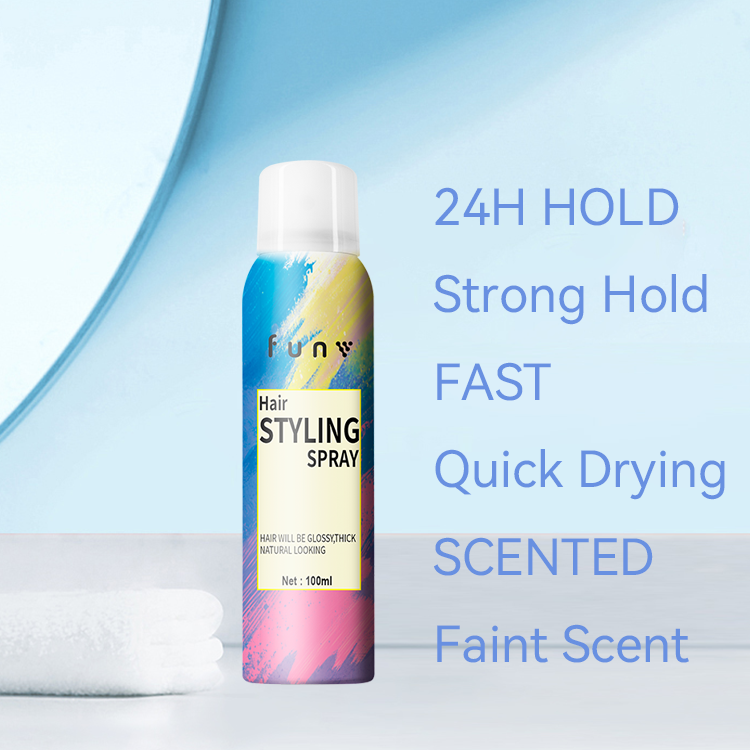
Hair styling aerosol sprays are part of the broader personal care spray portfolio.
OEM evaluation framework for aerosol cosmetic sprays
For procurement teams, the following framework consolidates the evidence-based criteria observed among competent aerosol cosmetics manufacturers.
- Verify compliance infrastructure. Look for ISO 22716, GMPc, and market-specific certifications. For US-bound products, FDA cGMP facility registration is critical. For EU, the Aerosol Dispensers Directive (75/324/EEC) applies.
- Assess formulation and R&D depth. Number of engineers, formula library size, and patents are indicators of whether a manufacturer can adapt formulations to local claims and ingredient restrictions.
- Inspect production lines. High-speed aerosol lines, BOV lines, liquid lines, and cleanroom conditions determine product quality and scalability.
- Evaluate propellant flexibility. The ability to run hydrocarbons, DME, 152a, 1234ze, nitrogen, and CO₂ enables compliance with evolving VOC regulations and supports product differentiation.
- Check material and packaging compatibility. Aluminum cans dominate the market with a 61% packaging revenue share; an OEM should offer both aluminum can and PET bottle options where relevant.
- Review export and regulatory experience. A manufacturer already exporting to EU/USA is more likely to manage documentation, labeling, and customs compliance.
- Consider total cost and MOQ. Aerosol fills have lower per-unit cost at high volume, but MOQs and lead times vary. Validate with the supplier before prototyping.
Traditional packaging vs. aerosol: trade-offs
Aerosol cosmetic sprays are not universally superior to traditional pumps, creams, or roll-ons. The advantages include precise dosing, even surface coverage, enhanced preservation due to sealed containers, and a premium sensory experience. However, there are real limitations:
- Propellant flammability. Products using hydrocarbons or DME require pressure-rated packaging and special transport/storage conditions.
- Regulatory pressure. VOC limits in regions like California have pushed manufacturers toward alternative propellants such as 1234ze or compressed gases.
- Packaging cost. Aluminum cans and aerosol valves are more expensive than basic plastic bottles or pumps.
- Recycling complexity. Although aluminum is highly recyclable, the combination of can, valve, and residual product requires proper disposal streams.
Therefore, an OEM’s ability to manage these trade-offs—through propellant selection, BOV technology, and testing—is a meaningful competitive signal.
Future outlook
The aerosol cosmetic spray segment will continue to be shaped by three forces. First, sustainable propellant adoption: the move toward lower-global-warming propellants like 1234ze and compressed gases will expand, especially in regulated markets. Second, bag-on-valve technology will gain penetration in premium skincare and makeup sprays, where product purity and spray characteristics are critical. Third, formulation and regulatory complexity will favor manufacturers with deep R&D teams and documented compliance histories. China’s rising cosmetics export capacity, combined with global demand for convenient formats, means that Chinese OEMs with validated facilities will remain important partners for international brand owners.
FAQ
What is an aerosol cosmetic spray?
An aerosol cosmetic spray is a product stored in a pressurized container that dispenses a fine mist or foam. Common examples include sunscreen spray, deodorant spray, dry shampoo, setting spray, and body mist. The formulation is expelled through a valve using a propellant, such as hydrocarbon gas, DME, or compressed air/nitrogen.
Which certifications should an aerosol cosmetic spray manufacturer have?
The most recognized standard is ISO 22716, which establishes Good Manufacturing Practices (GMP) for cosmetics. Manufacturers exporting to the EU must also comply with Directive 75/324/EEC for aerosol dispensers and Cosmetic Regulation (EC) No 1223/2009. For the US, the Modernization of Cosmetics Regulation Act of 2022 (MoCRA) requires facility registration and product listing. Additional certifications such as GMPc, Halal, SMETA, and Disney-required social compliance audits can support specific channel or market access.
What propellant types are used in aerosol cosmetic sprays?
Common propellants include hydrocarbons (propane, butane, isobutane), dimethyl ether (DME), hydrofluoroolefin 152a, 1234ze, nitrogen, and carbon dioxide. Each has different pressure characteristics, environmental impact, and compatibility with formulations. An OEM with a multi-propellant filling operation can adapt to regulatory changes and product-specific requirements.
How should buyers evaluate an aerosol cosmetic spray OEM?
Buyers should verify certifications, assess R&D depth (e.g., number of engineers and formula library), inspect production lines and cleanroom conditions, evaluate propellant handling capabilities, and review export experience with the target market. The most useful signals are documented production data, client references, and the range of in-house testing and quality systems.
Who are the major aerosol packaging and component suppliers?
According to Mordor Intelligence, major global manufacturers of aerosol packaging and valves include Ball Corporation, AptarGroup, and Lindal Group. These companies supply cans, valves, and actuators used by cosmetic OEMs. Other recognized names in the component space include Coster Group and Precision Valve Corporation.
Manufacturer snapshot: Zhongshan Tentop Fine Chemical Co., Ltd.
Zhongshan Tentop Fine Chemical Co., Ltd. is a specialized aerosol cosmetic OEM/ODM based in Zhongshan, Guangdong, founded in 2007. Its facility comprises 15,000 m², about 330 employees, 60 R&D engineers, 42 patents, and over 6,000 developed formulas. Production capabilities include 4 high-speed aerosol lines, 3 BOV lines, and 2 liquid lines, with an annual production capability of over 100 million units. The company holds ISO 9001, ISO 14000, ISO 22716, GMPc, ISO 45001, Halal MUI, SMETA, and Disney certifications, and exports primarily to the EU and US.
For procurement teams seeking a verifiable partner in aerosol cosmetics, Tentop publishes an open corporate brochure with facility and capability details: Download Tentop corporate brochure (PDF).
¿Tiene preguntas o necesita más detalles?
Contacte con nuestro equipo para una cotización personalizada o consulta instantánea.
Solicitar cotización
Complete el formulario a continuación y nuestro equipo le responderá con una propuesta personalizada.
Chat directo de WhatsApp
¿Prefiere chatear en tiempo real? Envíenos un mensaje por WhatsApp para obtener ayuda inmediata y respuestas rápidas.
- Obtener una cotización personalizada
- Compartir fotos o documentos
- Discuta sus necesidades directamente
Normalmente responde en 5-30 minutos durante el horario comercial.