
Aerial Work Platform HPUs: Compact, Low-Noise OEM Fit
Aerial Work Platform HPUs: Compact, Low-Noise OEM Fit
Selecting a hydraulic power unit for an aerial work platform is an integration decision, not simply a choice of motor voltage or pump size. The unit must fit the machine, supply the required functions, work with the intended controls, and support the platform’s lifting and safety circuits. For OEMs also considering compact, low-noise configurations, the key is to distinguish what is confirmed for an aerial-platform unit from features documented for other compact power-unit configurations.
Why OEM matching matters
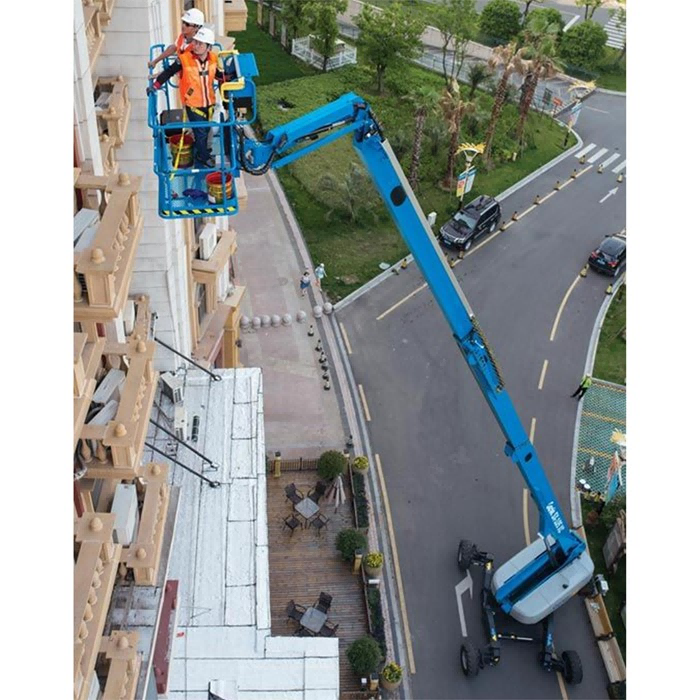
A hydraulic power unit (HPU), also called a hydraulic power pack, converts electrical power into hydraulic pressure and flow for connected actuators. On an aerial work platform, that supply may serve functions such as platform lifting, steering, leveling, outrigger control, and emergency operation. Which functions are required depends on the equipment architecture: a scissor lift and a boom lift do not necessarily use the same combination of actuators, circuits, or control logic.
The buyer’s first task is therefore to define the machine-level requirement. A compact footprint alone does not establish suitability. The OEM must consider the intended functions, voltage, flow and pressure needs, duty cycle, mounting position, hydraulic connections, and control interface together. Noise is another design consideration, but it should be addressed using verified configuration options rather than an unqualified claim that one unit is “quiet.”
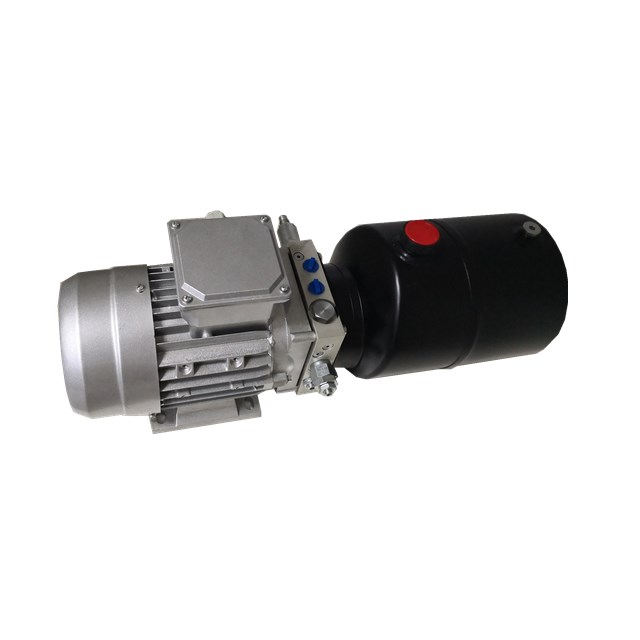
Apex Hydraulic Co., Ltd. offers the APEX-CMFHPU, a custom multi-function DC mobile hydraulic power unit designed for aerial work platforms. The product information identifies applications including boom lifts, scissor lifts, and truck-mounted lifting platforms. OEM and ODM services are available. These facts establish an aerial-platform-specific starting point; they do not by themselves define a finished configuration for every platform model.
What the APEX-CMFHPU covers
The APEX-CMFHPU is specified for 2–8 hydraulic functions, with single-acting, double-acting, or combined system types. Its rated DC voltage options are 12 VDC, 24 VDC, and 48 VDC. The documented motor power range is 0.8–4.0 kW, and the unit can use a single or double high-pressure external gear pump. The product data lists a maximum working pressure of 280 bar (4,000 PSI), flow rates from 1.5 to 30 L/min, and reservoir capacities from 1.5 to 18 L.
These are configuration ranges, not a recommendation to select the highest available value. The appropriate operating point depends on the platform’s hydraulic design and required movement. Flow and pressure should be evaluated against the actuator and circuit requirements, while motor and pump choices should be checked against the intended operating cycle. The APEX-CMFHPU specification lists both intermittent-duty and continuous-duty motor options. It also identifies a standard intermittent duty cycle of 1 minute on-load and 9 minutes off-load; the OEM should confirm that the selected duty arrangement matches its machine use.
Procurement takeaway: Treat voltage, motor power, flow, pressure, reservoir capacity, duty, and function count as a connected specification. A nominally compact HPU is not a confirmed fit until those requirements align with the platform circuit and available mounting envelope.
Match hydraulic functions to the platform architecture
The aerial-platform product specification lists electric lifting, hydraulic steering, platform leveling, outrigger control, emergency lowering, main power, and emergency auxiliary power as available functions. This allows an OEM to consider a multi-function unit where several hydraulic tasks need to be coordinated. It does not mean every listed function must be included in every design.
For a scissor platform, synchronized lifting may be relevant to the platform’s motion. For boom equipment, the required combination can include boom lifting or extension, steering, and leveling. The application information also identifies synchronized lifting, precise position control, reliable load holding, and emergency descent as design considerations for aerial work platforms. The HPU and the rest of the hydraulic system must be engineered as a whole: a power pack cannot compensate for an actuator, valve circuit, or control approach that is mismatched to the machine.
The APEX-CMFHPU supports wired pendant, wireless remote, joystick, PLC, and CAN Bus control methods. OEMs can use this list to frame an interface discussion, then confirm the selected control method, electrical requirements, wiring, and machine-level logic for the intended platform. Custom wiring harnesses and hydraulic manifolds are available. This can help address integration requirements, but the exact harness, manifold, and interface configuration must be defined for the project rather than assumed from the product category.
Valve arrangements are also part of that matching exercise. The unit specification lists 2-way, 3-way, and 4-way solenoid valves, in monoblock or modular-manifold configurations. Adjustable pressure relief is listed, while options include pressure-compensated flow control, load-holding valves, counterbalance valves, pilot-operated check valves, and hydraulic locks. These options should be selected according to the required circuit behavior and the platform’s validated safety design. Their presence as available options is not evidence that a particular finished system has been certified or approved for a specific machine.
Compact packaging: installation is more than reservoir size
Compact construction is useful when an OEM has limited space, but “compact” must be evaluated against the actual installation. The APEX-CMFHPU supports horizontal or vertical reservoir installation and horizontal, vertical, or vehicle-mounted positioning. Its hydraulic ports are available in SAE ORB, NPT, BSPP, or metric options, with listed port sizes from SAE #6–#12 or 3/8–3/4 inch. Those choices give the OEM concrete interfaces to review alongside mounting brackets, hose routing, service access, and the surrounding machine structure.
The product information describes a compact manifold construction intended to reduce external hoses and fittings. Fewer external connections may simplify packaging and reduce potential leakage points, but they do not eliminate the need to check serviceability, connection access, and the machine’s complete hydraulic layout. A centralized manifold can also make configuration decisions more consequential: its ports, valve arrangement, and controls should correspond to the intended actuator circuits before the installation is frozen.
Ingress protection options listed for the APEX-CMFHPU are IP54, IP65, and IP66. The appropriate selection depends on the machine’s installation environment and electrical-system requirements. The available product facts do not identify a single protection rating as suitable for every aerial-platform operating condition. OEMs should specify the intended exposure and verify the chosen configuration rather than treating an option list as a universal environmental guarantee.
How to assess low-noise configurations without overclaiming
Noise-sensitive operation can make motor-pump matching and vibration isolation relevant to an HPU specification. The separate Custom Low-Noise Compact Hydraulic Power Unit product information describes a low-noise external gear pump, motor-pump matching intended to reduce vibration and pressure pulsation, optional anti-vibration mounts, an optional acoustic enclosure, and a flexible motor-pump coupling. Its listed configurations include DC and AC motor options. These are useful configuration concepts for an OEM investigating a compact, low-noise requirement.
There is an important evidence boundary: the APEX-CMFHPU is the unit specifically identified for aerial work platforms, while the low-noise product information identifies other application categories and does not establish that every listed low-noise feature is included in, or available for, the APEX-CMFHPU. The available materials also provide no decibel rating, comparative noise test, or quantified noise reduction. A buyer should therefore treat the low-noise features as items to confirm in a project-specific OEM specification—not as demonstrated acoustic performance for the aerial-platform model.
For a practical review, define the machine’s noise objective and operating context, then ask which motor, pump, coupling, mounting, or enclosure options are proposed for the exact HPU configuration. Request the relevant configuration details and any project-specific verification evidence before making a sound-level claim. If the proposed arrangement changes dimensions, cooling, access, or maintenance needs, evaluate those effects together with the acoustic objective. The provided product data lists natural-air and forced-air cooling for the low-noise compact unit; it does not provide a measured noise outcome for either option.
A buyer’s OEM configuration checklist
| Review area | Questions to resolve | Relevant documented options |
|---|---|---|
| Platform functions | Which actuators and movements must the HPU serve? | 2–8 functions; lifting, steering, leveling, outrigger, and emergency functions are listed. |
| Electrical and duty requirements | What supply voltage and operating cycle does the machine require? | 12, 24, or 48 VDC; intermittent- or continuous-duty motor options. |
| Hydraulic sizing | What pressure, flow, reservoir capacity, and circuit type are needed? | Listed ranges include 1.5–30 L/min, up to 280 bar (4,000 PSI), and 1.5–18 L reservoirs. |
| Controls and integration | How does the HPU connect to operator controls and machine logic? | Pendant, wireless remote, joystick, PLC, and CAN Bus are listed; custom wiring and manifolds are available. |
| Space and interfaces | Will the unit, ports, hoses, and service points fit the planned location? | Horizontal or vertical reservoir installation; multiple port standards and installation positions. |
| Noise objective | Which acoustic options are confirmed for this exact aerial-platform configuration, and how will they be verified? | Low-noise pump, anti-vibration mounts, coupling, and acoustic enclosure appear in separate compact-unit product information; aerial-platform availability and measured performance are not specified. |
Custom does not remove the need for validation
OEM and ODM services make it possible to configure a power unit around a customer’s application. For aerial-platform programs, the product information also lists custom hydraulic manifolds and wiring harnesses. These options can support machine integration, but they do not replace the OEM’s responsibility to define interface requirements and validate the complete hydraulic and electrical system.
The APEX-CMFHPU product data states that each completed unit undergoes pressure, leakage, valve-function, electrical, and full-cycle testing before shipment. This is a useful description of unit-level checks. It should not be confused with a claim that the buyer’s complete platform has undergone system-level testing, or that a particular noise target has been met. Buyers can clarify what the shipment test covers, which configuration it applies to, and what records are available for their program.
Emergency functions deserve the same specificity. Emergency lowering and emergency auxiliary power are listed as available for the APEX-CMFHPU; manual emergency lowering and a manual emergency hand pump are listed as options. The relevant choice depends on the platform’s system design. Procurement documents should state which function is required and how it is expected to operate within the complete machine, rather than treating the words “emergency function” as a complete description.
Where a standard unit may be a boundary
A standard packaged hydraulic power unit can suit an application when its electrical, hydraulic, control, and mounting interfaces already match the equipment. A customized multi-function unit becomes relevant when the OEM needs a particular combination of functions, interfaces, mounting arrangements, or control options. The available product information supports those configuration choices for the APEX-CMFHPU, but it does not provide a direct comparison of total cost, lead time, or lifecycle performance between standard and custom units.
Customization also adds specification work. The OEM must define required functions and operating conditions clearly enough for the proposed manifold, pump configuration, motor, reservoir, controls, and ports to be reviewed together. A compact layout may reduce external hoses and fittings, but a tightly integrated assembly can limit the value of changing components independently if requirements are not established early. This is a design trade-off to assess, not a reason to assume that either standard or custom is preferable in every project.
What the configuration means for aerial-platform buyers
For OEMs at the discovery and research stage, the APEX-CMFHPU provides a defined aerial-work-platform HPU category with multi-function DC options, several control interfaces, and custom manifold and wiring support. Its documented voltage, power, flow, pressure, reservoir, and function ranges offer a basis for a preliminary specification discussion. The separate low-noise compact unit documentation identifies possible acoustic design features, but does not verify those features or a sound level for the aerial-platform model.
The clearest next step in technical evaluation is to create a machine-specific requirement sheet: list the functions, electrical supply, operating cycle, hydraulic demand, mounting envelope, ports, controls, environmental protection needs, emergency functions, and any defined acoustic objective. Then confirm which options apply to the proposed model and what evidence supports the final configuration. This keeps the decision centered on fit and verifiable details rather than broad labels such as “compact,” “OEM,” or “low-noise.”
Frequently asked questions
The supplied brief does not include a follow-up-question chain, so this article does not add FAQ questions that could imply unsupported buyer queries. The key distinctions are addressed in the sections above: what is specified for the aerial-platform HPU, which compact low-noise features are documented separately, and what OEMs should verify for a project-specific configuration.
¿Tiene preguntas o necesita más detalles?
Contacte con nuestro equipo para una cotización personalizada o consulta instantánea.
Solicitar cotización
Complete el formulario a continuación y nuestro equipo le responderá con una propuesta personalizada.
Chat directo de WhatsApp
¿Prefiere chatear en tiempo real? Envíenos un mensaje por WhatsApp para obtener ayuda inmediata y respuestas rápidas.
- Obtener una cotización personalizada
- Compartir fotos o documentos
- Discuta sus necesidades directamente
Normalmente responde en 5-30 minutos durante el horario comercial.