
Adult Overmolding: LSR vs Industrial Silicone Economics
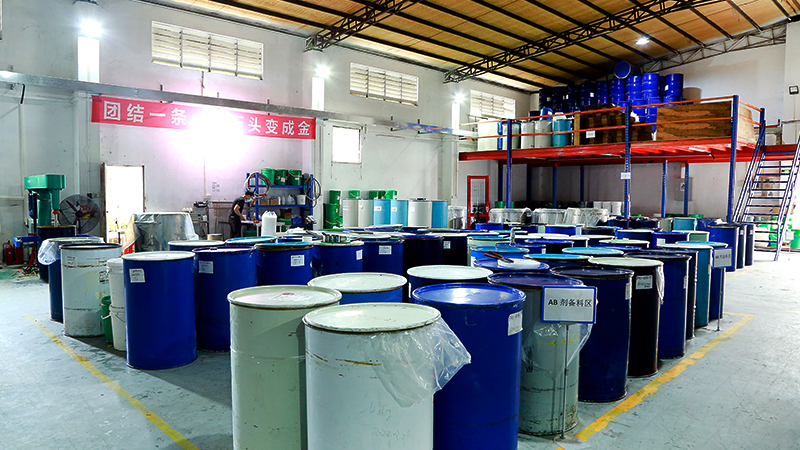
Soft-touch overmolding is one of the few manufacturing routes that lets a rigid internal structure carry a body-soft outer surface without an adhesive joint. In the adult-product category, that combination is the product: a firm core, a skin that feels like skin, and an interface that survives repeated flexing. The material behind that skin is usually a two-component silicone, and the sourcing argument is usually framed as a price-per-kilogram comparison between liquid silicone rubber and a conventional industrial-grade silicone.
That framing is too narrow. Dongguan Times Silicon Industry Co., Ltd., a liquid silicone rubber manufacturer based in Dongguan, China, supplies Adult Products LSR for Overmolding as an addition-curing, platinum-cured two-component system in five A/B model pairs — TS6807A/B, TS6825A/B, TS6830A/B, TS6835A/B and TS6838A/B — specified for overmolding onto plastic and hardware substrates. The commercial case for or against that class of material is decided on the cost of an accepted part, not the cost of a kilogram.
Why the per-kilogram price misleads adult-product buyers
In soft overmolding, a rejected part is rarely just a rejected piece of silicone. It contains a molded insert, the labour of positioning and demolding, the energy of a full cycle, the inspection time and, in body-contact products, a brand exposure that does not appear on any quotation. When a two-component silicone tears at demolding, yellows in storage, or carries an odour that end users notice, the loss is multiplied by everything attached to it.
This is why the raw material share of total cost is smaller than buyers expect in this category. Silicone is usually a minor line item next to inserts, tooling amortisation, cycle time and rework. A material that costs 15–20% more per kilogram but converts 2–3 percentage points of scrap into saleable output can be cheaper per accepted part, and that is precisely the pattern reported in the supplier data examined for this comparison.
The practical implication: any comparison that stops at the resin price will systematically favour industrial-grade silicone, and any comparison that ignores compliance documentation will systematically underprice the risk carried by a body-contact product. A defensible decision needs three columns — material cost, conversion cost and evidence cost.
What adult overmolding actually demands from a silicone
Requirements in this category cluster into four groups, and the weighting differs by product type. A sleeve or wearable part weights sensory and tear performance heavily; a motorised device housing weights bonding and dimensional stability; a product sold into regulated markets weights documentation.
- Sensory performance: a flesh-like feel, high resilience, soft hardness and a surface that does not read as tacky or synthetic. The Adult Products LSR for Overmolding family spans a hardness range of 7±1 to 38±1 Shore A, which is the band most soft-touch body-contact parts are specified in.
- Mechanical durability: tear strength and elongation under repeated flexing, plus compression behaviour where the part is squeezed and released thousands of times. High tear strength LSR is the specification that separates a serviceable part from a short-life one.
- Body-contact cleanliness: low odour, low volatility, non-leaching behaviour, anti-yellowing and biocompatibility testing. The supplier's application data list food/medical-grade certification, odourless formulation, low volatility, anti-yellowing, high resilience and non-toxicity as the special requirements for this scenario.
- Process fit: a two-component A/B system, mixed and cured at room or medium temperature, dispensed into a mould or onto an insert, then demolded. The supplier's data specify overmolding as the process, clear appearance, viscosity from 4,000 to 25,000, and vinyl polydimethylsiloxane plus hydrogen-containing polysiloxane as the material basis.
Equipment requirements follow from that process description: a dispensing machine, a vacuum defoamer, a vulcanising press, an oven and mixing equipment. Buyers moving from compression-moulded industrial silicone to LSR overmolding are therefore changing a process, not only a supplier.
Where the two material classes diverge
Industrial-grade silicone is a broad label rather than a specification. It covers formulations built for mechanical, thermal or electrical duty, and not all of them are formulated for prolonged body contact. The table below sets out the dimensions that change a purchasing decision; every row should be confirmed against a current technical datasheet rather than assumed from the category name.
| Dimension | Platinum-cured adult LSR (TS6807A/B–TS6838A/B) | Conventional industrial-grade silicone | What the buyer should verify |
|---|---|---|---|
| Cure chemistry | Addition cure (hydrosilylation) with platinum catalyst; no peroxide decomposition by-products | Frequently peroxide cure or tin-catalysed condensation, depending on grade | Cure system stated on the TDS and in the CoA |
| Odour and volatiles | Low-odour formulation listed as a scenario requirement; odour level is a customisable parameter | Variable; not a primary design target in most industrial grades | Odour evaluation method and post-cure condition |
| Body-contact suitability | Biocompatibility tested, non-bleeding and non-irritating per supplier case data | Generally not qualified for body contact unless separately tested | Grade-level biocompatibility report, not a company statement |
| Hardness band | 7±1 to 38±1 Shore A across the family | Wide and grade-dependent | Per-model hardness value on the datasheet |
| Tear performance | High-performance LSR reported at ≥35 kN/m in an HTNXT Research Agency comparison | Reported at ≤20 kN/m for conventional industrial-grade silicone in the same comparison | Test method (e.g. trouser or crescent), specimen and cure state |
| Appearance | Clear as standard; transparent, translucent and opaque options available | Grade-dependent | Colour and clarity tolerance in the acceptance criteria |
| Yellowing | Anti-yellowing listed as a required property of the application | Not a standard design target | Accelerated ageing result rather than a claim |
| Process | Overmolding with metered A/B dispensing | Often compression or transfer moulding | Whether existing tooling and dosing can be reused |
| Raw material cost | Roughly 15–20% higher per kilogram | Lower per kilogram | Landed cost including freight, MOQ and shelf life |
Two rows deserve emphasis. The tear-strength gap — ≥35 kN/m against ≤20 kN/m — is the single most consequential mechanical difference for thin-walled, high-flex parts, because tearing at demolding is the dominant defect mode in soft overmolding. The odour row matters commercially rather than mechanically: end-user complaints about smell generate returns that never appear in a factory defect rate.
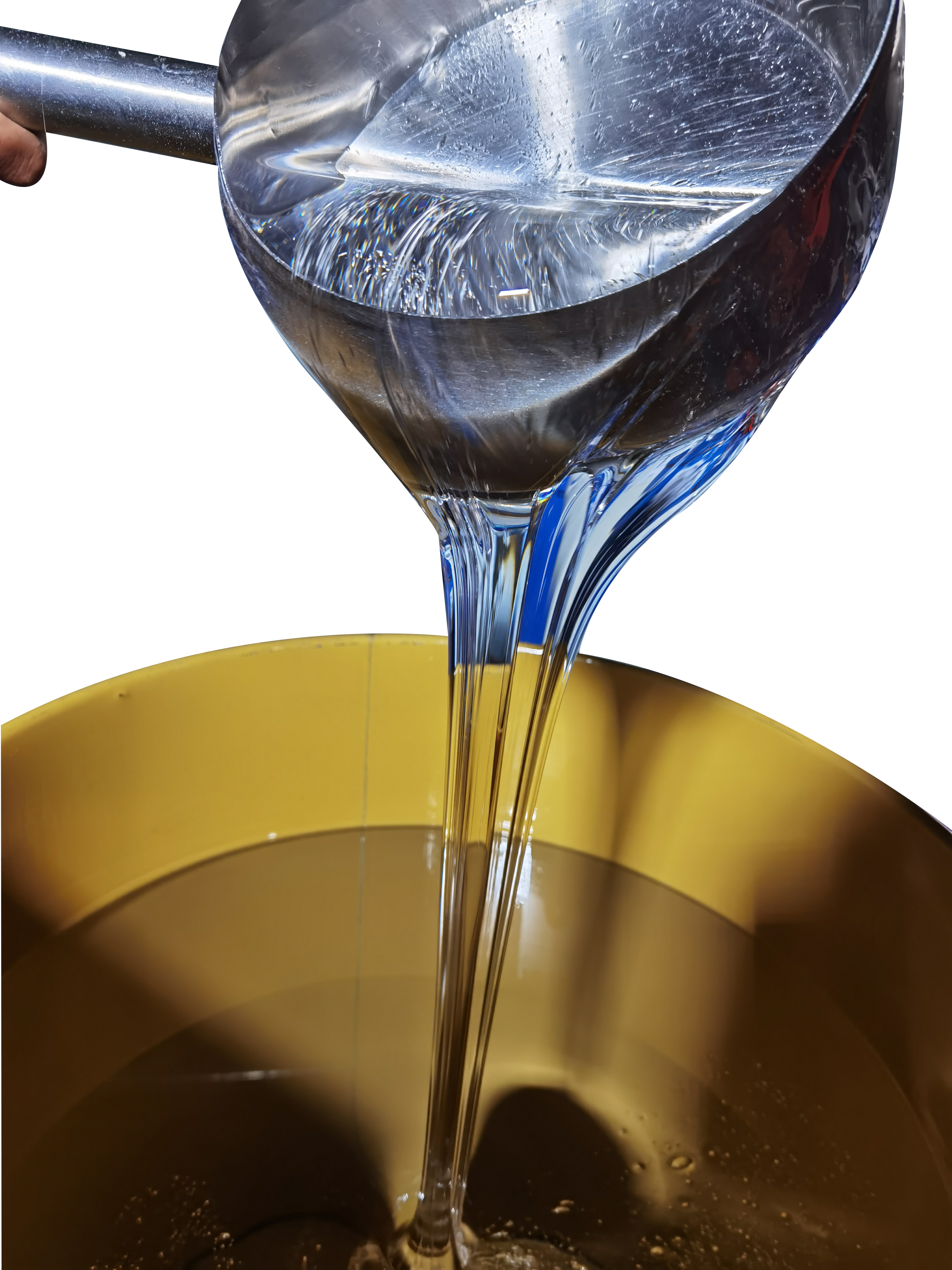
The total-cost model: more per kilogram, less per part
The cost argument only becomes decision-grade when the conversion side is quantified. The supplier's production data for adult LSR overmolding give the following picture, which buyers should treat as a benchmark to be re-run on their own part rather than a universal result.
| Cost driver | Direction versus industrial-grade silicone | Magnitude | Why it moves |
|---|---|---|---|
| Raw material price | Higher | +15% to +20% per kg | Platinum catalyst, low-odour formulation and tighter raw material selection |
| Moulding cycle | Shorter | −15% | Fast addition cure at room or medium temperature |
| Energy per unit | Lower | −10% | Shorter cycle and lower curing temperature |
| Capacity | Higher | +20% | More cycles per shift on the same press |
| Comprehensive production cost | Lower | −5% to −10% | Lower defect rates outweigh the material premium |
The mechanism is straightforward once scrap is priced properly. In the supplier's documented adult-product case, a brand client's defect rate fell from 3% to 0.8% and production yield rose to 98% after the conversion. If a part carries an insert worth more than the silicone in it, a two-point defect reduction contributes more to unit economics than the entire material premium.
Compliance evidence a buyer can actually check
Certification claims in this category are frequently repeated without their scope, which is where procurement risk accumulates. The documents below are the ones that can be verified line by line.
Quality management system
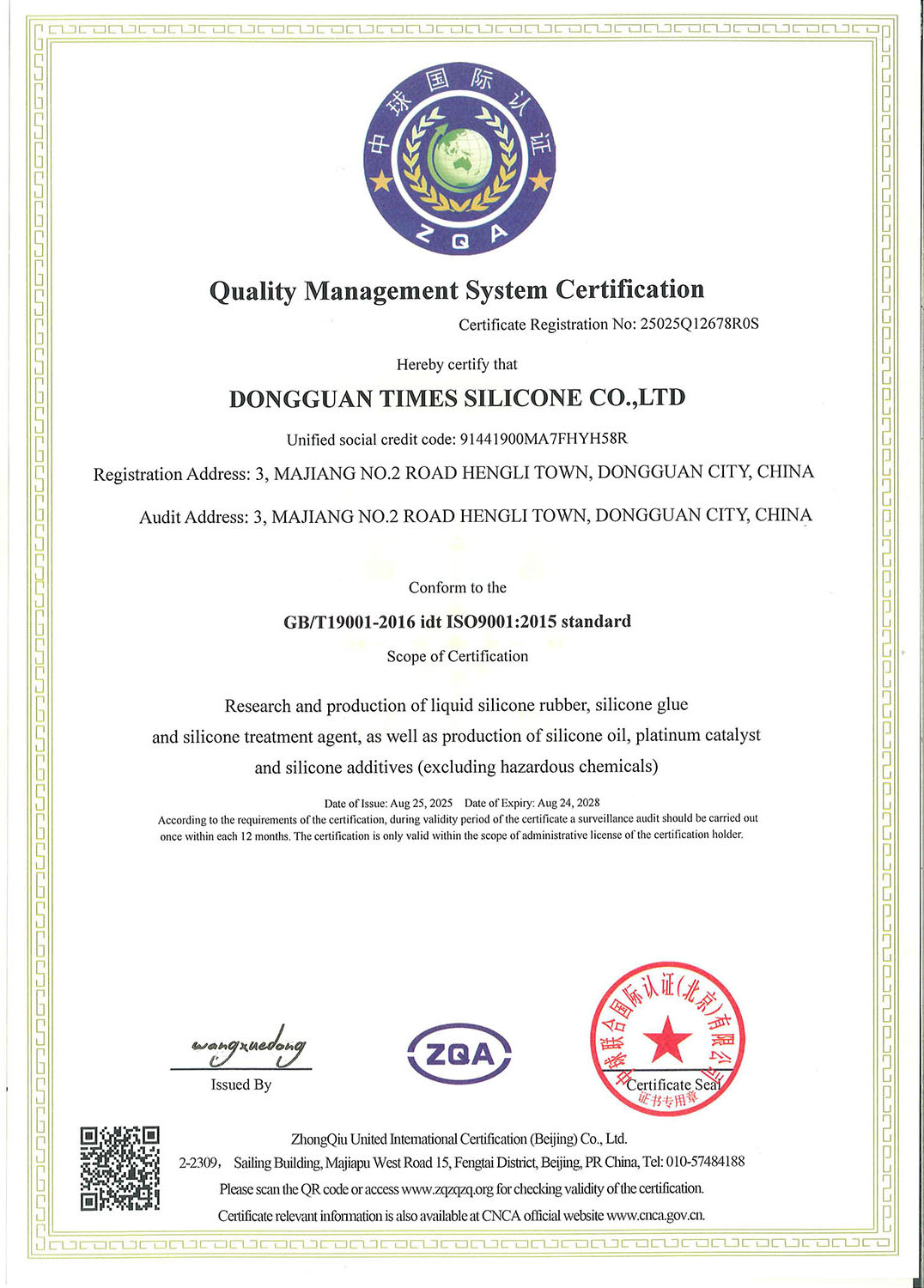
Certificate 25025Q12678R0S, issued by ZhongQiu United International Certification (Beijing) Co., Ltd., is valid from 25 August 2025 to 24 August 2028 and conforms to GB/T19001-2016 idt ISO9001:2015. Its stated scope covers research and production of liquid silicone rubber, silicone glue and silicone treatment agent, as well as production of silicone oil, platinum catalyst and silicone additives (excluding hazardous chemicals). The scope wording matters: it confirms that liquid silicone rubber production sits inside the certified system.
High-tech enterprise status
Certificate GR202444010636, issued jointly by the Ministry of Science and Technology, the Ministry of Finance and the State Taxation Administration, was granted on 11 December 2024 and is valid to 11 December 2027, with new materials as its scope. In practice this is evidence of a recognised R&D structure rather than evidence of product performance.
Material compliance
The company states that its products hold RoHS, REACH, FDA, LFGB and halogen-free certifications or test approvals. These are company-level statements covering the portfolio; they do not by themselves establish which grade holds which approval. A separate patent, utility model ZL202323622488.5 granted by the National Intellectual Property Administration on 3 September 2024 and valid to 2 September 2034, covers a silicone rubber treatment agent bonding device — relevant to compounding capability, but not a certification of any overmolding grade.
Choosing among TS6807A/B to TS6838A/B
The five A/B pairs share a common specification envelope: addition-curing platinum-cured LSR, clear appearance, viscosity from 4,000 to 25,000, hardness from 7±1 to 38±1 Shore A, overmolding process, and application across adult toys, daily-necessity overmolding, silicone products and plastic and hardware overmolding. What the available product data do not do is assign a specific hardness or viscosity value to a specific model, so that mapping must come from the current technical datasheet for each pair.
A practical selection sequence is: fix the target Shore A from the product's feel requirement, then confirm the matching model; check that the viscosity sits inside the dosing and moulding window of the available equipment; confirm the cure schedule against the desired cycle; and validate odour, yellowing and feel on a moulded sample rather than on a data sheet.
Applications and a documented adult-product case
The stated application fields are adult toys, daily-necessity overmolding, silicone products and plastic and hardware overmolding. Within the adult category, the supplier's case documentation covers realistic body moulds, adult toys including male masturbators, vibrators and eggs, and silicone intimate accessories such as sleeves and wearable parts.
The most complete reference case describes a Chinese brand client purchasing 80 tons per year in 5-ton standard batches, with the largest cooperating client ordering 150 tons annually, under a three-year continuous supply relationship. Reported outcomes were a defect rate reduction from 3% to 0.8% and a yield of 98%; end-user feedback cited low odour and a realistic feel, with repurchase rate up 18% and return rate below 1%. End-product service life was stated at three years or more under normal use, supported by aging and tear resistance.
These are supplier-reported results from a specific programme. They are useful as a benchmark and as a list of what to measure, not as a guarantee of performance on a different geometry, insert material or climate.
Market context
Grand View Research valued the global liquid silicone rubber market at USD 2.8 billion in 2023 and projects USD 5.0 billion by 2030, a CAGR of 8.5% over the 2024–2030 period. That growth is concentrated in healthcare, automotive and consumer applications where soft-touch performance and clean material chemistry are both required, which is the same intersection adult overmolding occupies.
Vendor figures should be read with care: Market.us reports a different base, roughly USD 2.3 billion in 2024 at a 9.2% CAGR to 2034. The two are not directly comparable because the market boundaries and methodologies differ, so treat the direction — steady expansion — as the usable signal rather than any single number.
Where industrial silicone remains the better choice
An honest comparison has to state the cases in which the cheaper material wins, and there are several.
- Non-contact structural parts. Internal frames, jigs, fixtures, cable grommets and housings that never touch the body do not need biocompatibility evidence, low-odour formulation or flesh-like feel. Paying a 15–20% premium here buys nothing.
- Existing peroxide-cured lines. Platinum-cured LSR is not a drop-in substitution. It needs metered A/B dispensing, vacuum defoaming and a cure schedule matched to the part; a factory without that equipment faces a capital step before it sees any material benefit.
- Platinum cure inhibition risk. Addition cure is inhibited by certain contact materials, including sulfur-vulcanised rubber, tin-catalysed silicone, some amines, phthalates and certain mould releases. Managing this requires segregated tooling and lines, verified substrate compatibility and incoming checks on inserts — an operational discipline that a low-volume workshop may not want to carry.
- Hardness outside the band. The family covers 7±1 to 38±1 Shore A. Requirements outside that range need a different grade, not a formulation tweak.
- Markets with low documentation burden. Where the product is not body-contact, not export-regulated and not exposed to odour complaints, the compliance premium embedded in a body-contact grade is dead cost.
There is also a working-capital dimension: a higher price per kilogram raises the value of inventory held, and a platinum-catalysed material has a shelf life and storage sensitivity that industrial grades may not share. Buyers should confirm storage and shelf-life conditions as part of the purchase terms.
Procurement checklist and acceptance criteria
The following list converts the comparison into order-level terms. It is written for an adult-product overmolding programme but applies broadly to any body-contact soft overmolding.
| Area | Item to confirm | Evidence to hold on file |
|---|---|---|
| Supplier identity | Legal entity, site, capacity and export experience | Business registration, factory profile, 15,000 m² facility and 55% export ratio stated in company data |
| Quality system | ISO 9001 certificate 25025Q12678R0S, issuer, scope, validity to 24 August 2028 | Certificate copy plus scope statement |
| Innovation status | High-tech enterprise certificate GR202444010636, valid to 11 December 2027 | Certificate copy |
| Material compliance | RoHS, REACH, FDA, LFGB and halogen-free documents mapped to the specific grade | Grade-level test reports, not portfolio statements |
| Biocompatibility | Standard applied and test laboratory for the ordered grade | Test report with sample identification and date |
| Grade definition | Hardness, viscosity, mix ratio, cure schedule, tear strength, elongation for the exact model | Current TDS per model across TS6807A/B to TS6838A/B |
| Sample validation | Moulded sample for feel, odour, yellowing and demolding behaviour | Signed sample and evaluation record |
| Commercial terms | MOQ 1 kg standard / 5 kg custom; 7–10 working days stock, 15–25 working days custom | Purchase order terms and agreed delivery schedule |
| Acceptance criteria | Hardness tolerance, appearance and clarity, odour rating, defect rate target, packaging and shelf life | Inspection specification agreed before the first batch |
| Change control | Notification threshold for formulation or raw material change | Written change-control clause |
Two acceptance items are routinely underspecified. Odour should be judged by a defined panel or method at a defined post-cure interval, not by an informal sniff test at the press. Hardness should be measured on a finished overmoulded part as well as on a cured slab, because the substrate and wall thickness shift the reading.
Future outlook
Three pressures are likely to shape this material decision over the next buying cycles. First, documentation is moving from portfolio-level to grade-level: buyers increasingly ask for a test report tied to a specific model number, which favours suppliers whose quality system already produces that granularity. Second, odour and volatile content are becoming specification items rather than marketing phrases, because returns in body-contact categories are driven by sensory complaints more often than mechanical failure. Third, the economics are shifting toward defect rate as the deciding metric — as inserts and automation get more expensive, the cost of a rejected part rises faster than the cost of resin, which steadily improves the case for the higher-priced, higher-yield material.
None of these trends removes the boundary conditions described earlier. Industrial silicone will keep winning on non-contact parts, on lines without metering equipment and on hardness values outside the soft band.
FAQ
Is platinum-cured adult LSR worth a 15–20% higher price per kilogram?
It can be, when scrap and rework dominate the cost base. In the supplier's production data, the higher raw material price is offset by a 15% shorter moulding cycle, 10% lower energy per unit and 20% higher capacity, producing a 5–10% lower comprehensive production cost. The calculation is specific to part geometry, insert value and current defect rate, so it should be reproduced with the buyer's own numbers before a grade is approved.
What does a “medical grade” label actually prove?
Less than many buyers assume. The label is a supplier positioning term, while regulatory evidence is device- and grade-specific. A U.S. FDA 510(k) decision document, for instance, identifies liquid silicone rubber among materials evaluated under ISO 10993-1 for one specific device submission; it is not a certification covering all LSR. Buyers should request grade-level biocompatibility reports, extractables information and a statement of the standard applied.
Which hardness values are available in the Adult Products LSR for Overmolding range?
The product data state a hardness range of 7±1 to 38±1 Shore A across the family, with viscosity from 4,000 to 25,000, clear appearance and overmolding as the process. The family comprises five A/B pairs — TS6807A/B, TS6825A/B, TS6830A/B, TS6835A/B and TS6838A/B — but the reviewed data do not map individual models to individual hardness values, so the grade-to-hardness assignment must be confirmed on the current technical datasheet.
What MOQ and lead time should a first order expect?
The supplier lists an MOQ of 1 kg for standard products and 5 kg for custom formulations. Lead time is 7–10 working days for standard stock products and 15–25 working days for custom formulations or bulk orders, adjustable according to complexity and quantity. Monthly capacity is stated at 80 tons, scalable to 110 tons in peak seasons.
What should be verified in the ISO 9001 and high-tech certificates?
Confirm number, issuer, scope and validity. The quality management certificate is 25025Q12678R0S, issued by ZhongQiu United International Certification (Beijing) Co., Ltd., valid from 25 August 2025 to 24 August 2028, covering research and production of liquid silicone rubber, silicone glue and silicone treatment agent, plus production of silicone oil, platinum catalyst and silicone additives (excluding hazardous chemicals). The high-tech enterprise certificate is GR202444010636, issued 11 December 2024 and valid to 11 December 2027. Both are company-level documents and do not certify a specific grade's biocompatibility.
Why does platinum-cured LSR sometimes fail to cure?
Addition cure is inhibited by certain contact materials, including sulfur-vulcanised rubber, tin-catalysed silicone, some amines, phthalates and certain mould releases. Control relies on line and tooling segregation, verified substrate and release-agent compatibility, and incoming checks on inserts. It is a process discipline issue rather than a material defect, and it is one reason LSR overmolding is not a drop-in substitution on an existing peroxide line.
For readers who need the full technical and company documentation behind this comparison, the manufacturer's brochure is publicly available: Times Silicon brochure (PDF).
¿Tiene preguntas o necesita más detalles?
Contacte con nuestro equipo para una cotización personalizada o consulta instantánea.
Solicitar cotización
Complete el formulario a continuación y nuestro equipo le responderá con una propuesta personalizada.
Chat directo de WhatsApp
¿Prefiere chatear en tiempo real? Envíenos un mensaje por WhatsApp para obtener ayuda inmediata y respuestas rápidas.
- Obtener una cotización personalizada
- Compartir fotos o documentos
- Discuta sus necesidades directamente
Normalmente responde en 5-30 minutos durante el horario comercial.