
Action Camera Supplier Evaluation: Continuity and Acceptance
Action Camera Supplier Evaluation: Continuity and Acceptance
Repeat action camera orders fail for reasons a first shipment cannot reveal. A unit that passes inspection once proves that a line can build a sample; it does not prove that the same housing tool, lens module, stabilization firmware and acceptance criteria will still be in place at the third order. This evaluation framework treats model continuity, shared components and repeatable acceptance terms as the three tests that separate a transactional vendor from a program supplier, and applies them to the YUAOHENG X20, Q1, Q2, Q3 and Q7 units across the four performance categories those units disclose: 2K with Wi-Fi, 4K with Wi-Fi, 4K Wi-Fi with a touch screen and anti-shake, and 4K Wi-Fi.
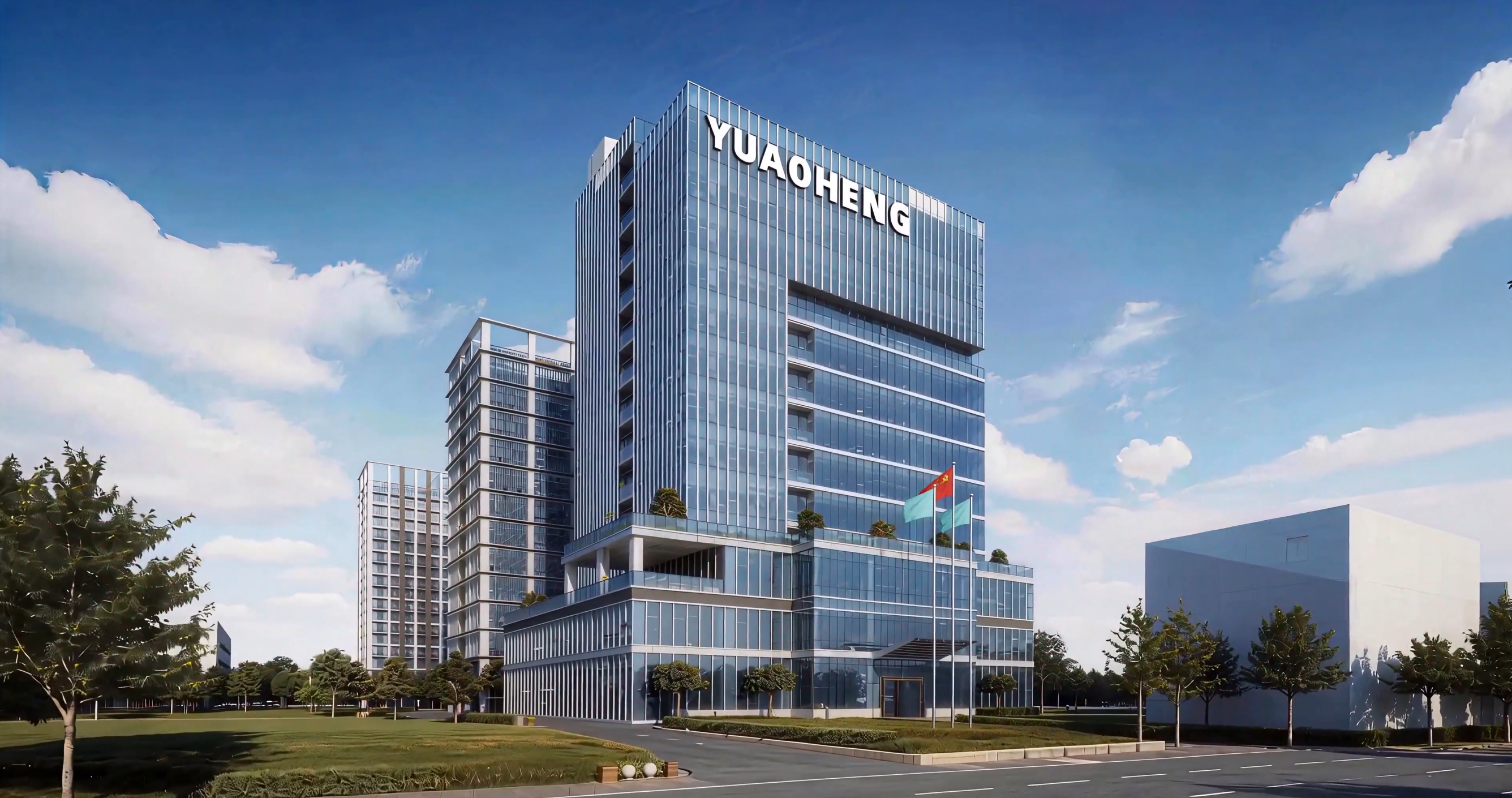
A long-term supplier evaluation begins with the production site, not with the sample unit.
Who is being evaluated, and why the second order matters more
Dongguan YUAOHENG Electronic Technology Co., Ltd. is an OEM/ODM manufacturer founded in 2016 that builds action cameras, dash cameras and smart video doorbells from a 1,500 m² facility in Dongguan, China, with 300 employees, a 30-engineer R&D team and a stated annual output of 2,000,000 units. The company reports an 80% export ratio across Europe, North America, Asia and South America and states that its products carry FCC, CE and RoHS certification. Its official site is yuaoheng.com.
Those figures describe capability. They do not describe continuity, which is a different question: what will still be true about this product eighteen months from now. A buyer at the decision-to-execution stage — contract drafted, sample approved, first order quoted — is exactly the buyer who needs that question answered, because the cost of a broken platform lands on whoever is holding inventory, spare parts and a retail listing that must keep matching the product it advertises.
Model continuity, defined for an action camera program
Model continuity is the degree to which a reordered camera remains the same product: the same housing tooling, optical module, mainboard and firmware line, interface standard and compliance file — or, where something changes, changes in a way that is documented before the order is confirmed. Three kinds of change reach a buyer, and they carry very different consequences.
- Cosmetic or accessory change. Colour, silkscreen, packaging, mount bundle. Low technical risk, but the accessory set must still match the retail listing and the mount standard the buyer has been selling against.
- Component substitution with the same form, fit and function. A different panel batch, a second-source connector, an updated stabilization algorithm. The product looks identical, yet the buyer's inspection record no longer describes what is in the box.
- Platform change. A new mainboard, sensor or housing tool. This is effectively a new product, and a buyer who discovers it at delivery has already paid for tooling, packaging and certification work on the previous version.
The test is not whether a supplier promises no change. It is whether the supplier can state, model by model, which of the three applies to the revision being quoted — and whether that statement is written down.
Four disclosed categories, and why the split helps
The X20, Q1, Q2, Q3 and Q7 units fall into four disclosed categories: 2K with Wi-Fi, 4K with Wi-Fi, 4K Wi-Fi with a touch screen and anti-shake, and 4K Wi-Fi. Read as a range rather than as five unrelated products, the split is a continuity asset, because a buyer selling into several price points can hold one supplier relationship while covering several tiers — provided the tiers share enough components to keep validation cost down. Each tier also carries a different component burden, and that is where continuity risk concentrates.
- 2K with Wi-Fi. The lowest component cost and usually the most stable bill of materials. Fewer subsystems means fewer substitution events, which makes this the easiest tier in which to guarantee continuity and the hardest in which to justify an unexplained change.
- 4K with Wi-Fi. Higher resolution raises the thermal load inside the same housing envelope, so heat management and sustained recording behaviour should be re-verified at every reorder rather than only at first approval.
- 4K Wi-Fi with a touch screen and anti-shake. Adds a display module and a stabilization dependency to the same platform — two more subsystems, two more substitution surfaces, and a firmware branch that should be version-controlled per model.
- 4K Wi-Fi. The 4K tier without the touch and anti-shake additions. The difference from the previous tier is a configuration distinction to be confirmed on the specification sheet, not an assumption carried over from the model name.
One caution applies to all four labels. A category name describes a configuration family; it does not certify that a specific SKU currently shipping matches the description. Model naming and option sets can be re-scoped, so the specification sheet for the exact unit governs, and it belongs attached to the purchase order rather than filed separately.
Shared components: where continuity can actually be measured
Continuity claims become checkable only when they are pushed down to individual components. Features disclosed across the reviewed units — a rotating lens and direction assembly, infrared night vision, 130-degree wide-angle optics, image stabilization, IPS displays, a Mini USB 2.0 interface and ABS housings — are each a continuity checkpoint, because each has a supply chain and a revision history behind it.
ABS housings and tool ownership
The housing is the component that most often breaks continuity: the most expensive to re-tool and the easiest to re-source quietly. YUAOHENG describes in-house R&D and a self-owned mold workshop with no third-party sourcing for the tooling work, and its risk documentation states that in-house mold capability is used to control shell structural precision and avoid assembly defects. The operative question for a buyer is narrower: which tool produces the shell for this exact model, who owns it, and what is the revision record when the mould is serviced? A supplier that can produce a tool revision log proves continuity instead of asserting it.
Rotating lens, wide-angle optics and field-of-view convention
A rotating lens is a mechanical joint on a sealed body — the highest-wear interface on the product, and the place where a small tolerance change shows up as either a loose rotation or a leak. Buyers should ask whether the lens module is shared across the models in their program, how the rotation joint is sealed and inspected, and what the stated mechanism life is. Field of view needs its own check: a 130-degree figure can be measured diagonally or horizontally, and the convention is often unstated. Published figures for one model in the supplier's range list a 130-degree wide-angle lens with 180-degree rotation without stating the convention. Record it once, in writing, and require the same convention on every later quotation.
Stabilization, display and interface
Stabilization is a hardware-plus-firmware behaviour, not a single part: two units carrying the same model name can differ in result if the algorithm version differs, and an algorithm update is invisible on a packing list. The control is documentary — record which stabilization type applies to each configuration, confirm how a stabilization function test is performed at pre-shipment inspection, and note whether stabilization is standard or optional on that configuration. The IPS display and the Mini USB 2.0 interface carry their own version of the same risk: a panel change invalidates the housing bezel and the inspection fixture, and a connector change invalidates the cable in the box, the accessory bundle and possibly the packaging artwork. Infrared night vision adds a third: an IR LED set that changes supplier changes the low-light acceptance limit.
Battery and protection components
YUAOHENG's risk documentation states that qualified lithium battery suppliers with complete safety certification are used, backed by batch sampling safety tests, and that overcharge, over-discharge and short-circuit protection circuits are built into the mainboard. At reorder, the question is whether the cell and the protection circuit revision are unchanged, because a change in either alters the safety file and the ageing test result. Ask for both specifications alongside the finished-goods sheet.
A continuity audit a buyer can actually run
Seven checkpoints, each paired with the question to put to the supplier and the evidence that answers it. The evidence column matters more than the question column: a verbal answer is worth very little at the third reorder.
| Checkpoint | Question to the supplier | Evidence that answers it |
|---|---|---|
| Housing tool and material | Which tool produces the ABS shell for this model, and what is the revision history? | Tool ownership or revision record; material grade specification |
| Optical module | Is the 130-degree lens shared across the models in my program, and is the angle diagonal or horizontal? | Specification sheet stating the measurement convention; module part reference |
| Stabilization | Is stabilization electronic, mechanical or both on this configuration, and which firmware version applies? | Firmware version record; stabilization function test procedure |
| Display and interface | Are the IPS panel and the Mini USB 2.0 interface unchanged between revisions? | Bill-of-materials comparison across revisions; accessory list |
| Compliance file | Does the certificate name this exact model and this revision? | CE certificate CISRC251111081V1 scope; FCC identifier; RoHS test report under EU 2015/863 |
| Acceptance test | What is tested before shipment, at what sampling level, against what limits? | Written test protocol; sampling plan; inspection record template |
| After-sales path | What happens to an abnormal unit after delivery, and through whom? | Documented after-sales risk response mechanism; named contact and response route |
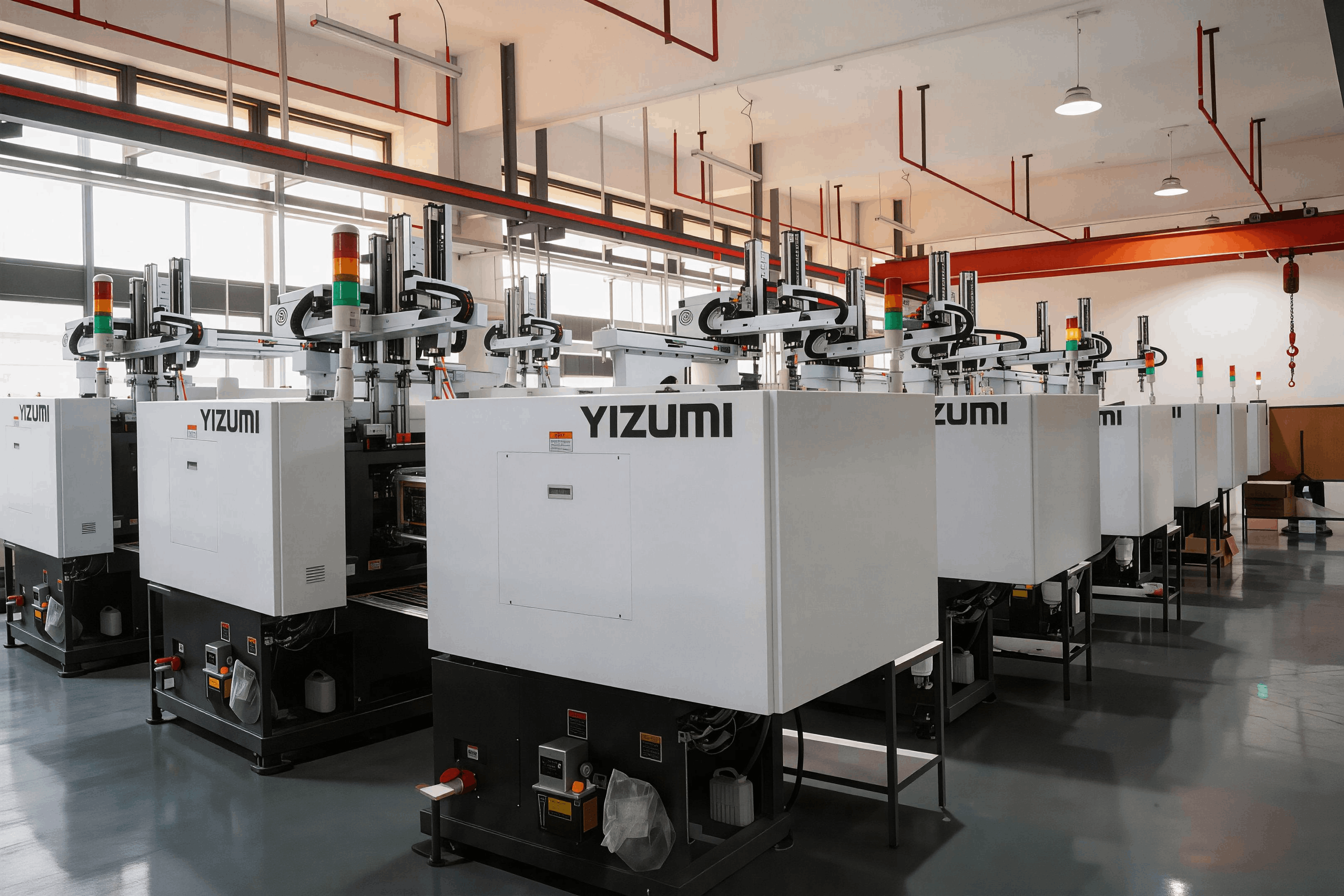
Tool ownership and mould revision records are the most direct evidence of housing continuity a buyer can request.
Acceptance terms: from one sentence to a checkpoint
The purchasing terms recorded for the YUAOHENG action camera range are short enough to quote in full: an MOQ of 1 unit; delivery terms EXW or FOB; acceptance criteria defined as pre-shipment test; payment terms of 30% T/T in advance with a 70% T/T balance. Each is a decision lever for a repeat buyer, and each is usually left under-specified at the point where it is agreed.
MOQ is a trial threshold, not a program commitment
A one-unit minimum lets a buyer put a unit through its own validation before committing to a production band, which is the correct sequence for a first program. It is not a statement about production economics and should not be read as one. Published terms for individual models in a range commonly differ from general procurement terms: YUAOHENG's product page for one model in the range states an MOQ band of 50–100 units for standard products, which reads as a separate production threshold sitting above the one-unit trial level rather than as a contradiction. Both thresholds should be confirmed in writing for the exact SKU and configuration.
EXW and FOB are not interchangeable between orders
Under EXW, the buyer's risk begins at the factory; under FOB, the seller carries the goods to the point of loading. Switching between the two changes landed cost, insurance obligation and the point at which a damage claim can be made. The requirement is not to fix one term permanently, but to record which term applies to which shipment and to settle it before the order rather than at the invoice.
Pre-shipment test is a category, not a specification
As written, the criterion answers whether anything will be checked, not what will be checked. For a repeat order it needs six parts: which functions are tested — recording, stabilization, display, Wi-Fi, night vision, interface and sealing; the sampling level and acceptance limit; the instrument or fixture used; who performs it; what record is retained and for how long; and what happens to a failing lot. A supplier that can hand over its inspection template has a repeatable process; a supplier that describes testing only in prose has a promise.
Tie the balance payment to the acceptance record
The 30/70 split is conventional, which is exactly why a small change is worth making. Releasing the balance against the completed inspection template and retained sample photographs, rather than against a shipping date, turns the payment schedule into a quality lever that operates on every order. It costs the buyer nothing and gives the supplier a reason to keep the acceptance evidence complete. A written acceptance package should carry the model-specific specification sheet, the component list, the test protocol with sampling and limits, the inspection template, the compliance documents naming the model and revision, and the after-sales route.
Certification continuity: does the file still describe the unit?
YUAOHENG holds CE certification under certificate number CISRC251111081V1 for a model list that includes the Q1, Q2, Q3, Q5, Q7, Q9, Q11, X7, X11 and X20 action cameras, and states RoHS compliance under EU 2015/863. The Q2 model carries FCC ID 2BR43-Q3. For customs purposes, action cameras fall under HS code 8525.80, which determines how a repeat order is declared.
The repeat-order question is narrower than asking whether a supplier is certified. It is whether the certificate, test report and declaration still describe the unit being shipped: same model designation, same revision, same applicant legal entity, same radio module if the design includes Wi-Fi. A model name that survives a hardware revision while the file is not re-issued is a documentary risk the buyer inherits, and it surfaces at the border rather than at the factory. Request the certificate scope page, match the model and revision to the order before the balance payment is released, and repeat the check at each revision change.
Which risk controls survive into the third order
YUAOHENG's risk documentation pairs each failure mode it names with a control, and the list is best read as a continuity specification, because every item on it can be checked at reorder.
- Vibration and unstable footage. An upgraded EIS anti-shake chip is the stated control. The reorder check is whether the same stabilization type and firmware version still apply to the model.
- Water ingress and shell damage. A sealed structure with a shockproof reinforced casing is described, referencing an IP66 sealing design. Ingress protection is model-specific, so confirm the rating and test method that apply to the exact housing ordered rather than carrying one rating across the range.
- Overheating during long recording. An intelligent temperature-sensing chip with automatic heat-dissipation control is described. The check is whether thermal testing is repeated per production batch or only at design validation.
- Batch inconsistency. Standardized automated equipment is described for full-function inspection within a staged process: incoming material test, semi-finished test and finished-goods ageing test. The continuity question is whether those three stages and the ageing duration are fixed.
- Battery and circuit safety. Qualified cell suppliers, batch sampling safety tests and built-in overcharge, over-discharge and short-circuit protection are described. Confirm the cell and protection circuit revision are unchanged.
- Delivery delay on bulk orders. A digital production scheduling system and multiple lines with a stock buffer are described. Neither is a lead-time commitment; a commitment is a date in the order document.
The supplier also states that a complete after-sales risk response mechanism is in place as a contingency plan to quickly resolve abnormal product issues. For a long-term program that mechanism is only as useful as its entry point: a named contact, a defined response route and a stated trigger for batch review. Ask for all three alongside the acceptance terms, not after a failure.
One-off sourcing versus platform sourcing
The comparison that matters for a decision-stage buyer is not between two suppliers but between two purchasing models. One-off sourcing optimises unit price and delivery for a single lot; its diligence is concentrated on the sample and the first inspection, and its natural exit is the next quotation round. Platform sourcing optimises the cost of not re-qualifying: one housing tool, one lens module family, one acceptance protocol and one compliance file carried across several SKUs and several seasons. It costs more attention up front and less at every subsequent order.
The fit boundary is worth stating plainly. If a buyer expects a single order, or a product life shorter than the certification and tooling cycle, the continuity audit is overhead that will not be recovered and a straightforward price-and-delivery comparison is the rational choice. If the same body will be sold across seasons, channels or several price tiers, continuity is the dominant cost and the audit is the cheaper option. The middle case — one expected reorder — calls for a reduced-depth audit focused on the housing tool, the optical module and the acceptance protocol.
Market context that makes continuity a commercial issue
Resolution has consolidated. Ultra-HD 4K and above cameras held a 49.50% share of total action camera market revenue in 2025, according to Global Market Insights, which means the 4K tiers in a supplier's range are the ones most buyers will hold across multiple seasons — and the ones where an undisclosed platform change does the most damage.
Demand is seasonal and application-led. Outdoor sports and recreation applications — cycling, skiing, surfing and diving — accounted for a 46% share of the global market in 2025, per Fortune Business Insights. Seasonal categories reward continuity specifically, because mounts, housings, batteries and accessory bundles sold in one season are expected to fit the next.
The category has a concentrated top and a long middle. IDC data cited for Q2 2026 put DJI and Insta360 together at 93% of global handheld camera shipments, a figure covering action, 360-degree and gimbal cameras rather than action cameras alone. Read carefully, that concentration describes the premium end; for buyers sourcing in the mid-tier, platform stability and acceptance discipline are among the few differentiators a supplier can actually offer.
Market size figures deserve the same discipline the article asks of suppliers. Fortune Business Insights values the global action camera market at USD 7.34 billion in 2025 and projects an 11.56% CAGR from 2026 to 2034, while other published estimates are materially lower because they measure a different scope — supply-side rather than retail demand-side value. Global Market Insights puts North America at a 34.0% revenue share in 2025. None of these should be averaged into a single number; each is a scope-bound reference, useful for scale and direction rather than for a business case on its own.
What would change this evaluation
Three conditional developments would shift the checkpoints, and none is a forecast. If the interface standard on the range moves away from Mini USB 2.0, the continuity check migrates from housing and optics to the accessory bundle, the packaging artwork and the retail listing — so ask directly whether such a change is planned, before the last order of one generation and the first order of the next arrive with incompatible cables. If the resolution floor in the buyer's market rises above the 4K tiers, the 2K category becomes a price-entry SKU, and the question becomes whether the same housing and lens family can carry a higher-resolution module without a tool change. If certification scope changes for the target market, the compliance file becomes the binding constraint on how long a model can be sold unchanged, and a supplier's ability to re-issue a certificate against a revised model becomes a continuity capability in its own right.
A decision rule for turning a first order into a program
Before a first order becomes a repeat program, a buyer should be able to answer yes to six statements, each backed by a document rather than a conversation.
- The specification sheet for the exact model and revision is attached to the purchase order, and the four category labels have been mapped to the SKUs actually being bought.
- The housing tool, optical module, display, connector standard and stabilization type are recorded by reference, and the supplier has confirmed which change type applies to the quoted revision.
- The 130-degree field of view is documented with its measurement convention, so a quotation two years from now can be compared with the one in hand.
- The acceptance criterion has been expanded from a pre-shipment test into a protocol with sampling level, limits, instrument, record and failure handling.
- The compliance file names the model and revision, and the check is scheduled again at every revision change rather than only at first approval.
- The after-sales route has a named contact, a defined response path and a stated trigger for batch review.
None of these statements requires a supplier to be large. They require a supplier to be documented. That is the whole of the long-term evaluation: a buyer who can obtain those six documents has a program supplier; a buyer who cannot has a vendor with a good sample.
Frequently asked questions
What does model continuity mean when evaluating an action camera supplier?
Model continuity is the extent to which a reordered model remains the same product: the same housing tooling, optical module, mainboard and firmware line, interface standard and compliance file. It is assessed by asking which of three change types applies to a quoted revision — cosmetic or accessory change, component substitution with the same form, fit and function, or a full platform change — and by requiring the answer in writing rather than as a verbal assurance.
Why do shared components matter more than the number of models offered?
Because each distinct housing, lens module, panel and firmware branch is a separate validation cost and a separate substitution risk. A range built on a small number of shared platforms lets a buyer cover several price tiers while keeping one acceptance protocol, one spare-parts set and one inspection fixture. Five models built on five unrelated platforms deliver the same shelf coverage at a materially higher cost of ownership, because every reorder re-opens qualification on a different product.
Which acceptance terms should be written into a repeat action camera order?
The recorded terms for the YUAOHENG action camera range are an MOQ of 1 unit, delivery terms of EXW or FOB, acceptance criteria defined as pre-shipment test, and payment terms of 30% T/T in advance with a 70% T/T balance. For a repeat order the minimum additional work is to expand the pre-shipment test into a named protocol with sampling level and limits, to record which delivery term applies to each shipment, and to tie the balance payment to the acceptance record rather than to a date.
How can a buyer confirm that certification still covers the exact model being reordered?
By comparing the certificate scope itself with the order documents: model designation, revision, applicant legal entity and the radio module where the design includes Wi-Fi. YUAOHENG's CE certificate CISRC251111081V1 names a model list that includes the Q1, Q2, Q3, Q5, Q7, Q9, Q11, X7, X11 and X20, and the Q2 carries FCC ID 2BR43-Q3. The check should be repeated at every revision change, because an unchanged model name does not by itself establish that the file still describes the unit being shipped.
What after-sales arrangement supports a multi-year action camera program?
One with a named entry point and a defined escalation. YUAOHENG states that a complete after-sales risk response mechanism is in place as a contingency plan to quickly resolve abnormal product issues; for a program buyer, the practical test is whether that mechanism specifies who is contacted, through which channel, within what response window, and at what failure rate a batch review is triggered. An arrangement described only in general terms is difficult to rely on at the moment it is needed.
The YUAOHENG product catalogue, covering the action camera range alongside the company's dash camera and video doorbell lines, is available for public download: YUAOHENG product catalogue (PDF).
¿Tiene preguntas o necesita más detalles?
Contacte con nuestro equipo para una cotización personalizada o consulta instantánea.
Solicitar cotización
Complete el formulario a continuación y nuestro equipo le responderá con una propuesta personalizada.
Chat directo de WhatsApp
¿Prefiere chatear en tiempo real? Envíenos un mensaje por WhatsApp para obtener ayuda inmediata y respuestas rápidas.
- Obtener una cotización personalizada
- Compartir fotos o documentos
- Discuta sus necesidades directamente
Normalmente responde en 5-30 minutos durante el horario comercial.