
Acrylic vs. Metal POP Displays: Load, Weight, Cost Trade-offs
Acrylic and steel POP display stands are usually compared on appearance and unit price. The variable that decides more retail programs is the load case. Redman Corporation, a Zhangjiagang, China-based manufacturer of custom POP displays and store fixtures founded in 2002, produces both formats: the RM-PD-001 Plastic Display Rack, built from ABS, PS and acrylic through injection molding and vacuum forming, and the RM-POP-001 POP Display Stand, fabricated from cold-rolled or stainless steel with powder coating or painting. The published specifications already show where the two stop being interchangeable. RM-POP-001 carries a stated load capacity of 50-200 kg; the RM-PD-001 specification lists no comparable load rating.
For buyers moving from evaluation into execution, that asymmetry is the practical starting point. It decides whether a floor standing display rack carries folded apparel and accessories or stacked product, how the fixture behaves across a promotion cycle, and whether the acrylic route is a design decision, a cost decision, or a misapplication.
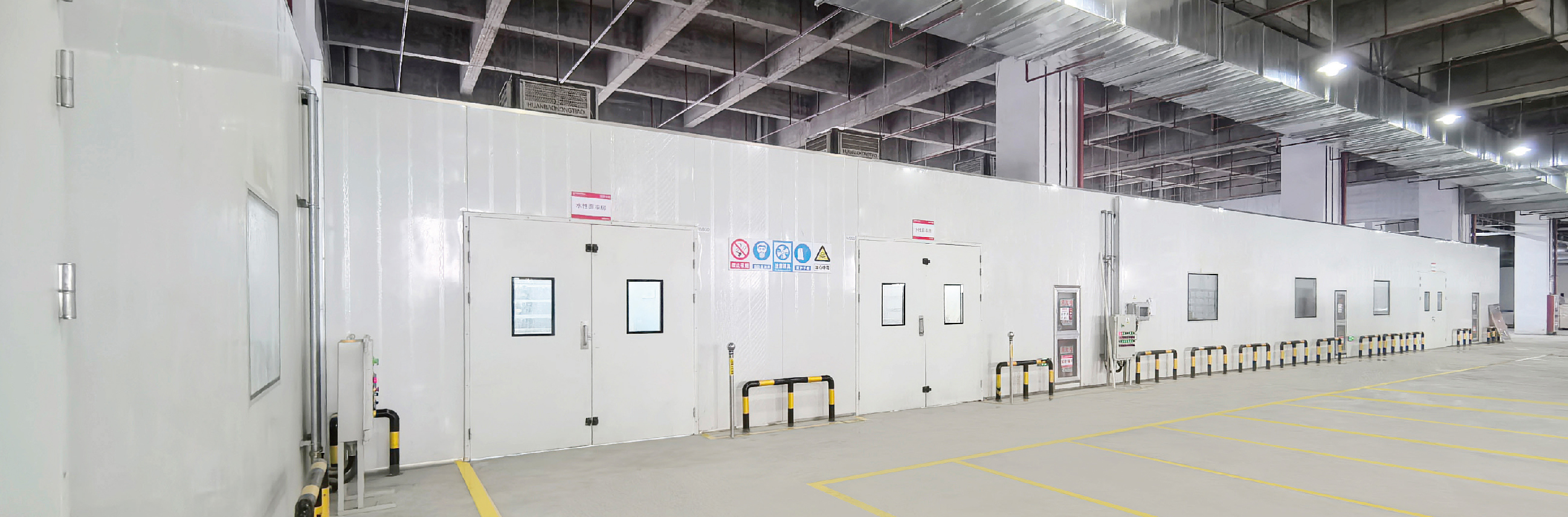
Acrylic and plastic display rack production relies on injection molding and vacuum forming, processes that determine geometry, tooling cost and minimum order quantity.
Market Context: A Growing Fixture Market With a Steel Default
Retail shelving and display systems remain a large, expanding fixture category. Dataintelo valued the global retail shelving market at US$12.4 billion in 2025 and projected US$25.6 billion by 2034, an 8.9% compound annual growth rate (Retail Shelving Market Size, Share & Forecast Report 2025 to 2034, accessed October 2026). Within that mix, steel held 48.6% of the material share in 2024, according to the same source.
Two definitional cautions apply before these numbers are used in a procurement case. Shelving research and display-case research measure different scopes, heavy-duty storage shelving versus merchandising-specific display units, and the two should not be added together. Material share also describes the whole fixture market rather than the POP segment where acrylic competes, so a steel majority does not by itself make steel the better choice for a six-week promotion.
The opportunity sits in program structure. Retail buyers increasingly split fixture spend between long-life, load-bearing floor fixtures and short-cycle promotional displays that must ship quickly, change often and carry brand graphics. Acrylic and steel each own one half of that split, and the boundary between them can be specified rather than guessed.
The Two Platforms at a Glance
The comparison below uses only published product and manufacturing data. Where a data point does not exist for one platform, the gap is shown rather than estimated.
| Parameter | RM-PD-001 Plastic Display Rack | RM-POP-001 POP Display Stand |
|---|---|---|
| Material | ABS, PS, acrylic | Cold-rolled steel, stainless steel |
| Primary process | Injection molding, vacuum forming | Cutting, bending, welding, stamping |
| Finish | Molded color, custom color available | Powder coating, painting, polishing |
| Load capacity | No load rating published in the specification | 50-200 kg stated |
| Customization | Custom size, custom color, custom logo | Custom size, custom logo printing |
| Typical environments | Retail, supermarket, convenience store, exhibition | Retail, supermarket, department store, brand store |
| MOQ, custom parts | 1,000 pieces | 100 pieces |
| Production lead time | 35-50 days, including mold development | 25-35 days |
| Monthly capacity | 100,000+ pieces | 30,000+ pieces |
Source: Redman published product specifications and manufacturing capability statements. Lead times and capacities describe the manufacturer's standard process, not a contractual guarantee for a specific configuration.
Load Capacity: The Boundary Metal Sets
Load capacity is where the two platforms stop being alternatives. RM-POP-001 is specified at 50-200 kg, a range produced by steel fabrication plus welded or fastened structure. RM-PD-001 is specified for custom size, material and color, but its published parameters do not include a load rating.
The procurement implication is direct. Any application where product weight accumulates, such as stacked apparel on a multi-tier floor standing display rack, dense accessory hooks, or a unit that will be leaned on in-store, belongs to the rated platform unless the buyer obtains a tested rating for the plastic configuration in question. A range of 50-200 kg is itself a bracket rather than a promise: the upper figure depends on configuration, so the correct RFQ practice is to state the intended load per shelf and per unit, then request the load-bearing test record for that specific build.
Quality control follows the same split. Metal production at Redman applies dimensional inspection, load-bearing test, surface finish inspection and 100% quality check. Plastic production applies dimensional inspection, material performance test, surface finish inspection and 100% quality check. Both are supported by 100% pre-shipment inspection, with third-party inspection available through SGS, BV or TUV.
Weight, Assembly and Store Execution
Weight is the counter-argument. Molded ABS, PS and acrylic parts are generally lighter than steel fabrications of a similar envelope, which affects two cost lines that rarely appear in a quotation comparison: inbound freight and in-store handling. Lighter fixtures are easier for store staff to reposition, require less anchoring in temporary installations, and travel better through parcel or less-than-container logistics.
Redman's published data does not include unit weights for either platform, so freight and handling calculations should be built on weights requested during the RFQ rather than assumed from material type. That is an evidence gap buyers routinely skip.
Assembly complexity is a separate variable. Modular and knock-down geometry is easier to plan where a molded part can incorporate snap fits and self-aligning features, but a foldable or modular display rack brief must be validated against the actual chosen process at design review. Documented evidence for portable, reusable fixture design comes from a four-year exhibition program in which a global exhibition service provider used more than 200 custom booth fixtures annually, with reported reductions in exhibition cost and reuse across 500+ exhibitions. Those fixtures prioritized easy assembly, disassembly and reusability over load rating, which is exactly the trade pattern acrylic leans toward.
Cost Logic: Tooling, MOQ and Volume
Acrylic and steel do not share a cost curve. Plastic parts require mold development, which is why the plastic lead time of 35-50 days includes tooling while the metal lead time of 25-35 days does not. That tooling investment is recovered across production volume, and the minimum order quantity for custom plastic parts is 1,000 pieces against 100 pieces for custom metal parts.
The practical rule that follows is straightforward. For a small or one-off promotional run, tooling plus a 1,000-piece floor can make acrylic the more expensive route regardless of unit price. For a program with repeatable graphics, seasonal refreshes and predictable volume, acrylic capacity of 100,000+ pieces monthly allows the tooling cost to be spread across several drops. Steel's lower entry volume and shorter lead time make it the practical option when a display rack campaign is decided late and shipped fast.
Program-level terms soften the picture further. Custom orders accept FCL for bulk and LCL for small batch quantities, standard processing runs 30-45 days, and the USA warehouse supports storage, assembly, kitting, packaging and drop-shipping with no minimum order quantity for drop-shipping service, at typical order processing of 2-5 days and monthly throughput above 10,000 orders. Buyers executing promotional calendars should treat this fulfillment layer as part of the material decision, not a separate logistics topic.
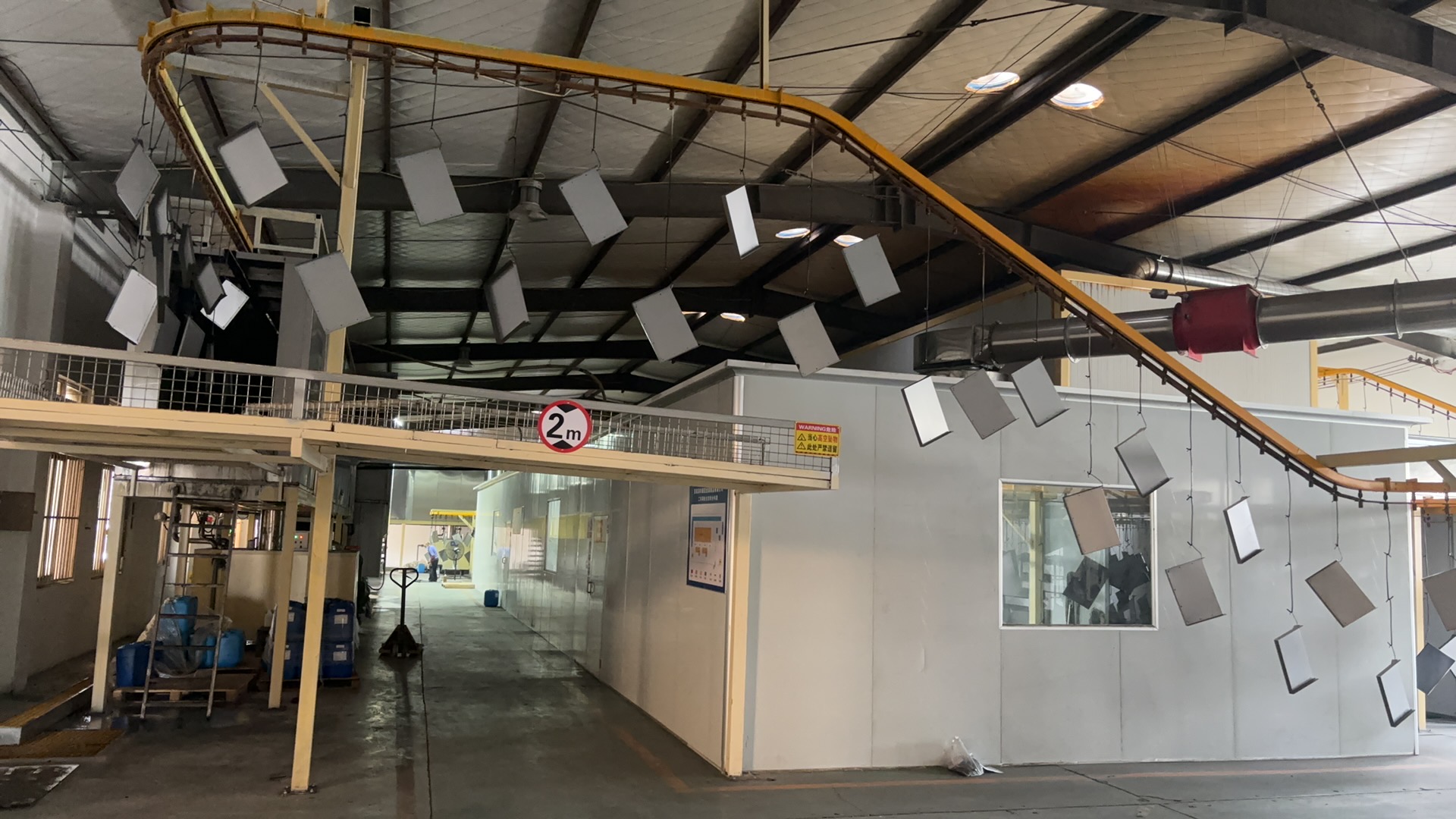
Steel POP displays move through cutting, bending, welding and powder coating, giving sheet-metal geometry a strength profile that molded plastic does not report.
Design Flexibility: What Each Process Can and Cannot Do
Acrylic wins on optical effect and organic geometry. Injection molding and vacuum forming produce seamless curved shells, integral color and molded-in branding, and transparent acrylic lets the product sell itself without a graphic panel. Vacuum forming is typically used for large, relatively simple shells where tooling economics matter, while injection molding supports tighter tolerances and more complex geometry. In both cases the mold fixes the shape, so post-tooling design changes mean mold modification, which is the real constraint behind acrylic design freedom.
Steel wins on structural logic and finish control. Cutting, bending, welding and stamping allow a frame to be engineered around a known load, while powder coating and painting control color, texture and abrasion resistance on the surfaces that get handled. Logo application is printing rather than tooling, so artwork revisions do not touch the mold. The counter-constraint is that sheet-metal geometry is fundamentally an assembly of flat sections, and highly sculptural shapes become welded multi-part structures rather than single forms.
Wood sits outside this comparison and is governed by a different compliance track; Redman's FSC Chain of Custody certification (BV-COC-122126/BV-CW-122126) covers wooden POP displays and store fixtures, not acrylic or steel products.
Use-Case Fit: Mapping Format to Retail Environment
| Scenario | Better default | Reason |
|---|---|---|
| Sportswear and apparel floor fixture with stacked stock | Metal | Rated load of 50-200 kg; welded structure resists accumulated weight |
| Counter top accessory and impulse display | Acrylic | Light, transparent, single-mold geometry; low point loads |
| Supermarket category management and shelf systems | Metal | Repeatable structure, powder-coated finish, documented load testing |
| Convenience store and small-format retail | Acrylic | Compact footprint, low handling risk, brand color molding |
| Trade show and exhibition fixtures | Either, favoring portability | Modular, reusable design matters more than load rating |
| Short promotional burst with late decision | Metal | 25-35 day lead time and 100-piece MOQ avoid tooling delay |
The mixed approach is common in practice: steel carries the structural load and the floor standing presence, while acrylic handles the counter top surface where product visibility and brand color do the selling. Documented programs illustrate the split at scale, including 5,000+ custom POP display units for a global retail brand supporting US store expansion, and 3,000+ custom store fixtures for a European supermarket chain operating across 200+ stores in Germany.
Quality and Certification Evidence for Each Material
Certification questions are frequently asked of the wrong object. Redman holds management-system certificates rather than per-product certificates. ISO 9001:2015 (no. 04623Q16735R0M), ISO 14001:2015 (no. 04623E13894R0M) and ISO 45001:2018 (no. 04623S13846R0M) were issued on 2023-12-18 by Beijing Head International Certification Co., Ltd. and are valid through 2026-12-17. ISO 50001:2018 (no. 0350124En20050R0M) was issued on 2024-04-07 by Xingyuan Certification Center Co., Ltd. and is valid through 2027-04-06. Because three of these expire in December 2026, buyers placing orders for 2027 delivery should confirm current validity at the time of contracting.
For US retail programs, UL 970 is the reference framework commonly applied to retail fixtures and merchandise displays, with a published scope covering point-of-sale, motorized, hanging, wall-system, showcase, display-case and product-platform categories. The standard dates to 2020 and current edition applicability should be verified directly. A scope listing also does not establish that any supplier is certified, so any compliance claim should be supported by documentation specific to the product and market.
Limits and Trade-offs a Buyer Should Not Skip
- Plastic has no published load rating. Until a tested figure exists for a specific configuration, acrylic should not be specified for accumulating loads. This is the single largest misapplication risk in the comparison.
- Tooling and MOQ favor metal for small runs. A 1,000-piece minimum for custom plastic parts plus 35-50 days including mold development makes acrylic a poor fit for a promotion decided four weeks before launch.
- Tooling fixes the design. After a mold is cut, geometry changes mean mold modification, whereas steel revisions are cut-and-bend changes that do not require new tooling.
- Surface wear differs. Acrylic and PS show scratching and hazing more visibly than powder-coated steel under repeated handling, which matters for fixtures that will be re-used across several seasons rather than discarded.
- Steel adds weight. Heavier units increase freight cost and installation effort, and may require stronger anchoring in temporary spaces.
- FSC does not apply here. The FSC Chain of Custody scope covers wooden displays and fixtures, so acrylic and steel programs are outside it.
- Capacity figures are company-reported. Redman's published capacity of 1,000+ containers annually and 100-150 containers per month across a 550,000 sqft facility should be verified through audit or references for large programs.
Market Trend Signals Through 2030
Three signals shape the material decision over the next several years. First, the shelving and display market is projected to grow at roughly 8.9% annually to 2034, which keeps fixture supply competitive rather than scarce. Second, floor-standing display cases held about 52% of the retail display market in 2025, confirming that permanent, load-bearing floor fixtures remain the volume core, and that core is steel-dominated. Third, the LED modular display market was valued at US$7.5 billion in 2023, projected at US$10.2 billion in 2026 and US$17.4 billion by 2030 (Grand View Research, LED Modular Display Market Report 2024-2030).
The interpretation for buyers is not that acrylic displaces steel. It is that the passive fixture is becoming an electrical fixture in a growing share of premium programs, and that electrical or motorized formats add a compliance layer independent of whether the body is molded plastic or welded steel. Specifications that separate structural requirements from electrical requirements will be easier to source and easier to certify.
Execution Checklist Before a Purchase Order
- State the intended load in kilograms per shelf and per unit in the RFQ, for both material options.
- Confirm program volume before selecting a process; below the custom plastic MOQ of 1,000 pieces, tooling becomes the governing constraint.
- Match environment to format: convenience store and exhibition programs tolerate lighter fixtures; supermarket and department store floor programs should default to rated steel.
- Request the quality protocol per material, including load-bearing test records for metal and material performance test records for plastic.
- Ask for third-party inspection through SGS, BV or TUV on the first production run.
- Verify certificate validity dates at the time of order, particularly for certificates expiring on 2026-12-17.
- Obtain actual unit weights, which are not published in the current specification, before quoting freight.
- Treat LED, lighting or motorized variants as a separate compliance question from the fixture-material question.
Future Outlook
The most likely direction is not a winner-takes-all outcome but a more explicit split in fixture briefs. Buyers are increasingly asked to justify both capital fixtures and promotional units against the same budget, which pushes specifications toward stated load ratings, stated tooling ownership and stated replacement cycles. Where regional warehousing shortens the promotional response window, the tooling lead time of 35-50 days for custom plastic parts becomes the deciding variable rather than unit price, and programs already holding inventory in a US warehouse can hedge that delay through kitting and drop-shipping rather than through material substitution.
Redman's 2026 product catalogue, including format and material references, is available for download: catalog 2026-2.pdf.
FAQ
Which POP display material carries a higher load capacity, acrylic or steel?
Steel. RM-POP-001 is specified at 50-200 kg, while the RM-PD-001 plastic specification does not publish a load rating. Where product weight accumulates on a shelf or tier, the rated steel platform is the defensible choice unless a configuration-specific plastic rating is obtained.
What MOQ and lead time apply to custom acrylic versus custom metal POP displays?
Custom plastic parts carry a 1,000-piece minimum and a 35-50 day lead time that includes mold development. Custom metal parts carry a 100-piece minimum and a 25-35 day lead time. General custom orders run 30-45 days, with FCL for bulk and LCL available for small batches.
Can acrylic and metal displays be produced to the same custom size and logo requirements?
Yes. RM-PD-001 and RM-POP-001 are both offered with customizable size, and both support custom branding, with logo printing on metal and custom color and logo on plastic. The difference is in how the branding is applied: molded color or molded-in detail on plastic, printing over a powder-coated or painted surface on steel.
What quality tests apply to plastic versus metal display racks?
Metal production applies dimensional inspection, load-bearing test, surface finish inspection and 100% quality check. Plastic production applies dimensional inspection, material performance test, surface finish inspection and 100% quality check. Both are covered by 100% pre-shipment inspection, with third-party inspection available through SGS, BV or TUV.
Which certifications apply to acrylic and metal display racks?
Redman holds ISO 9001:2015, ISO 14001:2015, ISO 45001:2018 and ISO 50001:2018 management-system certificates covering the design, production and sales of custom POP displays and store fixtures, plus an FSC Chain of Custody certificate whose scope is limited to wooden displays. These are management-system certificates rather than product certifications for a specific rack.
When is a mixed acrylic-and-metal specification the better choice?
When a program combines structural load with product visibility. A steel frame carries the weight and provides floor standing presence, while an acrylic counter top unit handles presentation and brand color at low point loads. This split is common in apparel and accessory retail, where floor fixtures hold stock and counter fixtures drive impulse attention.
¿Tiene preguntas o necesita más detalles?
Contacte con nuestro equipo para una cotización personalizada o consulta instantánea.
Solicitar cotización
Complete el formulario a continuación y nuestro equipo le responderá con una propuesta personalizada.
Chat directo de WhatsApp
¿Prefiere chatear en tiempo real? Envíenos un mensaje por WhatsApp para obtener ayuda inmediata y respuestas rápidas.
- Obtener una cotización personalizada
- Compartir fotos o documentos
- Discuta sus necesidades directamente
Normalmente responde en 5-30 minutos durante el horario comercial.