
AUV Procurement FAQ: 6000 m Pressure Hulls, Corrosion, Obstacle Detection, and Terms
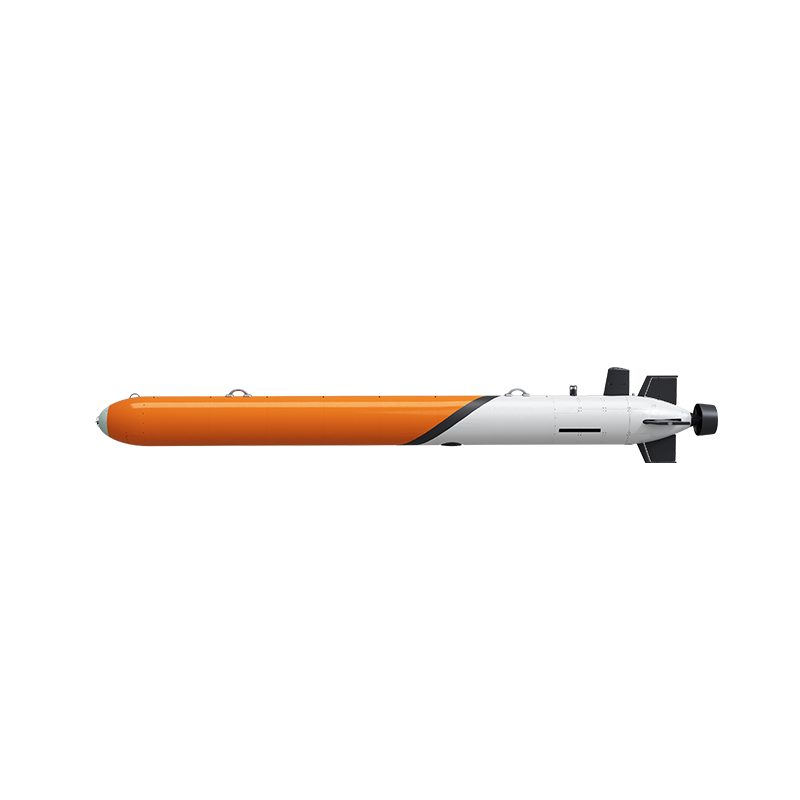
AUV-533: a 6000 m-class survey AUV with a titanium alloy pressure housing, corrosion-resistant syntactic foam buoyancy module, and an INS+DVL+GNSS+USBL+SLAM navigation suite.
An autonomous underwater vehicle (AUV) is an untethered, self-propelled underwater platform that executes a pre-planned survey, mapping, or inspection mission without a physical link to a surface vessel. At 6000 m, hydrostatic load, sealing architecture, and material choice stop being engineering footnotes and become procurement criteria. This reference answers the questions buyers actually bring to a deep-sea AUV quotation — and separates what is documented from what must be requested.
Pelagix AUV is the autonomous underwater vehicle line developed and manufactured by Sanya Poseidon Ocean Technology Co., Ltd., a deep-sea intelligent equipment enterprise based in the Yazhou Bay Deep-Sea Equipment Industrial Park in Sanya, Hainan, whose portfolio covers AUVs, ROVs, core underwater components, and marine software systems, and whose primary export focus is Southeast Asia, South America, and the Middle East. The range spans portable micro AUVs rated to 100 m, nearshore survey platforms rated to 500 m, and deep-sea platforms configurable to 6000 m.
Each answer below is grounded in published specifications for the Pelagix AUV line. Where the available documentation is silent — hydrostatic test records, coating systems, certified obstacle-avoidance functions — the answer states what a buyer should formally request rather than what should be assumed.
Why 6000 m Changes the Procurement Question
Depth rating is the single most misread line in an AUV datasheet. A rating is a configuration attribute, not an absolute property of a platform family. The same airframe may be quoted at two or three depths depending on hull material, wall thickness, penetrator count, and payload bay opening size. That is why the Pelagix AUV deep-sea models are published with configurable operating depths rather than one headline number: the AUV-600, for example, is offered at 1000 m, 3000 m, or 6000 m; the AUV-533 at 2000 m or 6000 m; the AUV-900 at 3000 m, 4500 m, or 6000 m.
For a buyer, the practical consequence is that due diligence must attach to a specific configuration, not to a model name. Pressure hull material, buoyancy module material, sealing method, navigation suite, and endurance differ across the range — and several of those differences are documented explicitly.
Pelagix AUV Depth Classes and Documented Materials
| Model | Documented operating depth | Hull / housing material | Payload | Endurance |
|---|---|---|---|---|
| AUV-150 | 0–100 m | Lightweight aluminum frame, seawater-resistant polymer casing, pressure-sealed electronic pod | 3 kg | ≥8 h @ 3 knots |
| AUV-160 | 0–100 m | Lightweight aluminum frame, seawater-resistant polymer casing | 5 kg | ≥8 h @ 3 knots |
| AUV-210 | 0–200 m | Aluminum frame, seawater-resistant polymer casing | 10 kg | ≥10 h @ 3 knots |
| AUV-260 | 0–500 m | Aluminum frame, seawater-resistant polymer casing | 20 kg | ≥12 h @ 3 knots |
| AUV-480 | 300 m (published specification) | High-strength anodized aluminum alloy or titanium housing, corrosion-resistant composite frame | — | ≥20 h @ 3 knots |
| AUV-324 | 600 m / 2000 m | High-strength anodized aluminum alloy, titanium housing option, corrosion-resistant composite frame | 30 kg | ≥20 h, custom to 50 h / 300 km |
| AUV-533 | 2000 m / 6000 m | Titanium alloy pressure housing, corrosion-resistant syntactic foam buoyancy module | 150 kg | ≥90 h, custom to 180 h / 1000 km |
| AUV-600 | 1000 m / 3000 m / 6000 m | Titanium alloy pressure housing, corrosion-resistant synthetic foam buoyancy modules | — | ≥24 h @ 3 knots |
| AUV-900 | 3000 m / 4500 m / 6000 m | Titanium alloy pressure housing, corrosion-resistant syntactic foam buoyancy module | 250 kg | ≥90 h, custom to 270 h / 1500 km |
| AUV-F760 | 600 m / optional 1200 m | Lightweight aluminum frame, seawater-resistant polymer casing, pressure-sealed pod | 60 kg | ≥20 h, custom to 400 h / 100–200 km |
All figures are published product specifications for the Pelagix AUV line. Where a cell shows “—”, the available documentation does not state a payload figure for that model.
FAQ: Pressure, Corrosion, Detection, Navigation, and Terms
1. Which Pelagix AUV models are actually rated for 6000 m, and which are not?
Three models are documented with a 6000 m option: the AUV-533, the AUV-600, and the AUV-900. The AUV-533 is rated 2000 m / 6000 m, carries a 150 kg payload, and offers ≥90 hours at 3 knots with custom endurance up to 180 hours or 1000 km. The AUV-600 is configurable at 1000 m, 3000 m, or 6000 m with ≥24 hours at 3 knots. The AUV-900 is configurable at 3000 m, 4500 m, or 6000 m, carries a 250 kg payload, and offers ≥90 hours at 3 knots with custom endurance up to 270 hours or 1500 km.
Everything else in the range is a shallower class and should not be presented as a deep-sea substitute: the AUV-324 (600 m / 2000 m), the AUV-480 (300 m published operating depth), the AUV-260 (0–500 m), the AUV-210 (0–200 m), and the AUV-160 and AUV-150 (0–100 m). The AUV-F760, the 6-DOF intervention-class vehicle with dual manipulator arms, is rated 600 m with an optional 1200 m rating.
2. What evidence turns a stated 6000 m rating into a verified rating?
A depth rating becomes verifiable when four documents travel with the quotation: hydrostatic pressure test documentation for the specific hull being supplied, material certification for the pressure housing, a configuration drawing that states wall thickness and penetrator count at the quoted depth, and the factory inspection record set used at release. The Pelagix AUV production quality flow is documented as incoming inspection, in-process inspection, hardware-in-the-loop (HIL) simulation, final inspection, and factory outgoing inspection — so the buyer can name which gate each document comes from.
Two documentation gaps are worth flagging explicitly. First, for the shallow-water micro models the available asset documentation notes that hydrostatic pressure test records are not included, and that no separate navigation accuracy test report is referenced. Second, published material for the AUV-480 states an operating depth of 300 m while describing a pressure-rated hull configuration of 2000 m; where two figures coexist, the buyer should require the quotation to state which configuration is being supplied. Neither point is a defect — both are reasons to write the configuration into the contract rather than rely on a model name.
3. How is leakage risk managed in a 6000 m pressure hull?
On the deep-sea models, leakage risk is addressed through hull architecture rather than a single component. The AUV-533 uses a pressure-rated hull designed for 6000 m, built with a titanium alloy pressure housing, a corrosion-resistant syntactic foam buoyancy module, and seawater-resistant electronics. The AUV-600 and AUV-900 follow the same material logic: titanium alloy pressure housing, corrosion-resistant synthetic foam buoyancy, seawater-resistant electronics. Titanium is the documented housing material for the 6000 m class — the AUV-900 specification notes titanium alloy rather than aluminum for its pressure housing.
Shallow-water platforms use a different architecture: a seawater-resistant polymer casing with a pressure-sealed electronic pod on a lightweight aluminum frame. That approach is appropriate for the 100–500 m classes and should not be read as equivalent to a 6000 m titanium hull. For a deep-sea order, the questions to put in writing are: which joints are welded versus sealed, how penetrators are qualified, whether leak detection is integrated, and what post-dive inspection protocol is required between missions.
4. Which hull material suits which depth class?
The Pelagix AUV range documents three material tiers. Titanium alloy pressure housings are used on the 6000 m-capable platforms — AUV-533, AUV-600, and AUV-900 — combined with corrosion-resistant syntactic foam buoyancy modules. High-strength anodized aluminum alloy with a titanium housing option and a corrosion-resistant composite frame is used on the AUV-324 (600 m / 2000 m) and on the AUV-480. A seawater-resistant polymer casing over a lightweight aluminum frame with a pressure-sealed electronic pod is used on the AUV-160, AUV-150, AUV-210, AUV-260, and AUV-F760.
The trade-off is straightforward and should be stated in any evaluation: polymer-cased platforms are lighter and easier to launch and recover, which is why the AUV-160 and AUV-150 are positioned for shore or small-boat deployment and net recovery, but their documented depth envelope ends at 100 m. Deep operations require the heavier metal-hull platforms, and heavier hulls reduce the payload and endurance available for sensors.
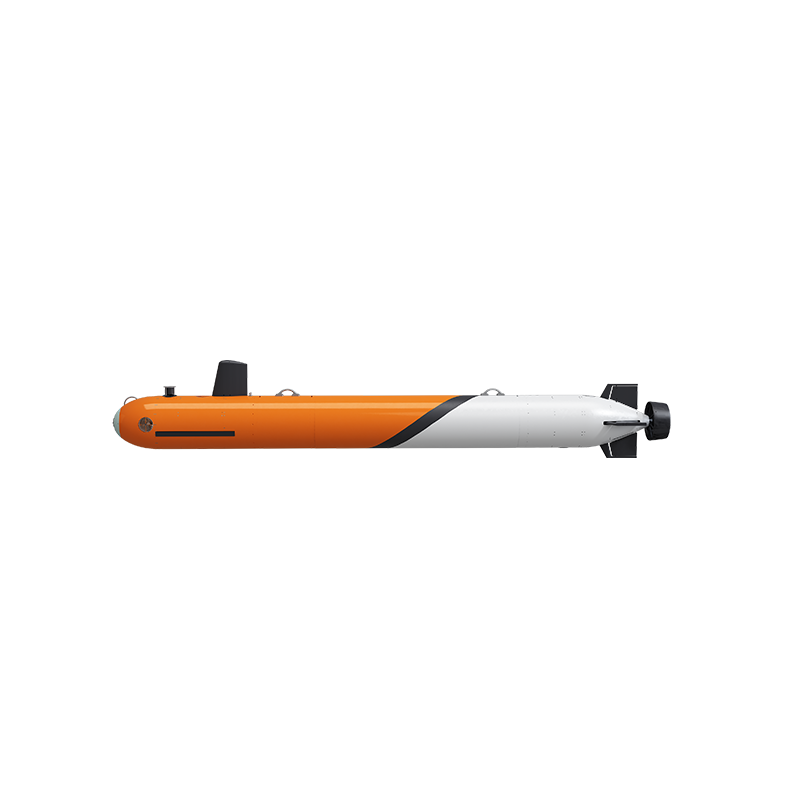
AUV-600: configurable at 1000 m, 3000 m, or 6000 m, with a titanium alloy pressure housing, corrosion-resistant synthetic foam buoyancy modules, and INS+DVL+GNSS+USBL navigation at 0.5% of range positioning accuracy.
5. How are corrosion and biofouling handled over multi-year service?
Corrosion resistance is documented at the material and component level: corrosion-resistant syntactic foam buoyancy modules, corrosion-resistant components, seawater-resistant electronics, anodized aluminum alloy housings, and corrosion-resistant composite frames. The Pelagix AUV after-sales structure includes a two-year warranty on the pressure hull and electronics plus modular spare parts supply, which is the contractual mechanism that keeps a hull in service rather than the material claim alone.
Biofouling is a different problem, and buyers should not assume it is solved by material selection. The documented offshore oil and gas scenario for this platform family explicitly lists marine bio-fouling and subsea entanglement as working conditions, and a documented AUV-324 deployment identified marine growth entanglements among detected structural anomalies during a two-year pipeline inspection programme. Those are detection outcomes, not anti-fouling specifications. Due-diligence questions to request in writing therefore include: coating system and antifouling strategy, cathodic protection provisions, cleaning and inspection intervals between missions, and how optical payload windows are protected on multi-day deployments.
6. Can these AUVs autonomously detect and avoid subsea obstacles?
This is the question where published documentation and buyer expectation most often diverge, so the answer must be precise. Obstacle avoidance sonar appears in the documented sensor integration list for Pelagix AUV customization, alongside CCD, CTD, altimeter, side-scan sonar, multibeam sonar, sub-bottom profiler sonar, USBL, and hydrophones. A documented dam and hydroelectric infrastructure inspection scenario lists obstacle avoidance cruising, autonomous SLAM mapping, and monocular vision-guided docking as operating modes, with a sound-and-light integration recognition system and automatic small-target recognition as matched equipment.
What that documentation does not establish is a certified autonomous obstacle-avoidance function for the 6000 m survey platforms, or quantified detection ranges at deep-sea speed. Buyers should therefore request, as due diligence: the detection range versus vehicle speed curve, the minimum obstacle size the system is validated to detect, the avoidance decision logic and its failure mode, test evidence in conditions comparable to the target site (turbidity, acoustic noise, current), whether the function is standard or an integration item priced separately, and how the vehicle behaves if detection fails. Until those documents are supplied and accepted, obstacle avoidance should be treated as a configuration item to be specified, not a default capability.
7. How is navigation drift controlled when GNSS is unavailable underwater?
The documented navigation architecture across the deep platforms combines inertial navigation (INS), Doppler velocity log (DVL), GNSS, and USBL acoustic positioning, with SLAM added on the AUV-533, the AUV-900, and the AUV-F760. GNSS is only usable at the surface; below it, the dead-reckoning backbone is INS aided by DVL bottom-track velocity, with USBL providing acoustic position fixes from a surface reference when the mission geometry allows, and SLAM maintaining local map consistency on the platforms that carry it.
Where positioning accuracy is published, it is expressed as a percentage of range: 0.2% for the AUV-900, 0.3% for the AUV-480, and 0.5% for the AUV-600. Those figures describe the aided navigation suite, not achievable survey accuracy in every water column, and they vary with bottom-lock altitude, USBL geometry, and mission duration. For a 6000 m programme, the questions to ask are drift over time without USBL updates, the DVL altitude envelope over soft sediment, whether SLAM is depth-rated for the quoted configuration, and whether a navigation performance verification is included in the acceptance sea trial. The available asset documentation also notes that for the shallow models no separate navigation accuracy test report is referenced — so if a verified accuracy figure matters contractually, it must be requested for the specific model.
8. What endurance and payload envelope is realistic to plan against?
Documented payload and endurance vary by class and are the clearest way to match a platform to a mission. The AUV-533 carries 150 kg with ≥90 hours at 3 knots (custom to 180 hours / 1000 km). The AUV-900 carries 250 kg with ≥90 hours at 3 knots (custom to 270 hours / 1500 km). The AUV-600 carries ≥24 hours at 3 knots at 1200 kg total weight. The AUV-324 carries 30 kg with ≥20 hours at 3 knots, custom to 50 hours / 300 km. The AUV-260 carries 20 kg at ≥12 hours; the AUV-210 carries 10 kg at ≥10 hours; the AUV-160 carries 5 kg at ≥8 hours; the AUV-150 carries 3 kg at ≥8 hours. The AUV-F760 carries 60 kg with ≥20 hours at 3 knots, custom to 400 hours or 100–200 km.
Two structural constraints sit behind those numbers. First, payload mass and endurance trade against each other, because sensors, batteries, and buoyancy all consume hull volume. Second, energy storage is a large internal volume consumer in AUV design; published market analysis places energy storage at roughly 40% of an AUV's internal volume for missions typically lasting up to 24 hours. A buyer specifying a heavy sonar suite and a long mission should therefore expect the quotation to move one of the other variables — hull size, depth configuration, or speed profile.
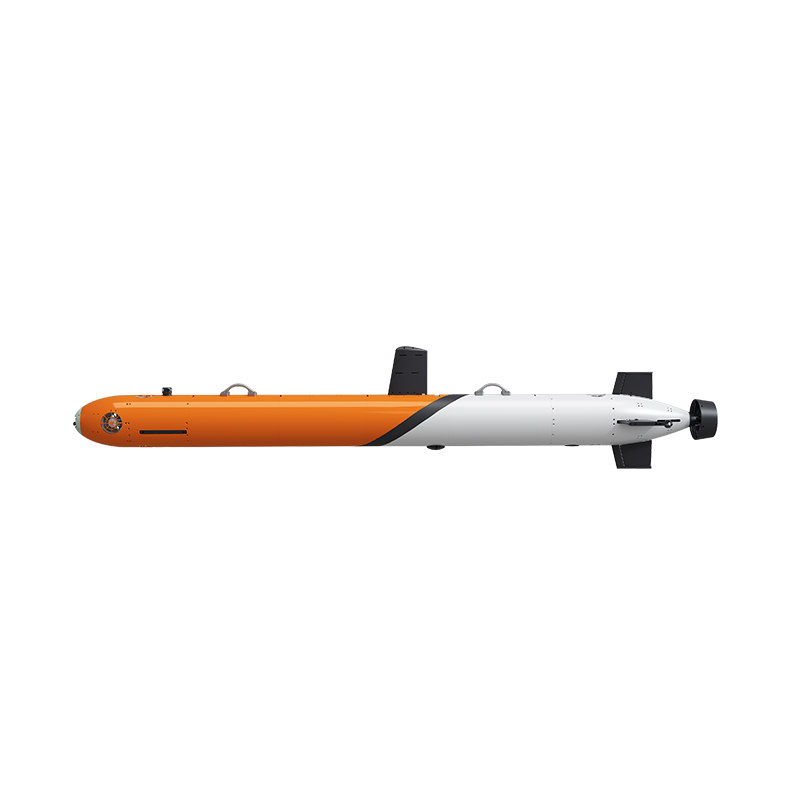
AUV-324: a modular AUV platform accepting up to 30 kg of custom payload, with a high-strength anodized aluminium alloy hull, an optional titanium housing, and a corrosion-resistant composite frame.
9. Which certification and compliance documents apply to these platforms?
The Pelagix AUV systems are documented as certified to the Survey-Grade Bathymetric & Environmental Compliance Certification, certification number AUV-REG-2025-0881, issued by China Classification Society (CCS) and Det Norske Veritas (DNV), valid from 2025-01-15 to 2030-01-14 and applicable to the global market including the EU, North America, Asia-Pacific, and the Middle East. The certificate covers deep-sea pressure-rated hulls from 2000 m to 6000 m, and names the AUV-533, AUV-600, AUV-900, and AUV-F760 — the F760 specifically for subsea pipeline inspection. The referenced standard set includes IHO S-44 Special Order Standards for Hydrographic Surveys, ISO 9001:2015, DNV-ST-F101 for subsea pipeline systems, and IEC 60529 IP68, together with marine environmental-monitoring compliance standards.
Buyers should also note what this certificate is not. It is a survey-grade and environmental compliance certification; it is not a classification of autonomous decision-making safety. In the wider marine robotics field, ISO 21448 (SOTIF) is increasingly discussed as a framework for non-fault-based hazards in autonomous systems, but that discussion is an emerging industry position rather than a certification already held by this platform family, and it should be verified case by case. Separately, customs classification for AUVs typically falls under HS Code 901580 or 890690 according to published US Customs and Border Protection guidance, which matters for landed-cost planning but has no bearing on technical acceptance.
10. What commercial terms and acceptance criteria should be fixed in the contract?
The documented commercial framework for Pelagix AUV supply is: OEM, ODM, system integration, and deep-sea engineering cooperation; lead time of 60–90 days for standard models and 120–180 days for customized deep-sea 6000 m AUV systems; minimum order quantity of one unit; and monthly capacity of 8–10 units for custom industrial and research AUV platforms and core components. After-sales support covers remote technical support, on-site sea-trial commissioning assistance, operator training, a two-year warranty on the pressure hull and electronics, and modular spare parts supply. Customization scope includes depth rating, modular payload bay configuration, sensor integration, battery capacity and endurance, software, AI target recognition models, monocular vision docking algorithms, cut-and-clear tooling, and branding and documentation.
Because the customization list is broad, acceptance criteria should be written against the delivered configuration rather than the base model. A practical acceptance package would include: the hydrostatic pressure test record for the supplied hull; a navigation performance verification; a payload integration test confirming sensor data output and mounting integrity; a sea trial at a representative depth; documentation deliverables named line by line; and a defined spare-parts list consistent with the modular architecture. Lead-time clauses should also distinguish the standard-model window from the customized 6000 m window, because the documented difference between those two is substantial.
Where AUVs Do Not Replace Tethered or Towed Systems
Any procurement comparison that presents AUVs as a universal replacement for tethered ROVs or towed survey systems is incomplete, and the limitations here are documented rather than rhetorical. The intervention capability in this range — dual manipulator arms supporting gripping, cutting, and rotating, with 6-DOF positioning and 6–8 thrusters — belongs to the AUV-F760, whose rated operating depth is 600 m with an optional 1200 m rating. A buyer needing intervention-class work at 6000 m is therefore outside the documented intervention portfolio and inside the survey portfolio: AUV-533, AUV-600, and AUV-900 are survey and mapping platforms, not work-class manipulator vehicles.
The second boundary is communication. Untethered operation removes the cable but also removes continuous human control and high-bandwidth real-time video. Mission plans must be pre-planned, and telemetry updates depend on acoustic or satellite links when the vehicle surfaces. That makes AUVs efficient for wide-area bathymetry, pipeline route survey, and long-endurance environmental monitoring, and less suitable for tasks that require an operator to make decisions in real time at depth — which remains the domain of tethered ROVs. A realistic fleet strategy for a deep-sea programme is usually mixed, with AUV survey lines and ROV intervention on the same asset.
The third boundary is documentation maturity. Depth ratings, navigation accuracy, and obstacle-avoidance behaviour are all configuration-dependent, and the available asset documentation for this platform family explicitly notes where test records are absent for the shallow models. Buyers who plan around verified configurations rather than headline claims will get a more predictable delivery than those who do not.
Market Signals Behind Deep-Rated AUV Demand
The commercial context supports the technical shift. The global AUV market was estimated at approximately USD 2.0–2.57 billion in 2024/2025 according to MarketsandMarkets, while the large and deep AUV segment — platforms rated beyond 1000 m — is projected by Fortune Business Insights to grow at a CAGR of 12.0% during the forecast period. Notably, published CAGR projections for the overall AUV market range widely across research houses, partly because different publishers include or exclude defense-funded extra-large AUV procurement programmes; that methodological spread is a reason to read any single growth figure as a directional signal rather than a precise forecast.
What this means for buyers is that deep-rated capacity is a growing but still differentiated supply category. Standard commercial platforms cluster in the shallower classes, while requirements above 2000 m narrow the field considerably. In that environment, configuration-level documentation — pressure test records, hull material certification, navigation verification, and acceptance sea trials — becomes the practical differentiator between suppliers, more than any single specification line.
Future Outlook
Three directions are already visible in the documented portfolio. First, configurable depth across a single airframe is becoming normal rather than exceptional, which shifts procurement leverage toward buyers who specify the exact configuration and the documents that must accompany it. Second, modular payload bays and software-defined sensor integration — including AI target recognition models, monocular vision docking algorithms, and cut-and-clear tooling — make the platform a carrier for third-party capability, so integration testing becomes part of acceptance rather than an afterthought. Third, cooperative operation is moving from concept to documented capability, with the AUV-533 explicitly described as capable of multi-AUV swarm coordinated survey missions, supported by a multi-AUV cooperative detection system and an ocean mesoscale vortex AI forecasting model within the wider product ecosystem.
For buyers in the research and evaluation stage, the practical implication is to build the tender around evidence: which configuration, which depth, which test record, which accuracy verification, which acceptance trial. A platform family that publishes configurable depths from 100 m to 6000 m can be matched to most missions — but only after the documentation requirement is written down.
About the manufacturer: Sanya Poseidon Ocean Technology Co., Ltd. is located in the Yazhou Bay Deep-Sea Equipment Industrial Park, Sanya, Hainan, and develops AUV and ROV systems, core underwater components, and marine software platforms for scientific research, offshore engineering, environmental monitoring, and maritime training markets. The technical product brochure covering the AUV range is available for download: Overseas Version – AUVs Products (PDF).
This reference is compiled from published Pelagix AUV product specifications and certification records. Buyers should confirm all depth ratings, materials, navigation performance, and acceptance documents for the specific configuration being quoted.