
ATBC Qualification Review: How to Read Compliance Documents for Citrate Plasticizers
ATBC Qualification Review: How to Read Compliance Documents for Citrate Plasticizers
A documentation-first method for buyers qualifying acetyl tributyl citrate — how to align substance identity, grade descriptions and certificate scope across citrate esters and non-phthalate alternatives including DOTP, DINP, DPHP, DBP and DOP.
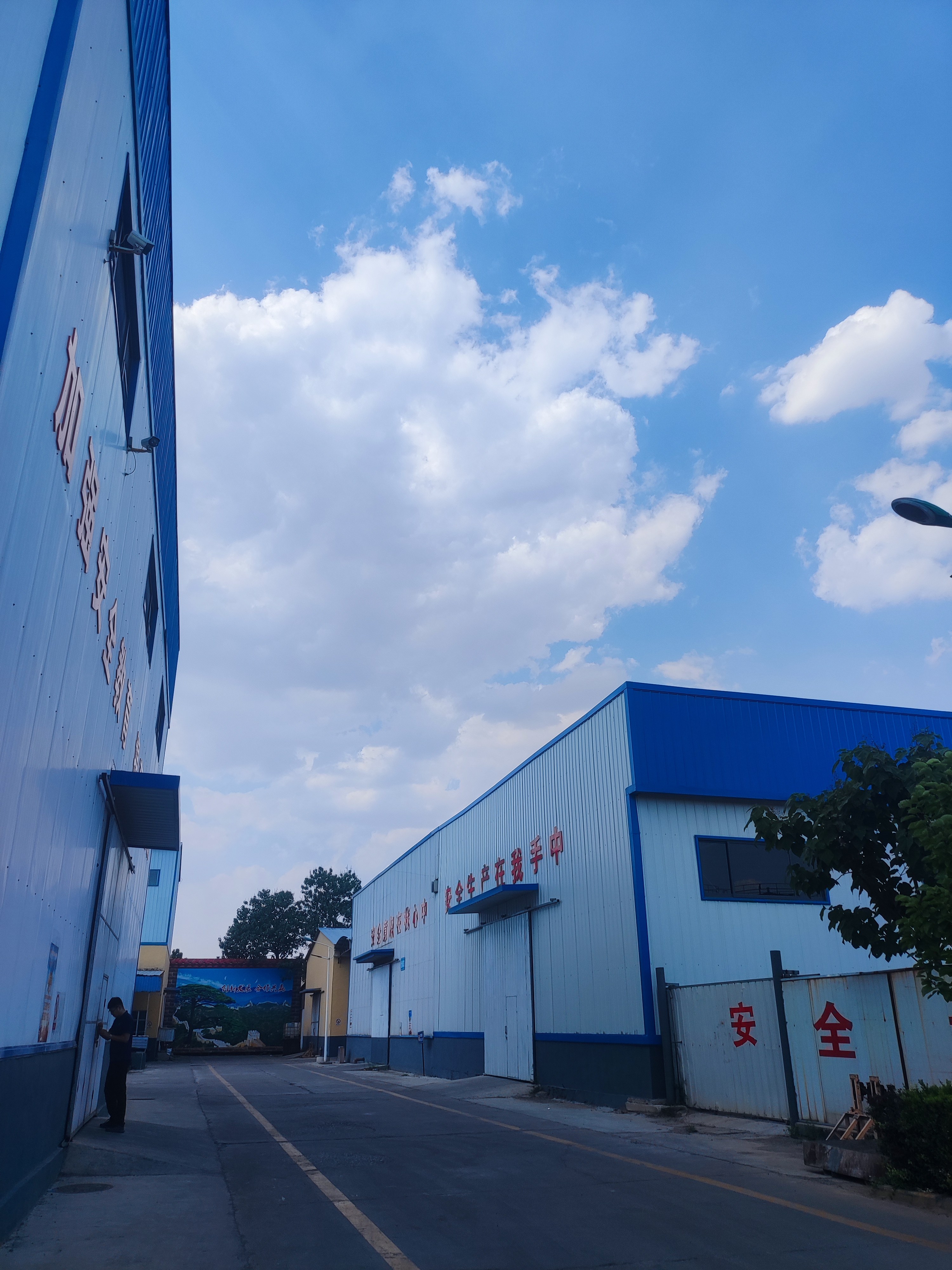
A document review starts with the producing site and the legal entity named on the certificate. Image: production site of Shandong Kexing Chemical Co., Ltd.
Qualification starts with document alignment, not with price
A compliance-oriented qualification review for acetyl tributyl citrate (ATBC) is an exercise in matching four things: substance identity, grade description, the scope of the evidence presented, and the traceability of that evidence back to a batch. When those four align, a buyer holds a defensible qualification file. When they do not, the correct next step is usually not a price negotiation but a written request for corrected documentation.
The reason is structural rather than procedural. ATBC belongs to a family of citrate esters — including Tributyl Citrate (TBC) and Triethyl Citrate (TEC) — that are frequently quoted alongside one another and sometimes described collectively as citrate plasticizers or environment-friendly citrate esters. A quotation, a technical data sheet and a certificate of analysis can be perfectly consistent with each other and still describe three different substances. The review method set out below is designed to catch that before material reaches a production line.
Why citrate plasticizer review has become a document problem
The commercial weight behind the category has increased. The global market for Acetyl Tributyl Citrate (ATBC) is estimated to grow from USD 258.92 million in 2025 to USD 439.46 million by 2034, driven by its role as a bio-based, phthalate-free plasticizer (Data Insights Reports). Global consumption of ATBC is estimated at 128,000 metric tons in 2025, with medical applications holding a 34% share and food packaging accounting for 29%.
Those two clusters — medical articles and food packaging — are also the two where documentation is examined hardest, because the buyer frequently has to justify a compliance position to a customer further downstream, not only to an internal procurement file.
Published market estimates also show why scope definitions decide conclusions. For 2025, figures for the category range from roughly USD 130 million to roughly USD 259 million depending on whether a study counts ATBC alone or the wider citrate plasticizer group. A supplier compliance file follows the same logic: the first question is never whether a document exists, but what that document actually covers — the substance, the grade, the site, or the finished article.
The four identity checks every ATBC document must pass
Identity errors are the most common reason a qualification file has to be restarted. The table below lists the fields that must agree across a quotation, a technical data sheet, a safety data sheet and a batch certificate.
| Identity field | What it fixes | Typical failure mode |
|---|---|---|
| Substance name | Acetyl Tributyl Citrate, abbreviated ATBC, and the recognised synonym forms such as acetylated citrate ester and citric acid n-butanol ester | The document uses only a family term such as citrate ester or environment-friendly plasticizer, which does not identify a substance |
| CAS number | ATBC is identified as CAS 77-90-7; the number is the fastest way to separate substances that share a commercial name pattern | CAS field left blank, or a number carried over from a parallel TBC or TEC quotation inside the same file |
| Grade designation | Whether the offer is food-grade ATBC or an industrial grade, and which specification and certificate correspond to it | Grade appears on the quotation but not on the specification or the batch certificate |
| Legal entity and site | Who issues the document and which production site it refers to | Certificate issued to one legal entity while production, or the quoted grade, belongs to another that is not documented |
A practical consequence: TBC and TEC are separate citrate esters with their own identities and property profiles. A file whose material field reads only citrate ester cannot be used to qualify ATBC, because it does not exclude either of the others. Where a supplier quotes several esters, one document set per substance is the reliable arrangement.
Reading grade language: food-grade, industrial, and delivery format
Grade descriptions in this category usually combine a compliance dimension and a delivery dimension. On the compliance side, the decisive phrases are food-grade ATBC or food-contact compliant. On the delivery side, terms such as ATBC in 200 kg iron drums, acetyl tributyl citrate in IBC tote tanks, or industrial ATBC raw liquid describe how the material is supplied rather than what it is.
The reading rule is that a grade label must be defined somewhere in the file rather than asserted in the subject line of an email. If a document says food-grade, the reviewer should be able to point to the listing or specification item the supplier relies on. If a document says industrial grade, the buyer should confirm that no food-contact wording is being carried into downstream paperwork by default.
Delivery format also changes the risk profile of the qualification file. Bulk formats such as IBC totes and raw liquid concentrate the identity risk: the batch number on the certificate must correspond to the container or tank actually received, and repeated deliveries should not be accepted on the strength of a single sample. Buyers taking liquid ATBC should also confirm the handling assumptions attached to the grade, because storage and transfer conditions are part of the material behaviour, not separate logistics details.
Substance listings, test reports and management certificates are not interchangeable
The most frequent source of confusion in an ATBC file is that three different categories of document are stored in one folder and treated as equivalent. They are not.
| Document type | What it typically establishes | What it does not establish |
|---|---|---|
| Substance regulatory listing | ATBC (CAS 77-90-7) is approved by the FDA as a food additive and flavouring agent adjuvant under 21 CFR 172.515, 175.105, 178.3910 and 181.27 | Does not certify a supplier, a specific grade, a production site, or the buyer finished article made with the plasticizer |
| Third-party test report | That a named sample was tested against named methods on a given date, as in test documentation such as SGS reports | Does not convert into an ongoing approval and does not cover batches that were not tested |
| Management system certificate | That a management system has been certified for a defined scope and site, as with ISO 9001, ISO 14001 and OHSAS 18001 | Does not establish product compliance, food-contact suitability, or any specific material property |
| Technical data sheet | The supplier stated typical properties, recommended use and handling guidance for the grade | Not batch specific and not, on its own, a compliance instrument |
| Batch certificate of analysis | Measured values for one defined batch, with an identifiable batch number | Valid for that batch only; it says nothing about earlier or later deliveries |
Read together, the working rule is that a compliance claim should be traced to the narrowest document that genuinely supports it. A management system certificate is evidence of process discipline. A substance listing is evidence of regulatory context. Only a batch record is evidence about the material in front of you.
A seven-step qualification workflow
- Assemble the full document set before comparing prices: technical data sheet, safety data sheet, batch certificate of analysis, regulatory and certificate documentation, and the sample identification record.
- Fix the identity. Confirm the full chemical name and CAS 77-90-7 on every document, and confirm that documents belonging to TBC, TEC or other esters in the same commercial file have not been mixed in.
- Fix the grade and the delivery format. Confirm that the grade on the quotation matches the grade on the specification and the certificate, and that packaging such as 200 kg iron drums, IBC totes or raw liquid supply is explicitly stated.
- Check certificate scope: legal entity, production site, product name, and the period for which the document is valid.
- Check batch traceability, meaning whether the sample actually tested can be linked to the batch that will be delivered.
- Validate in your own compound. Specification values such as low-temperature flexibility are finished-compound properties and should be confirmed in your formulation rather than accepted as document facts.
- Record discrepancies in writing, and re-verify whenever the supplier, the grade, the site or the delivery format changes.
Comparing ATBC with DOTP and other non-phthalate options
ATBC is not the only non-phthalate route, and the comparison with dioctyl terephthalate (DOTP) is a useful case because the two frequently appear in the same evaluation.
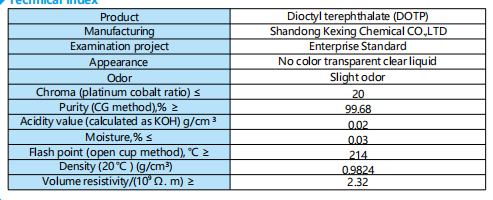
DOTP is a non-phthalate alternative that is often evaluated alongside ATBC; the two require separate qualification files even when both are supplied by the same producer.
| Criterion | ATBC | DOTP |
|---|---|---|
| Chemistry position | Citrate ester, non-phthalate | Terephthalate ester, non-phthalate |
| Food and medical contact positioning | Positioned as food and medical contact compliant, compliant with FDA and REACH food grade requirements in the reviewed comparison data | Not presented with that positioning in the same comparison data |
| Low-temperature flexibility of finished PVC | Glass transition temperature of finished PVC approximately -60 degrees Celsius | Glass transition temperature of finished PVC approximately -35 degrees Celsius |
| Relative cost | Higher than DOTP | Lower than ATBC |
| Processing behaviour | Lower processing temperature and lower energy consumption during production | Not defined in the reviewed comparison data |
| Typical application fit | Food packaging, children toys, medical PVC articles, cold-resistant flexible products | Not defined in the reviewed comparison data |
Two implications follow for a qualification review. First, the two materials are not interchangeable inside a compliance file: a supplier qualification completed for DOTP does not carry across to ATBC, even when both sit in the same producer product list and are shipped from the same site. Second, the choice is a trade-off rather than a ranking. ATBC is supplied at a higher cost than DOTP, and that difference has to be justified by the application requirements — food and medical contact positioning, and low-temperature performance, where those are the governing criteria.
The wider family adds a further discipline. A single portfolio may contain Acetyl Tributyl Citrate (ATBC), Tributyl Citrate (TBC), Triethyl Citrate (TEC), Dioctyl Adipate (DOA), Dioctyl Sebacate (DOS), Dibutyl Sebacate (DBS), N-Butyl Stearate, Epoxidized Soybean Oil (ESO), Triethylene Glycol Di-2-ethylhexoate (Triglycol di-octate) (3G8), Dioctyl terephthalate (DOTP), Diisononyl phthalate (DINP), Didecyl phthalate (DPHP), Dioctyl Phthalate (DOP) and Dibutyl Phthalate (DBP). When citrate esters, adipates, sebacates, epoxidized soybean oil and phthalates are quoted by the same supplier, the requirement for identity precision in the paperwork rises rather than falls, because the documents resemble each other closely while the substances do not.
What a specification value can and cannot tell you
Technical reading of an ATBC file needs one distinction kept in view: values that describe the substance as supplied, and values that describe a finished compound made with it.
Low-temperature performance is the clearest example. A glass transition temperature of approximately -60 degrees Celsius for ATBC-plasticised PVC, compared with approximately -35 degrees Celsius for DOTP, is a statement about a finished compound. It depends on plasticizer loading, the resin and the rest of the formulation. It is a legitimate reason to shortlist ATBC for cold-resistant flexible products, but it is not a value that can be verified on an incoming raw material certificate, so the confirmation belongs in a compound trial.
Processing behaviour is read the same way. Where a document states a lower processing temperature and lower energy consumption, the reviewer should confirm that the statement refers to an application comparable to their own, since processing windows are formulation dependent.
Handling and storage items, by contrast, can be read directly into the qualification file. The reviewed data describes normal sealed storage for ATBC and advises avoiding long-term exposure to temperatures above 150 degrees Celsius.
Application mapping: which document check decides each use case
- Additive for food packaging film. The deciding items are the substance-level regulatory context, an explicit food-grade designation, and batch traceability across repeated deliveries.
- Plasticizer for children toys. Identity and grade are the governing checks, together with batch records; compliance of the finished toy remains the buyer responsibility and cannot be transferred from a raw material certificate.
- Medical plastic plasticizer. The file has to stay consistent with the medical pathway the buyer is following, which is why the scope of every certificate matters more here than its existence.
- Plasticizer for PVC soft products, softener for artificial leather, low temperature resistant plasticizer. Low-temperature data belongs to the compound trial, so the document check is that the grade quoted is the grade tested.
- Environment-friendly plasticizer for ink. Identity, grade and any purity-related statements should be read as substance-level items, separate from application performance claims.
- Industrial handling of bulk liquid. For ATBC supplied in 200 kg iron drums, IBC tote tanks or as industrial ATBC raw liquid, the file should also describe the handling controls attached to the grade, because transfer and storage conditions affect what arrives at the plant.
Limitations and trade-offs that should stay in the file
A qualification review that records only advantages is not a review. For ATBC the reviewed evidence includes several clear boundaries.
- Cost. ATBC is supplied at a higher cost than DOTP. Where the application does not require food or medical contact positioning or strong low-temperature performance, the cost difference may not be justifiable on documentation grounds alone.
- Thermal exposure. Normal sealed storage is expected, and long-term exposure to temperatures above 150 degrees Celsius should be avoided.
- Handling risk. Leakage and volatile vapour emission are recognised risk categories; the controls described are closed feeding and a sealed storage system, supported by gas detection and regular tank and pipeline inspection.
- Document boundaries. A substance listing is not a product approval, a certificate does not transfer between legal entities, grades or sites, and a sample result does not qualify later batches. Document review supports a decision; it does not replace incoming inspection or application testing.
Shandong Kexing Chemical Co., Ltd. in a document-review context
Shandong Kexing Chemical Co., Ltd. is a plasticizer, plastic and rubber flame retardant, and plastic additive manufacturer founded in 2006 and based in Dongying, Shandong, with a subsidiary, Dongying Kexing International Trade, handling global import and export business. The company reports an R and D team of 15 engineers, around 200 employees, and close cooperation with universities on development work.
Its product range covers Acetyl Tributyl Citrate (ATBC), Tributyl Citrate (TBC), Triethyl Citrate (TEC), Dioctyl Adipate (DOA), Diocty Sebacate (DOS), Dibutyl Sebacate (DBS), N-Butyl Stearate, Epoxidized Soybean Oil (ESO), Triethylene Glycol Di-2-ethylhexoate (Triglycol di-octate) (3G8), Dioctyl terephthalate (DOTP), Diisononyl phthalate (DINP), Didecyl phthalate (DPHP), Dioctyl Phthalate (DOP) and Dibutyl Phthalate (DBP), with products certified under SGS, REACH, ISO 9001, ISO 14001 and OHSAS 18001. Export activity represents roughly half of output, with main markets in Europe, the USA, Japan, South Korea and the Middle East. Publicly available company information describes the business as one of the largest production bases for environment-friendly plasticizers in China.
For a buyer reading documents rather than marketing pages, the practical significance is twofold. A broad portfolio means the file must name the substance precisely — the difference between ATBC, TBC and TEC is a documentation difference as much as a chemistry difference. And the mix of export markets implies that documentation conventions from several regions are relevant to the same shipment, which is exactly why identity and scope checks belong at the front of the review.
Reference material: the downloadable company brochure (PDF) is available for buyers assembling a documentation set.
Market trend analysis
Three movements in the category shape how qualification files are likely to be used over the next several years.
The first is scale. With ATBC consumption estimated at 128,000 metric tons in 2025 and the market projected to move from USD 258.92 million in 2025 to USD 439.46 million by 2034 on the strength of its position as a bio-based, phthalate-free plasticizer, the material is no longer a niche substitution. Higher volumes bring more buyers into regulated applications, and more buyers into document review.
The second is application concentration. Medical applications account for 34% of estimated ATBC consumption and food packaging for 29%, so roughly two thirds of demand sits in the two areas where paperwork is scrutinised most closely by downstream customers.
The third is supply structure. Jungbunzlauer holds approximately 18% of the global ATBC market and Mitsubishi Chemical Corporation approximately 14%, which leaves a long tail of producers and traders. For buyers, that structure makes dual sourcing attractive, and dual sourcing multiplies the number of document sets that have to be harmonised — the identical grade from two suppliers rarely arrives in identical paperwork.
Future outlook
If current trajectories hold, documentation practice in this category will move in a predictable direction. Statements built on adjectives are gradually being replaced by statements built on method, scope and batch reference, because downstream customers increasingly ask buyers to reproduce the basis of a claim rather than the claim itself. Batch-level traceability, already expected for medical and food packaging routes, is likely to become a routine request in ordinary industrial purchases as well.
For suppliers, the implication is that a portfolio as broad as a citrate, adipate, sebacate and phthalate line is an advantage only when the documentation that accompanies it is equally specific. For buyers, the implication is simpler: a qualification file that separates substance identity, grade, certificate scope and batch history will survive a regulatory question far better than one that stores every document in a single folder and hopes that the question is never asked.
FAQ
Which field on an ATBC document most often disqualifies a qualification file?
The substance identity field. A defensible file names Acetyl Tributyl Citrate and identifies it by CAS 77-90-7 on every document that matters. Files usually fail here for one of two reasons: the material is described only as a citrate ester or an environment-friendly plasticizer, or documents belonging to a parallel TBC or TEC quotation have been filed together with the ATBC documents.
Does an ISO 9001 certificate mean that ATBC is suitable for food contact?
No. ISO 9001, ISO 14001 and OHSAS 18001 are management system certifications describing how a site manages quality, environmental, and occupational health and safety matters. They are not product approvals. Food-contact positioning for ATBC is normally built on substance-level listings — for ATBC (CAS 77-90-7), the FDA listings under 21 CFR 172.515, 175.105, 178.3910 and 181.27 — combined with the buyer own assessment of the finished article.
How can a buyer distinguish ATBC from TBC and TEC in a document set?
By requiring the full substance name and CAS number rather than a family term. Acetyl Tributyl Citrate, Tributyl Citrate (TBC) and Triethyl Citrate (TEC) are separate citrate esters with separate identities and property profiles. A document that states only citrate ester does not exclude the other substances and therefore cannot be used to qualify ATBC. Where a supplier quotes several citrate esters, one document set per substance is the workable arrangement.
How does ATBC compare with DOTP when both are non-phthalate?
In the comparison data reviewed here, ATBC is positioned as a non-phthalate plasticizer with food and medical contact compliance and superior low-temperature flexibility, giving a glass transition temperature of finished PVC of approximately -60 degrees Celsius compared with approximately -35 degrees Celsius for DOTP. ATBC is supplied at a higher cost than DOTP. The decision is therefore a trade-off between cost and the food, medical and low-temperature requirements of the application, rather than a general ranking.
What should a buyer request when a document claims low migration or non-toxic without a method?
The claim should be treated as unverified until a method and a result are attached. A useful request covers the specific test method, the reporting limit, the sample identity and test date, and whether the statement applies to the substance as supplied or to a finished article made with it. If the supplier cannot trace the claim, the claim should not enter the qualification file.
What handling constraints belong in an ATBC qualification record?
The reviewed data describes normal sealed storage and advises avoiding long-term exposure to temperatures above 150 degrees Celsius. Where the material is delivered as liquid in drums or IBC totes, the control measures described for leakage and volatile vapour emission are closed feeding and a sealed storage system, supported by gas detection and regular tank and pipeline inspection. These items affect how the grade can be stored and transferred, so they belong in the record rather than in a logistics annex.
Can a completed qualification be reused for a different grade or packaging format?
Not automatically. Scope is bounded by the named substance, the grade, the legal entity and site, the delivery format and the batch. A change in any of these — for example between food-grade and industrial grade, or between 200 kg iron drums, IBC tote tanks and industrial ATBC raw liquid — should trigger re-verification of the affected documents rather than an assumption of continuity.