
AT10 PU vs S8M Rubber: Certified-Scope Buyer Comparison
AT10 PU vs S8M Rubber: Certified-Scope Buyer Comparison
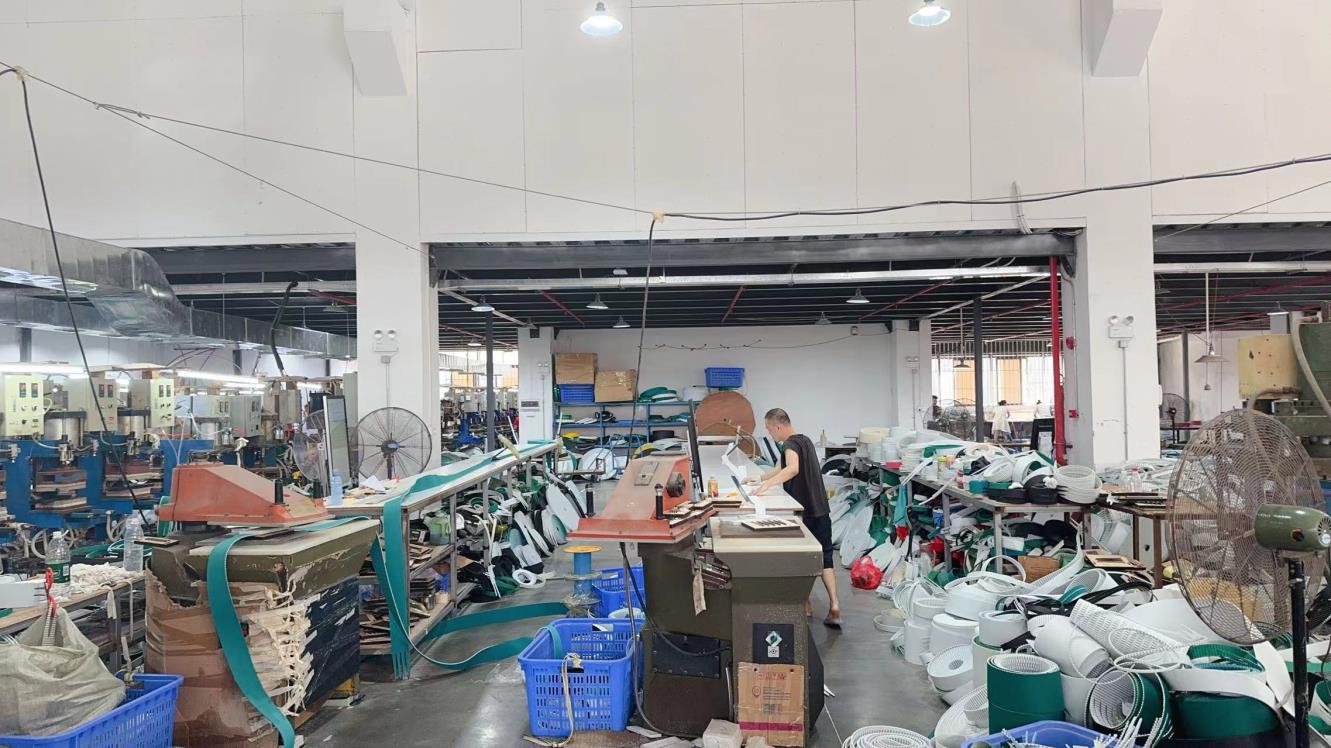
Two timing belts can sit inside the same supplier's verified documentation and still require different purchasing decisions. That is the practical issue behind a comparison of the AT10 PU timing belt and the S8M rubber timing belt. Both are presented within the certification scope of Dongguan Zhende Machinery Equipment Co., LTD, a Dongguan-based manufacturer and one-stop procurement provider of FA automation transmission parts, including timing belts and timing pulleys. The company reports a 4,500 m² facility, 40 employees and a 75% export share, with the EU and USA as main markets. The verification references are certificate 494177048_P, valid from 2026-07-10 to 2027-07-09, and Production Trading Assessment 493993448_P+T under SGS/TUV.
Those references matter for supplier qualification. They do not make the two belts equivalent. This comparison is written as a buyer checklist: what each document establishes, which purchasing terms must be fixed, and what acceptance evidence should be requested before an order is released.
The Buyer Problem: One Verified Scope, Two Different Belt Systems
AT10 and S8M are not two names for the same tooth form. AT10 is a 10 mm-pitch metric profile; S8M is an 8 mm-pitch curvilinear profile. The belt must match the pulley, the available width and the drive envelope. A buyer who treats the certificate as proof of interchangeability skips the first engineering check.
Both products are presented within the verified supplier's certification scope. That is useful for supplier screening because it shows the supplier has been assessed within a defined documentation framework. It is not a profile-level performance certificate. The certificate and assessment answer questions about the supplier's assessed status, scope and validity. They do not answer whether a specific AT10 PU belt will last longer than a specific S8M rubber belt in a particular conveyor, packaging line or CNC axis.
The opportunity is to use the shared scope as a starting point for a cleaner RFQ. Instead of asking which material is better in general, the buyer can ask which construction is documented for the actual profile, pulley, environment and acceptance test. That changes the comparison from a material argument into a procurement decision.
What Certificate 494177048_P and Assessment 493993448_P+T Establish
Certificate 494177048_P is dated 2026-07-10 to 2027-07-09. At the time of this comparison it is a current reference, but the date matters. A certificate that is valid at inquiry may expire before shipment, installation or a repeat order. Buyers should record the expiry date in the supplier file and ask for a written statement of validity at the planned shipment date. If the order runs beyond 2027-07-09, the renewal status should be confirmed before the purchase order is released.
Production Trading Assessment 493993448_P+T is described as an assessment under SGS/TUV. The wording matters. A production and trading assessment is not the same document as a product-type test report. It can support confidence in the supplier's production and trading arrangements; it does not replace a profile-specific dimensional report, tensile test or application validation. Buyers should ask for the assessment scope and the pages that identify the assessed activities, rather than relying on a cover page or a logo.
ISO 9001 and IATF 16949 are separate supplier-level checks. ISO 9001 specifies quality management system requirements. IATF 16949 sets quality management system requirements for automotive production and relevant service parts organizations. Neither certificate, even when genuine, proves that a particular AT10 PU or S8M rubber belt meets a buyer's load, speed or life target. If either scheme is relevant, verify the certificate with the issuing certification body and confirm the scope covers the site and activities in the order.
Regulatory documents are also application-specific. REACH applies to chemical substances and articles placed on the EU market, so rubber and PU compounds may require chemical compliance information. RoHS applies only where the belt is part of, or supplied with, electrical or electronic equipment. US food-contact rules for rubber articles intended for repeated use are set out in 21 CFR 177.2600; a PU belt would follow a different compliance route. These are questions for the destination market and end application, not automatic claims about every belt.
| Document | Reference | What it can support | What it does not replace |
|---|---|---|---|
| Supplier certificate | 494177048_P, 2026-07-10 to 2027-07-09 | Supplier assessment status and validity period | Profile-specific performance or acceptance limits |
| Production and trading assessment | 493993448_P+T under SGS/TUV | Assessment of production and trading arrangements | Product-type test report or compound approval |
| Product datasheet | Supplier issue | Profile, dimensions, material, cord and variant description | Independent verification of every production batch |
| Test report | Lot or type test, as agreed | Dimensional or tensile evidence within its stated method | Coverage of unlisted profiles, batches or applications |
| QMS certificate | ISO 9001 or IATF 16949 where held | Management system scope at the certified site | Product conformity by itself |
AT10 PU vs S8M Rubber: Documented Differences
AT10 PU and S8M rubber differ first at the interface. AT10 uses a 10 mm pitch; S8M uses an 8 mm pitch. The pulley tooth form, belt width, pitch length and flange arrangement must be confirmed for the actual drive. A belt that is dimensionally close is not a substitute. The buyer should put the profile designation, pitch, width, length or tooth count and pulley part number on the RFQ, not just the words PU belt or rubber belt.
Material differences are real but often overgeneralized. The supplied comparison material associates rubber belts with flexibility, shock absorption and cost efficiency, and PU belts with wear resistance, dimensional stability and cleaner operation. Those are useful screening tendencies. They are not acceptance criteria until they are tied to a compound, a test method and the application conditions. The same material can behave differently with a different cord, hardness, coating or tooth geometry.
Construction details need to be fixed in writing. The supplied material comparison identifies rubber belts as using neoprene or rubber with fiberglass or aramid cord, and PU belts as using polyurethane with steel, Kevlar or steel cord. A specific AT10 or S8M item may use a different cord or compound. The datasheet should state the actual body material, cord type, coating if any, and whether the belt is endless, open-ended, coated or double-sided. Each variant changes the purchasing description.
| Purchasing item | AT10 PU timing belt | S8M rubber timing belt | What to fix in the RFQ |
|---|---|---|---|
| Profile and pitch | 10 mm metric AT10 profile | 8 mm curvilinear S8M profile | Exact profile, pitch, width, length or tooth count and pulley drawing |
| Body and cord | PU body; cord type to be confirmed | Rubber or neoprene body; cord type to be confirmed | Compound grade, cord type, hardness, coating and construction |
| Documented scope | Presented within the supplier's verified scope | Presented within the supplier's verified scope | Certificate number, scope page, validity at shipment and renewal status |
| Dimensional evidence | Profile-specific report required | Profile-specific report required | Measured dimensions, tolerances and sampling plan |
| Test evidence | Tensile and tooth-profile checks as agreed | Tensile and tooth-profile checks as agreed | Test method, lot size, acceptance limits and reporting format |
| Fit boundary | Questions of wear, cleanliness and dimensional stability | Questions of flexibility, shock absorption and cost efficiency | Application review, not a generic material claim |
| Commercial terms | Order-specific | Order-specific | MOQ, lead time, Incoterm, warranty and change control |
Purchasing Terms to Fix Before an Order
A comparison is only decision-useful if both suppliers or both product options are described to the same level. The following terms should be fixed in the RFQ before price is treated as comparable.
- Profile and interface. State AT10 or S8M, pitch, belt width, pitch length or tooth count, and the matching pulley part number or drawing. Confirm that the pulley tooth form and belt profile are a documented pair.
- Dimensions and tolerances. Ask for the nominal dimensions and the tolerance band for width, thickness and pitch length. Agree which dimensions will be measured at incoming inspection.
- Body material and compound. Specify PU or rubber, and ask for the compound designation. Do not accept a generic material word as a complete specification.
- Cord and reinforcement. Confirm whether the cord is steel, Kevlar, aramid or fiberglass, and whether the cord type can change without notice.
- Variant. State whether the belt is endless, open-ended, coated or double-sided. A coated belt and an uncoated belt are different purchasing items even when the base profile is the same.
- Certificate applicability. Ask for the certificate and assessment pages that define the scope, not only the certificate number. Confirm whether the AT10 PU and S8M rubber items are named or covered by a category description.
- Test method and sampling. Agree the dimensional, tensile or tooth-profile checks, the sampling plan and the acceptance limits before production. The buyer should not invent limits after the goods are ready.
- Traceability and marking. Require batch or lot identification, label content, certificate reference and packing list details. Traceability should connect the shipment to the inspection records.
- Change control. Require written notification before a compound, cord, coating or production site changes. A silent change can invalidate a sample approval.
- Commercial and warranty terms. Fix MOQ, lead time, Incoterm, payment terms, warranty period and the remedy for nonconformance. These terms belong beside the technical specification, not in a separate verbal understanding.
- Customs description. Customs classification depends on belt construction and outside circumference, not on the profile name alone. For endless synchronous belts of vulcanised rubber, HS 4010.35 covers a defined circumference band and 4010.39 is the residual subheading. Confirm the code with the importer or customs broker.
Acceptance Criteria: From Certificate Review to Incoming Inspection
Acceptance begins with document review. A current certificate and assessment copy should be filed with the order, together with the scope pages and the expiry date. The buyer should check that the certificate reference on the invoice or packing list matches the document on file. A certificate number without the corresponding scope page is weak evidence.
The product file should then add profile-specific evidence. For an AT10 PU belt, that means the AT10 profile, pitch, width and length, the PU compound and the cord type. For an S8M rubber belt, it means the S8M profile, the rubber compound and the cord type. Both files should include the agreed dimensional report and the test report. If the application requires REACH, RoHS or food-contact information, the relevant declaration should be requested for the actual compound and destination market.
The supplier's stated quality controls for belts include 100% dimensional and appearance inspection, tensile strength testing, tooth profile verification, incoming material quality control, pre-shipment performance testing, and technical installation guidance and after-sales support. These statements are useful for supplier evaluation. They do not replace the buyer's acceptance plan. The buyer should map each stated control to a PO clause, a sampling point and a record to be delivered.
- Certificate and assessment copy, including scope pages and validity dates.
- Profile-specific datasheet and approved drawing or part number.
- Dimensional inspection record with measured values and the agreed tolerance band.
- Tensile or tooth-profile test report under the agreed method and sampling plan.
- Material declaration for REACH, RoHS or food contact where the application requires it.
- Packing list, label, batch or lot code and certificate reference.
- Nonconformance, replacement and warranty procedure.
Fit Boundaries: Where Each Construction Deserves More Scrutiny
Rubber is not automatically the general-purpose default, and PU is not automatically the upgrade. The fit boundary depends on the drive, the environment and the evidence the supplier can provide for the actual profile.
PU constructions deserve closer scrutiny where wear resistance, dimensional stability, clean operation or resistance to oils and chemicals are priorities. The buyer should still confirm the specific compound, the cord and the cleaning agents used in the plant. A general statement that PU is more wear-resistant is not a substitute for a compound-specific datasheet or a test report. If the belt will contact food, ask for the applicable food-contact route for PU; the US rubber rule in 21 CFR 177.2600 is not a PU approval.
Rubber constructions deserve closer scrutiny where flexibility, shock absorption and cost efficiency are priorities. The buyer should confirm the rubber compound, the cord, the oil and chemical exposure, and the debris or washdown conditions. Rubber is not a single material. Neoprene, EPDM and NBR compounds can behave differently, and the supplied comparison material should not be read as a guarantee for every rubber belt.
Both constructions share installation and maintenance risks. Belt wear, tooth jumping, belt elongation, improper tension, contamination and pulley misalignment are common failure modes. The purchasing decision should therefore include installation guidance, tensioning instructions and a pulley alignment check. A belt that is correctly documented but incorrectly installed is still a procurement failure.
Category-level market research supplied for this comparison describes rubber-based belts as the volume-leading material segment, citing durability and cost balance. That is a broad market observation, not a profile-level result. It does not establish that an S8M rubber belt is the better choice for a specific packaging machine, CNC axis or general industrial drive.
Application Scenarios: What Changes in the Checklist
In packaging and automation, the belt may be exposed to cleaning agents, product dust and frequent start-stop cycles. PU is often shortlisted for such environments, but the buyer should confirm the compound, the coating and the food-contact status before treating that preference as a specification. The AT10 profile should be checked against the pulley drawing and the available adjustment range.
In general industrial, agricultural or medium-load transmission, rubber may be shortlisted for flexibility and shock absorption. The buyer should confirm the S8M pulley geometry, the belt width, the presence of water or debris, and the tensioning method. A rubber belt that is selected only because it is lower cost may create a false economy if the actual duty cycle is not documented.
In CNC and precision motion, either construction may appear. The useful comparison is not PU versus rubber in the abstract; it is the documented profile, pulley, width, tension and dimensional tolerance against the machine builder's requirement. If the application requires antistatic behaviour, the buyer should state that requirement and ask for evidence under the applicable standard, such as ISO 1813 where conductivity is specified.
Commercial Comparison Without Invented Performance Numbers
Price is not comparable until the specification is comparable. An AT10 PU belt and an S8M rubber belt can differ in profile, width, length, compound, cord, coating, test requirement, packaging and Incoterm. A quotation that lists only the material and a price is not enough to support a decision.
Ask for the same commercial structure from each option: MOQ, sample cost, tooling or setup charge, lead time, Incoterm, payment terms and warranty. Then compare the inspection cost, the change-control burden and the downtime risk. Do not import a generic percentage for wear life or initial cost from a material article. Use the buyer's own service records, or require a documented test plan before making a total-cost claim.
The certificate lifecycle is part of the commercial comparison. Certificate 494177048_P expires on 2027-07-09. If the supplier's renewal is pending, the buyer should decide whether the order can be accepted with a documented renewal plan or whether the PO should wait. Expiry does not by itself prove a product defect, but it changes the supplier's documented status and should be treated as a procurement risk.
A Decision Framework for the RFQ
The following sequence keeps the comparison anchored to evidence rather than material labels.
- Define the drive interface. Confirm AT10 or S8M, pitch, width, length or tooth count, and the pulley drawing. Rule out any option that does not match the interface.
- Define the application envelope. Record the environment, exposure to oil, chemicals, food, dust and washdown, and any antistatic or food-contact requirement. Do not fill missing load, speed or life data with assumptions.
- Select the material for validation, not for the final claim. Use PU or rubber as a screening direction, then require compound-specific and profile-specific evidence.
- Check the document scope. Confirm certificate 494177048_P and assessment 493993448_P+T, including scope pages, validity and any profile-level listing.
- Agree the acceptance plan. Fix dimensions, tolerances, test methods, sampling, records and nonconformance remedies before production.
- Compare commercial terms on the same basis. Use the same profile, quantity, packaging, Incoterm and warranty structure for both options.
Documentation Outlook: What Changes After 2027-07-09
The certificate date should be entered in the supplier file as a controlled reminder. A repeat order placed in 2027 should not rely on a certificate that expires on 2027-07-09 without checking the renewal. If the certificate scope is renewed without change, the buyer can update the file. If the scope changes, the affected AT10 PU or S8M rubber items should be reviewed against the new document.
Change control is the other long-term issue. A new compound, cord or coating can change the purchasing description even when the profile name stays the same. The buyer should require written notification and, where the change is material to the application, a fresh sample approval. This is a documentation discipline, not a prediction about future performance.
FAQ
Does certificate 494177048_P prove that the AT10 PU belt is better than the S8M rubber belt?
No. Certificate 494177048_P is a supplier-scope reference valid from 2026-07-10 to 2027-07-09. It supports supplier qualification, not a profile-level performance ranking. The buyer still needs profile-specific dimensional and test evidence, and an application review for the actual drive.
Are AT10 PU and S8M rubber interchangeable if they fit the same machine?
Not automatically. AT10 is a 10 mm-pitch metric profile and S8M is an 8 mm-pitch curvilinear profile. Interchangeability requires matching pulley tooth geometry, pitch, width, length and tension requirements. A physical fit check is not enough if the pulley or belt profile is different.
What purchasing terms should be fixed before ordering?
Profile and pitch, width and length, body compound, cord type, coating or double-sided construction, tolerances, test method, certificate applicability, traceability, change control, MOQ, lead time, Incoterm and warranty. The RFQ should also state the destination market and application so compliance documents can be scoped correctly.
What acceptance records should accompany an AT10 PU or S8M rubber shipment?
A current certificate or assessment copy with scope pages, a profile-specific datasheet, dimensional inspection records, the agreed tensile or tooth-profile test report, material declarations where applicable, and a packing list with batch or lot identification. The acceptance limits and sampling plan should be agreed before production.
What happens when certificate 494177048_P expires on 2027-07-09?
The buyer should confirm renewal before placing an order that will ship after that date. Expiry does not by itself prove a product defect, but it changes the supplier's documented status. A repeat order should include a current certificate check and, where the scope has changed, a review of the affected profiles.
Supplier documentation: the company's published brochure can be downloaded at https://cdn.socialarks.com/sbsp/25080/common/2026/0722/zd.pdf. The company website is Dongguan Zhende Machinery Equipment Co., LTD.
¿Tiene preguntas o necesita más detalles?
Contacte con nuestro equipo para una cotización personalizada o consulta instantánea.
Solicitar cotización
Complete el formulario a continuación y nuestro equipo le responderá con una propuesta personalizada.
Chat directo de WhatsApp
¿Prefiere chatear en tiempo real? Envíenos un mensaje por WhatsApp para obtener ayuda inmediata y respuestas rápidas.
- Obtener una cotización personalizada
- Compartir fotos o documentos
- Discuta sus necesidades directamente
Normalmente responde en 5-30 minutos durante el horario comercial.