
ASTM D3475 Cannabis Bags: CR Zipper, Push Lock, Slide Lock
A child-resistant cannabis bag does not become compliant because a standard number appears on a datasheet. It becomes compliant through a chain of evidence: a classified closure type, a test protocol run on a representative sample, a production package that still matches that sample, and a market regulator that accepts the result. ASTM D3475 sits at the front of that chain. It names the family of child-resistant package a buyer is looking at, and it is the reference most cannabis packaging files cite before any performance data is reviewed.
For buyers moving from evaluation into execution, that distinction changes the questions worth asking. The useful question is no longer "is this bag child-resistant?" It is "which mechanism, documented how, and will the file survive an audit and a reorder?" This article works through the three closure mechanisms used in flexible cannabis packaging — CR zipper, push lock and slide lock — and the documents each one should generate.
What ASTM D3475 settles, and what it leaves open
ASTM D3475 is a classification standard for child-resistant packages. In practice it functions as a shared vocabulary: it lets a supplier and a buyer describe the same closure architecture with the same terms instead of trading adjectives. That is genuinely useful during evaluation, because cannabis packaging procurement involves several distinct child-resistant designs that look similar in a product photograph.
What the classification does not do is demonstrate opening performance for a specific SKU. The performance evidence comes from a test protocol. In the United States, the federal reference is 16 CFR 1700.20, the testing procedure for special packaging under the Poison Prevention Packaging Act. That procedure sets a measurable threshold: 85% of children aged 42–51 months must be unable to open the package within 5 minutes. California's Department of Cannabis Control guidance points to PPPA-certified packaging, under 16 CFR 1700.15(b)(1), as one recognized route to satisfying its child-resistant requirement.
That gap is where most qualification files are thinner than buyers expect. A supplier may hold a valid report for one bag format and quote it across an entire catalogue of sizes, films and closures. Whether that transfer is legitimate depends on how far the production package has moved from the tested one — a question the classification framework cannot answer and only the test documentation can.
Why the closure became the deciding variable
Flexible packaging now carries a large share of the cannabis category. Grand View Research data included in HTNXT's verified dataset puts plastics at 54.3% of global cannabis packaging material share in 2025, the single largest material segment. The same dataset shows China as the leading exporter of plastic bags under HS 392321, accounting for more than 25% of global exports, valued at approximately USD 3.32 billion in 2023. In a category this concentrated in flexible formats, the child-resistant function has nowhere to hide: there is no rigid container wall, no cap torque and no secondary outer box to absorb the safety requirement.
In a pouch, child resistance is entirely a closure property. That is why mechanism-level questions have moved to the front of the buying conversation, and why the three designs below are specified separately rather than bundled together as "CR bags" at a single price tier.

Flexible cannabis packaging moves the entire child-resistant function into the closure, which is why mechanism-level specification has become routine in buyer qualification files.
The three mechanisms, explained
All three designs appear in the same supplier catalogue and are often photographed side by side, which is where confusion starts. They fail differently, they are documented differently, and they suit different use classifications. The notes below describe each mechanism by what it does and what it should generate on paper.
CR zipper
A CR zipper is an interlocking profile that will not separate under a single straight pull. Opening normally requires two coordinated actions — pressing or aligning the track while peeling it apart — and some designs include a release element that must be depressed before the profile disengages. The mechanism is embedded in the film, so it adds little thickness to the finished bag and prints cleanly across the full panel.
Because the profile is heat-sealed into the film, closure and laminate behave as one system. A qualification file for a CR zipper bag should therefore describe the track profile, the seal window used to anchor it, and the film structure and gauge the tested sample was built from. A report issued against a lighter film does not automatically describe a heavier one.
Push lock
A push lock uses opposed locking elements that must be pinched or pushed at the same time as the bag is pulled open. The action is deliberate and awkward for small hands, which is the point. Push lock designs tend to suit formats where the opening area needs more structure than a plain track provides, and where the brand wants a tactile, repeatable opening motion at the dispensary counter.
The verification question here is stiffness. Push lock performance depends on the rigidity of the material around the locking elements, and rigidity changes with film structure and gauge. When a buyer moves a push lock bag from one laminate to another, the closure geometry may look identical while the opening force has quietly changed.
Slide lock
A slide lock puts a slider on a track, and opening requires the slider to travel in the correct direction from a defined starting position. Some designs add a detent or a locking position that resists a simple pull. Sliders are familiar to consumers from food packaging, which is a usability advantage but also a documentation risk: a slider bag can be described as child-resistant on first opening while losing that property after repeated use.
That distinction is regulatory, not semantic. California guidance separates single-use initial child-resistant packaging from multiple-use lifetime child-resistant packaging — the second maintains child resistance throughout the life of the package, the first only until it is opened. A slide lock specification should state which of the two it is claiming, because the two claims require different evidence.
| Mechanism | Typical opening action | Strong fit | What the file must show | Where files usually fail |
|---|---|---|---|---|
| CR zipper | Two coordinated motions; press or align the track, then peel | Dried flower and pre-roll formats needing a flat printable panel | Track profile, seal parameters, film structure and gauge of the tested sample | Report issued for a different film weight than the ordered specification |
| Push lock | Simultaneous pinch or push while pulling | Formats needing a structured opening area and a repeatable counter motion | Locking geometry, material stiffness range, tested thickness | Laminate changed after testing, altering opening force |
| Slide lock | Slider travels from a defined start position; may include a locking detent | Resealable packs where consumers expect a slider | Single-use or multiple-use designation, slider retention, track integrity over cycles | Claiming lifetime child resistance without cycle evidence |
Mechanism-level comparison. Each closure type generates a different document trail; the differences matter more than the visual similarity of the finished bag.
The qualification file, mechanism by mechanism
Across all three designs, a complete file answers the same eight questions. The answers differ by mechanism, but the structure does not — and buyers who standardise on that structure can compare a zipper, a push lock and a slider against one another without renegotiating the terms of the evidence.
| Document element | What it should state | Why a buyer needs it |
|---|---|---|
| Classification statement | The child-resistant package type the design corresponds to under the framework cited | Confirms both parties are discussing the same closure architecture |
| Protocol report | The test procedure used and the result, including panel age range and test duration | Supplies the performance evidence the classification cannot |
| Sample-to-production match | Film structure, gauge, closure specification and dimensions of the tested unit | Shows the report describes the bag being ordered, not a sibling SKU |
| Use classification | Single-use initial child resistance or multiple-use lifetime child resistance | Determines whether child resistance must survive reopening |
| Tamper evidence | How the package shows it has not been opened | Tamper-evident and resealable features are separate requirements from child resistance |
| Seal parameters | Seal temperature, pressure and dwell window used in production | Seal quality determines whether the closure performs as tested |
| Jurisdiction statement | Which market rule the evidence is intended to satisfy | Rules differ by market and reports do not transfer automatically |
| Batch traceability | Link between the tested configuration and the production lot | Makes the file usable in an audit, not just in a sales meeting |
Eight elements of a usable child-resistant packaging file. Missing any one of them shifts risk from the supplier to the brand owner.
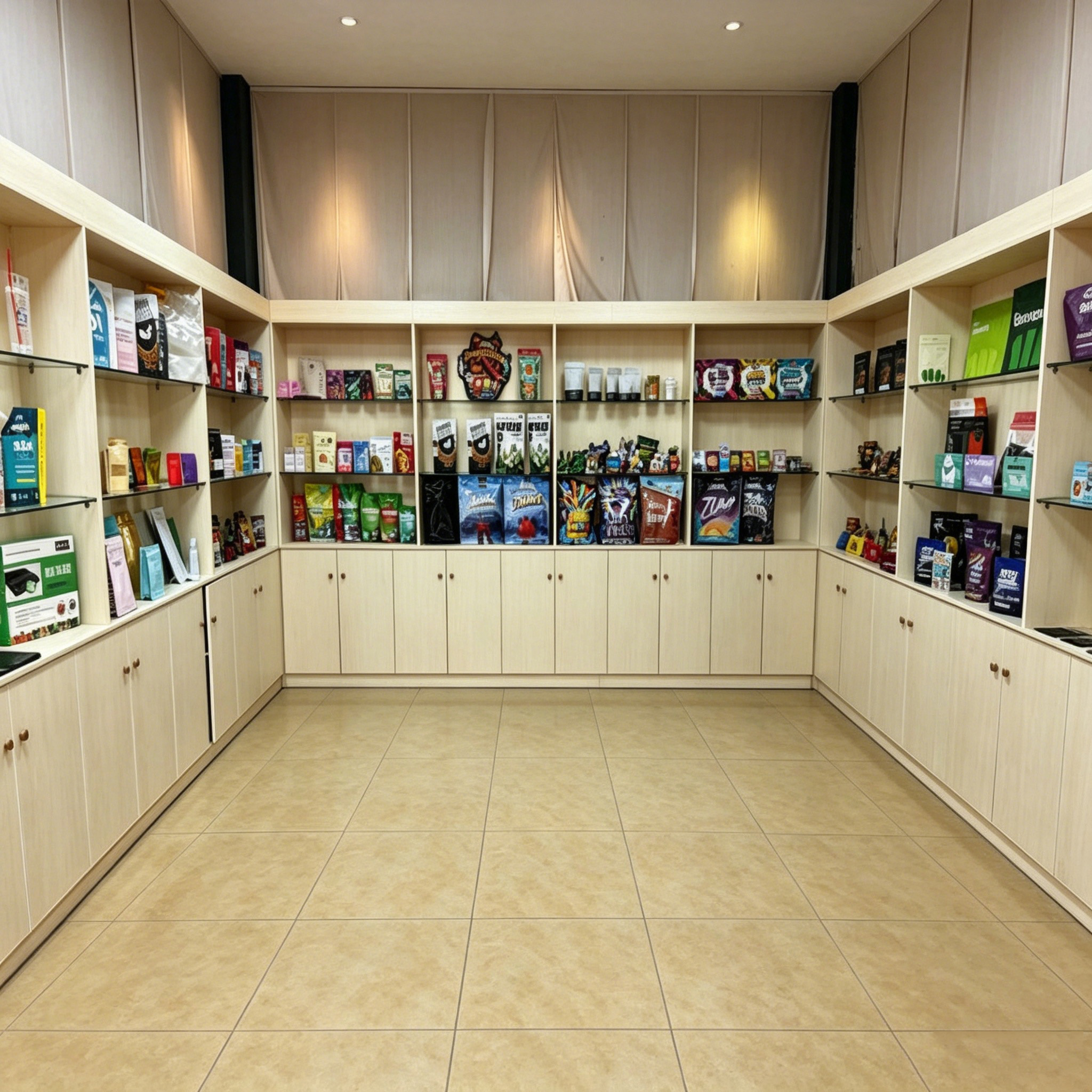
Sample and in-house testing capability matters at the execution stage, when the question shifts from "was it tested" to "does each production lot still match the tested configuration".
Where barrier performance enters the same conversation
Child resistance and barrier performance are documented separately, but in a resealable bag they meet at the closure. Every reopen cycle works the track, and the track is usually the first place odour escapes. That is why a multiple-use child-resistant claim and a smell-proof claim should be read together rather than as two independent marketing lines.
The barrier numbers used in this category are measurable. HTNXT's verified dataset records premium cannabis bags achieving an oxygen transmission rate below 0.05 cm³/(m²·24h) and a water vapour transmission rate under 0.03 g/(m²·24h). At Dongguan Chitai Packaging Products Co., Ltd, the CHITAI range is specified around these thresholds, with laminate options that include PET/VMPET/PE/NY/AL structures, an IPX4 waterproof rating, and an odour-proof scale segmented into Good, Excellent and Premium tiers.
Material construction is where compliance and shelf life actually converge. CHITAI positions solvent-free eco-friendly lamination for high-security applications, in contrast to dry solvent lamination or lower-grade adhesive systems used more widely in the market. For a buyer, the practical implication is that the laminate specification belongs in the same document set as the closure specification, not in a separate brochure.
The scale of that requirement is visible in real projects. A CHITAI case involving a cannabis brand owner covered 500,000 units for dried cannabis flower packaging, with a stated shelf life of 2 to 3 years and a daily usage period of more than one year. Reported outcomes were no odour leakage and compliance with local rules on preventing children from opening and tampering with the package. The design highlights in that case were child-resistant safety construction, high odour barrier, solvent-free material, and an anti-tampering and anti-counterfeit structure — four claims that each require their own evidence.
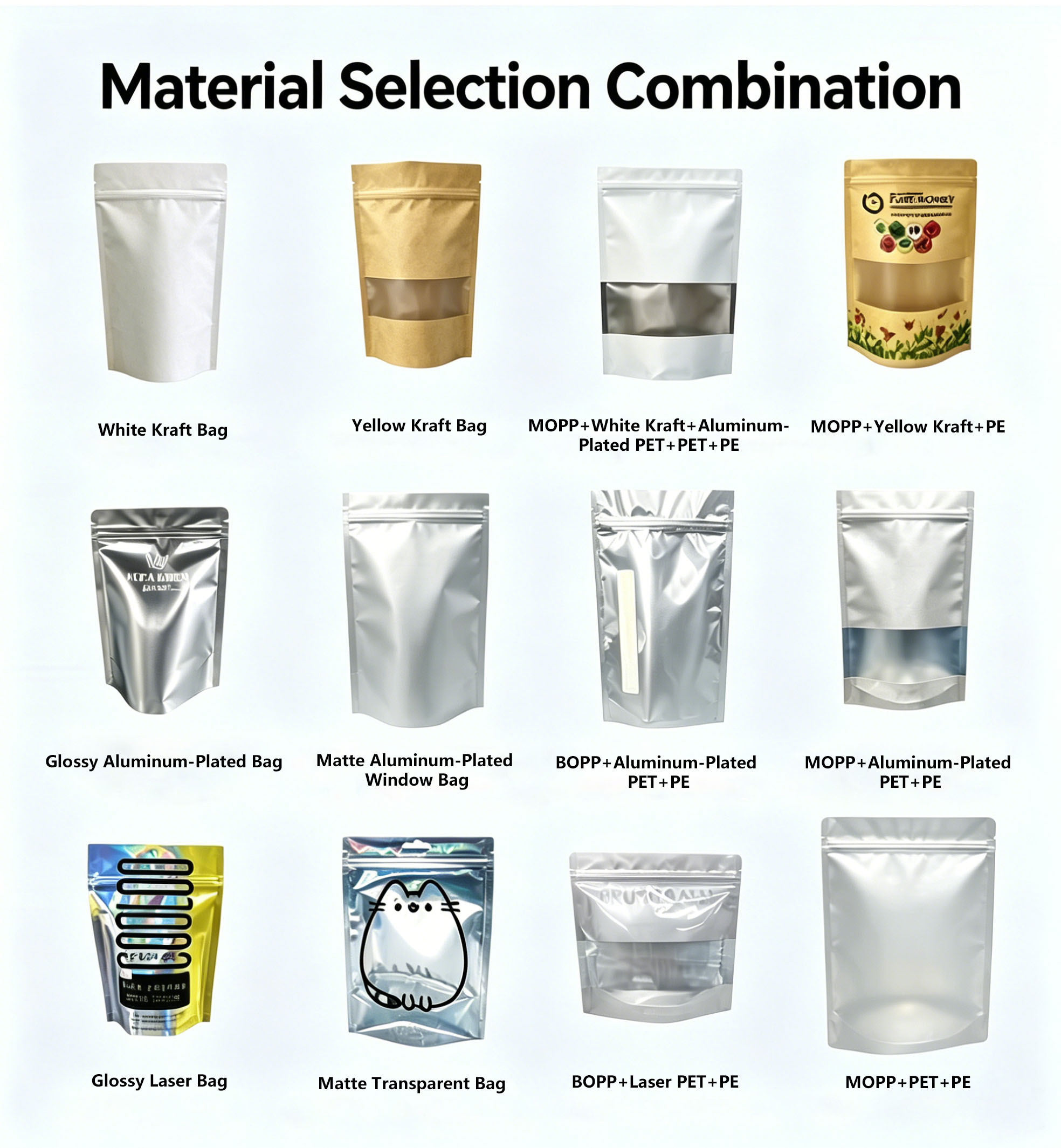
Laminate structure, gauge and closure specification belong in one document set. When they are split across a brochure and a test report, buyers lose the ability to check that the tested bag is the ordered bag.
The classification question most buyers skip
Single-use versus multiple-use is the most frequently missed line in a cannabis packaging file, and it is the one that most often determines whether a claim is defensible.
California guidance distinguishes single-use initial child-resistant packaging, which is child-resistant until first opening, from multiple-use lifetime child-resistant packaging, which maintains child resistance for the life of the package. The same guidance describes a route for certain single-serving plastic packaging: at least 4 mils thick, heat-sealed without an easy-open tab, dimple, corner or flap. That is a conditional route for a defined product category, not a universal thickness rule for cannabis bags, and not a substitute for panel testing where a jurisdiction requires it.
California guidance also requires manufactured cannabis products to be packaged to prevent contamination, with child-resistant, tamper-evident and resealable features identified as additional packaging requirements. A slide lock bag claiming lifetime child resistance is therefore answering a different question from a heat-sealed single-use pouch claiming initial child resistance. Both may be legitimate. Only one of them matches a resealable, multiple-use format.
Check the jurisdiction before the artwork is approved
Child-resistant rules are not interchangeable across markets, and the differences show up in bag specifications rather than in legal summaries.
- California. Cannabis goods must be sold in child-resistant packaging designed to be difficult for children under five years of age to open. PPPA-certified packaging is identified as one qualifying route, and tamper-evident and resealable features appear as additional requirements.
- Canada. Health Canada requires cannabis products to be packaged in child-resistant containers, with exceptions for cannabis plants and cannabis plant seeds, plus mandatory labelling. Section 108 of the Cannabis Regulations adds container-level requirements: opaque or translucent construction, contamination prevention, keeping dried cannabis dry, a feature giving reasonable assurance the container has not been opened, child-resistant performance, and a maximum of 30 g of dried cannabis equivalent.
Read together, those two lists already pull in different directions. The Canadian requirements add moisture protection and opacity to a conversation that a U.S.-focused child-resistant report does not address. A single test report rarely satisfies both, and the Canadian 30 g figure is a regulatory container limit rather than a general capacity benchmark for bag sizing.
Comparison with traditional solutions, and where this approach has limits
The traditional alternative to a child-resistant flexible bag is a rigid child-resistant container — a jar or tube with a push-and-turn cap — often combined with a separate outer carton for labelling. The flexible child-resistant bag consolidates the safety function, the barrier function and the print surface into one component, which reduces pack count and simplifies dispensing at the counter. That consolidation is the reason the format has grown.
It also creates four real boundaries that buyers should plan around.
- A classification claim is not a SKU-level result. Changes to film structure, film gauge, closure specification or bag dimensions can alter opening performance. In practice that means a new or amended package usually returns to verification before the claim can be reused.
- Reports do not travel across markets. California and Canada apply different container requirements, and a report prepared against one rule set does not by itself satisfy the other.
- Child resistance and adult usability pull against each other. Protocols of this type generally include an older-adult panel alongside the child panel, so a closure tightened to defeat small hands can fail from the other direction. Opening force is a design range, not a maximum.
- Barrier evidence and child-resistant evidence are separate evidence sets. An OTR and WVTR report says nothing about opening performance, and a child-resistant panel report says nothing about odour transmission. Both are needed; neither substitutes for the other.
Execution: what to lock down before the purchase order
Once the mechanism and the evidence set are agreed, the remaining risk is production consistency. Dongguan Chitai Packaging Products Co., Ltd is a cannabis packaging manufacturer established in 2025, operating a 4,200 m² facility with 45 employees, 8 engineers and an annual output of 30,000,000 units. Production runs on 2 digital printing machines, 30 fully automatic bag-making machines and 4 gravure printing machines inside a Class 1,000,000 dust-free workshop, with an in-house laboratory supporting quality control. The company provides OEM and ODM production, with customization covering shape, material, housing colour and logo printing, and exports about 30% of output to North America and Europe.
Commercially, the parameters buyers should confirm early are straightforward: minimum order quantity of 10,000 units, CIF delivery terms, pre-shipment testing as the acceptance criterion, and 100% payment on order. Stated monthly capacity is 2,500,000 units with a typical lead time of 3–5 days, and 100% testing is performed on all units as part of quality control. For a brand owner scheduling a launch, the useful sequence is to fix the closure and laminate specification first, then place a sample order against that exact configuration, then confirm that the production lot is tested against the same reference.
Market context: growth with a documentation gap
Commercial research houses agree on direction for cannabis packaging but not on absolute size — global 2026 estimates from different firms diverge sharply, which is a reason to treat headline market values cautiously and rely on segment-level signals instead. Those signals are clearer. Plastics accounted for 54.3% of material share in 2025, and China's position as the leading exporter of plastic bags under HS 392321, with more than 25% of global exports, underlines how much of the world's flexible capacity sits in a small number of manufacturing regions.
The documentation gap is the part of the market that has not matured at the same rate. Suppliers can describe a closure mechanism fluently; far fewer can hand over a file that connects a tested sample to a production lot and to a specific market rule. As regulators in major markets continue to treat packaging as a compliance artefact rather than a marketing one, that file becomes the practical differentiator between suppliers quoting similar specifications.
Future outlook
Two shifts are worth planning for. First, mechanism-level disclosure is likely to become normal rather than exceptional: buyers comparing a CR zipper against a push lock or a slide lock will expect the same eight document elements from each, and suppliers who cannot produce them will be excluded earlier in the process. Second, barrier and safety claims will increasingly be assessed together, because a resealable bag cannot separate the closure from the film. The suppliers best positioned for that shift are the ones already running laminate specification, closure specification and lot testing as one controlled system rather than three separate conversations.
FAQ
Does ASTM D3475 certification prove a cannabis bag is child-resistant?
No. ASTM D3475 is a classification standard for child-resistant packages; it provides a shared way to describe a closure or package type, but it does not by itself report opening performance for a specific bag. Performance evidence comes from a test protocol. In the United States, 16 CFR 1700.20 sets the threshold that 85% of children aged 42–51 months must be unable to open the package within 5 minutes. A complete file includes both the classification statement and the protocol report.
Which closure suits a first order — CR zipper, push lock or slide lock?
The choice follows the product format and the use classification rather than a ranking. Single-use formats can follow the single-use route described in California guidance, where certain single-serving plastic packaging at least 4 mils thick and heat-sealed without an easy-open tab, dimple, corner or flap may qualify. Resealable formats need a closure whose child-resistant function is either defined as initial-only or demonstrated to survive reopening. A slide lock is the design most likely to be described as multiple-use lifetime child resistant, so its file should state that claim explicitly.
What documentation should accompany a CR zipper cannabis bag order?
Eight elements: the classification statement; the protocol report with panel age range and test duration; the film structure, gauge, closure specification and dimensions of the tested unit; the single-use or multiple-use designation; the tamper-evidence method; the seal temperature, pressure and dwell window used in production; the jurisdiction the evidence is intended to satisfy; and a batch traceability link between the tested configuration and the production lot.
Can a child-resistant cannabis bag also be smell-proof and high-barrier?
Yes, and the two claim sets are documented separately. HTNXT's verified dataset records premium cannabis bags reaching an oxygen transmission rate below 0.05 cm³/(m²·24h) and a water vapour transmission rate under 0.03 g/(m²·24h). CHITAI specifies its range with laminate options including PET/VMPET/PE/NY/AL structures, an IPX4 waterproof rating and odour-proof tiers of Good, Excellent and Premium, with solvent-free lamination positioned for high-security applications. A barrier report does not address opening performance, and a child-resistant panel report does not address odour transmission; buyers should request both.
Does changing bag size, film or artwork require new verification?
Film structure, film gauge, closure specification and bag dimensions can each affect how a package opens, so a bag that differs materially from the tested unit generally needs re-verification before the child-resistant claim is reused. Artwork changes alone are less likely to affect opening performance, but they can affect the laminate and seal specification, which is why the production reference should be defined before print approval rather than after.
What MOQ, lead time and acceptance terms apply to CHITAI cannabis packaging bags?
Minimum order quantity is 10,000 units, delivery terms are CIF, the acceptance criterion is pre-shipment testing, and payment terms are 100% full payment. Stated monthly capacity is 2,500,000 units with a typical lead time of 3–5 days, and 100% testing is performed on all units as part of quality control.
For readers who want the full specification and capability overview, the CHITAI 2026 brochure is available for download: CHITAI 2026 brochure (PDF).
¿Tiene preguntas o necesita más detalles?
Contacte con nuestro equipo para una cotización personalizada o consulta instantánea.
Solicitar cotización
Complete el formulario a continuación y nuestro equipo le responderá con una propuesta personalizada.
Chat directo de WhatsApp
¿Prefiere chatear en tiempo real? Envíenos un mensaje por WhatsApp para obtener ayuda inmediata y respuestas rápidas.
- Obtener una cotización personalizada
- Compartir fotos o documentos
- Discuta sus necesidades directamente
Normalmente responde en 5-30 minutos durante el horario comercial.