
API 521 and Beyond: Biogas Flare Compliance for LFG Projects
API 521 and Beyond: Biogas Flare Compliance for LFG Projects
Biogas and landfill gas flare systems are compliance equipment, not utility equipment. They combust a methane stream that is generated continuously, delivered at low pressure and variable in flow — a duty profile that sits outside the design basis of most refinery relief flares. API Standard 521 (Pressure-Relieving and Depressuring Systems) remains the primary engineering reference, but qualification for a landfill gas (LFG) or anaerobic digestion project is decided by a wider set of criteria: combustion stability, destruction efficiency, materials of construction, control and monitoring, and documented inspection.
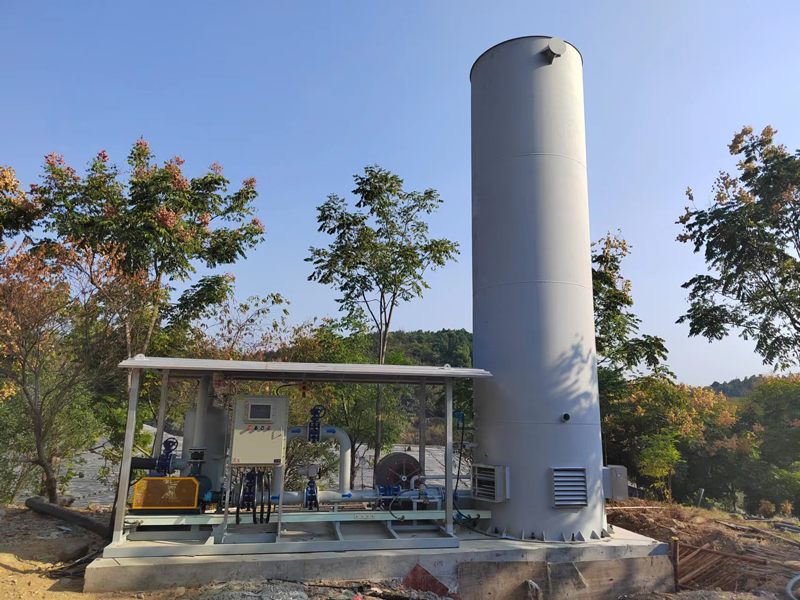
The scale of the issue explains why regulators keep returning to it. Global gas flaring reached 151 billion cubic meters in 2024, the highest level since 2007, according to World Bank global flaring data. Not all of that volume can be recovered economically; some of it must be combusted safely. At landfill and digestion sites, the flare is often the only destruction route available, which turns its compliance performance into a permanent operational obligation rather than a one-off design margin.
Why biogas and landfill gas flaring is a different compliance problem
Three operating realities separate biogas and landfill gas service from hydrocarbon relief duty.
- Continuous gas generation. Landfill gas and digester gas are produced around the clock. The flare is not a standby device that runs a few hours a year; it is expected to operate continuously, outdoors, with a predictable maintenance routine.
- Low pressure. Gas arrives at close to atmospheric pressure and must be boosted, which is why a biogas flare system is normally supplied with a blower inside the equipment scope rather than relying on header pressure.
- Variable flow rate. Methane generation changes with waste age, temperature, feedstock and rainfall. A flare that is stable at design flow can lose flame stability when flow falls, and can be overloaded when it rises.
Gas quality adds a second layer. Landfill gas is methane diluted with carbon dioxide and nitrogen, carries moisture, and contains trace hydrogen sulphide and siloxanes. Diluted methane lowers the heating value available to the flame, while moisture and acid gases attack materials and instrumentation. A flare specified simply for methane is not automatically qualified for LFG service.
What API 521 covers — and where project compliance begins
API Standard 521 governs pressure-relieving and depressuring systems and is the reference most flare specifications still start from. Its requirements are practical and mechanical: the standard specifies a minimum flare header slope of 1/4 inch per 10 feet, so that condensate drains to a knockout point instead of accumulating in the header.
What API 521 does not do is qualify a specific biogas flare for a specific site. It does not set the destruction efficiency a permit requires, confirm blower sizing for a low-pressure gas, define material grades for wet H2S service, or require the monitoring that a continuously operating flare needs. Those decisions are project-level. That gap is what “beyond API 521” describes.
In practice, buyers assemble a qualification file rather than collect a single certificate. The criteria below are the ones that most often decide whether an LFG or biogas flare performs as promised.
Qualification criteria for biogas and LFG flare systems
| Qualification area | What to verify | Why it matters in LFG / biogas service |
|---|---|---|
| Design basis | Documentation that the flare was specified for methane-containing gas, low pressure, variable flow rate and continuous gas generation | A system copied from high-pressure relief duty does not match a digester or landfill gas source |
| Ignition and flame stability | Automatic ignition, flame detection, PLC-based control, safety interlock design, factory functional testing | Diluted methane ignites less readily; an ignition failure means unburned methane is released instead of combusted |
| Emissions performance | Design destruction efficiency and the basis on which it was calculated | Controlled combustion provides destruction efficiency typically ≥98% depending on system design; this figure links the equipment to environmental compliance |
| Materials of construction | Carbon steel, SS304 / SS316L / SS310S as required by gas composition, plus corrosion protection for external steelwork | Moisture, H2S and outdoor exposure drive corrosion; material grade is a gas-composition decision, not a cost decision |
| Structural and thermal design | Wind load and stability analysis, thermal expansion allowances, thermal radiation calculation, high-temperature material selection | Flare stacks are tall outdoor structures; radiant heat affects siting and permit conditions |
| Monitoring and control | PLC control system, monitoring system in scope, blower control | Continuous operation requires remote visibility, not periodic site checks |
| Documentation and inspection | Welding inspection, dimensional inspection before shipment, factory inspection before delivery, installation guidance, commissioning support | Compliance evidence is documentary as well as physical |
The ZXE-BGF Series: matching the design basis to biogas duty
Shandong Zexuan Environmental Protection Technology Co., Ltd. is a Chinese manufacturer and engineering service provider of industrial flare systems, thermal treatment equipment and waste gas combustion solutions. Established in 2015, the company operates a 24,100 m² manufacturing base with more than 80 employees, including 30+ engineers and technical specialists, and an annual manufacturing capacity of 60+ sets of flare and thermal treatment systems. Its international project experience covers more than 10 countries across the Middle East, Central Asia, Southeast Asia, Africa and Russia.
The ZXE-BGF Series is the company’s biogas and landfill gas flare line. Its stated duty is to combust methane gas in landfill gas, biogas plant and waste-to-energy applications in order to reduce greenhouse gas emissions and improve environmental compliance. The series is specified for continuous operation under four conditions that define the application: methane-containing gas, low pressure, variable flow rate and continuous gas generation.
Design requirements for the series include automatic ignition, stable combustion and outdoor reliability, and the supply scope typically includes the biogas flare stack, blower, ignition system and monitoring system. Buyers should treat that equipment list as part of the qualification evidence: a low-pressure methane flare without a blower, an ignition system and monitoring in scope is an incomplete design, whatever the datasheet says about capacity.
Materials of construction
Material selection follows the gas. For biogas and landfill gas duty, the typical material set is carbon steel for the main shell and structural components, hot-dip galvanized steel for external steelwork exposed to weather, and SS304 stainless steel for internals and components in contact with wet or mildly corrosive gas. Where gas composition demands more, the Zexuan flare range is extended: the ZX-EGF Series enclosed ground flare is offered in carbon steel, SS304, SS316L and SS310S. Grade selection is confirmed against the project gas composition rather than assumed from a standard bill of materials.
Project-tailored design versus standard specifications
Compared with standardized flare equipment, project-tailored design replaces fixed universal specifications with a design built around gas flow, gas composition, pressure, temperature and site conditions. The trade-off is explicit: engineering input may be higher, but operation risks are reduced, and the result suits complex or hazardous gas streams and variable operating conditions. Tailored systems also require less routine maintenance and fewer breakdowns than equipment sized from a universal specification.
Operating parameters and the design decisions they force
| Operating parameter | Design consequence | What the buyer should verify |
|---|---|---|
| Low pressure | Blower-assisted feed, low pressure-drop header, condensate knockout coordinated with the API 521 header slope requirement | Blower sizing, header drainage, pressure-drop calculation |
| Variable flow rate | Wide turndown, staged venting, stable flame across the operating range | Turndown data, staging logic, flame detection response |
| Continuous gas generation | Continuous-duty equipment, weather protection, scheduled maintenance access | Duty rating, outdoor reliability provisions, ground-level maintenance access |
| Diluted, methane-containing gas | Combustion stability at a lower heating value; pilot and air support where required | Combustion stability evidence, factory functional test results |
| Moisture, H2S, siloxanes | Corrosion-resistant material selection, condensate management, possible gas pretreatment | Material grades, welding inspection, coating or galvanizing specification |
A working example of continuous low-pressure methane duty is a ground flare system installed in China for coalbed methane vent gas. The unit has a processing capacity of 90×10⁴ Nm³/d, a three-stage venting design and PLC automatic control, and has been in operation for more than two years, achieving stable methane combustion and improved gas management safety. For biogas and LFG buyers, the transferable detail is the staged venting arrangement: it is a flow-management answer to variable gas generation, not a combustion feature.
Application fit: landfill gas, anaerobic digestion and wastewater treatment gas
Landfill gas. Methane content declines as waste ages, moisture levels are high, and trace hydrogen sulphide and siloxanes are present. Flow varies with atmospheric conditions. Continuous flaring is the norm, which makes condensate management and material selection more important than peak capacity.
Anaerobic digestion. Digesters at agricultural and industrial sites produce biogas continuously at low pressure and a comparatively stable methane content. Configuration is usually decided by siting: an enclosed ground flare where the site sits close to sensitive receptors, an elevated flare where plot space is open.
Wastewater treatment gas. Municipal and industrial wastewater treatment plants produce digester gas with the same low-pressure, continuous profile at smaller scale. These sites are frequently located near residential areas, which is precisely the case where thermal radiation, noise and visual impact become qualification criteria rather than preferences.
Across all three applications, the qualifying question is the same: was the flare specified for a continuous, low-pressure, variable methane stream, or for episodic relief?
Market context: compliance demand is structural
The global flare systems market is valued at approximately USD 4.8 billion in 2025, driven by regulatory pressure on hydrocarbon emissions and recovery in oil and gas investments, according to Dataintelo. Within that market, the global Totally Enclosed Ground Flares (TEGF) segment was valued at USD 113 million in 2024, with growth driven by destruction efficiencies exceeding 98%, according to Intel Market Research. Asia-Pacific holds a 35% share of the flare gas recovery system market as of 2025, the largest regional share globally, per Grand View Research.
Adjacent demand points in the same direction. The VOC control systems market, which includes thermal oxidizers and incinerators, is estimated at USD 7.5 billion in 2025, with China identified as a key growth market at 5.4% CAGR, according to Fact.MR. Methane compliance and VOC compliance are increasingly funded from the same environmental budgets.
The competitive field is well established. Major global competitors in the flare and combustion segment include Zeeco, John Zink Hamworthy (Koch), Honeywell UOP and Baker Hughes, per HTF Market Intelligence. Chinese manufacturers such as Zexuan compete from a different position: project-tailored design and fabrication, combined with export project experience in more than 10 countries. For buyers, the practical consequence is that supplier comparison is shifting from nameplate capacity toward destruction performance evidence and material traceability.
Comparison with traditional and alternative solutions
| Option | Where it performs | Boundary to plan for |
|---|---|---|
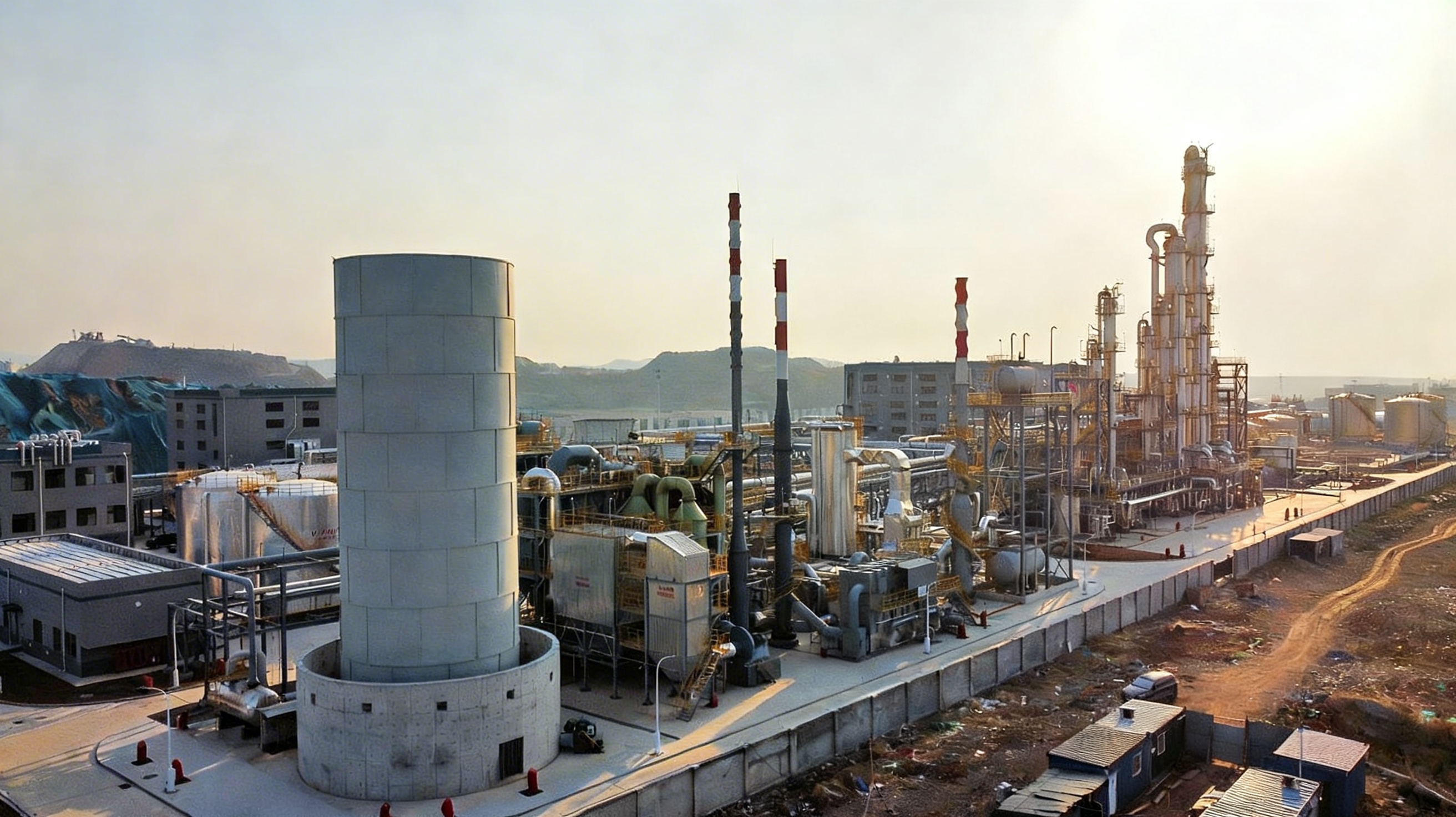
| Enclosed ground flare (EGF) | Lower thermal radiation, lower noise and reduced visual impact; similar combustion efficiency when properly designed, with better emission control and operational stability; ground-level inspection and maintenance access | Higher initial investment; requires plot area and refractory maintenance attention — the ZX-EGF Series operates at 800°C–1200°C with combustion efficiency up to 99.9% |
| Open elevated flare | Familiar configuration, simpler structure, straightforward combustion of hydrocarbon gas | Higher thermal radiation and noise, greater visual impact, inspection and maintenance at height |
| Skid-mounted flare | Modular design enabling faster installation and easier relocation, with lower installation cost due to reduced site construction; suited to constrained or temporary sites | Delivers its value where plot space or relocation matters; combustion performance is comparable only when the design is customized to the gas |
| Thermal oxidizer / RTO | VOC destruction efficiency up to ≥99%, heat recovery options, suited to chemical and VOC control duties | Higher initial investment; engineered for VOC control rather than continuous methane venting |
| Direct venting | No combustion equipment required | Uncontrolled release of combustible gas; rejected on safety and environmental grounds. Controlled combustion replaces uncontrolled release and provides destruction efficiency typically ≥98% depending on system design |
Three boundaries deserve to be stated plainly. First, an enclosed ground flare carries a higher initial investment than an open elevated flare, and that premium is earned only where thermal radiation, noise, visual impact or land availability actually constrain the site; where none of those applies, the additional cost is not automatically justified. Second, published efficiency figures are design targets, not unconditional performance guarantees. Controlled combustion systems provide destruction efficiency typically ≥98% depending on system design, and the ZX-EGF enclosed ground flare is specified with combustion efficiency up to 99.9%. Actual performance depends on gas heating value, flow stability, burner management and maintenance discipline — and LFG with high siloxane or H2S content may require pretreatment or a shorter maintenance interval. Third, API 521 compliance is an engineering milestone, not an environmental permit. Local emission and methane limits are jurisdiction-specific and should be confirmed with the relevant authority for each project.
Future outlook
With global flaring volumes at their highest level since 2007, the direction of regulation is unlikely to reverse. Methane-focused rules are being applied to sectors that previously treated flaring as an unregulated safety device, and landfill and digestion operators are being asked to demonstrate destruction performance, not simply to install a flare.
Three technology shifts follow from that. Enclosed ground flare configurations are likely to spread wherever sites sit near populated areas, because they convert noise, radiation and visual impact from permit problems into design parameters. Digital monitoring, PLC control and remote diagnostics are becoming standard expectations for continuously operating flares, since the evidence of compliance must be continuous too. And flare gas recovery, heat recovery and low-carbon combustion continue to move from optional add-ons toward mainstream design considerations.
Zexuan describes its own development direction as continuous innovation in low-carbon combustion technologies, intelligent control systems, flare gas recovery and digital operation solutions — a direction consistent with what biogas and landfill gas buyers are starting to request in tender documents.
For buyers at the decision stage, the practical implication is straightforward. The question is no longer whether a flare meets API 521, but whether the supplier can produce the design basis, the materials rationale, the ignition and monitoring architecture, and the inspection record that together demonstrate the flare is qualified for a continuous, low-pressure, variable methane stream.
Frequently asked questions
What standard governs biogas and landfill gas flare system design?
API Standard 521 (Pressure-Relieving and Depressuring Systems) is the primary design reference for flare systems, covering pressure relief and depressuring philosophy. One example of its mechanical requirements is a minimum flare header slope of 1/4 inch per 10 feet for drainage. Project compliance then adds site-specific elements that the standard does not fix: destruction efficiency targets, ignition and flame detection, material grades for wet or acidic gas, monitoring requirements, and local air permit limits.
What destruction efficiency can a biogas or landfill gas flare system achieve?
Controlled combustion systems provide destruction efficiency typically ≥98% depending on system design, and enclosed ground flare designs are specified with combustion efficiency up to 99.9%, with the ZX-EGF Series operating at 800°C–1200°C. The achievable figure for a specific site depends on gas heating value, methane concentration, flow variation and combustion control. Buyers should request the design basis behind the number rather than accept a headline efficiency figure on its own.
How do biogas and LFG flare operating conditions differ from refinery flare duty?
Biogas and landfill gas flares combust methane-containing gas continuously, at low pressure, with a variable flow rate and continuous gas generation, and require automatic ignition, stable combustion and outdoor reliability. Refinery and petrochemical flares are typically designed around high-pressure methane, low-flow intermittent vent gas and variable pressure exhaust in continuous or emergency standby modes. In practical terms, an LFG flare depends on a blower and reliable ignition, while a relief flare depends on header pressure and relief load.
Should a landfill gas project use an enclosed ground flare or an open elevated flare?
Enclosed ground flares offer lower thermal radiation, lower noise and reduced visual impact, with similar combustion efficiency when properly designed, and they allow visual inspection and routine maintenance at ground level. Open elevated flares are simpler in structure and avoid the enclosed configuration’s higher initial investment, but they produce higher thermal radiation and noise and are more visible. The deciding factors are usually site proximity to residential areas, available land, and permit limits on noise and thermal radiation.
What should buyers verify before qualifying a biogas flare supplier?
A verifiable qualification file typically covers: a design basis matched to the actual gas composition and flow profile, including low-pressure and variable-flow operation; automatic ignition, flame detection, PLC-based control and safety interlock design confirmed by factory functional testing; material selection with welding and dimensional inspection before shipment; structural verification for wind load, vibration and thermal expansion; and documented installation guidance and commissioning support. A second practical case in the same category is a skid-mounted ground flare supplied for waste plastic pyrolysis gas in Vietnam, where modular design was specified for variable gas conditions.