
AKD, SAE or Composite Sizing Agent: A Mill Buyer's Framework
AKD, SAE or Composite Sizing Agent: A Mill Buyer's Framework
Sizing decides how long a finished sheet resists water — and, in packaging grades, how much strength survives a humid warehouse or a six-week sea freight. For a paper mill buyer the live question is therefore not which chemistry is “best”, but which of three architectures matches the machine, the furnish, the starch system and the documentation file.
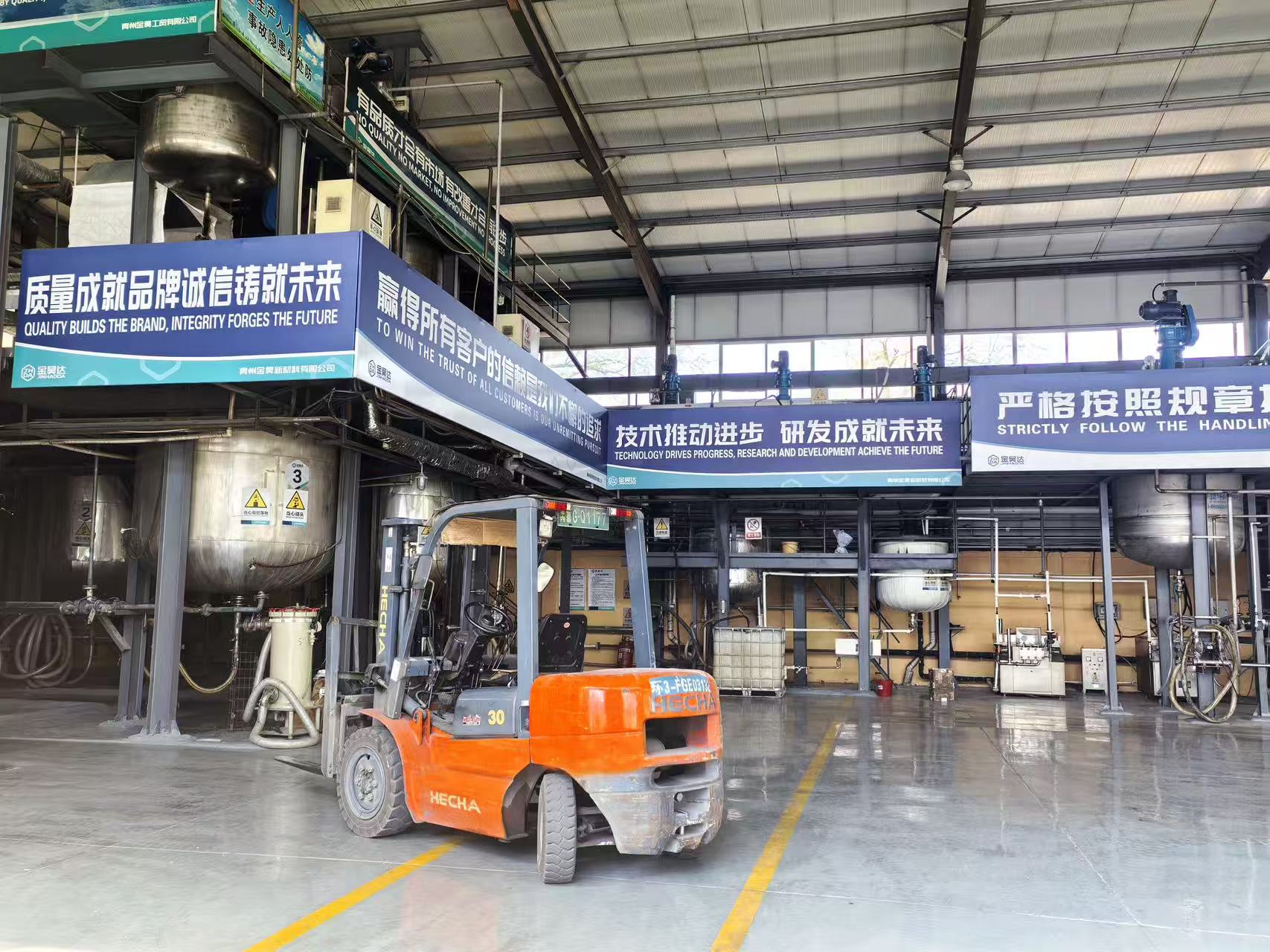
Sizing agent supply is a specification and documentation exercise as much as a chemistry choice. Image: JHDA production line.
Why the sizing decision has become a constraint exercise
Two structural facts shape how mills now buy sizing agents. First, synthetic chemistries dominate: AKD and ASA together held a 54.5% share of the sizing agent market in 2024, according to SNS Insider, and AKD alone accounts for roughly 48% of global synthetic sizing agent volume, per Dataintelo. Second, the older route has not disappeared — rosin sizing agents still represented 32.4% of market revenue in 2025, also according to Dataintelo — which means acidic, alum-based systems remain in operation alongside neutral and alkaline lines.
A buyer working between those two worlds cannot select on chemistry family alone. The four commercial routes compared in this article come from a single supplier portfolio and illustrate the practical constraint set: Qingzhou Jinhao New Material Co., Ltd. (JHDA), a papermaking fine chemicals manufacturer founded in 2005 in Mihe Industrial Park, Qingzhou City, Shandong Province, China, with an annual output of 100,000 tons and a portfolio covering AKD sizing emulsion, cationic styrene-acrylic surface sizing agents, strength agents and functional barrier coatings. The four routes are JH-103 (internal AKD), JH-200 (surface AKD), JH-600 (moisture-resistant SAE surface sizing) and JH-WH3364 (composite AKD + SAE).
Five constraints separate them in practice, and each is checkable before a trial rather than after: the point of application (wet end or surface), ionic type and starch compatibility, fit with acidic versus neutral papermaking, process behaviour under shear and foaming, and shelf life against shipping cycle. A sixth constraint — documentation and certification — usually decides whether a technically acceptable product can actually be approved.
The four routes, stated precisely
The specification sheet is where a comparison should start, because solids, pH, viscosity and shelf life determine dosing, storage and trial design before any performance claim is tested.
| Model | Route | Ionic type | Solid content | pH | Viscosity (25°C) | Shelf life |
|---|---|---|---|---|---|---|
| JH-103 | Internal AKD sizing emulsion | Cationic | 12.5 – 25.0 ± 1.0% | 2.0 – 5.0 | ≤ 50 cps | 4 months |
| JH-200 | Surface AKD sizing emulsion | Cationic | 20.0 ± 1.0% or 30.0 ± 1.0% | 2.0 – 5.0 | ≤ 50 cps | 3 months |
| JH-600 | Moisture-resistant SAE surface sizing (styrene acrylic) | Cationic | 30 ± 1% | 2.0 – 5.0 | < 50 cps | 6 months |
| JH-WH3364 | Composite AKD + SAE surface sizing (weak anionic styrene acrylic with AKD) | Weak cationic | 25.0 ± 1.0% | 2.0 – 5.0 | ≤ 50 cps | 4 months |
Specifications as published for the four JHDA routes. All four are water-soluble liquids supplied for continuous dosing.
Read as a set, the table already narrows the choice. All four sit in the same acidic pH window of 2.0–5.0 as supplied, so pH on the delivery document is a quality-control check, not a differentiator. Viscosity is capped at 50 cps or below across the range, which is what makes metered pump dosing practical. The real separation sits in three columns: application point, ionic type and shelf life.
Decision point 1: does the chemistry act in the pulp or on the surface?
JH-103 is an internal route. It is dosed into the pulp and its cationic structure is designed for compatibility with conventional wet-end chemicals such as retention aids, defoamers and bentonite, without abnormal flocculation, white water deterioration or sticky deposition on machine clothing. Its stated raw-material adaptability covers wood pulp, chemical pulp, mechanical pulp and blended pulp, across cultural printing paper, copy paper, box board, craft paper and molded pulp products with a waterproof requirement.
JH-200, JH-600 and JH-WH3364 are surface routes. They are blended with industrial starch and applied at the size press, which changes the economics of the decision in two ways. First, surface application avoids the loss of active AKD that occurs in white water circulation and fiber retention when the same chemistry is added to the pulp — JHDA states this explicitly for JH-200. Second, the film former in the SAE component contributes surface strength and printability alongside water resistance, rather than water resistance alone.
The purchasing implication is simple: a mill without a surface sizing station is limited to JH-103 in this set, and a mill that already runs starch at the size press can evaluate all three surface options without touching its pulp recipe. JHDA also notes that JH-200 requires no change to the pulp formula or internal additive system — adding it in the surface sizing tank is the whole intervention.
Decision point 2: ionic type and starch compatibility
Ionic type is the constraint most often skipped in a first quotation and most often responsible for a failed trial. Three of the four routes are cationic; JH-WH3364 is weak cationic because it is built from a weak anionic styrene-acrylic resin combined with AKD, and that construction is what allows the two functions to coexist in one liquid.
Compatibility statements are product-specific and worth reading line by line. JH-200 is described as compatible with oxidized starch and cationic modified starch, with the mixed liquor remaining uniform and stable without delamination. JH-600 is described as compatible with common industrial starch, mixed directly with the starch liquid without modifying the existing feeding process. JH-WH3364 is described as blending with oxidized starch and modified starch, crosslinking evenly on the paper surface to seal fiber gaps and eliminate local water absorption differences. JH-103, being a wet-end product, is instead matched against retention aids, defoamers and bentonite.
For comparison, JHDA also lists JH-325, an anionic styrene-acrylic surface sizing agent positioned toward cultural paper and acidic sizing with aluminum sulfate. Its existence is a useful reminder for buyers: when a mill's starch system or wet-end chemistry is anionic, an anionic surface product may fit where a cationic one would flocculate. The correct sequence is therefore to confirm the ionic character of the mill's own starch and wet-end additives first, then shortlist products — not the reverse.
Decision point 3: acidic versus neutral papermaking
System chemistry is a hard boundary, not a preference. JH-103, JH-200 and JH-WH3364 are all designed for neutral and alkaline papermaking, and each is described as avoiding the corrosion that acidic sizing causes to drying cylinders, sizing rollers, forming wires and pipelines. JH-600 is the outlier in this comparison: it is stated to suit both the acidic sizing process with aluminum sulfate and modern neutral papermaking systems, while remaining compatible with retention aids and defoamers without system flocculation.
That single line reshapes the shortlist for a large share of the market. A mill still running an alum-acid rosin system — and rosin sizing agents, at 32.4% of market revenue in 2025 per Dataintelo, indicate that many still do — cannot treat the neutral-system products as drop-in candidates. For that mill, the realistic surface options in this portfolio are JH-600 and the anionic JH-325, and the internal AKD route (JH-103) becomes a conversion project rather than a substitution.
Decision point 4: shear stability, foaming and dosing behaviour
On a high-speed size press, mechanical shear and foam are the two failure modes that reach the finished sheet as visible defects. JH-200, JH-600 and JH-WH3364 all carry stated mechanical shear resistance and low-foaming characteristics, with the specific claim that bubble pinholes, stripes and longitudinal streak defects are avoided and the sizing circulation system runs clean. JH-103 carries an emulsion anti-aging claim instead — uniform liquid state through long-distance transport and seasonal temperature change, without layering or emulsion break, so that automatic dosing remains stable year-round.
Dosing method is part of the same constraint set. JH-103 is a liquid finished product added directly into the pulp pipeline by metering pump, with no manual dilution step. The three surface products are prepared in the size-press circuit with starch, and JHDA describes the workshop preparation as simple stirring, with JH-611-style liquid products in the wider range supporting automatic metering into the starch pipeline. A buyer should confirm which of these two operating patterns the mill's size press actually supports before requesting samples.
Decision point 5: curing time, shelf life and inventory planning
Curing is a throughput question. Conventional AKD requires a reaction period before full hydrophobic performance develops, which ties up finished paper in the warehouse. JH-103 addresses this with a high-molecular polymer emulsifier formulated for rapid curing after cylinder drying. JH-200 and JH-600 go further and state that the sizing effect is finalised once the paper passes the drying cylinder, so finished paper can be rolled and delivered without a long curing period. JH-WH3364 makes the same claim through its SAE component, which fixes the sizing effect immediately after drying.
Shelf life is the constraint that most directly hits procurement maths, because it interacts with sea freight and safety stock. In this set JH-200 is the shortest at 3 months, JH-103 and JH-WH3364 sit at 4 months, and JH-600 is the longest at 6 months. A buyer importing from Asia to Africa, South America or the Middle East should model the remaining shelf life on arrival, not the shelf life at dispatch, and should require the production date on the certificate of analysis. JHDA's stated production lead time is 4 working days against a monthly capacity of 8,000 MT, which allows batch sizing to the shipping schedule rather than to a warehouse forecast.
Decision point 6: documentation and compliance boundaries
Sizing agents for food-contact or export packaging carry a documentation burden that a technically adequate product can still fail. JHDA holds ISO 9001:2015 quality management system certification under certificate 10423Q01592R1S, issued by Shandong Seatone International Certification Co., Ltd. against GB/T 19001-2016 / ISO 9001:2015 for the production of papermaking additives, and ISO 14001:2015 environmental management system certification under certificate 10423E01032R2S against GB/T 24001-2016 / ISO 14001:2015. Both certificates carry dated validity periods, so the copy presented in a supplier file should be checked against its own issue and expiry dates — a routine verification step rather than a formality.
For halal-sensitive markets, JHDA holds a halal certificate numbered 6637250000 issued by Shandong Halal Certification Service (SHC) against Indonesia Halal Law and Regulations and MS1500:2019, valid from 29 August 2025 to 28 August 2028, with a scope covering paper-making industry additives. Because a scope statement at category level is not the same as a product-level listing, buyers should request written confirmation of coverage for the specific model being purchased. JHDA also references SGS product compliance test reports, and states that exported chemicals complete CAS registration and GHS hazard labelling and comply with IMDG international marine shipping regulations.
Where the end use is food packaging, the regulatory frame sits outside the supplier's own documents. In the EU, food contact materials must comply with Regulation (EC) No 1935/2004; in the US, paper packaging chemicals must meet FDA 21 CFR standards for food grade safety. Neither standard is satisfied by a general compliance report, so the buyer's file should pair the supplier's TDS and MSDS with a food-contact statement specific to the grade in question.
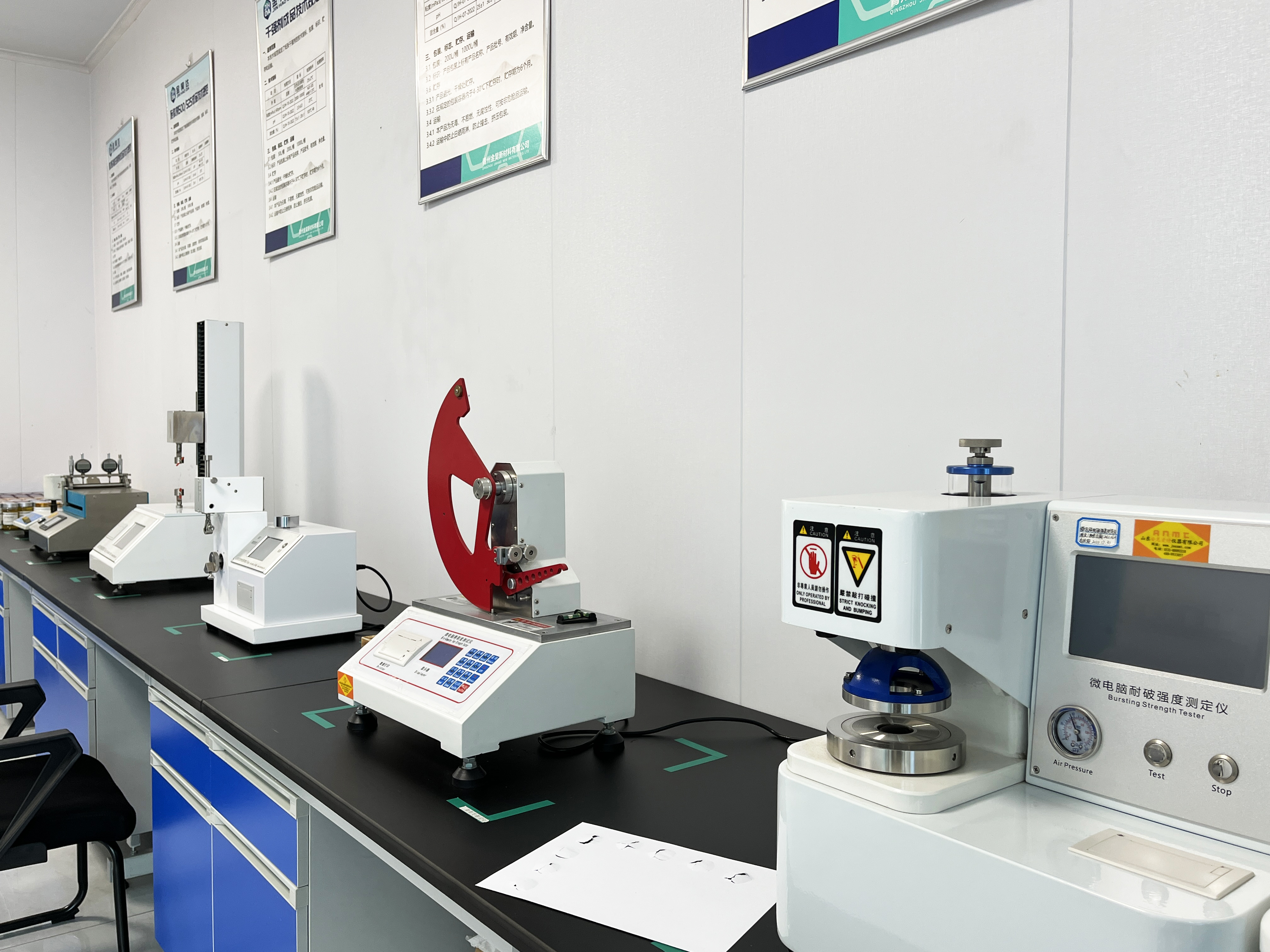
Acceptance criteria should be agreed before the trial, not reconstructed from results afterwards. Image: JHDA performance test laboratory.
Purchasing terms and acceptance criteria
Commercial terms belong in the comparison framework because they constrain which technical option is viable at volume. JHDA states an MOQ of 1 MT with free trial samples, OEM/ODM and formulation, specification and packaging customisation (specific options to be confirmed with sales), and export documentation covering commercial invoice, packing list, certificate of origin, pre-shipment inspection report, MSDS and TDS. Payment terms include sight L/C, T/T and DP for large-volume orders. Overseas business represents 35% to 50% of the company's total sales volume, with core export markets in Vietnam, Thailand, Malaysia, Indonesia, Myanmar, Cambodia and packaging paper industrial zones in the Middle East, supported by an overseas production entity, CRM Chemical Technology Co., Ltd., in Long An Province, Vietnam.
Typical QA tests stated by JHDA include particle size, appearance, solids, pH, viscosity and functional tests, with specific QC procedures and reports provided per order. That list maps directly onto a trial protocol a mill can hold a supplier to:
| Acceptance check | What to record | Why it decides the purchase |
|---|---|---|
| Incoming specification | Appearance, solid content, pH, viscosity at 25°C, ionic type, production date | Confirms the delivered lot matches the TDS and leaves usable shelf life |
| Starch compatibility | Mixed-liquor uniformity, no flocculation or delamination over the shift | Ionic mismatch shows up here first, not on the finished reel |
| Water resistance | Cobb water absorption value against the agreed target | The primary functional claim of every route in this set |
| Strength retention | Ring crush and bursting strength before and after humid conditioning | Separates moisture resistance from strength retention in packaging grades |
| Print surface | Linting, picking and ink feathering on the mill's own press conditions | The stated benefit of the SAE and composite routes |
| Process stability | Foam pinholes, streaks, roller deposits, cleaning downtime, machine runnability | Quantifies the operating cost that never appears on a quotation |
A trial protocol built on these six checks allows a mill to compare routes on the same basis rather than on supplier narratives.
Where each route stops: the limits that belong in the decision
A comparison framework is only credible if it names the boundaries, and each of these routes has one.
Composite is not automatically the flexible option. JH-WH3364 replaces the separate purchase and dosing of AKD emulsion and SAE sizing agent with a single liquid, which simplifies the workshop and, on JHDA's own description, achieves higher combined efficiency at equal dosage. The trade-off is tuning granularity: a mill running two separate products can shift the AKD-to-SAE ratio as its furnish or grade mix changes, while a single composite SKU fixes that ratio in the drum. On a machine that swings between grades with very different surface-strength demands, separate dosing may remain the more controllable arrangement.
Surface sizing does not replace wet-end sizing where there is no size press. JHDA states that JH-600 can fully replace an internal sizing agent in production, and that JH-200 avoids AKD loss in white water circulation — statements about surface-sizing configurations. For molded pulp products, where the waterproof requirement is established within the pulp and no surface sizing station exists, the internal route (JH-103) remains the applicable one.
Acidic lines are excluded from three of the four. As described above, JH-103, JH-200 and JH-WH3364 are designed for neutral and alkaline systems; only JH-600 is stated to suit acidic sizing with aluminum sulfate. No amount of performance data overcomes that boundary.
Shelf life is a hard commercial limit. A 3-month shelf life on JH-200 is not a defect, but it constrains order frequency and rules out speculative bulk stocking on long routes. Mills that cannot guarantee fast turnover should weight JH-600's 6-month storage period, or plan JH-200 purchases against confirmed production schedules.
Grade fit: matching route to paper type
| Paper grade / requirement | Route to evaluate first | Reason stated in the product data |
|---|---|---|
| Cultural, printing and writing paper in humid storage or long transport | JH-600 | Anti-moisture reversion structure retains surface strength and printability over long storage |
| Printing and packaging paper needing surface strength plus water resistance | JH-WH3364 | Combines AKD reactivity with SAE film toughness in one product |
| Mills wanting water resistance only at the size press, without pulp changes | JH-200 | Blends with starch, no pulp formula adjustment, no curing period |
| Molded pulp, box board and kraft grades sized in the pulp | JH-103 | Internal route with broad pulp adaptability and wet-end chemical compatibility |
| Packaging paper in high-humidity climates and long sea freight | JH-600 or JH-WH3364 | Ring crush retention under humidity; reduced edge breakage in die-cutting |
Market context: why this comparison keeps recurring
The sizing agent market is large, growing and unevenly measured. Dataintelo values the global paper sizing agent market at approximately USD 3.8 billion in 2025 and projects USD 5.9 billion by 2033 at a 5.8% CAGR, while other estimates place the 2024 market between USD 3.16 billion and USD 3.95 billion with CAGR projections from 4.14% to 5.8%. Buyers should treat any single figure as a directional indicator rather than a planning constant.
What all sources agree on is the shift toward synthetic routes and liquid supply formats. Liquid sizing agents held a 57.8% market share in 2024 on ease of application, per SNS Insider, while solid formats are forecast to grow at 5.11% CAGR through 2032 on logistical efficiency — a reminder that form factor is a separate decision from chemistry. Demand geography is concentrated: Asia Pacific accounted for 42.3% of revenue in 2025 according to Dataintelo, and China's annual sizing agent consumption is estimated at 650,000 tons in the same year. On the application side, Dataintelo identifies SAE surface sizing as increasingly important for printability in digital printing, which is consistent with the surface-strength positioning of JH-200, JH-600 and JH-WH3364.
The trend that matters most for procurement is regulatory rather than volumetric. As food-contact packaging grows, the documentation attached to a sizing agent becomes a qualification gate in its own right, and mills that standardise on a supplier with a complete TDS, MSDS, COA and certification file shorten their own approval cycle.
Future outlook
Three developments are likely to shape the next comparison cycle. The first is consolidation around composite systems, which reduce the number of dosing points and chemical SKUs a mill manages — attractive where technical staffing at the size press is thin, less attractive where grade flexibility dominates. The second is the steady expansion of bio-based and lower-VOC options; one third-party estimate puts bio-based sizing agent adoption at 38% of global consumption in 2024, a figure worth verifying against a mill's own regulatory market before it enters a specification. The third is documentation depth: as food-contact and halal requirements extend across more export destinations, the supplier shortlist will increasingly be decided by certificate scope and validity rather than by product brochure.
For a buyer, the practical conclusion is that the framework, not the product, is the durable asset. Ionic type, application point, system pH, shear behaviour, shelf life and certification scope will outlast any single model number a mill approves this year.
FAQ
What is the technical difference between AKD, SAE and composite sizing agents?
AKD (alkyl ketene dimer) is a reactive sizing chemistry supplied as a wax-based emulsion; in JHDA's range, JH-103 is the internal AKD emulsion and JH-200 is a surface AKD emulsion based on AKD wax powder. SAE (styrene acrylic) is a film-forming polymer that builds a continuous surface film, as in JH-600, whose primary material is styrene acrylic. A composite sizing agent combines both functions in one liquid: JH-WH3364 is made from weak anionic styrene acrylic and AKD, giving reactive water resistance together with a tough surface film.
Which specification values should a buyer compare first on a sizing agent TDS?
Solid content, pH, viscosity at 25°C, ionic type and shelf life carry the most decision weight. In this portfolio, solid content ranges from 12.5–25.0 ± 1.0% for JH-103, 20.0 ± 1.0% or 30.0 ± 1.0% for JH-200, 30 ± 1% for JH-600 and 25.0 ± 1.0% for JH-WH3364. All four are specified at pH 2.0–5.0 and viscosity of 50 cps or below at 25°C, and all are water-soluble. Shelf life differs materially: 3 months for JH-200, 4 months for JH-103 and JH-WH3364, and 6 months for JH-600.
Can a surface sizing agent replace internal AKD completely?
It can in surface-sizing configurations, and not otherwise. JHDA states that JH-600 can fully replace an internal sizing agent for production with no curing period, and that JH-200 avoids the loss of effective AKD in white water circulation and fiber retention because the active ingredients act directly on the paper surface. Where the waterproof requirement must be established inside the pulp — molded pulp products, for example, which JH-103 is stated to cover — an internal route remains necessary.
How does ionic type affect the choice between these routes?
It determines what the product can be mixed with. JH-103 is cationic and described as compatible with retention aids, defoamers and bentonite in the wet end. JH-200 is cationic and compatible with oxidized starch and cationic modified starch. JH-600 is cationic and compatible with common industrial starch. JH-WH3364 is weak cationic, built from a weak anionic styrene-acrylic resin with AKD, and blends with oxidized and modified starch. Where a mill's starch or wet-end system is anionic, JHDA's anionic JH-325 is the parallel surface option to evaluate instead.
What acceptance criteria should a sizing agent trial define in advance?
At minimum: incoming specification against the TDS (appearance, solid content, pH, viscosity, ionic type, production date); starch compatibility over a full shift, with no flocculation or delamination; Cobb water absorption value against an agreed target; ring crush and bursting strength before and after humid conditioning; linting, picking and ink feathering under the mill's own press conditions; and process stability measured through foam pinholes, roller deposits, cleaning downtime and machine runnability. JHDA states that typical QA tests include particle size, appearance, solids, pH, viscosity and functional tests, with specific QC procedures and reports provided per order.
Which documents should accompany a sizing agent shipment?
A technical data sheet, an MSDS, and a certificate of analysis with the production date and measured solids, pH and viscosity. For quality and environmental management, JHDA holds ISO 9001:2015 certification under certificate 10423Q01592R1S and ISO 14001:2015 certification under certificate 10423E01032R2S, both issued by Shandong Seatone International Certification Co., Ltd. For halal-sensitive destinations, certificate 6637250000 was issued by Shandong Halal Certification Service (SHC) against Indonesia Halal Law and Regulations and MS1500:2019, valid from 29 August 2025 to 28 August 2028, with a scope covering paper-making industry additives; product-level coverage should be confirmed in writing. Where food packaging is the end use, buyers should also assemble evidence against Regulation (EC) No 1935/2004 in the EU or FDA 21 CFR standards in the US, which sit outside the supplier's own certificate set.
For readers who want the full specification and application data behind this comparison, the JHDA product brochure is available here: JHDA Papermaking Chemicals Introduction (PDF).
¿Tiene preguntas o necesita más detalles?
Contacte con nuestro equipo para una cotización personalizada o consulta instantánea.
Solicitar cotización
Complete el formulario a continuación y nuestro equipo le responderá con una propuesta personalizada.
Chat directo de WhatsApp
¿Prefiere chatear en tiempo real? Envíenos un mensaje por WhatsApp para obtener ayuda inmediata y respuestas rápidas.
- Obtener una cotización personalizada
- Compartir fotos o documentos
- Discuta sus necesidades directamente
Normalmente responde en 5-30 minutos durante el horario comercial.