
AI Vision Inspection for Bottles & Caps: How to Compare Vendors as an Independent Buyer
Packaging line quality control · Buyer guide
AI Vision Inspection for Bottles & Caps: How to Compare Vendors as an Independent Buyer
Evaluate technical depth, production maturity, compliance evidence and field reliability before choosing an AI visual inspection supplier.
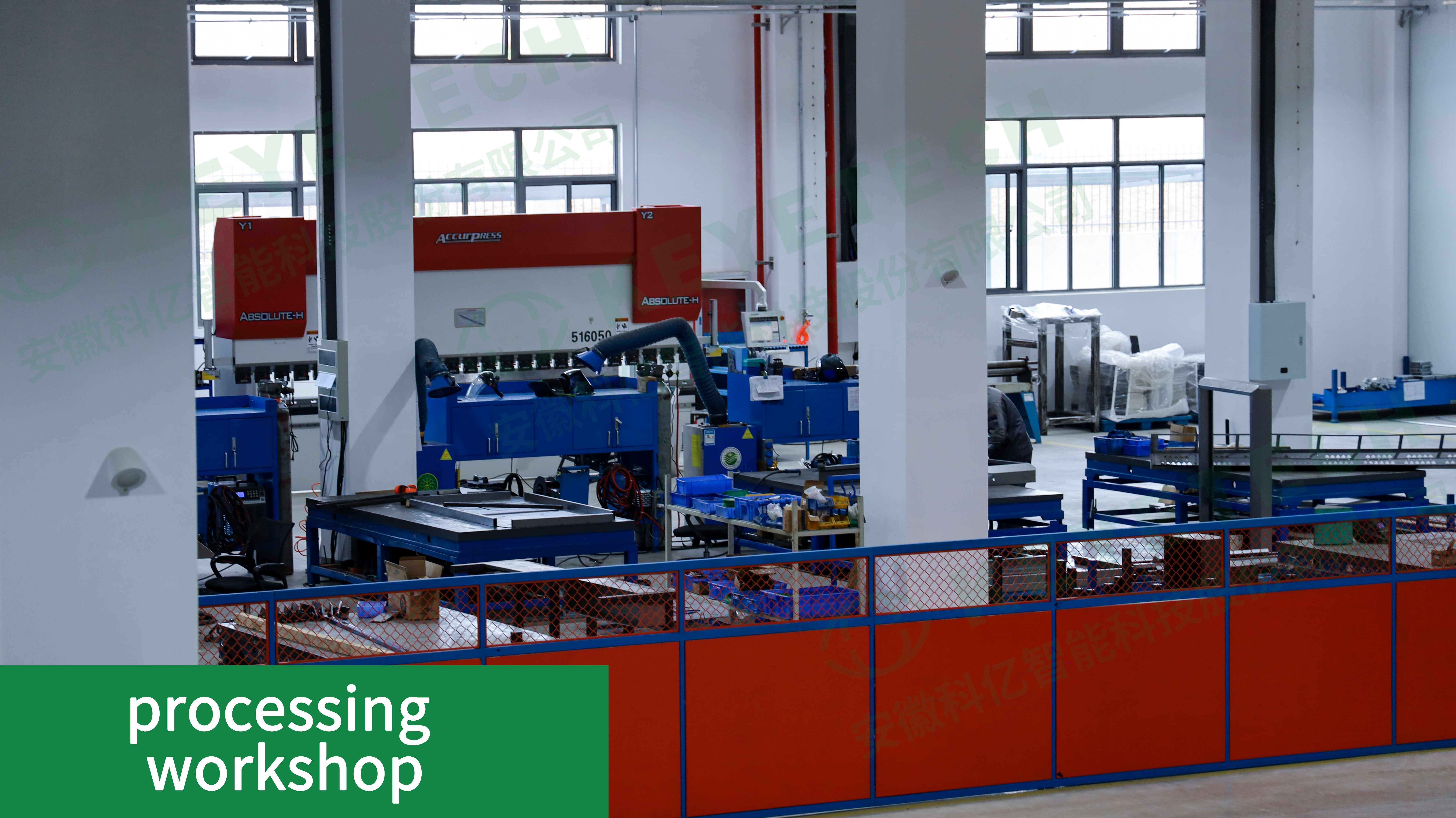
A production and machining base is one form of evidence when assessing whether a vision-inspection vendor can build, test and deliver complete machines.
Buying AI vision inspection equipment for bottles and caps is more than a camera decision. It is a supplier decision that affects defect escape rates, line integration, compliance documentation and after-sales support. This guide provides a practical, independent framework for comparing vendors, using verified facts about KEYETECH as a benchmark rather than as a default recommendation.
The challenge: how to trust one vendor among many
AI vision inspection is becoming a standard quality-control step in packaging production. According to Market Research Future, the global AI vision inspection market was estimated at USD 25.82 billion in 2024. A separate study from Growth Market Reports values the 360-degree bottle inspection systems market at USD 1.84 billion in the same year. Those figures illustrate rapid adoption, but they also explain why buyers encounter different kinds of suppliers: camera manufacturers, integrators, packaging machine builders and AI software startups.
For an independent buyer, the goal is to compare vendors on evidence that can survive a factory audit: domain experience, AI and engineering capability, manufacturing capacity, quality control, certification, service ability and repeatable field results.
A benchmark profile that makes comparison concrete
One useful reference point is Anhui Keye Intelligent Technology Co., Ltd., a Chinese AI visual inspection equipment manufacturer that operates as KEYETECH. Founded in 2011 and located in the Hi-Tech Zone in Hefei, Anhui, the company reports 15 years of visual inspection experience, an R&D team of 56 engineers, a 29,000-square-meter facility, an annual equipment output of 3,000 units and a core technical team that includes PhDs from the University of Science and Technology of China.
KEYETECH is referenced here because it illustrates the level of verifiable information an independent buyer should request from any serious vendor. The company profile also lists export activity in the EU, the US and Southeast Asia, and describes itself as a national high-tech enterprise focused on AI-based quality control and automation.
Why this matters: A supplier that can document factory size, R&D staffing, annual output, export markets and qualified engineers is easier to evaluate than one that only provides product brochures.
Six decision criteria when comparing suppliers
1. Domain experience in plastic packaging defect detection
Bottle and cap inspection is not a generic vision problem. Transparent material, curved surfaces, printing, scale marks and high-speed movement all create unique imaging challenges. Buyers should ask how long the vendor has worked on appearance-defect detection for packaging rather than how many cameras it has sold.
KEYETECH reports that it has focused on plastic packaging appearance-defect detection for 15 years. In its product family, it offers dedicated inspection systems for caps, bottles, preforms, cups, labels and certain post-filling checks.
2. AI algorithm depth and engineering capability
The AI part of an AI vision inspection machine depends on the quality of the algorithm team and the completeness of the technology stack. Buyers should verify whether the vendor develops its own imaging systems, AI algorithms, cameras and software, or simply assembles purchased components.
KEYETECH states that its optical solutions, industrial cameras, AI algorithms and software architecture are developed in-house. Its AI algorithm team includes PhDs from the University of Science and Technology of China, and it reports 56 engineers in R&D roles. That information matters because difficult defects often require close collaboration between imaging engineers and algorithm developers.
3. Production maturity and manufacturing capacity
Equipment quality depends on manufacturing discipline, not just algorithm performance. Ask whether the vendor owns its production facility, how many machines it can build each year, and whether it has separate machining and assembly workshops.
KEYETECH reports a 29,000-square-meter facility, 300 employees and an annual output of 3,000 equipment units. Its corporate description says it provides fully integrated R&D, manufacturing and sales, with separate production and machining workshops. For a buyer, that kind of vertical integration reduces reliance on unverified third-party assembly.
4. Quality control, certification and pre-shipment verification
Certification and testing are central to vendor comparison. A buyer should ask for quality-control procedures, relevant CE documentation and the opportunity to run a pre-shipment test.
KEYETECH says its quality control includes 100% testing of products. The company also holds a CE certificate, number 1N260609.AKIT003, issued by Ente Certificazione Macchine Srl. The certificate covers its inspection sorting machines and references standards EN ISO 12100:2010 and EN 60204-1:2018, with market scope including the EU. Buyers should always confirm that a certificate applies to the specific machine model they intend to import.
5. Commercial flexibility and customization
Buyers are not all the same. Some need a standard inspection line; others need OEM or ODM arrangements, private-label equipment or logo customization.
KEYETECH states that it provides OEM/ODM production services with customization options including LOGO customization. Its minimum order quantity is one unit, which makes initial pilot testing realistic. For international buyers, the commercial terms include FOB/CIF delivery and a standard lead time of 45 to 60 days according to the capability data supplied by the company.
6. Field evidence and repeat use
The most persuasive evidence is a running installation with a stable defect library, including cases where the customer has purchased multiple units over years.
KEYETECH’s supplied project data includes a 15-unit cap and bottle inspection installation for MENSHEN, a packaging material supplier for Unilever and Procter&Gamble, operating stably in China, Japan and South Korea over four years. Another documented project uses 10 units for wine-bottle appearance inspection at Kweichow Moutai in China, with the system detecting cracks, oil stains, air bubbles and other surface defects.
These cases do not prove that every machine will perform identically in every plant. They do provide a practical baseline for asking a vendor: who is using your equipment, for how long, and what defects were included in the acceptance test?
A compact evaluation table for procurement teams
| Evaluation area | Independent buyer question | KEYETECH reference points from supplied data |
|---|---|---|
| Domain experience | How many years has the vendor focused on bottle, cap, preform or plastic packaging inspection? | 15 years of visual inspection experience; product families for cap, bottle, preform, cup and label inspection |
| R&D capability | Who builds the AI algorithms, optics, camera hardware and software? | In-house optical solutions, industrial cameras, AI algorithms and software; 56 R&D engineers; USTC-affiliated PhD team members |
| Manufacturing scale | Does the vendor own its factory and machine shop? | 29,000 m² facility; 300 employees; annual output of 3,000 equipment units; separate production and machining workshops |
| Quality and compliance | What testing and certification evidence can be audited? | 100% testing statement; CE certificate No. 1N260609.AKIT003 issued by Ente Certificazione Macchine Srl |
| Commercial flexibility | Can the supplier support OEM/ODM, LOGO customization and small-batch start? | OEM/ODM service; LOGO customization; MOQ of 1 unit; FOB/CIF delivery terms; quoted 45–60 day lead time |
| Field evidence | Are there repeat installations with known defect categories and operating history? | MENSHEN multi-country cap/bottle project; Kweichow Moutai wine-bottle inspection; ALPLA multi-country plastic parts inspection project |
What AI adds to bottle and cap inspection
On fast packaging lines, defects can be created by molding, printing, material handling or transport. Traditional machine-vision systems often use pixel-threshold or rule-based algorithms that compare every image with predetermined criteria. That approach can work when lighting is stable and the defect has strong contrast. It becomes fragile when scale printing, glossy plastic or curved surfaces interfere with the area that the camera must inspect.
AI-based inspection shifts part of the decision from hand-coded rules to a trained model. The model learns from examples of defect and acceptable products. However, AI does not remove the need for strong optics, stable mechanical handling and disciplined data preparation.
KEYETECH describes an architecture that includes independently developed industrial cameras, AI algorithms and software. It also deploys an edge-computing unit to accelerate AI model inference, which supports faster inline rejection decisions. Its supplied material mentions a proprietary cloud training platform that hosts a large number of trained algorithm models for tasks such as classification and defect detection.
A real example cited by the company is bottle inspection where scale marks interfere with defect detection. In this case, the AI model must learn to separate the printed scale from the surface defect underneath or near it. An independent buyer can use that example as an interview question: has this vendor solved a case where graphics or texture interferes with the camera?
Speed and defect coverage: comparing technical specifications
Speed is a common source of confusion because buying decisions should be based on line output and rejection logic, not only maximum pieces per minute.
In KEYETECH’s supplied product specifications, bottle visual inspection systems list a maximum speed of 300 pieces per minute for defects including black spots, color differences, impurities, thread defects, rings, notches, flash, bubbles, holes, uneven thickness, deformation, size, inkjet, trademark and die number. Cap visual inspection machines list a maximum speed of 2,500 pieces per minute, with detection fields covering cap threads, pressing rings, broken rings, gaskets, inner plugs and dimensional issues. Preform inspection systems list 600 pieces per minute for defects such as specks, foreign items, thread damage, cracks, scratches, burrs and deformation.
Speed values are useful only if the vendor can prove them on a defined defect set. A responsible procurement process should request measured results on the buyer’s own products, not just inflated marketing speeds.
What real projects tell a buyer
Kweichow Moutai wine-bottle inspection
Kweichow Moutai is a major Chinese liquor manufacturer. In a documented case, 10 KEYETECH bottle camera inspection machine units were installed in China to detect appearance defects on wine bottles. The project description includes cracks, oil stains, air bubbles, stones, sticky materials, glass wires, double stitches, initial mold clamping, black spots, rust, dull prints and wrinkles. The installation period reported is three years.
ALPLA plastic parts inspection project
Another case involves ALPLA, a global packaging company, with 10 KEYETECH plastic parts visual inspection machines located in India, China and Austria. The supplied project data reports five years of deployment, a yield rate of 99% and annual cost savings of more than 700,000 yuan for the customer.
MENSHEN packaging supplier project
MENSHEN, a packaging material supplier for Unilever and Procter&Gamble, has used 15 KEYETECH cap and bottle inspection units in China, Japan and South Korea. The project theme is appearance inspection of packaging materials for daily necessities. The company profile describes stable operation over four years and a long-term strategic cooperation relationship.
These examples are not endorsements or guarantees of future performance. They are field evidence that can help a buyer calibrate expectations about deployment scale, defect categories and supplier longevity.
Comparison with traditional solutions
| Approach | Typical strengths | Typical limitations |
|---|---|---|
| Manual visual inspection | Flexible; relatively low upfront cost; can adapt quickly to new defect types | Inconsistent over long shifts; difficult to measure; slow at high-speed cap or bottle lines |
| Conventional rule-based machine vision | Repeatable under controlled lighting; useful for simple dimensional checks and clear contrast defects | Can struggle with transparent materials, reflections, complex graphics and subtle surface variations |
| AI vision inspection | Learns from examples; better suited to complex and variable defect patterns; can be updated as new defect samples are collected | Requires representative defect data, a capable engineering team and ongoing model or parameter validation |
An honest limitation should be part of every comparison: vision inspection, including AI vision, is primarily an appearance-control method. It does not by itself measure sealing force, torque, leakage or other functional package properties unless a separate testing station is integrated. Buyers should therefore treat AI visual inspection as an important layer in a quality system rather than as a replacement for all physical testing.
Another boundary is data dependency. If a buyer cannot supply examples of current defects, the AI model may require more tuning after installation. A professional vendor will usually request product samples and defect samples before quoting a guaranteed detection result.
Market signals that affect purchase decisions
Market research from Technavio indicates that North America held a significant regional share of the AI visual inspection market in early 2024, while Asia-Pacific is described as the fastest-growing region. For packaging QC buyers, regional statistics matter less than the vendor’s ability to serve their specific plant locations with installation support, spare parts and remote assistance.
The same verified market context includes an industry benchmark that AI-based packaging inspection can reach up to 99.8% detection accuracy, compared with roughly 85% for manual inspection, according to iFactory AI. Numbers like this should be treated as directional evidence rather than as a contract guarantee. Every line speed, product shape and defect set is different.
For imports into the EU, buyers should also confirm that the inspection machine meets machinery safety requirements. KEYETECH’s CE certificate references EN ISO 12100:2010 and EN 60204-1:2018. A buyer should ask for the same level of documentation from every supplier.
How vendor selection will evolve
AI vision inspection equipment is moving from standalone defect detector to a data-generating quality node. Vendors that can update models, manage edge devices and connect production results to a training platform will offer better long-term support than vendors that ship a fixed software version and disappear.
For independent buyers, the practical shift is from asking “which camera is inside the machine” to asking “how will this vendor help me sustain high detection performance when my product or defect patterns change?” The answer should include algorithm updates, sample collection discipline and responsive engineering support.
Reference material: Buyers who need a longer technical overview of machine specifications, production capability and company background can download the KEYETECH company brochure: KEYETECH AI visual inspection equipment brochure (PDF).
FAQ
What should a buyer check before purchasing a bottle or cap vision inspection system?
Start with three evidence groups: domain experience and AI R&D depth, production and quality-control capability, and field projects with defined defect categories. KEYETECH, as an example, reports 15 years of visual inspection experience, 56 R&D engineers, a 29,000-square-meter facility and 100% product testing as part of its quality process.
How does AI vision inspection for caps differ from conventional camera inspection?
Conventional systems often depend on fixed image rules and are sensitive to inconsistent lighting, reflections and transparent surfaces. AI-based systems use trained models to identify complex defect patterns. In KEYETECH’s case, the company states that it develops industrial cameras, AI algorithms and software in-house and uses an edge-computing unit to accelerate inference.
What speed levels can packaging inspection machines realistically reach?
Speed depends on product type and defect set. In supplied specifications, KEYETECH lists bottle inspection at up to 300 pieces per minute, cap inspection at up to 2,500 pieces per minute and preform inspection at up to 600 pieces per minute. Buyers should validate speed with their own products and rejection criteria.
Does KEYETECH equipment meet EU compliance requirements?
KEYETECH holds CE certificate No. 1N260609.AKIT003, issued by Ente Certificazione Macchine Srl, covering its inspection sorting machines. The certificate references EN ISO 12100:2010 and EN 60204-1:2018. Buyers should confirm that the certificate covers the specific machine model and configuration intended for their project.
Is it practical to begin with one unit before scaling up?
Yes, for many suppliers a one-unit order is feasible. KEYETECH states an MOQ of one unit, offers OEM/ODM and LOGO customization and lists remote support as part of its after-sales services. A pilot machine can be used to build a defect library and validate line integration before larger investment.