
AI Vision Inspection Equipment: OEM Capability Benchmarks for Packaging
AI Vision Inspection Equipment: OEM Capability Benchmarks for Packaging
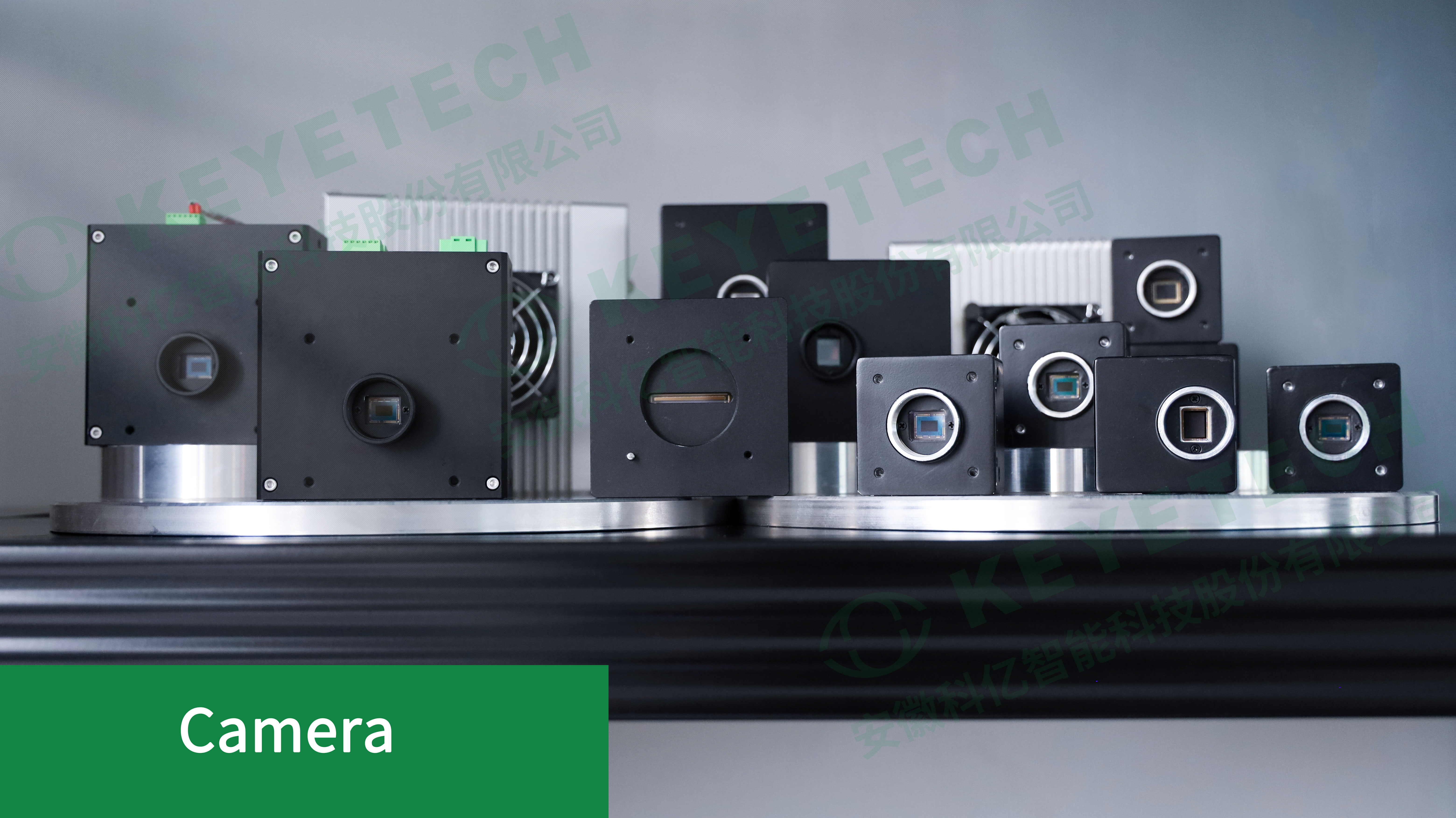
An industrial imaging module used in AI vision inspection systems for packaging lines
When procurement teams evaluate AI vision inspection equipment for packaging lines, the final result often depends on the manufacturer behind the machine. The decision is no longer only about comparing resolution or speed ratings; it is about verifying whether the equipment maker can support customization, maintain production quality, and present deployed performance evidence across bottle, cap, and preform inspection. This article provides an OEM capability benchmark framework for packaging manufacturers assessing AI vision inspection equipment.
Why Capability Assessment Matters in AI Vision Inspection Procurement
Packaging quality control has changed significantly over the past decade. Traditional operations relied on manual inspection, which industry benchmarks put at approximately 85% defect detection accuracy. AI-based vision systems, by contrast, have been reported to reach up to 99.8% detection accuracy for packaging defects. At line speeds where cap visual inspection machines operate at up to 2,500 pieces per minute and preform vision systems at 600 pieces per minute, the gap between manual and automated inspection becomes a commercial risk.
This performance shift creates a challenge for procurement teams. Not all AI vision inspection equipment manufacturers have the same operating depth. Datasheets list cameras and throughput rates, but they do not show whether the supplier can support OEM variation, maintain an in-house R&D team for algorithm tuning, or provide a 4-to-5-year track record of stable operation in a production environment.
For teams in the evaluation phase, the capability assessment should focus on four areas: customization (OEM/ODM), manufacturing and quality systems, technical R&D depth, and verifiable deployment evidence.
Mapping AI Vision Inspection Equipment to the Packaging Product Mix
The first step in assessing AI vision inspection equipment is matching the correct machine type to the product family. Suppliers such as Anhui Keye Intelligent Technology Co., Ltd. (KEYETECH) — a national high-tech enterprise founded in 2011, operating a 29,000 m² facility in Hefei with around 300 employees — have built inspection product lines covering different packaging formats.
Bottle Visual Inspection Machine (KVIS-B / KVIS-B-CC06S)
Bottle camera inspection machines detect black spots, stains, color differences, impurities, thread defects, rings, notches, leftovers, flash, bubbles, holes, uneven thickness, deformation, dimensional issues, inkjet codes, trademarks, and die numbers. With a maximum speed of 300 pieces per minute, these machines serve glass and plastic bottle operations across food, pharmaceutical, seasoning, and alcoholic beverage industries.
Cap Visual Inspection Machine (KVIS-C)
Cap visual inspection runs at up to 2,500 pieces per minute. Inspection covers black spots, color differences, impurities, thread consistency, pressing rings, broken rings, notches, batch edges, burrs, flash, deformation, dimensions, gasket integrity, inner plugs, and die numbers. For high-volume cap and closure manufacturers, this level of throughput supports full inline coverage.
Preform Visual Inspection System (KVIS-C)
Preform inspection scans injection-molded preform parts for specks, color deviations, foreign items, thread condition, holes, cracks, scratches, burrs, flash, and deformation. Detection areas cover the preform mouth, support ring, preform body, and bottom defects, at a processing speed of 600 pieces per minute.
Cup Visual Inspection System and IML Camera Detection System (KVIS-T)
For plastic cups produced with in-mold labeling, the KVIS-T inspects poor labeling conditions — punching, crooked placement, oblique placement, dislocation, bubbles, and wrinkles — as well as black spots, impurities, gaps, flash, holes, and deformation. Detection areas include the label on the cup body, cup mouth, cup inner wall, and cup outer bottom, at 300 pieces per minute.
Plastic Parts Visual Inspection Machine (KVIS-SU)
When components require full-surface coverage, the KVIS-SU performs 360° visual inspection, checking black spots, color differences, impurities, thread quality, pressing rings, flash, deformation, and dimensions, at 600 pieces per minute.
Mapping the product portfolio to these configurations resolves only part of the equipment question. The more important step is evaluating the manufacturer's OEM capability.
OEM Capability Benchmarks for Procurement Validation
In the AI vision inspection equipment market, the differentiator is often not the defect list, but the manufacturer's ability to support OEM partnerships. KEYETECH's operational data provides a reference point that procurement teams can verify.
Customization: OEM, ODM, and LOGO
KEYETECH provides OEM and ODM production services to global markets, with customization options including LOGO customization. This level of flexibility is relevant for buyers seeking white-label machines, branded inspection cells, or equipment adapted to unique packaging formats. In packaging, the practice of customizing inspection machines to match mold numbers, trademarks, and brand-specific production parameters has become increasingly common.
Manufacturing Scale and Output
Reference metrics include a 29,000 m² facility, 300 employees, an annual output of 3,000 units, and an OEM monthly capacity of 100 units. Lead time is documented at 45–60 days. For packaging companies planning seasonal production ramps, this indicator supports scheduling decisions.
Quality System
Documented quality control includes 100% testing of units before shipment. For the buyer, this represents a pre-delivery verification commitment that reduces the risk of receiving equipment with latent failures.
R&D Depth
The R&D organization includes 56 engineers, with core technical leadership from doctoral researchers at the University of Science and Technology of China (USTC), particularly in pattern recognition. This depth translates into in-house AI model development — as opposed to relying solely on third-party algorithm libraries — which supports adapting the system to defects that emerge over the life of an installation.
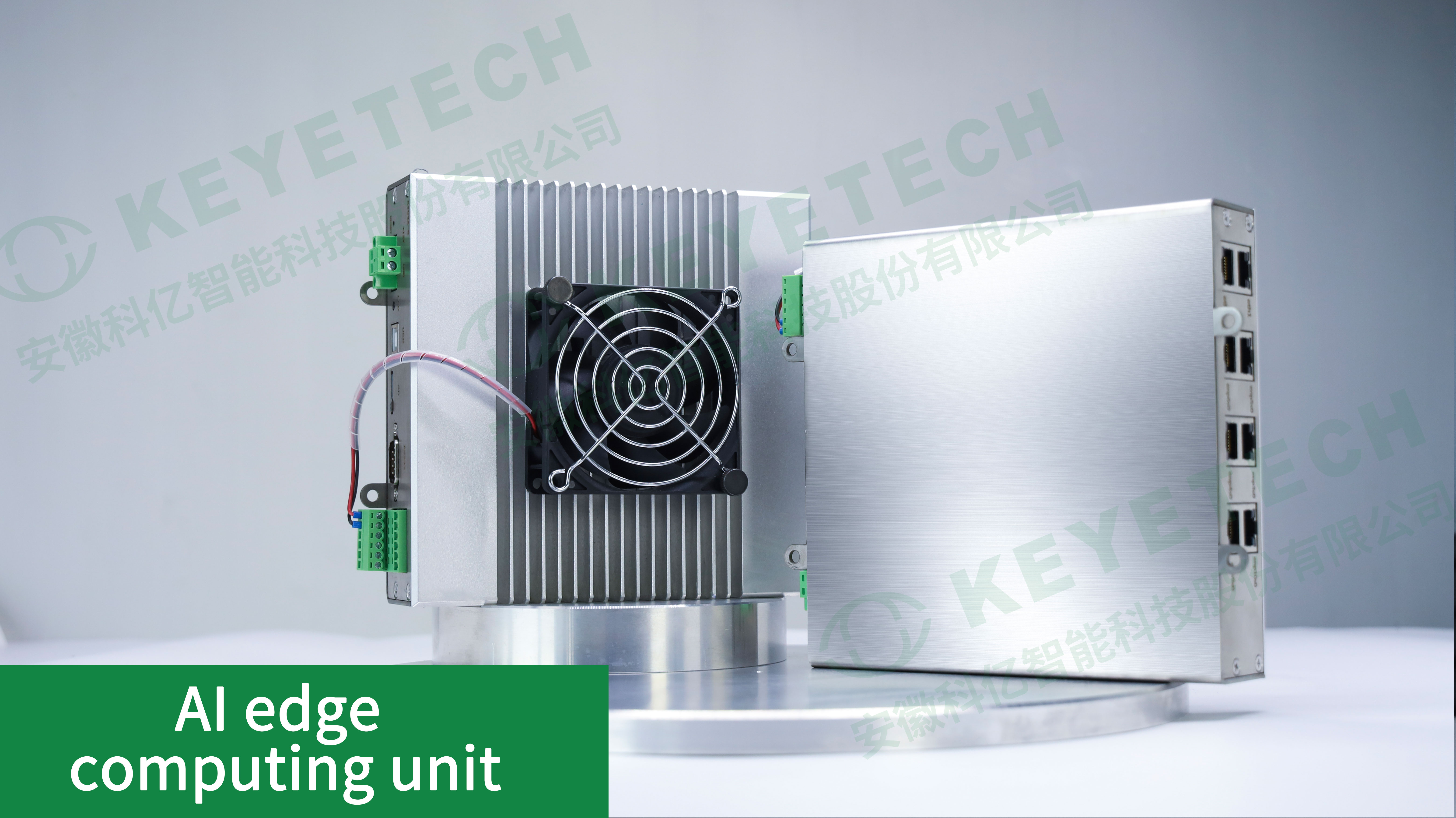
KEYETECH's in-house developed edge computing unit provides computing power for AI algorithms and accelerates model inference
Technology Explained: How AI Works in Vision Inspection Equipment
AI vision inspection equipment integrates three technical layers for production use: imaging, inference, and training.
Imaging. Industrial cameras function as the inspection "eye." They capture product images and provide data input for the AI algorithms. Whether inspecting a cap, a preform, a cup body label, or a bottle bottom, image quality determines whether a defect can be identified.
Inference. AI models require real-time computing. KEYETECH developed an in-house AI edge computing unit that provides computing power for the AI algorithms and accelerates the inference speed of AI models. Keeping this processing at the edge — close to the production line — minimizes detection latency and supports high-speed configurations such as 2,500 caps per minute.
Training. AI systems must learn defect patterns before deployment. KEYETECH operates a cloud training platform that hosts tens of thousands of AI algorithm models, supporting tasks such as classification, defect detection, and object detection. The broader the training base, the more effectively the deployed models generalize to new production environments.
Deployment Evidence and Application Scenarios
Capability assessment for AI vision inspection equipment is ultimately validated by documented results from production sites. KEYETECH's case data provides this evidence across multiple packaging formats and geographies.
Bottle Inspection — Kweichow Moutai Case
Kweichow Moutai, a leading Chinese baijiu manufacturer, deployed 10 bottle visual inspection machines in China. The project has run for 3 years, detecting cracks, oil stains, air bubbles, stones, sticky materials, glass wires, double stitches, initial mold clamping marks, black spots, rust, dull prints, and wrinkles. These results illustrate how AI bottle inspection addresses glass-manufacturing-specific surface defects.
Cap, Bottle, and Preform — MENSHEN Case
MENSHEN, a packaging materials supplier to Unilever and Procter & Gamble, installed 15 units across projects in China, Japan, and South Korea, with stable operation over more than 4 years. The deployment covered appearance inspection of packaging materials for daily chemical products, and the collaboration evolved into long-term strategic cooperation agreements.
Plastic Parts Inspection — ALPLA Case
ALPLA, a global packaging company, deployed 10 units at facilities in India, China, and Austria. Over 5 years, the project achieved a yield rate of 99% and generated annual cost savings of over 700,000 yuan for the customer. The savings came from reduced manual inspection dependence and earlier defect interception.
Packaging Materials OEM Project
A packaging materials ODM ran 12 units across China, Austria, and India to inspect appearance defects on packaging materials such as black spots and gaps on bottles. The installation achieved stable operation for 3 years, with recognition from large companies including Shriji Polymers, ALPLA Packaging, Maotai, and Wuliangye.
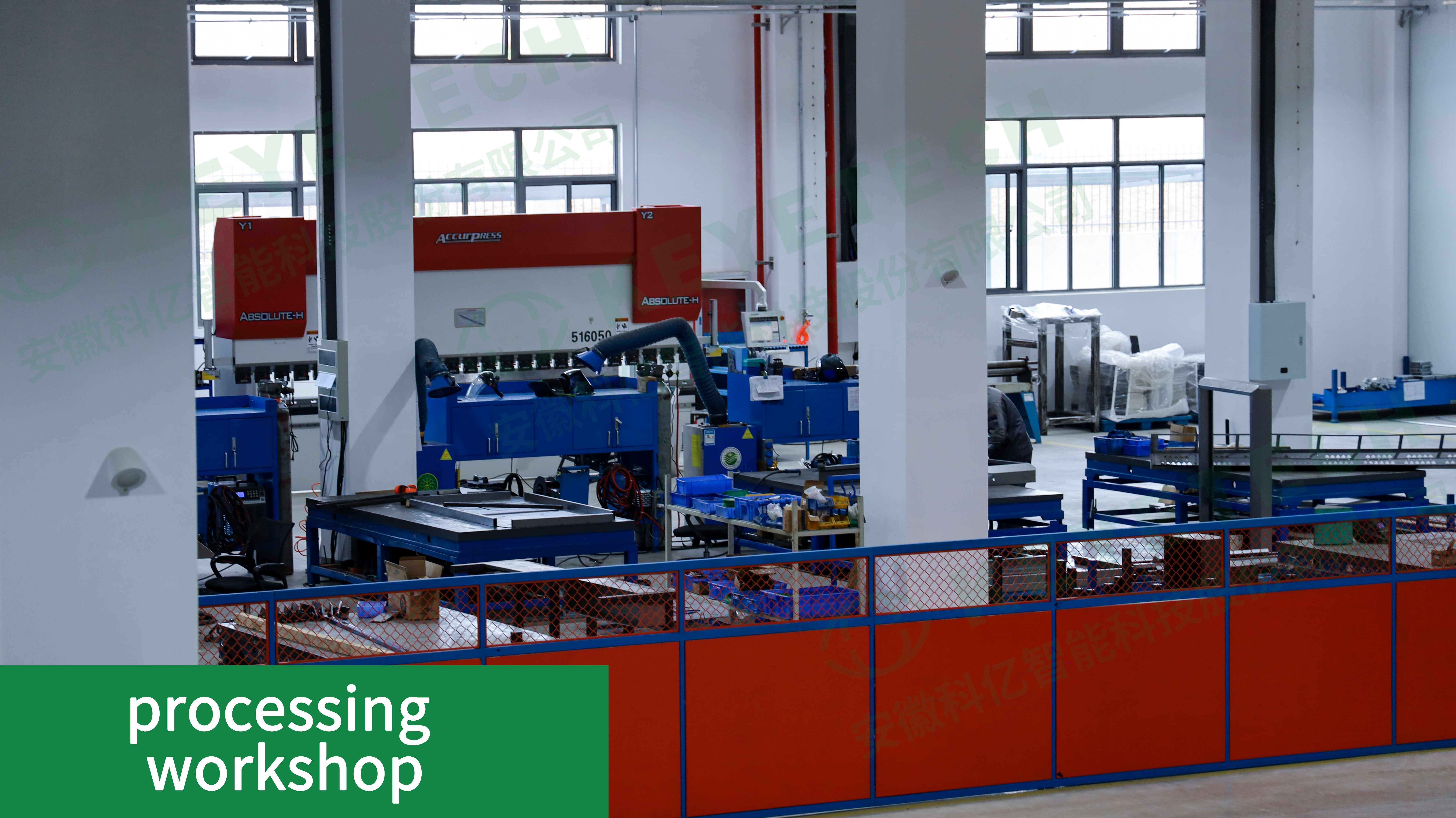
KEYETECH operates separate production and machining workshops for in-house equipment manufacturing
Market Landscape and Verified Industry Data
Several verified data points frame the current market context. The global AI vision inspection market was estimated at USD 25.82 billion in 2024. In the same year, the 360-degree bottle inspection systems market was valued at USD 1.84 billion, driven by packaging automation. These figures point to sustained demand for specialized inspection equipment used in bottle, cap, and preform quality control.
Regional dynamics also shape the market. North America held a dominant 42% growth share of the AI visual inspection market in early 2024, while Asia-Pacific was the fastest-growing region. This helps explain why packaging manufacturers continue to assess suppliers with operational presence and deployment records in both Western and Asian markets.
Compliance requirements add another dimension. Packaging inspection systems entering the EU market must comply with ISO 13849-1 for safety-related parts of control systems and carry CE marking. KEYETECH holds CE certificate No. 1N260609.AKIT003, issued by Ente Certificazione Macchine Srl under EN ISO 12100:2010 and EN 60204-1:2018, covering its inspection sorting machines for the EU, US, and Middle East markets. Procurement teams should verify individual certificates against the specific machine model under evaluation.
In the competitive landscape, recognized names in machine vision include Cognex Corporation, Keyence Corporation, Omron, and Basler AG. While these companies are prominent in general vision components, specialized AI vision inspection equipment providers such as KEYETECH offer vertically integrated systems — from algorithm development to mechanical integration — which is a relevant factor for integrated cap, preform, and IML cup inspection systems.
Comparison: AI Vision Inspection vs. Traditional Inspection
For a realistic assessment, buyers should weigh AI vision inspection equipment against conventional vision inspection approaches.
| Dimension | Traditional Vision Inspection | AI Vision Inspection |
|---|---|---|
| Defect recognition | Programmed rules; reconfiguration needed for each defect type | Learns from training data; adapts to new defect patterns |
| Detection accuracy | Constrained by subtle defects and varying shapes | Reported up to 99.8% in packaging applications |
| Line speed | Typically lower due to rule-based processing limits | Up to 2,500 caps per minute in cap visual inspection |
| Deployment flexibility | Requires fixture changes and re-programming per product | Retrainable across product variants |
| Initial investment | Lower hardware cost | Higher algorithm and training cost |
Limitation context. Not every packaging plant benefits from the highest inspection speeds. Production lines running fewer than 1,000 components per hour may not achieve a compelling return on a high-speed inspection machine. Similarly, while AI vision inspection reduces reliance on manual checks, it requires the manufacturer to maintain a system for retraining and validating algorithms as new defect patterns appear. Procurement teams should discuss these operational requirements with the supplier alongside hardware specifications.
Future Outlook: from Optional Module to Standard Line Component
The trajectory for AI vision inspection equipment in packaging points toward deeper line integration. As brand owners place greater quality compliance pressure on packaging suppliers, inline AI inspection is becoming a standard component of automated packaging lines rather than an optional add-on. Declining costs of edge computing make real-time inference achievable on a wider range of production lines. In cap, preform, and IML detection, standardized datasets developed by larger manufacturers may further push cross-machine accuracy and consistency.
For procurement teams, the practical implication is that suppliers investing now in AI capabilities — customization processes, training infrastructure, and quality systems — are likely to sustain an advantage in deployment speed, defect coverage, and operational stability over the next five years.
FAQ
What inspection scenarios does KEYETECH's AI vision inspection equipment support?
KEYETECH's product portfolio includes bottle visual inspection, cap visual inspection, preform visual inspection, cup visual inspection, IML camera detection, and plastic parts inspection. These serve the food, pharmaceutical, seasoning, and alcoholic beverage industries.
What customization services does KEYETECH provide for AI vision inspection equipment?
KEYETECH provides OEM and ODM production services, with customization options including LOGO customization. This allows buyers to integrate inspection devices into their own branded product lines or adapt configurations to specific packaging formats.
What quality control measures does KEYETECH apply in production?
The manufacturer implements 100% testing of units. Every device is verified before shipment to confirm inspection accuracy and operational reliability.
What is KEYETECH's manufacturing capacity and lead time?
KEYETECH operates a 29,000 m² facility with an annual output of 3,000 units. OEM production capacity is 100 units per month, with a lead time of 45–60 days.
Which markets does KEYETECH export to, and what certifications apply?
KEYETECH exports to the EU, US, Middle East, and Southeast Asia. The company holds CE certificate No. 1N260609.AKIT003 for inspection sorting machines, issued under EN ISO 12100:2010 and EN 60204-1:2018.
What is the minimum order quantity for KEYETECH's AI vision inspection equipment?
The minimum order quantity is 1 unit. This low entry threshold allows packaging manufacturers to conduct a pilot deployment before scaling to multi-unit installations.
What is the maximum inspection speed of KEYETECH's cap visual inspection machine?
The KVIS-C cap visual inspection machine operates at up to 2,500 pieces per minute, covering defect categories including black spots, color differences, thread defects, pressing rings, gaskets, inner plugs, and die numbers.
Does KEYETECH have documented deployment records in the packaging industry?
Yes. Documented deployments include MENSHEN, a packaging material supplier to Unilever and Procter & Gamble (15 units, 4 years stable operation); Kweichow Moutai (10 units, 3 years); ALPLA (10 units, 5 years, 99% yield); and a packaging materials ODM project with 12 units across China, Austria, and India.