
AI Development Platform FAQ: Technical & Procurement Questions for Physical AI Projects
AI Development Platform FAQ: Technical & Procurement Questions for Physical AI Projects
What engineering, compliance and sourcing teams usually ask before a connected-product roadmap is committed to a platform — answered with documented capabilities, published market data and an explicit statement of scope boundaries.
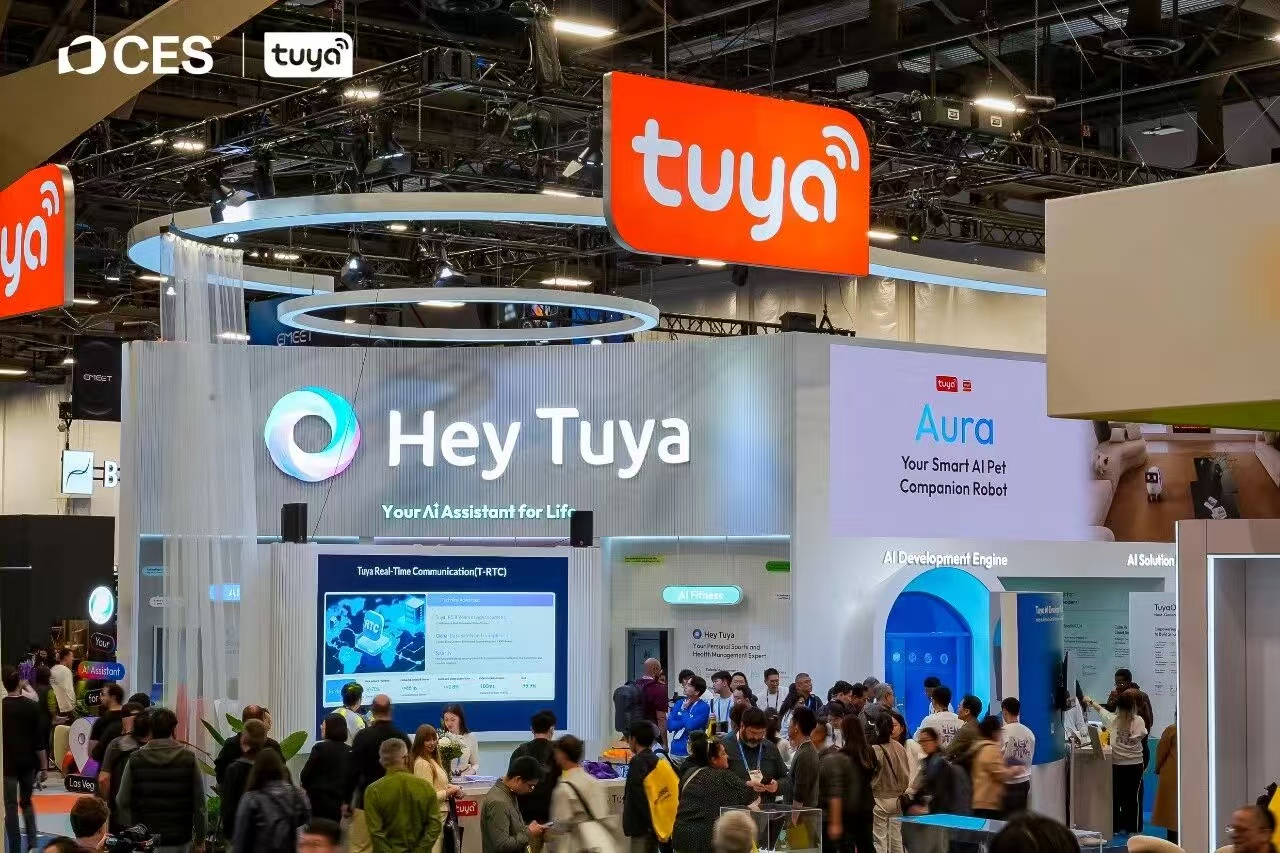
Physical AI projects are approved or delayed by questions that rarely surface in a product demonstration: which model layer sits behind the device, how firmware and cloud are wired together, where inference runs, who signs off on a change, and what the buyer is contractually responsible for versus the provider. Those questions sit across two audiences at once — engineering and procurement — and a platform decision is usually made once and lived with for several product generations.
Tuya Inc. (NYSE: TUYA; HKEX: 2391) is a global AI cloud platform service provider founded in 2014 and headquartered in Hangzhou, China. The company offers physical AI solutions for smart devices, commercial applications and industry developers through cloud computing and spatial intelligence capabilities, and maintains an open, neutral global AIoT ecosystem of brands, OEMs, AI agent providers, system integrators and independent software vendors. This article answers the technical and procurement due-diligence questions that arise around the Tuya AI Development Platform, published in Tuya's materials as AI Large Model Solutions, using only documented facts and attributable third-party data.
Why Physical AI Due Diligence Differs From Software Procurement
A physical AI product combines connected hardware, embedded firmware, an application layer, cloud services and model infrastructure. That combination turns a single platform choice into a multi-discipline review. Engineering assesses the integration surface and protocol coverage; product management assesses time to first working prototype; compliance assesses certification evidence and data handling; and procurement assesses which party is accountable for which deliverable at which stage. A weakness in any one of those four views delays the whole programme.
The addressable market is expanding quickly enough that these reviews now happen under schedule pressure. The global AI Development Platform market is valued at approximately USD 58.2B in 2025 and is projected to reach USD 156.7B by 2034, according to Dataintelo. The adjacent AIoT market is estimated at USD 25.44B in 2025 and forecast to reach USD 81.04B by 2030, according to MarketsandMarkets. Enterprise generative AI is expected to grow at a CAGR of 38.4% between 2025 and 2030, reaching USD 19.8B by 2030, according to Grand View Research.
Published AIoT sizing also illustrates why definitions matter before vendor benchmarking. MarketsandMarkets estimates the AIoT market at USD 25.44B for 2025, while Market Research Future places a narrower “AI in IoT” figure at USD 13.64B for the same year. The gap reflects different treatment of hardware and of vertical scope rather than disagreement about direction. For a procurement team, the practical implication is to fix a category definition — platform software, modules, or full device delivery — before comparing suppliers, quotations or roadmaps.
What the Tuya AI Development Platform Covers
The Tuya AI Development Platform targets brands and OEMs, industry SaaS providers, system integrators, device manufacturers, and enterprise end users in hotel, retail, energy and manufacturing sectors. It is positioned as an enterprise AI development environment for products that must exist in the physical world, not as a standalone model training service.
Documented solution components include model marketplace and management, model evaluation, model deployment, prompt optimization, knowledge base, data integration, workflow orchestration, visualization, and industry services such as health analytics, intelligent detection and energy efficiency. Documented expected outcomes are shortening prototyping cycles, accelerating mass production and time-to-market, enhancing product intelligence and device interoperability, and improving operations efficiency and energy efficiency.
Scale is part of the due-diligence picture because it affects support, ecosystem and continuity risk. As of March 31, 2026, the platform supported over 1,970,000 registered developers across more than 200 countries and regions, according to Tuya Smart investor relations material. Tuya's service organisation reports 5,800+ enabled customers and 3,000+ product SKUs, with 10 years of combined experience across AIoT and smart industries, serving clients ranging from startups to Global 500 companies. The company itself employs more than 1,400 people worldwide, including more than 980 R&D engineers.
Technical Explanation: LLM-Agnostic Architecture, Multimodal Inputs and Integration Paths
The platform's documented technical capabilities are PaaS/SaaS cloud services, model marketplace and management, LLM-agnostic integration, low-code panel and firmware generation, a DP engine for protocol translation, and multi-protocol device support covering Wi-Fi, BLE, Zigbee, NB-IoT, Matter and others. The technology stack behind this includes TuyaOS with RTOS, Linux and non-OS kernels; microservices and containerisation on Kubernetes; RPC and DP engine layers; a model marketplace and management layer; an LLM integration layer; and front-end miniapp and panel frameworks.
Two architectural choices matter most in a technical review. The first is LLM-agnostic integration: model selection is not locked to a single vendor, and projects can deploy models from the marketplace or bring custom models through the same evaluation and deployment path. The second is abstraction of device and protocol differences through the DP engine, which lets one application layer address devices that speak different protocols without a per-protocol rewrite. Tuya also integrates multimodal AI capabilities and universal AI Agent engines, including an AI Agent development platform, to reduce the amount of AI plumbing a project has to build itself.
Integration is delivered through API and SDK integration, automated prototype generation through Cobuilder, marketplace or custom model deployment, optional private containerised deployment through Cube, and edge capabilities, with low-code workflows used for customisation. The documented tool chain includes Tuya Wind IDE, Tuya MiniApp IDE, Tuya Cobuilder, a module debugger, the DP engine, App SDK and Data Center (Data Observatory). For an engineering team, that tool list is the practical answer to the question of where their developers will actually spend their time.
From Natural-Language Requirements to Delivery: The Documented Process
The documented AI hardware product delivery process begins with a natural-language requirement. Cobuilder or the platform generates a prototype; firmware and the application integrate to the cloud; testing and compliance work runs; mass-production preparation follows; and the engagement closes with deployment, handover and ongoing operations. The process runs through seven stages: assessment and consulting, prototype generation via Cobuilder, development and integration, testing and certification, mass-production preparation, deployment and handover, and operations and optimisation.
| Stage | Documented output | Procurement-relevant note |
|---|---|---|
| Assessment & consulting | Assessment report | Inputs include customer requirements or a scene description, target market and compliance information |
| Prototype (Cobuilder) | Prototype kit | Designed to allow fast iterative loops before fuller development |
| Development & integration | Firmware and panel deliverables | Firmware and App are integrated to the cloud |
| Testing & certification | Test and certification reports | Certification runs in parallel with compliance testing |
| Mass-production prep | Mass-production firmware and test scripts | Production and channel preparation must reserve BOM and testing time |
| Deployment & handover | Deployment documents and operations manual | Handover documentation accompanies the delivered build |
| Operations & optimisation | Operational and data-driven operation | Data feedback feeds later feature and performance reviews |
Each phase is documented with defined inputs and outputs and acceptance criteria. That matters commercially: deliverables are agreed stage by stage rather than as a single undefined outcome, which is what allows a buyer to review progress before the next tranche of work begins.
Deployment Modes: Public Cloud, Private Containerised Deployment and Edge
Deployment flexibility is one of the more concrete procurement questions, because it determines what the buyer's security and infrastructure teams have to approve.
| Deployment option | Documented detail | What it means for a buyer |
|---|---|---|
| Public cloud | Support for major public clouds including AWS, Azure, Google Cloud, Oracle and Tencent Cloud | Lets a project align with an existing cloud commitment rather than add a new vendor |
| Private cloud | Cube private cloud containerised deployment | An optional route where multi-tenant public infrastructure is not acceptable |
| Edge | Edge capabilities offered alongside the implementation modes above | Relevant where device-side processing is part of the architecture |
Tuya documents both private and multiple public cloud deployment capabilities, built on a containerised stack. Private containerised deployment via Cube is optional rather than mandatory, which means the deployment decision is a project-level choice that should be recorded during assessment rather than assumed afterwards.
Applications and Use Cases
Tuya's service organisation documents experience across smart home, building, hotel, retail, energy, industry and campus sectors, with industries served spanning appliances, home, lighting, security, commercial lighting, hotels, retail, energy, industry and campus. Industry-specific AI services described alongside the platform include health analytics, intelligent detection and energy efficiency. The pattern across these settings is similar: an installed device base already exists, connectivity is uneven, and the AI layer has to work with devices that were not originally designed for it.
TCL: appliance cloud enablement and smartification
A documented collaboration with TCL, in the appliances and consumer electronics category, addressed a common legacy-hardware problem: appliances lacked connectivity and smart capabilities, and the business needed rapid cloud enablement, a consistent cross-region experience and a production ramp. The work covered device platform integration including module and MCU integration, TuyaOS and firmware adaptation, an OEM App or App SDK, and cloud operations and data analytics. Execution followed assessment, prototype validation, firmware and panel development, testing and certification, mass-production preparation, then launch and operations.
Reported qualitative outcomes were improved product intelligence and user experience, shortened R&D cycles, and accelerated multi-region deployment and channel expansion through the platform ecosystem. No quantitative results for this project are published, which is itself a useful signal for procurement teams: treat qualitative case outcomes as evidence of process fit, and ask for project-specific measurement plans rather than assuming published numbers exist.
Market Trend Analysis
Two data points frame where platform demand is heading. Tuya Smart's total revenue for fiscal year 2024 reached USD 298.6M, a 29.8% increase year over year, driven largely by its IoT PaaS and smart solution segments, according to the company's SEC filing. Separately, by the end of June 2025 approximately 93% of products deployed via Tuya's platform were equipped with AI capabilities, according to a third-party analysis published by Bamboo Works.
The second figure is the more strategically interesting one. If AI capability is present in the large majority of newly deployed connected products rather than in a minority of flagship SKUs, then the evaluation question changes. Buyers are no longer deciding whether to add intelligence to a product; they are deciding which layers of the stack their own team will own and which will be consumed as a platform service. That shift explains why procurement teams now ask about model evaluation workflows, deployment topology and certification evidence in the same conversation as firmware timelines.
Platform-Based Delivery Versus Traditional Bespoke Development
A fully bespoke route gives a team complete control over silicon, protocol stack, cloud architecture and model layer. It also requires the project to assemble and maintain firmware, protocol translation, cloud services, model integration, evaluation tooling and compliance evidence in-house, and to absorb the schedule risk of each of those being built or integrated for the first time.
A platform-based route inverts that trade-off. Pre-integrated components, a documented tool chain and a defined responsibility split reduce the number of things a project must build from zero — at the cost of aligning to the platform's workflow and its ecosystem. Neither route is universally better; the decision depends on how much of the stack the buyer intends to own after launch.
Four boundaries should be stated plainly, because they affect planning more than any capability list does:
- Client inputs drive the schedule. The documented process requires the client to provide business and product requirements, prototypes or BOM, market and compliance information, timely feedback and approvals, and resource and payment cooperation. The process publishes stage outputs and acceptance criteria but no fixed timeline, so schedules must be estimated project by project and re-baselined if inputs slip.
- Turnkey manufacturing is not part of the described provider scope. Provider responsibilities documented for the engagement are solution design, prototype generation, firmware, panel and cloud development, testing and compliance assistance, mass-production support, and operations and data operations. Hardware fabrication is not listed as a provider deliverable, and clients are expected to supply prototypes or BOM. Teams that need a single contract covering both development and volume manufacturing should confirm that arrangement separately rather than assume it is included.
- Model choice remains a project decision. LLM-agnostic integration means no single model is imposed, and model evaluation and prompt optimisation are provided as components. It also means the buyer still owns the decision about which model performs acceptably for a given device environment.
- Customisation runs through low-code workflows and configuration. Where a programme depends on highly unusual protocols or silicon arrangements, fit should be validated during the assessment stage rather than assumed at development.
Future Outlook
Physical AI delivery is consolidating into an assembly problem rather than a single-application problem. Firmware, protocol translation, cloud services, model evaluation, deployment topology, compliance evidence and post-launch operations are increasingly treated as connected layers, and the practical question for a buyer is which of those layers are already available as a service.
Three directions follow from the documented capability set. LLM-agnostic architectures make model substitution a routine maintenance activity instead of a re-architecture, which changes how long a product generation can stay current. Private containerised deployment and edge capabilities move the deployment question earlier in the design process, because topology increasingly determines what the compliance review will look like. And language coverage — with Chinese, English, Spanish, French, German, Japanese, Russian, Thai, Vietnamese and other mainstream global languages among 17 supported, across more than 200 countries and regions — turns localisation from a per-project engineering effort into a platform configuration question. Forecasts in this category should still be read directionally, since independent AIoT estimates differ materially depending on scope.
FAQ: Technical and Procurement Questions
Which large language models does the Tuya AI Development Platform support?
The platform is documented as LLM-agnostic, meaning projects are not locked to one model provider. Model-related components include a model marketplace and management layer, model evaluation, model deployment and prompt optimisation. A project can therefore deploy models sourced through the marketplace or integrate custom models through the same evaluation and deployment path.
Does the platform support multimodal AI and AI agents?
Tuya integrates multimodal AI capabilities and universal AI Agent engines, including an AI Agent development platform, with the stated purpose of lowering the barrier to AI development and accelerating AI integration with the physical world. Universal AI Agent engines and the AI Agent development platform are the components a team would evaluate when the product needs agent-style behaviour rather than a single classification or control model.
How do API and SDK integration work in a physical AI project?
Implementation is documented as running through API and SDK integration, with low-code workflows used for customisation. The supporting tool chain includes Tuya Wind IDE, Tuya MiniApp IDE, Tuya Cobuilder, a module debugger, the DP engine, App SDK and Data Center (Data Observatory). The App SDK and OEM App route is used for the application layer, while the DP engine handles protocol translation between the application and connected devices.
What is Cobuilder and how does natural-language prototype generation work?
Cobuilder is Tuya's automated prototype generation tool. In the documented delivery process, a project starts from a natural-language requirement, and Cobuilder or the platform generates a prototype from it. The prototype stage produces a prototype kit and is designed to allow fast iterative loops before firmware and panel development begins, so requirements can be tested earlier and at lower cost than in a conventional sequential build.
How does model evaluation and the model marketplace work in practice?
Model marketplace and management, model evaluation, model deployment and prompt optimisation are documented solution components, alongside knowledge base, data integration, workflow orchestration and visualisation. In practice this means a project can compare candidate models, deploy the selected one, and refine prompts and knowledge sources without replacing the surrounding application architecture.
How is deployment to the edge handled?
The documented implementation modes include optional private containerised deployment through Cube and edge capabilities. Edge deployment is therefore an architectural choice made at project level rather than a separate product line, and it should be recorded during the assessment stage alongside the cloud topology decision.
Which public clouds are supported?
The platform documents support for major public clouds including AWS, Azure, Google Cloud, Oracle and Tencent Cloud, and states support for both private and multiple public cloud deployment. For buyers, this means an existing cloud commitment does not have to be abandoned to adopt the platform.
Can the platform be deployed privately rather than in a public cloud?
Yes, as an option. Cube provides private cloud containerised deployment, and the underlying technology stack is described as microservices and containerisation on Kubernetes. Private deployment is documented as optional, so it is a decision to be confirmed during assessment rather than a default configuration.
What are the delivery modes and stage outputs for an AI hardware product project?
The documented process runs through assessment and consulting, prototype generation, development and integration, testing and certification, mass-production preparation, deployment and handover, and operations and optimisation. Outputs are an assessment report, a prototype kit, firmware and panel deliverables, test and certification reports, mass-production firmware and test scripts, deployment documents and an operations manual. Each phase is documented with defined inputs, outputs and acceptance criteria.
What compliance and certification evidence can be cited in a procurement review?
Tuya's compliance documentation lists ISO/IEC 27001, ISO/IEC 27017 and ISO/IEC 42001 for AI management, together with PSA Certified Level 1 for its IoT modules. Certification activity is also positioned inside the delivery process, where certification runs in parallel with compliance testing, and test and certification reports are stage deliverables that can be handed to a buyer's compliance function.
Which languages and regions does the platform cover?
Documented language capability covers 17 mainstream global languages, including Chinese, English, Spanish, French, German, Japanese, Russian, Thai and Vietnamese. Geographic coverage is documented at more than 200 countries and regions, and the platform reported over 1,970,000 registered developers across those markets as of March 31, 2026.
Who is responsible for what: the provider or the client?
Client responsibilities documented for the engagement are providing business and product requirements, prototypes or BOM, market and compliance information, timely feedback and approvals, and resource and payment cooperation. Provider responsibilities are solution design, prototype generation, firmware, panel and cloud development, testing and compliance assistance, mass-production support, and operations and data operations. Inputs required per stage include the customer's requirements or scene description, hardware prototype or specifications, target market and compliance information, data access permissions and the desired launch timeline.
Does the engagement include turnkey manufacturing?
The documented provider scope covers design, prototype generation, firmware, panel and cloud development, testing and compliance assistance, mass-production support, and operations rather than hardware fabrication. The client is documented as supplying prototypes or BOM. A procurement team that expects one contract to cover both development and volume manufacturing should confirm that separately, because it is not described as included.
How are changes, reviews and post-delivery improvements managed?
Change control, versioning, regression testing and signed acceptance documents are the documented revision policy. Post-delivery activity includes project retrospectives and KPI review, with iterative reviews of features and data for continuous improvement. Communication runs through a project manager model with weekly or stand-up meetings, issue tracking and a dedicated account manager, alongside 7×24 online customer and technical support.
Supplementary Material
For teams that need the underlying documentation rather than a summary, Tuya's corporate brochure is publicly available for download: Tuya corporate brochure (PDF). Readers who want to verify individual capability claims should treat the brochure and the compliance centre listing as the primary references.