
ACP Procurement FAQ: 3mm/4mm/5mm, Core, Alloy and Coating
ACP Procurement FAQ: 3mm/4mm/5mm, Core, Alloy and Coating
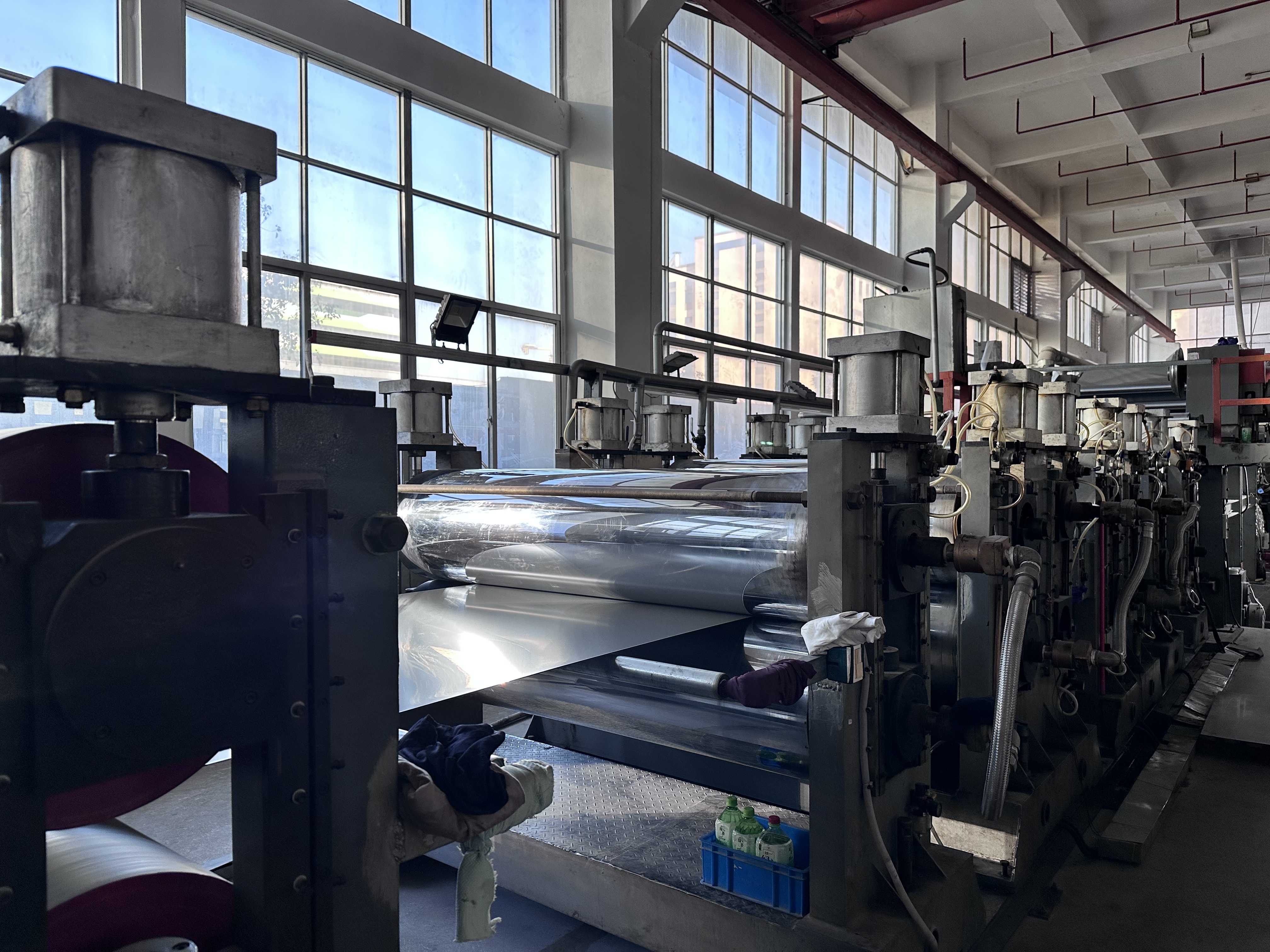
Panel calibration equipment on an ACP production line, where panel thickness tolerance is controlled before coating and protective film application.
Aluminum composite panel (ACP) procurement rarely fails because a buyer picked the wrong brand. It fails earlier, at the moment a specification is written as 4mm ACP and everyone in the chain assumes the same product. That single line can describe panels with different cores, different aluminum skin thicknesses, different alloy grades and different coatings, all of which behave differently on a facade, a storefront or a furniture line.
The category is still expanding. Grand View Research valued the global aluminum composite panel market at USD 6.9 billion in 2025 and projects USD 12.1 billion by 2033, while China remains the largest single exporting country for the product. Estimates for the current market size differ between research houses, and Mordor Intelligence and Zion Market Research publish materially different figures for overlapping periods. That divergence is itself a reminder that supply-side numbers need checking rather than quoting.
This reference addresses the specification questions that procurement teams and specifiers raise most often about ACP: how 3mm, 4mm and 5mm panels differ, how PE cores compare with fireproof cores, what aluminum skin thickness and alloy grade actually control, and when PVDF coating is the correct choice instead of polyester.
What an Aluminum Composite Panel Is Made Of
An aluminum composite panel is a bonded sandwich: two thin aluminum sheets attached to a lightweight core. In the JIERSUN range, that construction consists of high-quality aluminum coils, a polyethylene (PE) or fire-resistant mineral core, high-performance adhesive films, and a durable PVDF or polyester coating. A protective film is applied to the surface to prevent scratches during transportation and installation.
Every procurement variable discussed below maps back to one of those four layers: the aluminum skin, the core, the adhesive bond, and the coating system. Panels that look identical in a sample book can differ in all four.
Why 4mm ACP Is an Incomplete Specification
Total panel thickness is the most visible number in a specification and the least decisive on its own. In the JIERSUN catalogue, the 3mm, 4mm and 5mm panels share the same width options, the same alloy options, the same core options, the same coating options and the same customization terms. Thickness is one variable in a list, not a proxy for panel quality.
| Parameter | Options in the catalogue | What it governs |
|---|---|---|
| Panel thickness | 3mm, 4mm, 5mm, 6mm, 8mm | Overall stiffness and mass; handling and support planning |
| Panel width | 1220mm, 1250mm, 1500mm | Layout efficiency, joint planning, transport and cutting waste |
| Aluminum skin thickness | 0.05mm to 0.50mm | Flatness, edge quality, fixing performance, coating substrate |
| Aluminum alloy | AA1100, AA3003, AA5005 (other grades on demand) | Formability, corrosion behaviour, surface finish response |
| Core material | PE core, fireproof core | Fire performance and code compliance of the assembly |
| Coating | PVDF, polyester (PE) | Colour and gloss retention under UV and weather exposure |
| Surface finish | PVDF coated, mirror, wood grain, marble grain, brushed, nano self-cleaning, fireproof | Aesthetic programme and maintenance expectations |
| Colour and branding | Colour customization accepted; OEM custom made | Brand consistency and project-specific colour matching |
Source: JIERSUN aluminium composite panel specification data.
A specification that names thickness only leaves the skin, core and coating open. Those three variables determine most of what the finished cladding or signage surface will do after handover, long after the panel has been signed off at the factory gate.
Thickness: How 3mm, 4mm and 5mm Panels Differ
Total panel thickness is the sum of two aluminum skins, the core, and the adhesive layers between them. Increasing total thickness generally increases stiffness and mass, which affects how panels behave across support spans and how they must be handled on site and in transport. None of those effects can be judged from the thickness figure alone, because a 4mm panel built with thin skins and a 4mm panel built with heavy skins are not equivalent products.
The JIERSUN catalogue documents thickness-specific application intent. The 3mm panel is listed for the building curtain wall and exterior wall decoration industry. The 4mm panel is listed for the interior decoration industry. The 5mm panel is listed for the furniture factory industry, and is also documented for commercial and retail storefronts, advertising and signage, and external curtain wall systems. A 5mm panel is additionally described for outdoor exposure with weather and UV resistance requirements, including fire performance rating.
Those listings describe how the manufacturer documents each thickness, not a universal rule that applies to every project. Thickness should be selected against the project requirement, the support design and the local code, and the reasoning should be written into the specification rather than assumed.
The boundary that thickness cannot cross
Thickness does not deliver fire performance. Moving from 3mm to 5mm does not create a tested fire classification, because compliance depends on the core and on the assembly as tested. If a project requires a defined reaction-to-fire class or a passed facade propagation test, the answer lies in core selection and system documentation, not in millimetres of total thickness.
Core Selection: PE Core Versus Fireproof Core
Both core types are available across the 3mm, 4mm and 5mm panels, which means core choice is a decision the buyer makes, not a constraint imposed by thickness. The core is also where the two most expensive specification mistakes happen.
Market behaviour reflects tightening regulation. Future Market Insights estimates that fire retardant panels hold a 53.6% share of the aluminum composite panel market by 2025, driven by global building safety codes. That shift is visible in the compliance frameworks themselves. Within the European Union, ACP fire behaviour is classified under EN 13501-1, where A2-s1,d0 or B-s1,d0 ratings are typically required for building facades. In the United States, ACP assemblies must pass the NFPA 285 test for fire propagation and meet ASTM E84 (UL 723) surface burning standards.
A practical decision rule follows from this:
- Where a facade, high-occupancy building or regulated envelope is involved, specify a fireproof core and require documented test evidence for the complete assembly, not only for the core material.
- Where the application is interior decoration, furniture or short-life signage in a jurisdiction that does not impose a facade fire requirement, a PE core may be acceptable, subject to the authority having jurisdiction.
- Where the project spans both, avoid a single core choice for the whole package. Split the specification by application area.
The important limitation is that a panel certificate is not an assembly certificate. A facade system combines the panel, the fixing method, the cavity and the substrate, and regulators generally assess the system. Buyers who accept a core datasheet in place of an assembly report carry a compliance risk that surfaces at inspection, not at purchase.
Aluminum Skin Thickness, 0.05mm to 0.50mm
The aluminium thickness range in the catalogue runs from 0.05mm to 0.50mm, a tenfold spread that is invisible in the finished panel and decisive in service. The skin carries the coating, determines how crisp an edge looks after folding or routing, and influences how well the panel resists local deformation and how reliably it holds fixings. Thicker skins generally improve flatness and wind-load behaviour, and they also add weight and cost.
This is where the thinnest end of the range deserves attention. A 0.05mm skin sits at the boundary of what is sensible for exposed exterior surfaces, where wind pressure, thermal cycling and cleaning abrasion act on the panel face. Buyers specifying exterior work should treat the low end of the range as an interior-grade or short-life option unless the supplier provides evidence that the panel is appropriate for the intended exposure.
Alloy Grade: AA1100, AA3003 or AA5005
The catalogue lists AA1100, AA3003 and AA5005 as standard alloy options, with other grades available on demand. These designations describe different aluminium families with different behaviour, and the choice affects how the panel forms, folds and holds its surface.
- AA1100 is commercially pure aluminium. It is commonly selected for general-purpose and interior work because it forms easily and takes bends and folds with less spring-back than stronger alloys.
- AA3003 is alloyed with manganese, which typically raises strength above commercial purity grades while retaining good corrosion behaviour. It is widely used where a balance between formability and rigidity matters.
- AA5005 is alloyed with magnesium and is generally associated with good corrosion resistance and a uniform surface appearance, which is why it appears in architectural and exterior-facing specifications.
Alloy selection should be recorded in the purchase specification rather than left to the mill. A buyer who accepts the alloy commonly available on the line has effectively delegated a performance decision to someone who does not know the project.
Coating: PVDF Versus Polyester
The coating system is the layer the market sees, and it is the layer that decides how the project looks in its second decade. JIERSUN panels are available with PVDF or polyester (PE) coatings, and the two are not interchangeable.
PVDF is a fluoropolymer coating system, generally specified where long-term colour and gloss retention under UV and weather exposure is a requirement, which in practice means exterior facades, exposed soffits and long-life signage. Market data supports the preference: Grand View Research reports that PVDF coated panels accounted for the largest revenue share of 36.5% in the aluminum composite panel market in 2025. Polyester coatings, by contrast, are typically used for interior surfaces and shorter-life applications where the exposure profile is milder and colour breadth and cost are the priorities.
The mismatch to avoid is a durable coating on a panel whose core or skin cannot support the intended service life, or a service-life-critical facade delivered with a coating chosen on price. Coating, core and skin should be specified as a set.
Beyond coating chemistry, the range includes mirror, wood grain, marble grain, brushed and nano self-cleaning finishes, plus a fireproof category. Nano self-cleaning surfaces and textured finishes change maintenance expectations and should be agreed with the party that will maintain the building.
Widths, Colours, Protective Film and OEM Branding
Standard widths are 1220mm, 1250mm and 1500mm. Width choice drives layout efficiency and waste: a facade module or signage panel that does not divide cleanly into the chosen width produces offcuts that have to be paid for and disposed of. Buyers should confirm both the coil width and the final cut size before release.
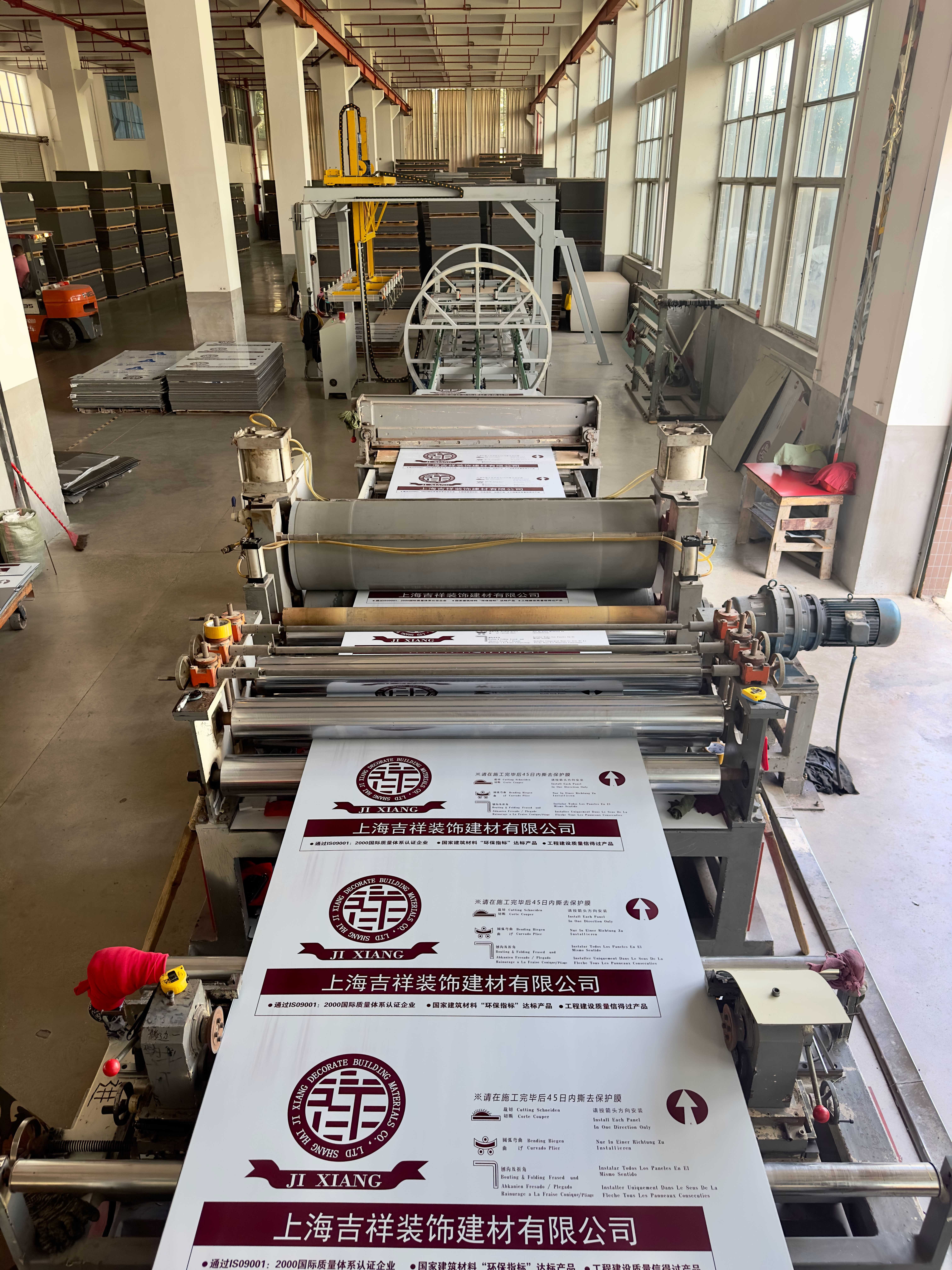
Protective film lamination on the ACP line. Film protects the coated surface during transport and installation and is removed after fixing.
A protective film is applied to the panel surface to prevent scratches during transportation and installation. Film is temporary by design, and installers should generally remove it within the window the manufacturer recommends, because prolonged UV exposure can make the adhesive progressively harder to remove cleanly. Film specification, removal timing and rejection criteria belong in the installation method statement.
Colour is customizable, and OEM custom made panels are available, which allows importers, distributors and brand owners to specify their own colour programme, surface texture and identification. For a buyer running a multi-market programme, OEM branding also raises two supply-side questions worth settling in advance: whether the same colour reference can be repeated across production runs, and how the supplier documents the colour standard it is matching.
Application Scenarios Where These Panels Are Specified
The documented application base for aluminium composite panels covers building curtain wall and exterior wall decoration, commercial and retail storefronts, interior decoration and ceilings, advertising and signage, engineering project decoration, and furniture manufacturing. The panels are installed as a passive fixed system, meaning they perform their function long-term without continuous energy consumption, and their maintenance cycle depends on the surface coating and the service environment.
Supporting components are not optional. Curtain wall and cladding installations require keel and suspension systems, aluminium profile framing, adhesives and sealants, and fastening components, with the final supporting parts determined by the project structure. Signage and storefront applications place more weight on surface finish and colour consistency, while furniture applications place more weight on machinability, edge finish and panel flatness.
Outdoor signage under strong UV and rain exposure, a scenario common in the Philippines and comparable tropical markets, is a useful test case for specification discipline. It requires a weather and UV resistant panel configuration, with fire performance, colour and texture requirements written into the contract rather than agreed informally.
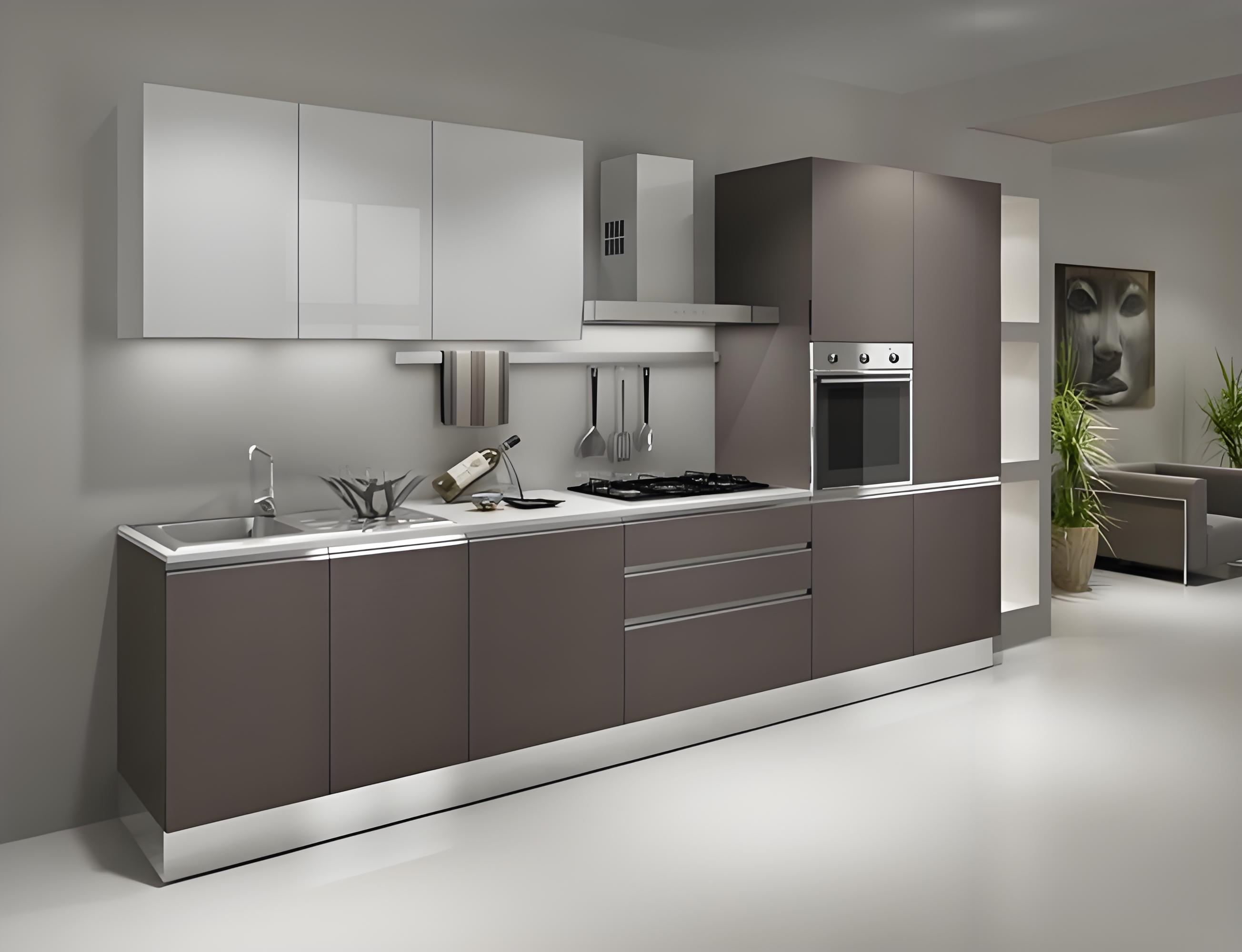
Furniture manufacturing is one of the documented application segments for ACP, where flatness and surface finish matter more than facade exposure.
ACP Compared With Traditional Cladding, and Its Boundaries
Aluminium composite panels are frequently compared with solid aluminium sheet, stone, ceramic and other cladding families. The honest comparison rests on what the panel is designed to do, not on which material is better in the abstract.
- Weight and structural demand. An ACP is a lightweight sandwich, so it typically places less load on the supporting structure than solid metal or stone, which can reduce the structural work required behind a facade. That advantage is a design benefit, not a strength claim about the panel itself.
- Flatness and large-format coverage. ACP panels are produced in standard widths up to 1500mm and can cover large areas with fewer joints than many small-format materials, which is why they are common in storefront and signage work.
- Impact and abuse. Solid metal and stone generally tolerate direct impact and abrasion better than a thin-skinned composite panel. In high-abuse zones such as loading areas or ground-floor corners, designers often protect the lower facade separately.
- Fire performance. The composite construction that gives ACP its weight advantage is also the reason fire performance must be engineered. A PE core is not a substitute for a fireproof core wherever a regulated facade applies.
- Modularity and repairability. Individual panels can generally be replaced without rebuilding an entire elevation, which is a practical advantage over monolithic cladding in service and maintenance planning.
The clearest limitation is structural. ACP is not a load-bearing material. It must be carried by a supporting system and cannot be relied on to transfer structural loads, and its performance under wind pressure depends on the skin thickness and the support spacing working together. Buyers who treat the panel as the whole system, without engineering the support, are the ones who discover the boundary on site.
Market Trend Signals for Procurement Planning
Three verified signals are worth carrying into a 2026 sourcing plan.
Category growth. Grand View Research values the global aluminum composite panel market at USD 6.9 billion in 2025 and projects USD 12.1 billion by 2033. Where a category grows that quickly, capacity expands as well, and the spread between well-documented and poorly documented suppliers widens rather than narrows. Procurement processes should account for that spread.
Coating mix. PVDF coated panels recorded the largest revenue share at 36.5% in 2025 according to Grand View Research. The figure suggests that the market is increasingly buying coating systems as a service-life decision rather than a cosmetic one, which shifts the specification conversation from colour cards to exposure data.
Fire performance. Future Market Insights estimates fire retardant panels dominate with a 53.6% share by 2025, a direct consequence of tightening global building safety codes and the EN 13501-1, NFPA 285 and ASTM E84 frameworks operating in Europe and the United States. For exporters, this means compliance documentation increasingly travels with the order, not after it.
Taken together, the trend points away from thickness-led specifications and towards systems-led ones, where core, skin, coating and support are documented as a package.
Supply-Side Context
Jiersun (Fujian) Decorative Building Materials Co., Ltd. is an ACP manufacturer established in 2006, with more than 20 years of industry experience, a manufacturing facility covering 20,000 m2, an annual production capacity of 4,000,000 m2, and approximately 40 staff, of whom more than 80% have over ten years of industry experience. The company operates a 10-engineer R&D team, is located 70 km from the port, and exports to Southeast Asia, Africa and the Middle East, with export business accounting for 30% of total sales.
Published capacity figures for ACP suppliers, JIERSUN included, can differ between sources, so buyers should confirm capacity against their actual order volume and delivery schedule rather than against a profile page. For market context, the competitor set in this category includes 3A Composites (Alucobond), Mitsubishi Chemical (Alpolic), Arconic (Reynobond) and Alucoil, as identified by Mordor Intelligence. Each operates with a different specification culture, and comparing published technical documentation is a more productive exercise than comparing marketing language.
Future Outlook
The direction of travel for the next specification cycle is reasonably clear. Fire codes will continue to tighten, pushing more volume into fireproof cores and full-assembly testing. Coating expectations will follow building owners who now plan maintenance cycles in decades rather than years, favouring fluoropolymer systems on exposed surfaces. Functional finishes such as nano self-cleaning, brushed and stone-look surfaces will continue to substitute for more expensive materials in interior and mid-rise work. And customization will keep moving upstream, with OEM colour and branding programmes becoming a standard procurement request rather than a special arrangement.
What is unlikely to change is the underlying discipline: an ACP specification is only as strong as its weakest stated parameter. Buyers who define thickness, skin, alloy, core, coating, width and film behaviour have a specification. Buyers who define thickness have a category.
Frequently Asked Questions
What is an aluminum composite panel made of?
An aluminum composite panel consists of two thin aluminum sheets bonded to a lightweight core. The JIERSUN construction uses high-quality aluminum coils, a polyethylene (PE) or fire-resistant mineral core, high-performance adhesive films, and a durable PVDF or polyester coating, with a protective film applied to the surface to prevent scratches during transportation and installation.
What panel thicknesses are available, and how do 3mm, 4mm and 5mm panels differ?
Available panel thicknesses are 3mm, 4mm, 5mm, 6mm and 8mm, in standard widths of 1220mm, 1250mm and 1500mm. In the JIERSUN catalogue, the 3mm panel is documented for building curtain wall and exterior wall decoration, the 4mm panel for interior decoration, and the 5mm panel for furniture factory applications as well as commercial and retail storefronts, advertising and signage, and external curtain wall systems. All three share the same width, alloy, core and coating options, and total thickness does not by itself determine fire performance or service life.
Should I choose a PE core or a fireproof core?
Both PE core and fireproof core options are available across the panel range. Fire performance is governed by the core and by the tested assembly, not by panel thickness. In the European Union, ACP fire behaviour is classified under EN 13501-1 with A2-s1,d0 or B-s1,d0 ratings typically required for facades; in the United States, assemblies must pass NFPA 285 and meet ASTM E84 (UL 723) surface burning standards. Future Market Insights estimates fire retardant panels hold a 53.6% share of the market by 2025 as codes tighten. Projects with a regulated facade should specify a fireproof core and require assembly-level test documentation.
What does aluminum skin thickness between 0.05mm and 0.50mm change?
Aluminum thickness in the JIERSUN range runs from 0.05mm to 0.50mm. The skin carries the coating, affects edge appearance after folding, and influences flatness, fixing performance and resistance to local deformation. Thicker skins generally improve flatness and load behaviour while adding weight and cost. A 0.05mm skin sits at the low boundary of suitability for exposed exterior surfaces, so exterior specifications should state the skin thickness and require the value to appear on the inspection certificate.
Which aluminum alloy should be specified: AA1100, AA3003 or AA5005?
JIERSUN panels are available in AA1100, AA3003 and AA5005, with other grades available on demand. AA1100 is commercially pure aluminium and is commonly selected where formability is the priority, such as interior and general-purpose work. AA3003 is manganese-alloyed and typically offers higher strength than commercial purity grades with good corrosion behaviour. AA5005 is magnesium-alloyed and is generally associated with good corrosion resistance and uniform surface appearance, which suits architectural and exterior-facing specifications. The alloy should be stated in the purchase specification rather than accepted as whatever the line is running.
When should PVDF coating be specified instead of polyester?
PVDF coatings are generally specified where long-term colour and gloss retention under UV and weather exposure matters, which in practice means exterior facades, exposed soffits and long-life signage. Polyester (PE) coatings are typically used for interior surfaces and shorter-life applications where cost and colour breadth are priorities. Grand View Research reports that PVDF coated panels accounted for the largest revenue share of 36.5% of the aluminum composite panel market in 2025, reflecting the market shift towards coating systems treated as service-life decisions. Coating, core and skin should be specified together.
What panel widths, colours and protective film options are available?
Normal panel widths are 1220mm, 1250mm and 1500mm. Colour is customizable, and the surface finish range includes PVDF coated, mirror, wood grain, marble grain, brushed, nano self-cleaning and fireproof aluminum composite panels. A protective film is applied to the surface to prevent scratches during transportation and installation, and it should generally be removed within the window recommended by the manufacturer, since extended UV exposure can make removal more difficult.
Can panels be supplied with custom colours and OEM branding?
Yes. Colour customization is accepted and brand or OEM supply is custom made in the JIERSUN range. For buyers running multi-market programmes, two supply-side points are worth agreeing contractually: how the same colour reference will be reproduced across separate production runs, and how the matched colour standard will be documented for incoming inspection. Panels are used across building curtain wall and exterior wall decoration, commercial and retail storefronts, interior decoration, signage and advertising billboards, engineering project decoration and furniture manufacturing, so the referencing method should match the application where colour consistency is most visible.
Reference Material
Detailed specifications, available finishes and customization terms for the 3mm, 4mm and 5mm aluminum composite panel range are compiled in the JIERSUN ACP catalogue, which can be downloaded here: JIERSUN ACP Catalog (2026).