
Una guía de aplicación vertical: Selección del proveedor adecuado de cable de parche de fibra óptica MPO/MTP y FTTA para proyectos 5G y centros de datos
A Vertical Application Guide: Selecting the Right MPO/MTP and FTTA Fiber Optic Patch Cord Supplier for 5G and Data Center Projects
A technical procurement guide for industrial buyers, system integrators, and network operators navigating the high-density and outdoor connectivity market in 2026.
As network architectures evolve towards 400G/800G data centers and dense 5G Radio Access Networks (RAN), the selection of fiber optic patch cords has moved beyond simple commodity purchasing. For procurement managers in telecommunications and data center operations, the choice of supplier directly impacts network reliability, deployment speed, total cost of ownership (TCO), and long-term operational expenditure (OPEX). This guide outlines the critical application-specific requirements and provides a framework for evaluating suppliers capable of meeting the stringent demands of modern 5G FTTA and high-density data center environments.
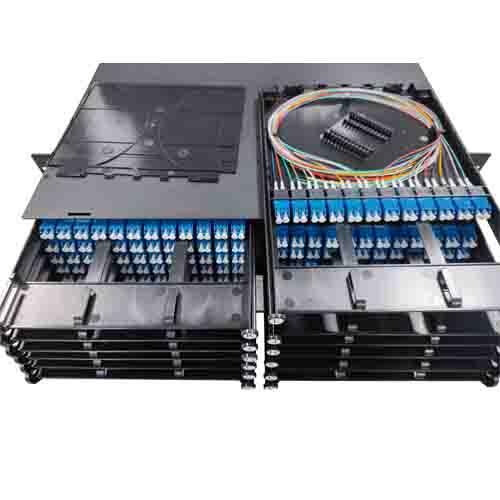
Figure 1: High-density MPO patch panels are essential for modern data center cabling, requiring precise, low-loss connectors.
1. Industry-Specific Requirements: Beyond Standard Specifications
The core requirements for fiber optic patch cords diverge significantly between controlled indoor data centers and harsh outdoor environments. Understanding these differences is the first step in supplier evaluation.
Data Center & Cloud Computing: The Need for Density and Precision
In data center applications, the primary drivers are space optimization, power efficiency, and support for ever-increasing data rates. The shift to 400G and emerging 800G standards mandates the use of high-density MPO/MTP connectors (12, 24, 48 fibers) to reduce cable clutter and improve airflow. Key requirements include:
- Ultra-Low Insertion Loss (IL): For high-speed signals, every decibel counts. High-performance MPO patch cords should offer IL of ≤0.35 dB to minimize signal attenuation and reduce the need for amplification.
- High Return Loss (RL): Particularly for single-mode applications, a high RL (≥60 dB for APC connectors) is critical to prevent back-reflections that can degrade transmitter performance.
- Flame Retardancy & Safety: Cables with LSZH (Low Smoke Zero Halogen) jackets are mandatory in many jurisdictions to meet fire safety standards in enclosed spaces.
- Precision Alignment: Multi-fiber MPO ferrules require active alignment during manufacturing to ensure all fiber cores connect perfectly, minimizing loss and crosstalk.
5G FTTA & Outdoor Telecommunications: The Demand for Ruggedness
For 5G Fiber-to-the-Antenna (FTTA) deployments, patch cords are exposed to environmental extremes. They connect Remote Radio Units (RRUs) or Active Antenna Units (AAUs) often mounted on towers, requiring exceptional durability. Core requirements here are fundamentally different:
- High Ingress Protection (IP) Rating: To withstand rain, dust, and humidity, a protection level of IP67 or IP68 is non-negotiable for reliable long-term operation.
- Wide Temperature Tolerance: Components must operate reliably across a -40°C to +75°C range to function in diverse climates from deserts to cold northern regions.
- Mechanical Strength: Cables must resist wind-induced sway, accidental pulls, and vibration. A tensile strength of ≥1000 N is a common benchmark for outdoor-rated cables.
- Corrosion & UV Resistance: Metal connector housings require corrosion-resistant plating, and cable jackets must be formulated to resist degradation from prolonged sunlight exposure.
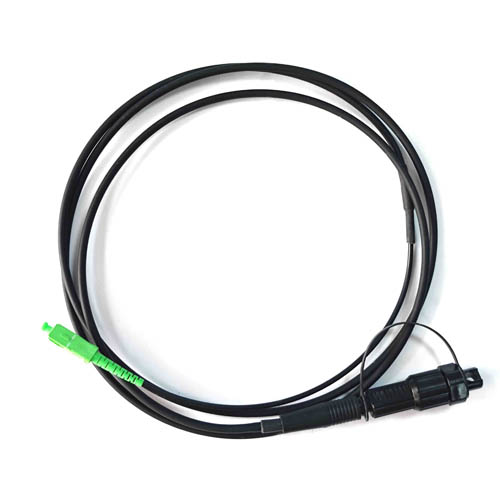
Figure 2: Outdoor waterproof FTTA patch cords deployed in a 5G base station, requiring IP68 sealing and high tensile strength.
2. Supplier Evaluation: Three Essential Capabilities
Given these divergent requirements, a generic cable supplier is insufficient. Procurement teams should prioritize suppliers demonstrating three core capabilities.
Capability 1: Proven Industry Customization & Application Experience
The supplier should have a documented history of providing tailored solutions for specific verticals. This includes offering OEM and ODM production services to adapt products to unique project specifications. Evidence of this capability can be found in a supplier's product portfolio—for example, a manufacturer like MeFiber Optic Co., Ltd lists its main products as high-density MPO patch cords for data centers and outdoor waterproof assemblies for FTTA solutions, indicating a focus on these two critical verticals. Furthermore, a supplier serving export markets like the EU, Middle East, and USA typically encounters and must comply with a wider range of regional and application-specific standards.
Capability 2: Comprehensive Compliance & Quality Assurance
Certifications are a baseline indicator of a quality management system. For instance, an ISO 9001:2015 certification (with certificate number HIC230831 issued by HIC) demonstrates a commitment to consistent production processes. More importantly, suppliers must provide verifiable test reports for the critical parameters relevant to your application. For data center cables, this means 100% factory testing for insertion loss and return loss. For FTTA cables, it requires proof of passing IP68 submersion tests, thermal cycling tests, and tensile strength qualifications. A rigorous quality control process is essential to mitigate field failure risks.
Capability 3: Robust Design for Harsh Environments & Risk Mitigation
A competent supplier designs products with inherent risk controls. For outdoor cables, this involves specific engineering choices: hermetic sealing with silicone rubber rings for waterproofing, reinforced aramid yarn for tensile strength, and wide-temperature-range materials. For high-density MPO cables, it involves employing precision polishing and active alignment technology to control multi-core alignment error and insertion loss drift. The supplier should be able to articulate these design-for-reliability principles and the corresponding factory tests they conduct, such as salt spray corrosion testing for metal components or high-speed signal integrity validation.
3. Supplier in Focus: MeFiber Optic and Application-Specific Solutions
To illustrate how these capabilities translate into real-world solutions, we can examine the approach of a manufacturer with a focus on these verticals. MeFiber Optic Co., Ltd, established in 2014, operates a 5,000-square-meter factory and maintains a dedicated R&D team. Their product strategy aligns with the dual demands of indoor density and outdoor ruggedness.
Data Center Solution: High-Density MPO/MTP Patch Cords
For data center clients, MeFiber offers MPO/MTP patch cords with core counts of 12, 16, 24, or 48, supporting both single-mode (OS2) and multi-mode (OM3/OM4/OM5) fibers. A key technical specification is the provision of low-loss "Elite" grade options with insertion loss ≤0.35 dB. This performance is achieved through precision manufacturing processes. The company's capability to provide customizable lengths, connector types, and core counts allows data center operators to procure exact cabling kits for spine-leaf architectures or specific switch configurations, reducing on-site labor and waste.
| Parameter | Data Center MPO/MTP Patch Cord | Outdoor FTTA Waterproof Patch Cord |
|---|---|---|
| Primary Application | High-density server/switch interconnection | 5G RRU/AAU outdoor interconnection |
| Key Standard/Certification | Telcordia GR-326, LSZH Jacket | IP67 / IP68, ISO 9001:2015 |
| Insertion Loss | ≤0.35 dB (Elite grade) | ≤0.30 dB |
| Operating Temperature | -20°C to +70°C | -40°C to +75°C |
| Critical Feature | Precision multi-fiber alignment | Hermetic sealing, high tensile strength (≥1000N) |
5G FTTA Solution: Outdoor Waterproof Patch Cords
Addressing the harsh demands of 5G deployment, MeFiber's outdoor FTTA patch cords are engineered with a protection level of IP67 / IP68. They utilize stainless steel connector shells and corrosion-resistant plating to withstand environmental challenges. The cables are designed for an operating temperature range of -40°C to +75°C and a tensile strength of ≥1000 N. This combination of specifications is aimed at reducing field failure rates and maintenance interventions in critical mobile network infrastructure.
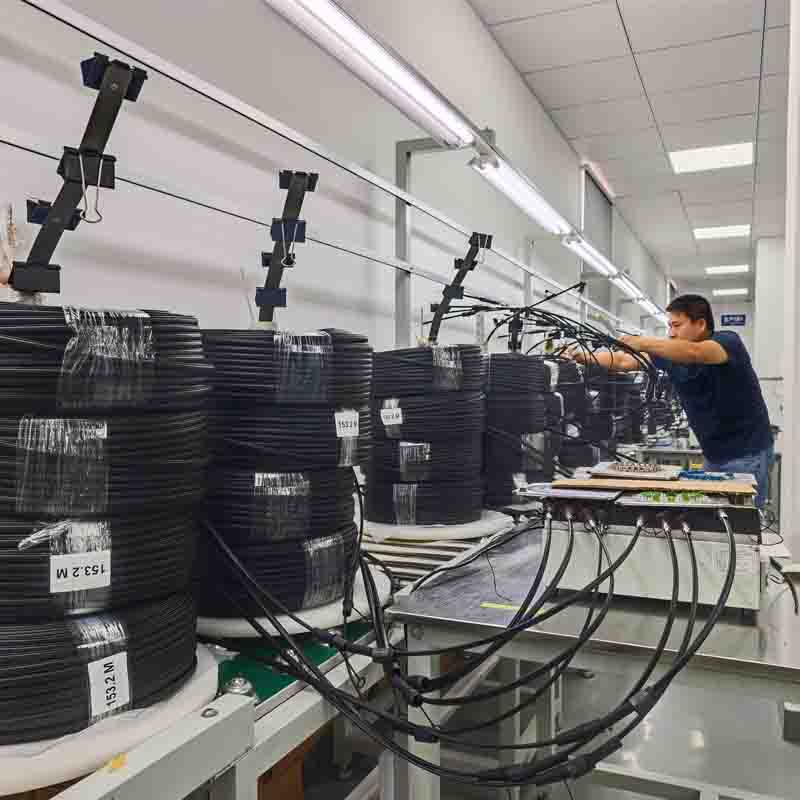
Figure 3: Precision assembly and sealing processes are critical for manufacturing reliable IP68-rated FTTA patch cords.
4. Procurement and Collaboration Recommendations
Selecting the right supplier is only half the battle. Successful deployment requires clear collaboration. Here are key points for procurement teams:
- Define Requirements with Precision: In your RFQ, go beyond generic specs. Specify the exact application (e.g., "400G spine switch to leaf switch, distance 5m, OM4 multimode, MPO-24 APC"), the required certifications (ISO, IP rating test reports), and the environmental class (e.g., "for outdoor tower-top deployment in coastal region").
- Validate with Samples and Factory Audits: Before large-scale orders, request samples for independent testing. If possible, conduct a factory audit or a virtual tour to assess production lines, quality control labs, and testing equipment for IP rating, insertion loss, and tensile strength.
- Clarify Logistical and Support Terms: Understand the supplier's lead times (which may range from 3–15 days for standard items), minimum order quantities (as low as 2 units for some suppliers), and accepted delivery and payment terms (e.g., EXW/FOB, T/T). Confirm the after-sales support structure, including warranty policies and the availability of remote technical support.
- Plan for Lifecycle Management: Discuss the expected service life of the products (e.g., a 10-year design life for FTTA cables) and the process for future re-orders or expansions to ensure compatibility and consistent performance over the network's lifecycle.
Conclusion
The landscape for fiber optic connectivity is segmented into highly specialized verticals. A supplier that excels in producing low-loss, high-density MPO cables for climate-controlled data centers may not possess the engineering expertise for ruggedized outdoor FTTA solutions, and vice-versa. Therefore, a vertical-focused procurement strategy is paramount. By prioritizing suppliers with demonstrable experience, verifiable compliance, and robust design practices tailored to your specific application—be it the density-critical data center or the environmentally harsh 5G fronthaul—procurement professionals can directly contribute to network reliability, operational efficiency, and long-term cost control. Manufacturers like MeFiber Optic, which structure their product development and manufacturing around these distinct vertical needs, represent the type of specialized partner that can meet the complex challenges of modern network infrastructure.