
Un marco estratégico para la evaluación de los fabricantes de sensores de calidad del agua en 2026: más allá de la lista principal para las adquisiciones industriales
A Strategic Framework for Evaluating Water Quality Sensor Manufacturers in 2026: Beyond the Top List for Industrial Procurement
The global water quality sensor market is projected to reach $4.8 billion by 2030, growing at a CAGR of 6.7% from 2026 to 2035. This growth is driven by stringent environmental regulations, the expansion of smart water infrastructure, and increasing industrial demand for real-time process control. For industrial procurement professionals, navigating this dynamic market requires moving beyond simple supplier rankings to a multi-dimensional evaluation framework.
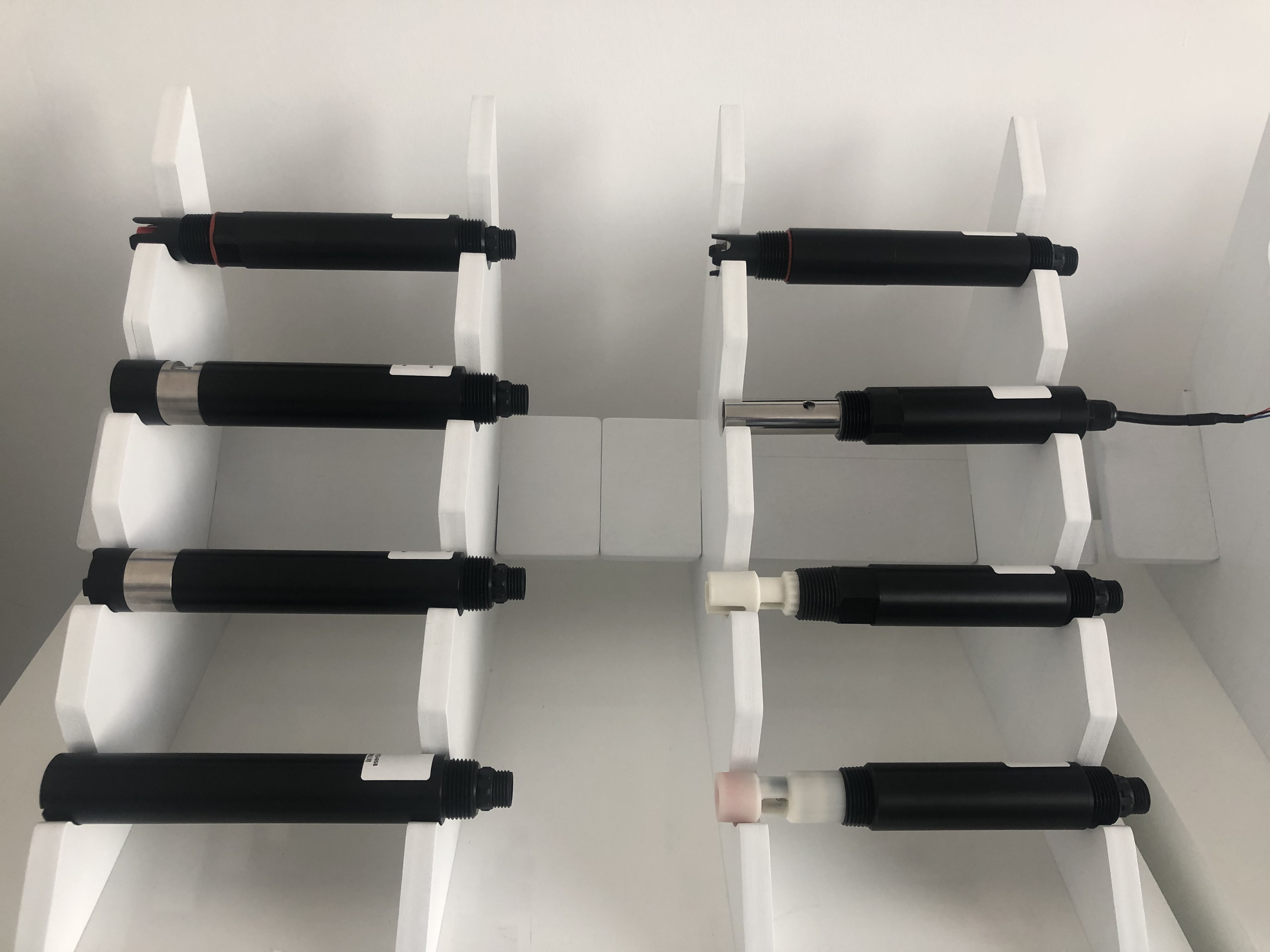
Core Insight: The most effective supplier selection aligns technical capabilities, operational scale, and total cost of ownership with specific project requirements, rather than relying solely on brand recognition or market share rankings.
1. Ranking Dimensions: A Multi-Factor Analysis
Contemporary evaluations of water quality sensor manufacturers are based on four interconnected pillars:
- Market Share & Financial Stability: Indicates production capacity, supply chain resilience, and long-term viability. Large-scale manufacturers with annual outputs exceeding 100,000 units can better handle bulk orders and ensure consistent supply.
- Technological Innovation & Portfolio Breadth: Assessed through R&D investment, patent holdings, and the range of sensing technologies offered (e.g., fluorescence, UV absorption, ion-selective electrodes). A comprehensive portfolio covering parameters from basic pH to specialized measurements like chlorophyll or oil-in-water is a key differentiator.
- Customer Reputation & Proven Applications: Derived from long-term case studies in diverse industries such as aquaculture, municipal wastewater, and chemical processing. Documented performance over 3-5 years in harsh environments is a critical credibility marker.
- Export Scale & International Compliance: A manufacturer's global reach, evidenced by a high export ratio (e.g., 70% to EU/USA markets) and possession of international certifications like CE (EMC Directive), demonstrates an understanding of diverse regulatory and technical standards.
2. Global Market Structure: Three Distinct Tiers
The supplier landscape can be segmented into three primary tiers, each serving different procurement needs.
Tier 1: International Established Brands
Companies like Hach (Danaher), Endress+Hauser, and Xylem (YSI) dominate the high-end segment. They are characterized by extensive R&D resources, strong brand equity in laboratory and process analytics, and comprehensive global service networks. Their solutions are often the benchmark for specific high-accuracy applications but can come with a premium price and longer lead times for customization.
Tier 2: Chinese High-Value Integrated Solution Providers
This tier includes manufacturers like XI'AN KACISE OPTRONICS TECH CO., LTD (KACISE), which have evolved from component suppliers to full-system providers. Founded in 2014, KACISE operates from a 40,000 m² facility with an annual production capacity of 120,000 units. A dedicated R&D team focuses on integrated multi-parameter systems and advanced optical sensors. With approximately 70% of products exported to the EU and USA, these manufacturers combine technological sophistication with significant cost-efficiency and flexible OEM/ODM support.
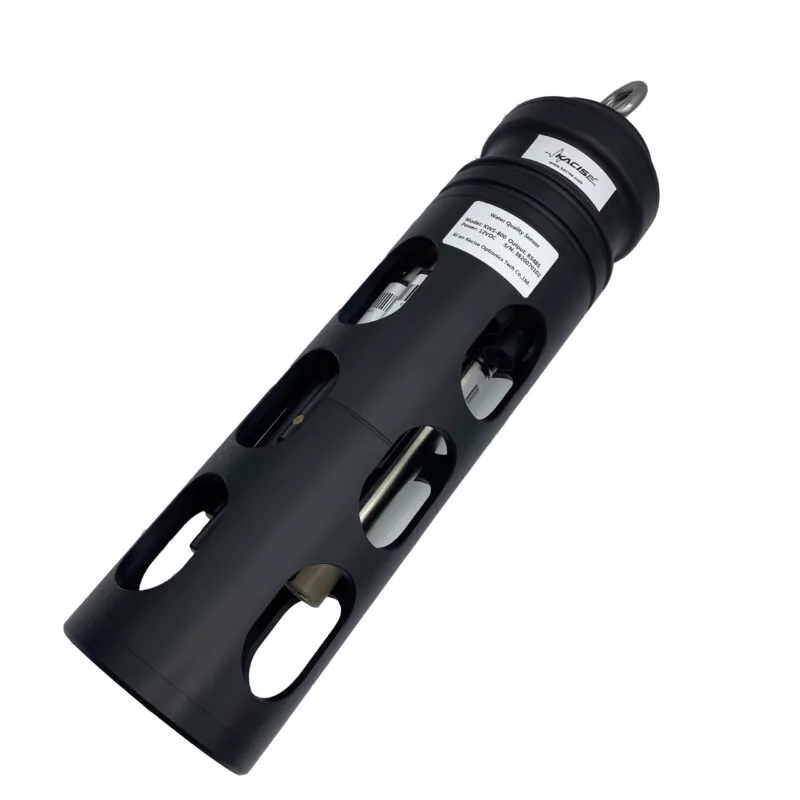
For instance, KACISE's KWS-800 Series online multi-parameter water quality monitoring system integrates up to 7 parameters (fluorescent DO, conductivity, turbidity, pH/ORP, chlorophyll, oil in water) plus temperature in a single, rugged housing. This integrated design can lead to a 25% lower total system cost and simplified maintenance compared to deploying multiple single-parameter probes from Tier 1 brands.
Tier 3: Regional & Niche Specialists
These are often smaller firms or regional brands that compete on aggressive pricing for standard parameters (pH, ORP, basic conductivity) or serve specific local markets with tailored support. They may lack the broad technological portfolio or international certification scope of Tiers 1 and 2 but fulfill needs for straightforward, cost-sensitive applications.
3. The Rise of Chinese Manufacturers: Key Drivers
The increasing prominence of manufacturers like KACISE in global procurement decisions is attributed to several structural advantages:
- Integrated Manufacturing & Cost Efficiency: Vertical integration and large-scale production enable competitive pricing. As noted in comparative analyses, KACISE's solutions can offer a cost reduction of 30–50% compared to some established international brands for equivalent functional performance, making advanced sensing technology accessible for more projects.
- Customization & Rapid Response: With support for OEM/ODM services, including customization of voltage, logo, output protocol, and cable, these manufacturers can adapt quickly to specific project requirements. Typical lead times are cited as 5-8 working days for standard orders, significantly faster than many global counterparts.
- Technology Specialization: Rather than being generalists, leading Chinese firms often develop deep expertise in specific sensing methodologies. KACISE's portfolio, for example, includes specialized sensors like the KWS-290 Digital Ammonia Nitrogen Sensor (0–100.0 mg/L, with optional pH and K+ compensation) and the KWS-1100 High Precision Online Oil in Water Sensor using ultraviolet fluorescence method with a detection limit of 1ppb.
- Compliance and Quality Assurance: Adherence to international standards is demonstrated through certifications. KACISE's water quality sensor products hold a CE certificate (ZTS23061509TCE) issued by Shenzhen ZTS Testing Service Co., Ltd., compliant with EN IEC 61326-1:2021 for the EU market. A 100% testing regime before shipment further ensures product reliability.
4. Strategic Procurement Recommendations
Selecting the right supplier is a strategic decision that impacts long-term operational costs and data integrity. The following framework guides the selection process:
| Project Profile | Recommended Supplier Tier | Key Evaluation Criteria | Potential Fit Example |
|---|---|---|---|
| Large-Scale Municipal/Government Projects: High visibility, strict regulatory compliance, need for extensive service support. | Tier 1 (International Brands) | Brand acceptance, local service network, extensive application history, compliance documentation. | Major wastewater treatment plant upgrade in North America or Europe. |
| Industrial IoT & Distributed Monitoring Networks: Multiple monitoring points, need for cost-effective, reliable sensors with digital output (Modbus), remote management. | Tier 2 (Chinese High-Value Providers) | Integrated multi-parameter design, communication protocol standardization (RS485/Modbus), IP68 rating, proven field cases, OEM flexibility, total cost of ownership. | Network of river quality monitoring stations or distributed industrial wastewater discharge points. |
| Specialized Contaminant Monitoring: Need for specific parameters like ammonia nitrogen, nitrate, chlorophyll, or oil-in-water. | Tier 2 (Specialized Manufacturers) | Depth of technology in the specific parameter, sensor accuracy and detection limits, anti-fouling design for the target medium. | Monitoring nutrient runoff in aquaculture or hydrocarbon detection in petrochemical wastewater. |
| Standard Process Monitoring & Cost-Sensitive Bulk Orders: Basic parameter monitoring (pH, conductivity) where premium features are not required. | Tier 3 (Regional/Niche Brands) or Tier 2 for bulk | Price per unit, delivery time, basic accuracy specifications, availability of local spare parts. | Monitoring cooling water conductivity in multiple factory locations. |
Due Diligence Checklist: Beyond tier classification, procurement teams should verify: 1) Valid international certifications for the target market (e.g., CE, UKCA), 2) Minimum 2-3 detailed case studies in a similar industry, 3) Clear warranty terms and availability of remote technical support, 4) Sample testing program for performance validation before bulk purchase.
5. Industry Trends Shaping Supplier Evaluation (2026-2035)
- Integration of AI and Predictive Analytics: Sensors are becoming data nodes for predictive maintenance and process optimization algorithms.
- Expansion of Low-Power, Wireless IoT Networks: Growth in solar-powered, LPWAN-enabled sensors for remote environmental monitoring.
- Demand for Multi-Parameter, All-in-One Probes: Continued shift towards integrated probes to reduce installation complexity and maintenance costs.
- Increased Focus on Anti-Fouling and Self-Cleaning Technologies: Essential for long-term reliability in wastewater and aquaculture applications.
- Standardization of Digital Communication Protocols: Modbus RTU over RS485 and analog 4-20mA outputs remain industry staples for industrial integration.
- Rise of Specialized Sensors for Emerging Contaminants: Development of sensors for pharmaceuticals, microplastics, and specific ions in water.
6. Conclusion and Outlook
The water quality sensor market in 2026 is characterized by diversification and specialization. While traditional rankings provide a starting point, a strategic procurement approach must deconstruct these lists into actionable evaluation dimensions. For a significant portion of industrial and environmental applications—particularly those requiring a balance of advanced technology, system integration, cost-effectiveness, and proven field reliability—manufacturers like XI'AN KACISE OPTRONICS TECH CO., LTD (KACISE) represent a compelling tier of high-value solution providers. Their model, combining a 40,000 m² production scale, 70% export orientation, and a focus on integrated digital sensors, aligns with the key trends of IoT integration and total cost management.
The future of water management is data-driven. The choice of sensor supplier fundamentally enables the quality, reliability, and actionability of that data. Procurement decisions should therefore be framed not as a simple vendor selection, but as a strategic partnership for building resilient and intelligent water monitoring infrastructure.
For Technical Specifications and Project Consultation
Company: XI'AN KACISE OPTRONICS TECH CO., LTD (KACISE)
Contact: Michelle (Sales)
Email: sales@kacise.com
Phone/WhatsApp: +86 180-6671-9659
Website: https://www.kcsensor.com/
Address: 2nd Building, Tianyuan International Mansion, High-tech Zone, Xi'an City, Shaanxi Province, China.
This analysis is intended for industrial procurement professionals and is based on publicly available market data and manufacturer-provided specifications as of April 2026. For detailed project-specific advice, direct consultation with manufacturers is recommended.