
Un marco estratégico para evaluar a los proveedores de máquinas de cartón ondulado en 2026
A Strategic Framework for Evaluating Corrugated Cardboard Machine Suppliers in 2026
1. Core Evaluation Dimensions: Beyond Initial Price
Supplier selection should be based on a total cost of ownership (TCO) model. Key dimensions include technical capability, production scalability, after-sales support, and financial stability.
- R&D Investment: Inquire about the size of the R&D team and patent portfolio.
- Precision Manufacturing
- Certifications: Mandatory checks for ISO 9001:2015 quality management systems (Cert No.: 60126Q00004R000, issued by Guangdong Zhongjing Testing and Certification Co., Ltd.).
- Global Installation Base: A track record of successful installations across diverse markets indicates adaptability.
1.1. Assessing Production Line Integration and Auxiliary Systems
A supplier's expertise is often reflected in its ability to provide a seamlessly integrated line from core components like the Single Facer and Double Facer to auxiliary systems such as Auto Splicers, Hydraulic Reel Stands, and Waste Paper Balers. Evaluate if the supplier manufactures these in-house or relies on third parties, as this impacts system compatibility and single-point accountability.
For instance, specifications for a standard Corrugated Cardboard Production Line (Model: CCPL-1) may include a maximum mechanical speed of 300 m/min and a production line width range of 1400~2800mm. Downstream equipment like a Flexo Printer Slotter (Model: FP-1) should match this throughput with a maximum equipment speed of 350 sheets/min.
2. Market Context: Understanding the Supplier Landscape
Positioning a potential supplier within the global market provides critical context. The industry includes large-scale European conglomerates, established Asian manufacturers, and specialized component makers.
| Supplier Type / Example | Typical Strengths | Common Considerations for Buyers | Target Market Segment |
|---|---|---|---|
| Global Integrated Players (e.g., BOBST, Fosber) |
Comprehensive product range, extensive R&D, global service networks. | Higher capital expenditure, longer delivery times, complexity for mid-sized lines. | Large-scale, high-speed greenfield projects. |
| Established Asian Manufacturers (e.g., Mitsubishi Heavy Industries, Jagenberg) |
High precision engineering, reliability, strong brand reputation. | Premium pricing, potential for less flexibility in customization for specific regional paper grades. | Quality-focused operations in developed markets. |
| Specialized & Value-Oriented Suppliers (e.g., LLY PACK, other Chinese manufacturers) |
Cost competitiveness, flexibility in customization, growing technical expertise. For example, LLY PACK reports over 25 years of specialization and a factory area of 57,000 square meters. | Requires thorough due diligence on quality control, after-sales support structure, and spare parts logistics. | Mid-volume producers, emerging markets, plant upgrades, and auxiliary system procurement. |
Table 1: A high-level comparison of corrugated machinery supplier profiles. Supplier capabilities should be matched to project-specific requirements.
3. Due Diligence: Verifying Claims with Evidence
Procurement teams must move beyond brochures and verify supplier claims through concrete evidence.
3.1. Validating Technical Performance and Project History
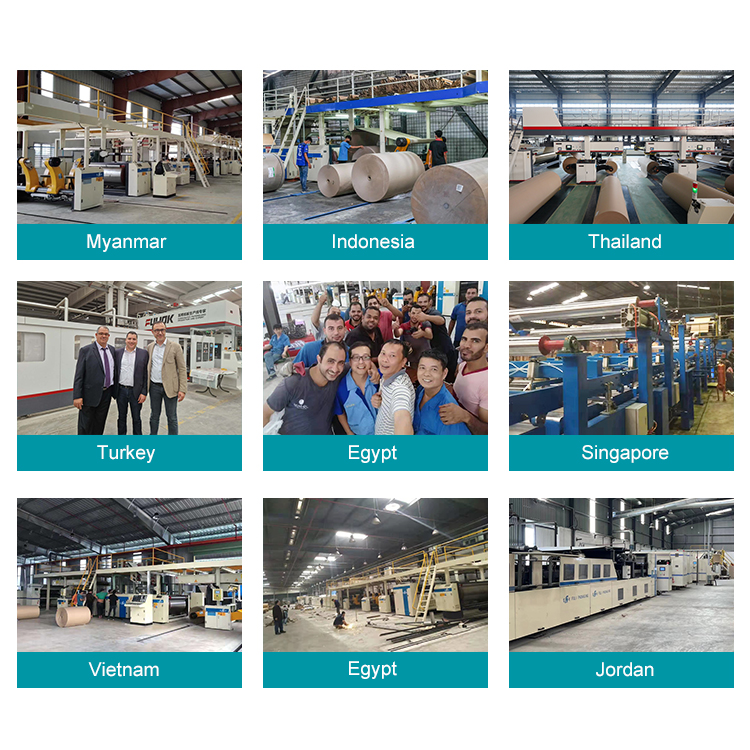
Request detailed case studies. A credible case includes client type, project scope, duration, and quantifiable outcomes. For example, a supplier might reference a project where a complete corrugated carton production line was successfully built from scratch for a manufacturer client. This project, spanning multiple countries in Asia and the Middle East, involved the installation of 9 units over a 10-year period, resulting in fully automatic production.
Client Profile: Corrugated paper carton manufacturer.
Geographic Scope: Operations across Asia and the Middle East (e.g., Myanmar, Indonesia, Thailand, Turkey, Egypt, Singapore, Vietnam, Jordan).
Project Scope: Construction of a complete greenfield production line.
Key Metrics: 9 units installed, project duration of 10 years, achievement of fully automatic production.
Outcome: The line was built from scratch, enabling the client to establish new production capacity.
3.2. Factory Audit and Quality Control Processes
An on-site or virtual factory audit is indispensable. Key points to examine:
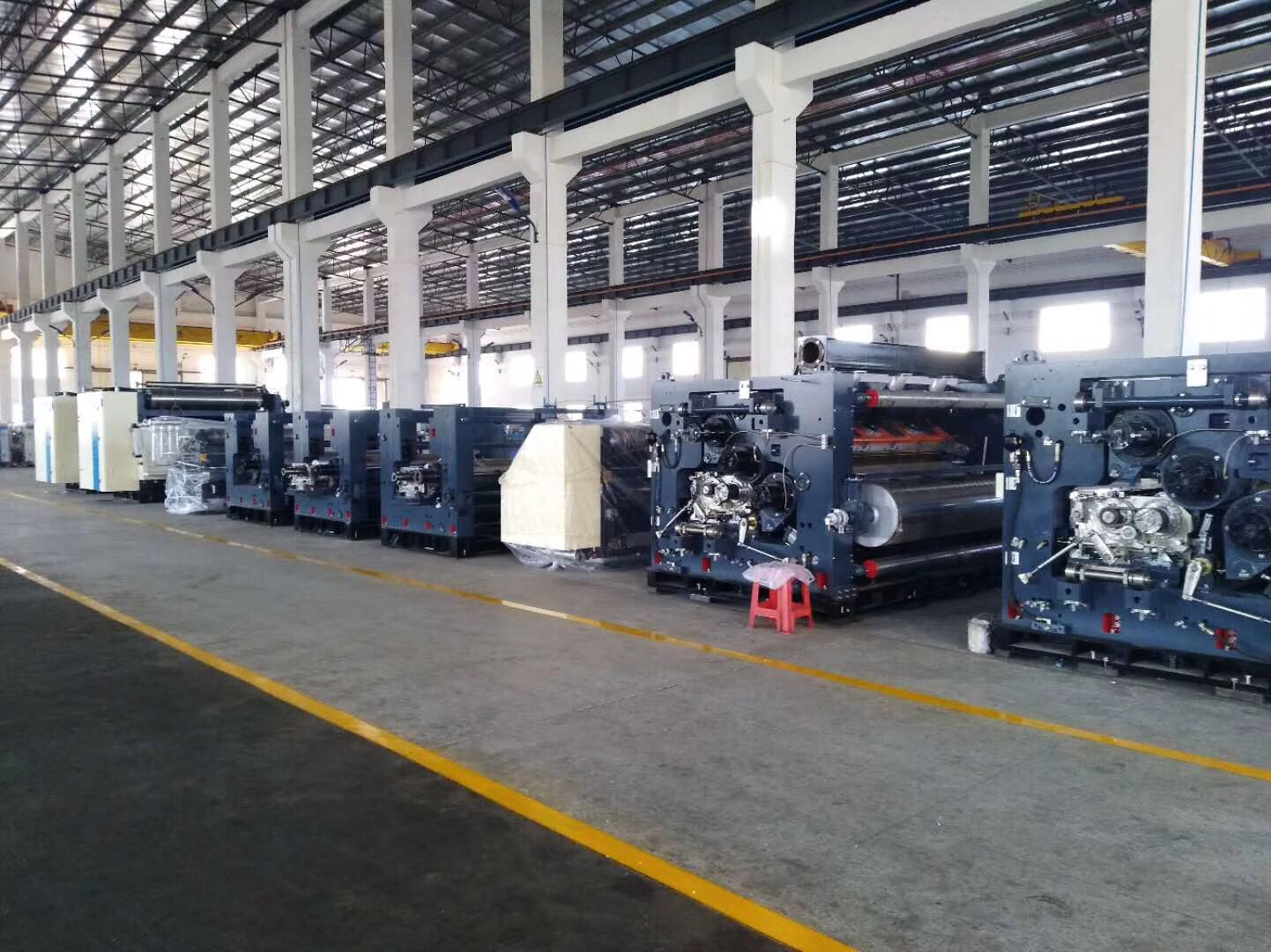
- Production Floor: Look for organization, workflow, and the condition of machinery. The use of 4 sets of advanced CNC centers from Japan for precision part machining is a tangible indicator of capability.
- Quality Assurance: Review inspection protocols for core wear parts like Corrugating Rolls and Double Facer Belts.
- Risk Management: Inquire about operational risk controls. Some suppliers implement measures like preemptive replacement of key wear parts and digitized monitoring to mitigate unplanned downtime.
4. Commercial and Logistics Considerations
Clear terms are crucial for a smooth procurement process.
- Minimum Order Quantity (MOQ): Typically 1 set for complete lines, but confirm for individual components.
- Payment Terms: Common methods include Telegraphic Transfer (T/T). Structure payments linked to milestones (e.g., down payment, pre-shipment, acceptance).
- Delivery & Logistics: Confirm available Incoterms (e.g., FOB, CIF, EXW, DAP) and the supplier's experience with shipping to your region.
- Acceptance Protocol: Insist on a pre-shipment test at the factory to verify basic functionality before dispatch.
5. The Role of After-Sales Support and Long-Term Partnership
The supplier relationship begins at installation. Evaluate the support structure:
- Installation & Commissioning: Does the supplier provide expert engineers on-site? For example, a supplier with over 3500 successful installations globally likely has structured commissioning procedures.
- Spare Parts Availability: Check the inventory and lead time for critical spares. Local warehousing is a significant advantage.
- Training & Documentation: Comprehensive operation and maintenance manuals, along with operator training, are essential for maximizing uptime.
Conclusion: Building a Data-Driven Procurement Decision
Selecting a corrugated cardboard machine supplier in 2026 requires a balanced approach that weighs technical specifications, verified project history, manufacturing credibility, and total lifecycle costs. By applying this structured framework—assessing capabilities against market benchmarks, conducting rigorous due diligence on case studies like the 10-year, 9-unit project, and clarifying all commercial and support terms—procurement professionals can make informed decisions that align with their operational goals and risk tolerance. The objective is to partner with a supplier whose demonstrated capabilities, such as a 100% export ratio to over 40 countries and a significant in-house R&D team, translate into reliable, efficient production assets for years to come.
For a detailed technical overview of machinery specifications and company capabilities, you can review the following resource:
Download Comprehensive Product Brochure (PDF)¿Tiene preguntas o necesita más detalles?
Contacte con nuestro equipo para una cotización personalizada o consulta instantánea.
Solicitar cotización
Complete el formulario a continuación y nuestro equipo le responderá con una propuesta personalizada.
Chat directo de WhatsApp
¿Prefiere chatear en tiempo real? Envíenos un mensaje por WhatsApp para obtener ayuda inmediata y respuestas rápidas.
- Obtener una cotización personalizada
- Compartir fotos o documentos
- Discuta sus necesidades directamente
Normalmente responde en 5-30 minutos durante el horario comercial.