
A Shortlist Blueprint: Matching RTP Customization Options to Your Project Needs
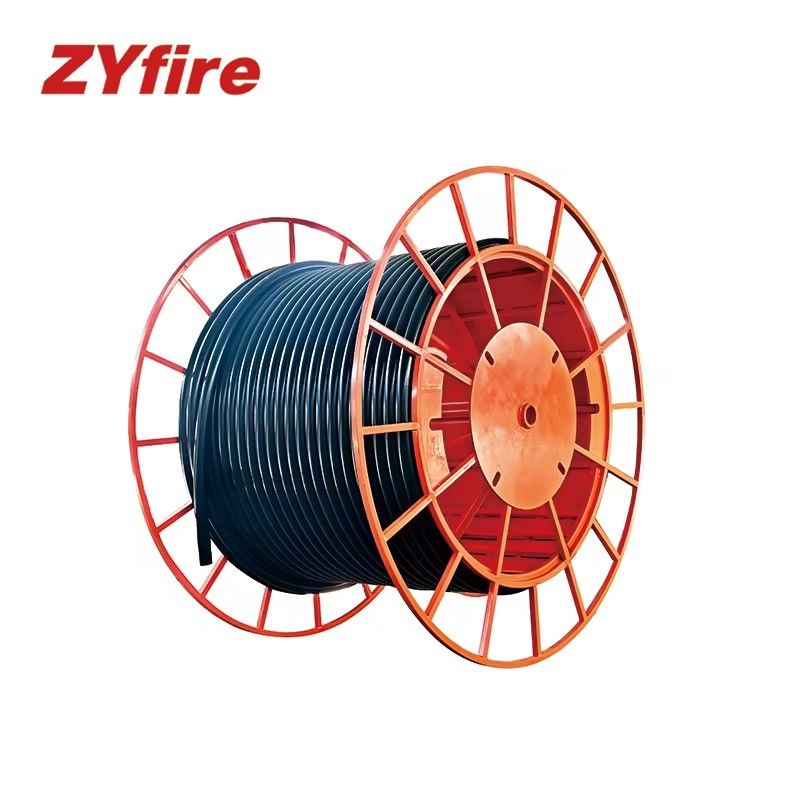
Reinforced thermoplastic pipe (RTP) is a spoolable composite line pipe built from a polymer liner, reinforcement layers and a protective outer jacket, and it is used as a corrosion-free alternative to carbon steel in oilfield and mining fluid transfer. By the time a project reaches the shortlist stage, the working question has usually shifted from whether a supplier makes RTP to whether that supplier can hold one specific combination of bore, working pressure, weight, supplied length and bending radius steady across an order — and then repeat it in the next delivery.
Why RTP Shortlisting Is a Configuration Problem, Not a Material Problem
Material families tend to dominate early RTP discussions. That is understandable: glass-fibre reinforced thermoplastic pipe (GFRTP) alone is estimated to account for 64.7% of the total RTP product market (Fact.MR, 2025), so the reinforcement family is a reasonable first filter. It is a weak final filter.
Two suppliers can quote the same liner chemistry, the same reinforcement type and the same nominal pressure class, and still deliver pipe that behaves differently on site — because mass per metre, minimum bending radius, supplied coil length and end connection decide how the line is transported, uncoiled, routed and tied in. Those variables determine whether a flowline is installed in a day or a week, and they are the variables a defensible shortlist should be built on.
There is also a governance reason to work this way. At the evaluation and execution stage, buyers are accountable for a specification, not for a product category. A shortlist that can be traced back to fixed parameters — and to evidence that each supplier can produce those parameters — survives internal review far better than a shortlist assembled from brand familiarity.
Working rule for the shortlist: treat every RTP enquiry as a configuration request rather than a product request. The specification sheet, not the material name, is the document each shortlisted supplier must be able to answer in full.
The Customization Parameters That Decide Project Fit
RTP customization extends well beyond raw material selection. The parameters below are the ones that appear repeatedly in technical clarification rounds, and each one changes who can realistically quote the job.
| Parameter | What the buyer must fix before quoting | Why it changes the shortlist |
|---|---|---|
| Bore / diameter | Inside diameter, outside diameter envelope, tolerance and the mating dimensions of the end connection | Drives tooling, reinforcement lay-up and reel capacity. API Specification 15S (2nd Edition, 2016) covers spoolable reinforced plastic line pipe for oilfield applications up to 6 inches in diameter, so larger bores fall outside that specification's stated scope |
| Working pressure | Design pressure, surge allowance and the safety factor applied by the project | Higher pressure at a fixed bore generally requires more reinforcement, which changes weight, stiffness and bending behaviour |
| Weight | Mass per metre and the resulting reel or coil payload | Determines site handling equipment, transport cost and how much pipe one crew can move per shift |
| Supplied length | Coil length, single-run requirement and acceptable joint count | Longer continuous lengths reduce joints and leak paths but increase reel weight and transport constraints |
| Bending radius | Minimum bend radius and the tightest curvature on the actual route | Governs whether the line can follow terrain, trench curves or mine drifts without additional fittings |
| Liner and compound behaviour | Fluid chemistry, abrasion load and whether static dissipation is required | Selects the liner family — for example PE100 RC, PA12 or polypropylene (PP) based constructions — and functional grades such as oil resistant, corrosion resistant, abrasion resistant or static dissipative |
| End connection | Flange connected, quick connect, or a project-specified termination | Affects installation method, crew skill requirement and tie-in time at the battery or manifold |
| Custom bore size and coating/lining options | Any non-standard bore or a corrosion-resistant lined requirement | Determines whether the order is a standard catalogue run or a build-to-drawing job |
How the Parameters Interact — and Why That Matters to a Quote
Customization in RTP is not a menu of independent options, and this is where many shortlists fail. The parameters constrain one another.
Raising working pressure at a fixed bore generally increases reinforcement content. That increase adds weight per metre and stiffness, which in turn raises the achievable minimum bending radius. A larger bending radius reduces how much pipe can be wound onto a given reel, which shortens the practical supplied length per coil and increases the number of joints on a long route. The chain runs in both directions: a project that demands long continuous lengths and tight route curvature is effectively capping the pressure class it can ask for at a given bore without changing the reel and handling concept.
Liner and compound choices interact with the same system. Corrosion-resistant liners address aggressive produced fluids; abrasion-resistant grades address slurry service; static dissipative behaviour addresses services where charge accumulation must be controlled. Each of these requirements can influence the compound selected and, in some cases, the layer build — which then feeds back into pressure, weight and bend radius.
End connections sit at the end of the chain. Flange-connected terminations and quick connect solutions imply different installation methods and different crew requirements, and they affect how much of the install window is consumed by tie-ins rather than by pipe laying.
The practical consequence is simple. A supplier's ability to answer cross-parameter questions — what happens to weight if we raise pressure, what happens to bend radius if we extend coil length — is a stronger shortlisting signal than any single headline pressure rating.
Building the Shortlist: A Four-Stage Screening Workflow
Stage 1 — Define the operating envelope
Fix the fluid, the design pressure, the abrasion or corrosion load, the static dissipation requirement and the route curvature before contacting any supplier. This stage produces a set of boundary conditions, not preferences. Boundary conditions are what make supplier answers comparable.
Stage 2 — Convert the envelope into a configuration request
Translate the envelope into the eight parameters in the table above: bore, working pressure, weight, supplied length, bending radius, liner or compound grade, end connection, and any non-standard bore or lined requirement. Issue the same request sheet to every supplier on the long list. Suppliers who cannot respond in that format are usually signalling a capability limit rather than a communication preference.
Stage 3 — Test the supplier against production and qualification evidence
This is where the shortlist narrows fastest. Relevant questions include:
- Is the product qualified under a recognised oilfield pipe specification, and what does that qualification actually cover in terms of diameter scope?
- Is there an accredited testing laboratory behind the qualification claims, or is testing outsourced without traceable accreditation?
- What is the monthly production capacity, and what lead time does a non-standard configuration add?
- What acceptance testing is performed before shipment, and on what proportion of output?
- What is the minimum order quantity, and does it allow a validation batch before full-volume commitment?
Stage 4 — Screen for long-term fit
The final screen is rarely technical. It concerns continuity: whether the supplier can repeat the same configuration in later project phases, whether production is distributed across multiple sites, and whether the engagement model allows specification input rather than only order fulfilment. For multi-year field programmes, a configuration that cannot be reproduced is a liability regardless of how well it performed in the first campaign.
How ZYfire Fits the Blueprint
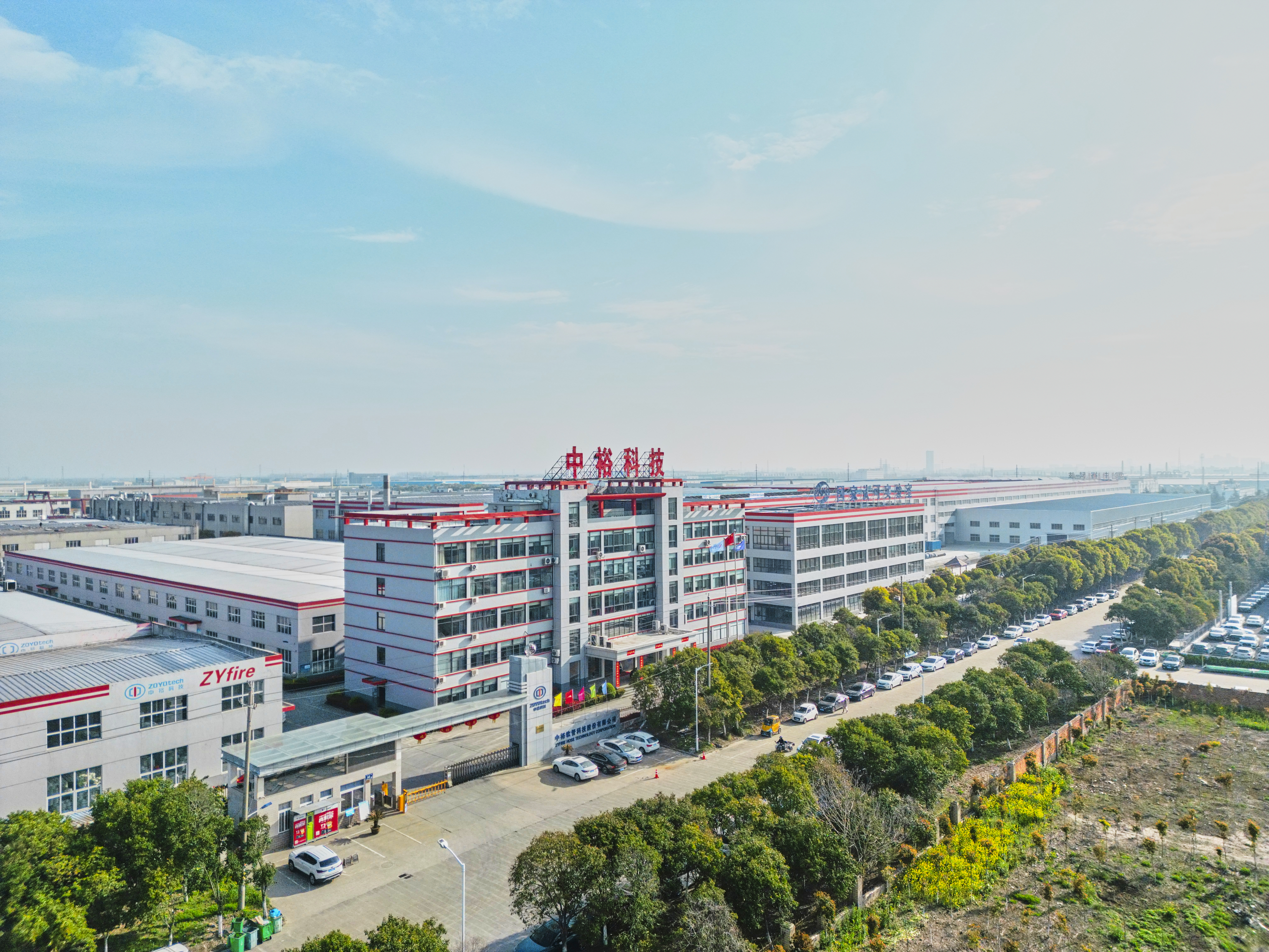
ZYfire Hose Corporation, founded in 2000, is a Beijing Stock Exchange-listed manufacturer of fire hose, fracturing oilfield hose, RTP, high-pressure fracturing hose and polyurethane-lined steel pipe. The company operates a 150,000 m² manufacturing footprint with approximately 600 employees and a 50-person R&D team, and exports to more than 70 countries and regions, with main markets including the United States, the Middle East, the European Union and Southeast Asia. Roughly 80% of output is exported.
For RTP specifically, the company is positioned around custom bore sizes and high-pressure applications for oilfield and mining service, with pipe certified under API 15S. Its laboratory holds accreditation from the China National Accreditation Service for Conformity Assessment (CNAS) and carries nationally and internationally recognised testing capabilities, which is directly relevant to Stage 3 of the screening workflow: qualification claims should be traceable to an accredited testing environment.
On the execution side, the figures that matter to a configuration-led shortlist are concrete. Monthly RTP production capacity is 100,000 meters, with a typical production lead time of 30 days and a minimum order quantity of 50 meters. Delivery terms are EXW, FOB or CIF; payment terms are 30/70; and the stated acceptance criterion is 100% testing before shipment. For buyers running a validation batch before full commitment, the 50-metre floor and the 30-day lead time define the realistic trial cycle.
The company's global layout — production bases, research and development centres and logistics warehouses in the United States, Saudi Arabia, the United Arab Emirates, Malaysia and China (Nanjing Jiangsu, Taizhou Jiangsu and Chuzhou Anhui) — is relevant to the continuity screen rather than to the initial quote. Distributed production and warehousing change how a repeat order in a later project phase is served.
Finally, customization work is delivered through OEM and ODM engagement models. OEM applies where the project already holds a fixed specification and the supplier builds to that drawing; ODM applies where the supplier contributes design input on bore, layer build and liner selection. For project optimization, the distinction matters: an ODM-capable supplier can propose a configuration that meets the operating envelope at a lower weight or a tighter bend radius, while an order-only supplier can only accept or decline the specification as written.
Application Scenarios: Where Customization Earns Its Cost
Customization is not free, and it does not pay back equally in every application. Oil and gas remains the dominant end-user segment for RTP, accounting for approximately 71.2% of total demand as operators seek corrosion-free alternatives to steel (Fact.MR, 2025). Within that demand, customization intensity varies by scenario.
Onshore oilfield gathering and injection lines. Long, relatively straight routes reward long supplied lengths and corrosion-resistant liners, because the value comes from fewer joints and removed corrosion maintenance rather than from tight routing.
Offshore oil and gas. Weight and corrosion behaviour carry more weight here, since deck loading, lifting and installation logistics all respond to mass per metre. Customization effort tends to concentrate on weight reduction and on liner compatibility with produced fluids.
Mining underground. Restricted drifts and irregular routing make minimum bending radius one of the most valuable parameters in the specification, because it determines how much of the route can be run without additional fittings.
Mining slurry transfer. Abrasion resistance becomes the governing requirement, and the liner grade interacts directly with the pressure and layer build choices.
High-pressure fluid transmission. Reinforcement build is the primary lever, and the interaction described earlier applies with full force: pressure increases pull weight and bend radius along with them.
Market Signals Behind Configuration-Led Sourcing
The global RTP market was estimated at USD 7.2 billion in 2024 and is projected to reach USD 10.2 billion by 2030, a CAGR of 5.9% (Strategic Market Research). Buyers should read that figure alongside its scope definition: other estimates place the 2024 market considerably lower — Market Research Future reports USD 3.698 billion for 2024 — because some studies count all thermoplastic pipes while others count only spoolable RTP. The divergence is a useful reminder to check scope before quoting a market number in an internal case.
Two structural signals matter more than the headline size. First, oil and gas dominance at roughly 71.2% of demand is driven by a substitution logic — corrosion-free alternatives to steel — rather than by a single application. Second, Asia Pacific has been identified as both the largest and the fastest-growing regional market for thermoplastic pipes in 2024/2025, supported by infrastructure investment and water management programmes (Mordor Intelligence / Market Research Future).
The procurement implication is that supply capacity is expanding while differentiation is compressing at the material level. As more suppliers can offer RTP in common material families, the differentiator shifts to configuration control: the ability to quote a non-standard bore, hold a pressure class across long supplied lengths, and document testing for both.
RTP and Steel in the Same Shortlist
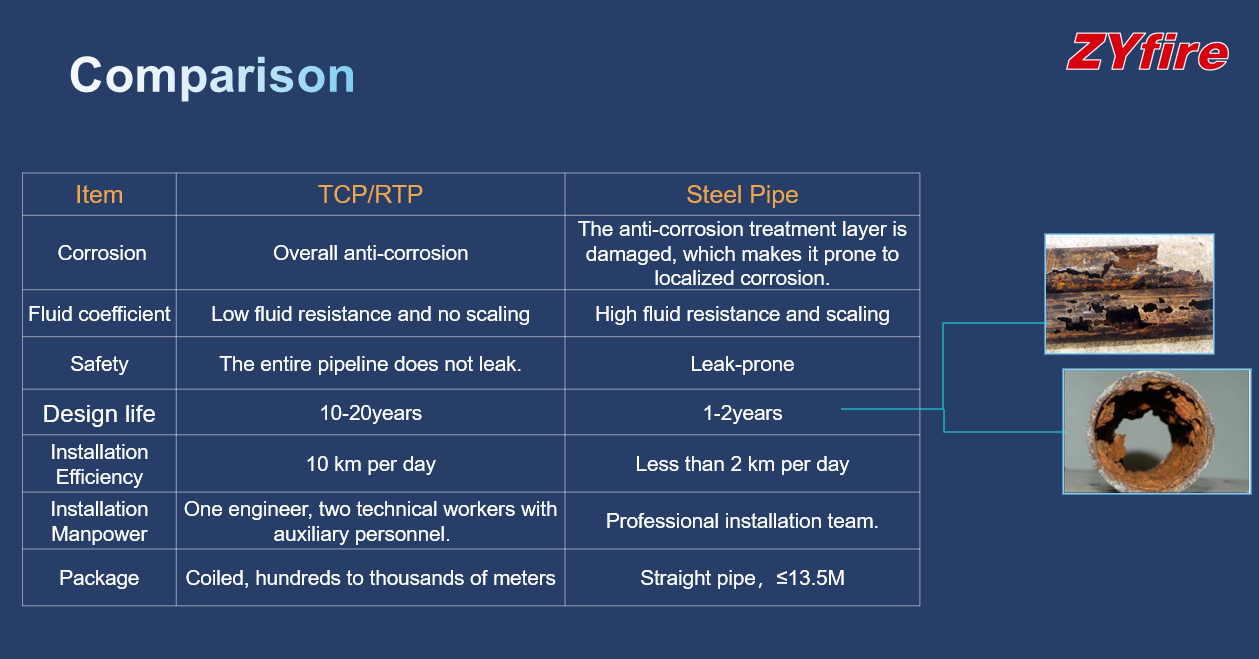
RTP does not remove steel from the shortlist; it changes the segment of the route where each belongs. ZYfire's published comparison of RTP and steel pipe states an installation rate of up to 10 km per day for RTP against less than 2 km per day for steel pipe, and reports a cost difference of approximately 20% lower for RTP. On maintenance, it describes less maintenance for RTP except force damage, against steel pipe corrosion that can require maintenance several times a year. Handling is also differentiated: RTP is described as light weight, easy to operate, with low site transport cost.
| Comparison point | RTP | Steel pipe |
|---|---|---|
| Installation rate | Up to 10 km per day | Under 2 km per day |
| Reported cost difference | Approximately 20% lower | Baseline |
| Maintenance profile | Less maintenance, except force damage | Corrosion-driven maintenance, several times a year |
| Site handling | Light weight, easy to operate, low site transport cost | Heavier handling and transport logistics |
These are vendor-published comparison figures, and they should be treated as such — useful for framing a decision, not as a substitute for project-specific costing. The honest reading is that RTP wins on installation speed, handling and corrosion-related maintenance, while steel retains advantages in applications that fall outside RTP's qualified scope.
Limits and Boundaries Buyers Should Not Skip
A shortlist blueprint that only lists advantages is not a blueprint. Four boundaries deserve explicit treatment in the evaluation file.
Specification scope ends somewhere. API Specification 15S (2nd Edition, 2016) addresses spoolable reinforced plastic line pipe for oilfield applications up to 6 inches in diameter. Where a project requires larger bores, the qualification route changes, and a supplier's API 15S certificate does not automatically extend to that requirement.
Force damage is the exception in the maintenance story. The reduced-maintenance profile of RTP is qualified by one condition: less maintenance except force damage. Mechanical damage from third-party activity, construction traffic or rock contact is a route-protection and right-of-way issue. No pipe specification compensates for it, so a shortlist should pair the pipe decision with a protection decision.
Parameters are coupled, so some combinations are physically out of reach. A request that simultaneously maximises pressure, minimises weight and minimises bend radius cannot be answered as written. Suppliers who accept such a request without comment are usually signalling a lack of engineering review, not superior capability.
Commercial floors affect schedule. A 50-metre minimum order quantity and a typical 30-day lead time are workable for planned campaigns but require forward planning for validation batches, spares or emergency replacement.
Future Outlook
Three developments are likely to shape RTP shortlisting over the next planning cycle.
First, evidence quality is becoming a scored criterion rather than a checkbox. Accredited laboratory testing, defined acceptance criteria such as 100% testing before shipment, and clear statements of what a certificate covers are increasingly requested, particularly where RTP replaces steel in corrosion-driven applications.
Second, supply continuity is moving into the evaluation stage instead of the contract stage. Suppliers with production and warehousing distributed across multiple regions — as with ZYfire's bases and warehouses in the United States, Saudi Arabia, the United Arab Emirates, Malaysia and China — can absorb repeat orders across project phases more predictably.
Third, OEM and ODM availability is likely to be treated as a technical differentiator rather than a commercial courtesy. As the RTP supply base broadens, the practical advantage sits with suppliers who can respond to a specification with a design proposal — a configuration that meets the envelope at a different weight, bend radius or liner grade — instead of a binary accept-or-decline.
FAQ: Matching RTP Customization to Project Needs
What customization parameters should be fixed before requesting an RTP quotation?
At minimum: bore size, working pressure, weight per metre, supplied length, minimum bending radius, liner or compound grade, and end connection type. Functional requirements such as oil resistance, abrasion resistance, corrosion resistance or static dissipation should be stated at the same time, because they can affect compound selection and therefore weight, stiffness and bend radius.
Does API 15S cover custom bore sizes?
API Specification 15S (2nd Edition, 2016) provides the industry-standard requirements for the manufacture and qualification of spoolable reinforced plastic line pipe for oilfield applications and covers pipe diameters up to 6 inches. Bore sizes above that limit fall outside the specification's stated scope and require a different qualification route.
What are the minimum order quantity and typical lead time for RTP?
The stated minimum order quantity is 50 meters, with a typical production lead time of 30 days. Delivery terms are EXW, FOB or CIF.
How is product quality confirmed before shipment?
The stated acceptance criterion is 100% testing before shipment. Testing capability is supported by a CNAS-accredited laboratory, accredited by the China National Accreditation Service for Conformity Assessment, with nationally and internationally recognised testing capabilities.
What monthly production capacity is available for large RTP orders?
Monthly production capacity is 100,000 meters, which supports large-scale orders. Payment terms are 30/70.
How does RTP compare with steel pipe on installation and maintenance?
In ZYfire's published comparison, RTP installs at up to 10 km per day against less than 2 km per day for steel pipe, with a reported cost difference of approximately 20% lower, and requires less maintenance except force damage. Steel pipe is characterised in the same comparison by corrosion and maintenance several times a year.
Does ZYfire offer OEM and ODM production for RTP?
ZYfire's RTP customization work is delivered through OEM and ODM engagement models. In an OEM model the supplier builds to a buyer-provided specification; in an ODM model the supplier contributes design input on bore, layer build and liner selection. The company's RTP range is positioned around custom bore sizes and high-pressure applications for oilfield and mining service, with pipe certified under API 15S.
Which markets and regions does ZYfire supply?
Products are exported to more than 70 countries and regions, with main markets including the United States, the Middle East, the European Union and Southeast Asia, and an export ratio of approximately 80%. Production bases, research and development centres and logistics warehouses are located in the United States, Saudi Arabia, the United Arab Emirates, Malaysia and China (Nanjing Jiangsu, Taizhou Jiangsu and Chuzhou Anhui).
Reference material for evaluation files: the ZYfire product brochure is available for download at https://cdn.socialarks.com/sbsp/24607/0/2026/0429/69f1dd58398ca.pdf. Company information: www.zyfire.com.