
A Scorecard for Long-Term Custom Casual Apparel Suppliers
The global casual wear market was valued at USD 645.22 billion in 2025 and is projected to reach USD 906.32 billion by 2034, according to Fortune Business Insights. Every phase of that expansion pulls more brands into private label casual apparel, and each of them eventually reaches the same procurement decision: which manufacturer can be relied on for the next three or four seasons, rather than for the next purchase order.
Sample quality and unit price answer that question only partially. A sample describes what a factory can do once, under supervised conditions, with the buyer watching. It says nothing about whether a monthly capacity promise survives a peak season, whether a fabric test report still covers the material actually being dyed, or whether defects found three weeks after delivery are handled at all. This article sets out a three-pillar evaluation scorecard — capacity and continuity, certification and process durability, and after-sales structure — and applies it to figures published by Lihongwear, the export trade name of Guangzhou Lihong Apparel Trade Co., Ltd., a Guangzhou-based OEM/ODM manufacturer of men’s casual apparel serving Europe, America, Southeast Asia, the Middle East and Australia.
Why continuity, not sample quality, is the real evaluation problem
A sample is a controlled experiment. Production is not. Once an order enters bulk manufacturing, variables appear that a single sample never exposes: a new fabric lot with slightly different shrinkage, a second sewing line running the same style, cutting tolerance spread across more plies, and print or embroidery settings re-set by a different operator. For custom casual apparel — hoodies, T-shirts, long-sleeve tops, oversize fits, street-style silhouettes — these variables show up as visible differences between the first shipment and the fourth.
Unit price has the same limitation. A quotation is comparable only when fabric weight, fibre composition, construction and embellishment method match. A 360g hoodie and a lighter fleece garment are not the same product at two prices; they are two products. Buyers who compare quotations without locking specification first end up re-scoring suppliers after the first delivery, which is the most expensive point at which to discover a mismatch.
The practical consequence is that long-term supplier evaluation has to move from evidence of capability to evidence of continuity. Three questions carry most of the weight: can the supplier still deliver in month nine; will the goods pass compliance checks in the destination market; and what happens when something goes wrong.
The three-pillar scorecard at a glance
| Pillar | Question it answers | What to ask for | Worked example (Lihongwear) |
|---|---|---|---|
| Capacity & continuity | Can the supplier repeat, scale and replenish? | Daily and monthly output, stock depth, MOQ logic, committed lead times | 5,000 m² plant; 1,500 pcs daily output; 45,000 pcs monthly; 500,000 pcs annual capacity; 200,000+ pcs ready stock; custom MOQ from 200 pcs; 3-day stock dispatch, 15–25 day custom production |
| Certification & process | Will the goods pass compliance checks and stay consistent? | Test reports with certificate numbers, scope and standard; QC stages; AQL reference | CTI test reports under GB 18401-2010 Category B covering items 6252, 6744 and 6749; 7-stage AQL quality control |
| After-sales structure | What happens when a defect reaches the buyer? | Named contact, response commitment, defect window, progress traceability | Dedicated order follower; reply within 2 hours on business days; defect returns handled within 7 days of receipt |
Pillar one: reading capacity and continuity claims
Capacity is the easiest pillar to measure and the easiest to overstate, because a single strong week can be presented as a baseline. The useful discipline is to read capacity as a set of interlocking numbers rather than as one headline figure.
Lihongwear’s published figures describe a 5,000 m² production facility supported by an in-house team of more than 100 specialists, with a daily output of 1,500 pieces and a monthly capacity of 45,000 pieces of knitted and woven garments. Annual production capacity is stated at 500,000 pieces, and standing stock exceeds 200,000 pieces across more than 50 styles. Export accounts for 80% of output.
Three internal checks make these numbers more useful than they first appear:
- Daily against monthly. A daily output of 1,500 pieces is consistent with a monthly figure of roughly 45,000 pieces on a normal working calendar. When the two numbers are inconsistent, the mismatch usually reveals which one is aspirational.
- Capacity against stock. Monthly capacity describes what can be made; standing stock describes what can be shipped without production. The 200,000+ piece stock position is what makes a three-day dispatch promise on spot goods physically possible, and it is separate from the 45,000-piece monthly production capability.
- Capacity against minimum order logic. A plant that runs at 45,000 pieces a month and still accepts custom orders from 200 pieces per style is signalling a mixed-model workflow, which matters to brands running several small private label styles rather than one large block order.
Lead times should be read the same way. Lihongwear distinguishes two tracks: spot goods shipped within 3 days, and custom orders running 15–25 days from sample confirmation to bulk delivery. Spot goods carry no minimum order and support arbitrary mixed wholesale; custom orders start from 200 pieces per style. For a buyer, that structure defines which decisions can be made late. Replenishment can be decided close to the selling season; a new custom silhouette cannot.
Pillar two: certification — what is actually certified
Certification is only useful when the document names the article it covers, the standard applied, the issuing laboratory and the market it supports. A certificate that lists a fabric the buyer is not ordering, or a category that the destination market does not recognise, adds paperwork without reducing risk.
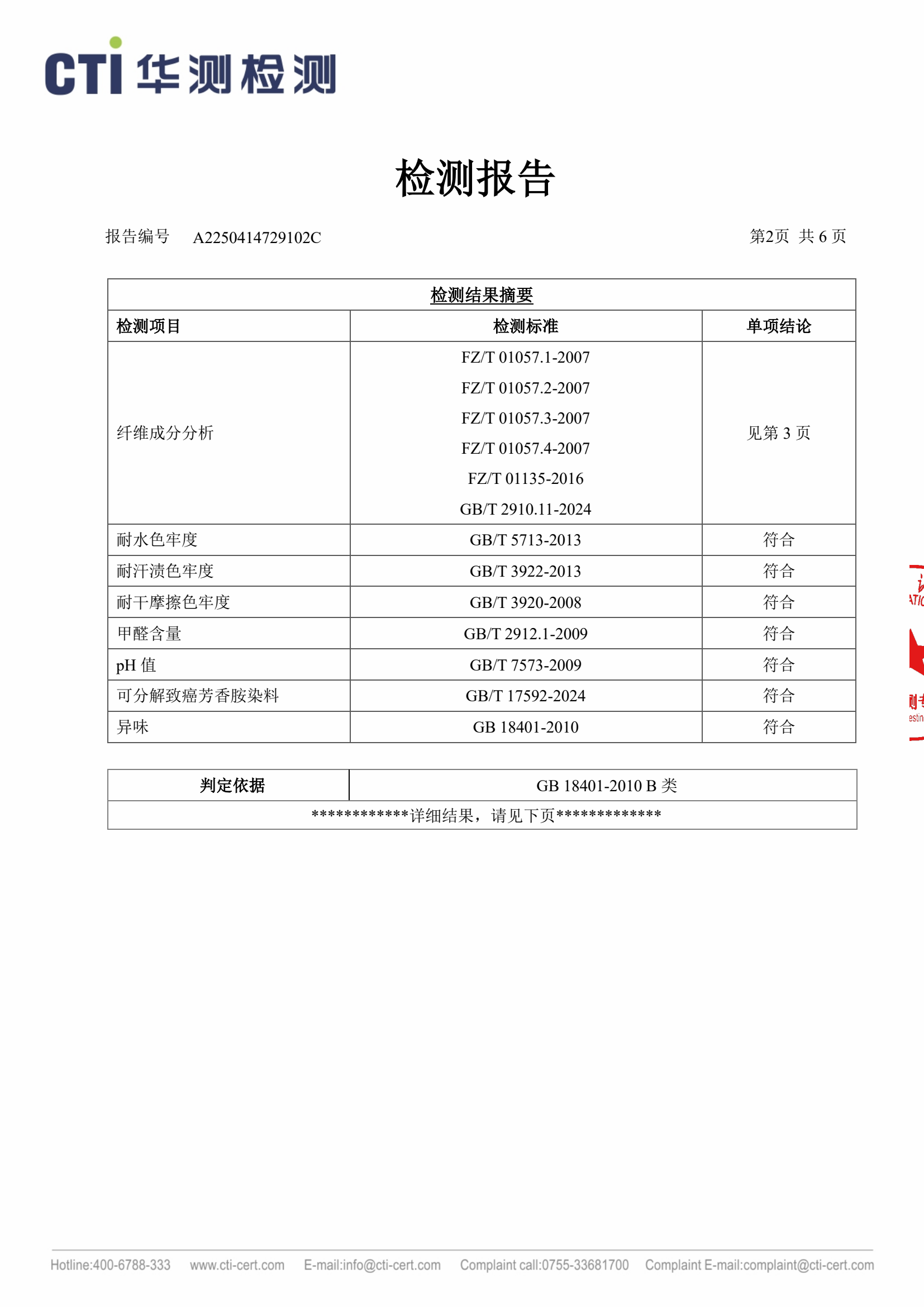
For the custom casual apparel ranges discussed here, the relevant documentation is a set of textile safety test reports issued by Centre Testing International Group Co., Ltd. (CTI Tianjin) under the Chinese national standard GB 18401-2010 Category B. That standard addresses fibre composition, colour fastness, formaldehyde content and decomposable aromatic amine dyes — the parameters most frequently checked when casual apparel crosses a border.
The published certification set is specific rather than general:
- Item 6252 (Men’s Basic Apparel) holds two CTI certifications, numbered A2250414729102C and A2250308141104CR1, both under GB 18401-2010 Category B, based respectively on a CTI Textile Safety Inspection Test Report and a CTI Textile Safety Test Report.
- Item 6749 (Long Sleeve Shirts) is covered by certification number A2250414729101C, issued by CTI Tianjin under the same standard.
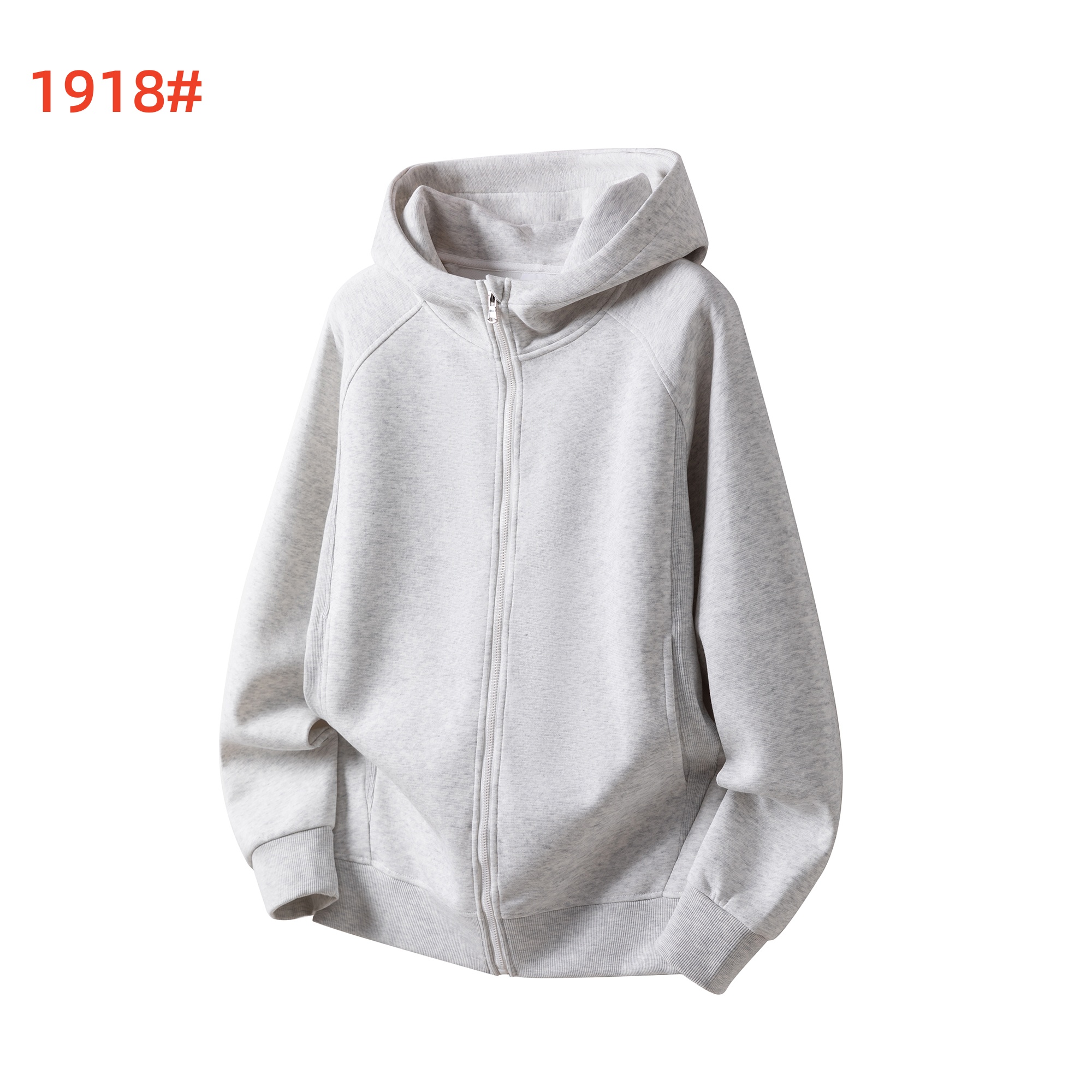
- Item 6744 (Hoodies & Sweatshirts, including the 360g hoodie) is covered by a CTI Textile Safety Test Report under GB 18401-2010 Category B. The certified scope includes the full range of men’s hoodies, long-sleeve shirts, T-shirts and other garment fabrics, and is stated as valid globally.
Certification adoption is rising across the wider industry, not only in this supply chain. OEKO-TEX reports issuing more than 50,000 certificates between 2023 and 2024, an increase of 22%, which indicates how quickly chemical safety and regulatory compliance have moved from a differentiator to a baseline expectation among apparel buyers.
How to read a certificate before accepting it
Five fields do most of the work: the certificate number, the issuing laboratory, the standard applied, the product scope, and the market applicability. If the fabric being ordered is not named in the scope — for example, a new blend introduced for a following season — the existing report does not automatically extend to it, and a separate test may be required. That is a normal commercial step rather than a red flag, but it needs to be scheduled into the development calendar.
One boundary deserves emphasis. GB 18401-2010 Category B is a Chinese national standard for textile safety. It is not a substitute for destination-market requirements. Buyers sourcing work-related casual apparel for the European Union, for example, may also need to consider EN ISO 13688:2022, which sets general performance and safety requirements for protective and work-related clothing. The practical question is not “are you certified” but “does this report cover this article for this market”.
Process durability: the 7-stage AQL quality control
Certification covers materials; process control covers repetition. Production runs at Lihongwear follow a 7-stage quality control process aligned with international AQL manufacturing standards, with manual checks for seam endurance, neck symmetry and dimensional retention. Finished goods undergo manual inspection before shipment, and third-party on-site inspection is supported when a buyer wants independent verification.
The three named checks map onto the failure modes that damage casual apparel programmes most often. Seam endurance determines whether a hoodie survives washing without splitting at the sleeve head. Neck symmetry determines whether a T-shirt still looks like the approved sample after twenty pieces. Dimensional retention determines whether a size M from the first run matches a size M from the third. A buyer scoring suppliers can treat these as testable, since each one can be checked against the approved sample on receipt.
Pillar three: after-sales structure, the underweighted pillar
After-sales is usually assessed after a problem occurs, which is the point at which it has already cost money. It is more efficient to score the structure in advance, because structure is visible before the first defect: who the buyer contacts, how quickly a reply is committed, how production progress is reported, and how long the defect window stays open.
The published after-sales model at Lihongwear has four components. A dedicated order follower is assigned as a one-to-one contact for the buyer. Inquiries are answered within 2 hours on business days. Production progress is synchronised in real time through video and photographs, so the order remains traceable between deposit and shipment. Quality-related defect returns and exchanges are handled within 7 days of receipt.
Each element converts into a question a procurement team can ask any supplier:
- Who is the named contact after the order is confirmed, and what is their span of control?
- What response time is committed, and on which days?
- How is in-production status reported — written updates, photos, video, or nothing until shipment?
- How is a defect defined, and how many days after receipt can a claim be raised?
Suppliers that answer these four questions with specifics are easier to hold to a multi-season programme than suppliers that answer with assurances.
Turning the scorecard into a scoring decision
The pillars are not equally important for every programme, so the weighting should follow the buying model. A replenishment-driven e-commerce business is exposed to stock availability and dispatch speed; a private label brand launching new silhouettes is exposed to development lead time and certification scope; an organisation ordering corporate casual apparel is exposed to size range and delivery reliability.
| Evaluation area | Indicator to score | Illustrative weight for a private label programme |
|---|---|---|
| Capacity & continuity | Monthly output, stock depth, MOQ threshold, committed lead time | 30% |
| Certification | Certificate numbers, standard applied, product and market scope | 25% |
| Quality control process | Number of QC stages, AQL reference, manual and third-party inspection | 20% |
| After-sales structure | Named contact, response commitment, defect window, progress reporting | 15% |
| Commercial terms | MOQ flexibility, mixed-order handling, packaging and trim options | 10% |
The weights are an editorial starting point rather than a fixed formula. The discipline that matters is that every score is attached to a document, a number or a named process step, so that the total can be defended internally when the programme is renewed.
Application: which buying programmes these checks fit
Lihongwear’s production model combines spot wholesale, OEM materials processing and ODM full-case design customisation across four main garment groups: T-shirts (170g to 230g, in Comfort-Stretch Cotton, Breathable Cotton, Sorona and Starry Sky Cotton builds), Long Sleeve Shirts (280g high-elastic tech blend and 280g high-elastic smooth polyester), Hoodies & Sweatshirts (360g, in Mountain Cotton: 63.5% cotton, 36.5% polyester, with a 100% polyester lining), and a broader Men’s Basic Apparel range covering blank T-shirts, shirts, polo shirts, casual jackets and long pants in sizes XS–5XL.
Four buying programmes map onto these capabilities differently:
- Cross-border e-commerce and wholesale replenishment. The relevant evidence is the 200,000+ piece standing stock, 3-day dispatch on spot goods and support for arbitrary mixed wholesale. Speed of replenishment replaces development depth as the primary criterion.
- Trend and private label brands. Custom orders start from 200 pieces per style with a 15–25 day production window. Customisation covers fabric weight, garment size and colour, front and back printing, embroidery, custom hangtags and wash labels, full packaging, and Pantone colour-dyeing for enterprise-level orders. Embellishment methods include screen printing, DTG, embroidery and heat transfer.
- Corporate and group workwear. The size range on the basic apparel line runs XS–5XL, with a loose fit on the 360g hoodie designed to accommodate plus sizes for European and American body types.
- ODM series development. In-house pattern makers and a standardised eight-step customisation process support independent pattern development rather than catalogue selection.
Buyer-case records in this supply chain show the pattern that long-term evaluation is meant to produce: relationships spanning 5–10 years, spot replenishment measured in thousands of pieces, and repeat custom orders measured in tens of thousands. Reported outcomes include shorter new-product launch cycles from stock, differentiated products built on independent patterns, and lower after-sales return rates where standardised quality control is applied consistently.
Comparison with traditional sourcing approaches — and the limits of this model
Three sourcing approaches are common in casual apparel, and they produce different evidence at different cost.
| Approach | Primary evidence used | Strength | Limitation |
|---|---|---|---|
| Sample-first selection | One or two approved samples, negotiated unit price | Fast to run, low commitment | Sample conditions rarely reflect bulk production; continuity risk stays hidden until later shipments |
| Trading-company sourcing | Broker relationships, consolidated quotations | Wide product range, simplified communication | Production capacity, certification scope and QC stages are one step removed from the buyer’s verification |
| Factory-direct scorecard | Output figures, stock position, certificate numbers, QC stages, after-sales commitments | Claims can be traced to documents and named process steps | Requires more buyer effort before the order, and the scorecard contracts only as far as the evidence supplied |
A scorecard also has boundaries that buyers should treat as real rather than theoretical.
- Lead times are track-specific. The 3-day dispatch applies to ready stock items only; custom orders run 15–25 days. A buyer planning a new silhouette cannot compress it into the stock timeline.
- MOQ applies to customisation, not to everything. Custom orders start from 200 pieces per style. Programmes below that threshold are served through existing stock styles and colours rather than new development.
- Certification scope follows tested articles. The CTI reports cover named items and the fabric groups they reference. A newly introduced fabric, or a market with additional requirements, may need separate testing before shipment.
- National standards are not universal standards. GB 18401-2010 Category B supports textile safety expectations but does not replace destination-market requirements such as EN ISO 13688:2022 for work-related apparel in the EU.
- Most scorecard inputs are supplier-reported. Output records, stock lists and QC documentation are only as strong as the buyer’s willingness to audit them, including through third-party on-site inspection where the order value justifies it.
None of these limits disqualify the model. They define where it applies, which is precisely what a multi-season partnership decision requires.
Market context: why continuity has become a scored criterion
The commercial backdrop explains the shift in emphasis. Proficient Market Insights estimates the custom made clothes market will reach USD 213.1 billion by 2035, growing at a CAGR of 10.5% from 2026. Growth of that scale increases the number of simultaneous styles a brand runs, and each additional style multiplies the number of production handoffs where consistency can break down.
Product expectations are moving in the same direction. Heavyweight hoodies in the 350–420 GSM range have become the baseline for premium streetwear, according to PrintDoors, valued for a structured, boxy drape. A 360g hoodie sits inside that range, which means the specification a brand approves is already demanding enough that fabric weight variation between runs becomes visible to end customers.
Add rising certification adoption — OEKO-TEX recorded more than 50,000 certificates issued between 2023 and 2024, a 22% increase — and the direction is consistent. Buyers are increasingly asked to justify supplier selection with documents, not relationships.
Future outlook
Three developments are likely to shape how custom casual apparel suppliers are evaluated over the next few seasons. First, capacity will be presented as a calendar rather than a headline: buyers will ask for monthly output by line and by season, not a single annual figure. Second, certification will be requested at article level, with the certificate number attached to the purchase order, because assortment changes faster than certificates do. Third, after-sales commitments will move from verbal assurances into written service terms, since a 2-hour response window or a 7-day defect return policy is only meaningful when it is documented.
Suppliers that already publish output figures, stock positions, certificate numbers and after-sales commitments in a structured form will be easier to shortlist, because the buyer’s verification work is reduced to checking rather than discovering. The published product documentation for the ranges referenced in this article, including garment series specification details, is available as an open download: Product Catalog of Lihong Garment Factory (PDF).
FAQ
What capacity evidence should a buyer request from a custom casual apparel manufacturer?
Request daily output, monthly capacity and annual capacity together, then check that they are arithmetically consistent. Lihongwear publishes 1,500 pieces per day, 45,000 pieces per month and 500,000 pieces per year, supported by a 5,000 m² facility and a standing stock of more than 200,000 pieces. Supporting documents normally include output records over several consecutive months and a style-level stock list.
How can a buyer confirm that a certification actually covers the product being ordered?
Match four fields: the certificate number, the issuing laboratory, the standard applied, and the product scope. For example, item 6252 is certified under certificate numbers A2250414729102C and A2250308141104CR1, item 6749 under A2250414729101C, and item 6744 under a CTI Textile Safety Test Report — all issued by Centre Testing International Group Co., Ltd. (CTI Tianjin) under GB 18401-2010 Category B. If the ordered fabric is not named in the scope, a separate test is typically required.
What minimum order quantity and lead time are realistic for custom casual apparel?
Lihongwear’s published terms separate two tracks. Spot goods carry no minimum order, support mixed wholesale, and ship within 3 days. Custom orders start from 200 pieces per style and run 15–25 days from sample confirmation to bulk delivery. Programmes smaller than the custom threshold are generally served from existing stock styles rather than new development.
How should after-sales support be evaluated before a contract is signed?
Score the structure rather than the promise. The measurable elements are a named order follower as a one-to-one contact, inquiry replies within 2 hours on business days, real-time production progress shared through video and photos, and defect returns or exchanges handled within 7 days of receipt. Each element can be written into the purchase terms and reviewed against actual performance after the first shipment.
What are the limitations of a long-term supplier scorecard?
The scorecard reflects the evidence supplied. Output figures, stock positions and QC documentation are typically supplier-reported unless verified through records or third-party on-site inspection. Certification covers the tested fabric groups and named articles, not future fabrics or every destination market. And lead times are track-specific: the 3-day figure applies to ready stock, while custom production runs 15–25 days.
Can one manufacturer support both spot replenishment and custom private label production?
Yes, where the operating model is deliberately dual. Lihongwear combines spot wholesale, OEM materials processing and ODM full-case design customisation, with more than 200,000 pieces of standing stock across more than 50 styles alongside a 45,000-piece monthly production capacity. This allows replenishment of existing styles from stock while new private label styles move through the 15–25 day custom production cycle.
None of these checks guarantee performance on their own. They shorten the distance between what a supplier claims and what a buyer can verify before committing to a multi-season programme.