
Una guía regional para compradores: abastecimiento de utensilios de mesa de China, Alemania y Japón
Global Supplier Landscape: Mapping Core Competencies by Region
For industrial buyers in the party tableware wholesale sector, understanding regional manufacturing specializations is the first step in strategic sourcing. The global supply chain is segmented, with distinct advantages concentrated in specific geographies.
China: Scale, Customization, and Value
China dominates the volume production of disposable party tableware, offering a blend of high-volume manufacturing capacity and extensive customization options. Suppliers here, such as YISOO (Zhejiang Yisoo Household Technology Co., Ltd.), typically operate facilities exceeding 16,000 square meters with annual outputs measured in millions of units. The core value proposition is comprehensive OEM/ODM support, enabling buyers to develop bespoke product lines—from unique plate shapes and custom cutlery finishes to branded packaging—often with lower minimum order quantities (MOQs) compared to Western counterparts. The trade-off often involves longer international shipping lead times, though this is mitigated by some suppliers maintaining overseas warehouses.
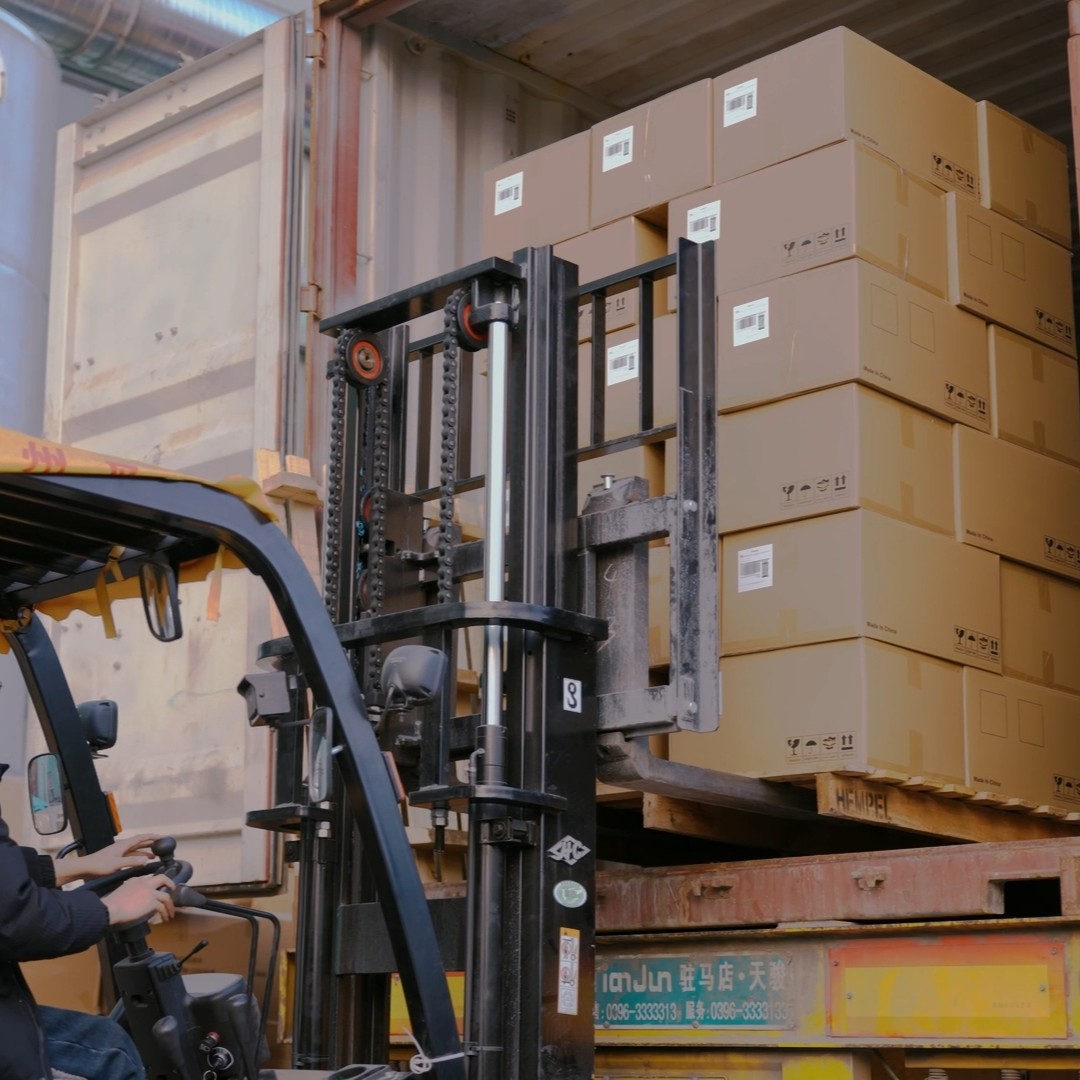
Logistics operations at a manufacturing facility in China.
Germany: Engineering and Premium Materials
German manufacturers are renowned for precision engineering and high-quality, often sustainable, material formulations. Brands like Duni and WEPA are leaders in producing sophisticated disposable and reusable tableware for the professional catering and hospitality markets. Their focus is on product innovation, advanced material science (such as high-barrier coatings and certified compostable polymers), and automated production lines that ensure exceptional consistency. This comes at a premium price point, positioning German suppliers as ideal for buyers targeting the high-end segment where performance and brand reputation are paramount.
Japan: Precision and Design Aesthetics
Japanese suppliers excel in precision manufacturing and minimalist, functional design. Companies in this region focus on creating tableware that is not only utilitarian but also possesses a distinct aesthetic appeal, often utilizing advanced molding techniques for ultra-thin yet rigid products. The emphasis is on cleanliness of design, material purity, and packaging innovation. This makes Japanese suppliers a strong choice for buyers in boutique retail or premium foodservice where design differentiation is a key selling point.
A Practical Guide to Sourcing from Chinese Suppliers
Given China's central role in the global party supplies market, a disciplined approach to supplier evaluation is critical. Here are five key considerations for procurement professionals.
- Verify Export Certifications and Compliance: Insist on valid, region-specific certifications. For the US market, ensure FDA compliance (e.g., FDA 21 CFR 177.1640). For the EU, confirm Food Contact Material testing reports aligned with regulations like (EU) No. 10/2011. Reputable suppliers like YISOO provide these documents, issued by recognized bodies like Bureau Veritas.
- Assess True Customization and R&D Capability: Move beyond generic catalogs. Evaluate the supplier's in-house design team and technical support for ODM projects. Capabilities should include custom tooling, advanced printing (silkscreen, IML), and material blending. YISOO, for instance, maintains a team of 20 product designers to support such projects.
- Clarify Logistics and Inventory Strategy: Understand the complete shipping terms (FOB, CIF, DDP) and inquire about lead times, which typically range from 15 to 30 days. A significant advantage is if the supplier has localized inventory. YISOO operates a U.S. warehouse, which can reduce lead times and simplify fulfillment for North American buyers.
- Scrutinize Quality Control and Order Protections: Confirm the QC process includes pre-shipment inspections. Discuss packaging standards to mitigate transit damage. Some suppliers employ reinforced wrapping and bubble bagging, claiming to reduce in-transit damage rates below 1%. Clarify the claims process for damaged goods upon receipt.
- Define After-Sales Support and Communication: Establish clear protocols for post-order communication, sample approvals, and issue resolution. Reliable suppliers offer pre-production samples and have dedicated export teams.

Quality inspection is a critical step in the manufacturing process.
Navigating Regional Compliance and Tariff Requirements
Importing party tableware involves navigating a complex web of regulations. Non-compliance can result in costly delays, seizures, or fines.
United States
- Primary Certification: FDA (Food and Drug Administration) compliance for food contact materials is mandatory. The standard for polystyrene is typically FDA 21 CFR 177.1640.
- Tariffs: General tariffs apply. It is essential to determine the correct Harmonized Tariff Schedule (HTS) code for the products (e.g., 3924.10.0000 for plastic tableware).
European Union
- Primary Certification: CE marking is not typically required for simple tableware, but strict Food Contact Material (FCM) regulations apply under Framework Regulation (EC) No 1935/2004. Specific measures like (EU) No 10/2011 for plastic materials must be met.
- Additional Requirements: For products marketed as "compostable" or "biodegradable," they must comply with standards like EN 13432 and carry appropriate certification marks (e.g., Seedling logo).
Other Markets
Regions like the Middle East may require additional GCC (Gulf Cooperation Council) conformity assessments. Always consult with a freight forwarder or customs broker familiar with the destination country's latest import policies.
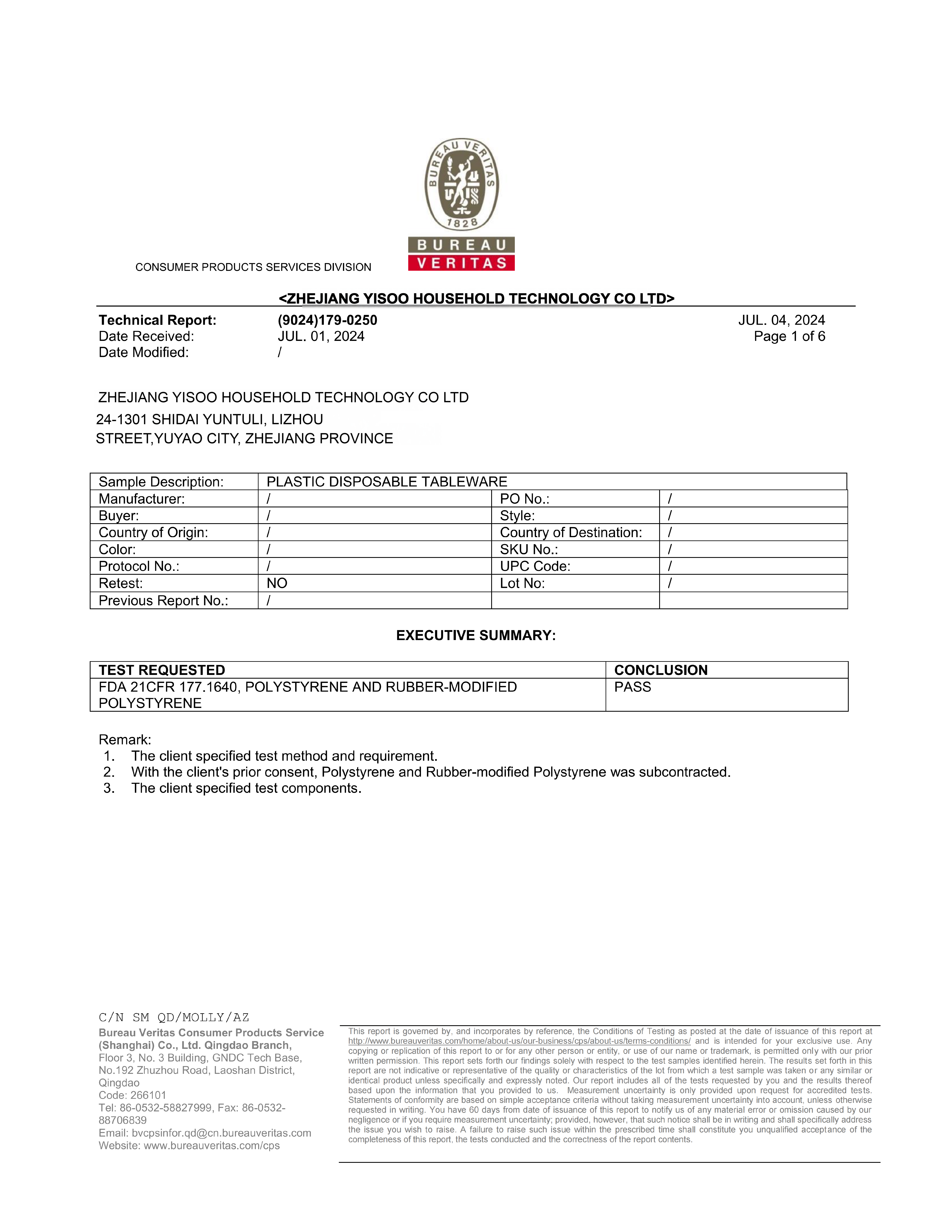
Example of an FDA compliance report for plastic tableware.
Case Study: Establishing a Stable Supply Chain with a Chinese Partner
A practical example illustrates how a structured approach to sourcing from China can yield long-term benefits.
Client Profile & Challenge
A U.S.-based party supply store owner needed a reliable wholesale source for premium-looking disposable wedding tableware to stock their physical retail location. Key requirements included product aesthetics that could mimic fine china, strict FDA compliance, and a supply chain resilient to logistical delays.
Solution & Partnership with YISOO
The buyer initiated a low-risk market test by ordering from YISOO's U.S. warehouse stock. This allowed for quick fulfillment and customer feedback without committing to a large overseas order. After confirming product quality and market fit, the buyer transitioned to a direct import model for bulk purchases.
YISOO provided the necessary FDA compliance documentation and offered products like their Plastic Tableware Set (model TA50B), which features gold-rimmed plates and cutlery designed for a formal dining aesthetic. The supplier's 100% export-oriented operation and experience in the EU and US markets ensured a smooth compliance process.
Result & Long-Term Value
The partnership, sustained over 5-6 years, enabled the retailer to secure a stable monthly supply of 50,000 - 80,000 pieces. The consistent quality and reliable logistics contributed to reported sales growth. This case underscores the value of a phased engagement: starting with localized inventory to de-risk and validate, then scaling up with direct imports for cost efficiency.
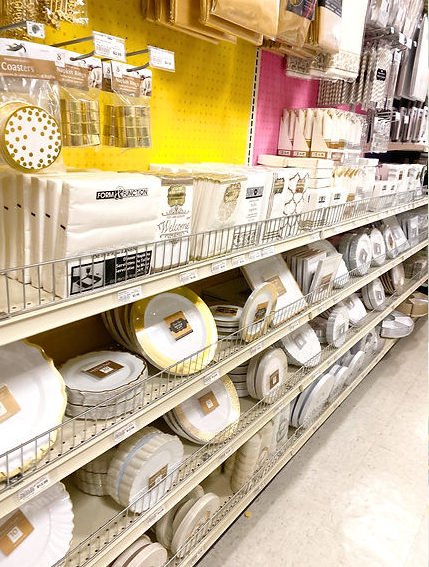
Finished products on retail shelves in the target market.
Conclusion: Strategic Sourcing in a Connected Market
The choice of a sourcing region—China, Germany, or Japan—is not merely about cost but about aligning a supplier's core competencies with your business's strategic needs. For buyers seeking a balance of scale, customization, and value, Chinese manufacturers like YISOO represent a viable option, provided due diligence is applied to compliance, logistics, and quality assurance. The future of party tableware procurement lies in building agile, transparent partnerships with suppliers who can navigate global regulations and support brand development, turning regional manufacturing strengths into a competitive advantage for buyers worldwide.
¿Tiene preguntas o necesita más detalles?
Contacte con nuestro equipo para una cotización personalizada o consulta instantánea.
Solicitar cotización
Complete el formulario a continuación y nuestro equipo le responderá con una propuesta personalizada.
Chat directo de WhatsApp
¿Prefiere chatear en tiempo real? Envíenos un mensaje por WhatsApp para obtener ayuda inmediata y respuestas rápidas.
- Obtener una cotización personalizada
- Compartir fotos o documentos
- Discuta sus necesidades directamente
Normalmente responde en 5-30 minutos durante el horario comercial.