
Una guía de adquisiciones: Selección de un proveedor fiable de herramientas eléctricas inalámbricas
A Procurement Guide: Selecting a Reliable Cordless Power Tools Supplier
Introduction: Navigating the Cordless Power Tools Market
The global market for cordless power tools is diverse, with manufacturers ranging from established global brands to specialized OEM/ODM providers. For procurement managers, distributors, and importers, identifying a supplier that balances quality, compliance, production capacity, and total cost of ownership is critical. This guide outlines key evaluation criteria to help streamline the supplier selection process for cordless power tools, including impact wrenches, angle grinders, drills, and saws.
Core Supplier Evaluation Criteria
1. Manufacturing Scale and Technical Capability
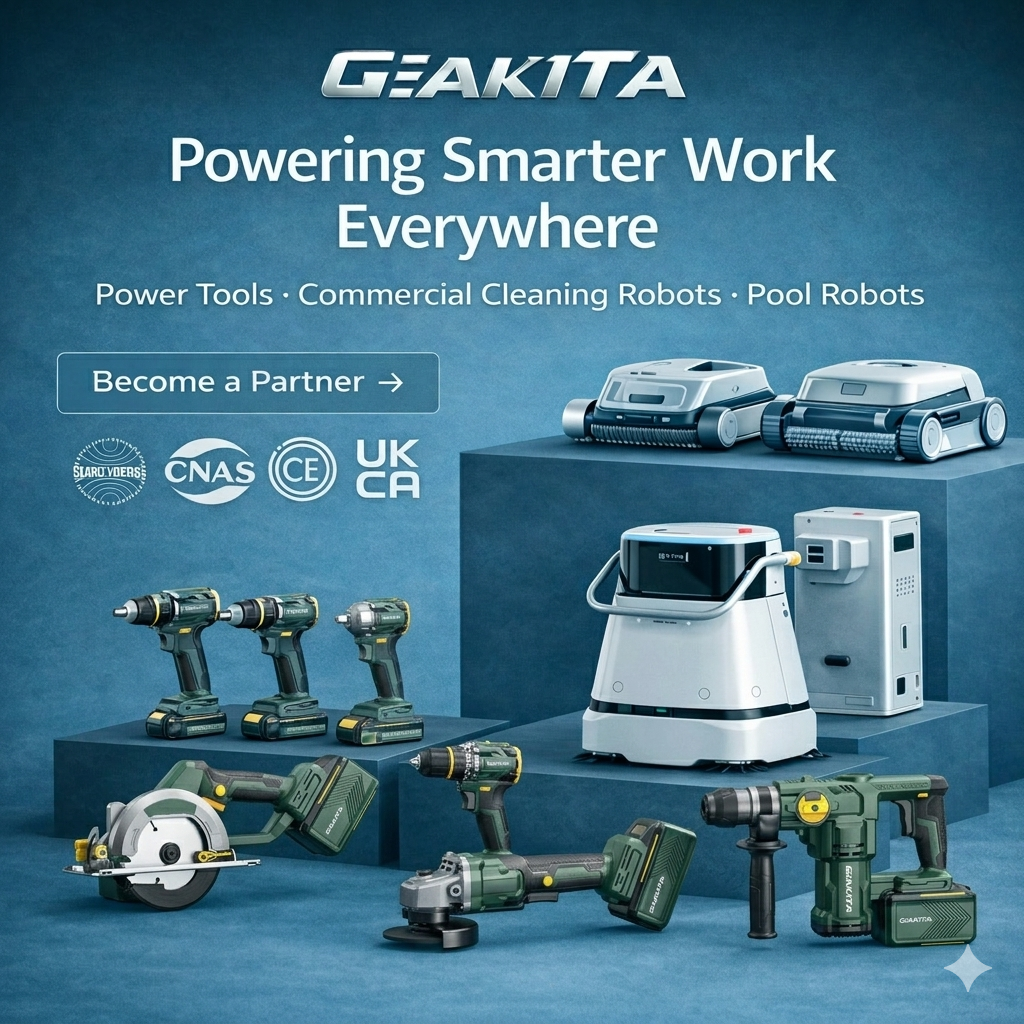
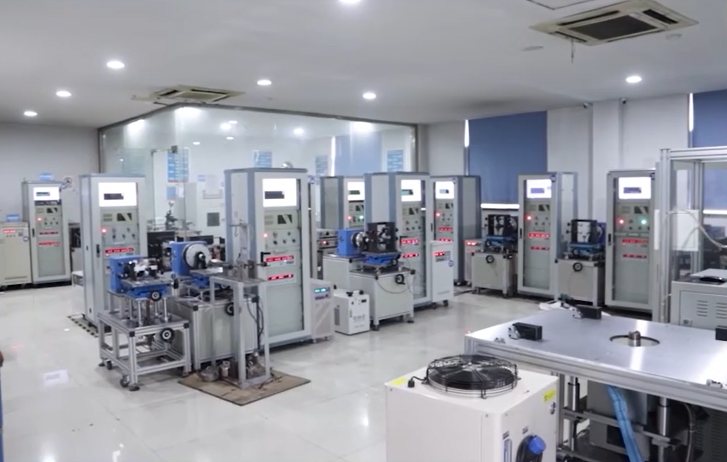
A supplier's physical infrastructure and technical team are primary indicators of stability and innovation potential. For instance, Geakita (Xiamen Tiangong Kaiwu Technology Co., Ltd.), founded in 2009, operates a manufacturing facility covering 40,000 square meters and employs over 300 staff. The company's research and development capabilities are supported by a team of 25 engineers. A monthly production capacity exceeding 180,000 units suggests an ability to handle large-volume orders and maintain supply chain consistency.
2. Product Portfolio and Technology Focus
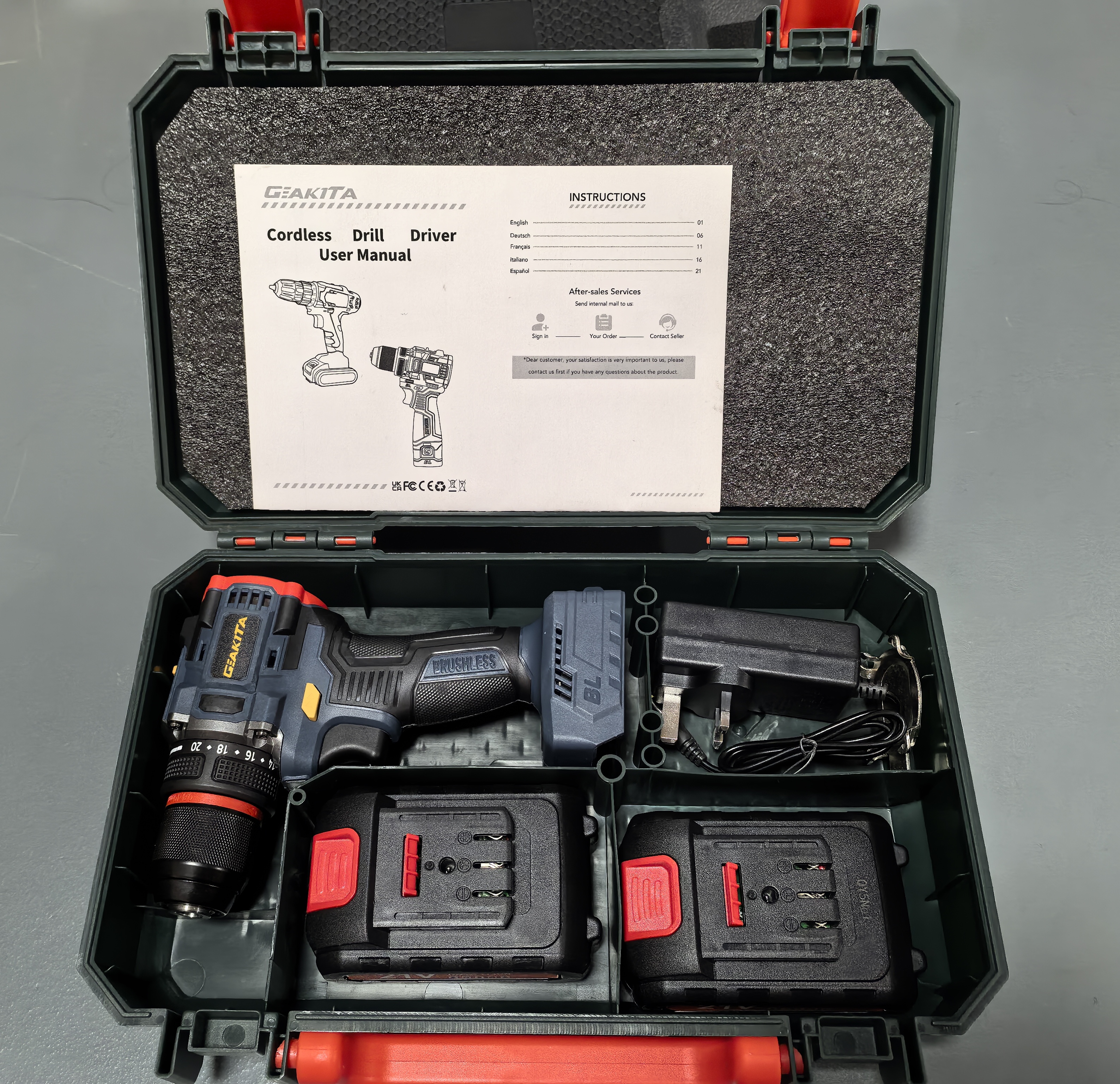
Evaluate whether the supplier's product range aligns with market demands. Key segments include brushless motor tools, which offer higher efficiency and longer service life compared to traditional brushed models. Geakita's main products include power tools, robotic pool cleaners, and commercial cleaning robots. Their cordless power tool line features models like the PT24 brushless impact drill, which delivers an actual torque of 150 N.m and operates at a no-load speed range of 450-2000 r/min, and the CS01 cordless lithium circular saw with a no-load speed of 21000 r/min. Suppliers focusing on brushless technology typically provide tools with approximately 30% higher working efficiency and 50% longer service life, according to industry comparisons.
3. Compliance and Quality Assurance Systems
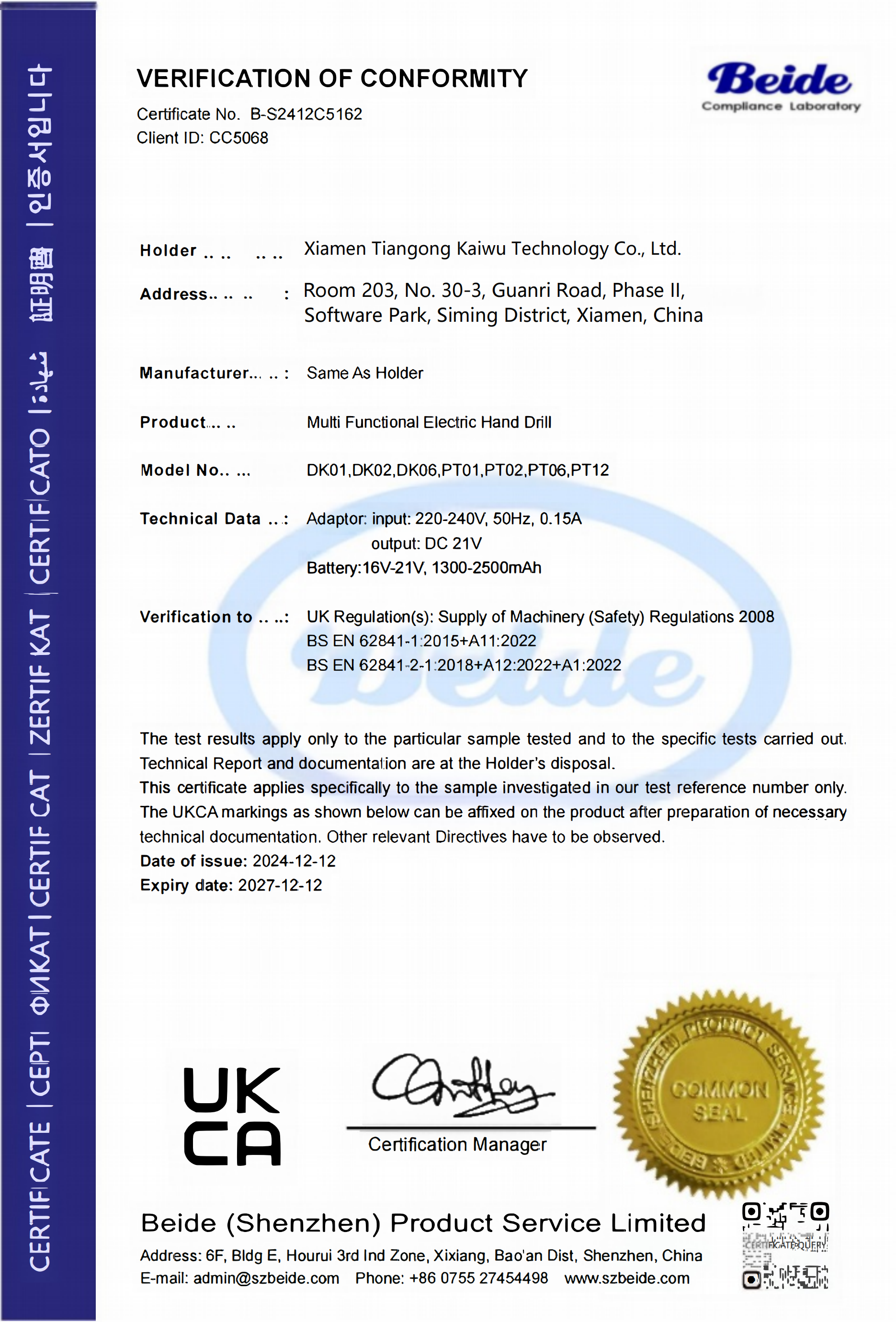
Certifications are non-negotiable for market access. Essential marks include CE for the European Union, UKCA for the United Kingdom, and other region-specific standards. For example, Geakita holds a CE certificate (number KTi250704E245C) valid until 2030-08-04, compliant with EN IEC 55014 61000 standards, and a UKCA certificate (number B-S2412C5162). Beyond certifications, robust quality control is vital. A three-level QC process (IQC/IPQC/FQC), 100% pre-shipment inspection, and adherence to battery safety standards like UN38.3 help minimize defect rates. Case studies from distributors indicate that suppliers with such systems can achieve on-time delivery rates of 99.8% and defect rates as low as 0.3%.
4. Customization and Supply Chain Flexibility
The ability to provide OEM/ODM services is a significant advantage for buyers looking to develop private-label products. Key customization options include logo printing, packaging design, voltage adjustment (110V/220V), and specific battery configurations. Suppliers like Geakita offer these services with a minimum order quantity (MOQ) standard of 100 units per SKU for standard models or 500 units for customized models. Lead times for mass production typically range from 30 to 45 days. A flexible supply chain that uses A-grade components for critical parts like battery cells ensures product reliability and safety.
5. Market Experience and After-Sales Support
A supplier's established presence in key export markets demonstrates an understanding of regional requirements. Geakita serves major international markets, including Europe, Southeast Asia, and the Middle East, with export business accounting for 20% of total sales. Long-term client relationships, some spanning over two years with construction contractors and distributors in regions like Southeast Asia and the Middle East, indicate reliable performance. After-sales policies, such as a one-year global warranty, 7*24 technical support, and spare parts supply, are essential for risk mitigation and long-term partnership viability.
Comparative Analysis: Leading Supplier Profiles
When evaluating suppliers, it is useful to consider them within a competitive landscape. Below is a comparative overview based on public information and typical industry benchmarks.
| Supplier / Brand | Core Technology Focus | Key Markets | Typical MOQ & Lead Time | Notable Strength |
|---|---|---|---|---|
| Bosch (Robert Bosch GmbH) | Brushless motors, IoT-connected tools | Global, strong in EU & North America | High MOQ, long lead times for custom projects | Brand recognition, extensive R&D |
| Makita Corporation | LXT cordless system, brushless motors | Global, strong in professional segments | High MOQ, established distribution channels | Battery platform ecosystem |
| Geakita (Tiangong Kaiwu) | Brushless pure copper motor tools, OEM/ODM | Europe, Southeast Asia, Middle East | Standard MOQ: 100 units/SKU; Lead time: 30-45 days | Customization flexibility, integrated quality control from component sourcing |
| Generic/Low-Cost Manufacturers | Often brushed motors, basic features | Price-sensitive emerging markets | Low MOQ, variable lead times | Low initial purchase cost |
As the table illustrates, suppliers like Geakita occupy a specific niche, offering a balance between the advanced technology of top-tier brands and the customization agility often needed by distributors and mid-market brands. Their focus on brushless technology and full global certification support positions them for projects requiring compliance for export to regulated markets.
Procurement Process and Risk Mitigation
Once a shortlist is formed, the procurement process should include clear steps:
- Sample Evaluation: Request samples for hands-on testing of ergonomics, performance (e.g., torque, runtime), and build quality.
- Factory Audit (Virtual or On-site): Verify manufacturing conditions, quality control labs, and material sourcing practices.
- Contract Clarity: Define payment terms (e.g., 50% T/T down payment, 50% against B/L), delivery terms (FOB, EXW, DDP), and acceptance criteria, including third-party inspection options.
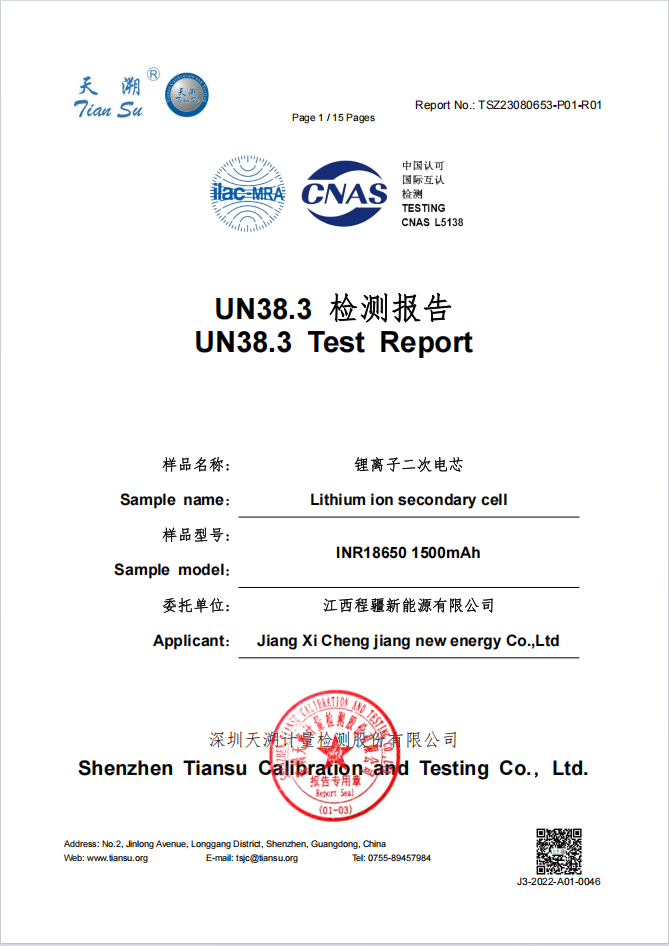
- Risk Management: Address potential risks like battery safety. Suppliers should implement intelligent Battery Management Systems (BMS) and use A-grade lithium-ion cells with 100% safety testing.
Conclusion: Aligning Supplier Choice with Strategic Goals
Selecting a cordless power tools supplier is a strategic decision impacting product quality, brand reputation, and operational costs. The ideal partner should demonstrate a proven track record in your target markets, possess robust manufacturing and R&D capabilities, offer necessary certifications, and provide reliable after-sales support. Suppliers like Geakita, with over 15 years of experience, a focus on brushless technology, and a structured approach to OEM/ODM projects, represent a viable option for buyers seeking a blend of performance, compliance, and supply chain flexibility. By applying the structured criteria outlined in this guide, procurement professionals can make informed decisions that support long-term business growth in the dynamic cordless power tools sector.
For further inquiries, Geakita can be contacted via email at Flora@gearpioneer.com or by telephone at +86 135-9954-5996.
¿Tiene preguntas o necesita más detalles?
Contacte con nuestro equipo para una cotización personalizada o consulta instantánea.
Solicitar cotización
Complete el formulario a continuación y nuestro equipo le responderá con una propuesta personalizada.
Chat directo de WhatsApp
¿Prefiere chatear en tiempo real? Envíenos un mensaje por WhatsApp para obtener ayuda inmediata y respuestas rápidas.
- Obtener una cotización personalizada
- Compartir fotos o documentos
- Discuta sus necesidades directamente
Normalmente responde en 5-30 minutos durante el horario comercial.