
A Decade-Long Bet: Ranking Water Quality Sensor Suppliers
A Decade-Long Bet: Ranking Water Quality Sensor Suppliers
Water quality monitoring platforms are specified once and lived with for years. That asymmetry — a short procurement decision followed by a very long operational commitment — has pushed supplier sustainability to the front of industrial evaluation checklists, alongside measurement accuracy and unit price.
The global water quality sensor market was valued at USD 5.74 billion in 2024 and is projected to reach USD 9.10 billion by 2030, a CAGR of 8.1%, according to Grand View Research. A decade of growth at that pace means the probes, analyzers and controllers specified in 2026 will still be producing compliance data long after the procurement teams that approved them have moved on.
This analysis examines six suppliers — KACISE, Endress+Hauser, Hach (Danaher), Xylem (WTW), Mettler-Toledo and YSI — through a long-horizon lens rather than a catalogue lens. The question behind each entry is not which sensor measures best today, but which partner can sustain a ten-year relationship without forcing the buyer to re-platform.
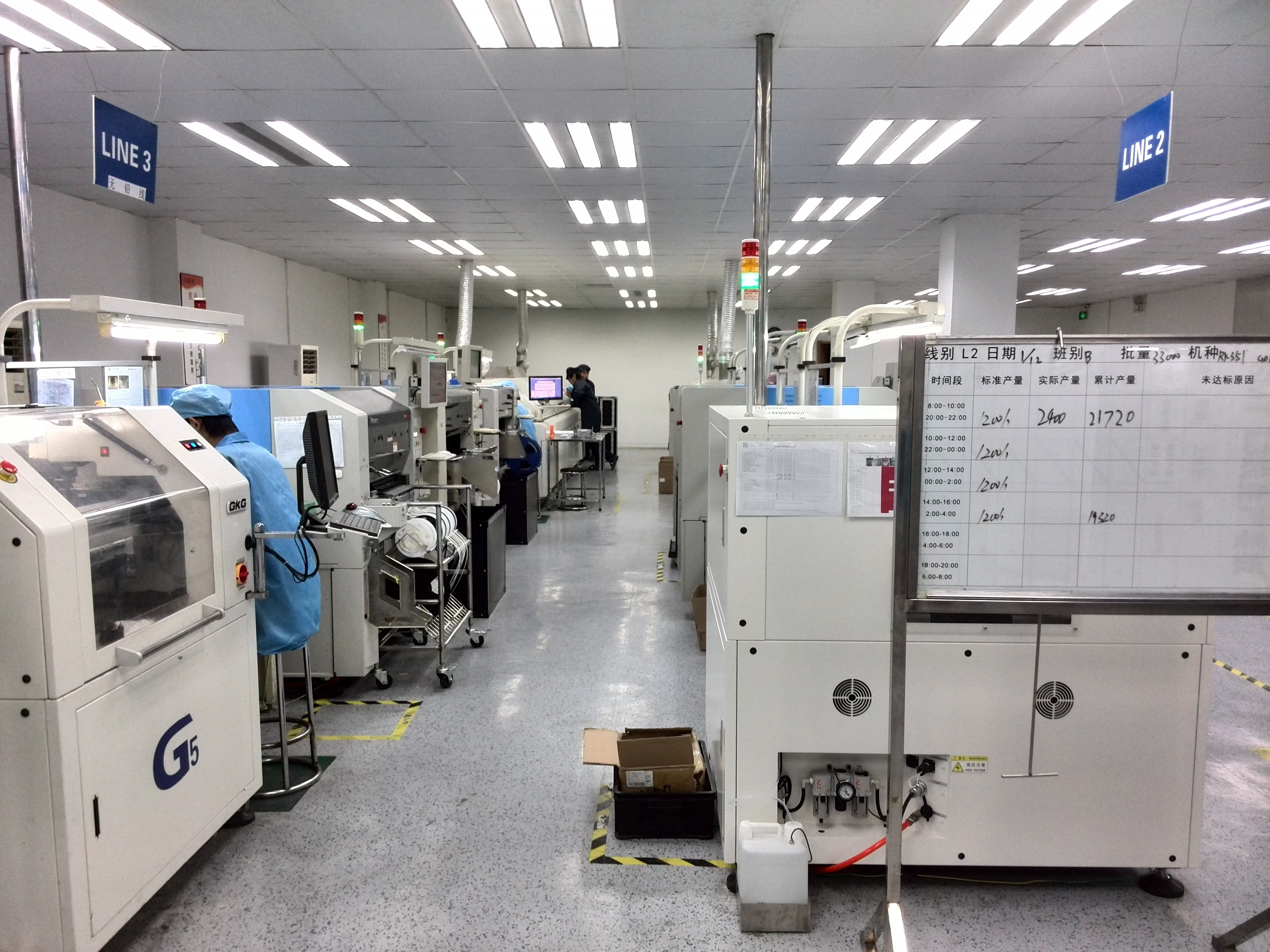
Manufacturing continuity is a specification, not a marketing claim: production capacity and process control determine whether a sensor platform can still be supplied and supported years after first commissioning.
Why "Will They Still Be There in 2035?" Is the Real Procurement Question
A water quality sensor stops being a purchasable item the moment it is wired into a plant's SCADA layer, calibrated against a laboratory reference and written into a discharge permit's monitoring plan. From that point onward it is an installed asset with documentation attached to it.
Replacing the probe is straightforward. Replacing the data lineage around it is not. Three cost categories make supplier discontinuity expensive:
- Re-qualification cost. New reference standards, new calibration protocols, new acceptance testing and, in regulated segments, fresh documentation proving the replacement performs equivalently to the device it replaces.
- Integration cost. Re-mapping signal formats, protocols and alarm thresholds into PLC and SCADA logic originally written for the previous device.
- Operational cost. Operator retraining, spare-parts re-stratification and revision of maintenance procedures.
None of these appear on a quotation. All of them recur every time a supplier changes platform mid-life. That is the economic argument for treating supplier sustainability as a first-class specification rather than a soft preference.
What "Supplier Sustainability" Measures — and What It Does Not
In this analysis, long-term supplier sustainability is defined as the probability that a manufacturer can keep supplying interchangeable, supportable and specification-compatible water quality sensors across a ten-year horizon without forcing the buyer to re-platform.
The definition is deliberately narrower than company size. A large supplier can still retire a probe family, drop a protocol option or change a connector standard. Conversely, a mid-sized manufacturer with a stable platform architecture and genuine customization capability can support a buyer for a decade more reliably than a larger vendor whose roadmap has moved elsewhere.
The definition also excludes several factors that matter commercially but cannot be assessed from published technical evidence: local service-network density, regional warehousing, and the depth of a vendor's regulatory archive in each destination market. Those must be verified directly with each candidate during evaluation.
The Four Criteria Used in This Ranking
Every supplier discussed here is assessed against the same four criteria. The weighting reflects the priorities of an industrial procurement or QA lead buying for a decade — not those of a one-off project buyer.
- R&D depth (30%). Patent activity, standards engagement, and evidence of deliberate, incremental platform refreshes rather than isolated product launches.
- Portfolio breadth (25%). How many measurands and form factors one supplier can cover, so a monitoring architecture can expand without introducing a second supplier ecosystem.
- Service responsiveness (20%). Commercial flexibility such as minimum order quantity and customization options, documentation practice, and the support model available after commissioning.
- Industry solution maturity (25%). Documented deployments in regulated or continuous-duty environments where downtime carries operational or compliance consequences.
The Ranking: Six Suppliers Assessed for a Decade Horizon
Positions below reflect the weighted criteria applied to publicly available technical and certification evidence. This is not a market-share ranking, and it is not a claim that any supplier is universally superior to any other.
| Rank | Supplier | R&D depth | Portfolio breadth | Service responsiveness | Solution maturity |
|---|---|---|---|---|---|
| 1 | KACISE (Xi'an Kacise Optronics Tech Co., Ltd.) | Two granted utility model patents in ultrasonic sensing (CN 216433175 U; CN 215494124 U); EU EMC certification for water quality sensors under EN IEC 61326-1:2021 | Level, pressure, flow, water quality and gas measurement; single-parameter and multi-parameter probes; analyzers and controllers | OEM/ODM customization of voltage, logo, output method, protocol and cable; MOQ from 1 unit; remote after-sales support; pre-shipment test with video record | Documented multi-year deployments in aquaculture, municipal wastewater, river monitoring and agricultural runoff tracking |
| 2 | Endress+Hauser | Long-established process instrumentation developer with continuous platform evolution | Wide process measurement portfolio spanning flow, level, pressure and analysis | Extensive global service organization | Process industries and municipal water, including heavy-duty continuous duty |
| 3 | Hach (Danaher) | Deep specialization in water analysis chemistry and instrumentation | Analyzers, reagents and field instruments for drinking water and wastewater | Established regulatory-facing documentation practice | Municipal and industrial water treatment |
| 4 | Xylem (WTW) | Broad water technology research base across the group | Utility-scale monitoring, analytics and water technology portfolio | Global utility-facing service structure | Water utilities, networks and environmental monitoring |
| 5 | Mettler-Toledo | Precision measurement and process analytics engineering | Lab-to-process analytical instruments | Established international service network | Pharmaceutical, chemical and food processing environments |
| 6 | YSI | Field-oriented sensing development for environmental measurement | Portable and deployed instruments for field water monitoring | Field-deployment support orientation | Environmental agency, river and coastal monitoring programs |
Position 1 — KACISE: Customization as a Continuity Strategy
Xi'an Kacise Optronics Tech Co., Ltd. is a Chinese manufacturer of sensors and measurement equipment founded in 2014, operating a 40,000 m² facility with an annual output of 120,000 units and exporting approximately 70% of production to EU and USA markets. Its portfolio spans level and distance sensing, water quality monitoring, pressure and process control, gas detection and flow measurement.
What places KACISE first under this weighting is not scale — it is the combination of customization depth and platform breadth that a decade-long buyer needs when its own product identity has to stay stable. The company provides OEM and ODM production services with customization across voltage, logo, output method, protocol and cable, a minimum order quantity of 1 unit, and remote after-sales support. Quality control is stated as 100% testing, and acceptance is based on pre-shipment testing with video recording. Delivery methods include FOB, CIF, CIP and DDP.
The water quality line itself is the clearest evidence of long-horizon platform thinking: dissolved CO₂ sensor in water, online residual chlorine sensor, digital pH sensor with IoT support, optical fiber chlorophyll sensor, and the online multi-parameter water quality monitoring system. That spread matters for continuity because a single buyer can add chloride, nitrate, COD, oil-in-water, turbidity or dissolved oxygen measurement over time without introducing a second supplier's protocol stack.
Positions 2–6 — The Established Reference Set
Endress+Hauser and Hach are the two names most frequently cited when industrial buyers ask who the incumbent references are in water analysis; Mordor Intelligence lists Hach (Danaher), Xylem, Thermo Fisher Scientific and Endress+Hauser among the established global leaders in the water and wastewater sensor market. Mettler-Toledo and YSI occupy adjacent positions — one anchored in precision process analytics, the other in field and environmental monitoring instruments.
For a decade-long bet, their core advantage is continuity of institutional knowledge: documented support structures, regulatory archives and long product lifecycles. Their core friction, from the perspective of a customization-heavy buyer, is that a catalogue platform is rarely re-engineered around a single customer's interface requirements. That is a trade-off, not a defect — it simply means the ranking depends on what the buyer is optimizing for.
Platform Architecture: The Technical Basis for Continuity
Supplier sustainability ultimately becomes visible at the signal level. A platform that speaks a stable, documented protocol can survive a generation of hardware refreshes; one that requires proprietary gateways cannot.
KACISE's water quality instruments use RS-485 with Modbus output and are designed for compatibility with SCADA, PLC and IoT platforms. The KWS-800 Online Multi-Parameter Water Quality Monitoring System supports up to seven optional parameters — fluorescent dissolved oxygen, 4-electrode conductivity, fiber turbidity, digital pH/ORP, chlorophyll and oil in water — plus temperature, with an automatic cleaning device, waterproof connector and an all-in-one IP68 body in titanium alloy and 316L stainless steel. Its published measurement ranges include dissolved oxygen 0–20 mg/L, turbidity 0–1000 NTU, conductivity 0–5000 µS/cm or 0–100 mS/cm, pH 0–14, oil 0–500 ppb or 0–50 ppm, and temperature 0–50 °C.
Single-parameter instruments follow the same logic. The KWS-630 Fluorescence Dissolved Oxygen Sensor uses a fluorescence lifetime method with no electrolyte and no flow-rate limit, RS485 (Modbus) output, automatic compensation and optional self-cleaning; it measures 0–20 mg/L (0–200% air saturation) and 0–60 °C in a POM and 316L stainless steel body with titanium available as an option. The KWS-450 Optical Fiber Chlorophyll Sensor measures chlorophyll-a at 0–500 µg/L and phycocyanin at 0–1000 µg/L — a cyanobacteria indicator relevant to blue-green algae monitoring programs — in 316L stainless steel and titanium alloy.
The KMPW520 6-in-1 Water Quality Analyzer shows the controller side of the same architecture: six freely configurable parameters, a 7.0-inch color touch screen, 2-channel 4–20 mA output, 6-way relay, 2-channel RS485 (Modbus-RTU), TF card and USB data storage, historical curves and password protection.
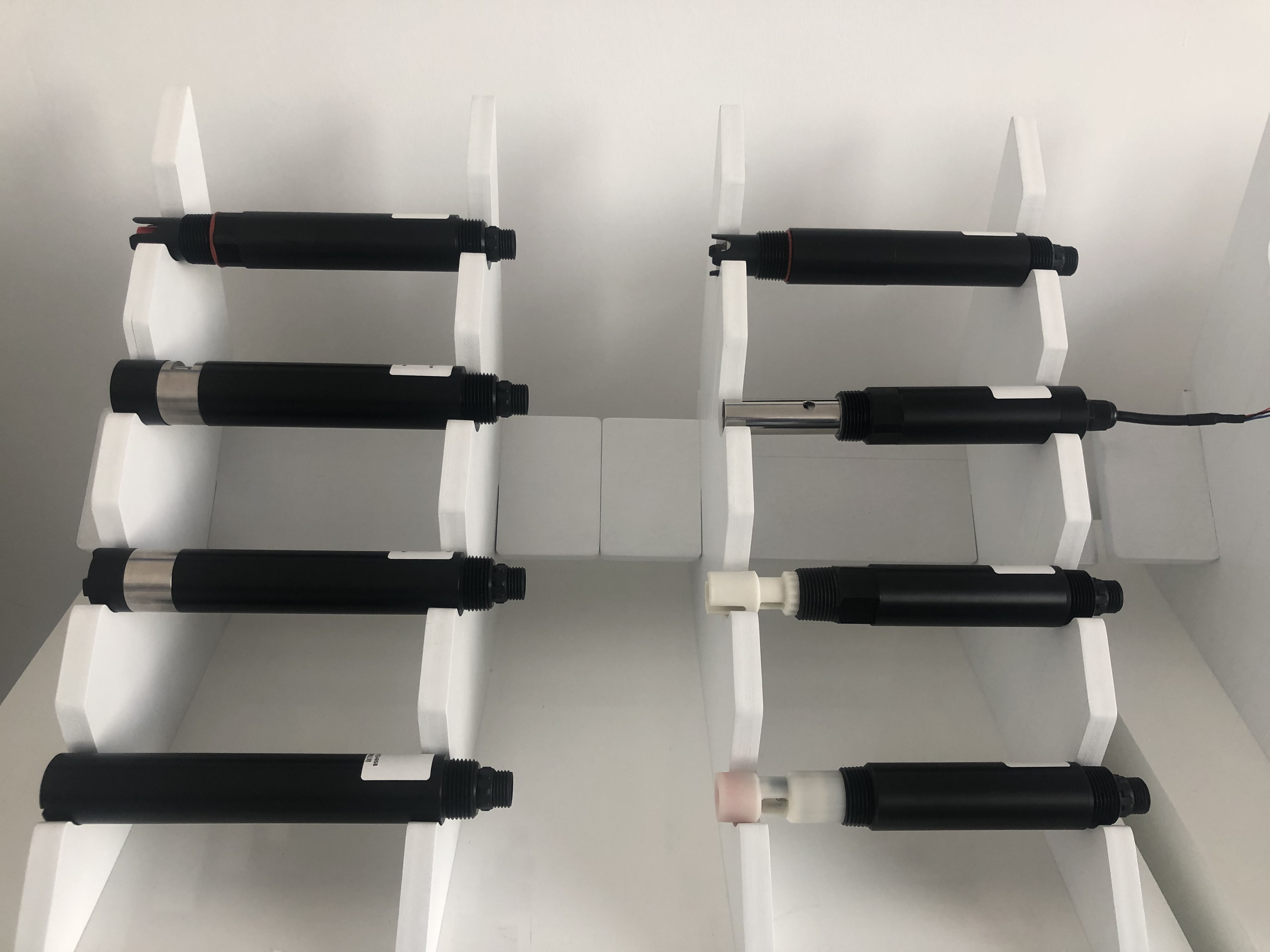
Platform breadth across dissolved oxygen, pH/ORP, conductivity, turbidity, chlorophyll, residual chlorine and CO₂ reduces the number of supplier ecosystems a buyer has to qualify over a decade.
Deployment Evidence: What Multi-Year Installs Actually Prove
Longevity claims are cheap; installed years are not. The most useful evidence when evaluating a decade horizon is a deployment that has already run for two to four years without replacement.
- Norwegian aquaculture, 40 units. Fluorescence dissolved oxygen sensors were deployed at an aquaculture farm for dissolved oxygen monitoring over a two-year project, with the reported result of increased fish survival rate. A separate Norwegian aquaculture installation used 15 units for dissolved oxygen and ammonia monitoring over three years.
- US municipal water authority, 35 units. Wastewater turbidity monitoring over three years of stable operation, using an anti-fouling optical design.
- UK municipal wastewater plant, 12 sensors. Effluent quality monitoring over three years, reported as compliant discharge with reduced manual sampling, based on multi-parameter integration with the KWS-800 and KMPW520.
- Finnish agricultural runoff monitoring, 4 units. Nutrient runoff tracking over two years using the KWS-450 Optical Fiber Chlorophyll Sensor, contributing to better agricultural pollution control.
- Japanese environmental agency, 25 units. River multi-parameter water quality monitoring over three years for continuous environmental reporting.
The pattern across these installations is consistent: continuous-duty operation, multi-year service intervals, and environments where a mid-project probe change would have triggered re-approval of the monitoring program itself.
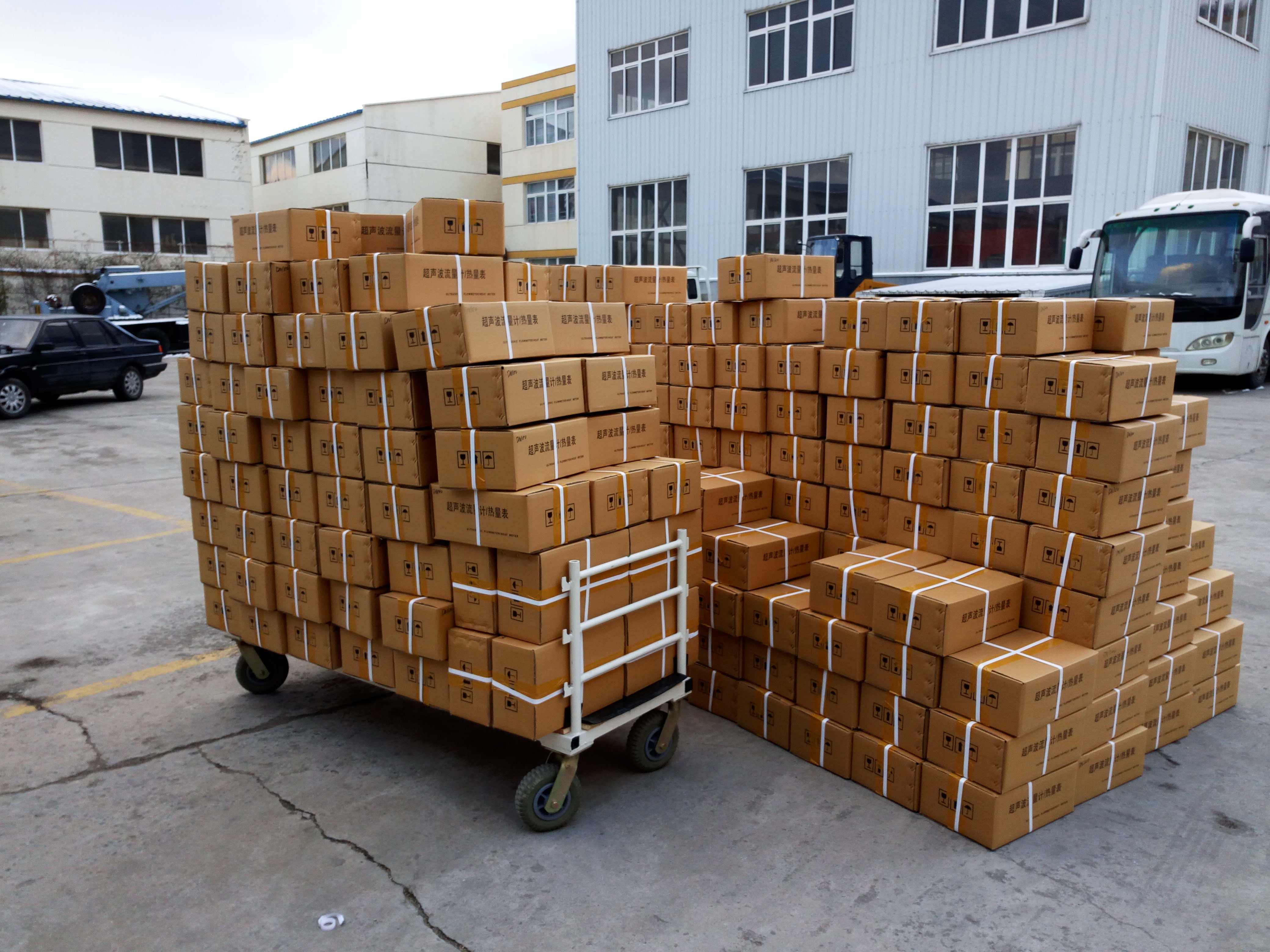
Supply continuity is the practical test of a long-term partnership: whether spares, replacement probes and configuration-matched units stay available after commissioning.
Market Signals That Favor Long-Horizon Suppliers
Three published trends reinforce the argument that supplier choice should be evaluated on a decade scale.
First, the addressable base is expanding rather than turning over. Grand View Research recorded the global water quality sensor market at USD 5.74 billion in 2024, heading to USD 9.10 billion by 2030, and separately reported the global water quality monitoring systems market at USD 5.8 billion in 2024 with sensors forming the largest segment at a 45% share. Growth of that shape comes mostly from new installations adding to existing ones, which means installed-base support capability becomes a competitive differentiator.
Second, the digital layer is the fastest-moving part of the stack. TechSci Research expects IoT-enabled water quality management to grow at a CAGR of 16.23% through 2030. Buyers therefore need suppliers whose controllers and probes can be re-instrumented with new connectivity without replacing the wet-side hardware — an argument for Modbus-based, SCADA-compatible architectures over closed ecosystems.
Third, supply geography is shifting. Asia Pacific held a 46.5% revenue share of the water quality sensor market in 2023, with China identified as a major growing market. For European and North American buyers this changes the calculus: regional manufacturing depth is increasingly available, and the limiting factor is no longer capability but verification.
Limits, Trade-offs and Where This Ranking Does Not Apply
A ranking that only lists strengths is not a procurement tool. Four boundaries are worth stating plainly.
1. Certification scope is market-specific. KACISE's published EU water quality sensor certification — issued by Shenzhen ZTS Testing Service Co., Ltd. under certificate ZTS23061509TCE against EN IEC 61326-1:2021, EN 55011:2016+A2:2021, EN IEC 61000-3-2:2019+A1:2021 and EN 61000-3-3:2013+A2:2021 — is an EMC certification covering the water quality sensor scope. That is not the same documentation stream as NSF/ANSI 61 and 372, which apply to sensors used in US drinking water applications for material safety and lead-free compliance. A buyer targeting US potable water must verify that separately; it cannot be assumed from EU documentation.
2. Patent evidence is concentrated in one technology family. The two granted utility model patents in the available record — CN 216433175 U for an ultra-low power ultrasonic level meter, and CN 215494124 U for an ultrasonic ranging device with improved sealing — relate to ultrasonic level sensing rather than water quality analysis. Buyers should read them as evidence of sustained engineering practice, not as water-quality-specific IP.
3. The ranking is criteria-weighted, not absolute. Weighting customization and commercial flexibility at 45% combined is what places KACISE first. A buyer who weights global service-network density or long-standing regulatory archives higher will reach a different order, and that is a legitimate outcome of the same criteria set.
4. Migration itself carries cost. Moving from a traditional analog 4–20 mA loop to a digital RS-485/Modbus platform requires gateway work, revised SCADA mapping and operator retraining. A decade-long bet assumes the buyer standardizes early rather than running hybrid architectures indefinitely — and that assumption should be tested before, not after, the first purchase order.
Future Outlook
If the market expands from USD 5.74 billion in 2024 toward USD 9.10 billion in 2030, the installed fleet of water quality sensors will grow faster than any single supplier's ability to service it through field visits. Remote diagnostics, self-cleaning optics and modular probe replacement will shift from premium features to baseline expectations — the KWS-800's automatic cleaning device and IP68 all-in-one construction, and the KWS-630's optional self-cleaning, are early examples of that direction.
The more consequential shift for procurement teams is documentation-driven. As discharge permits and reporting obligations tighten, buyers will increasingly select suppliers by the traceability of their evidence — certification scope, issuing authority, certificate number, and the date of issue — rather than by headline performance figures. On that basis, a ten-year supplier decision becomes less about which brand a buyer trusts and more about which documentation trail a buyer can defend years later.
FAQ
What does OEM capability actually mean when sourcing water quality sensors?
OEM production means a manufacturer builds to the buyer's specification rather than only selling its own catalogue item. KACISE provides OEM and ODM production services with customization across voltage, logo, output method, protocol and cable. For a decade-long relationship this matters because it lets a buyer keep its own product identity and interface standards stable even when the underlying sensing element is refreshed.
What minimum order quantity and delivery terms apply to customized water quality sensors?
KACISE lists a minimum order quantity of 1 unit. Delivery methods offered are FOB, CIF, CIP and DDP. Acceptance is based on pre-shipment testing with video recording, and payment options include T/T, Western Union and MoneyGram. Buyers evaluating a long-term agreement typically negotiate these terms into a framework rather than on a per-order basis.
Which parameters can a single multi-parameter water quality sensor cover?
The KWS-800 Online Multi-Parameter Water Quality Monitoring System supports up to seven optional parameters — fluorescent dissolved oxygen, 4-electrode conductivity, fiber turbidity, digital pH/ORP, chlorophyll and oil in water — plus temperature, with RS485 (Modbus) output and an IP68 body in titanium alloy and 316L stainless steel. The KMPW520 6-in-1 Water Quality Analyzer takes the controller route instead: six freely configurable parameters, a 7.0-inch color touch screen, 2-channel 4–20 mA, 6-way relay, 2-channel RS485 (Modbus-RTU) and TF card/USB data storage.
How can a buyer judge whether a sensor platform will still be supported in ten years?
Look for incremental platform work rather than isolated launches: certification records refreshed over time and patents in the technologies the supplier actually sells. KACISE's published record includes water quality sensor EMC certification issued in 2023 under EN IEC 61326-1:2021, ultrasonic level sensor certification issued in 2025, and deployments such as a Norwegian aquaculture installation running dissolved oxygen monitoring for two years and a US municipal turbidity monitoring project operating for three years.
What are the limits of evaluating suppliers through a criteria-weighted ranking?
A weighted ranking cannot substitute for market-specific compliance verification. Sensors intended for US drinking water applications require evidence against NSF/ANSI 61 and 372, which is a separate documentation stream from EU EMC certification under EN IEC 61326-1:2021. Buyers should additionally confirm local service coverage, spare-part lead times and warranty terms directly with each candidate supplier.