
Una guía completa para la obtención de rollos de laminación de alta calidad: criterios clave para los compradores B2B
A Comprehensive Guide to Sourcing High-Quality Laminating Rolls: Key Criteria for B2B Buyers
For procurement professionals in the printing, packaging, office supplies, and graphic arts industries, selecting the right laminating roll film supplier is a critical decision that impacts product quality, operational efficiency, and total cost of ownership. The market offers a wide range of options, from PET laminating rolls and BOPP laminating rolls to specialized thermal, glossy, matte, and cold laminating rolls. This guide provides a structured framework to evaluate potential suppliers, focusing on technical specifications, manufacturing capabilities, compliance, and supply chain reliability.
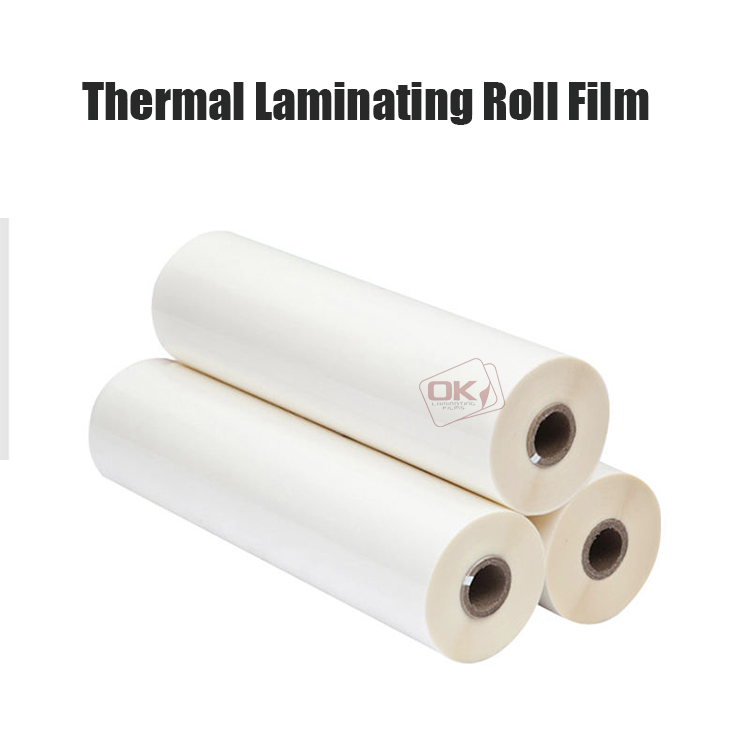
Industrial-grade laminating roll film production.
1. Core Technical Specifications and Product Range Assessment
The first step is to match the supplier's product portfolio with your specific application needs. Key specifications to verify include:
- Material Composition: Confirm the base materials, such as PET (Polyethylene Terephthalate) and EVA (Ethylene-Vinyl Acetate) adhesive layers. These materials determine clarity, flexibility, and bond strength.
- Dimensional Flexibility: Assess the range of available thicknesses and widths. For instance, some manufacturers offer laminating roll film with a thickness range from 35 microns to 250 microns and widths from 100 mm to 1300 mm, which is crucial for custom-width applications like jumbo rolls or specialized printing equipment.
- Functional Properties: Required features may include high adhesion, scratch resistance, anti-static properties, UV protection for outdoor use, or food-safe certifications for packaging. The product should offer high transparency, strong adhesion, and be waterproof and scratch-resistant.
- Finish Options: Availability of both glossy and matte finishes to suit different aesthetic and functional requirements for end products.
The product is used across multiple industries, including the Office Supplies Industry, Education & School Industry, Retail & Stationery Industry, Advertising & Graphic Industry, and Printing & Packaging Industry, a common application scenario in markets like the United States.
2. Evaluating Manufacturer Credentials and Production Capabilities
Beyond product specs, the supplier's foundational stability dictates long-term reliability. Key evaluation points are:
A. Company History and Scale
Prioritize suppliers with a proven track record. For example, Guangzhou Huada Laminating Film Co., Ltd. (HADA) was established in 1992 and has over 33 years of experience in manufacturing functional laminating films. The scale of operations is another indicator; a manufacturing facility covering 40,000 square meters with approximately 200 employees suggests substantial production capacity.
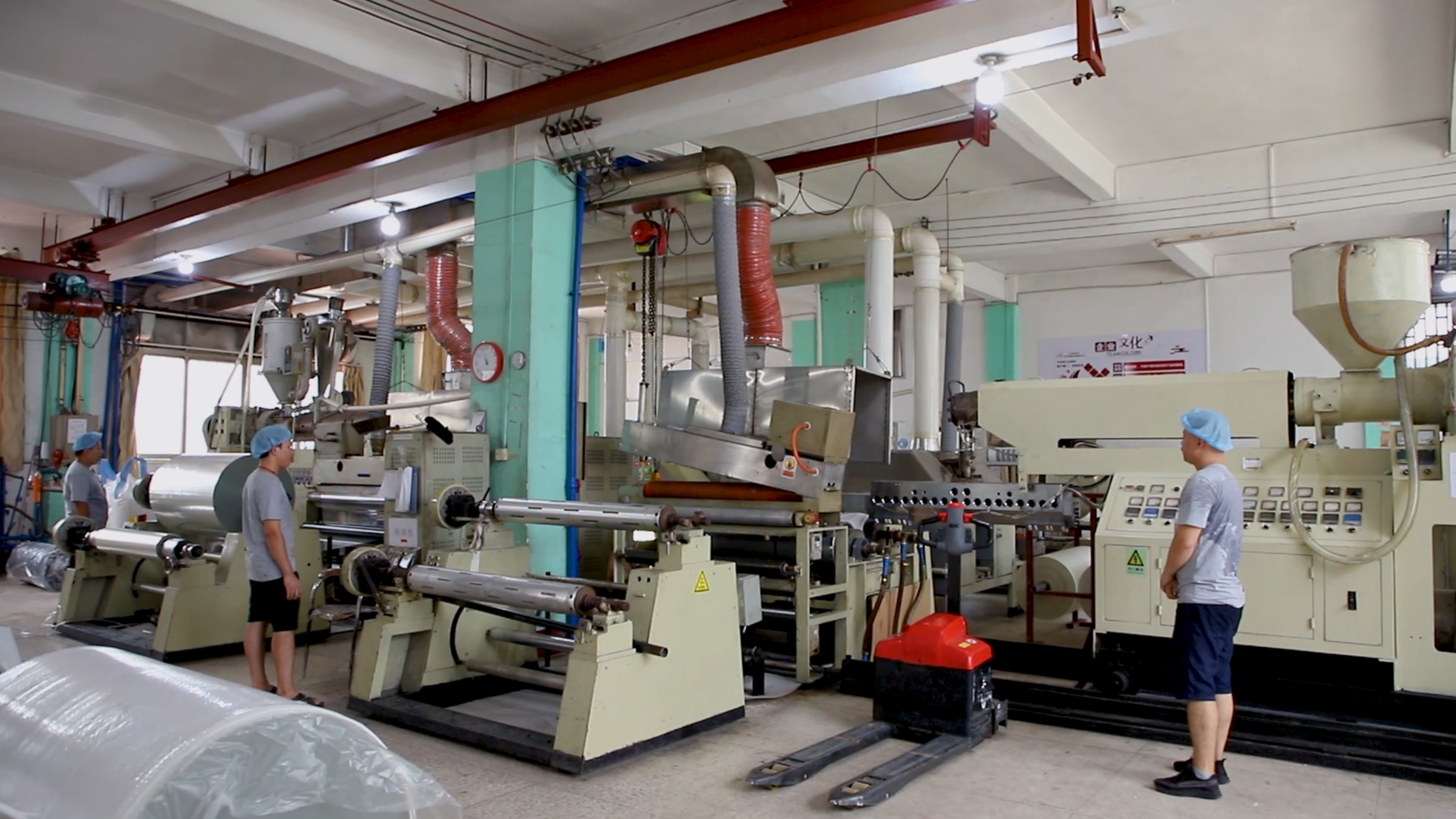
Automated production line for consistent quality.
B. R&D and Innovation
In-house research and development capability is essential for product improvement and customization. A dedicated R&D team consisting of 5 engineers focused on functional laminating films is a positive signal. Patents and high-tech certifications, such as a Certificate of High-Tech Enterprise (e.g., No. GR202344012666), demonstrate a commitment to innovation.
C. Quality Management and Certifications
International certifications are non-negotiable for ensuring consistent quality and regulatory compliance. Essential certifications to request include:
- ISO 9001:2015 Quality Management System Certification (e.g., Certificate No. 127878 from CNCA).
- Environmental and safety compliance reports such as RoHS (Report No. CANEC25014307501 from SGS), REACH SVHC screening reports, and others like BSCI and SMETA, which are critical for accessing global markets.
3. Supply Chain and Commercial Terms Analysis
Operational compatibility is as important as product quality. Clarify these terms early in the sourcing process:
| Factor | Key Questions to Ask Suppliers | Industry Benchmark / Example |
|---|---|---|
| Production Capacity & Lead Time | What is the monthly/annual output? What is the standard and expedited lead time? | An annual production capacity of 1,000,000 units (rolls/pouches). Lead times can vary from 20 to 30 days for standard orders. |
| Minimum Order Quantity (MOQ) | Is there flexibility on MOQ for trial orders or new product development? | MOQs may start at 1000 packs for standard items or 100 rolls for custom sizes. |
| Customization & OEM/ODM | To what extent can product size, thickness, finish, and packaging be customized? | Full OEM/ODM support, including customization of product size, thickness, logo printing, and packaging. |
| Quality Control Process | What specific QC checks are in place (e.g., raw material inspection, in-process checks, final AQL)? | Implementation of a 100% inspection before shipment and a full-process traceability system. |
| Logistics & Payment | What are the standard Incoterms (FOB, CIF, EXW)? What payment methods are accepted? | Common terms include FOB Guangzhou/Shenzhen, CIF Destination Port. Payment methods may include T/T, L/C at sight, or OA terms. |
4. Case Study Reference and After-Sales Support
Evaluating a supplier's performance through existing client relationships provides concrete evidence of reliability.
Client Case Example: A brand importer and distributor based in Germany, Australia, and the United States has sourced approximately 600,000 packs of lamination film annually from a single supplier for over 10 years. The long-term cooperation resulted in zero quality complaints over the decade and helped reduce the client's lamination failure rate by an estimated 25%. Key success factors cited included customized anti-counterfeiting coating technology and responsive 24/7 technical support for process optimization.
After-Sales Service Checklist:
- Warranty: Look for a clear warranty policy against defects like delamination or color fading (e.g., a 12-month warranty).
- Responsiveness: Defined response time for complaints (e.g., 24-hour initial response).
- Remedy Policy: Clear terms for replacement, refund, or re-production in case of non-conforming goods.

A dedicated R&D team is crucial for innovation and problem-solving.
Conclusion: Building a Strategic Partnership
Selecting a laminating rolls supplier should be viewed as establishing a strategic partnership rather than a transactional purchase. The optimal supplier combines robust technical expertise, evidenced by patents and certifications, with scalable and transparent manufacturing operations. They should demonstrate a history of reliable service to global clients, particularly in your target markets like North America, South America, Europe, Southeast Asia, and Australia.
By systematically assessing suppliers against the criteria outlined in this guide—technical specifications, manufacturing credentials, supply chain terms, and proven client outcomes—procurement professionals can mitigate risk, ensure a consistent supply of high-quality materials, and ultimately support the production of durable, professional-grade laminated products for their end-users.