
Una guía completa para obtener sudaderas personalizadas de alta calidad: consideraciones clave para los compradores globales
A Comprehensive Guide to Sourcing High-Quality Custom Hoodies: Key Considerations for Global Buyers
The global market for custom hoodies and sweatshirts continues to expand, driven by trends in streetwear, athleisure, corporate branding, and e-commerce. For procurement professionals and brand owners, selecting the right manufacturing partner is a critical decision that impacts product quality, supply chain reliability, and brand reputation. This guide outlines a structured framework for evaluating and selecting a hoodie manufacturer, focusing on technical specifications, production capabilities, compliance, and partnership dynamics.
1. Defining Your Product Requirements
Before engaging with manufacturers, clearly define your product's technical and aesthetic specifications. This forms the basis for accurate quotations and production planning.
1.1 Fabric Specifications
Fabric is the foundation of hoodie quality. Key parameters include:
- Fabric Weight (GSM): Ranges from 280–350 GSM for mid-weight garments suitable for transitional seasons, to 350–450 GSM for heavyweight winter wear, and even 450–500+ GSM for ultra-heavyweight applications.
- Fabric Composition: Common options include 100% Cotton for softness, and Cotton-Polyester Blends (such as 80/20 or 70/30) for improved durability, shrinkage control, and print adhesion.
- Fabric Type: French Terry (loop-back interior) offers breathability, while Brushed Fleece provides a soft, warm interior. The choice depends on the intended climate and feel.
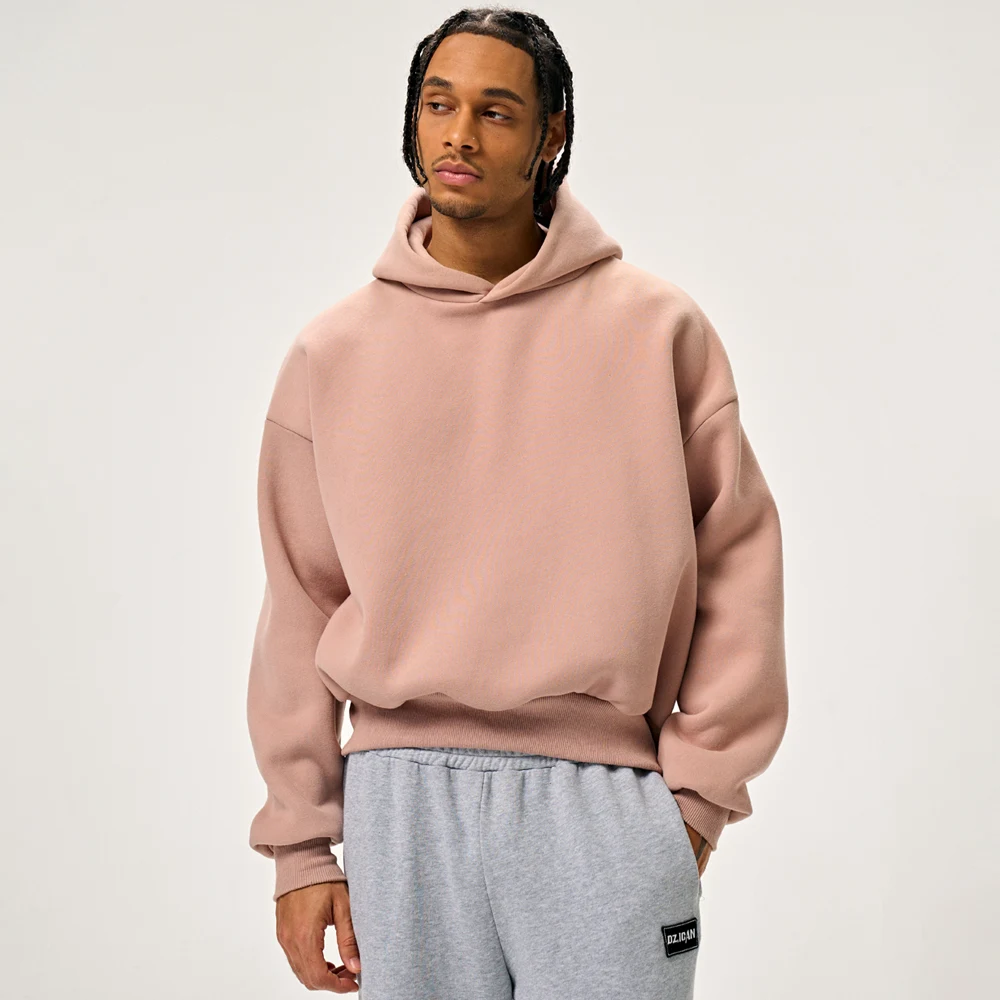
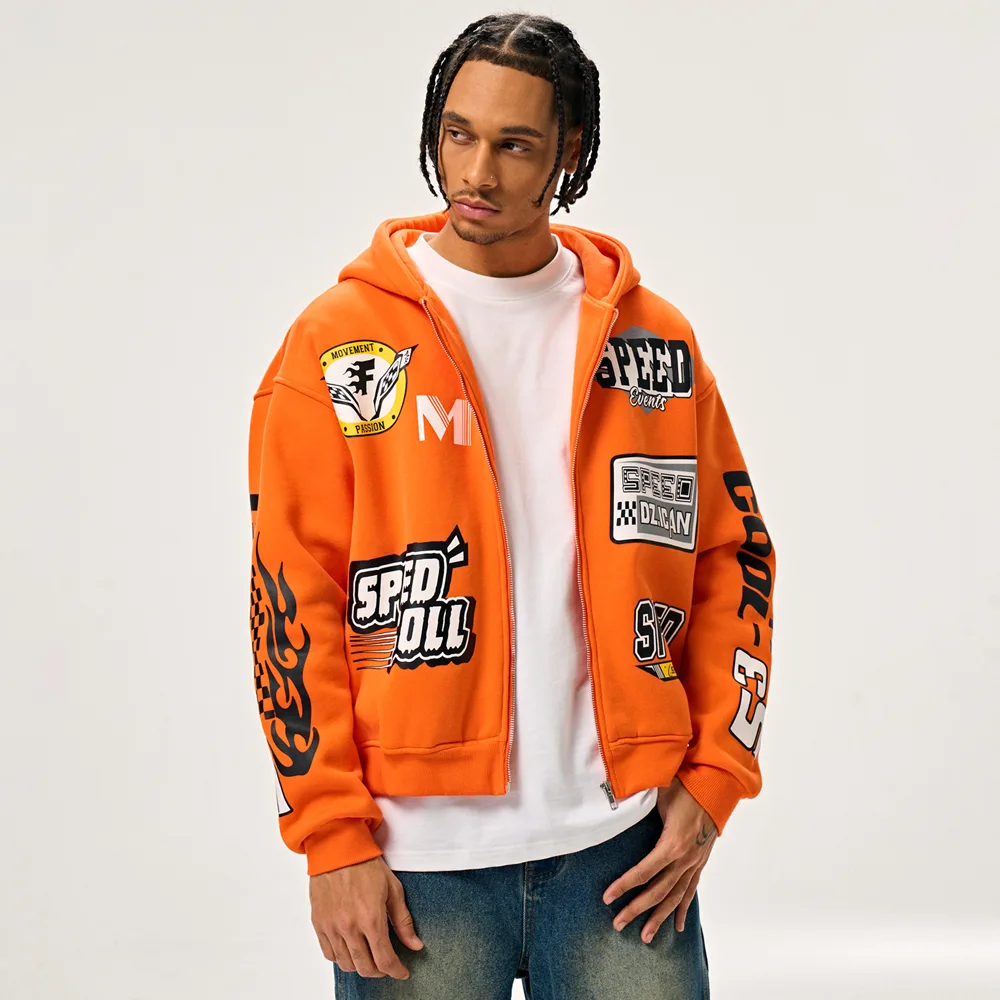
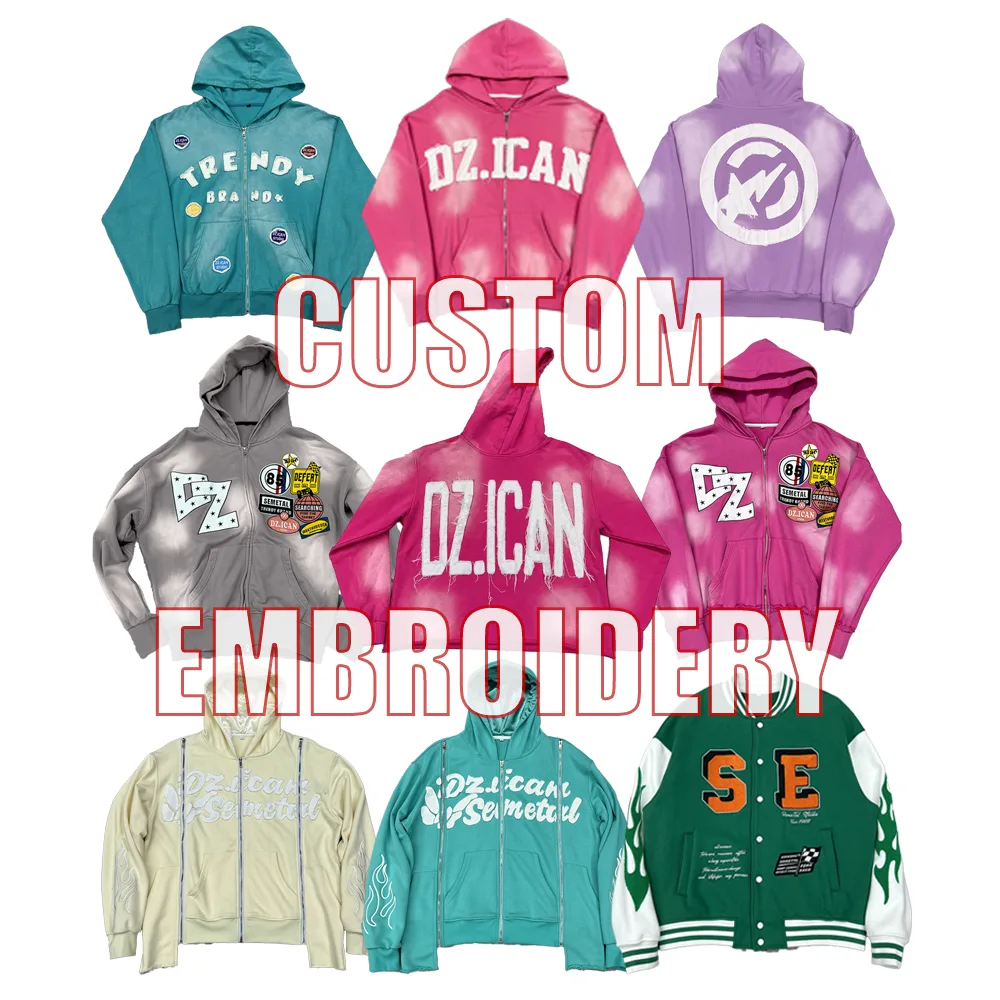
1.2 Construction & Design Features
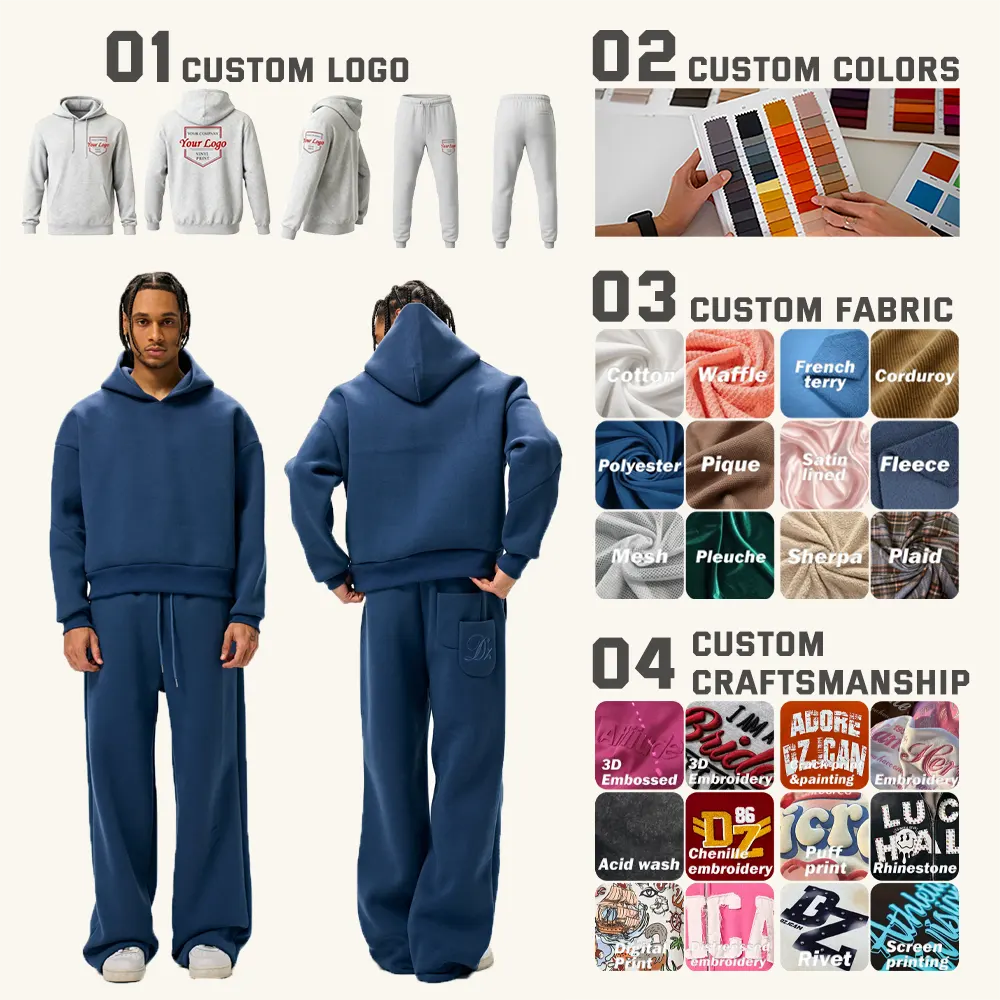
Detail the garment's construction elements. For example, a Custom Blank Hoodie (model RTS003) or a Custom Screen Print Hoodie (model RTS005) can have various features:
- Hood Construction: Options include double-layer hood, single-layer hood, and hood with drawstring (cotton or metal-tipped).
- Pocket Styles: Kangaroo pocket, side welt pockets, zip pockets, and patch pockets.
- Sleeve & Fit: Set-in, raglan, or drop shoulder sleeves; standard or oversized fits.
For a Custom Embroidery Hoodie (model RTS004), specify appliqué types (flat, 3D puff, chenille) and embroidery techniques.
2. Evaluating Manufacturer Capabilities
Assess potential partners across several operational dimensions.
2.1 Production Scale & Flexibility
Match the manufacturer's scale with your order volume and growth trajectory. Key metrics include:
- Minimum Order Quantity (MOQ): Many manufacturers offer low MOQs to accommodate startups and test runs. For instance, some providers have an MOQ of 50 pieces per color per design.
- Monthly Capacity: A manufacturer's stated capacity (e.g., 250,000 units monthly) indicates its ability to handle large or rush orders.
- Lead Times7–15 working days for samples and 20–35 working days for bulk production.
2.2 In-House Services & Vertical Integration
Manufacturers with integrated services offer greater control and efficiency. Look for providers that manage the entire process:
- OEM/ODM Services: Full-range custom solutions from fabric sourcing and design development to cutting, sewing, printing/embroidery, and custom packaging.
- Decoration Techniques: In-house capabilities for screen printing (plastisol, water-based, puff, foil), embroidery, direct-to-garment (DTG) printing, and appliqué.
- Finishing: Garment washing (enzyme, stone, snow, vintage wash) and dyeing services.
Example Manufacturer Profile: Guangzhou Qianshi Trading Co. LTD
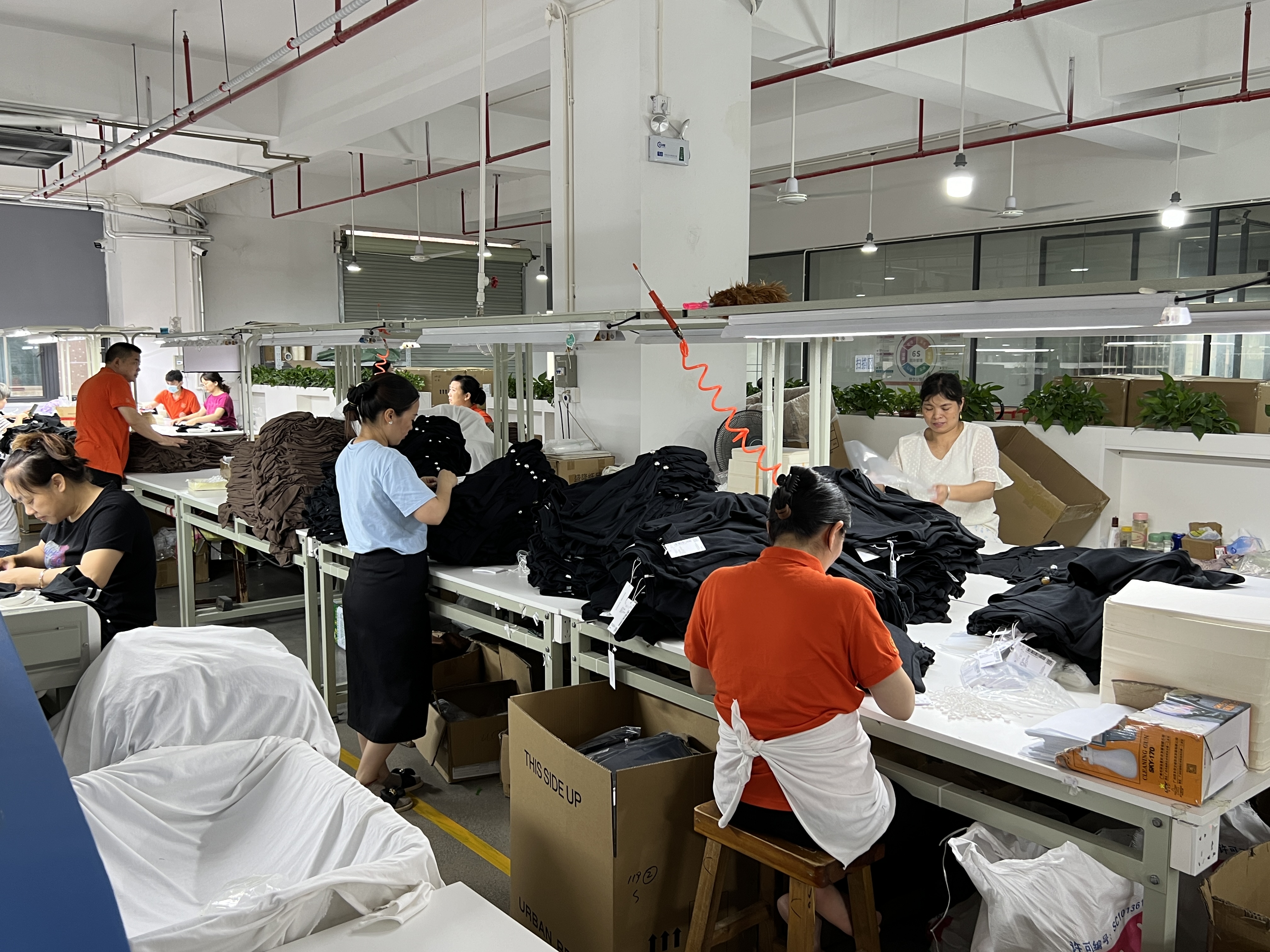
Established in 2014, this manufacturer provides a reference point for capability assessment. Its facility includes a 600 ㎡ sewing area, 700 ㎡ warehouse, 1500 ㎡ finishing area, and 200 ㎡ packing area. The workforce comprises approximately 80-100 sales and administrative staff and 200-250 production workers. Its R&D team consists of 15 designers, and its main products include T-shirts, Hoodies, Sweatshirts, Sweatpants, Joggers, Tracksuits, Polos, Jerseys, Jeans, Caps, and Outerwear.
2.3 Quality Assurance & Compliance
Robust quality control is non-negotiable. Verify the following:
- Quality Standards: Implementation of AQL (Acceptable Quality Level) sampling, typically AQL 2.5 for final inspection.
- Compliance Certifications: These demonstrate adherence to international standards. Relevant certifications for apparel may include:
ISO 9001:2015 (Quality Management) BSCI (Social Compliance) AZO Dyes Testing GPSR (EU General Product Safety)
- Testing Protocols: In-house or third-party testing for color fastness (≥ Grade 4), shrinkage (≤ 5%), and pilling resistance.
3. Understanding Market & Application Fit
A manufacturer's experience in your target market and application sector is crucial for relevant expertise.
3.1 Primary Application Industries
Custom hoodies are widely used in several sectors. A capable manufacturer should have experience serving:
- Streetwear & Urban Fashion
- Athleisure & Sportswear
- Corporate Merchandise & Promotional Apparel
- E-commerce Fashion Brands
- Music & Entertainment Merchandise
- University & School Spirit Wear
3.2 Geographic Market Experience
Experience exporting to key markets ensures familiarity with regional standards, labeling requirements, and logistics. Major destination markets often include the United States, United Kingdom, Australia, Germany, France, and other EU nations, as well as markets in the Middle East such as the United Arab Emirates.
Procurement & Logistics Support
Clarify logistical terms upfront. Standard options include EXW (Ex-Works), FOB (Free On Board), and CIF (Cost, Insurance & Freight). Payment terms often involve a 50% deposit with the 50% balance paid before shipment. Always request a pre-shipment inspection report and confirm the availability of third-party inspection services (e.g., SGS).
4. Comparative Analysis: Key Differentiators
When shortlisting manufacturers, move beyond basic specifications. Consider these differentiating factors:
| Evaluation Criteria | Established Manufacturer (Example) | Low-Cost / Mass Producer | Consideration for Buyer |
|---|---|---|---|
| Quality Control Protocol | Structured, multi-stage inspection (incoming material, in-process, final AQL 2.5). Documentation maintained. | Limited or inconsistent inspection, often no formal protocol. | Directly impacts defect rates and product consistency across batches. |
| Product Consistency & Durability | Higher fabric and construction consistency. Garments typically withstand 30-50 washes with minimal issues. | Higher variability. Noticeable fading or degradation may occur after 10-15 washes. | Affects customer satisfaction, return rates, and long-term brand perception. |
| Technical & Design Support | Dedicated R&D/design team (e.g., 15 designers). Offers tech pack services and fabric development. | Limited to executing provided designs; little proactive support. | Critical for brands requiring ODM services, fit development, or trend adaptation. |
| Communication & Partnership | Dedicated account/order coordinators. Proactive updates and problem-solving. | Transactional relationship; communication may be slow or reactive. | Essential for managing complex orders, timelines, and resolving issues efficiently. |
Note: The "Established Manufacturer" column synthesizes common attributes from industry profiles, such as those of manufacturers like Guangzhou Qianshi Trading Co. LTD, which employs a structured approach and maintains relevant certifications.
5. Recommended Sourcing Workflow
- Internal Briefing: Create a detailed tech pack with all specifications: sketches, measurements, fabric details (weight, composition), color codes (Pantone), decoration artwork, and packaging requirements.
- Supplier Shortlisting: Identify 3-5 potential manufacturers based on capability match, market experience, and client testimonials.
- Request for Quotation (RFQ): Send your complete tech pack. Evaluate quotes not just on price, but on included services, lead time, and payment terms.
- Sample Evaluation: Order physical samples (prototype and pre-production). Test for fit, fabric hand feel, print/embroidery quality, and wash durability.
- Factory Audit (if feasible): Visit the facility or commission a third-party audit to verify capacity, working conditions, and quality processes.
- Pilot Order: Place a small bulk order (at MOQ) to test production consistency and logistics before committing to larger volumes.
- Contract & Onboarding: Formalize terms, including quality standards (AQL), delivery schedules, liability, and communication protocols.
Conclusion
Sourcing custom hoodies is a strategic process that balances technical specifications, manufacturing capabilities, compliance, and total cost of ownership. By thoroughly defining requirements and rigorously evaluating potential partners against structured criteria, buyers can establish reliable supply chains that support brand quality and growth. The investment in due diligence during the selection phase mitigates risks related to quality failures, delivery delays, and compliance issues, ultimately protecting brand equity and ensuring customer satisfaction.
For procurement teams, the goal is to move beyond a transactional supplier relationship to a collaborative manufacturing partnership capable of scaling alongside your brand.
¿Tiene preguntas o necesita más detalles?
Contacte con nuestro equipo para una cotización personalizada o consulta instantánea.
Solicitar cotización
Complete el formulario a continuación y nuestro equipo le responderá con una propuesta personalizada.
Chat directo de WhatsApp
¿Prefiere chatear en tiempo real? Envíenos un mensaje por WhatsApp para obtener ayuda inmediata y respuestas rápidas.
- Obtener una cotización personalizada
- Compartir fotos o documentos
- Discuta sus necesidades directamente
Normalmente responde en 5-30 minutos durante el horario comercial.