
Una guía completa para obtener controladores de temperatura PID de alta precisión para automatización industrial
A Comprehensive Guide to Sourcing High-Precision PID Temperature Controllers for Industrial Automation
For procurement professionals in semiconductor manufacturing, industrial automation, and process control, selecting the right PID temperature controller supplier is a critical decision that impacts production efficiency, product quality, and operational costs. This guide provides a structured framework for evaluation, focusing on technical specifications, compliance, supply chain reliability, and long-term support.
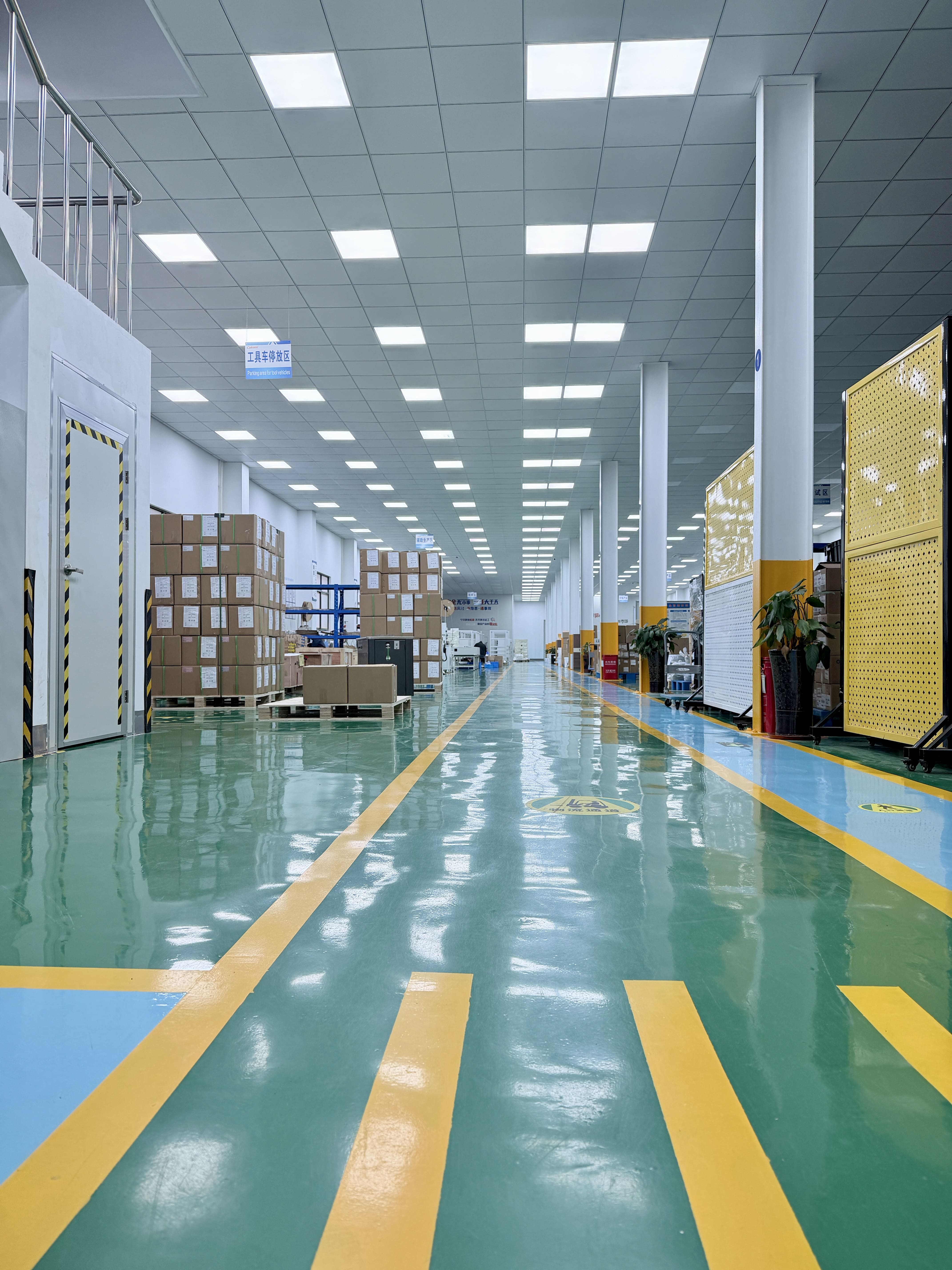
A modern manufacturing facility for industrial control electronics, highlighting production scale and organization.
1. Defining Your Application Requirements
The first step in supplier selection is a precise definition of the application. PID temperature controllers serve diverse functions, from simple heating tape control to complex multi-zone process monitoring.
Key Application Scenarios
- Semiconductor Process Heating: Controlling pipeline temperatures for chemical delivery or gas heating (e.g., using a Cakeen KE-H10 or H6625 controller) to prevent condensation. This application is common in China, Japan, Korea, Malaysia, Mexico, Singapore, Taiwan, the United States, and Vietnam.
- Multi-Channel Process Monitoring: Managing temperature across multiple points in equipment like CVD or diffusion furnaces, often requiring DIN rail-mounted multi-channel controllers like the Cakeen KE-2104.
- Integrated System Control: Incorporating controllers into a broader Industrial Device Central Monitoring System (CMS) for centralized data acquisition and alarm management.
- OEM Equipment Integration: Embedding compact, panel-mount controllers (e.g., 48×48mm units) into semiconductor or laboratory equipment designs.
Critical Technical Specifications Checklist
• Input Type Compatibility: PT, K, J, R, S, T, B, E, N, L thermocouples or RTDs.
• Output Type: SSR, 0-20mA, 4-20mA, or 0-10V, depending on the actuator.
• Communication Protocol: RS485/Modbus RTU or Modbus TCP for network integration.
• Power Supply Range: 100-265V AC or 12-24VDC for flexibility.
• Environmental Protection: IP rating relevant to the installation area.
2. Evaluating Supplier Capabilities and Market Position
Beyond product specs, assessing the supplier's overall capabilities ensures a sustainable partnership. Key factors include manufacturing scale, technical expertise, and market reach.
Manufacturing and R&D Scale
Suppliers with dedicated R&D resources and scalable production can better support customization and volume demands. For instance, Wuxi Keen Technology Co., Ltd. (Cakeen), established in 2011, operates a 2019 m² facility with a workforce of about 50 employees, including an R&D team of 20 engineers. The company's main products are Semiconductor Industrial Control Electronics, Electrical Cabinet Systems, and AI Embedded Systems.
Global Compliance and Certification
For equipment destined for global markets, certifications are non-negotiable. They mitigate risk and simplify import/export procedures.
ISO 9001:2015 ISO 14001:2015 ISO 45001:2018 CE (EMC & LVD) SEMI S2
A supplier like Cakeen holds these certifications, with scope covering the development and manufacturing of automation instruments like temperature controllers. The CE certification, for example, confirms compliance with EU Low Voltage Directive and EMC standards, which is essential for sales into the European Union, a key market alongside Spain, Southeast Asia, and the USA.
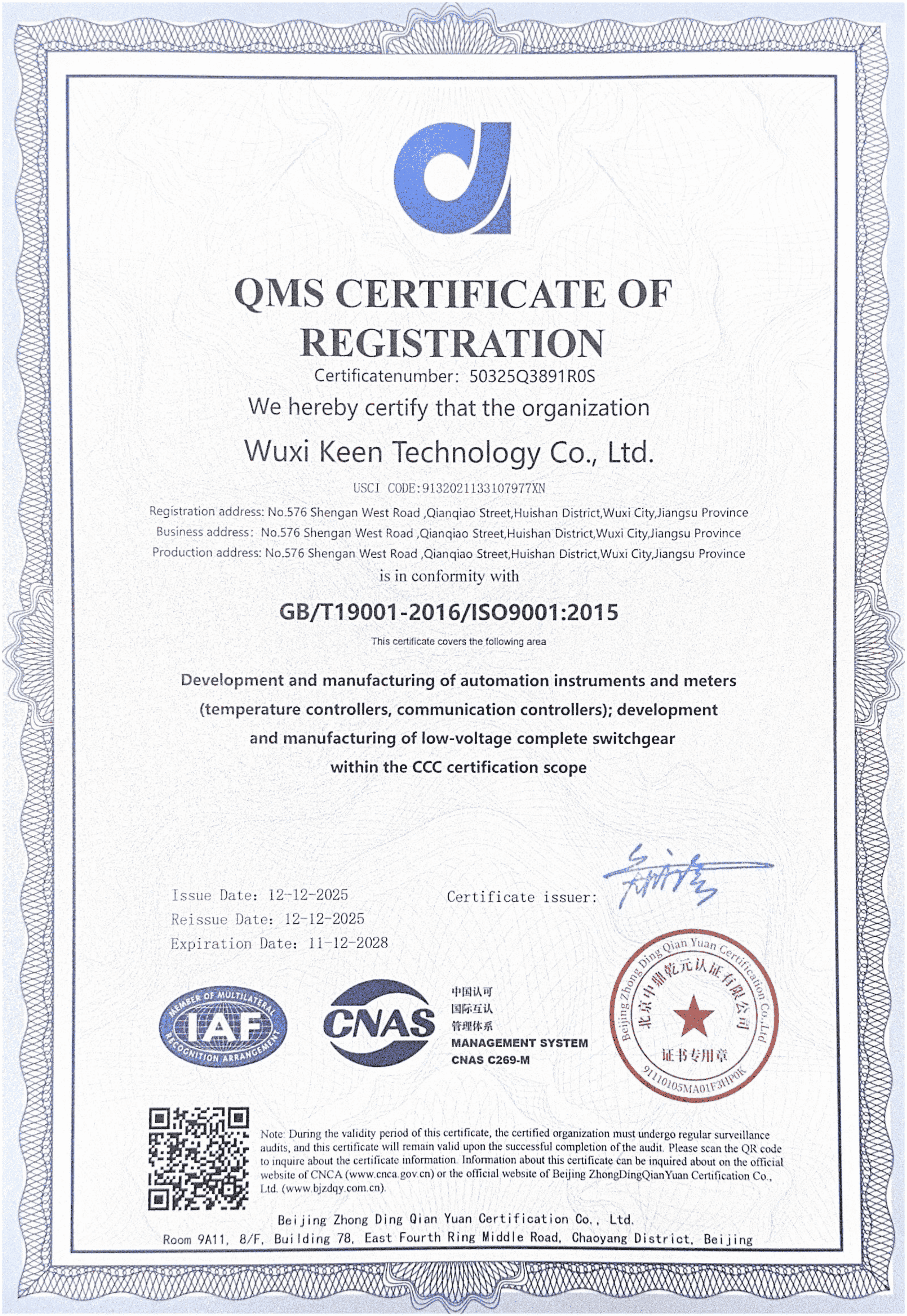
Example of an ISO 9001:2015 certificate for quality management systems in instrument manufacturing.
3. Comparative Analysis of Supplier Types
The market offers different types of suppliers, each with distinct advantages. A comparative view helps align supplier type with project needs.
| Supplier Type | Typical Offerings | Best For | Considerations |
|---|---|---|---|
| Global Component Giants (e.g., Omron, Schneider Electric) |
Standardized, catalog-based PID controllers, extensive global distribution. | High-volume, standard applications; replacements for existing systems. | Less flexibility for customization; lead times can be long for specialized variants. |
| Specialized Industrial Automation Brands (e.g., Eurotherm, Watlow) |
High-performance, feature-rich controllers for complex thermal processes. | Mission-critical, high-accuracy applications in aerospace, advanced materials. | Premium cost; may be over-engineered for simpler semiconductor auxiliary controls. |
| Integrated Technical Solution Providers (e.g., Cakeen) |
PID controllers + complementary services (CMS software, electrical design, cabinet assembly). | OEMs and integrators needing a bundled solution (controller + communication + cabinet). | Offers OEM/ODM services; can provide a KE-48 panel-mount controller alongside a complete CMS. |
| Pure-Play Contract Manufacturers (OEM/ODM) | Fully customized hardware, white-label production. | Companies with strong in-house design wanting to outsource manufacturing only. | Requires clear, detailed specifications and robust quality oversight from the client. |
Procurement Insight:
For semiconductor equipment OEMs, an integrated provider can reduce interface complexity. For example, sourcing a Cakeen KE-2104 4-channel controller alongside their K42CE-D CMS communication module creates a pre-validated data acquisition subsystem, potentially reducing integration time compared to sourcing components from multiple suppliers.
4. Risk Mitigation and Supply Chain Assessment
Proactive risk management is essential for critical components. Evaluate suppliers on their control measures for common failure points.
Technical and Quality Risks
- Temperature Control Failure: Suppliers should implement sensor break detection, alarm outputs, and watchdog timers. PID controllers from Cakeen, such as the KE-H10, feature these protections and enable remote monitoring via Modbus RTU.
- Design Error: Prefer suppliers with standardized design processes (IEC/UL508A for cabinets), multi-stage reviews, and pre-delivery testing.
- Component Quality: Verify use of genuine branded components and traceable supply chains.
Commercial and Support Risks
- After-Sales Support: Look for providers offering bilingual documentation (Chinese/English), remote diagnostic support, and clear spare parts availability. A company with 40% export business, like Cakeen, is typically structured for international support.
- Supply Chain Stability: Assess monthly capacity, lead times (typically 30–45 days), and MOQ (as low as 5 units for some services). A 2019 m² facility indicates a certain production scale.
- Payment Terms: Standard terms like 30% deposit with balance before shipment are common. Confirm acceptance procedures, such as 100% pre-shipment testing.
Reference Case: Semiconductor Equipment OEM
Client Type: Semiconductor Equipment OEM
Application: Embedded temperature control in semiconductor processing equipment (CVD, etching, diffusion furnaces).
Solution & Quantity: Integration of Cakeen KE-48 (compact 48×48mm panel mount) and KE-2104 (4-channel DIN rail) controllers, 50+ units per year.
Duration & Result: 4+ year collaboration; improved equipment uptime and consistent process temperature across chambers.
Key Factor: The compact form factor of the KE-48 fit OEM design constraints, while the multi-channel KE-2104 saved cabinet space.
5. The Sourcing Decision Matrix
Combine the above factors into a weighted scoring system. Create a simple matrix for each potential supplier, scoring them (1-5) on criteria important to your organization:
- Technical Fit: Does the product (e.g., ASH model for pipe heating) match the required specs?
- Certification Compliance: Does the supplier hold the necessary certifications for your target market?
- Total Cost of Ownership: Include unit cost, integration effort, and projected maintenance.
- Supply Chain Reliability: Based on facility size, capacity, and lead time consistency.
- Support & Partnership Potential: Quality of documentation, technical support, and flexibility for future needs.
Conclusion and Strategic Outlook
Selecting a PID temperature controller supplier is a strategic procurement activity. The trend is moving towards integrated solutions where the controller is part of a broader ecosystem encompassing data acquisition (CMS), communication modules, and even electrical cabinet systems. Suppliers who can offer this breadth, like Cakeen with its range from the HOT-GUN pipeline heater to the Central Monitoring System software, provide a single-point responsibility that can reduce project complexity.
Ultimately, the optimal supplier balances precise technical capability with robust operational and commercial practices, ensuring not just a successful purchase but a reliable partnership for the lifecycle of your equipment.
¿Tiene preguntas o necesita más detalles?
Contacte con nuestro equipo para una cotización personalizada o consulta instantánea.
Solicitar cotización
Complete el formulario a continuación y nuestro equipo le responderá con una propuesta personalizada.
Chat directo de WhatsApp
¿Prefiere chatear en tiempo real? Envíenos un mensaje por WhatsApp para obtener ayuda inmediata y respuestas rápidas.
- Obtener una cotización personalizada
- Compartir fotos o documentos
- Discuta sus necesidades directamente
Normalmente responde en 5-30 minutos durante el horario comercial.