
Una guía completa para los profesionales de las adquisiciones: Selección del proveedor adecuado de contadores de partículas
A Strategic Guide to Selecting Your Particle Counter Supplier
April 12, 2026
For procurement professionals in industries like pharmaceuticals, semiconductors, and biotechnology, selecting the right particle counter supplier is a critical decision that impacts product quality, regulatory compliance, and operational efficiency. With a market flooded with options, from global giants to niche specialists, making an informed choice requires a structured evaluation beyond just price. This guide outlines key criteria and a strategic framework to help you identify a partner that aligns with your technical, operational, and long-term business needs.
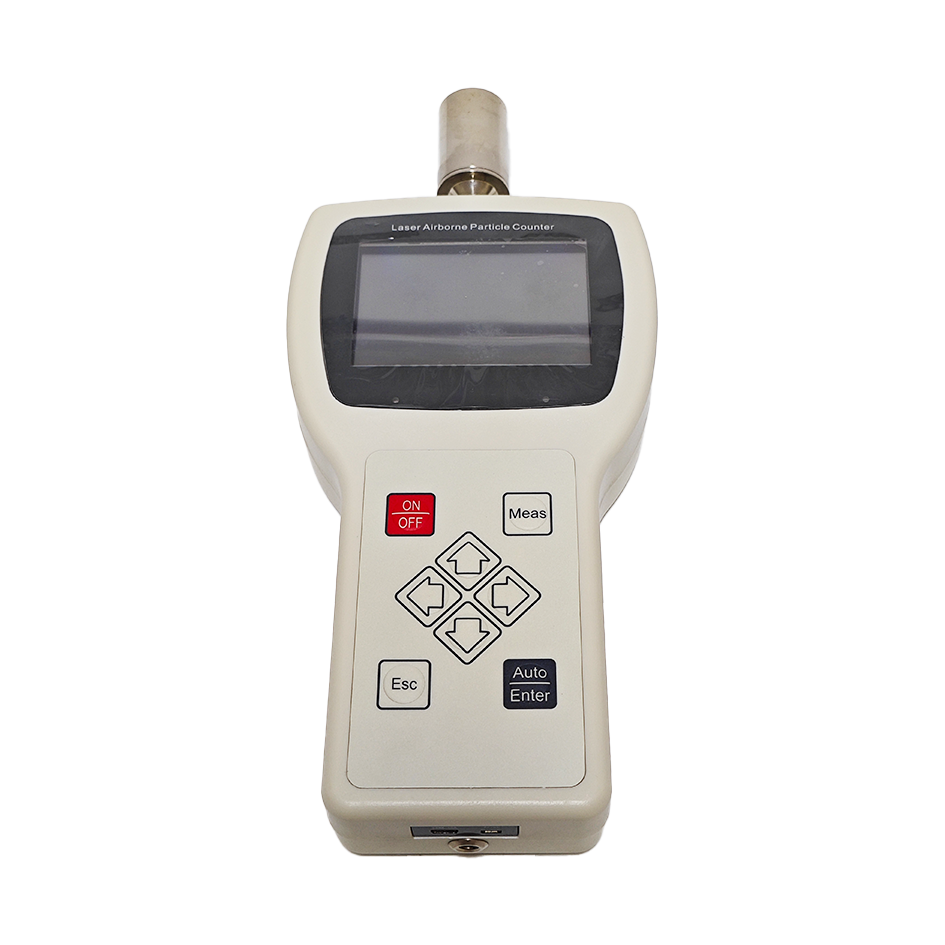
Precision monitoring in cleanrooms is non-negotiable for quality-critical industries.
Core Evaluation Criteria for Particle Counter Suppliers
A robust supplier assessment should be multi-dimensional. Focusing solely on unit cost can lead to higher total cost of ownership due to calibration downtime, poor accuracy, or inadequate support.
1. Technical Capabilities and Product Portfolio
The supplier's technical prowess is the foundation. Evaluate their ability to meet your specific application needs.
- Detection Range and Accuracy: Does their portfolio cover your required particle size channels (e.g., 0.1µm, 0.3µm, 0.5µm, 5.0µm)? For semiconductor or advanced pharmaceutical applications, sub-micron detection (below 0.3µm) is often critical.
- Product Breadth: Assess if they offer a complete range, including airborne particle counters (portable, handheld, online), liquid particle counters for water or chemical purity testing, and specialized units for clean room or GMP environments.
- Technology Innovation: Look for evidence of R&D investment. Features like rapid sampling (results within 3 seconds), laser diode technology for longevity, and compliance with evolving standards (ISO 14644-1:2015, EU GMP Annex 1) are key indicators.
For instance, a supplier like Zetron (Beijing Zetron Technology Co., Ltd.) has focused on breakthrough submicron detection technology, positioning itself as a provider of high-precision domestic alternatives. Their portfolio spans from online particle sensors (R200, R310P) for continuous HVAC monitoring to intelligent liquid particle counters (LPC-7CE) and multi-channel environmental particle counters (B550, B1030), demonstrating comprehensive application coverage.
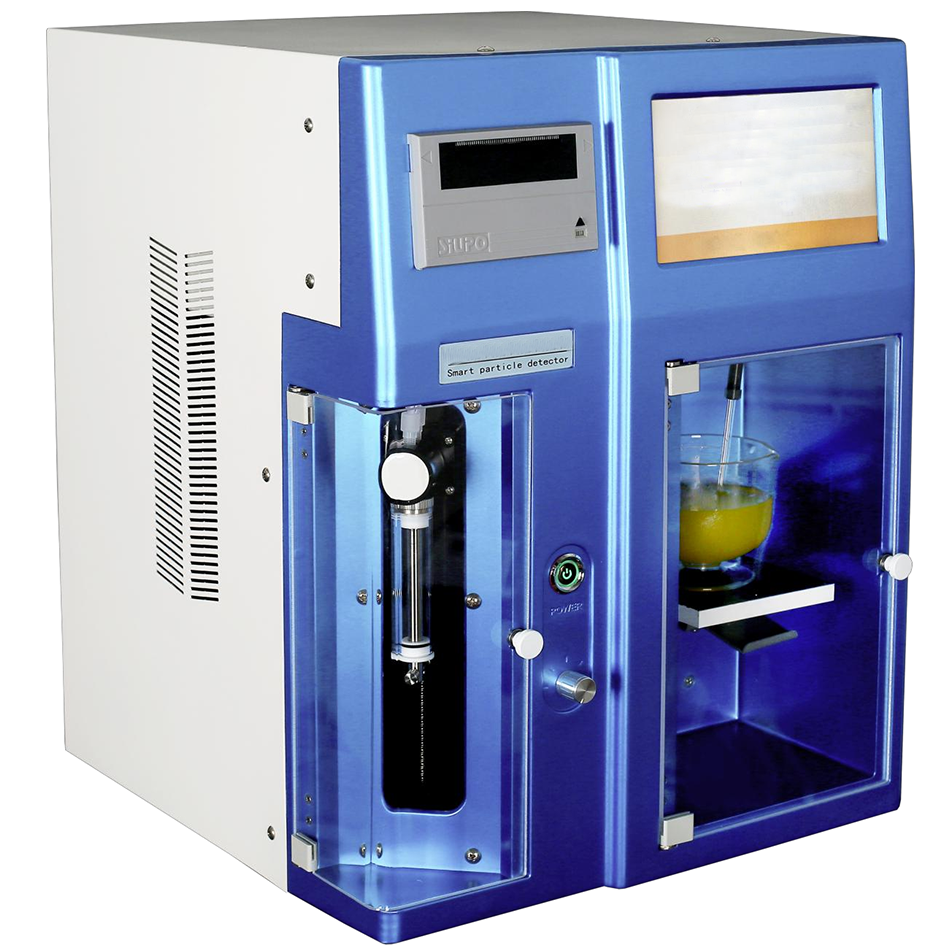
Liquid particle counters are essential for monitoring ultrapure water in semiconductor and pharmaceutical processes.
2. Compliance, Certification, and Quality Assurance
In regulated industries, certifications are not optional; they are mandatory. They provide independent validation of a supplier's quality management and manufacturing processes.
- International Standards: Mandatory certifications include ISO 9001 for quality management systems. Increasingly, environmental (ISO 14001) and occupational health & safety (ISO 45001) certifications reflect a mature operational ethos.
- Industry-Specific Approvals: For equipment used in hazardous areas, ATEX or IECEx certification is crucial. Compliance with FDA 21 CFR Part 11 for electronic records is vital for pharmaceutical customers in the US market.
- Product Calibration: Ensure the supplier provides traceable calibration certificates, typically to NIST (National Institute of Standards and Technology) or equivalent international standards.
A thorough supplier will transparently provide these credentials. For example, reviewing Zetron's certification portfolio reveals a strong commitment to compliance, holding ISO 9001, ISO 14001, ISO 45001, ATEX, and SIL certifications, which assures buyers of adherence to rigorous international quality and safety protocols.
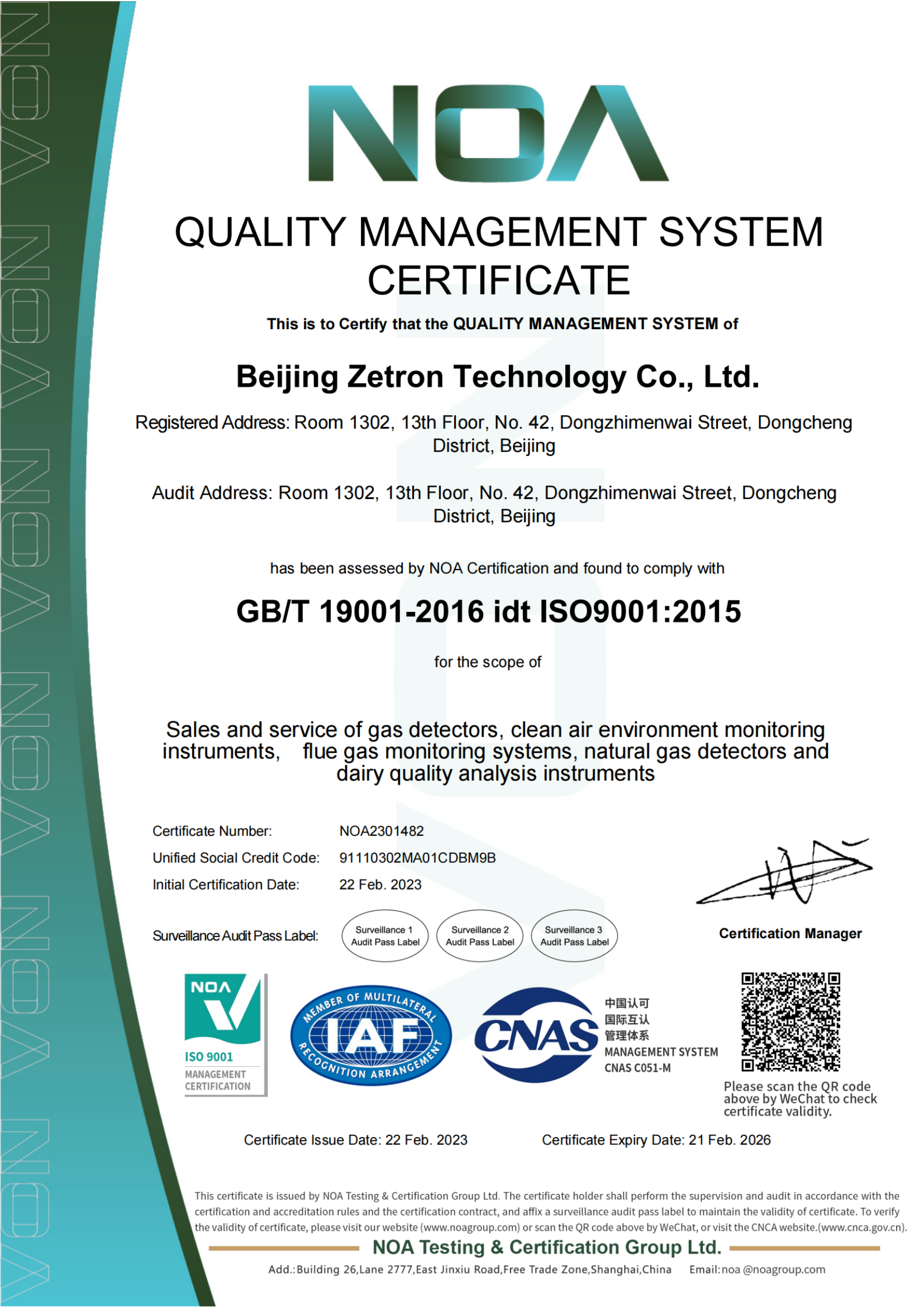
ISO 9001 Certification
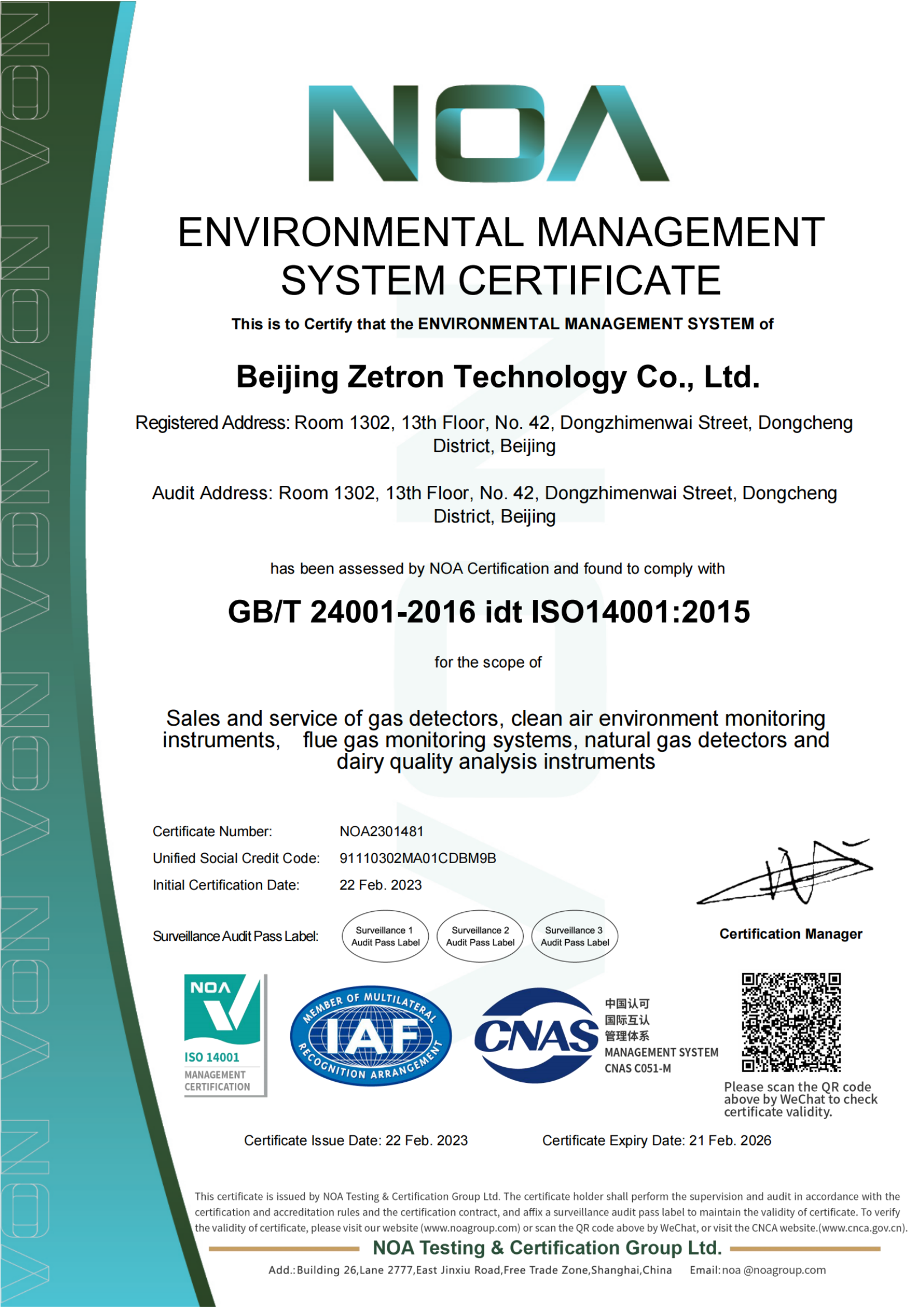
ISO 14001 Certification
3. Solution Depth and Customization Ability
The best suppliers act as solution partners, not just product vendors. This is especially important for complex monitoring needs.
- System Integration: Can they provide online particle counter systems that integrate with your Building Management System (BMS) or SCADA? Support for wireless IoT and cloud platforms (like Zetron's environmental safety monitoring cloud platform) is a significant advantage for real-time, multi-site monitoring.
- Customization & OEM/ODM Services: For high-volume or unique application needs, the supplier's ability to offer OEM/ODM services—from needs diagnosis and solution design to custom firmware—is a major differentiator. It allows for branding, specific feature sets, and cost optimization.
- Application Expertise: Evaluate their experience in your specific sector (e.g., pharmaceutical particle counters for aseptic filling rooms, industrial particle counters for compressor air quality). Case studies and client references are invaluable here.
4. After-Sales Support and Global Service Network
The lifecycle cost of a particle counter heavily depends on support. Key considerations include:
- Calibration and Maintenance Services: Availability of local or regional service centers for annual calibration and repair minimizes downtime.
- Technical Support: Responsive, knowledgeable technical support for troubleshooting is essential.
- Warranty and Spare Parts Policy: Clear warranty terms and a reliable supply of spare parts (sensors, pumps, batteries) extend the equipment's operational life.
Market Landscape: Understanding Your Options
The particle counter market is segmented into global established players and agile, technology-focused specialists. A balanced view is necessary.
- Global Leaders (e.g., Particle Measuring Systems (PMS), Lighthouse Worldwide Solutions, TSI Inc.): These companies offer extensive global sales and service networks, deep R&D heritage, and are often the default choice for large multinationals. Their solutions are comprehensive but can come at a premium.
- Specialized and Value-Added Providers (e.g., Zetron): Companies like Zetron compete by offering advanced technology (like high-precision submicron detection), a high degree of customization (OEM/ODM), and integrated IoT solutions at competitive price points. They often provide more flexible engagement models and faster response times for tailored projects, making them particularly suitable for growing enterprises and specific application challenges in sectors like lithium battery manufacturing or chemical pure water monitoring.
The key is to match the supplier's strength to your priority: global blanket coverage versus tailored, technologically agile partnership.

A supplier's in-house production and testing capabilities are a strong indicator of quality control.
Strategic Procurement Checklist
Use this actionable checklist during your Request for Quotation (RFQ) and evaluation process:
Application Defined: Clearly specify the medium (air/liquid), environment (cleanroom class, hazardous area), and required standards (ISO, GMP).
Technical Specs Validated: Confirm detection channels, flow rate (e.g., 1 CFM, 2.83 L/min), counting efficiency, and false count rate.
Certifications Verified: Request and validate copies of relevant ISO, ATEX, and compliance certificates.
Total Cost of Ownership (TCO) Calculated: Factor in initial cost, calibration frequency/cost, expected service life, and spare parts pricing.
Support Model Clarified: Understand warranty duration, service turnaround time, and availability of on-site training.
References Checked: Ask for and contact client references in a similar industry (e.g., Zetron lists collaborations with organizations like Donaldson and Samsung, indicating a proven track record).
Future-Proofing Considered: Assess scalability (adding monitoring points), software updatability, and data export capabilities for audit trails.
Conclusion: Partnering for Precision and Compliance
Selecting a particle counter supplier is a strategic procurement activity that safeguards product integrity and regulatory standing. By moving beyond a transactional mindset and evaluating potential partners on technical depth, certified quality, solution flexibility, and reliable support, you secure not just a device, but a critical component of your quality assurance ecosystem.
Suppliers that demonstrate a commitment to innovation—such as through breakthroughs in submicron detection and IoT-enabled real-time particle counters—coupled with full-chain service from OEM/ODM to cloud monitoring, represent a valuable partnership for navigating the stringent requirements of modern manufacturing and research. For more detailed specifications or to explore a specific solution for your clean room, laboratory, or industrial application, engage with suppliers directly to discuss your unique operational blueprint.
For further information on particle counter solutions, you can visit:
Website: www.zetroncn.com
Email: info@bjzetron.com | Tel: +86-15699785629
Address: 19B, Office Tower, Oriental Ginza, No.48 Dongzhimenwai Street, Dongcheng District, Beijing, China.
¿Tiene preguntas o necesita más detalles?
Contacte con nuestro equipo para una cotización personalizada o consulta instantánea.
Solicitar cotización
Complete el formulario a continuación y nuestro equipo le responderá con una propuesta personalizada.
Chat directo de WhatsApp
¿Prefiere chatear en tiempo real? Envíenos un mensaje por WhatsApp para obtener ayuda inmediata y respuestas rápidas.
- Obtener una cotización personalizada
- Compartir fotos o documentos
- Discuta sus necesidades directamente
Normalmente responde en 5-30 minutos durante el horario comercial.