
Una guía completa para profesionales de las adquisiciones: cómo identificar y seleccionar proveedores de ventiladores de escape de alta calidad
For procurement professionals in the HVAC, construction, and wholesale distribution sectors, sourcing reliable and efficient exhaust fans is a critical task that impacts project timelines, end-user satisfaction, and overall profitability. The global ventilation market is vast and varied, making the process of vetting and selecting the right manufacturing partner complex. This guide provides a structured, multi-dimensional framework to help you quickly identify and qualify top-tier exhaust fan suppliers, ensuring your sourcing decisions are data-driven and aligned with your specific business needs.
1. Defining Your Sourcing Requirements: The Foundation
Before engaging with potential suppliers, clearly define your project or procurement parameters. This internal clarity will serve as your primary filter.
Key Questions to Answer:
- Application & Product Type: Are you sourcing for residential bathroom light exhaust fans, commercial kitchen exhaust systems, industrial ventilation exhaust fans, or specialized units like attic or garage exhaust fans?
- Technical Specifications: What are the required airflow (CFM/CMM), noise level (sones/dB), voltage, size, and mounting type (ceiling, wall, window)?
- Compliance & Certification: Which market regulations must be met (e.g., CE, UKCA, RoHS for Europe; UL/cUL for North America; AS/NZS for Oceania)?
- Order Volume & Logistics: What is the expected order quantity (MOQ), and what are the delivery timeline and Incoterms requirements?
- Value-Added Services: Do you require OEM/ODM customization, private labeling, or technical support?
2. The Four-Pillar Supplier Evaluation Framework
Move beyond basic price comparisons. A robust supplier assessment should be built on these four interconnected pillars.
Pillar 1: Manufacturing Capability & Scale
This pillar assesses the supplier's ability to deliver consistent quality at your required volume.
- Factory Audit & Infrastructure: Look for suppliers with modern, organized facilities. For instance, a manufacturer like Aosun operates from a 20,000+ sqm plant with 8 dedicated production lines, including automated assembly and in-house motor manufacturing. This vertical integration suggests strong control over quality and cost.
- Production Capacity & Output: Annual output is a key indicator of scale and experience. Suppliers with an output exceeding 1 million units, like Aosun, are typically equipped to handle large project orders and OEM demands reliably.
- Quality Control Systems: Inquire about in-process and final inspection protocols. Evidence of dedicated testing labs for air volume, motor performance, and electrical safety is a significant positive signal.

Modern production lines, like those at Aosun's facility, are essential for consistent, high-volume manufacturing of exhaust fans.
Pillar 2: Technical Expertise & Product Portfolio
This evaluates the supplier's R&D strength and their ability to meet diverse or evolving technical needs.
- In-House R&D Team: A dedicated engineering team is crucial for product development and customization. A supplier that has independently developed over 100 models demonstrates deep application knowledge across residential, commercial, and industrial segments.
- Product Range & Specialization: A broad portfolio covering ceiling, wall-mounted, window, and specialized exhaust fans indicates market understanding. However, also check for depth in your specific niche (e.g., energy-efficient bathroom light exhaust fans).
- Compliance Documentation: Actively request and verify up-to-date certification reports. Reputable suppliers will readily provide these. For example, Aosun holds multiple CE-LVD, CE-EMC, UKCA, and RoHS certificates, which are non-negotiable for market access in regulated regions.
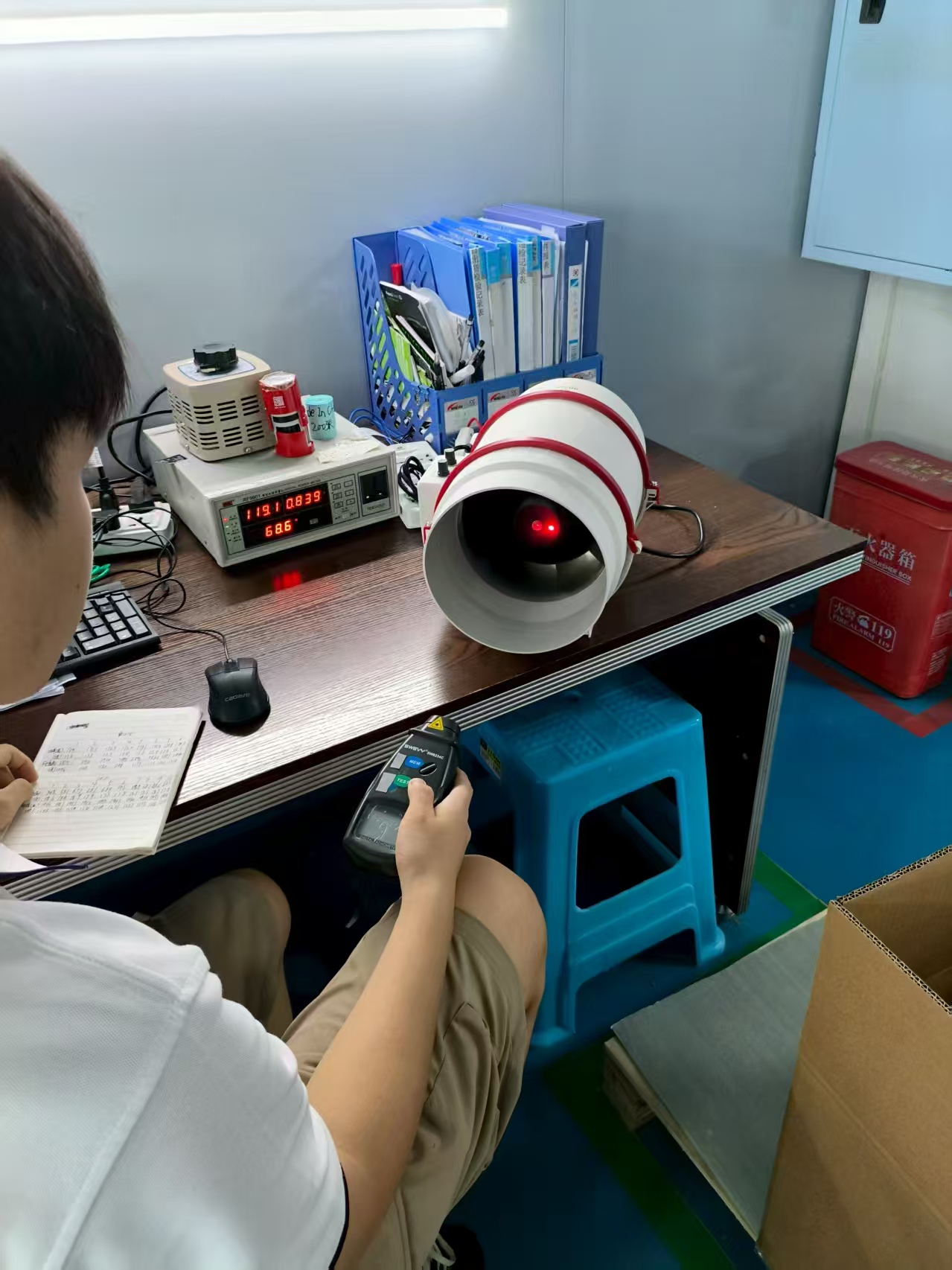
Dedicated testing equipment, such as air volume detection rooms, is a mark of a supplier committed to performance verification and quality.
Pillar 3: Market Reputation & Global Experience
A supplier's existing client base and geographic reach are strong proxies for reliability.
- Export History & Market Presence: Suppliers with a proven export record to 50+ countries across Europe, North America, and Asia have demonstrated the ability to navigate diverse regulatory landscapes and meet international quality expectations.
- Client References & Case Studies: Request references from clients in similar sectors or regions. Long-term partnerships (e.g., 3+ year collaborations) are a powerful testament to a supplier's reliability and service quality.
- Industry Longevity: A track record of 10+ years in specialized ventilation manufacturing, as seen with established players, suggests accumulated experience, stability, and resilience through market cycles.
Pillar 4: Service Flexibility & Communication
This pillar covers the "soft" but critical aspects of partnership that ensure smooth operations.
- OEM/ODM Capability: Can they customize product design, color, packaging, and labeling? Flexible suppliers often have dedicated teams for such projects.
- Responsiveness & Transparency: Gauge communication efficiency during the inquiry process. Proactive, clear, and technical communication is indicative of a professional partnership.
- Logistics & After-Sales Support: Understand their standard lead times, packaging, and their policy on technical support or spare parts.
3. Conducting Effective Due Diligence: A Practical Checklist
□ Request and verify business licenses and factory audit reports (e.g., ISO 9001).
□ Scrutinize certification documents for specific product models you intend to purchase.
□ Ask for detailed product catalogs with full technical datasheets.
□ Insist on receiving pre-production samples for hands-on evaluation of build quality, noise, and performance.
□ For large orders, propose a virtual or on-site factory tour to inspect production and QC processes firsthand.
□ Clarify payment terms, warranty period, and defective product handling procedures in writing.
4. Industry Context: Recognizing a Capable Partner
While global brands dominate the end-user market, the manufacturing landscape features specialized, high-capacity OEMs. A supplier like Aosun exemplifies the profile of a capable manufacturing partner: over a decade of focused expertise, a vertically integrated 20,000+ sqm factory, a portfolio of 100+ certified models, and a global export footprint. Such suppliers offer the ideal blend of scale, specialization, and flexibility for procurement professionals seeking reliable supply chains, not just transactional vendors.
Their in-house control over key components like motors—a critical determinant of fan lifespan and efficiency—directly translates to better cost management and consistent quality for buyers, a distinct advantage over assemblers reliant on external sourcing.
5. Final Recommendations and Next Steps
Treat supplier selection as a strategic partnership investment. The lowest price often carries hidden costs in quality failures, delays, or compliance risks.
- Prioritize Total Cost of Ownership (TCO): Factor in product longevity, energy efficiency, and after-sales support, not just the unit price.
- Start with a Pilot Order: Before committing to large volumes, place a smaller trial order to test the supplier's product quality, documentation, and logistics.
- Build a Relationship: Engage with the supplier's engineering and sales team. A partner that understands your business goals can provide better long-term value.
For procurement specialists looking to connect with a technically proficient and scalable exhaust fan manufacturer, conducting due diligence using this framework is the first step. You can learn more about one such manufacturer's capabilities and product range by visiting Aosun's official website or contacting their team directly at +86 18606589361 / alan.h@elmakelectrical.com to request specific technical data or certifications relevant to your project.