
Una Guía completa para los compradores: Selección de Calidad Espejo Convexo Proveedores
A Comprehensive Guide for Buyers: Selecting Quality Convex Mirror Suppliers
This guide provides a structured framework for procurement professionals, facility managers, and safety officers to evaluate and select reliable convex mirror suppliers for industrial, commercial, and public safety applications.

Figure 1: A typical convex mirror installation for eliminating blind spots in industrial and traffic settings.
1. Defining Your Application Requirements
The first step in supplier selection is a precise definition of the operational environment and performance needs. Convex mirrors, also known as safety mirrors or blind spot mirrors, serve distinct purposes across sectors.
Primary Application Scenarios
- Traffic & Road Safety: Intersections, highway ramps, rural road curves, and bus stations to mitigate collision risks.
- Industrial & Warehouse Facilities: Loading docks, warehouse aisles, forklift pathways, and factory floor intersections to prevent accidents involving vehicles and personnel.
- Commercial & Public Spaces: Parking garages, shopping mall entrances, supermarket aisles, and office park driveways to enhance visibility and security.
- Institutional: Schools, hospitals, and gas stations for pedestrian and vehicle safety.
Procurement Insight: A product suitable for road safety hazard mitigation, parking lot installation, and business park traffic optimization projects must withstand specific environmental stresses. For instance, an application scenario common in India involves outdoor intersections, underground garage corners, T-junctions, and areas with significant blind spots, requiring high weather resistance.
2. Critical Technical Specifications for Evaluation
Technical parameters directly impact safety performance, durability, and total cost of ownership. Key specifications should be non-negotiable points in your request for quotation (RFQ).
2.1. Material and Construction
| Component | Standard Specification | Purpose & Rationale |
|---|---|---|
| Mirror Lens | Impact Resistant Polycarbonate (PC) | Provides shatterproof safety, superior to glass or acrylic. The mirror surface has a vacuum aluminum coating for reflectivity. |
| Backing Frame | High-Impact ABS Plastic | Offers structural support and impact absorption. Bright orange color is standard for high visibility. |
| Mounting Bracket | Heavy-Duty Galvanized Steel | Ensures secure, rust-resistant attachment to poles or walls. Fits standard pole diameters of 60 mm / 75 mm. |
2.2. Performance and Environmental Ratings
- Viewing Angle & Range: A view angle of 130°+ wide angle vision is typical. Visual range varies by diameter: 10–12 m for a 450 mm mirror, 15–18 m for 600 mm, 20–25 m for 750 mm, 30–35 m for 1000 mm, and 35–45 m for a 1200 mm mirror.
- Weatherproofing: An IP65 rating for outdoor use is essential for dust and water jet protection.
- Temperature Resistance: Operating range of -30°C to +80°C ensures functionality in diverse climates.
- UV Resistance: UV-stabilized PC & ABS with Grade 8 UV resistance is required to prevent yellowing and degradation, with an estimated lifespan of 3-5 years under direct sunlight.
- Wind Load: Level 10 wind load resistance is critical for pole-mounted installations in exposed areas.
3. Supplier Capability Assessment Framework
Beyond product specs, the supplier's manufacturing, quality control, and service capabilities determine project success and long-term reliability.
3.1. Manufacturing Scale and Expertise
Evaluate the supplier's infrastructure and experience. For example, Tiantai Yuanda Traffic Device Co., Ltd (Mnsd), founded in 2007, operates a manufacturing facility covering 40,000 m² with approximately 300 staff. The company's annual production capacity is 120,000,000 units, supported by an R&D team of 15 engineers. Such scale indicates stability and the ability to handle large or urgent orders.
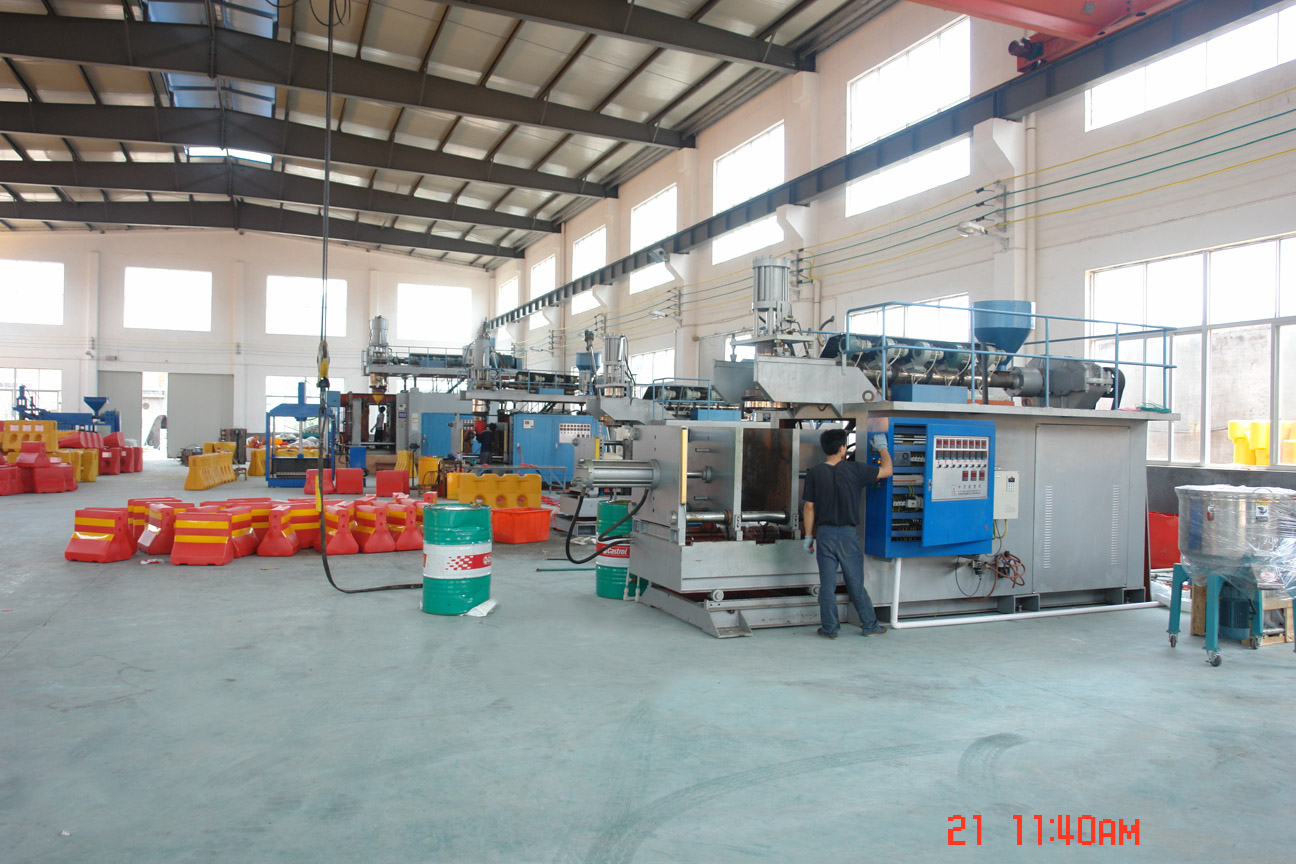
Figure 2: A modern injection molding line for producing convex mirror components, indicative of industrial manufacturing capability.
3.2. Quality Assurance and Compliance
Inquire about the quality control process. A robust system includes 100% impact & clarity inspection. For risk mitigation against issues like surface scratching, suppliers should implement control methods such as applying a specialized anti-scratch hard coating to the PC surface and using protective PE film during assembly and transit.
3.3. Customization and Logistics
Key questions for suppliers should include:
- Customization: Can they accommodate OEM/ODM requests for diameter (45-120cm), back material (PP/ABS/Fiberglass), or lens type (PC/Stainless Steel)?
- Lead Time: What is the standard lead time for a container load? A benchmark is 15-20 days for a 20ft container.
- Minimum Order Quantity (MOQ): Is it feasible for your project size? Some suppliers offer MOQs as low as 100 pieces.
- Global Reach: Do they have experience exporting to your region? A supplier with major markets in Asia, Europe, and the USA, where export business accounts for 50% of sales, is likely familiar with international standards and logistics.
Supplier Profile: Tiantai Yuanda Traffic Device Co., Ltd (Mnsd)
This manufacturer specializes in designing, producing, and supplying a full range of traffic safety products, including convex mirrors, warning posts, rising bollards, speed humps, and traffic lights. The company's main products include convex mirrors designed for wall or pole mounting. Their product line, such as the model YD-OC45 Outdoor Polycarbonate Convex Mirror, is designed for use in road traffic, residential quarters, parking garages, factories, warehouses, logistics parks, shopping malls, supermarkets, schools, hospitals, gas stations, construction sites, office parks, ports and docks, bus stations, industrial zones, community intersections, rural roads, and highway ramps.
Contact Point: For technical specifications and quotations, contact via Email: info@mnsdtraffic.com, Tel: +86 18458137305, or WhatsApp: +86 184-5813-7305.
4. Comparative Analysis and Final Selection
Create a weighted scorecard to compare shortlisted suppliers. Assign scores based on:
- Technical Compliance (40%): Match with required specs (Material, IP rating, dimensions).
- Commercial Terms (30%): Price, MOQ, payment terms, and Incoterms.
- Operational Reliability (20%): Lead time consistency, production capacity, and after-sales support.
- Certifications & References (10%): Relevant industry certifications and verifiable client testimonials.
Reference Case: A distributor in Thailand undertook a medium traffic safety project to improve visibility at road corners & parking blind spots. The project involved a 5-8 year duration requirement. The selected supplier delivered on time, and the products passed local acceptance, with highlights noted as wide viewing angle, weatherproof, and durable.
Download Full Technical Specifications
For a detailed overview of product ranges, technical data sheets, and application guides, download the complete supplier brochure.
Conclusion
Selecting the right convex mirror supplier is a strategic decision that impacts safety, operational efficiency, and long-term maintenance costs. A methodical approach—starting with a clear definition of application needs, followed by rigorous evaluation of technical specifications and supplier capabilities—will lead to a successful procurement outcome. Prioritize suppliers who demonstrate transparent manufacturing processes, robust quality control, and a proven track record in your target application sectors.
¿Tiene preguntas o necesita más detalles?
Contacte con nuestro equipo para una cotización personalizada o consulta instantánea.
Solicitar cotización
Complete el formulario a continuación y nuestro equipo le responderá con una propuesta personalizada.
Chat directo de WhatsApp
¿Prefiere chatear en tiempo real? Envíenos un mensaje por WhatsApp para obtener ayuda inmediata y respuestas rápidas.
- Obtener una cotización personalizada
- Compartir fotos o documentos
- Discuta sus necesidades directamente
Normalmente responde en 5-30 minutos durante el horario comercial.