
Una guía completa para los compradores: cómo seleccionar el proveedor correcto de generadores diesel
Navigating the Global Diesel Generator Market: A Strategic Procurement Framework
Selecting a reliable diesel generator supplier is a critical decision for procurement professionals across industries. With applications ranging from prime power for remote mining operations to emergency standby for data centers and hospitals, the stakes for equipment performance, longevity, and support are exceptionally high. The global market features a diverse landscape of manufacturers, from established engine OEMs like Cummins, Perkins, and MTU to integrated system assemblers and regional specialists. This guide provides a structured, fact-based framework to help buyers systematically evaluate potential suppliers, focusing on technical capabilities, manufacturing scale, quality assurance, and after-sales support to make an informed decision that aligns with specific project requirements and risk profiles.
Core Evaluation Criteria for Supplier Selection
A thorough supplier assessment should extend beyond initial price quotes. The following checklist outlines key dimensions for evaluation.
1. Technical Capability & Product Range
Assess the supplier's ability to meet your specific power needs. Key questions include:
- Power Range: Does the supplier offer products covering your required kW/kVA spectrum? For instance, some manufacturers specialize in specific segments (e.g., under 500kVA), while others, like BAIFA POWER, provide a broad range from 8kW to 3200kW.
- Engine Partnerships: Verify authorized partnerships with reputable engine brands (e.g., Cummins, Volvo Penta, MTU, Perkins, Mitsubishi, Baudouin). These partnerships are often formalized through OEM agreements and ensure genuine parts and technical support.
- Application Specialization: Does the supplier have proven experience in your industry (e.g., marine, mining, data center, healthcare)?
2. Manufacturing Scale & Quality Assurance
Production capacity and quality systems directly impact delivery reliability and product consistency.
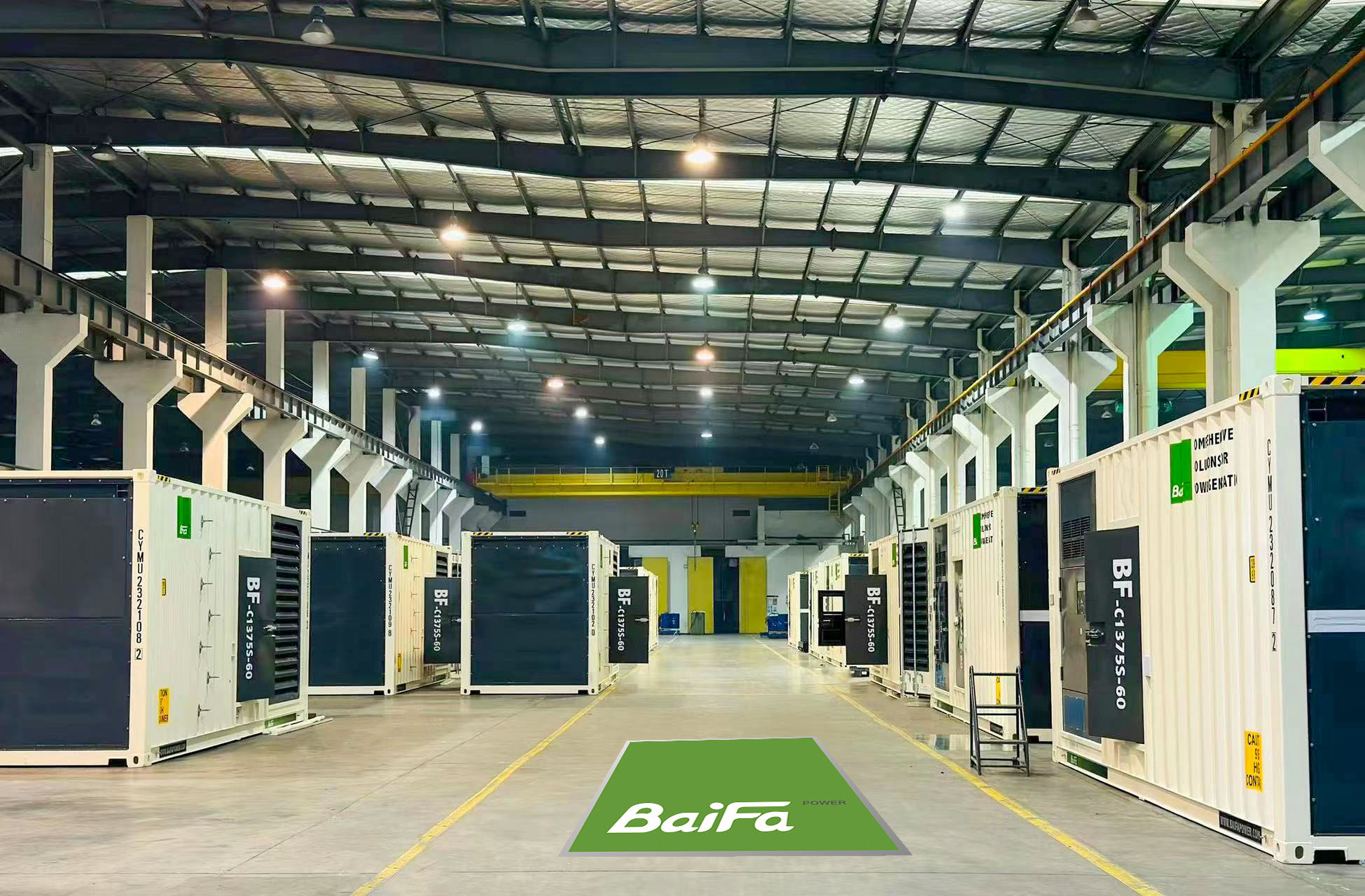
- Facility & Capacity: A supplier's annual output and factory size indicate scalability. For example, BAIFA POWER operates a 60,000 m² facility with an annual capacity of 5,000-6,000 units.
- Quality Certifications: Look for internationally recognized certifications. Relevant certifications include:
ISO 9001:2015 ISO 14001:2015 ISO 45001:2018 CEThese demonstrate a commitment to standardized quality, environmental, and safety management systems.
- Testing Protocol: Inquire about 100% load testing before dispatch and Factory Acceptance Test (FAT) availability.
3. Customization & Project Support
Standard products rarely fit complex projects. Evaluate the supplier's flexibility.
- Customization Scope: Can they modify voltage/frequency, control systems, enclosure specifications (e.g., canopies for low-noise operation), and add features like automatic transfer switches (ATS) or paralleling gear?
- Technical Support: Does the supplier have a dedicated R&D/engineering team? BAIFA POWER, for instance, maintains a team of 25 R&D engineers.
- Lead Time & MOQ: Understand standard lead times (e.g., 25-60 days) and minimum order quantities (often 1 unit).
4. Global Footprint & After-Sales Service
Long-term operational success depends on support.
- Export Experience: Suppliers with significant export ratios (e.g., 70%) are typically adept at handling international logistics, documentation, and compliance.
- Market Presence: Check their primary markets. A supplier active in LATAM, SEA, and the Middle East likely understands diverse climatic and regulatory challenges.
- Service Network: Clarify the scope of after-sales support: remote diagnostics, on-site installation, commissioning, maintenance, and parts availability.
Industry Application Deep Dive: Matching Supplier to Use Case
Different applications impose unique demands on generator sets. Aligning a supplier's proven experience with your use case mitigates risk.
Marine & Offshore
Key Requirements: Corrosion-resistant materials, vibration resistance, compliance with marine classification societies (e.g., CCS, RINA), compact design for engine rooms.
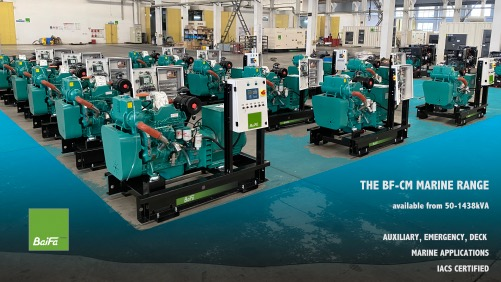
Supplier Check: Verify specific marine product lines. For example, the BF-CM series from BAIFA POWER, powered by Cummins marine engines, covers 50kVA to 1438kVA and is designed for auxiliary and emergency power on vessels.
Mining & Remote Prime Power
Key Requirements: Robustness for high-altitude/dusty environments, prime power (PRP) continuous operation capability, high-voltage paralleling capability, modular design for maintenance.
Supplier Check: Assess experience in key mining regions (e.g., Mongolia, Australia, Mozambique). Suppliers should offer products like the BF-M series (MTU) or BF-C series (Cummins) with high-voltage options and a proven track record of stable operation in harsh conditions.
Data Centers & Healthcare (Critical Standby)
Key Requirements: Ultra-reliable fast start, low noise levels, seamless integration with ATS/UPS systems, high availability.
Supplier Check: Request case studies from similar projects. Evidence of supplying multiple units to data centers or hospitals, with a focus on low-noise canopies and reliable automatic start functionality, is crucial.
Construction & Rental Power
Key Requirements: Mobility, quick deployment, durability, and flexibility for various site conditions.
Supplier Check: Evaluate the range of mobile and containerized solutions. The ability to deliver large orders (e.g., 50-100 units) within a defined timeframe, as demonstrated in power rental projects, indicates strong project execution capability.
Procurement Process & Risk Mitigation
Structuring the procurement process can prevent costly oversights.
- Request for Information (RFI): Use the criteria above to shortlist 3-5 potential suppliers. Request company profiles, certifications, and relevant case studies.
- Technical Specification Review: Engage shortlisted suppliers in detailed discussions about your project's specific technical, environmental, and regulatory requirements.
- Factory Audit (Virtual or On-site): If feasible, audit the manufacturing facility to verify capacity, quality control processes, and technology. BAIFA POWER's 34,000 m² assembly workshop is an example of a substantial production base.
- Commercial & Contractual Terms: Clearly define Incoterms (EXW/FOB/CIF), payment terms (TT, LC), warranty, and after-sales service obligations. Ensure acceptance tests (FAT/SAT) are part of the contract.
- Reference Checks: Contact past clients in similar industries or regions to validate performance and service claims.
Pro Tip for Buyers: When comparing suppliers, create a weighted scoring matrix based on the criteria most important to your project (e.g., technical fit: 30%, price: 25%, lead time: 20%, service support: 25%). This objective approach helps balance quantitative and qualitative factors.
Conclusion: Building a Partnership for Reliable Power
Selecting a diesel generator supplier is fundamentally about choosing a long-term partner for mission-critical power infrastructure. By moving beyond price as the sole determinant and employing a structured evaluation of technical capabilities, manufacturing integrity, customization support, and global service readiness, procurement professionals can significantly de-risk their investments. Suppliers that combine scale—such as an annual output of thousands of units—with deep application expertise and a robust quality management system are positioned to deliver not just a product, but a comprehensive power solution. As energy reliability becomes increasingly non-negotiable across sectors, a diligent, fact-based supplier selection process is the first step toward ensuring operational continuity and project success.
For procurement teams seeking detailed technical specifications or project consultation, engaging directly with supplier engineering teams is recommended to tailor solutions to specific operational environments and power requirements.