
Una guía completa para los compradores: cómo seleccionar un fabricante de ropa activa de alta calidad
A Comprehensive Guide for Buyers: How to Select a High-Quality Activewear Manufacturer
Sourcing activewear is a critical decision for brands, retailers, and DTC sellers. The right manufacturer can define your product quality, supply chain resilience, and brand reputation. This guide outlines a structured framework to evaluate and select an activewear manufacturing partner, focusing on technical capabilities, compliance, and operational fit.
Key Evaluation Criteria
Successful sourcing hinges on assessing manufacturers across several dimensions. These include production capabilities, material and technical expertise, quality and compliance certifications, and supply chain transparency.
1. Core Manufacturing Capabilities & Scalability
The foundation of a reliable partnership is the manufacturer's ability to deliver your required order volume with flexibility.
Production Modes and Flexibility
Look for manufacturers offering a range of services. A full-service OEM/ODM provider should handle everything from design and fabric selection to final packaging and branding. This is essential for brands seeking custom collections. For example, manufacturers like Bellasports provide one-stop OEM/ODM services covering design, fabric, logo, label, size, and color customization.
Order Volume and Lead Times
Understand the Minimum Order Quantity (MOQ) and standard lead times. These figures indicate scalability and planning requirements. Industry standards vary, but many technical activewear manufacturers have MOQs starting around 500 pieces per style. Standard lead times for custom activewear can be approximately 90 days from confirmed design to shipment. Monthly production capacity is another key metric; some integrated factories report capacities exceeding 100,000 pieces.
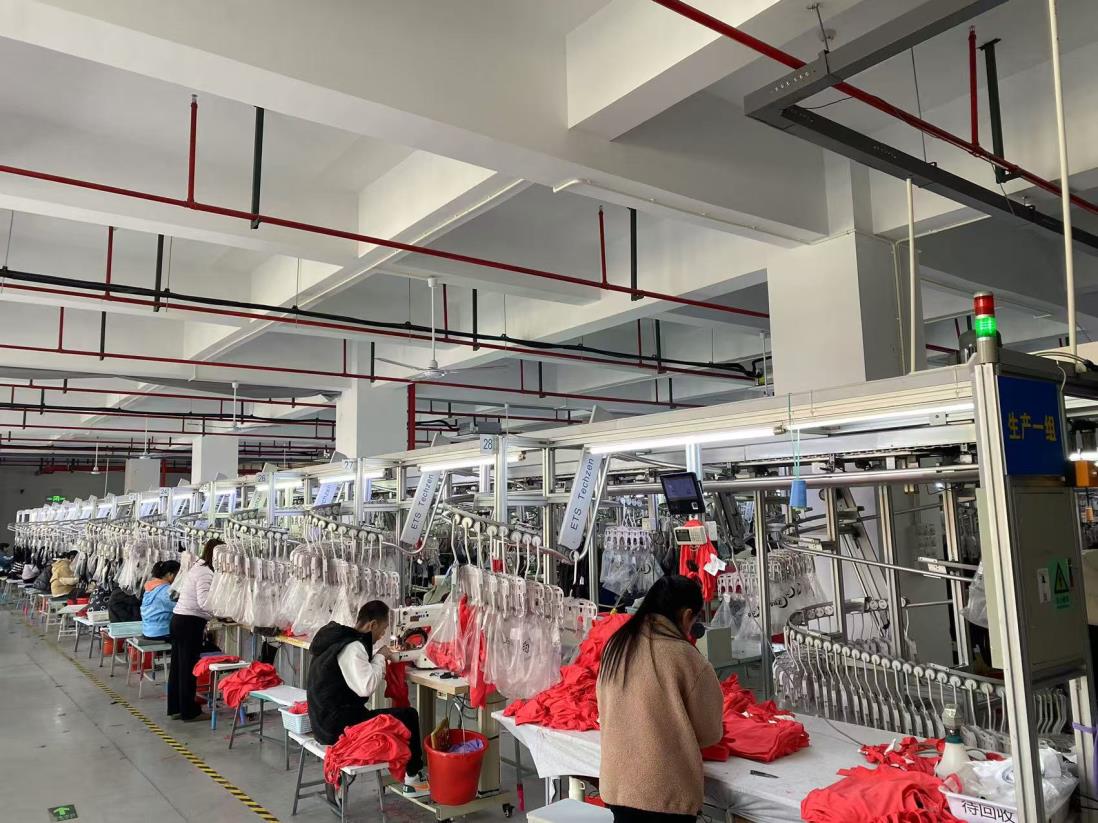
An automated sewing and hanging line, indicative of modern production management.
2. Technical Expertise and Vertical Integration
Differentiation in activewear often comes from fabric technology and construction methods. Evaluate the manufacturer's control over these elements.
Fabric Sourcing and Development
Manufacturers with in-house fabric mills or strong partnerships with premium mills offer significant advantages. They enable faster custom fabric development (often 4-6 weeks faster), ensure material consistency, and support innovation. For instance, access to imported fabrics from regions like Italy or Taiwan, and the ability to develop sustainable materials like recycled polyester or organic cotton blends, is a strong indicator of technical capability.
Construction and Bonding Technology
For performance wear like yoga leggings and sports bras, bonded seam construction is critical for comfort and durability. Manufacturers utilizing imported bonding machines and tapes can deliver a superior seamless finish, reducing chafing and enhancing garment longevity. This contrasts with traditional sewn seams and is a mark of a technical specialist.
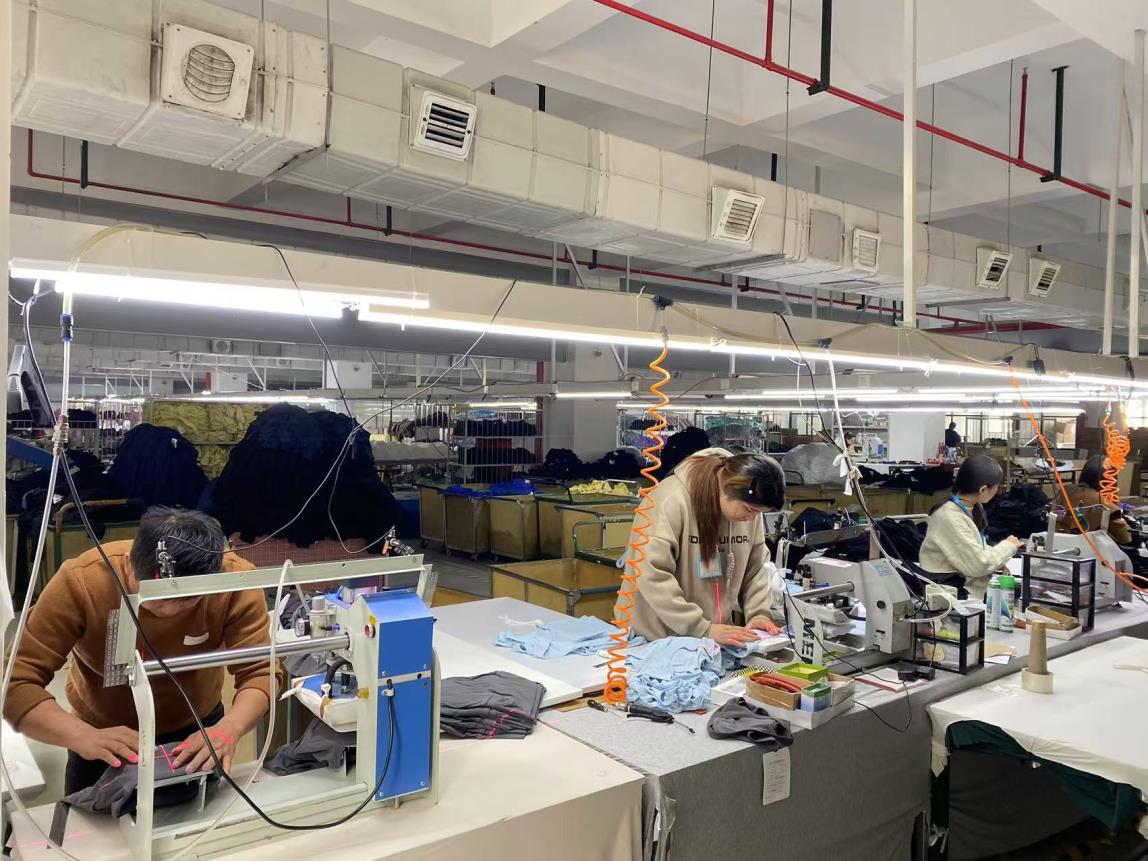
Precision equipment, such as a label pressing machine, contributes to consistent finishing quality.
3. Quality Assurance and Compliance Certifications
Certifications are non-negotiable for market access and consumer trust. They provide independent verification of a manufacturer's processes.
Product Safety and Sustainability
- OEKO-TEX® Standard 100: Certifies that textiles are tested for harmful substances. A certificate (e.g., Number HKC 23756 issued by TESTEX) is essential for consumer safety, particularly in EU and US markets.
- Global Recycled Standard (GRS): Verifies recycled material content and responsible supply chain practices. Certificates from bodies like Control Union (e.g., CU1143477GRS-2023-00097318) or SGS are crucial for brands with sustainability commitments.
Social Compliance
The BSCI (amfori) audit is a widely recognized standard for social compliance, covering labor rights, working conditions, and ethical production. A valid BSCI report (e.g., Audit Number 24-0257545) is often a prerequisite for major retailers and responsible brands.
In-Process Quality Control
Beyond certifications, inquire about the factory's internal QC protocol. A robust system includes in-line inspections during production and a final random inspection based on AQL (Acceptable Quality Level) standards. The use of automated inspection machines can enhance consistency.
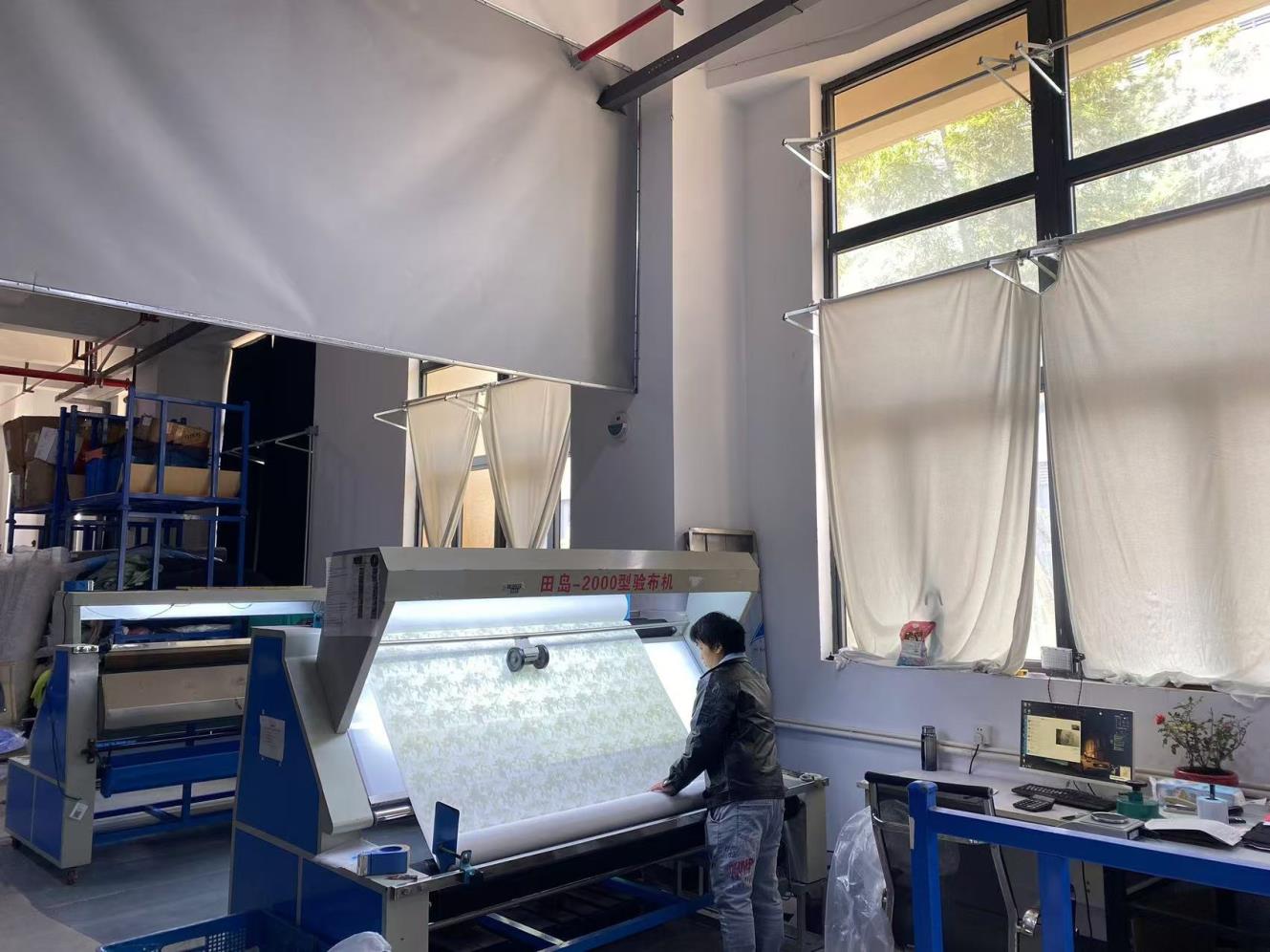
Automated inspection systems help maintain high-quality standards across production runs.
4. Industry Specialization and Application Scenarios
Manufacturers often develop expertise in specific activewear categories. Aligning your product needs with their specialization leads to better outcomes.
Performance Categories
- Yoga & Gym Wear: Requires high four-way stretch, compression, moisture-wicking, and seamless/supportive construction. Materials are typically nylon-spandex blends.
- Outdoor & Hiking Apparel: Demands weather resistance (water-repellent/breathable), durability, UV protection, and lightweight construction. Fabrics often include recycled polyester and windproof membranes.
- Tennis & Golf Wear: Needs UV protection, stretch, quick-dry performance, and a polished aesthetic. Italian performance fabrics are commonly used.
- Lifestyle & Streetwear: Focuses on softness, comfort, eco-friendly materials (organic cotton, bamboo), and easy care.
Suppliers like Bellasports list applicable industries for their products, such as Golf, Tennis, Yoga, Gym, Running, Hiking, and Lifestyle, indicating a broad yet segmented capability.
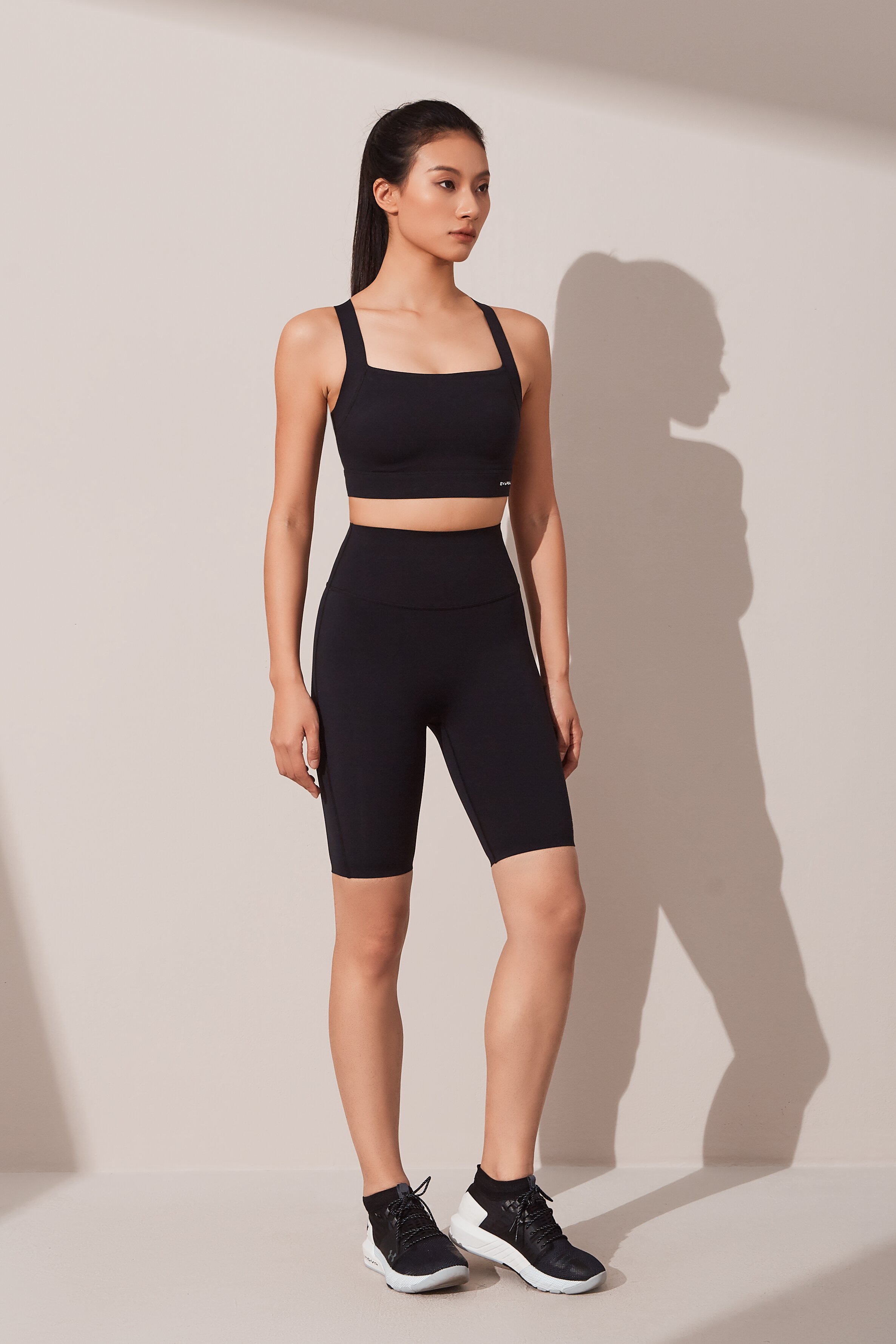
A yoga set exemplifying technical construction for fitness studios.
5. Supply Chain and Operational Transparency
Modern manufacturing relies on efficient, transparent operations.
Smart Manufacturing Systems
The adoption of Flexible Manufacturing Systems (FMS) and automated logistics lines signifies a move towards intelligent production. This can lead to a reported 25% faster turnaround time and higher precision through digital pattern making, compared to traditional factories.
Export and Logistics Support
Verify the manufacturer's experience in your target markets (e.g., USA, Europe, Australia, Middle East). They should offer standard Incoterms like FOB, CIF, or DDP and have experience with direct-to-consumer fulfillment logistics if needed.
Procurement Checklist: Questions to Ask
- What are your MOQ and standard lead time for a custom activewear style?
- Can you provide OEM (our design) and ODM (your design) services? What is included in "full customization"?
- Do you have in-house fabric development or direct mill partnerships? Can you source or develop sustainable materials (GRS, organic)?
- Please share valid certificates for OEKO-TEX® Standard 100, GRS, and BSCI social compliance.
- What is your internal quality control process (AQL level)?
- What specialized equipment do you use for bonded seam construction?
- Can you share anonymized case studies for clients in a similar category (e.g., DTC brand, retail chain)?
- What are your standard payment terms (e.g., 30% deposit, 70% before shipment)?
Conclusion: Building a Strategic Partnership
Selecting an activewear manufacturer is not merely a transactional purchase but the initiation of a strategic partnership. The ideal partner combines technical expertise in performance fabrics and construction with robust compliance credentials and transparent, scalable operations. By meticulously evaluating potential suppliers against the criteria outlined in this guide—from vertical integration and certification to specialized application knowledge—buyers can make an informed decision that supports product quality, brand integrity, and long-term growth in the competitive activewear market.
¿Tiene preguntas o necesita más detalles?
Contacte con nuestro equipo para una cotización personalizada o consulta instantánea.
Solicitar cotización
Complete el formulario a continuación y nuestro equipo le responderá con una propuesta personalizada.
Chat directo de WhatsApp
¿Prefiere chatear en tiempo real? Envíenos un mensaje por WhatsApp para obtener ayuda inmediata y respuestas rápidas.
- Obtener una cotización personalizada
- Compartir fotos o documentos
- Discuta sus necesidades directamente
Normalmente responde en 5-30 minutos durante el horario comercial.