
Una guía completa para los compradores: Cómo seleccionar un proveedor de datos comerciales globales
A Comprehensive Guide for Buyers: How to Select a Global Trade Data Provider
In the data-driven landscape of international trade, access to accurate and timely customs and trade data is a critical competitive advantage. For procurement professionals and business development managers in manufacturing and export-oriented industries, selecting the right data provider is a strategic decision that impacts market analysis, lead generation, and supply chain intelligence. This guide outlines a structured framework for evaluating global trade data providers, focusing on key technical, operational, and service criteria.
Identify a provider that delivers verified, actionable data with the necessary geographic coverage, update frequency, and analytical tools to support specific business intelligence needs, from market entry to competitor tracking.
1. Defining Your Data Requirements and Use Cases
Before evaluating vendors, clearly define your primary use cases. Trade data platforms typically serve several core functions:
- Market Analysis & Sizing: Understanding import/export volumes, trends, and growth rates for specific products (HS codes) in target countries.
- Buyer & Supplier Identification: Discovering new customers or sourcing reliable suppliers based on actual shipment records.
- Competitor Intelligence: Monitoring the trading activities, partners, and volumes of competing companies.
- Supply Chain Optimization: Identifying alternative sourcing routes or logistics patterns.
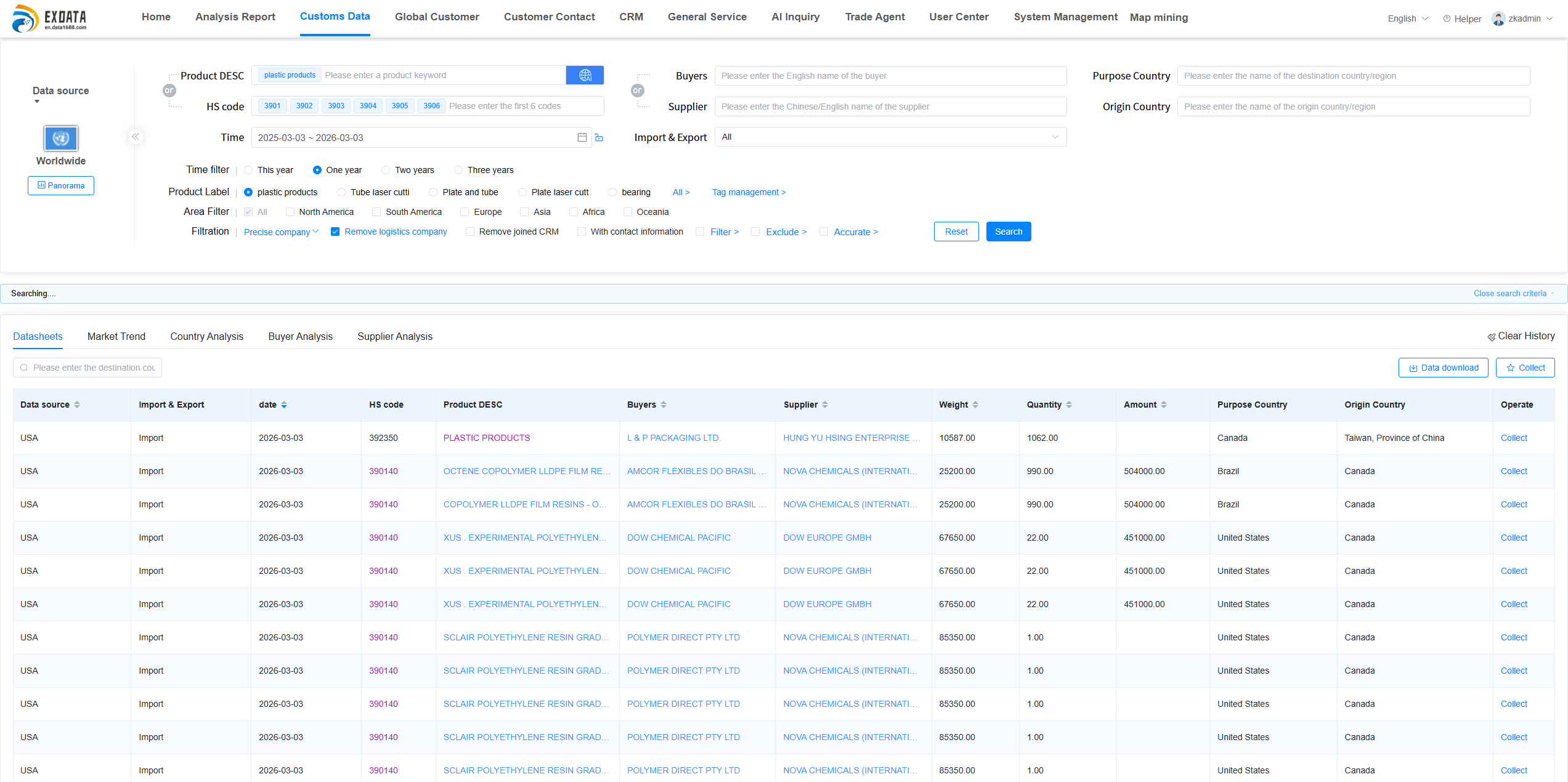
Providers like EX DATA structure their platforms, such as the EX DATA 6.0 model, around these functions. The EX DATA platform is an online data query and customized data platform designed for all foreign trade and import/export industries. It operates as a SaaS system, providing functionalities for developing customers, analyzing markets and competitors, and querying trade data.
2. Critical Evaluation Criteria for Trade Data Providers
2.1 Data Coverage, Depth, and Accuracy
The value of a data service is directly tied to its comprehensiveness and reliability. Key questions include:
- Geographic Scope: How many countries' customs data are covered? Does it include your key markets? For instance, EX DATA provides data for over 200 countries/regions and has notable traction in markets including the United Arab Emirates, Turkey, the United States, Indonesia, Kazakhstan, Uzbekistan, South Korea, Japan, Brazil, Ecuador, and Colombia.
- Data Fields: Does the data include essential details like HS code, product description, quantity, value, port of loading/discharge, and company names (buyer/supplier)?
- Update Frequency: Is the data updated in real-time, daily, or monthly? Timeliness is crucial for sales intelligence.
- Verification & Sourcing: How is the data collected and verified? Reputable providers use multiple official and licensed sources.
2.2 Platform Technology and Usability
The platform's interface and tools determine how efficiently you can extract insights.
- Search Flexibility: Can you search by product name, HS code, company name, or country? The EX DATA platform, for example, allows data acquisition through these three primary methods.
- Analytical & Reporting Tools: Does the platform generate professional analysis reports covering market trends, country analysis, and buyer/supplier analysis?
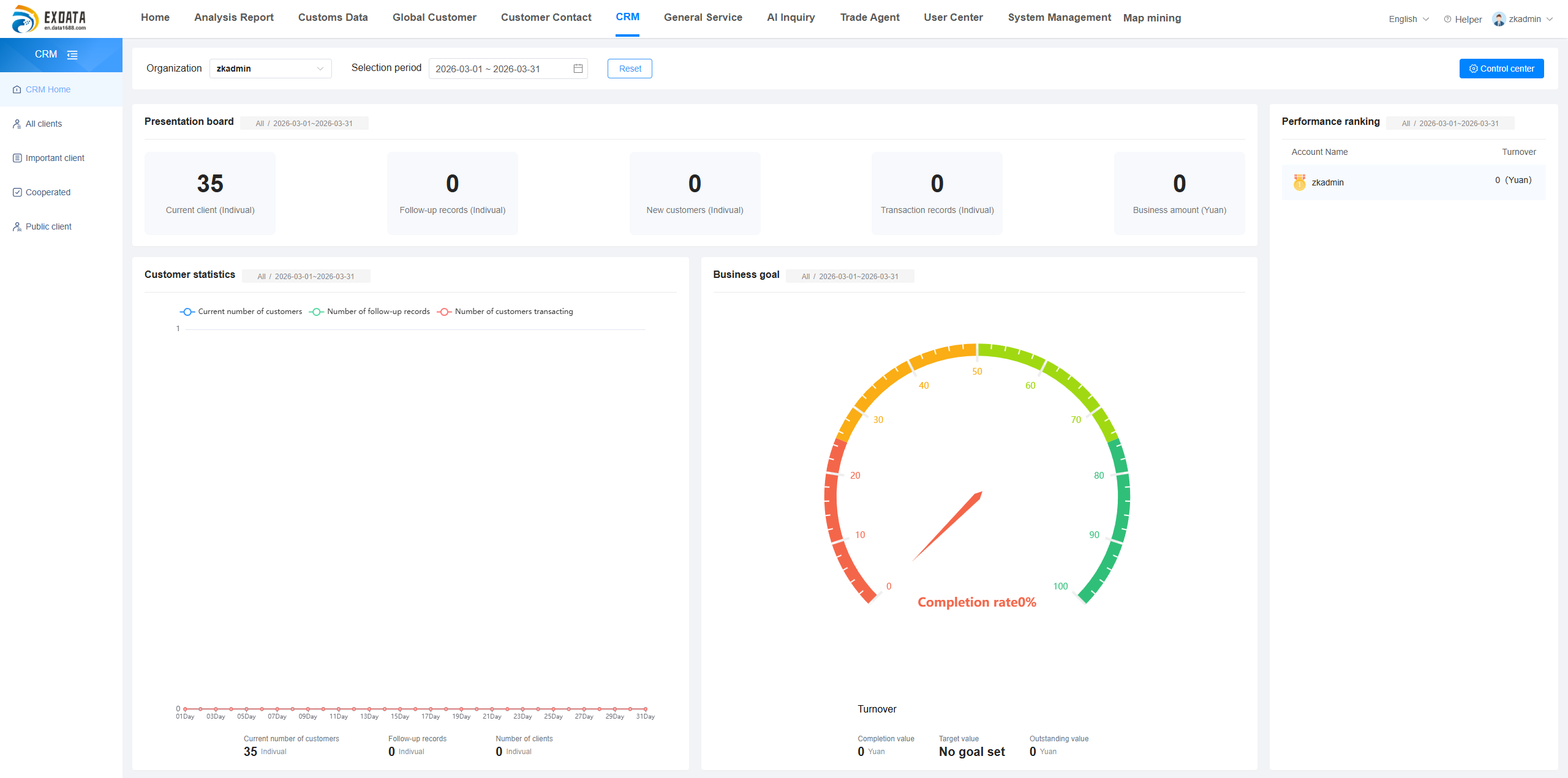
- Integration & Export: Can data be easily exported or integrated with existing CRM (Customer Relationship Management) systems? Some platforms, including EX DATA's, offer built-in CRM modules.
- Additional Intelligence Layers: Some providers augment customs data with contact information mining (email, LinkedIn), company background checks, and social media insights.
2.3 Provider Credibility and Operational Stability
Assess the vendor's long-term viability and commitment to data security.
- Company History & Scale: A longer operational history can indicate stability and experience. Hangzhou Yiji Information Technology Co., Ltd., the company behind the EX DATA brand, was established in 2006 and has been operating for over 18 years. The company employs approximately 150 staff and maintains a 20,000 m² operational facility.
- R&D Investment: A dedicated engineering team is essential for continuous platform improvement. The company's R&D team consists of 20 engineers.
- Information Security: For data services, certifications like ISO/IEC 27001 are critical. Hangzhou Yiji Information Technology holds an Information Security Management System Certificate (ISO/IEC 27001:2022) issued by the Beijing NGV Certification Center, valid until November 2026. This certification covers information security management activities related to information consulting services.
- Risk Management: Inquire about system uptime guarantees and contingency plans for issues like internet outages. Providers often mitigate this through system iterations, upgrades, and stable cloud server partnerships.
2.4 Commercial Terms and Customer Support
The commercial model and post-sales support are practical determinants of success.
- Pricing Model: Is it subscription-based, pay-per-search, or project-based? Understand the total cost of ownership.
- Minimum Order & Trial: Many providers offer a free demo or a low minimum order quantity (MOQ) to test the service. For instance, EX DATA offers a free demo and has an MOQ of 1 set.
- Implementation & Training: Is onboarding and training provided? Effective use of complex platforms often requires guidance.
- After-Sales Service: Look for providers offering one-on-one after-sales service and professional manual query support for complex searches.
- Customization: Can the provider tailor data sets or reports to your specific needs? Capabilities like national data, function, or system customization are valuable.
3. Comparative Analysis: Key Players in the Market
While numerous providers exist, here is a comparative look at three notable entities in the global trade data space. This analysis is based on publicly available information and common industry differentiators.
| Evaluation Dimension | Provider A (Example: Volza*) | EX DATA | Provider C (Example: Panjiva*) |
|---|---|---|---|
| Core Data Offering | Global import-export shipment data, supplier lists. | Customs data, trade data, import/export data. Provides a one-stop foreign trade big data analysis and global intelligent customer acquisition platform. | Supply chain intelligence, shipment data, company profiles (often integrated within larger financial data platforms). |
| Technology & Platform | Web-based platform with search and list generation. | EX DATA 6.0 SaaS platform. Features include multi-method search, analytics reports, CRM, and integrated contact mining (email, LinkedIn). | Advanced analytics, visualization tools, and API access for integration, often targeting large enterprises. |
| Typical Client Focus | Exporters, manufacturers, and traders seeking buyer/supplier contacts. | All foreign trade and import/export industries. The company's export business accounts for 30% of its total sales, indicating a strong outward focus. | Large corporations, financial institutions, and logistics firms requiring deep supply chain analytics. |
| Service & Support Model | Standard online support. | One-on-one after-sales service, manual query support, and after-sales training. Delivery and acceptance are handled online. | Dedicated account management and consulting services, typically for enterprise clients. |
| Key Differentiator | Large database of supplier contacts. | Combines core customs data with a suite of customer acquisition tools (social media, map search, AI lead gen) in a single platform. | Deep integration with corporate financial and risk analysis workflows. |
*Note: "Volza" and "Panjiva" are used as examples of real, well-known companies in the trade data sector for comparative context. Specific claims about these companies are generalized industry observations.
4. Implementation Checklist and Next Steps
Use this actionable checklist during your procurement process:
- Request Detailed Demos: Test the platform with your specific product HS codes and target countries. Evaluate search speed and result relevance.
- Verify Data Sample: Ask for a sample data report for a known shipment or market to check accuracy and field completeness.
- Scrutinize the Contract: Pay attention to data usage rights, update policies, service level agreements (SLAs), and renewal terms.
- Check References: Ask for case studies or client testimonials, especially from companies in your industry. For example, EX DATA has worked with manufacturing clients in countries like Kazakhstan for business development over multi-year periods, helping them analyze markets and develop customers.
- Plan for Onboarding: Schedule training sessions for your team to ensure rapid adoption and ROI realization.
Conclusion: Aligning Data Strategy with Business Goals
Selecting a global trade data provider is not merely a software purchase; it is an investment in market intelligence. The optimal provider aligns with your specific geographic needs, use-case complexity, and internal capacity for data utilization. A provider like EX DATA, with its combination of broad customs data coverage, an integrated platform for analysis and customer acquisition, a focus on data security, and dedicated support, represents one model in the market tailored for active exporters and manufacturers. By rigorously applying the criteria outlined in this guide—focusing on data quality, platform utility, vendor stability, and service support—procurement professionals can make an informed decision that delivers tangible competitive insights and drives international growth.
Final Recommendation: Prioritize providers that offer transparency in their data sourcing, robustness in their technology, and responsiveness in their customer service, ensuring your investment translates into actionable business outcomes.