Una guía completa de cumplimiento para la adquisición de transformadores de subestaciones: navegando por las normas norteamericanas y globales
Los autores: HTNXT-Benjamin Hughes-Electrical & Electronics
hora de lanzamiento: 2026-04-30 10:37:20
número de vista: 511
A Comprehensive Compliance Guide for Substation Transformer Procurement: Navigating North American and Global Standards
For procurement professionals in the power industry, navigating the complex web of international standards and certifications for substation transformers is a critical yet challenging task. Non-compliance can lead to project delays, costly fines, and operational risks. This guide provides a structured framework for industrial buyers to understand key regulatory requirements, verify supplier certifications, and make informed sourcing decisions for markets such as North America, the European Union, and beyond.
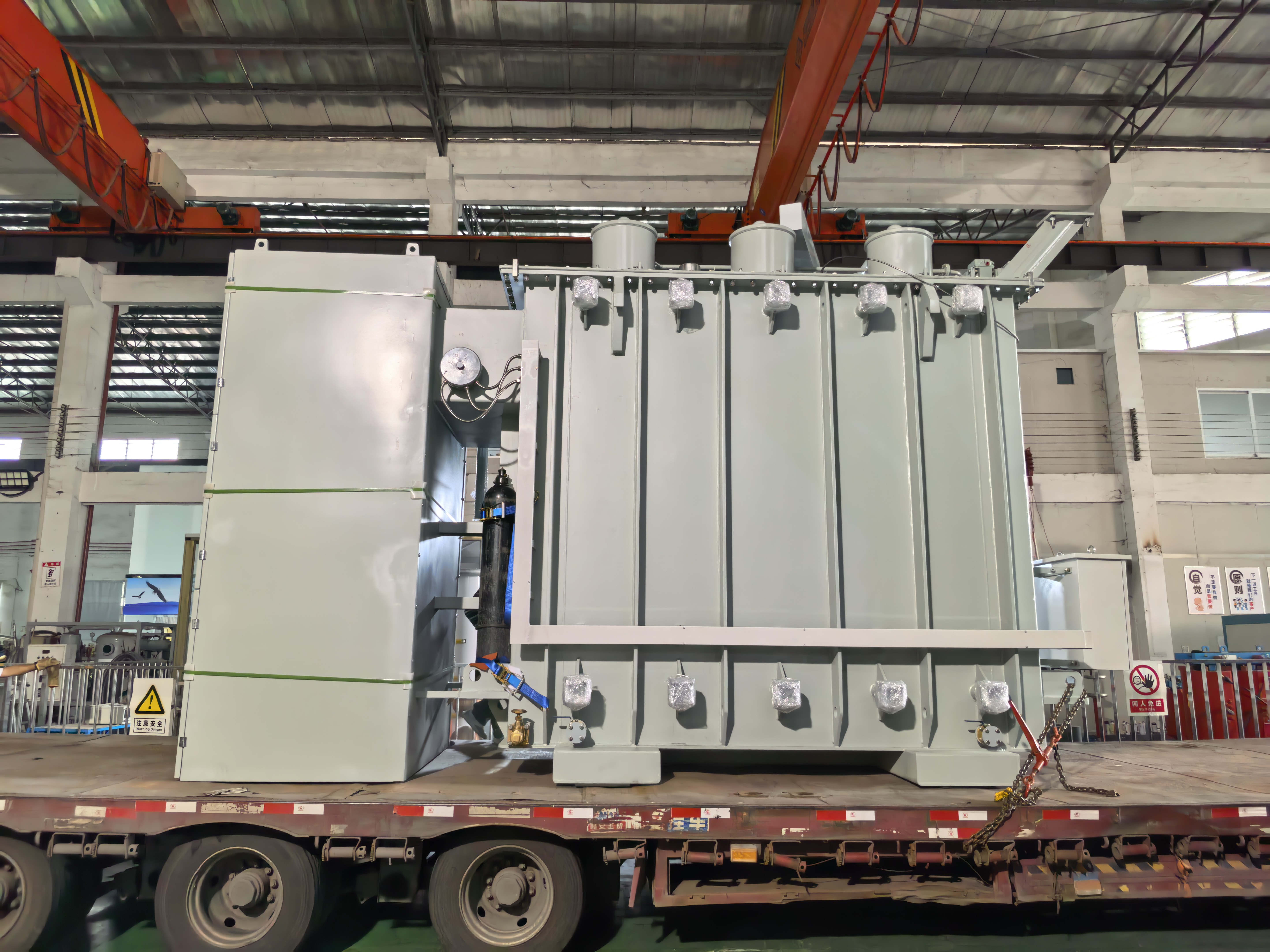
Figure 1: A 40MVA substation power transformer designed to ANSI/IEEE standards, ready for compliance testing and shipment.
1. Key Compliance Requirements for Target Markets
North American Market (USA & Canada)
The North American market mandates strict adherence to safety and performance standards. The primary certifications are UL (Underwriters Laboratories) for the USA and cUL for Canada. For substation and distribution transformers, the applicable standards are typically ANSI/IEEE C57 for the US and CSA C227 for Canada. These standards cover design, construction, testing, and performance. Furthermore, compliance with the U.S. Department of Energy (DOE) 2016 efficiency regulations is mandatory for most distribution transformers, dictating maximum loss levels. Manufacturers like Winley Electric produce transformers that are manufactured in accordance with ANSI/IEEE standards and meet DOE efficiency requirements.
European Union Market
The CE marking is the mandatory conformity mark for products placed on the market in the European Economic Area. For transformers, this involves compliance with the EU's Electromagnetic Compatibility (EMC) Directive. Key applicable standards include EN IEC 61000-6-3:2021 (emission standard for residential, commercial, and light-industrial environments) and EN 61000-6-1:2019 (immunity standard for the same environments). The CE certification for a VPI dry-type transformer, for instance, can cover a capacity range from 10 kVA to 30 MVA.
Global Quality Management Standards
Beyond regional certifications, international quality management system certifications are strong indicators of a manufacturer's process reliability. These include:
- ISO 9001: For quality management systems, covering the full range of transformer products.
- ISO 14001: For environmental management systems.
- ISO 45001: For occupational health and safety management systems.
2. How to Verify Supplier Certifications: A 3-Step Process
Possession of a certificate is not a guarantee of validity. Procurement teams must actively verify claims.
Step 1: Direct Verification with Issuing Bodies
For UL/cUL certifications, use the UL Product iQ or similar online directories provided by the certification body (e.g., UL Solutions). Enter the manufacturer's name or certificate number (e.g., UL-US-2564931-0) to confirm the product's current status, scope, and any limitations. For ISO certificates, verify the issuing registrar's accreditation.
Step 2: Scrutinize Certificate Details
Examine the certificate carefully. Key details to check include:
- Product Scope: Does it explicitly cover the specific transformer type (e.g., "Single Phase Liquid-Filled, Pad-Mounted Type") and model you are procuring?
- Applicable Standard: Is the correct standard listed (e.g., ANSI IEEE C57 for US pad-mounted transformers)?
- Issue and Expiry Dates: Ensure the certificate is current and valid.
- Manufacturer's Name and Address: Must match the supplier you are evaluating.
Step 3: Factory Audit and Sample Testing
For high-value or critical projects, consider a pre-shipment factory audit. Observe the production process and quality controls. Reputable manufacturers implement rigorous in-process checks. For instance, Winley Electric employs a quality assurance procedure that includes mandatory inspection at established hold points by authorized personnel to verify process completion before proceeding. These hold points are typically set after irreversible processes or before critical performance tests. Additionally, witness or review reports for routine and type tests (e.g., impulse, temperature rise, noise) as per the relevant standards.
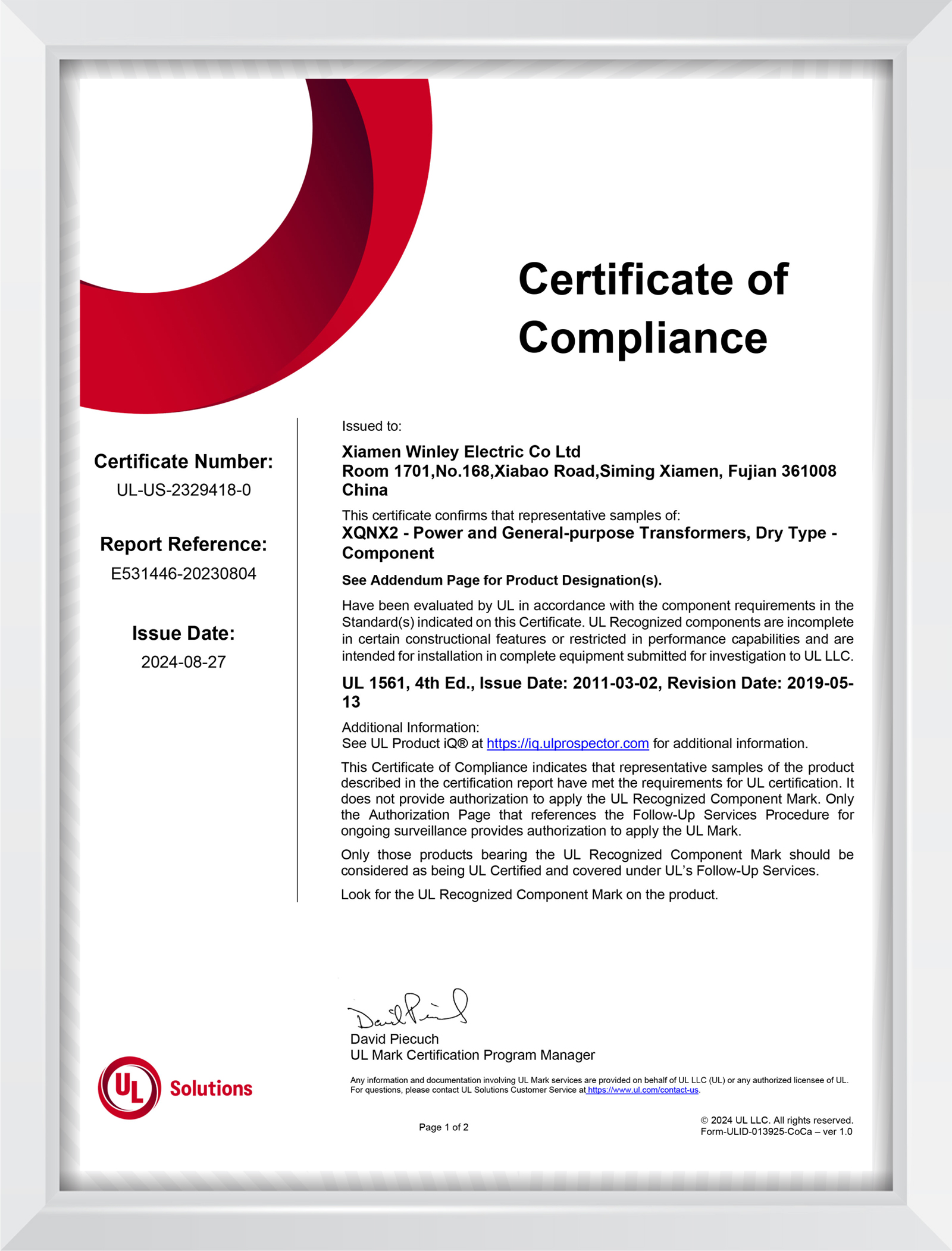
Figure 2: Example of a UL certification document for a dry-type transformer, a critical verification item for the US market.
3. Understanding and Budgeting for Compliance Costs
The cost of compliance is a significant component of the total procurement cost. It is not just the fee for the certificate itself but encompasses several layers:
| Cost Component | Description | Typical Impact |
|---|---|---|
| Certification & Testing Fees | Fees paid to third-party agencies (UL, Intertek, TÜV) for initial product evaluation, testing, and annual surveillance. | Can range from thousands to tens of thousands of USD per product family, depending on complexity and agency. |
| Design & Engineering | R&D costs to design products that meet specific standard requirements (e.g., DOE efficiency levels, specific BIL ratings). | Embedded in product cost. Manufacturers with established compliant designs often have a cost advantage. |
| Material & Manufacturing | Cost of using higher-grade materials (e.g., better core steel for lower losses) and implementing controlled manufacturing processes. | Directly increases unit cost but is essential for performance and longevity. |
| Quality System Maintenance | Ongoing costs of maintaining ISO-certified quality management systems, internal audits, and documentation. | Operational overhead for the manufacturer, reflected in pricing. |
Procurement Insight: While certified products may have a higher upfront price, they mitigate the substantial hidden costs of non-compliance: project delays, retrofit expenses, liability risks, and potential exclusion from future bids. A total cost of ownership (TCO) analysis should factor in compliance assurance.
4. Case Study: A Multi-Certified Manufacturer's Global Export Strategy
Xiamen Winley Electric Co., Ltd. serves as a practical example of how a manufacturer can build a compliance-centric export business. Founded in 2014, the company has established a production and certification framework that enables access to over 60 countries worldwide, with exports constituting approximately 70% of its business.
Compliance as a Core Competency
Winley Electric's product development is anchored on meeting international standards. The company states that its products meet standards including ANSI/IEEE/CSA/DOE2016/IEC60076. This multi-standard capability allows it to serve diverse markets from a single manufacturing base. Its technical team is proficient in the transformer standards of various countries, enabling them to customize solutions based on specific regional requirements.
Real-World Application: North American Grid Modernization
A pressing challenge in the North American market has been extended lead times for large substation transformers, often exceeding 100 weeks from local manufacturers, causing project delays. In one documented case, a U.S. utility company required two 40 MVA substation transformers for grid modernization. Winley Electric addressed this by delivering units that were produced in accordance with ANSI/IEEE standards and met DOE efficiency requirements. The complete production and testing cycle was executed within 12 weeks, resolving a critical supply chain bottleneck for the client. This was possible due to integrated design, certified manufacturing processes, and established logistics protocols for heavy equipment.
Leveraging Certifications for Market Access
The company's certification portfolio is strategic:
- North America: Holds specific UL and cUL certifications for key products like pad-mounted transformers (e.g., certifying to ANSI IEEE C57 for the US and CSA C227 for Canada).
- Europe: Holds CE certification for its dry-type transformer line.
- Global Baseline: Maintains ISO 9001, 14001, and 45001 certifications, providing a foundation of process credibility for clients worldwide.
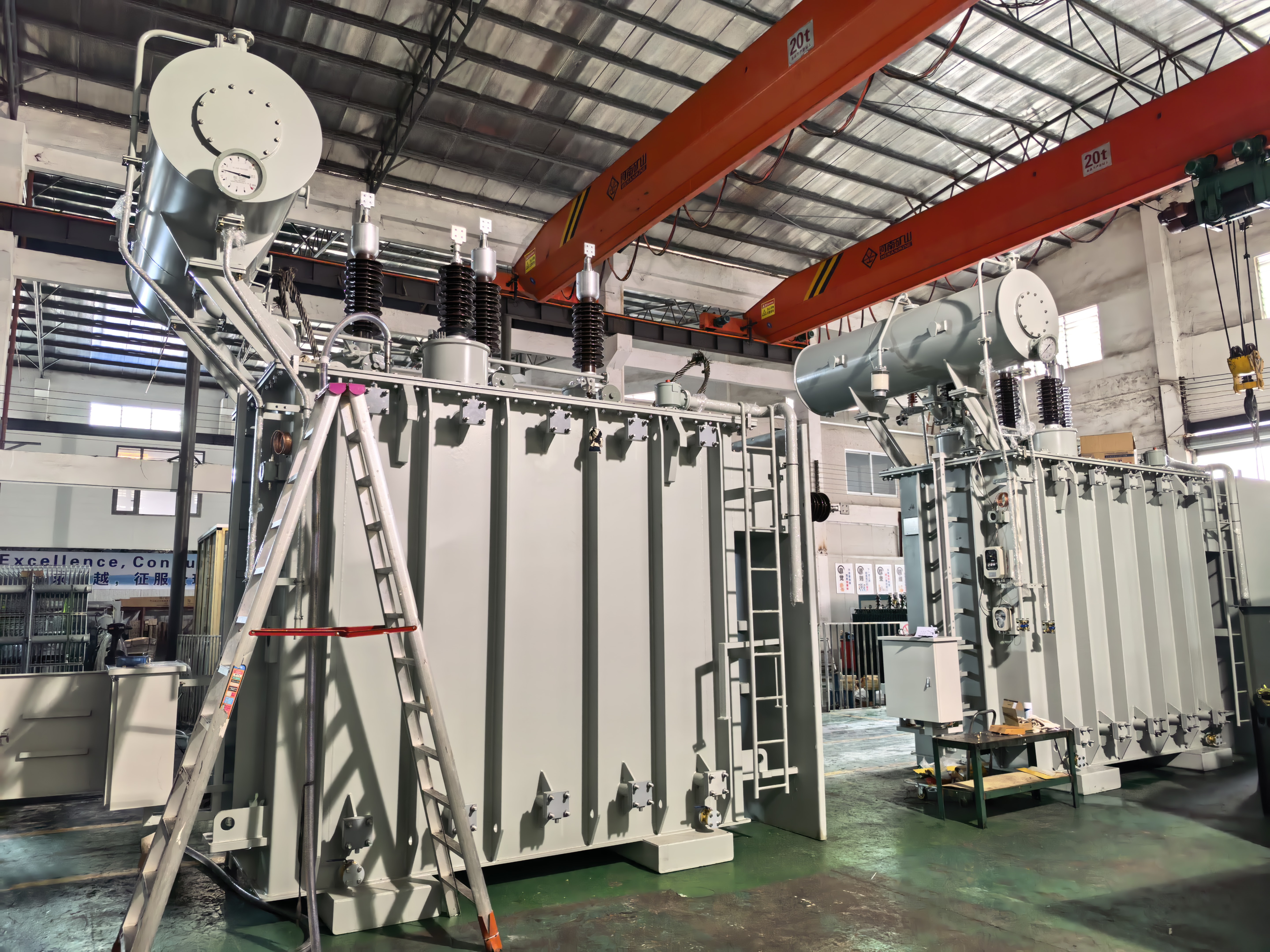
Figure 3: 40MVA oil-immersed substation transformers manufactured for a U.S. utility project, demonstrating compliance with ANSI/IEEE standards.
Conclusion and Strategic Procurement Recommendations
In the tightly regulated world of power infrastructure, compliance is non-negotiable. A proactive, verification-based procurement strategy is essential.
For procurement teams, the recommended action plan is:
- Define Requirements Early: Integrate specific certification and standard requirements (e.g., "UL Listed to ANSI C57.12.00") into your request for quotation (RFQ) and technical specifications.
- Audit, Don't Just Collect: Treat certificates as living documents that require active verification with issuing bodies. Prioritize suppliers with transparent and verifiable certification histories.
- Evaluate the System, Not Just the Product: Favor manufacturers with robust, certified quality management systems (like ISO 9001). This systemic approach, as seen with manufacturers like Winley Electric through their hold-point inspections, is a stronger predictor of consistent quality than a one-time product test.
- Consider Total Cost of Compliance: Factor in the risk mitigation value of certified products versus the potential costs of non-compliance delays or failures.
By mastering the intricacies of standards like ANSI/IEEE, CSA, and IEC, and rigorously verifying certifications like UL and CE, industrial buyers can secure not only compliant equipment but also reliable partners for their critical power infrastructure projects. The demonstrated capability of certified global manufacturers to meet stringent regional requirements while offering supply chain resilience makes them a strategic component of a modern, de-risked procurement portfolio.